
Plot Summary
Hunger in the FAYZ
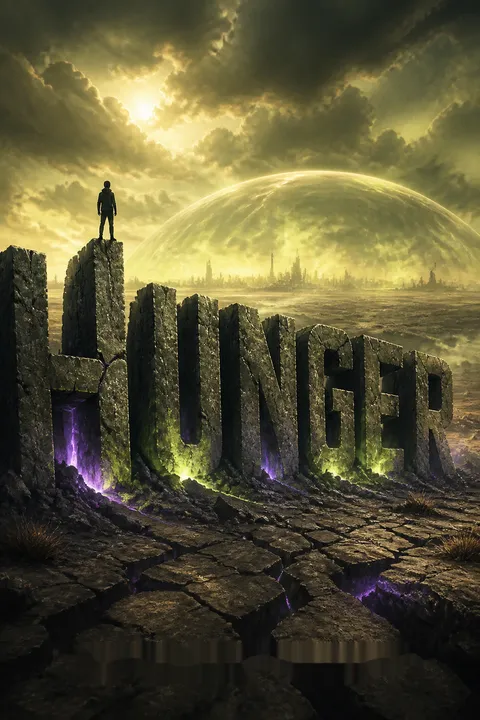
In the FAYZ, a world without adults, Sam Temple and the children of Perdido Beach face a new, relentless enemy: hunger. Food is running out, and the initial chaos has given way to a grinding, desperate struggle for survival. Sam, now the de facto leader, is exhausted by the endless demands and the weight of responsibility. The children scavenge for anything edible, but canned goods and snacks are nearly gone. The fields offer hope, but even there, danger lurks. The absence of adults has forced the kids to grow up fast, but their youth and inexperience show in every decision. Hunger gnaws at their bodies and their spirits, setting the stage for conflict, fear, and the emergence of new threats both human and inhuman.
Worms and Warnings
When Sam and his friends discover a field of cabbages infested with monstrous, flesh-eating worms, the horror of their new world becomes undeniable. The worms, called "zekes," kill a boy named E.Z. in a gruesome attack, leaving Sam and the others shaken and guilt-ridden. Astrid, Sam's brilliant girlfriend, investigates the worms and finds they are not only deadly but intelligent, territorial, and evolving. The children realize that the FAYZ is mutating everything—animals, plants, even people. The threat of starvation is now compounded by the terror of predatory mutations, and the kids must find a way to harvest food without falling victim to the zekes. The balance between survival and safety grows ever more precarious.
Power Struggles Ignite
As food shortages worsen, Sam's authority is tested by both his allies and rivals. Albert, the resourceful former McDonald's manager, proposes a system of payment for work, clashing with Sam's ideals. Meanwhile, Caine, Sam's power-hungry twin, recovers from a mental breakdown and plots to seize control of the nuclear power plant, the FAYZ's lifeline. At Coates Academy, Caine gathers his followers, including the sadistic Drake and the cunning Diana, and sets his sights on the town's remaining resources. The children are forced to choose sides, and the seeds of division—between mutants and normals, leaders and followers—begin to sprout. The struggle for power becomes as dangerous as the struggle for food.
Monsters Within and Without
The FAYZ's mutations intensify, blurring the line between nightmare and reality. Little Pete, Astrid's autistic brother and the FAYZ's most powerful mutant, conjures monsters from his mind, threatening everyone's safety. Lana, the Healer, is haunted by the voice of the Darkness—the Gaiaphage—calling her to the mine. The children's psychological wounds deepen as they face not only external threats but also their own fears, guilt, and trauma. Mary, the day care leader, battles anorexia, while others turn to alcohol, drugs, or violence. The monsters are not just in the fields or the caves; they are inside the children themselves, warping their minds and relationships as hunger and fear take their toll.
The Price of Survival
As starvation looms, the children are forced to make impossible choices. Orc, transformed into a gravel-skinned giant, is bribed with beer to harvest cabbages from the zeke-infested fields. Albert opens a dance club, charging admission in batteries and toilet paper, sparking ethical debates about fairness and exploitation. Quinn discovers fishing as a new food source, but even this is quickly monopolized. The children's innocence erodes as they barter, steal, and fight for survival. The lines between right and wrong blur, and the cost of staying alive grows heavier with each passing day. The FAYZ is no longer just a prison—it is a crucible, burning away childhood and forging something harder, darker, and more desperate.
Divided We Starve
The growing divide between mutants ("freaks") and normals is stoked by Zil, who forms the Human Crew to oppose Sam's leadership and the mutants' powers. Zil's rhetoric turns the hungry, frightened children against each other, leading to riots, lynch mobs, and the first stirrings of civil war. Hunter, a mutant with deadly powers, becomes the target of a public execution, while others are exiled or ostracized. The fragile community Sam has tried to build begins to fracture, and the threat of starvation is now matched by the threat of violence from within. The FAYZ teeters on the brink of chaos, and the children must decide whether to unite or destroy each other.
The Darkness Calls
Deep in the mine, the Gaiaphage—the Darkness—grows stronger, feeding on fear, pain, and the promise of new power. It calls to Lana, Caine, and others, twisting their minds and compelling them to serve its will. Caine, driven by the Darkness's hunger, plots to steal uranium from the power plant to feed the Gaiaphage and gain its favor. Lana, tormented by the voice in her head, is drawn inexorably toward the mine, where her healing power will be used to give the Gaiaphage a body. The children are pawns in a larger, more sinister game, and the true enemy is no longer hunger or each other, but the ancient, alien evil beneath their feet.
Mutant and Normal
The distinction between mutants and normals becomes a flashpoint for violence and discrimination. Zil's Human Crew targets anyone with powers, blaming them for the FAYZ's woes and hoarding of food. Mutants like Duck, who can control his density, and Brianna, the super-speedster, are hunted and ostracized. Even those without powers are forced to choose sides. The children's fear of the unknown—of change, of difference—turns neighbor against neighbor. Prejudice and paranoia threaten to consume the community, and Sam's efforts to maintain order are undermined by suspicion and betrayal. The FAYZ becomes a microcosm of society's darkest impulses, magnified by desperation and isolation.
The Club and the Mob
Albert's club offers a brief respite from misery, but also becomes a symbol of inequality and greed. As the children dance and barter, Zil's mob gathers strength, culminating in a public lynching attempt on Hunter. Astrid and Orc intervene, but the damage is done—the community's unity is shattered. Meanwhile, Sam, exhausted and broken, is forced to confront his own limitations and the impossibility of pleasing everyone. The night is filled with fire, violence, and the scent of roasting meat, as the children teeter between civilization and savagery. The FAYZ's darkness is not just physical, but moral, and the choices made tonight will echo for a long time.
The Power Plant Siege
Caine and his followers seize the nuclear power plant, cutting off electricity to Perdido Beach and holding hostages. Sam and his allies mount a desperate assault, but are thwarted by Caine's cunning and Drake's brutality. The siege becomes a battle of wits, powers, and endurance, with the fate of the FAYZ hanging in the balance. As the children fight for control of the plant, the true purpose of Caine's plan is revealed: to steal uranium for the Gaiaphage. The battle leaves many wounded, traumatized, or dead, and the power plant itself is left crippled, plunging the FAYZ into literal and figurative darkness.
Feeding the Gaiaphage
Caine, Drake, Diana, and Jack transport the stolen uranium to the mine, pursued by Sam, Quinn, Brianna, and Duck. The Gaiaphage, now nearly sentient, uses Lana's healing power to begin constructing a monstrous, invulnerable body. As the uranium is delivered, the Gaiaphage's strength surges, and it prepares to emerge from the earth. The children's final confrontation with the Darkness is at hand, and the outcome will determine not only their survival, but the fate of the entire FAYZ. The battle is not just physical, but existential—a struggle against an evil that feeds on their worst fears and weaknesses.
Collapse and Consequence
In a desperate gambit, Duck uses his power to collapse the mine shaft, dragging the Gaiaphage and himself deep into the earth. The explosion and cave-in seal the monster away—at least for now—but at a terrible cost. Duck is lost, presumed dead, and Lana is left shattered by her ordeal. Edilio, Dekka, and others are gravely wounded. The children bury their dead and try to make sense of the trauma they have endured. The FAYZ is saved from immediate destruction, but the scars—physical, emotional, and moral—will not heal easily. The children are left to mourn their losses and wonder what new horrors may yet emerge.
The Cost of Leadership
Throughout the crisis, Sam is pushed to the brink by the impossible demands of leadership. He is blamed for every failure, every death, every injustice. His relationship with Astrid is strained by the weight of responsibility and the impossibility of making everyone happy. In the aftermath, Sam finally admits his limits and steps back, allowing others to share the burden. The children establish a council, distribute new currency, and try to rebuild their shattered community. Sam's journey is one of growth through pain, learning that leadership is not about being perfect, but about enduring, adapting, and trusting others.
The Human Crew Rises
Zil's Human Crew, fueled by fear and hunger, unleashes a wave of violence against mutants and anyone who stands with them. The attempted lynching of Hunter, the branding of Astrid and Little Pete as freaks, and the spread of anti-mutant graffiti mark a new low for the FAYZ. Even after the immediate crisis passes, the divisions remain, poisoning the community's future. The children must confront the consequences of their actions and the reality that the enemy is not just the Darkness in the mine, but the darkness in their own hearts.
The Healer's Sacrifice
Lana's journey into the mine, her possession by the Gaiaphage, and her role in the monster's near-ascension leave her traumatized and guilt-ridden. She is forced to use her healing power to save those she loves, even as she mourns the lives lost and the innocence destroyed. Lana's sacrifice is both physical and spiritual—a testament to the cost of power and the burden of being needed. Her reunion with Patrick, her dog, is bittersweet, as she realizes that healing others cannot heal her own wounds.
The Final Stand
With the Gaiaphage buried, the children of the FAYZ try to rebuild. Albert introduces a new currency, and the council works to restore order and distribute food. The zekes are appeased with mutant meat, and Hunter is exiled but continues to provide for the community. Sam, Astrid, and the others struggle to find hope in the aftermath of horror. The FAYZ remains a place of danger and darkness, but also of resilience and the possibility of redemption. The children have survived another trial, but the future remains uncertain, and the hunger—literal and metaphorical—still gnaws at them all.
Aftermath and Ashes
In the days following the collapse of the mine, the children bury their dead, paint over the graffiti, and try to move forward. The power is gone, the food is scarce, and the divisions between mutants and normals linger. Yet, there are moments of grace: Sam is forced to rest, the children surf again, and Lana finds comfort in Patrick's presence. The FAYZ is still a place of suffering, but also of survival. The story ends not with triumph, but with the quiet determination to endure, to heal, and to hope for a better tomorrow.
Analysis
Michael Grant's Hunger is a harrowing exploration of what happens when the structures of society collapse and children are forced to confront not only external threats but the darkness within themselves. The novel uses the FAYZ as a crucible, stripping away adult guidance and forcing its young characters to grapple with hunger, fear, prejudice, and the seduction of power. The mutations and the Gaiaphage serve as both literal and metaphorical embodiments of change, trauma, and evil—forces that can be resisted, but never fully defeated. The story's greatest strength lies in its refusal to offer easy answers: leadership is a burden, not a blessing; survival often demands moral compromise; and the line between hero and villain is perilously thin. The divisions between mutants and normals, the rise of demagogues like Zil, and the psychological toll on characters like Sam and Lana resonate with real-world issues of scapegoating, mental health, and the cost of leadership. Ultimately, Hunger is a meditation on resilience—the ability to endure, adapt, and find hope even when the world is falling apart. Its lesson is both sobering and inspiring: in the darkest times, the greatest danger is not the monsters outside, but the ones we carry within.
Review Summary
Hunger, the second book in Michael Grant's Gone series, receives mostly positive reviews with an overall 4.02/5 rating. Readers praise the gripping, action-packed plot featuring starving children in the FAYZ three months after adults disappeared. Many appreciate the realistic character development and intense survival themes, though some criticize the weak female characters and Sam's overly heroic nature. The large cast of characters occasionally confuses readers, and multiple perspectives can be distracting. While some find pacing issues, most readers find the book engaging and darker than its predecessor, eagerly anticipating the next installment.
People Also Read

Characters
Sam Temple
Sam is the heart of the FAYZ's struggle for survival—a natural leader thrust into an impossible role. His powers (shooting light from his hands) make him both a protector and a target. Sam's relationship with Astrid is a rare source of comfort, but his sense of duty isolates him. He is haunted by guilt over every death and failure, and his inability to please everyone nearly breaks him. Sam's arc is one of painful growth: learning to share leadership, accept his limits, and trust others. His compassion and integrity are his greatest strengths, but also his greatest burdens.
Astrid Ellison
Astrid is Sam's intellectual equal and emotional anchor. Her brilliance is matched by her empathy, but she is often forced into the role of the "bad cop," making hard decisions and challenging Sam's choices. Her devotion to her autistic brother, Little Pete, is unwavering, even as his powers threaten everyone's safety. Astrid's faith and rationality are tested by the FAYZ's horrors, and her relationship with Sam is strained by the pressures of leadership. She embodies the struggle to balance logic and compassion, and her insights often save the community from disaster.
Caine Soren
Caine is Sam's twin and mirror image—a brilliant, ruthless leader driven by ambition and insecurity. His telekinetic powers and manipulative charm make him a formidable foe, but his mind is fractured by the influence of the Gaiaphage. Caine's need for control masks deep fear and vulnerability, especially in his relationship with Diana. His willingness to serve the Darkness, even at the cost of others' lives, reveals the dangers of unchecked power and the seduction of evil. Caine's arc is one of self-destruction and fleeting redemption, as he is both victim and perpetrator.
Lana Arwen Lazar
Lana's power to heal any wound makes her indispensable, but also isolates her. She is haunted by the Gaiaphage's voice, which manipulates her actions and ultimately uses her to attempt its own rebirth. Lana's journey is one of suffering and sacrifice—she endures captivity, possession, and the guilt of harming friends against her will. Her psychological trauma is profound, and her struggle to reclaim her autonomy is central to the story's emotional core. Lana's resilience and compassion are tested to the limit, and her survival is both a victory and a curse.
Diana Ladris
Diana is Caine's confidante and lover, a master manipulator who uses her power to measure others' abilities. Her sarcasm and intelligence mask deep insecurity and a longing for connection. Diana's relationship with Caine is complex—she both enables and challenges his worst impulses. Her survival instincts are strong, but she is ultimately forced to choose between self-preservation and loyalty. Diana's arc is one of reluctant heroism, as she risks everything to save Caine and herself from the Gaiaphage's grasp.
Drake Merwin
Drake, known as Whip Hand, is the FAYZ's most feared and hated figure. His tentacle arm, a gift from the Gaiaphage, is both weapon and symbol of his monstrous nature. Drake's sadism is unchecked, and he revels in the suffering of others. His rivalry with Sam and Caine is fueled by jealousy and a desire for dominance. Drake's loyalty is only to the Darkness, and his actions drive much of the story's violence and horror. He is the personification of the FAYZ's darkest impulses, and his survival ensures that the threat of evil remains ever-present.
Albert Hillsborough
Albert transforms from an overlooked kid into the FAYZ's economic mastermind. His focus on systems, incentives, and currency brings a semblance of order to chaos, but also sparks ethical debates about fairness and exploitation. Albert's ambition and resourcefulness are vital to the community's survival, but his detachment and willingness to make hard choices put him at odds with Sam and Astrid. He represents the tension between idealism and pragmatism, and his rise to power is both necessary and troubling.
Brianna "The Breeze"
Brianna's super-speed makes her a vital asset in crises, but her impulsiveness and need for recognition often put her in danger. She struggles with loneliness and a desire to prove herself, masking vulnerability with bravado. Brianna's relationships with Jack and Dekka reveal her complexity—she is both admired and envied, both superhero and scared kid. Her near-death experiences and brush with radiation force her to confront her own mortality and the limits of her power.
Edilio Escobar
Edilio is Sam's most loyal ally, a calm, practical problem-solver who shoulders the dirtiest and most thankless tasks. His immigrant background and outsider status give him unique perspective and empathy. Edilio's courage and reliability make him indispensable, but his humility often leaves him overlooked. His near-fatal injury in the climax underscores the cost of loyalty and the quiet heroism that sustains the FAYZ.
Zil Sperry
Zil is the architect of the Human Crew, channeling the children's fear and hunger into violence against mutants. His charisma and cunning make him a dangerous rival to Sam, and his willingness to exploit prejudice and desperation leads to lynchings, riots, and lasting scars. Zil's arc is a cautionary tale about the power of demagoguery and the ease with which communities can turn on themselves in times of crisis.
Plot Devices
The FAYZ and the Age Limit
The FAYZ (Fallout Alley Youth Zone) is the central device: a dome that traps everyone under fifteen, erasing adults and older teens. This creates a Lord of the Flies scenario, forcing children to build a society from scratch. The age limit introduces constant tension, as every birthday is a potential death sentence, and the absence of authority accelerates both innovation and chaos.
Mutation and Evolution
The FAYZ's radiation triggers mutations in animals, plants, and children, granting powers and spawning horrors. These mutations serve as both literal threats and metaphors for adolescence, difference, and the unpredictability of change. The evolving zekes, the monstrous Gaiaphage, and the children's own powers drive the plot and symbolize the struggle to adapt and survive.
The Gaiaphage (The Darkness)
The Gaiaphage is both a literal monster and a symbol of the darkness within. Its psychic influence over Lana, Caine, and others creates a web of manipulation, driving the story's central conflicts. The Gaiaphage's hunger for uranium and its plan to create a body raise the stakes from mere survival to existential threat, uniting and dividing the children in their response.
Leadership and Moral Dilemmas
Sam's journey is structured around impossible decisions—who eats, who works, who lives, who dies. The narrative explores the psychological toll of leadership, the temptation to compromise morals for survival, and the dangers of both idealism and pragmatism. The council, the club, and the Human Crew all represent different models of governance, each with strengths and flaws.
Prejudice and Division
The growing rift between mutants and normals is a device for exploring prejudice, scapegoating, and the fragility of community. Zil's rise, the lynching of Hunter, and the spread of anti-mutant graffiti mirror real-world patterns of discrimination and violence, adding depth and relevance to the story's conflicts.
Sacrifice and Redemption
The climax hinges on acts of sacrifice—Duck's selfless plunge, Lana's endurance, Sam's willingness to step back. These moments of heroism are contrasted with moments of failure and betrayal, creating a narrative structure that emphasizes the cost of survival and the possibility of redemption, even in the darkest times.
Gone Series
Download PDF
Download EPUB
.epub digital book format is ideal for reading ebooks on phones, tablets, and e-readers.








































