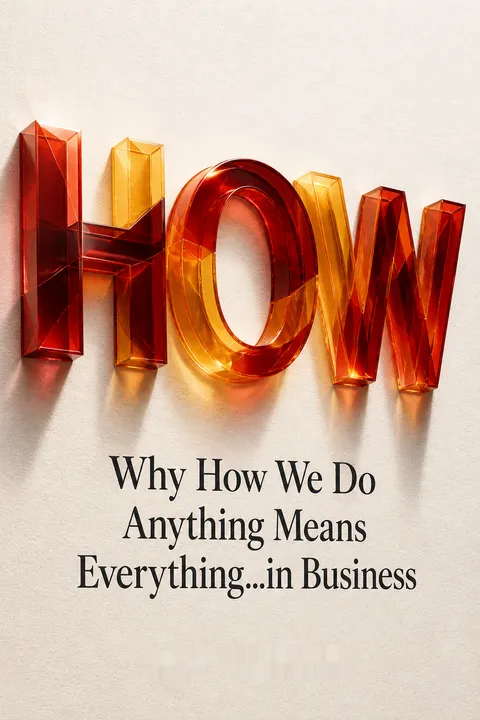

Key Takeaways
1. The "HOW" is the New "WHAT": Differentiating in a Commoditized World
In the twenty-first century, it isn’t what you do that matters most.
Beyond products and services. In today's hyper-competitive landscape, simply offering a new, better, faster, or cheaper product (the "what") is no longer enough. Competitors quickly replicate innovations, turning almost every "what" into a commodity. This commoditization extends beyond businesses to individuals, where specialized knowledge or expertise offers only fleeting differentiation.
The realm of human behavior. The true frontier for competitive advantage lies in "how we do what we do"—the realm of human behavior. This area, rich in variation and impossible to commoditize or copy, offers a unique opportunity to "outbehave the competition." Stronger connections, intense collaboration, consistent promise-keeping, and meaningful customer experiences foster loyalty and productivity that cannot be easily replicated.
Innovation in HOW. The innovations of the twenty-first century will not just be in new products or business models, but in new ways to create value and differentiation through "HOW." Success and significance in this dramatically new environment are achieved not through raw talent alone, but through consistent, values-driven behavior over time.
2. Hyperconnectivity and Transparency Reshape Business
The free flow of information has irrevocably changed the ways we interrelate, both for the positive and the negative.
Information's new paradigm. Unlike land or capital, information is infinite and elastic; the more I have, the more you can have. The internet has made information flow instantly and cheaply, rendering old "fortress capitalism" habits of hoarding and control obsolete. Power has shifted to those who open up and share information freely, as exemplified by companies like Google and Amazon.
Flattening organizations. This unfettered information flow has flattened organizational hierarchies, breaking down traditional job silos. Many activities once confined to specific departments are now everyone's responsibility, demanding new skills in connection and collaboration. The workforce has become an organic ecosystem of mutually reinforcing independent agents, requiring unprecedented ability to connect.
The age of transparency. We live in an era where virtually everything about individuals and organizations is discoverable. This "technological transparency" means that actions, statements, and even past missteps are easily exposed and remembered, making "whistleblogging" and public scrutiny commonplace. This new vulnerability demands a proactive approach to "interpersonal transparency," where authenticity and openness become crucial for building trust and managing reputation.
3. Trust is the Hard Currency of the Information Age
For it is mutual trust, even more than mutual interest that holds human associations together.
Filling the Certainty Gap. In times of high uncertainty, trust becomes the essential currency. It calms fears, allows for predictability, and enables individuals and organizations to function and thrive. Research shows that humans are biologically hardwired for altruistic helping and trust, with oxytocin playing a key role in fostering social attachment and overcoming fear.
Quantifying trust's value. Studies empirically link trust to reduced transaction costs and increased value-creating behaviors like information sharing. Companies with higher trust levels incur significantly lower procurement costs and are more likely to secure exclusive business opportunities. At the macroeconomic level, generalized trust directly correlates with higher investment rates and GDP growth, demonstrating its tangible economic impact.
The TRIP to progress. Trust enables a powerful cycle: Trust leads to Risk, which fuels Innovation, ultimately resulting in Progress (TRIP). In a trusting environment, individuals and teams feel emboldened to take more rational risks, challenge the status quo, and experiment, leading to continuous innovation and sustained growth. This dynamic is self-propelling, with trust building more trust over time.
4. Values Transcend Rules: From "Can" to "Should"
[There is a] difference between what you have a right to do, and what is the right thing to do.
Limitations of rules. Rules are external, reactive, and often inefficient proxies for desired values. They create floors of behavior but inadvertently set ceilings, encouraging loophole-hunting and a focus on "can versus can't" thinking. Over-reliance on rules breeds distrust, cynicism, and a passive, compliant mindset, as seen in the proliferation of compliance programs that yield little real behavioral change.
The power of "should." Shifting from rules-based "can" thinking to values-based "should" thinking unlocks a wide spectrum of creative and innovative solutions. Values are internal, aspirational, and inspire action, propelling individuals and organizations to higher conduct. They provide a clear, unambiguous guide, eliminating the "gap" between individual action and organizational goals.
Constitutions over codes. Just as democratic societies are founded on values-filled constitutions rather than endless rules, organizations thrive by embracing core values. These values, like integrity, compassion, and respect, provide a stable reference point for decision-making, fostering a culture where individuals act on their beliefs, leading to greater alignment, loyalty, and long-term success.
5. Conquering Distraction and Dissonance for Peak Performance
It’s very hard to perform without a clear head or a clear conscience.
The cost of distraction. Internal voices (insecurity, resentment) and external stimuli (inappropriate emails, microinequities) constantly distract us, pulling our minds "out of the game." These small lapses in "how" we interact can subtly leech productivity, divert energy, and strain relationships, leading to significant costs in time, resources, and morale.
Dissonance impedes clarity. Cognitive dissonance, the mental discomfort from conflicting ideas or actions, physically impairs clear thinking. When confronted with dissonant messages, the reasoning parts of the brain shut down, and emotional responses take over. This makes learning and adaptation difficult, as individuals may even feel rewarded for rejecting information that contradicts their existing beliefs.
Friction and cynicism. Unresolved distraction and dissonance manifest as friction in interpersonal relationships, leading to bickering, tension, and plummeting morale. This environment breeds cynicism, where employees distrust management and become resistant to change, further eroding productivity and commitment. Cultivating consonance—acting in harmony with oneself and one's values—is crucial for maintaining focus and fostering a productive work environment.
6. Reputation: Your Most Valuable and Vulnerable Asset
Reputation, reputation, reputation! O, I have lost my reputation! I have lost the immortal part of myself, and what remains is bestial.
Reputation in a transparent world. In today's hyperconnected and transparent world, reputation is more critical than ever. It's the sum total of your "HOWs"—what you stand for, your track record, and how you've been experienced by others. Reputation precedes you, records your past, and sets expectations for your future, acting as a form of "reputational capital."
Beyond brand image. Unlike brand awareness, which can be manipulated, reputation is earned through consistent, authentic behavior. Consumers and partners now look past marketing proxies to the truth of a company's culture and conduct. This shift means that "how you create a rewarding and reliable experience for your customers" is paramount, making reputation a direct competitive advantage.
Building reputational capital. A strong reputation is built brick by brick, one interaction at a time, through integrity, consistency, and trust. It's a long-term commitment, not a short-term fix. In a world where careers are fluid and information is instantly shared, your personal reputation and network of contacts become indispensable assets, influencing everything from job opportunities to business deals.
7. Culture is the Uncopiable Competitive Advantage
I came to see, in my time at IBM, that culture isn’t just one aspect of the game; it is the game.
The sum of all HOWs. Culture is a company's unique DNA—the sum total of its history, values, aspirations, and beliefs. It's the operating system that defines "how things really work" and influences every interaction. Unlike products or processes, culture is organic, evolving, and impossible to copy, making it the ultimate source of sustainable differentiation.
Governing through culture. To thrive in the 21st century, organizations must shift from governing with culture (external rules) to governing through culture (internal values). This means embedding governance within the collective "HOWs" of the group, empowering individuals to act autonomously, guided by shared principles rather than rigid directives.
Values-based self-governance. This ideal culture type, exemplified by companies like GE/Durham and Sewell Automotive, relies on values and principles as its engine. It fosters transparency, universal vigilance, and a leadership mindset at all levels. Such cultures inspire alignment, reduce the need for costly external controls, and drive innovation by giving people the freedom to act creatively and responsibly.
8. Leadership is a "HOW" Mindset, Not a Title
Leadership is getting your HOWs right, and you can look at anything through the prism of leadership.
Beyond formal authority. Leadership is not confined to titles; it's an attitude, a disposition, and a way of approaching daily challenges. In a horizontal, hyperconnected world, everyone has the opportunity to lead by getting their "HOWs" right—whether it's writing an email, attending a meeting, or building a report. This self-governing mindset is crucial for making "Waves" of positive influence.
The Leadership Framework. This framework provides a lens for focusing efforts on behaviors that engender trust, build reputation, and inspire others. It's built on core values and encompasses attributes like:
- Vision: Proactively envisioning a better future.
- Communicate and Enlist: Sharing your vision transparently to unite others.
- Seize Authority and Take Responsibility: Stepping forward and owning challenges.
- Plan and Implement: Turning ideas into action.
- Build Succession and Continuity: Creating self-sustaining systems that don't rely on individual heroics.
Charismatic authority and inspiration. True leaders wield charismatic authority, earned through principled action and a desire to get their "HOWs" right, rather than relying on formal power. They inspire, rather than just motivate, by connecting actions to beliefs and values, fostering a self-sustaining atmosphere of dedication and purpose.
9. Pursuing Significance Drives True Success
Success is something you get when you pursue something greater than yourself, and the word I use to describe that something is significance.
The paradox of success. Direct pursuit of success often proves elusive. Instead, true and enduring success is a byproduct of pursuing something larger and deeper: significance. This means envisioning efforts in service of a better world, contributing value to others, and building a legacy that transcends immediate gains.
Principled decision-making. Leaders make decisions based on principle, not just pragmatism. Principled choices, guided by long-term values, foster consistency, build trust, and strengthen reputation. In a transparent world, where every action is scrutinized, acting from principle is not only ethical but also the most efficient and nimble path to sustained continuity.
Passion and optimism. Significance is fueled by passion and optimism. Passion, a deep, introspective consideration of one's work, unleashes phenomenal energy and higher insights. Optimism, a "force multiplier," enables leaders to confront complexity, overcome obstacles, and push past points of no return, transforming challenges into opportunities for growth and progress.
Review Summary
How explores the importance of values, ethics, and principled behavior in business and leadership. Seidman argues that in today's interconnected world, how we do things matters more than what we do. The book emphasizes transparency, trust, and self-governance as keys to success. While some readers found it insightful and inspiring, others felt it was repetitive or lacked concrete advice. Many appreciated the real-world examples and anecdotes, though some criticized the dated references and corporate focus. Overall, reviewers saw it as a thought-provoking exploration of ethical leadership in the modern business landscape.
People Also Read




Download PDF
Download EPUB
.epub digital book format is ideal for reading ebooks on phones, tablets, and e-readers.








































