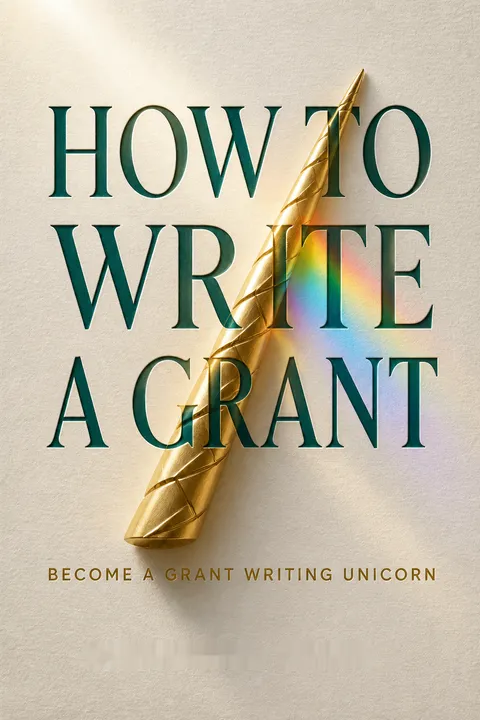

Key Takeaways
1. Master the Seven Steps to Writing Winning Grants
The trick is following consistent processes to stay on schedule and produce your best work.
Systematic approach. Grant writing is a learnable skill, not magic, that thrives on consistent processes. It's about preparing an application to receive funding for a specific goal, and while the money doesn't need to be paid back, it's far from "free." Following a structured, seven-step approach ensures thoroughness and maximizes your chances of success.
Core process. The journey begins by treating funding guidelines like a cherished recipe, reading them meticulously to understand every nuance. Next, create a "narrative skeleton" by outlining prompts and brainstorming ideas, avoiding full sentences to identify information gaps. This preparation culminates in an "outstanding kick-off meeting" with all project stakeholders, where responsibilities are assigned and a clear agenda is followed.
Execution and review. Finalize the grant budget early, as it impacts all other application components, including the narrative and required attachments. Write your narrative "fast and furiously," avoiding context switching and prioritizing quick drafts over perfection, then edit rigorously. Prepare key attachments like resolutions and letters of support with ample lead time. Finally, ensure an independent review of the entire package and submit your application at least one to two days early to avoid last-minute stress and technical issues.
2. Strategically Find and Select High-Potential Grants
All grants are not created equal.
Targeted research. Avoid a "shotgun approach" to grant seeking; instead, use critical thinking to identify opportunities with the highest likelihood of success and return on investment. Tools like Instrumentl.com can revolutionize this process, turning hours of research into minutes by helping you find 100+ potential grants quickly. Remember to think creatively about your project's elements, exploring diverse funding angles beyond obvious categories, such as health, environment, or community identity for a skatepark.
Filtering opportunities. The grant research funnel involves three stages: first, find a broad list of grants (100+), considering various organization types and potential partnerships. Second, filter this list down to about 20 promising options by assessing the funder's giving priorities, eligible uses of funds, and past giving history, often found in 990 forms for private foundations. This stage requires quick "keep or cut" decisions, not deep dives.
Top pursuits. The final, most time-consuming stage narrows the list to your top ~10 pursuits. This involves calculating grant competitiveness (aim for 20%+ success rate), thoroughly reviewing funding guidelines for hidden details, contacting past applicants for insights, and crucially, seeking feedback directly from the funder. This systematic approach, documented in a "Funding Strategy," ensures you focus your limited resources wisely and increase your win rate.
3. Cultivate Funder Relationships and Project Readiness
Nothing is worse than getting a cold application and not knowing where it came from, even if it is perfectly written.
Build rapport. Funders want to help solve challenging problems and are looking for partners, not just applications. Avoid submitting "cold applications" by proactively building relationships with funding agencies. This means identifying their investment priorities, reviewing their giving history, and reaching out for conversations, even if they are "invite-only" or seem unresponsive.
Project planning is paramount. Ideas alone are insufficient for funding; projects need "meat and bones" to instill confidence in funders. Before pursuing grants, conduct a readiness assessment using a Project Planning Toolkit to ensure your project has a clear overview, problem statement, scope of work, and a decent cost estimate. This includes defining your "tangible transformation sentence" – a concise, compelling description of who you serve, what you do, and why it matters.
Demonstrate viability. Funders want to see that your project is technically viable, has engaged beneficiaries and stakeholders, and has a clear plan for sustainability beyond grant funding. Be prepared to discuss your team's qualifications, financial management capacity, and how you will measure success. A well-planned project, even if it's an early-stage prospectus, shows professionalism and respect for the funder's time, making you stand out from the competition.
4. Craft a Compelling Narrative with Purpose and Persuasion
Remember, we are not writing just to present facts. We are writing to persuade.
Move your reader. A convincing narrative goes beyond mere facts; it persuades the funder by establishing urgency and demonstrating the project's profound impact. You must genuinely believe in the project, articulating its importance with passion and clarity, and always focusing on the real problem it solves, not just a "good idea."
Strategic arguments. Define your "WHY arguments" by explaining how the project strengthens the community, creates a domino effect for other investments, and what negative consequences arise if it's not funded. Prove your team is the best by highlighting relevant experience and strategic partnerships. Present a "great game plan" with a realistic scope of work and implementation strategy, even if you need to gather bullet points from technical staff.
Clarity and impact. Answer narrative questions directly and clearly, using bolded and italicized sub-questions to guide the reviewer effortlessly. Embrace "strength-based thinking," focusing 80% on what's working and 20% on the deficit, to avoid reinforcing negative stereotypes. Learn to write well through practice, reading, and seeking feedback, ensuring your narrative is authentic, humble, and articulate, connecting actions to a larger vision without over-promising.
5. Leverage Match Funding Creatively to Maximize Impact
The best source of match is other grants.
Strategic stacking. Match, or cost share, is the portion of project costs funded by resources other than the grant you're pursuing. The most effective strategy is to leverage other grants like dominoes, stacking pursuits to use one award as match for the next. This requires upfront planning through a Funding Strategy to ensure grants align and can be secured before funds are spent.
Diverse contributions. Beyond other grants, explore various sources for match. Leverage debt, such as low-interest loans, to show your organization's commitment and bridge funding gaps, potentially replacing loans with grants later. Utilize in-kind contributions like donated staff time, volunteer hours, materials, or services, valuing them at fair market rates.
Partnerships and scope. Engage philanthropists and corporate partners through authentic relationships, as they can provide significant funding or naming rights. Expand your project's scope to include complementary, already-funded initiatives, leveraging those committed funds as match. Even the "promise" of future funding, through letters of interest, can persuade funders that your project is destined for success, demonstrating powerful psychological leverage.
6. Prioritize Project Management to Avoid Burnout
At its very core, successful grant writing is the byproduct of excellent project management.
Proactive scheduling. Avoid running out of time by developing your grant schedule backward from the deadline. Set a "new deadline" two days before the actual one, factor in approval time, and establish micro-deadlines for narrative drafts, budget finalization, letters of support, and resolutions. This detailed approach, ideally managed in software like Asana, transforms you into an excellent project manager.
Focused work. Combat context switching and distractions by dedicating a "loose ends day" to handle non-urgent tasks, allowing you to stay "parked in your narrative" during writing periods. Cultivate an accountability buddy to share progress and receive feedback, as you're 65% more likely to follow through when you tell someone. Finish your first draft quickly, even if messy, and gather feedback often to propel your narrative forward.
Deep work environment. Create a dedicated space for "deep work" where you can achieve a flow state, free from distractions like phone notifications or email. "Tell your phone who's boss" by putting it on silent or disabling internet access. If you lack the time to complete a grant application properly, pass on the opportunity. It's better to channel that time into other priorities or project development than to submit subpar work and risk burnout.
7. Center the Community Through Human-Centered Design
The people who face those problems every day are the ones who hold the key to their answer.
Empathetic solutions. Embrace Human-Centered Design (HCD) to ensure that solutions originate from and are led by the community experiencing the problem. As a grant writer, your role is to facilitate, amplify wisdom, and provide skills, not to impose solutions. Cultivating an empathetic mindset is crucial, allowing you to set aside preconceived ideas and keep the beneficiaries at the core of your work.
Inclusive planning. Actively involve community members at every stage of project planning and grant writing. Identify who is missing from conversations and invite their contributions, removing barriers to engagement like inconvenient meeting times or language. Form diverse advisory teams, ensuring they are compensated for their time and expertise, to provide feedback on project plans and funding strategies.
Dignified storytelling. When using data and stories in your narrative, be intentional about the data you select and the narrative you craft. Avoid "over sensationalizing" or presenting stories in a "charitable" light. Prioritize the voice and humanity of the people whose stories are being shared, ensuring dignity and nuance. This approach not only strengthens your application but also fosters authentic partnerships and truly impactful projects.
8. Confront Imposter Syndrome and Embrace Your Unicorn Journey
You can grow beyond imposter syndrome.
Awareness is the first step. Imposter syndrome, the feeling of being a phony despite high achievement, is a common experience among high achievers, including grant writers. Recognizing this shared struggle, as the author did when learning about the term, is the crucial first step to diffusing its power. When feelings of inadequacy arise, pause and reflect on their source, often revealing a lack of confidence.
Climb the Dunning-Kruger curve. Understand the Dunning-Kruger effect: initial high confidence followed by a "valley of despair" as you realize how much you don't know. This dip in confidence is normal and temporary. Steadily restore your confidence by building competence through real-world experience and exposure. Affirm your capabilities, reminding yourself that you know more than you think and are growing into your future self.
Action over fear. The ultimate way to overcome imposter syndrome is to "make yourself do the thing that scares you." Whether it's conducting an informational interview, starting a freelance business, or leading a workshop, taking action, even when terrified, builds genuine confidence. Embrace the "scared, but doing it anyway" mindset, knowing that each step, however small, propels you forward and reveals your inherent capabilities.
9. Build a Life of Freedom and Purpose Through Freelancing
You build a life you love when you protect your energy from soul-suckers.
Strategic entry. If your goal is a fulfilling career with flexibility, freelancing is often the most effective path into grant writing, bypassing the "chicken and egg" dilemma of needing experience to get a job. Instead of volunteering to gain experience, which can devalue your time, offer to solve specific problems for organizations with a paid proposal after conducting informational interviews.
Value your work. The freelancing landscape is growing, but a significant gender pay gap exists. To thrive, you must value yourself enough to signal to others that your work is valuable. This means developing strong technical skills that solve real problems and confidently charging for your services. Freelancing allows you to discover what truly energizes you, providing a "cookie crumb of data" to guide your career path.
Protect your energy. Building a life you love requires protecting your most precious resource: your energy. Conduct an "energy audit" to identify activities, people, and places that drain you, and actively minimize or remove them. Embrace micro-moments of joy and positive self-talk to maintain high "vibrations." While you're always "working for someone else" in service, choose clients and opportunities that ignite your purpose, making work feel less like a chore and more like a calling.
10. Commit to Lifelong Learning and Self-Care for Sustained Success
Life is long if you know how to use it.
Continuous growth. Grant writing, like many fulfilling careers, thrives on lifelong learning. Your unique blend of skills, passion, and grit can move mountains, but continuous self-development is key. Embrace the idea that "the stars will never align" perfectly; instead, "just do it and course-correct along the way," starting before you feel completely ready to build momentum.
Craftsmanship and pride. Strive for "near perfect" work, pouring pride into your craftsmanship. While perfectionism can hinder progress, a commitment to doing your best work extracts a deep sense of purpose. Remember that freelancing has low barriers to entry, so don't let the need for a perfect logo or website delay your start. Focus on delivering quality work that is "perfect enough" to move you forward.
Holistic well-being. Grant writing can be demanding, with late nights and stressful moments. Treat yourself like a high-performing athlete, prioritizing health and planned recovery time between projects. Establish positive habits for "free-flowing" energy: stitch new habits to existing ones, replace bad habits, and eliminate reliance on willpower by making conscious choices. Adequate rest, healthy eating, and daily routines are imperative to sustain your endurance and bring your best self to your work and life.
Review Summary
How to Write a Grant receives mostly positive reviews (4.32/5), praised for being concise, practical, and accessible to beginners. Readers appreciate the clear guidance, motivational tone, and actionable steps for grant writing success. Common criticisms include excessive promotional content for the author's online courses and website, with frequent plugs disrupting the reading experience. Some note the book focuses on project-based grants rather than general operating grants, and offers broad advice instead of detailed technical guidance. Most recommend it as a helpful starting resource, particularly for newcomers.
People Also Read
Download PDF
Download EPUB
.epub digital book format is ideal for reading ebooks on phones, tablets, and e-readers.








































