
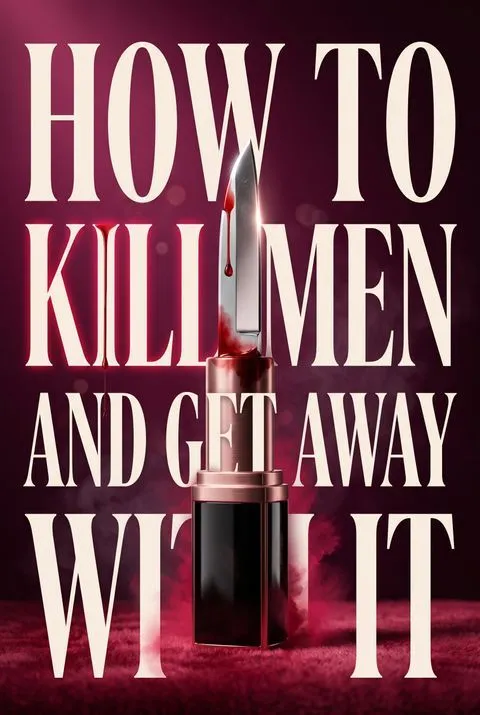


Plot Summary
Prologue
In a Belgravia apartment, the narrator1 straddles a man cuffed to a bed, tightening a crystal-seamed nylon stocking around his throat. She observes his struggle with clinical calm, cataloguing the palette of death: bursting red eyes, blue lips, yellowing skin. She mocks him as he gasps his last words, a plea about his children, then pulls the stocking tight for good.
Asphyxiation, she notes, takes far longer than films suggest. When he stills, she eases his lids shut, admiring how peaceful, almost innocent, he looks. She approves of the bloodless method, recalling that blood ruins good clothing, and thinks of the chilled Montrachet waiting in the next room. Someone, she concedes, was right about how authentic this looks.
The opening weaponizes intimacy and domesticity against the reader, framing murder in the vocabulary of aesthetics, wine, and interior care. Brent establishes her narrator's defining paradox: meticulous emotional detachment fused with sensual connoisseurship of death. The stocking, the cuffs, the staged scene all evoke eroticized violence, inverting the usual gendered script in which women are the strangled. By withholding the victim's identity and the accomplice's name (the ambiguous she), the prologue functions as a narrative promissory note, seeding a mystery the novel will detonate. The chilling flippancy about bloodstains signals the book's tonal engine: comedy braided with atrocity, inviting complicity while daring us to laugh at our own discomfort.
The Influencer's Gilded Void
Kitty Collins1 sells happiness to millions on Instagram, but her Chelsea penthouse, a guilt gift from a mother who fled to France,11 houses a woman who despises the brand she has become. Heiress to the Collins' Cuts meat fortune yet vegan since watching cattle bled in her father's slaughterhouse, she fills empty days with yoga, champagne, and hollow sex.
Then a stalker she nicknames The Creep resurfaces in her direct messages, describing in loving detail how he would cut her throat. Her friend Tor4 urges her to project fearlessness and post provocative photos. Reluctantly, Kitty1 agrees to a girls' night out she loathes, unaware the evening will crack open something feral she has spent years pressing down like a jack-in-the-box.
Brent opens in the register of social satire, mapping influencer culture as a treadmill of manufactured intimacy and dopamine dependency. Kitty's veganism, rooted in childhood trauma at the abattoir, quietly foreshadows her fluency with butchery and her selective moral code. The stalker introduces external threat while dramatizing a universal female condition: surveillance, the keys-between-fingers vigilance the dedication invokes. The gap between Instagram-Kitty and private-Kitty establishes the unreliable, performing narrator whose charm will implicate the reader. Wealth is depicted as insulation and anesthetic, an existential void money cannot fill, priming her hunger for something she will misname as purpose.
The Broken Bottle
Walking home alone after ditching her drunken friends, Kitty1 is ambushed by the property bore who groped her all night, Matthew Berry-Johnson. He seizes her arm, smashes a wine bottle at her feet, and pins her against the embankment wall, threatening to rape her and dump her body in the river. Something long dormant wakes.
She knees him hard and shoves him; he staggers, spins, and falls face-first onto the jagged bottle, which tears open his neck. She watches him bleed out, then steps neatly around the pooling blood and walks home. Police rule it a drunken accident. At his funeral, his girlfriend Hayley eulogizes him with brutal honesty as cruel and violent, confirming Kitty's1 instinct that the world lost nothing worth grieving.
The inciting kill is coded as self-defense, granting Kitty (and the reader) moral cover while planting the seed of appetite. Brent stages the death as accident, preserving Kitty's technical innocence even as her chilling composure, stepping around the blood, betrays something already broken. Hayley's funeral confession retroactively sanctions the violence, introducing the novel's central provocation: that a man mourned publicly can be privately monstrous. The scene dramatizes how rape culture manufactures its own vigilantes, and how easily righteousness can masquerade as bloodlust. Kitty's absence of guilt is the true rupture, the ordinary world she can no longer return to.
Closure for Maisie
When her friend Maisie5 sobs that a man named Joel ghosted her after weeks of intimacy, Kitty1 decides Maisie5 deserves answers. She builds a fake Tinder profile, matches him, and drives to his parents' twee Greenwich house to demand he simply phone Maisie5 and explain. Joel refuses, sneering that Maisie5 was only a hookup, and when Kitty1 grabs his phone he tackles her down.
Panicking, she swings a metal Burj Khalifa souvenir and drives its spire through his eye, killing him instantly. Faced with a corpse, she folds him into a suitcase, snapping bones, and drives to the family abattoir in Hampshire, where she feeds Joel through the mincers by dawn. Days later, The Creep messages that he knows exactly what she did last night.
Kitty's second killing pivots from self-defense to intervention on another woman's behalf, edging her toward vigilantism proper. The abattoir sequence fuses inheritance with identity: she disposes of a man using the very industry that scarred her, transforming trauma into methodology. Brent's black comedy peaks in the grotesque logistics, deflating horror through designer-bag banality. Crucially, Maisie's swift indifference to Joel's disappearance underscores the novel's cynicism about how disposable men can prove and how little anyone notices. The Creep's escalation converts private guilt into external jeopardy, tightening the thriller mechanics beneath the satire.
Kitty Writes Her Code
Rather than haunting her, the killings leave Kitty1 glowing and her follower count surging, and she reasons both men were predators the world is better without. She drafts Kitty's Code, a Dexter-flavored rulebook: never women, never the innocent, only cheaters, liars, and rapists, and never get caught.
Beneath the bravado lie old wounds. Years earlier, celebrated novelist Adam Edwards6 seduced her at twenty-two, then plunged into depression while she nursed him, only for her to discover he was secretly declaring love to a woman named Saskia and using Kitty1 for publicity.
That betrayal hardened into a belief that heartbreak can obliterate a woman. Now she recasts murder as mercy, sparing other women the pillow-soaked nights she once suffered, and makes Tinder her hunting ground.
The chapter formalizes Kitty's self-mythology, exposing vigilantism as psychological defense against her own victimhood. The Adam flashback supplies the origin of her rage: not abstract justice but specific, humiliating betrayal that fused love with annihilation. By codifying rules, Kitty imposes narrative order on chaos, converting compulsion into ideology, precisely the rationalization the novel will later interrogate. Brent lets the reader feel the seduction of the logic while subtly flagging its narcissism (the exception-that-proves-the-rule mockery, the Dexter theft). Adam becomes the ghost animating every subsequent kill, the wound she keeps reopening on strangers.
The Embankment Rescue
Heading home one humid night, Kitty1 spots a barefoot woman hurrying along the embankment, trailed by a man who had ignored her refusals in a bar. Kitty1 crosses over, pretends they are old friends, and bundles the terrified stranger, Claire, into an Uber to safety. Then she circles back to the pursuer.
He shows no flicker of remorse, branding the woman a whore who was asking for it, and steps toward Kitty1 in menace. Her reaction is animal: she slides her expensive Shun knife from her sleeve, opens his throat, and tips him over the wall into the Thames. Unlike the earlier deaths, this one is deliberate, chosen, savored. The half-decapitated body surfaces in Woolwich, and The Creep purrs that he is always watching.
This is Kitty's true crossing of the threshold: premeditated, unprovoked by direct threat to herself, and pleasurable. Brent stages the rescue and the murder as mirror halves of the same impulse, protecting one woman by executing her hunter. The scene interrogates the seductive fantasy of the female avenger while quietly noting its slippage toward pure predation; the man is despicable, but Kitty is now the initiator, not the defender. The Shun knife, an object of aesthetic pride, embodies how she aestheticizes violence. The Creep's omniscience reframes the thriller: someone is authoring her downfall in real time.
The Man Who Sees Her
At a lavish V&A gala honoring music mogul James Pemberton,7 father of Kitty's1 friend Hen,3 she notices a nervous man rehearsing a speech and chewing his thumbnail. Charlie Chambers2 turns out to be no hired underling but the founder of The Refugee Charity, a man who walked away from his father's fortune to help displaced women and children.
Kind, funny, and self-deprecating, he is nothing like the preening peacocks in Kitty's1 circle, and his attention unnerves her because he treats her as layered rather than decorative.
Their budding romance stumbles when Charlie2 clumsily asks her to promote the charity on Instagram, ripping open her Adam6 wound, but his sincere apology wins her back. For the first time in years, Kitty1 craves something ordinary and good.
Charlie functions as the novel's counterweight and moral temptation: proof that intimacy without exploitation is possible, and the one thing that could domesticate Kitty's violence. His refugee work introduces a genuine ethics of care against her performative one, quietly indicting her selective vigilantism. The near-rupture over PR exposes how thoroughly Adam has recalibrated her threat-detection; kindness reads as manipulation. Brent uses the romance to raise the stakes: Kitty now has something to lose, converting future kills into existential gambles. The gala also plants James Pemberton, the patriarchal apex predator whose money buys everyone's silence.
Caught With The Walls Papered
As love with Charlie2 blooms, Kitty1 keeps hunting. She lures Daniel Rose, a newly released rapist, with a fake single-mother profile and doses his drink with GHB, but overdoes it and he dies in her car before she can savor it; she smuggles the remains past her charmed concierge,10 even loading bags into her boot while posing for a selfie with a fan police officer.
Later she abducts serial woman-beater Niall King and butchers him in her hallway, walls papered against blood spatter. Charlie2 arrives mid-kill with flowers.
She fends him off with a lie about a painful waxing session, but he glimpses the papered walls, concludes she is hiding another man, and ends things, refusing half measures. She cannot defend herself without unveiling the monster within.
The double kill accelerates Kitty's recklessness, and the near-miss with Charlie dramatizes the widening chasm between her two lives. Brent extracts dark farce from the concierge and the selfie-taking officer, satirizing how privilege and celebrity render Kitty invisible in plain sight. Charlie's breakup is a tragic irony engine: the truth (murder) would horrify him less believably than the lie (infidelity), yet honesty is impossible. The scene crystallizes the novel's thesis that intimacy demands transparency Kitty cannot survive. Her silence, chosen to protect love, ensures its collapse, foreshadowing the impossibility of reconciling her appetite with her longing.
Blood on the Aegean
Heartbroken and rattled, Kitty1 flees to a Mykonos villa with Tor.4 Their idyll shatters when Tor4 stumbles home at dawn, drugged and raped aboard a yacht called Liberty by three British men, then assaulted a second time while she feigned unconsciousness. Knowing Greek authorities may jail rather than believe a victim, Kitty1 sedates her grieving friend4 and slips out with an ice pick.
On the yacht she kills Theo and Freddie, pilots the boat out to sea, and dumps them, then saws off ringleader Archie's genitals before letting him bleed to death, feeding all three to the Aegean. Back home she covers her tracks with a fabricated miscarriage story, letting Tor4 believe the bloodied dress belonged to private grief rather than triple murder.
The Mykonos massacre is the novel's most unambiguous revenge fantasy, staged against the real-world horror of victims criminalized abroad. Brent leans into catharsis while escalating brutality (the castration marking Kitty's descent into ritualized cruelty). The sequence tests reader complicity: these men are guilty, yet the pleasure is ugly. Kitty's miscarriage lie introduces a deceit that will metastasize, showing how her care for Tor is inseparable from control and concealment. The friendship, genuinely tender, is built on a foundation of protective falsehood, a microcosm of Kitty's entire performed life. Vengeance here is efficient, righteous, and morally corrosive at once.
The Wrong Reynolds Brother
When footballer Raphael Reynolds is exposed sending a fan rape threats, Kitty1 targets him at a nightclub, playing hard-to-get until he insists on escorting her home. She drugs and kills the man in his Chelsea penthouse, savoring the justice, until morning news reveals the real Raphael was arrested in Spain for a bar brawl.
The gentle, boyish man she strangled was Ruben, his eighteen-year-old brother, an innocent house-sitter who had been pretending to be Raphe to impress girls.
The catastrophe collides with a buried truth: at fifteen, Kitty1 bludgeoned her own abusive father to death with an antique vase after he beat her mother,11 and the two women fed him through these same mincers, staging his disappearance. Her justified monster has now slaughtered a blameless boy.
The plot's devastating hinge, this error demolishes Kitty's code and its comforting self-justification. Brent detonates the vigilante fantasy by proving her judgment fallible and her righteousness lethal to the innocent, the exact category her code forbids. The revelation of the father's murder recontextualizes everything: her vigilantism is a repetition compulsion born of adolescent trauma, her mother a co-conspirator, the abattoir a family crypt. Ruben, who cosplayed masculine bravado he hadn't earned, dies for a performance, mirroring Kitty's own life of masks. The kill she cannot rationalize becomes the crack through which guilt, long suppressed, finally floods in.
Pumped Stomach, Second Chance
Ruben's murder becomes a televised manhunt, and Kitty1 collapses into a drugged, sleepless spiral, barricaded in her flat, dreaming of Adam6 and Ruben drowning in blood and fantasizing about slitting her own wrists. She swallows fistfuls of benzodiazepines and vodka until consciousness fails.
Charlie,2 unable to reach her for days, convinces her concierge10 to let him in and finds her near death; her stomach is pumped in an NHS hospital. Believing it a suicide attempt fueled by their breakup and the miscarriage Tor4 mentioned, he moves in to care for her, and they reconcile and fall fully in love.
Kitty1 privately vows to stop killing forever, terrified another mistake could cost her this fragile happiness, even as The Creep taunts that her freedom is ending.
The overdose externalizes Kitty's collapsed self-mythology; without the code's moral scaffolding, the violence turns inward. Brent complicates the suicide question (accident or wish), keeping the narrator unreliable even to herself. Charlie's rescue reframes him as savior and jailer both, his tenderness premised on a false narrative he constructs (depression, miscarriage) because the real story is unthinkable. Their reconciliation offers the possibility of redemption through love, the novel's most hopeful thread, yet it rests entirely on Kitty's concealment. Her vow to stop reads as sincere and doomed, because the reader already senses violence is less her choice than her compulsion.
The Mogul Falls
At Pemberton's7 Eighties-themed party, Kitty1 escapes a bitter row with Hen3 only to be cornered in the soundproofed basement studio by James,7 who gropes her and refuses to let her leave until Hen3 interrupts. Days later, James7 is arrested for decades of sexual assault, and the dam bursts: singers, models, and women abused as girls flood social media under a viral hashtag with harrowing accounts of coercion and rape.
Charlie2 confesses he ignored the rumors because James7 bankrolled his charity, and Kitty1 seethes at the complicity of silence. When the mogul7 is released on bail to a Belgravia hideaway, one of the few places she knows he is hiding, she abandons her promise, sharpening her knives in her mind for a final, monstrous target.
James embodies institutional predation, the powerful man whose wealth converts victims into settlements and whose charity work launders his reputation, precisely the dynamic Charlie admits enabling. Brent widens the lens from individual bad men to the systems that shield them, giving Kitty her most defensible target and her most dangerous temptation. His assault of Kitty makes it personal; the #MeToo deluge makes it political. Charlie's confession implicates even the good man in the economy of silence, deepening the novel's moral murk. Kitty's broken vow marks the tragic recognition that her nature will not be soothed by love while monsters remain unpunished.
Three Keep a Secret
Dressed to seduce, Kitty1 arrives at the Belgravia apartment expecting a willing James,7 but he is baffled: he never sent the luring texts. Hen3 emerges and confesses everything. She is The Creep, having installed spyware on Kitty's1 phone the night of the first kill and watched every murder with envious awe.
Claiming her father raped her from age twelve, Hen3 blackmails Kitty1 into strangling James7 with a stocking, staging a humiliating sex-game death. Then, wine in hand, Hen3 calmly reveals the abuse was fabricated, invented to weaponize Kitty's1 rage, gloating that she too can be sweet and psychotic.
Remembering the proverb that three can keep a secret only if two are dead, Kitty1 tasers Hen3 and feeds her friend through the abattoir mincers as well.
The climax collapses the novel's moral architecture entirely. Hen, the envious mirror-self, exposes vigilantism as manipulable theater and turns Kitty's righteousness into a murder weapon aimed by a liar. The fabricated abuse is Brent's cruelest twist: it retroactively poisons the reader's cathartic approval of the James kill, revealing how easily the language of victimhood can be counterfeited and how Kitty's code depends on trusting testimony she cannot verify. Killing Hen, her closest friend and doppelganger, completes Kitty's isolation and confirms that her lethal instinct now overrides all loyalty. The proverb becomes prophecy; self-preservation, not justice, is her final law.
Epilogue
Six months later, at a Shard New Year's dinner, Kitty1 appears redeemed. She has poured her blood-money fortune into Charlie's2 charity, funding schools, hospitals, and payouts to James's7 victims, and quietly sent Adam6 to a US locked-in-syndrome trial. Surrounded by Tor,4 Maisie,5 and Rupert,9 deeply in love with Charlie,2 she toasts absent Hen,3 whom the world believes has simply withdrawn to grieve.
She tells herself the red beast has been gentled to sleep by love. Then a news bulletin reports two young women found dead near the Chelsea embankment, lured into fake Ubers by a predator. As Charlie2 runs a bath, Kitty1 feels the old thing inside her open one eye and stretch, wide awake.
The coda stages redemption only to revoke it. Kitty's philanthropy genuinely helps, converting stolen fortune into restorative justice and amplifying silenced women, a real good that cannot cleanse how it was funded. Brent refuses catharsis: the reawakened appetite at the new predator's emergence reframes Kitty's violence as addiction, not mission, unresponsive to love or purpose. The fake-Uber killings echo the novel's opening anxieties, suggesting either a copycat or Kitty's relapse, and implicate a culture that keeps manufacturing predators for her to hunt. The final image, the beast opening one eye, denies closure and indicts the reader's own hunger for the sequel of vengeance.
Analysis
Brent's novel is a feminist revenge thriller wearing the costume of a chick-lit comedy, using the influencer milieu to smuggle in serious inquiry about rape culture, class insulation, and the failure of justice systems to protect women. Its central provocation is complicity: the first-person voice is so charming, so funny about atrocity, that readers find themselves cheering executions, then must reckon with what that cheering means. The genius of the structure lies in its calibrated escalation, from arguable self-defense to premeditated slaughter to catastrophic error, which steadily erodes the moral cover the narrator (and reader) rely upon. The killing of an innocent teenager is the hinge that exposes vigilantism as fallible and lethal, and the late revelation that a claim of abuse was fabricated retroactively contaminates the reader's earlier catharsis, brilliantly demonstrating how the vocabulary of victimhood can be counterfeited and weaponized. Kitty1 is a study in trauma-repetition: her adolescent murder of an abusive father, her mother's11 complicity, and Adam's6 betrayal converge into a compulsion she dresses as mission. Wealth functions throughout as anesthetic and armor, buying invisibility for both Kitty1 and the predators she hunts, notably the mogul7 who launders monstrousness through philanthropy. The romance with Charlie2 offers the tantalizing possibility that love might heal, only for the epilogue to reject it: philanthropy and devotion cannot cure what is, finally, an addiction. Brent refuses redemption, ending on the beast opening its eye, a formal indictment of the reader's own appetite for the next round of vengeance. The book asks uncomfortable questions it declines to answer neatly: whether justice outside broken systems is heroism or narcissism, whether female rage is empowerment or pathology, and whether we can enjoy a killer's company without becoming, briefly, her accomplice.
Review Summary
How to Kill Men and Get Away With It received mixed reviews. Many readers enjoyed the dark humor and premise of a female vigilante targeting abusive men. The main character Kitty was polarizing - some found her entertaining, while others disliked her privileged influencer persona. Critics noted plot holes and unrealistic elements. The book was praised for addressing serious themes like sexual assault, though some felt it was heavy-handed. Readers appreciated the twists and pacing, but some found the ending unsatisfying. Overall, it was a divisive but engaging read for many.
Characters
Kitty Collins
Influencer heiress vigilanteA twenty-nine-year-old Chelsea influencer and heiress to the Collins' Cuts meat empire, Kitty performs flawless contentment for millions while privately loathing herself. Vegan since childhood after witnessing slaughterhouse horrors, she is fastidious, sardonic, and hyper-controlled, terrified of eating in front of others yet fearless with a knife. Beneath the designer armor lies profound trauma: an abusive father, a distant mother11, a first love who shattered her6. She channels a dormant savagery into a self-appointed mission against predatory men, dressing compulsion as justice. Witty and observant, she narrates her own atrocities with disarming humor, seducing the reader into complicity. Her deepest longing is not violence but ordinary tenderness, which she fears her nature will never allow her to keep.
Charlie Chambers
Idealistic charity founderThe founder and CEO of The Refugee Charity, Charlie abandoned his wealthy father's finance world to help displaced women and children. Green-eyed, nervous, and self-deprecating, he chews his thumbnail and radiates a warmth alien to Kitty's1 glossy circle. He is genuinely ethical, emotionally open, and refuses half measures in love, though he privately battled depression after his father cut him off. Charlie treats Kitty1 as complex rather than decorative, offering her a vision of intimacy without exploitation. His moral seriousness quietly indicts the compromises around him, and his devotion becomes both Kitty's1 salvation and her impossible test, since loving him fully would require a truth she cannot survive telling.
Hen (Henrietta) Pemberton
Sharp-tongued closest friendDaughter of powerful music mogul James Pemberton7, Hen is Kitty's1 oldest and most acerbic friend, quick with a cruel joke and an unerring instinct for a person's soft spot. She hides an eating disorder, a chaotic love life with a musician, and a corrosive sense of living in others' shadows. Beneath her boho-charity glamour churns resentment, competitiveness, and a hunger for attention she can never quite satisfy. Fiercely capable in a crisis, she is also volatile and wounded, prone to explosive drunken confrontations. Her relationship with Kitty1 is intimate, rivalrous, and layered with envy, a friendship that has always mixed genuine love with something colder and more calculating.
Tor (Victoria)
Loyal glamorous confidanteAdopted as a baby by a celebrity UN ambassador, Tor is Kitty's1 steadiest friend: warm, loud, spiritually inclined, and unashamedly sexual. Beautiful and beloved, she carries private insecurities about being a PR-stunt daughter and about being a Black woman navigating Chelsea's whiteness. Generous and intuitive, she senses Kitty's1 hidden pain more than the others, offering hugs, cord-cutting rituals, and unconditional loyalty. A traumatic ordeal tests her resilience and deepens the friendship's intensity.
Maisie
Romantic, fragile friendA former flatmate and heiress raised among supermodels and superyachts, Maisie is the group's incurable romantic, tumbling in and out of love with dramatic intensity. Sweet, trusting, and easily wounded, she treats minor crises as emergencies and rebounds with startling speed. Her heartbreaks and infatuations repeatedly pull Kitty1 into action, and her openness makes her both endearing and, in Kitty's1 protective eyes, achingly vulnerable to men who exploit her.
Adam Edwards
Kitty's ruinous first loveA darkly charismatic, prize-winning novelist who seduced Kitty1 at twenty-two with borrowed literary quotations and intense passion. Brilliant, magnetic, and afflicted by crippling depression, Adam swung between adoration and cold withdrawal, and ultimately betrayed her while she nursed him through his lowest ebb. He embodies the wound that calcified Kitty's1 belief that heartbreak can destroy a woman, haunting her every subsequent judgment of men and love.
James Pemberton
Powerful music mogulHen's3 father, a hugely wealthy record-label founder famed for lavish parties and philanthropy, and a patron of Charlie's2 charity. Charming and commanding in public, he is grasping, entitled, and dangerous in private, a man who treats women as commodities and trusts money to erase consequences. A surrogate father figure to Kitty1 since childhood, he represents institutional predation and the culture of silence that shields powerful men.
Ben
Hen's misogynist brotherHen's3 preening brother, a would-be male model who leers, brays, and dispenses casual misogyny while imagining himself irresistible. He embodies the entitled Chelsea men Kitty1 despises.
Rupert
Maisie's posh boyfriendA Harvard-and-Oxford, red-trousered boyfriend of Maisie's5, initially dismissed by Kitty1 as a Blow-Dry in Red Trousers. Gentle and slightly hapless, he surprises everyone by proving genuinely kind and devoted.
Rehan
Kind building conciergeA warm, hardworking concierge at Kitty's1 apartment building who sends his earnings home to daughters in Pakistan. He adores Kitty1, who repays him with gifts, and his trusting presence proves darkly convenient to her secret activities.
Kitty's mother
Distant, absent parentA once-glamorous beauty who married into the meat fortune and endured her husband's cruelty, retreating into migraines and absences before fleeing to the South of France. Loving but remote, she shares an unspoken bond of terrible secrets with her daughter1.
Plot Devices
The Abattoir Mincers
Grisly inherited disposal methodThe Collins' Cuts slaughterhouse in Hampshire, where pigs are bled and ground into reformed meat, becomes Kitty's1 body-disposal engine. Its recurrence transforms her family inheritance into her crime infrastructure, literalizing the theme that violence runs in her bloodline. The device fuses horror with mordant comedy (victims reappearing as supermarket sausages) and ties her present killings to a foundational family secret. Because she grew up desensitized to the mechanized death of animals, the abattoir explains both her fluency with butchery and her selective conscience: she can process human bodies with the same detachment her father processed livestock. Each return to the factory marks an escalation, and the machine ultimately consumes people far closer to her than strangers.
The Creep's Messages
Menacing surveillance threadAn anonymous stalker floods Kitty's1 Instagram with violent, threatening messages, escalating from generic menace to eerily specific knowledge of her crimes, including photos taken from inside private events. The device sustains dread and dramatic irony throughout: the reader knows someone is watching Kitty1 commit murder, yet the watcher never reports her. It converts Kitty1 from predator to prey, destabilizing her sense of control and mirroring the surveillance every woman endures. The stalker's impossible access, tracking her through parties, holidays, and killings, seeds a central mystery whose eventual solution reframes the entire narrative and detonates a betrayal at the heart of Kitty's1 inner circle.
Kitty's Code
Vigilante moral rulebookAfter her early kills, Kitty1 writes a numbered ethical code, explicitly borrowed from Dexter: no women, no innocents, no vulnerable people, spare doormen and police, killing must serve a purpose, and never get caught. The device gives her compulsion the shape of a mission and offers the reader a framework for complicity, making the murders feel like justice rather than psychopathy. It also functions as dramatic setup: the moment Kitty1 violates her own rules, the code collapses and her self-justification crumbles. Brent uses it to interrogate the seductive logic of vigilantism, exposing how a righteous framework depends entirely on infallible judgment the human wielding it cannot possess.
The Influencer Facade
Performance masking the selfKitty's1 Instagram presence, curated smiles, hashtags, sponsored teas, bikini shots, is a mask she despises yet cannot abandon, dependent on the dopamine of likes. The device structures the novel's satire of digital culture and doubles as thematic mirror for Kitty's1 whole existence: everything is staged, from her brand to her cover stories to her seductions of targets. Her fame renders her paradoxically invisible, letting her hide crimes behind celebrity charm and adoring fans, including a selfie-seeking police officer. Social media also drives plot, exposing predators for her to hunt and providing the channel through which her stalker torments her. The gap between performed and private self is the book's psychological engine.
The Framing Prologue
Withheld-identity opening hookThe novel opens mid-murder, with the narrator1 strangling a cuffed man and alluding to a shadowy she who approved the staging. By concealing both victim and accomplice, the prologue creates a deferred-recognition hook that the climax pays off, recontextualizing the scene once the reader learns who is being killed and who orchestrated it. The device establishes tone (glamorous, clinical, comic-horrific) and narrative unreliability from the first page, and its eventual placement in the timeline reveals the depth of a betrayal within Kitty's1 circle. It exemplifies Brent's structural playfulness, letting the reader unknowingly witness the story's darkest turning point before understanding its stakes.
FAQ
Synopsis & Basic Details
What is How to Kill Men and Get Away With It about?
- Influencer embraces dark vigilante: The novel follows Kitty Collins, a wealthy London social media influencer who discovers a disturbing sense of empowerment after accidentally killing a man who threatened her. This event awakens a dormant darkness, leading her to target predatory men who have evaded legal consequences.
- Balancing public persona and secret life: Kitty maintains her glamorous online presence while secretly using dating apps and other means to identify and eliminate men she deems harmful, navigating the risks of exposure and the psychological toll of her actions.
- Journey through trauma and seeking purpose: Fueled by past trauma, including witnessing violence and experiencing betrayal, Kitty seeks a twisted form of justice and purpose beyond the superficiality of her influencer world, exploring themes of revenge, privilege, and the flaws in the justice system.
- Navigating threats and complex relationships: As Kitty continues her mission, she faces threats from a mysterious stalker who seems to know her secrets and grapples with the complexities of genuine connection when she meets Charlie, a man who challenges her worldview.
Why should I read How to Kill Men and Get Away With It?
- Unique blend of dark humor and social satire: The book offers a sharp, often darkly funny commentary on influencer culture, wealth, and modern dating, juxtaposing superficiality with brutal violence and psychological depth.
- Compelling, morally ambiguous protagonist: Kitty is a complex character whose internal monologue is both witty and disturbing, forcing readers to confront uncomfortable questions about justice, trauma, and what happens when victims take extreme control.
- Twisty plot with unexpected turns: The narrative keeps you guessing with surprising reveals, particularly regarding the stalker's identity and the consequences of Kitty's actions, making for a fast-paced and engaging read.
What is the background of How to Kill Men and Get Away With It?
- Inspired by #MeToo and social commentary: Author Katy Brent mentions in her letter that the seed was planted by watching "Made in Chelsea" and wondering about a character going "Patrick Bateman," but the concept evolved with the #MeToo movement, exploring women snapping back against male abusers.
- Author's journalism background informs style: Brent's fifteen years in journalism, including television journalism, likely contribute to the novel's sharp, observational tone, fast pacing, and ability to weave in contemporary cultural references and news-like reports.
- Exploration of privilege and London society: The setting in affluent Chelsea and the portrayal of the characters' privileged lives provide a specific social context, highlighting how wealth and status intersect with personal trauma and the ability to operate outside conventional systems.
What are the most memorable quotes in How to Kill Men and Get Away With It?
- "This is for every woman who has ever walked home with her keys between her fingers.": This dedication sets the tone, immediately establishing the novel's core theme of female vulnerability and the pervasive fear of male violence, which Kitty's actions directly confront.
- "The colour palette of death is really rather pretty.": Spoken by Kitty in the prologue, this chilling line reveals her detached, almost aesthetic appreciation for the physical process of death, underscoring her disturbing psychological shift and lack of immediate remorse.
- "Money can't buy class.": Kitty's internal thought about Raphe Reynolds, this quote, while seemingly superficial, reflects her deeper judgment of men who possess wealth and power but lack empathy or respect, connecting to the theme of how privilege often masks moral corruption.
What writing style, narrative choices, and literary techniques does Katy Brent use?
- First-person, conversational, and darkly humorous: The novel is told entirely from Kitty's perspective, using a witty, informal, and often sarcastic tone that draws the reader into her mindset, even as she describes horrific acts with unsettling casualness.
- Heavy use of pop culture references and brand names: The narrative is saturated with mentions of social media platforms, celebrities, fashion brands, and reality TV, grounding the story in contemporary influencer culture and highlighting the superficial world Kitty inhabits and critiques.
- Juxtaposition and irony as key devices: Brent constantly contrasts the glamorous, privileged setting and Kitty's public persona with the brutal reality of her secret life, using irony to underscore the hypocrisy and darkness beneath the polished surface.
Hidden Details & Subtle Connections
What are some minor details that add significant meaning?
- Rehan's consistent kindness and gifts: The concierge Rehan's genuine warmth, protective attitude ("you the princess in my tower for me to protect"), and gifts for his daughters stand in stark contrast to the predatory men Kitty targets, highlighting the rare instances of simple human goodness she encounters and values.
- The specific details of the abattoir visit: Kitty's vivid, visceral memory of the cow being "stuck" and her subsequent vomiting ("the metallic smell of cow blood so potent, it filled my mouth") is a foundational trauma, explaining her veganism and foreshadowing her later use of the abattoir for disposal, linking her family's "blood money" to literal blood.
- The Burj Khalifa sculpture as a murder weapon: This tacky souvenir, initially just part of Joel's parents' "travel tat," becoming the instrument of his death is darkly ironic and symbolic, turning a symbol of aspirational wealth and global reach into a tool of brutal, localized justice.
What are some subtle foreshadowing and callbacks?
- The dedication "keys between her fingers": This common symbol of female self-protection is immediately subverted by Kitty's internal preference for a "serrated hunting knife and a syringe of GHB," foreshadowing her extreme methods compared to typical female safety measures.
- Kitty's childhood axe incident: The anecdote about Kitty wanting to attack a lad's mag office with an axe ("Kitty and the Axe") foreshadows her later violent tendencies and her friends' awareness of her capacity for extreme anger, hinting that her darkness wasn't entirely new.
- Adam's comment about his head being the "scariest place": This seemingly throwaway line during his depression foreshadows his later state of locked-in syndrome, where he is literally trapped within his own mind, making his fate a twisted fulfillment of his earlier fear.
What are some unexpected character connections?
- Hen as "The Creep" stalker: The reveal that Kitty's seemingly supportive friend Hen is the anonymous online stalker ("I'm your stalker, Kitty. The Creep. It was me the whole time") is a major twist, transforming their friendship dynamic and revealing Hen's deep-seated jealousy and manipulative nature.
- James Pemberton's connection to Kitty's father: James being a friend of Kitty's missing father ("Your dad always told me to look after you if anything happened to him") adds a layer of disturbing irony to his later predatory actions towards Kitty, linking her past trauma directly to her present target.
- Adam's connection to Hen's mother: Kitty's casual mention of not gelling with Hen's mum because she caught her dad "shagging over a pool table" with her ("I guess you don't gel with women you catch your dad shagging over a pool table") subtly links the two families' hidden dysfunctions and provides a potential source for Hen's later bitterness and actions.
Who are the most significant supporting characters?
- Tor: As Kitty's most consistently supportive and emotionally intelligent friend, Tor provides a moral anchor and a stark contrast to Kitty's darkness. Her own trauma later in the book becomes a direct catalyst for Kitty's actions, highlighting the depth of their bond and the cycle of violence/revenge.
- Charlie Chambers: Representing the possibility of genuine connection and normalcy, Charlie challenges Kitty's cynical view of men and offers a path towards redemption. His presence forces Kitty to confront her desire for a different life, making their relationship central to her internal conflict and potential transformation.
- Hen: Initially appearing as a typical friend, Hen's reveal as the stalker and her subsequent confession expose the hidden resentments and trauma beneath the surface of their privileged lives, making her a pivotal antagonist whose actions drive much of the later plot and force Kitty to confront uncomfortable truths about herself and her friendships.
- James Pemberton: As the embodiment of the powerful, abusive men Kitty targets, James serves as the ultimate villain. His history of predation, particularly towards young women and his own daughter (as Hen claims), justifies Kitty's final act in her own twisted moral code, bringing the themes of patriarchal abuse and vigilante justice to a head.
Psychological, Emotional, & Relational Analysis
What are some unspoken motivations of the characters?
- Kitty's need for control: Beyond justice, Kitty's meticulous planning and enjoyment of the "performance" of killing ("I'd have liked to have been an actress") suggest a deep-seated need for control, stemming from her childhood helplessness witnessing her mother's abuse and her own past experiences of being powerless (Adam's betrayal, stalker threat).
- Hen's desire for validation and recognition: Hen's stalking and manipulation, culminating in her orchestrating her father's death, are driven by a desperate need to be seen and acknowledged, particularly by her father and by Kitty, whom she resents for seemingly effortless popularity and attention ("Even my dad wants you. I feel like I'm invisible to him").
- Charlie's underlying need to "save" Kitty: While presented as genuine love, Charlie's immediate assumption that Kitty's overdose was a suicide attempt ("You tried to kill yourself") and his insistence on moving in to care for her suggest a potential "white knight" complex, possibly linked to his own past depression and desire to make a difference ("I guess I've always been a bit 'worthy'").
What psychological complexities do the characters exhibit?
- Kitty's dissociative coping mechanisms: Kitty often describes her actions and feelings with a disturbing detachment ("The colour palette of death is really rather pretty," "I'm going to enjoy watching him go through the grinders"), suggesting a form of dissociation or emotional numbing as a way to process trauma and justify her violence.
- Hen's complex trauma response: Hen's alleged history of abuse by her father manifests as extreme jealousy, manipulative behavior, substance abuse ("Coke Diet Break"), and a distorted sense of reality, culminating in her shocking lie about the abuse to manipulate Kitty, showcasing the devastating and unpredictable long-term effects of trauma.
- Charlie's struggle with his privileged background and empathy: Charlie grapples with the guilt of his family's wealth and his father's lack of empathy ("My dad doesn't think so, sadly... I don't need all the money my family were offering. It doesn't make me happy"), seeking purpose through charity work and demonstrating a genuine capacity for compassion that contrasts with the toxic masculinity Kitty is used to.
What are the major emotional turning points?
- The first accidental kill (Matthew Berry-Johnson): This event is the initial turning point, transforming Kitty's fear into empowerment and awakening her "dark side," setting her on the path of vigilantism ("I can't feel any remorse. In fact, it's the opposite. Because of me, one fewer woman will lie awake at night wondering what she did wrong").
- Tor's rape in Mykonos: Tor's horrific experience is a pivotal emotional catalyst for Kitty, shifting her focus from targeting general predators to seeking direct revenge for someone she loves, leading to the brutal kills on the yacht and highlighting the personal stakes of her mission.
- The accidental killing of Ruben Reynolds: This is the most significant turning point for Kitty's internal state, triggering intense guilt, a severe breakdown, and a period of self-destructive behavior ("I've killed the wrong man. And not just a man. A fucking kid"), forcing her to confront the devastating consequences of her actions when they are not "justified" by her code.
How do relationship dynamics evolve?
- **Kitty and her friends (
Download PDF
Download EPUB
.epub digital book format is ideal for reading ebooks on phones, tablets, and e-readers.








































