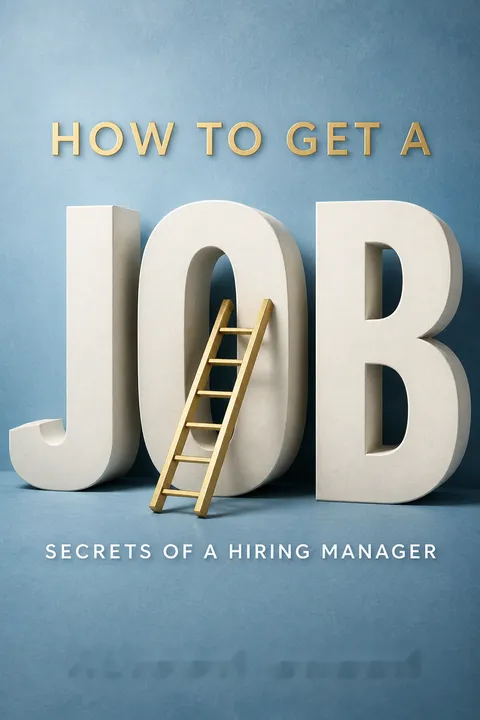

Key Takeaways
1. Adopt a Mutual Match Mindset
The wiser goal is to focus on learning whether you're a mutual match — emphasis on mutual.
Shift your perspective. Many job-seekers approach the process feeling helpless and solely focused on being "chosen." Instead, view it as a two-way street, like dating, where both parties are evaluating compatibility. Your primary goal isn't just to secure any offer, but to find a role where you can genuinely thrive and be happy, ensuring a good quality of life beyond the initial hire.
Assert your value. Recognize that you are a businessperson contemplating a relationship with another businessperson. This means shedding deference and acting with professional assertiveness. For example, if an employer is vague about timelines, it's businesslike to ask for clarity, rather than passively waiting and feeling frustrated. This mindset not only reduces stress but also signals to employers that you respect your own time and are a confident, capable colleague.
Avoid self-sabotage. Many candidates inadvertently harm their chances by underestimating themselves or being overly passive. This includes not applying for jobs they could get, failing to follow up, downplaying their strengths, or neglecting to show genuine enthusiasm. Remember to actively showcase your fit, express interest, and overcome perfectionism that delays action, while also ensuring the job aligns with your needs.
2. Craft a Compelling Resume & Cover Letter
For each position, they answer the question: What did you accomplish in this job that someone else wouldn’t have?
Showcase accomplishments, not duties. Your resume is a marketing document, not a job description. Instead of merely listing responsibilities, highlight quantifiable achievements and unique contributions that demonstrate your excellence. Think about what made you stand out in previous roles and how you exceeded expectations. This approach helps hiring managers envision your potential impact.
Optimize resume structure. Discard outdated rules like the one-page limit (two pages are generally fine for experienced professionals). Avoid objectives, which are often generic and take up valuable space. Focus on a clear, chronological format that emphasizes your professional journey.
- Leave off: Objectives, high school details (if past a few years), extra unsolicited documentation, subjective descriptions ("great leadership skills"), and photos (in the U.S.).
- Convert to PDF: Ensures formatting consistency across different viewing systems.
Personalize your cover letter. This is your opportunity to make a compelling case for this specific job at this specific company. Don't just summarize your resume; explain why you want this particular role and why you'd excel in it, drawing connections that aren't obvious from your resume alone. A well-tailored letter demonstrates genuine interest and attention to detail, immediately elevating your application above the generic submissions.
3. Master the Interview as a Two-Way Conversation
The best interviews I’ve ever done are the ones that felt like a two-way conversation, where the candidate and I had an honest conversation about the needs of the role.
Prepare thoroughly and authentically. Success in an interview hinges on preparation. Research the employer's mission, clients, and culture, and deeply understand the job description. Practice answering common questions out loud until your responses flow naturally, focusing on examples that highlight your skills and accomplishments. This preparation reduces nerves and allows your genuine professional self to shine through.
Engage in mutual assessment. An interview is not an interrogation; it's a dialogue where both sides evaluate fit. Be ready to ask insightful questions about the role, team, and management style. This demonstrates your critical thinking and genuine interest in finding the right environment. Remember, you're also interviewing them to determine if this is a place where you can be happy and successful.
Handle tough questions gracefully. Be prepared for common questions like "Tell me about yourself" (professional overview), "Where do you see yourself in five years?" (career progression, not specific titles), and "Why did you leave your last job?" (focus on new challenges, avoid badmouthing). When discussing weaknesses, be honest about an area you're actively improving, rather than offering a disguised strength. If fired, take responsibility, explain what you learned, and keep it brief and calm.
4. Navigate Post-Interview Follow-Up Strategically
A thank-you note isn’t really about “manners”; rather, it’s about signaling interest.
Send a thoughtful thank-you note. This is a crucial step often overlooked by the majority of candidates. A personalized thank-you note, sent via email for speed, reinforces your enthusiasm for the position and allows you to reiterate key points or provide additional information. It signals that you've reflected on the conversation and remain genuinely interested, which can be a deciding factor between equally strong candidates.
Communicate proactively, not desperately. While enthusiasm is attractive, desperation is not. It's perfectly acceptable to follow up politely if a promised timeline passes or to express continued interest. However, avoid excessive calls or emails, or sounding like you'll take any job. The key is to convey confidence in your options while highlighting your specific interest in this opportunity.
Manage timelines effectively. Always ask about the employer's hiring timeline during the interview. If you have external constraints, such as another job offer, communicate this clearly and professionally. A reasonable employer will appreciate your transparency and may expedite their process if they are genuinely interested. If they cannot accommodate, you'll have the information needed to make an informed decision.
5. Leverage References Effectively
Your references should be people who will speak glowingly about your work.
Choose strong, professional advocates. Your references should ideally be past managers who can provide enthusiastic, detailed accounts of your work performance. Avoid listing only peers or personal contacts unless specifically requested, as this can raise questions about your relationship with former supervisors. Always seek permission from your references before providing their contact information, ensuring they are prepared and willing to speak positively on your behalf.
Prepare your references. Give your references a heads-up when they might receive calls, especially for specific positions. Provide them with your resume and the job description so they can tailor their feedback to the role. Make it easy for them by providing accurate contact information and a clear understanding of your connection to each person. This ensures they are fresh in mind and can speak effectively about your qualifications.
Address potential issues proactively. If you anticipate a less-than-stellar reference from a previous employer, don't ignore it.
- Attempt resolution: Contact the former boss to discuss concerns or reach an agreement on what will be said.
- Involve HR: If the reference is factually inaccurate, escalate to HR.
- Warn prospective employers: If all else fails, provide context to new employers before they call, explaining the situation and offering alternative contacts or performance reviews.
6. Handle Job Offers and Salary Negotiations Wisely
Always, always, always get every detail of a job offer in writing, if you want those details to be respected.
Secure the offer in writing. Never accept a job offer based solely on verbal agreements. Insist on a written offer detailing salary, benefits, start date, and any other agreed-upon terms. This protects you from misunderstandings or changes in conditions after you've committed, providing a clear record of the agreement.
Ask clarifying questions and negotiate. Once you have a written offer, take time to review it thoroughly. This is your last chance to ask any lingering questions about the role, team, or company culture. It's also the appropriate time to negotiate salary or other terms. Many employers have room in their budget and expect candidates to negotiate, so don't leave money on the table by not asking.
Manage multiple offers and declines professionally. If you're juggling multiple offers, communicate transparently with companies about your timelines. Ask for a reasonable amount of time (a few days to a week) to consider an offer. If you decide to decline, do so promptly and professionally, offering a specific reason if you're comfortable sharing it. Never accept an offer with the intention of backing out later, as this can damage your professional reputation.
7. Address Specific Job Search Scenarios Proactively
If you can successfully put these doubts to rest, many hiring managers will be thrilled to hire your overqualified self.
Overqualified? Explain your motivation. When you're overqualified, employers worry about boredom, salary expectations, and short tenure. Address these concerns directly in your cover letter and interview. Explain why you're interested in a lower-level role, perhaps due to a career change, desire for less responsibility, or a strong passion for the company's mission. Frame your experience as a benefit, not a liability.
Under-qualified? Make a compelling case. Job ad qualifications are often wish lists. If you're a strong match but lack a specific requirement, apply anyway. Your cover letter must acknowledge the gap and explain how your transferable skills, enthusiasm, and quick learning ability will compensate. Research the company extensively and demonstrate how your unique experiences align with their needs, even if not a perfect one-to-one match.
Recent grads: Focus and build experience. For recent graduates, concentrate your job search and prioritize quality over quantity in applications. Ensure your resume highlights internships, volunteer work, and relevant projects over extensive academic details. Actively network, consider temping or volunteering to gain experience, and be open to entry-level roles that allow you to learn and grow.
8. Build and Utilize Your Network (and Volunteer)
By volunteering, you become a known quantity.
Connections are helpful, not essential. While many jobs are secured through traditional applications, networking can significantly ease the process. Leverage platforms like LinkedIn to identify connections through your existing contacts. Don't hesitate to reach out to former colleagues, mentors, or even friends and family for advice or introductions. Most people are willing to help if asked politely and directly.
Volunteer strategically. Volunteering is an excellent way to gain relevant experience, expand your professional network, and demonstrate your skills, especially if you're a recent grad, changing careers, or under-qualified. Treat volunteer work with the same professionalism as a paid job. Becoming a "known quantity" through consistent, high-quality volunteer contributions can give you a significant advantage over unknown candidates.
Use connections effectively. The most impactful way to use a connection is to have them directly recommend you to the hiring manager, ideally by forwarding your resume and explaining why you'd be a good fit. If they offer a direct contact, it's fine to politely ask if they'd be willing to make the introduction themselves. This personal endorsement carries more weight than a cold application.
9. Read the Company for Red Flags
As a candidate, you can learn a ton about a prospective employer by watching how they handle little things during the hiring process.
Observe their professionalism and decisiveness. Pay close attention to how the company conducts its hiring process. Are they organized and reliable, or flaky and inconsistent with communication or timelines? Do they make decisions efficiently, or does the process drag on with endless interviews? Inconsistent or prolonged processes can signal disorganization or indecisiveness within the company, which may reflect the work environment.
Assess their consideration and candor. Note how you are treated throughout the process. Are interviewers considerate of your time and schedule, or do they make unreasonable demands without apology? Do they seem genuinely friendly and welcoming, or dismissive? Smart employers are candid about both the upsides and downsides of a role, seeking a true match. Beware of those who only "sell" the job, as they may be hiding less attractive realities.
Investigate turnover and culture. Ask direct questions about why the previous person left the role and the tenure of others in the department. High turnover can be a red flag, indicating a problematic work environment, while zero turnover might suggest a reluctance to address underperformance. Inquire about the company culture and management style to determine if it aligns with your preferences. Your manager's impact on your daily life is immense, so gather as much insight as possible.
10. Embrace Rejection as Part of the Process
When the job market is like it is now and you’re a strong candidate who’s not getting offers, it’s not you. It’s the market.
Rejection is not a measure of your worth. In a competitive job market, even highly qualified candidates face rejection. It's crucial to internalize that rejection is often not personal; it simply means another candidate was a slightly better fit, or the company had limited slots for many strong applicants. Avoid self-blame and maintain perspective on your value.
Don't over-interpret vague responses. Phrases like "we'll keep your resume on file" rarely mean anything concrete. Similarly, a job being reposted after your interview doesn't necessarily mean you were unsuitable; it could be due to internal changes or their chosen candidate falling through. Avoid driving yourself crazy trying to read tea leaves; focus on what you can control.
Turn rejection into potential opportunity. If a position you applied for is reposted after you were rejected, there's no harm in reapplying and reiterating your interest. Circumstances may have changed, and they might be open to reconsidering you. When you do, acknowledge your previous application and express continued enthusiasm. This proactive approach can sometimes turn a past "no" into a future "yes."
People Also Read






Download PDF
Download EPUB
.epub digital book format is ideal for reading ebooks on phones, tablets, and e-readers.








































