
Plot Summary
Witnessed in the Shadows
Zara, a quiet, anxious fourteen-year-old, stumbles upon a brutal murder while walking home from school. The victim is Jamie, a homeless man she knows from her volunteer work. The trauma of witnessing the crime is compounded by her sense of duty—she is the only one who saw what happened. This moment fractures her world, setting in motion a chain of events that will test her family's bonds, her own sense of right and wrong, and the limits of the justice system. The ordinary becomes extraordinary as Zara's life is thrust into the harsh glare of danger, secrecy, and moral ambiguity.
The Lie That Unravels
Zara's testimony is pivotal in the trial of two promising young footballers accused of Jamie's murder. Under pressure, she lies about the sequence of events, omitting that Jamie attacked first. Her intention is to secure justice for Jamie, whom she believes was wronged by society and the system. But the lie is exposed under cross-examination, unraveling the prosecution's case and leading to the boys' acquittal. The fallout is immediate and devastating: Zara's identity as "Girl A" is leaked online, and a wave of public outrage and threats descends upon her and her family, shattering any illusion of safety.
Family Under Siege
Lauren, Zara's mother, and Aidan, her stepfather, struggle to protect Zara as the media and an online mob turn their lives upside down. The family becomes the target of a relentless campaign of harassment, both digital and physical. Their home is no longer a sanctuary; every knock at the door, every shadow on the street, is a potential threat. The family's unity is tested as each member copes differently—Lauren with fierce maternal love, Aidan with anxious pragmatism, and Zara with guilt and isolation. The siege is not just external but internal, as trust and hope begin to erode.
Anonymity Shattered
The promise of anonymity for Zara is broken when her name and photo are leaked by a vigilante group obsessed with "justice" for the acquitted footballers. The group's digital witch hunt quickly escalates into real-world danger, culminating in a failed abduction attempt on Zara. The family's sense of reality is warped by the constant threat, and the police are unable to offer more than temporary, visible protection. The digital age's power to destroy privacy and safety becomes terrifyingly clear, as the family realizes that hiding is no longer enough—they must disappear.
The Threat Grows Closer
Despite police surveillance, the threats intensify. The family's home is invaded, their dog threatened, and a chilling warning is delivered in person. The authorities issue an Osman warning—a formal notice of a credible threat to life. The family is forced to confront the reality that the law cannot protect them from a determined, anonymous enemy. The psychological toll mounts: Lauren's optimism falters, Aidan's anxiety deepens, and Zara's guilt festers. The family must make an impossible choice: stay and risk death, or abandon everything for the hope of safety.
Into Hiding, Into Fear
The family enters witness protection, adopting new names, histories, and locations. Lauren becomes Lindsey, Zara becomes Sienna, and they are relocated to a remote northern town. Aidan, torn between his loyalty to Lauren and his responsibility to his biological daughter Poppy, chooses to stay behind. The separation is agonizing, and the rules of protection are absolute: no contact, no digital traces, no mistakes. The process is dehumanizing, stripping away identity, relationships, and the comforts of home. Yet, even in hiding, the fear persists—can they ever truly disappear?
The Cost of Protection
Life in witness protection is a daily struggle with loneliness, paranoia, and the loss of self. Lauren and Zara grapple with their new identities, unable to confide in anyone or form genuine connections. Lauren's attempts to build a new life are undermined by her grief for Aidan and the impossibility of moving on. Zara, desperate for belonging, risks exposure by seeking friendship and, eventually, love. The psychological cost is immense: the family's sacrifices are not just material but existential. The past haunts them, and the future is uncertain.
Fractures and Sacrifices
Aidan's decision to stay in London to care for Poppy fractures the family further. Poppy, already burdened by her mother's illness, is traumatized by the loss of her stepfamily and the violence that follows. The novel explores the complexities of blended families—how love, loyalty, and obligation are never simple. Each character is forced to make sacrifices: Aidan gives up his marriage, Lauren her sense of self, Zara her innocence, and Poppy her trust. The emotional fallout is as devastating as the physical danger, revealing the limits of what any one person can bear.
Digital Footprints, Real Dangers
The family's digital past becomes a weapon for their enemies. Social media, once a source of connection, is now a liability. Aidan, leveraging his IT skills, infiltrates the vigilante group online, feeding them false leads while gathering evidence for the police. The tension between visibility and invisibility is constant: every photo, every message, every online interaction is a potential breach. The novel interrogates the double-edged sword of technology—its capacity to both endanger and empower, to expose and to shield.
Love and Loneliness in Exile
Despite the rules, Lauren and Aidan cannot resist clandestine contact through burner phones. Their love, tested by distance and danger, becomes a lifeline for both. Zara, too, finds solace in a new friendship—and the stirrings of first love—with Dom, a boy in her new town. These connections are fraught with risk but are also essential for survival. The novel explores the human need for intimacy, even when it endangers everything. Love, in its many forms, is both a vulnerability and a source of strength.
The Trap Is Set
Aidan's undercover work within the vigilante group culminates in a plan to entrap them with the help of a sympathetic police officer, Lottie. As the group closes in on Lauren and Zara's new location, Aidan races against time to gather enough evidence for arrests. But betrayal and miscommunication lead to disaster: Poppy, under duress, reveals Lauren and Zara's address to the group, believing the police will intervene in time. The tension is unbearable as the family's fate hangs in the balance, and the consequences of every choice become starkly clear.
Betrayal and Fire
The vigilante group attacks Lauren and Zara's home, setting it ablaze in a calculated act of vengeance. Aidan, frantic and helpless, arrives too late. He is told that Lauren and Zara have died in the fire, their bodies unrecognizable. The family and the reader are plunged into grief and shock. The justice system, once again, fails to deliver closure: the arsonists evade conviction, and the wider conspiracy remains only partially exposed. The cost of truth, of doing the right thing, is revealed to be almost unbearable.
Ashes and Aftermath
In the aftermath, Aidan and Poppy struggle to rebuild their lives amid overwhelming loss. The legal system grinds on, with Zara's testimony—recorded before her "death"—becoming the linchpin in a new trial against the football club and its enablers. The novel lingers in the space between hope and despair, exploring how survivors carry on when justice is partial and wounds are deep. The family's sacrifices are honored, but the scars remain. The story seems to end in tragedy, with love and truth unable to overcome violence and hate.
The Truth Survives
In a stunning reversal, it is revealed that Lauren and Zara survived—their deaths faked by the protection service as a last resort to keep them safe. Months later, with the vigilante group dismantled and the perpetrators convicted, Lauren reaches out to Aidan. The family is given a second chance at life, love, and belonging. The novel ends not with perfect justice or restoration, but with the hard-won possibility of healing. The truth, though battered, endures—and so does hope.
Analysis
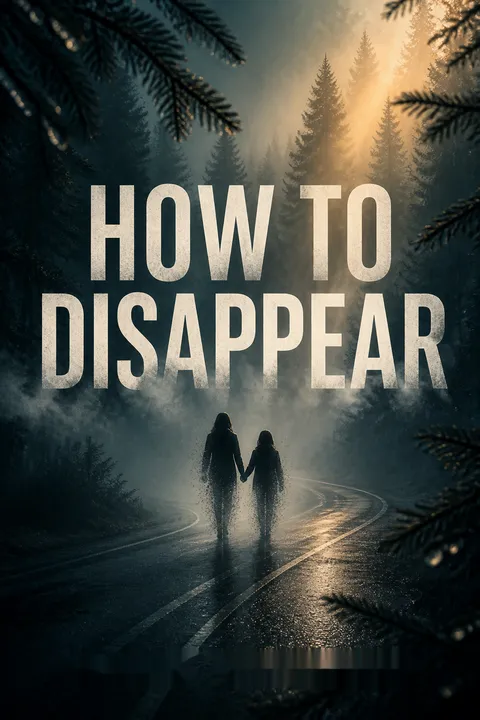
"How to Disappear" is a gripping, emotionally charged exploration of the costs of truth, the fragility of safety, and the enduring power of love and identity in the digital age. Gillian McAllister's novel interrogates the myth of perfect justice, revealing how systems designed to protect can fail—and how ordinary people must navigate impossible choices when the law is not enough. The story's structure, with its shifting perspectives and relentless escalation, immerses the reader in the psychological reality of living under siege, both from external threats and internal doubts. The novel is especially resonant in a world where privacy is increasingly elusive, and where online outrage can have deadly real-world consequences. At its core, the book is a meditation on what it means to belong—to a family, to oneself, to a community—and how those bonds can be both a source of vulnerability and the ultimate means of survival. The final twist, revealing survival and the possibility of reunion, is not a facile happy ending but a testament to resilience, adaptation, and the stubborn persistence of hope. In a time of uncertainty and fear, "How to Disappear" offers a nuanced, compassionate vision of what it takes to endure, to forgive, and to begin again.
Review Summary
How to Disappear is a psychological thriller receiving an overall 4/5 rating. Most reviewers praised its gripping tension, emotional depth, and compelling exploration of witness protection's impact on a blended family. Characters were generally considered believable and relatable, with the multi-perspective storytelling widely appreciated. Common criticisms included characters making frustratingly unrealistic decisions, particularly regarding breaking protection rules, and occasionally slow pacing. The unexpected ending divided readers, with most finding it satisfying. The audiobook narration by Nicola Walker received specific praise.
People Also Read




Characters
Lauren Starling
Lauren is the emotional heart of the novel—a fiercely loving mother whose optimism and warmth are tested by relentless danger. Her journey is one of transformation: from confident caregiver to a woman stripped of identity, forced to become "Lindsey" in witness protection. Her relationship with Aidan is passionate and sustaining, but her primary loyalty is to Zara. Lauren's psychological arc is marked by resilience, guilt, and the struggle to reconcile self-preservation with self-sacrifice. Her longing for connection, even at great risk, underscores the novel's exploration of what it means to be seen and loved.
Zara Starling
Zara is a sensitive, bookish teenager whose life is upended by witnessing a murder. Her anxiety, already a defining trait, is exacerbated by trauma and the burden of truth. Zara's decision to lie in court is driven by a deep sense of justice and empathy for the marginalized, but it also reveals her naivety and the dangers of idealism. Her psychological journey is one of guilt, isolation, and the desperate need for belonging. In exile, she risks everything for friendship and love, ultimately finding strength in vulnerability and the courage to testify again.
Aidan Madison
Aidan is the family's anxious anchor, a man whose pragmatism and technical skills become crucial in their fight for survival. Torn between his love for Lauren and Zara and his responsibility to his biological daughter Poppy, Aidan embodies the complexities of blended families. His infiltration of the vigilante group is both heroic and self-destructive, driven by guilt and the need to protect. Aidan's psychological arc is defined by sacrifice, helplessness, and the search for agency in a world where control is an illusion. His love for Lauren is both his salvation and his undoing.
Poppy Madison
Poppy is Aidan's biological daughter, caught between her father's new family and her own mother's illness. Her role is both observer and victim, forced to navigate adult dangers while still a teenager. Poppy's psychological journey is marked by anger, guilt, and the longing for stability. Her inadvertent betrayal—revealing Lauren and Zara's location under threat—haunts her, but she ultimately becomes a symbol of resilience and the possibility of forgiveness. Her friendship with Emily provides a lifeline, illustrating the importance of support beyond family.
The Vigilante Group ("Find Girl A")
The group is a faceless, shifting collective driven by outrage, entitlement, and a warped sense of justice. Led by Brian (Luke's father), they embody the dangers of digital vigilantism and the ease with which online hate can spill into real-world violence. Their motivations are a toxic mix of personal grievance, tribal loyalty, and the thrill of power. The group's anonymity makes them all the more terrifying, as they can be anyone, anywhere. Their pursuit of Zara is relentless, escalating from online harassment to attempted murder.
Brian (Luke's Father)
Brian is the orchestrator of the group's campaign against Zara, motivated by the loss of his son's football career and a refusal to accept his guilt. He is charismatic, manipulative, and ultimately ruthless, willing to incite violence to protect his family's reputation. Brian's psychological profile is one of denial, projection, and the corrosive effects of parental ambition. His inability to see his son's actions clearly mirrors the broader theme of self-delusion and the dangers of unchecked loyalty.
Luke Taylor
Luke is the young footballer acquitted of Jamie's murder after Zara's lie is exposed. His time in prison and subsequent release leave him embittered and adrift. Luke is both victim and perpetrator, shaped by the toxic culture of his club and the expectations of those around him. His relationship with his father is fraught, and his actions are driven by a need for validation and belonging. Luke's arc is a cautionary tale about the costs of privilege, denial, and the failure of adult guidance.
Jon (Protection Service Officer)
Jon is the family's handler in witness protection, a figure of both authority and empathy. His role is to enforce the rules, but he is also a confidant and, at times, a source of comfort. Jon's own backstory—marked by loss and a commitment to protecting others—adds depth to his character. He represents the impersonal, sometimes inadequate machinery of the state, but also the possibility of individual kindness within it. His relationship with Lauren is marked by mutual suspicion and reluctant trust.
Lottie (Police Officer)
Lottie is a young police officer who becomes Aidan's secret collaborator. Her willingness to bend the rules and her empathy for Aidan's plight make her a crucial, if unofficial, protector. Lottie's own experiences as a mother inform her actions, and her eventual disillusionment with the system leads her to leave the force. She embodies the novel's theme of doing the right thing, even when institutions fail.
Dom
Dom is the boy Zara meets in her final relocation, a musician with his own history of moving and adaptation. His acceptance of Zara's quirks and anxieties offers her a chance at genuine connection and healing. Dom represents the possibility of new beginnings, even in the aftermath of trauma. His relationship with Zara is tentative, sweet, and ultimately redemptive—a reminder that love can survive even the most extreme circumstances.
Plot Devices
Parallel Narratives and Multiple Perspectives
The novel employs a rotating cast of narrators—Lauren, Zara, Aidan, Poppy, and others—to provide a multifaceted view of events. This structure allows the reader to inhabit each character's fears, hopes, and rationalizations, creating empathy and tension. The shifting perspectives also mirror the fragmentation of the family and the instability of identity in witness protection.
Digital Threats and Social Media
Social media is both a plot catalyst and a source of ongoing danger. The leak of Zara's identity, the vigilante group's online organization, and Aidan's digital countermeasures all hinge on the power of technology to connect and destroy. The novel uses digital footprints as a metaphor for the impossibility of true erasure in the modern world, and as a means of foreshadowing and escalating threat.
Foreshadowing and Repetition
The narrative is laced with recurring motifs—alarms, knocks at the door, the longing for a bath, the comfort of routines—that foreshadow both danger and the desire for normalcy. The repetition of certain phrases and images (e.g., "if only," "what if," "keep in touch") underscores the characters' sense of helplessness and the cyclical nature of trauma.
False Endings and Twists
The novel's structure is built around a series of apparent endings—Zara's exposure, the family's relocation, the fire and supposed deaths—each of which is later subverted. The final twist, revealing Lauren and Zara's survival, recontextualizes the entire narrative and offers a hard-won sense of hope. These reversals keep the reader off-balance and mirror the unpredictability of real danger.
Moral Ambiguity and Ethical Dilemmas
Characters are repeatedly forced to choose between competing goods: truth versus safety, loyalty versus justice, self-preservation versus sacrifice. The novel refuses to offer simple solutions, instead exploring the messy, often tragic consequences of doing "the right thing." This ambiguity is heightened by the legal and bureaucratic limitations of the systems meant to protect.
About the Author


Download PDF
Download EPUB
.epub digital book format is ideal for reading ebooks on phones, tablets, and e-readers.








































