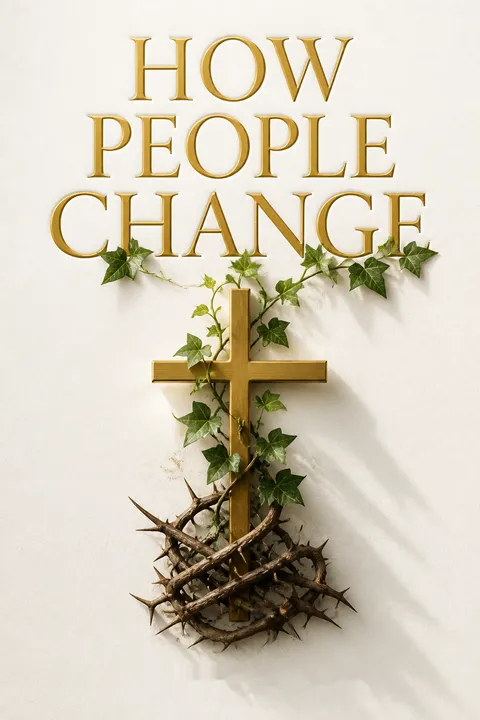

Key Takeaways
1. The Gospel Gap: Missing Present Grace
Often there is a vast gap in our grasp of the gospel.
Unseen spiritual blindness. Many Christians understand that Jesus forgave their past sins and promises a future in heaven, yet they remain blind to the gospel's transformative power in their daily lives. This "gospel gap" leaves them ineffective and unproductive, struggling with relationships, material things, and spiritual growth, despite their theological knowledge. This blindness often stems from a focus on external religious activities rather than the deep, present work of God.
Three forms of blindness. This gap manifests as blindness of identity, where individuals root their self-worth in performance or problems rather than in Christ. It also leads to blindness to God's provision, failing to see that Christ himself is "everything we need for life and godliness" in the here and now. Finally, there's blindness to God's process, misunderstanding that God uses difficulties not for comfort, but for growth and holiness, actively shaping us into Christ's image.
Counterfeit fillings. When the gospel gap remains, it gets filled with "Christian externalism" – plausible but incomplete lies that masquerade as true Christianity. These include formalism, legalism, mysticism, activism, biblicism, psychologyism, and socialism. These counterfeits appeal to our self-righteousness, selfishness, tendency to blame external evil, and desire for independence, ultimately displacing Christ from the center of our daily lives.
2. Counterfeit Hopes: The Deception of External Fixes
We can be abducted by falsehood when we least expect it.
Subtle abductions. Paul warns against being "taken captive through hollow and deceptive philosophy," emphasizing that this can happen subtly in the "little moments of life." We often seek alternative pathways to change that promise freedom while allowing us to keep our pride and agenda intact, rather than embracing Christ-centered transformation. These deceptive philosophies often borrow biblical truth but miss its core.
Common false hopes. People frequently misdiagnose their problems, believing that changing external factors will bring lasting change. These "hollow and deceptive" solutions include:
- Changing circumstances: "If only my situation were different, I'd be happy."
- Changing behavior: Focusing on external actions without addressing underlying heart motives.
- Changing thinking: Believing that adjusting expectations or memorizing verses is sufficient, rather than a personal encounter with Christ.
- Changing self-concept: Affirming innate goodness or self-esteem, which contradicts the biblical view of a fallen heart.
- "Just trust Jesus more" (as a therapist): Reducing Christ to someone who merely meets our self-defined needs, rather than a Redeemer who makes us holy.
True hope in Christ's fullness. The Bible declares that in Christ, we are "full," "made alive," and "set free" (Col. 2:9-15). This means we have a new record (forgiveness) and new power (the Holy Spirit) to fight sin. This comprehensive provision in Christ means we lack nothing and need not be seduced by deceptive promises that ultimately lead to self-sufficiency and bondage.
3. God's Dream: Transforming You, Not Just Your Circumstances
God’s love comes into your life to change what you live for.
Beyond self-centered dreams. As "meaning makers," we instinctively dream of a better life, often focusing on changing external situations or relationships ("If only my boss were more patient"). However, God's dream is far deeper: to change us from within. He is intent on rescuing us from ourselves, reshaping our desires, thoughts, and actions to align with His divine nature.
Confidence in God's work. Paul's prayer in Philippians 1:3-11 radiates confidence, not in human ability, but in Christ's unwavering commitment to complete the good work He began in us. This "Christ-centered confidence" allows us to face daily struggles—whether at work, with family, or personal battles—knowing that God is actively moving us forward, even when we don't perceive it. Our ultimate goal is the praise and glory of God.
Eternity clarifies values. The biblical story, from creation to redemption, provides a "final chapter" (Revelation 7:9-17) that helps us make sense of our present lives. When viewed through the lens of eternity, our earthly struggles and blessings gain profound meaning. The saints in heaven celebrate their redemption, not earthly possessions or achievements, reminding us that our greatest treasure is our progressive deliverance from sin and transformation into Christ's image. This destination makes every sacrifice and struggle worthwhile.
4. Married to Christ: Your Unshakeable Identity and Power
Christ assumes our liabilities and graciously gives us his assets.
A covenant relationship. The Bible uses the intimate metaphor of marriage to describe our relationship with God, rooted in a covenant of relational promise. Just as a spouse's debt becomes shared and assets become common, Christ takes on our spiritual liabilities (sin, alienation, foolishness, powerlessness) and bestows upon us His infinite assets (justification, wisdom, power). This union is not merely legal; it's a deeply personal relationship that grows over time.
Pure devotion to the incomparable Bridegroom. Paul's "godly jealousy" for the Corinthians' "sincere and pure devotion to Christ" (2 Cor. 11:1-3) highlights the exclusivity of this spiritual marriage. Christ is the supreme Creator, Sustainer, Reconciler, and Peacemaker (Col. 1:15-24), deserving our ultimate affection. When we allow comfort, success, or other good things to usurp His place, we engage in spiritual infidelity, compromising our identity and potential.
Living out your new reality. Our union with Christ means we are "full in Christ" (Col. 2:9-10), possessing everything needed for a godly life. This transforms how we navigate daily challenges:
- Job loss: Identity and security remain in Christ, not career.
- Thankless work: Fulfillment comes from Christ, not job satisfaction.
- Single parenting: Christ is the source of wisdom and strength.
- Chronic suffering: Most precious things are spiritual, not physical.
- Earthly success: Blessings are from God's grace, not personal effort, guarding against pride.
This union empowers us to stand firm where we once would have fallen.
5. Community: The Essential Context for Change
What God does in individuals is part of a larger story of redemption that involves all of God’s people through the ages.
God's communal nature. The importance of community for personal change stems from God's own triune nature—Father, Son, and Holy Spirit existing in perfect harmony. We, made in His image, possess a deep longing for connection, which sin often corrupts into self-centered pursuits. However, the gospel opens the door to redemptive friendships where we are conformed to Christ's image.
Unity forged by sacrifice. Ephesians 4:1-6 calls believers to humility, gentleness, patience, and forbearance, urging them to "keep the unity of the Spirit." This unity is not something we create, but a reality established by Christ's sacrifice. God allowed Himself to be "torn asunder" on the cross so that we might be united to Him and to one another, making every act of reconciliation within the church a reflection of this profound divine love.
Built together, not alone. Our adoption into God's family is both individual and corporate. We are "fellow citizens with God's people and members of God's household," "being built together to become a dwelling in which God lives by his Spirit" (Eph. 2:19-22). This means personal transformation is inextricably linked to communal life. Our diverse spiritual gifts are given "for the common good" (1 Cor. 12:7), strengthening the entire body and revealing God's love more fully than any individual effort could.
6. The Big Picture: Heat-Thorns-Cross-Fruit
The Bible is the ultimate spiritual compass, able to tell us exactly where we are and where we need to go.
More than just directions. The Bible is not merely a collection of rules or isolated stories; it's God's grand narrative of cosmic redemption. It offers a "helicopter view" of life, showing how everything connects and how God's grace guides us. This comprehensive wisdom prevents us from getting lost in the details of our personal struggles, providing clarity, motivation, and guidance.
The Heat-Thorns-Cross-Fruit model. This simple yet profound framework, rooted in Jeremiah 17:5-10, organizes the elements of change in daily life:
- Heat: The external circumstances, both difficulties and blessings, that we constantly face.
- Thorns: Our ungodly, sinful responses to these circumstances, stemming from our heart's desires and leading to negative consequences.
- Cross: God's redemptive presence, comfort, cleansing, and power, available through Christ's work.
- Fruit: Our new, godly responses, flowing from a heart renewed by grace, leading to positive consequences.
A personal spiritual biography. This model is not abstract theology; it's a mirror reflecting our own spiritual journey. It serves as a diagnostic tool, revealing what's wrong within us, and a map, showing the path to transformation. By understanding this "big picture," we can interpret our lives from God's perspective, recognizing that He meets and changes us in the midst of life's challenges, even when the "Heat" remains intense.
7. Heat: Life's Inevitable Trials and God's Purpose
The promises of the Redeemer come to people who live in a world where such things take place.
Life's harsh realities. Paul describes earthly life as "subjected to frustration," "bondage to decay," and "groaning as in pains of childbirth" (Rom. 8:20-22). This biblical realism acknowledges that suffering, disappointment, and brokenness are inevitable for everyone in a fallen world, not signs of being forgotten or singled out by God. Even blessings can be a form of "Heat," presenting temptations and opportunities for growth.
God's purpose in trials. Deuteronomy 8:2-14 reveals that God leads us through "wilderness wanderings" to teach, humble, and discipline us. Trials are not interruptions to God's plan but integral to it, designed to expose our hearts, demonstrate His sustaining power, and prepare us for future spiritual obstacles. James 1:2-4 encourages us to "consider it pure joy" when facing trials, as they develop perseverance and mature us.
Honesty in the darkness. Psalm 88, a lament without a positive resolution, is included in Scripture to show that God understands the full range of human despair and welcomes our raw honesty. Bringing our doubt, fear, and pain to God in worship is an act of faith, not a sign of weakness. This invitation to authenticity liberates us from spiritual masks, assuring us that God's love is sturdy and His grace sufficient, even when "the darkness is my closest friend."
8. Thorns: The Idolatry at the Root of Your Sin
The heart is deceitful above all things and beyond cure.
Beyond superficial diagnoses. When confronted with sin, we often blame external factors: other people, our past, a bad day, or even our physical state. However, the Bible insists that these are merely the occasions for sin, not its ultimate cause. Our true problem lies deep within our hearts, a "worship disorder" where good things in creation usurp the rightful place of the Creator.
The heart's defection. The Ten Commandments reveal this hierarchy: breaking the first three (worship of God) inevitably leads to breaking the others (behavior towards others). When we elevate something like respect, comfort, or control above God, it becomes an idol. This "spiritual adultery" (James 4:1-4) drives our sinful responses, such as anger, blame, or self-pity, as we desperately try to satisfy our misplaced desires.
Uncovering hidden idols. Romans 1:25 explains that we "exchanged the truth of God for a lie, and worshiped and served created things rather than the Creator." This means even seemingly good desires—for obedient children, a loving marriage, or successful work—can become destructive idols when they become ultimate. Identifying these "God-replacements" through honest self-examination is the crucial first step towards genuine repentance and turning our hearts back to Christ.
9. The Cross: Your Source of New Identity and Daily Power
I have been crucified with Christ and I no longer live, but Christ lives in me.
A radical internal transformation. The Cross is not just a historical event for past forgiveness or a ticket to future heaven; it fundamentally defines our identity and potential now. Through Christ's crucifixion, we spiritually "died" to sin's dominion, breaking its power over us. This means the old, sinful self no longer lives, replaced by Christ himself dwelling within us through the Holy Spirit (Gal. 2:20; Rom. 8:9-10).
New potential for daily living. This indwelling Christ provides a new principle for life, enabling us to live by faith in the Son of God. Our potential is no longer measured by our own strength, character, or past successes, but by the limitless power of Christ within us. This empowers us to:
- Live with personal integrity: Embracing self-knowledge, seeking community, and expressing godly emotions.
- Create a climate of grace: Forgiving others, humbly asking for forgiveness, serving tangibly, and persevering through difficulties.
- Act with courageous grace: Speaking truth, granting forgiveness, saying "no" to selfish desires, and using gifts for God's glory.
Grace for every failure. Despite this new potential, sin's presence remains, and we will inevitably fail. However, the Cross frees us from self-defeating guilt and rationalization. Each failure becomes an opportunity to run to Christ, confess our sin, receive His forgiveness, and be reminded of our identity as those for whom He died. This daily rhythm of repentance and faith keeps the Cross central, preventing both "Christless activism" (pride) and "Christless passivity" (despair).
10. Fruit: The Visible Evidence of a Changed Heart
The fruit of the Spirit is love, joy, peace, patience, kindness, goodness, faithfulness, gentleness and self-control.
Beyond mere diagnosis. True change extends beyond understanding our problems; it must be visible in our actions and relationships. The Bible emphasizes that "faith without deeds is dead" (James 2:26), meaning genuine heart transformation inevitably produces outward "Fruit." This Fruit is not a result of stoic obedience but flows from a heart captivated by the Giver of the commands.
Streams of living water. Jesus promised that believers would have "streams of living water flow from within" (John 7:37-38), referring to the Holy Spirit. Galatians 5:13-6:10 illustrates how the Spirit battles our sinful nature, enabling us to say "no" to self-indulgence and "yes" to godly responses. The Spirit produces "Fruit" like love, joy, peace, and patience—character qualities that are gifts, not just ideals, empowering us to respond to life's "Heat" in new ways.
New and surprising harvest. This Spirit-wrought Fruit manifests in tangible ways:
- Personal integrity: Freedom to examine oneself, seek godly help, and express authentic emotions.
- Transformed relationships: Readiness to forgive, humbly ask for forgiveness, serve others with compassion, and speak truth in love.
- Purposeful actions: Making peace, using gifts for God's glory, and discerning when to say "no" to others' agendas to align with Christ's will.
Like David in his cave (Psalm 4), we can experience joy, peace, and ministry even amidst profound suffering, because Christ's grace transforms us to bear good Fruit in the desert.
11. Repentance & Faith: The Daily Rhythm of Growth
Faith keeps us laying hold of the grace and mercy of Christ and thereby avoiding despair. Repentance keeps us facing our ongoing struggle with sin and thereby avoiding pride.
The ongoing link to Christ. Faith and repentance are not just entry points into the Christian life; they are the daily, moment-by-moment rhythm that connects us to Christ's grace. Faith anchors us in His mercy, preventing despair, while repentance confronts our sin, guarding against pride. This continuous cycle is essential for sustained spiritual growth.
Three ingredients of repentance. The parable of the Prodigal Son (Luke 15:11-32) illustrates this process:
- Wake Up: Coming to our senses, realizing our deepest problem is ourselves, not circumstances, and seeing God's grace as increasingly attractive.
- Own Up: Admitting our sin with godly sorrow (focusing on offending God and hurting others), seeing the idolatrous roots beneath behavioral sins, and even repenting of self-righteous efforts to justify ourselves.
- Shift Weight: Receiving the Father's lavish embrace, resting in Christ's forgiveness, allowing our idols to lose their appeal, and experiencing new energy, joy, and purpose.
A Cross-centered lifestyle. This daily practice of repentance and faith transforms our responses to life. When we acknowledge our responsibility for sin, identify our heart's idols, embrace Christ's forgiveness, and follow His call, God's commands become attractive and empowering. We learn to trust His presence and provision, knowing that even when change is hard and slow, Christ in us is our real hope, leading to a new harvest of godly thoughts, motives, actions, and words.
Review Summary
How People Change receives high praise from most readers for its Christ-centered, gospel-oriented framework for understanding sanctification. Reviewers appreciate the "Heat, Thorns, Cross, Fruit" model as a practical and biblically grounded approach to personal change. Common criticisms include repetitiveness, overly lengthy chapters, and insufficient attention to serious mental health issues. Many found it most valuable when read in a group setting. Despite stylistic complaints, the majority consider it an essential resource for Christians, counselors, and ministry workers seeking deeper transformation rooted in the gospel.
People Also Read




Download PDF
Download EPUB
.epub digital book format is ideal for reading ebooks on phones, tablets, and e-readers.








































