
Plot Summary
Unraveling Secrets, Spinning Truths
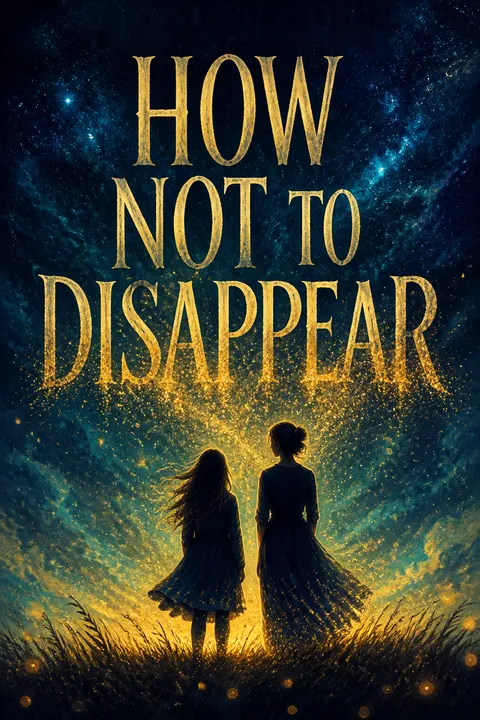
Seventeen-year-old Hattie faces a lonely and complicated summer, burdened by the discovery that she is unexpectedly pregnant after a one-time encounter with her best friend, Reuben. As she keeps her secret hidden, an unexpected phone call hints at further unspoken truths—a "mysterious" elderly great-aunt named Gloria emerges, as if conjured out of family oblivion. Torn between dread and the need for distraction, Hattie's life is suddenly entangled with Gloria's brittle charm and myriad eccentricities. Their first meeting is awkward and destabilizing, as both women resist and provoke one another, setting off a dynamic that foreshadows the deep, emotional unraveling that's yet to come. This chapter sets the emotional groundwork—loss, denial, and the fierce need for connection—that shadows both Hattie's and Gloria's lives.
The Stick's Second Line
Hattie's pregnancy becomes inescapably real as test after test yields double lines, jolting her from the realm of denial into anxious self-reflection. Surrounded by chaos at home and work, she's isolated inside the tightening spiral of her own consequence: not only the secret of her pregnancy but also unspoken regrets about her dead father. Hattie can't bring herself to speak to her mother or to reach out to Reuben—the "accidental" father—for support. Her panic and inability to act reveal how knowledge alone cannot grant certainty; decisions, consequences, and the fear of regret redouble her isolation. The gravity of her choice grows, colored by self-judgment and the secret, primal hope for rescue from uncertainty, setting up her desperate need for guidance—anywhere it may come.
Family Ties, Family Lies
Hattie's home life is a lattice of love and tension: a hard-working mother, breezy stepfather Carl, exasperating siblings—all seemingly at odds with her internal crisis. The arrival of Gloria's news triggers buried resentments about her late father, Dominic, whose absence lingers like a question mark. The family's refusal to talk about the past, especially about Dominic and his family, underscores how shame and silence are inherited, not just experienced. When Hattie announces she'll visit Gloria herself, she claims agency for the first time, but it is a boldness tinged with self-righteousness and fear—the recurring motif of inherited ghosts, suppressed longings, and the haunting uncertainty of what's been lost by not being spoken.
Wild E-mails and Truths
E-mail becomes Hattie's confessional booth. Her digital conversations with Reuben are fraught with longing, sarcasm, and the ache of abandonment—by him, by her best friend Kat, even by her mother. She wants Reuben to intuit her secret and rescue her from herself, but he is blithe and oblivious, more preoccupied with adventure than consequence. Their exchanges reveal how adolescent armor—wit, anger, casual cruelty—masks a desperate hunger for care and acknowledgment. The irreverent banter and unsent drafts are the textual scars of growing up: a preview of the confrontation with difficult truth that both characters want to avoid but cannot escape.
Encountering The Disappearing Duchess
When Hattie visits Gloria, she is thrust into the chaotic den of an irreverent, bohemian septuagenarian whose world is sinking beneath memory loss and gin. Gloria's apartment is a labyrinth—absurd, dirty, dazzling with relics and regrets. She is challenging, dismissive, half-lucid and half-lost, but Hattie sees glimpses of shared DNA and pain in her eyes. Gloria is not the kind relative Hattie hoped for—she's angry, secretive, and fiercely resistant to help. The visit is both test and initiation: only the brave and desperate endure Gloria's sharp edge. Their antagonism is a mirror; both women, despite age and circumstance, are running from heartbreak and clinging to autonomy in a world ready to write them off.
Portraits, Patterns, and Guilt
Hattie's return from Gloria leaves her shaken but obsessed. She's drawn to old photos and stories of her hereditary line—finding evidence of hidden violence and brokenness, especially in women rendered invisible by abuse, war, and silence. As she cares for herself and her family in her mother's absence, Hattie sees her own predicament reflected in Gloria and her ancestors: how love can wound, how choices disappear when history and shame dictate the terms. The complicated dance of blame, care, and the wish to "disappear" ties both women across decades. Guilt—a legacy unspoken—pushes Hattie to consider helping Gloria reclaim her story before it's lost forever.
Bucket Lists and Boundaries
Gloria and Hattie, both with secrets, strike an unlikely partnership—a literal and symbolic road trip through memory and geography. Gloria, beginning to slip deeper into dementia, agrees to revisit key sites of her turbulent youth before memory is erased entirely. Hattie's motivation is uneven: part escape from her own crisis, part urge to witness and rescue, to rewrite familial fate. The journey is organized by bucket-list whimsy but undercut by Gloria's insistence on agency: she will tell her story, but only on her terms. This shared quest is not straightforward healing—each stop is a confrontation with loss, shame, and the boundaries of love and autonomy.
Roads to the Past
The trip takes them through locations marked by Gloria's past: tender first loves, racist hostility, sisterly devotion, traumatic family dinners, and secrets too long buried. Along the way, Gloria's revelations—of forbidden romance, patriarchal violence, and family estrangement—merge with Hattie's own longing for parental connection and self-understanding. Hattie's questions and Gloria's guarded storytelling create uneasy intimacy; each discovers echoes of their own dilemmas in the other's confessions. The physical road-travel is a metaphor for traveling back through psychological and social constraints. Each mile brings new layers of love, loss, and anger into sharp relief.
Edges of Fear, Mists of Memory
Gloria's dementia worsens with each day, making the journey a race against time as well as memory. There are moments of connection—laughter, shared meals, fleeting joys—but also terror: of becoming lost, of truth being irretrievably erased, of being abandoned. The boundaries between caregiver and dependent blur; Hattie is forced to confront her own fears and desires, the inevitability of loss, and her responsibility for another's story. With illness lurking, every emotional revelation is fragile—moments of clarity are pounced upon; moments of confusion are mourned. Their journey is haunted by the fear that identity can be truly and finally erased.
Births and Lost Beginnings
Gloria at last reveals her greatest secret: as a teenager, she carried the child of a violent man, a pregnancy defined by shame, betrayal, and coercion. In an era when girls had no choice, she was banished to a Mother and Baby Home, forced to relinquish her baby, and told to disappear it from her life. Hattie, hearing this, contextualizes her own predicament: the luxury and burden of choice, the impossibility of certainty, and the truth that pain repeats across generations. The two women's fates converge around the moment of birth—both literal delivery and the symbolic act of speaking an unbearable story aloud.
Unsent Messages and Unhealed Wounds
The stories of missing men—fathers gone to war or wandering, lovers who vanish, babies lost to forced adoption or miscarried—become a metaphor for the female experience: how women's losses are borne in silence, their loves erased or denied. Hattie faces her own reality when Reuben reenters the picture, only to disappear again—echoing the men in Gloria's life and family history. Yet, it is through female friendship, particularly a healing reunion with Gloria's old friend Edie, that both women begin to claim their wounds and find a kinship that resists disappearance.
Lies We Tell Ourselves
At last, Gloria admits what has long been hidden even from herself: her pregnancy was the result of rape by her sister's husband, Vinnie—Hattie's own grandfather. Overwhelmed by shame, convinced no one would believe her, Gloria relinquished her child (Hattie's father) to her sister, who was herself desperate for a child after miscarriages and trapped in a quiet horror of domestic abuse. This unspoken trauma—kept to "protect" one another and the family's reputation—becomes both a burden and a binding. Hattie is devastated but finally able to see how violence, secrecy, and fear warp the future and haunt the living. Naming the truth does not destroy them, but offers a fraught path toward redemption.
Unraveling the Locket
During a night alone, Hattie discovers Gloria's old locket. Inside, the faded inscription reveals the final, astonishing truth: Gloria's baby, lost and given away, was Hattie's father, Dominic. The story comes full circle—connection out of erasure. The act of physically holding this artifact bridges the silence of generations; both women are, improbably, grandmother and granddaughter. This discovery transforms their journey from one of mutual rescue and healing to a fiercely bonded survival—women who have not disappeared from one another, even when lost, bruised, or forgotten by everyone else.
What's Left Unspoken
The aftermath of secrets exposed. Hattie, recovering from a near-fatal car accident, chooses to keep her pregnancy—no longer out of hope for romantic rescue but in recognition of her own agency and desire. Gloria, her memories fading, is nonetheless prized and protected by her redeemer-granddaughter. Reuben, unable to face responsibility, disappears for good, his absence proof that love is not always an antidote to loss. Hattie and her mother reconcile, both bearing regrets, and Carl—once a comic bystander—becomes a quiet pillar. The true inheritance is not shame or silence, but the ability to finally make choices for oneself.
Facing Endings, Owning Choices
Time passes. Gloria fades, but surrounded by a family that now claims her. Hattie juggles university and single motherhood—her choices, her regrets, her loves. The ghosts of the past (her father, Gloria, Reuben) are no longer threatening to erase her but are woven, with pain and resilience, into her life narrative. Gloria's death, when it comes, is both an ending and an affirmation: that no one truly disappears as long as they are loved and remembered; that every pain, once spoken, loses some of its power; that choices, while always shadowed by regret, are also illuminated by love. Hattie, holding her son, knows the ultimate lesson passed through the generations: I am here.
Not Afraid, Not Alone
In the book's silent coda, Hattie recognizes that the only way not to disappear in the face of loss, violence, and time is through love—chosen, fought for, and remembered. The echo of "I am not scared. If I say it enough, it may be true" is transformed: the struggle is not only to claim agency but to pay it forward, so even as memory and identity fail, no one is truly lost while even one person remembers, forgives, and loves. The circle is closed, not in tragedy, but in defiance—each woman is more than her suffering, and no one disappears without trace.
Analysis
Clare Furniss's How Not to Disappear is at once a coming-of-age novel and a multigenerational reckoning with the ways women have been erased—from their families, from history, and even from their own minds. Its narrative gently but insistently tears back the veil on the legacies of trauma: how silence and shame are passed down, how decisions made or forced in one era echo in the next, and how agency—even painfully claimed—can be revolutionary. Furniss powerfully contrasts Hattie's modern dilemmas with Gloria's vanished options: the privilege and burden of "choice" against the griefs of compulsion and secrecy. The novel is unsparing in its depiction of memory's fragility—through dementia, through familial refusal, and through self-punishing denial—but also clear-eyed about the limits of truth-telling and forgiveness. Its optimism is hard-won: the assertion that "you cannot disappear if you are loved" is both a call to witness others and to accept being witnessed oneself, flaws and regrets and all. The lesson is not that love or honesty fix everything, but that the act of telling—of being present for each other across loss, regret, and fallibility—is the way we resist oblivion, both for ourselves and those who came before. In this, How Not to Disappear stands as a meditation on memory, agency, intergenerational love, and the defiant power of not turning away.
Review Summary
How Not to Disappear receives an average rating of 4.08/5, with most readers praising its emotional depth, complex characters, and dual storylines exploring dementia, teen pregnancy, and family secrets. Gloria and Hattie are widely loved as protagonists, with their road trip forming the heart of the novel. Some critics note pacing issues, overly similar narrative voices, and occasionally predictable plot twists. Many readers were moved to tears by the ending, and the book's sensitive handling of dementia and social issues was frequently highlighted as a strength.
Characters
Hattie Lockwood
Hattie is a fiery, tender, and perceptive teenager stranded at a life crossroads: pregnant by her charismatic best friend, Reuben, while feeling invisible within her own fractured family. She is both generationally modern—digital, ironic, full of banter—and existentially traditional, grappling with shame, agency, and legacy. Psychoanalytically, Hattie wavers between self-denial and self-assertion, mirroring her ancestors' buried secrets. Her journey with Gloria forces her to confront pain not just from her own choices, but inherited across generations. While initially seeking escape or rescue, Hattie's development is toward self-forgiveness, acceptance, and fierce autonomy. She ends transformed, grounded not by certainty but by a new readiness to "own her choices," and the courageous understanding that love, not fear, keeps us from disappearing.
Gloria Harper
Gloria, Hattie's great-aunt and biological grandmother, is a glamorous and acerbic survivor whose wit and bravado conceal layers of trauma and longing. Suffering early-onset dementia, Gloria is desperate to preserve her memories before they vanish—yet equally determined to control how much of her story she reveals. Her life is a palimpsest of silencing: raped by her brother-in-law, forced to surrender her child, erased from her family history, and finally spectrally present as age eats away her sense of self. Gloria's psychological defense is to refuse pity, to "disappear" rather than be erased by others; yet she craves witness. She is Hattie's warning and also her muse—embodying how secrets, shame, and haunted love warp generations, but that truth, finally told, is a redemptive act.
Ruth Lockwood (Hattie's Mother)
Ruth is the emotional and financial anchor of her family, exhausted by responsibility and haunted by failed marriage, the loss of Dominic (Hattie's father), and her own ambivalence about love and remarriage. She is both withholding (avoiding painful topics) and fiercely loving. Psychoanalytically, Ruth has transferred her disappointment and anxiety onto Hattie, struggling to balance control with letting her daughter discover autonomy. Her relationship with Hattie is one of tenderness as much as generational misunderstanding; in facing Hattie's crisis, Ruth is finally forced to confront her own regrets, bridging a gap of silence.
Reuben Wilde
Reuben is the archetype of wild, beautiful boys: magnetic and broken, running from responsibility, and masking vulnerability with bravado. To Hattie, he represents hope—for rescue, for transformation, for belonging—but also the impossibility of rescue. Reuben's route through the story is marked by absence: absent father, absent friend, and finally absent partner. Psychologically, he embodies the fear of intimacy, the trauma of parental negligence, and the inability to own consequences. His failure to "come home" to Hattie cements her growth: love cannot save someone who refuses it. He is the bittersweet echo of male disappearance.
Gwen (Nan)
Gwen—Gloria's sister, Hattie's grandmother, and adoptive mother of Dominic—is the archetype of the "good daughter" who internalizes duty at the cost of her own happiness and agency. Her infertility, abusive marriage to Vinnie, and secret adoption of Gloria's child are acts both of love and self-preservation. Gwen is a tragic study in generational repression: knowing, but never stating, the truth about Vinnie's violence and Gloria's suffering. Her letters at the end of the novel reveal guilt, gratitude, and the limitations of even immense love when silenced by shame.
Dominic (Hattie's Father)
Dominic is the radiant absence in Hattie's life: the father who died overseas, the son given up by Gloria, the longed-for child of Gwen. Poignantly, his identity (and thus part of Hattie's own) is shaped not by presence but by stories withheld, false parentage, and the trauma passed down through two women. He represents both the power and pain of family secrets: his lostness makes his descendants' struggle for connection more fraught and ultimately, more precious.
Carl
Carl, Ruth's partner, is "not quite a dad," perpetually ribbed by Hattie for his athletic clichés and penchant for pastel jumpers. Seemingly superficial, Carl is revealed as quietly wise and warm, validating Hattie and providing unconditional support. He becomes a bridge between old family wounds and new, more hopeful connections—not a replacement for the old order, but a gentle reimagining.
Kat
Kat's practical, cutting honesty and unwavering loyalty ground Hattie through uncertainty. Kat's own struggles—her queer identity, toxic relationship with Zoe—parallel Hattie's need to belong and be seen. As confidante, Kat provides both emotional ballast and comic subversion ("Knob!"); her presence allows the exploration of non-romantic love as a saving force. Kat's ultimate calling as a neurologist is a symbolic act of care for lost minds like Gloria's, underscoring the novel's theme of witness and repair.
Edie
Edie is Gloria's fellow survivor from the Mother and Baby Home—kind, resilient, and capable of a forgiveness that borders on the divine. She is a rare link to Gloria's interrupted past, providing practical solidarity and emotional wisdom. In being able to reunite with her own (adopted) son, Edie shows a possible path to "restituted" love—her story contrasts the irrevocable losses suffered by Gloria but also offers a template of hope and resilience.
Vinnie
Vinnie is the monstrous heart of the hidden family trauma—respectable and charming in public, cruel in private, a predator whose violence shatters both sisters' lives. His rape of Gloria is the foundational crime whose silence poisons love, identity, and memory for three generations. He represents the power of male authority to erase, but also the decay of that power when exposed at last.
Plot Devices
Dual Narrative—Cross-Generational Parallels
The novel's structure alternates between Hattie's voice and Gloria's memories, employing parallel timelines to highlight the cyclical nature of trauma, shame, and silence. As Hattie navigates her own crisis—unplanned pregnancy, the ache of loss, and the burden of decision—she is forced (and offered) to witness Gloria's hidden life: its violence, its subterfuge, and its irrepressible spirit. This duality allows the reader to see how the past is never past, but how active listening and witness can begin to unravel cycles of disappearance.
The Road Trip as Rites of Passage
The literal journey through the landscapes of England mirrors an emotional passage through memory, shame, and the reclamation of self. Each stop is not only a site from Gloria's past but a symbolic ring in Hattie's inferno, pressing her closer to her own reckoning with agency and regret. The fading map of Gloria's mind makes each revelation urgent, fragile, and precious.
Unsent Letters and E-mails
Unsent or hesitant messages—driven by embarrassment, longing, or anger—are a recurrent motif. These digital and analog ghosts symbolize the difficulty of telling the truth, the desire for connection, and the scars of abandonment. The text-heavy e-mails between Hattie, Reuben, Kat, and others expose the contrast between what is spoken and unspoken.
The Locket
The physical artifact of Gloria's locket bridges the "disappearing" history—it contains photographs, inscriptions, and ultimately the revelation of Hattie's true origin. As an object it changes hands, is lost and retrieved, mirroring memory's fragility and resilience.
Dementia and Unreliable Narration
Gloria's slipping memory—her Post-its, notebooks, and episodes of confusion—function as both plot mechanics and profound metaphor for the fear of erasure, for women whose lives are not recorded or believed. The frequent recurrence of "maybe if I say it often enough, it will be true" encapsulates the precariousness of both truth and identity.
Foreshadowing and Repetition
Repeated lines—"I am not afraid," "You can't disappear if you're loved," "Not sad, not sad"—become incantations against oblivion. Actions from decades past (spinning in the sun, running from violence, staring at the sea) recur in renewed form, showing that healing is looping, not linear. Foreshadowing is embedded in artifacts, dreams, and slips of memory that only reveal their significance in retrospect.
Download PDF
Download EPUB
.epub digital book format is ideal for reading ebooks on phones, tablets, and e-readers.








































