
Plot Summary
Dungeon Shadows and Chains
She clings to sanity by befriending a rat and creating small rituals with scraps of food. The threat of violence is constant, embodied by a monstrous forest bog sharing her cell. Callie's fear and confusion are palpable—she's lost her sense of self, haunted by the question of how she ended up here. The rat, more than it seems, offers her hope and warnings, but the dungeon's oppressive atmosphere and the ever-present threat of pain keep her on edge. Her longing for rescue and the struggle to remember her identity are the only things keeping her from succumbing to despair.
Small-Town Scientist's Longing
She's an outsider in a small town, dedicated to her work with wildlife and environmental conservation. Her only real friends are animals and a few kind colleagues, like Cliff and Cecelia. Despite her achievements, she feels isolated, misunderstood, and judged for her ambition and independence. Her dreams of joining a prestigious butterfly research project in Mexico are dashed by sexist assumptions. The ache of rejection and the longing for belonging and purpose drive her deeper into her work, even as she questions if she'll ever truly fit in.
Rejection and Resilience
A phone call from the Lepidoptera Migratory Society dashes her hopes of joining their fieldwork, citing her age and lack of family as liabilities. The sting of being overlooked for her dedication and expertise is sharp, but Cecelia's gruff support helps her rally. Callie resolves to focus on her local conservation efforts, determined to prove her worth. Her resilience is tested, but she clings to her passion for saving moths and butterflies, channeling her pain into action. The chapter captures her vulnerability, her stubbornness, and the flicker of hope that keeps her moving forward.
Animal Bonds and Hallucinations
She releases rehabilitated bunnies, who refuse to leave her side, and is teased for her "Disney princess" effect. Her friendship with Cliff is complicated by his romantic interest, which she gently rebuffs. Alone at home, she reflects on her childhood encounter with a fairy and a menacing crow—an event dismissed as mushroom-induced hallucination but which shaped her obsession with winged creatures. The memory is bittersweet, blending wonder and trauma, and hints at a deeper magic in her life. Her longing for connection, both human and supernatural, is palpable.
The Fox and the Fungi
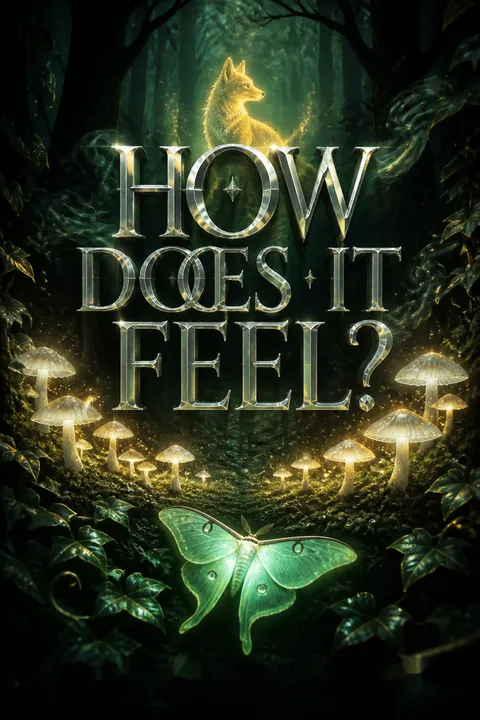
While tending to her animal feeders, Callie encounters a fox with golden, sparkling fur—an impossible, magical sight that unsettles her. She's dismissed by Cliff, who sees only danger. Later, she meets Crazy Earl, a disgraced biologist obsessed with a mysterious, powerful mushroom called the "destroying angel." Their shared passion for mycology and conservation forges a bond, and Earl reveals the mushrooms' connection to strange, supernatural events in Willow Springs. The fox and the fungi become symbols of the thin veil between worlds, and Callie's curiosity is piqued despite the danger.
The Destroying Angel's Secret
Their forays into the wild are filled with camaraderie and hints of something darker. Earl's warnings about the mushrooms' power and the fairy rings they form are laced with regret and fear. When they finally find a destroying angel, the forest grows ominous, and both feel an unnatural dread. Earl's stories of portals and Fae realms seem less like ramblings and more like warnings. Callie's scientific mind wars with her intuition, but she's drawn inexorably toward the unknown, even as the air thickens with foreboding and the boundaries of reality blur.
Into the Fae Veil
After losing her precious microscope in the woods, she ventures out at night, dressed for a date but driven by obsession. Guided by a trail of luna moths and fireflies, she stumbles upon a perfect ring of destroying angel mushrooms. Despite warnings from the magical fox, she steps into the circle and is plunged into darkness, falling through a portal. She lands in a world both familiar and terrifying, surrounded by armored Fae and monstrous beings. Her scientific quest has become a journey into myth, and she is now a captive in a realm where logic and reason offer little protection.
Captive of the Unseelie
Mistaken for an assassin, she is brutalized by the prince, Mendax, and his monstrous court. The dungeon is a place of horror, where her fear is both sustenance and entertainment for her captors. The only kindness comes from the rat—now revealed as a shifter—and the enigmatic assassin, Alistair, who spares her life. Callie's resilience is tested as she endures violence, humiliation, and the constant threat of death. Her scientific mind struggles to make sense of the magic and cruelty around her, but she refuses to surrender her identity or hope.
The Forest Bog's Torment
The bog, a shapeshifting monster, feeds on her terror and threatens unspeakable acts. Callie's ingenuity and rage flare—she fights back, using her scientific knowledge to create a weapon from the bog's own body. In a moment of desperate violence, she kills her tormentor, shocking the guards and herself. The act is both liberating and traumatizing, marking a turning point in her captivity. She is no longer a passive victim; her survival instincts and intelligence become her weapons. The cost, however, is a further erosion of her innocence and trust.
The Prince of Smoke
His cruelty is matched by moments of fascination and conflicted desire for Callie. He is drawn to her fire and resilience, even as he tries to break her. Their interactions are charged with danger, attraction, and misunderstanding. Mendax's power to impel—control minds by name—hangs over Callie, who cleverly withholds her true name. The court is a nest of intrigue, where alliances shift and violence is always near. Callie's survival depends on her ability to navigate Mendax's moods and the deadly politics of the Unseelie, even as she begins to see glimpses of vulnerability beneath his monstrous exterior.
The Assassin's Misunderstanding
The Unseelie court's paranoia and hatred of humans make her a target for torture and spectacle. Mendax's obsession with her grows, and he offers her a deal: survive three deadly trials, and he will return her to the human world. The misunderstanding becomes a twisted bond, as Callie's intelligence and courage earn her both respect and enmity. The court's cruelty is relentless, but Callie's refusal to break—her insistence on her own story and identity—becomes an act of defiance. The emotional stakes rise as she is forced to play a game she never chose.
The Trials Begin
The first, a gauntlet through the blood forest, pits her against monstrous nocturneye—bat-like predators that hunt by echolocation. Using her scientific knowledge, she mimics luna moths' acoustic camouflage to evade them, turning her weakness into strength. The second trial is a deadly puzzle of poisons and antidotes, where her expertise in botany and toxicology saves her life. Each trial is a crucible, burning away her illusions and forging her into something harder and more dangerous. Mendax's fascination deepens, and the line between captor and lover blurs as they are drawn together by mutual need and pain.
Blood Forest Survival
In the blood forest, she faces not only physical threats but the psychological terror of being hunted for sport. Her knowledge of animal behavior and survival tactics allows her to outwit her pursuers, but the ordeal leaves her scarred and exhausted. The court's delight in her suffering is matched only by Mendax's conflicted admiration. The trial is a microcosm of her journey—science and magic, fear and courage, isolation and connection. Callie emerges victorious but changed, her resilience now laced with a darkness that mirrors the world she inhabits.
Poison and Antidote
Faced with seven cups—four poisons and three antidotes—she must rely on her knowledge of plants and chemistry to survive. The presence of snakes, her greatest fear, adds psychological torment. The oracle's cryptic guidance and the pressure of time force her to trust her instincts and training. When she makes a mistake, she uses the venom of a snake as the final antidote, a desperate act of self-experimentation. The experience is both a triumph of mind over magic and a harrowing ordeal that leaves her physically and emotionally drained.
The Bonding and Betrayal
As political tensions rise, Mendax's mother pressures him to bond with Callie, making her his future queen. The bond is both a source of power and a shackle, tying their fates together. In the final trial, Callie must choose between two doors—one leading to freedom, the other to a deadly beast. Mendax tries to help her, but the queen's treachery switches the doors. In a moment of heartbreak, Callie stabs Mendax in his vulnerable spot, fulfilling her secret mission as an assassin for the Seelie. The act is both a liberation and a tragedy, as love and duty collide.
The Final Arena
The arena is a spectacle of violence and betrayal. Callie's choice leads to a confrontation with a monstrous beast, but Mendax intervenes, sacrificing himself to save her. The queen's machinations are revealed, and the court descends into chaos. Callie's final act—stabbing Mendax and walking away—breaks both their hearts. The bond between them is severed, but the emotional scars remain. The chapter is a crescendo of action, emotion, and consequence, leaving both characters forever changed and the future uncertain.
A Dream and a Nightmare
The events of Faerie are dismissed as hallucinations caused by mushroom poisoning, but the scars—physical and emotional—remain. Her old friend Earl is revealed to be Prince Aurelius in disguise, and the true nature of her mission comes to light. Callie's heart is incomplete, held as collateral by the Seelie queen. The story ends with her poised between two worlds, her identity fractured, and her future uncertain. The dream of love and the nightmare of betrayal are inseparable, and Callie must reckon with the cost of survival and the price of freedom.
Analysis
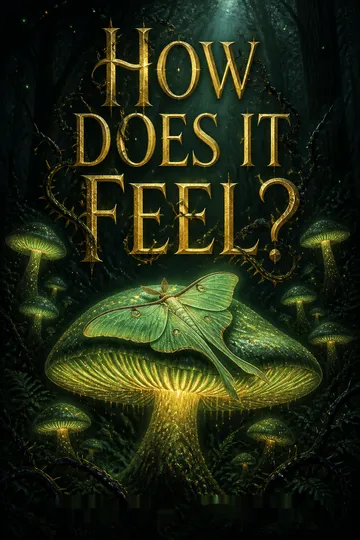
"How Does It Feel?" is a dark, emotionally charged portal fantasy that explores the boundaries between science and magic, love and violence, captivity and freedom. At its core, the novel is about transformation—how trauma, desire, and the search for belonging can remake a person in ways both beautiful and terrible. Callie's journey from isolated scientist to survivor and betrayer is a meditation on agency, resilience, and the cost of survival. The story interrogates the power dynamics of gender, knowledge, and magic, using the devices of name magic, forced bonds, and deadly trials to dramatize the struggle for autonomy in a world that seeks to define and control. The relationship between Callie and Mendax is both a romance and a tragedy, a dance of mutual destruction and longing that refuses easy resolution. The novel's modern resonance lies in its depiction of a heroine who refuses to be defined by others' expectations, who uses both intellect and instinct to navigate a world that is as wondrous as it is cruel. The ending, with its ambiguity and sense of loss, challenges the reader to consider the price of freedom and the possibility of healing after betrayal. Ultimately, "How Does It Feel?" is a story about the courage to face the unknown, the pain of loving what can destroy you, and the hope that even in the darkest places, transformation is possible.
People Also Read

Characters
Callie Peterson
Callie is a fiercely intelligent, compassionate environmental scientist whose life is defined by loneliness, ambition, and a deep connection to animals. Her childhood encounter with the Fae—dismissed as hallucination—shapes her obsession with moths and the supernatural. In Faerie, she is mistaken for an assassin, enduring captivity, torture, and trials that test her mind and spirit. Callie's psychological journey is one of transformation: from outsider and victim to cunning survivor and, ultimately, betrayer. Her relationships—with Mendax, Earl/Aurelius, and the animal shifters—reveal her longing for love and belonging, but also her capacity for darkness and sacrifice.
Mendax (Malum Mendax)
Mendax is the embodiment of power, cruelty, and conflicted desire. As prince of the Unseelie, he is feared for his ability to impel minds and his ruthless enforcement of order. His fascination with Callie is both predatory and vulnerable—she awakens feelings he cannot control, threatening his identity and rule. Mendax's psychological complexity lies in his struggle between darkness and the possibility of love. The forced bond with Callie becomes both his undoing and his redemption, as he is ultimately betrayed by the only person who truly sees him. His arc is one of self-destruction, longing, and the agony of being both villain and victim.
Earl / Prince Aurelius / Eli
Earl is introduced as a quirky, ostracized biologist, but is later revealed to be Prince Aurelius of the Seelie court—and Callie's childhood best friend, Eli. His role is that of protector, guide, and manipulator, orchestrating Callie's journey as part of a larger political game. Aurelius's affection for Callie is genuine but complicated by duty and secrecy. His ability to shift forms and his involvement in the plot to assassinate Mendax add layers of ambiguity and betrayal. Psychologically, he is torn between loyalty to his family, his love for Callie, and the moral cost of using her as a weapon.
The Queen (Tenebris)
The queen is a force of nature—cold, calculating, and unyielding. Her hatred of humans and obsession with power drive much of the court's violence. She manipulates Mendax and Callie, orchestrating the trials and the forced bond. Her psychological profile is one of narcissism, paranoia, and a willingness to sacrifice anyone for her own ends. She is both a symbol of the system's brutality and a personal antagonist whose actions catalyze the story's tragedies.
Alistair Cain (Shivers)
Alistair is the court's feared killer, a panther shifter who is inexplicably drawn to protect Callie. His gentleness with her contrasts with his reputation, revealing a capacity for empathy and regret. Alistair's psychological depth lies in his struggle with his own darkness and the redemptive power of connection. He becomes a mentor and ally, teaching Callie about the dangers of names and the rules of Faerie. His presence is a reminder that even in a world of monsters, kindness can survive.
Walter (Brown Rat)
Walter is a shifter who oscillates between rat, wolf, and human forms. His initial role as Callie's secret protector is complicated by his allegiance to Mendax and the Unseelie. Walter's psychological conflict is rooted in his divided loyalties—he is drawn to Callie but bound by duty and fear. His ultimate fate is a testament to the cost of compassion in a world that punishes weakness.
Cecelia
Cecelia is Callie's colleague and one of the few people who supports her unconditionally. Her tough love and practical wisdom ground Callie in the real world, providing emotional ballast amid the chaos. Cecelia's role is less about transformation and more about stability—she represents the possibility of acceptance and belonging, even for outsiders.
Cliff
Cliff is the game warden who offers Callie friendship and the possibility of a simple, grounded life. His unrequited affection and inability to understand Callie's deeper needs highlight the gap between her and the world she inhabits. Cliff's presence is a reminder of what Callie sacrifices in her pursuit of meaning and magic.
The Forest Bog
The forest bog is a shapeshifting creature that feeds on terror and pain. Its sadistic games and sexualized violence are a crucible for Callie's transformation. Psychologically, the bog represents the externalization of trauma—the monster that must be confronted and destroyed for healing to begin.
The Oracle (Lania)
The oracle delivers cryptic warnings and administers the poison trial. Her role is to challenge Callie's intellect and courage, forcing her to confront her fears and trust her instincts. Lania's presence is a reminder that survival in Faerie requires both knowledge and faith, and that destiny is shaped by choice as much as by fate.
Plot Devices
Portal Fantasy and the Veil
The story uses the classic device of a portal—here, a ring of destroying angel mushrooms—to transport Callie from the mundane world to Faerie. This crossing is both literal and symbolic, marking the boundary between science and magic, reason and myth, innocence and experience. The veil is thin, and the consequences of crossing it are profound: Callie's identity, relationships, and worldview are all upended. The portal is also a metaphor for trauma and the journey into the unconscious, where monsters and miracles coexist.
Trials as Rite of Passage
The three trials—blood forest, poison, and the arena—are structured as escalating tests that force Callie to use her intellect, courage, and adaptability. Each trial is both a physical ordeal and a psychological crucible, stripping away her illusions and forging her into a new self. The trials are also a commentary on power: they are spectacles for the court, designed to entertain and control, but they become opportunities for resistance and self-assertion.
Name Magic and Identity
In Faerie, knowing someone's true name grants control over them. Callie's refusal to give her real name is an act of self-preservation and defiance. Mendax's ability to impel by name is a symbol of the dangers of intimacy and vulnerability. The motif of names recurs throughout the story, highlighting the tension between connection and autonomy, trust and betrayal.
Misunderstanding and Mistaken Identity
Callie is mistaken for an assassin, and her true mission is hidden from both Mendax and the reader until the climax. This device creates dramatic irony and emotional complexity, as love and violence become inseparable. The revelation of Earl's true identity and the nature of Callie's allegiance to the Seelie court add layers of ambiguity and moral ambiguity.
Bonding and Betrayal
The forced bond between Callie and Mendax is a double-edged sword: it creates a connection that is both empowering and coercive. The bond is a metaphor for love, trauma, and the ways in which relationships can both heal and harm. The final betrayal—Callie stabbing Mendax—fulfills the logic of the bond, turning love into a weapon and freedom into loss.
Foreshadowing and Circular Structure
The story is rich in foreshadowing: the childhood encounter with the Fae, the obsession with moths, the warnings about names and food, the shimmering fox. These elements recur in new forms, creating a sense of inevitability and resonance. The ending, with Callie awakening in the hospital, mirrors the beginning, blurring the line between dream and reality and leaving the reader questioning what is true.

Download PDF
Download EPUB
.epub digital book format is ideal for reading ebooks on phones, tablets, and e-readers.








































