
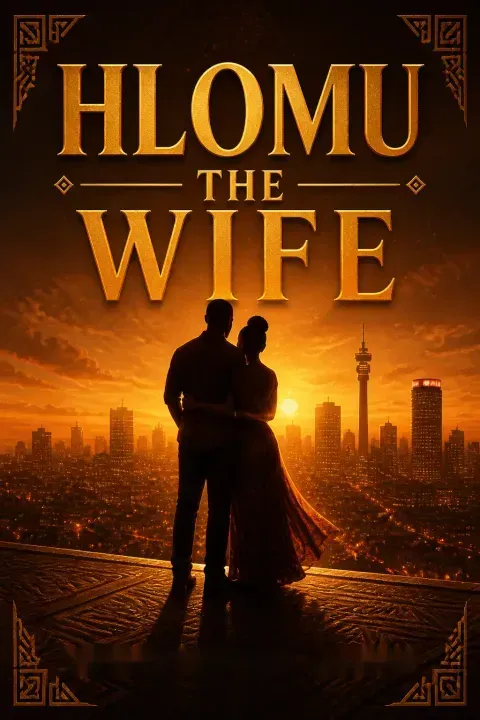


Plot Summary
The Bug-Eyed Driver
Hlomu,1 a 22-year-old reporter new to Johannesburg, commutes daily through Bree taxi rank. One evening a tall stranger with big eyes2 tells her to move with the queue, then starts appearing everywhere: outside her flat in a Corolla Sprinter, at her office gate, behind the wheel of her taxi. He learns her name, her office number, her cell number.
She resists, insults him, ignores him. He plays a maskandi song whose lyrics translate to you will love me eventually. On the fifth day, exhausted and curious, she gets into his car. He introduces himself as Mqhele Zulu,2 feeds her ice cream, and within a week she is cooking him dinner in her flat. He kisses her at 5am against her door. She is hooked.
The courtship is coercive dressed as romantic persistence. Mqhele deploys surveillance tactics (learning her schedule, her contacts) that would alarm any reasonable person, yet Hlomu reframes his stalking as devotion. This early dynamic establishes the central tension of the entire saga: the line between protection and control, between being cherished and being owned. Her surrender after days of resistance — including getting into a stranger's car despite having written stories about women found dead in velds — reveals a subconscious attraction to danger that she will spend years rationalizing as love.
Cash in the Closet
During her first weekend at his Naturena house, Hlomu1 tidies Mqhele2's closet and discovers a heavy black bag stuffed with cash. When he returns, she confronts him sitting on the bed with the money beside her. He admits he does not drive taxis — he owns them. All eight brothers own them.
He has no bank account; he bought his house and car with cash. Then he feeds her olives from a jar and explains they are planning to move into trucking. Hlomu1 is furious at being deceived about who he really is, yet within hours she is back in his arms. The next morning she takes him to open his first bank account.
The cash discovery functions as a narrative baptism: Hlomu is plunged into the Zulu family's off-the-books economy and must decide whether to flee or adapt. Her choice to stay — and to immediately begin reforming him (the bank account) — reveals her core psychology. She is not a passive victim but an active participant who believes she can domesticate danger. The olive-eating ritual, bizarre and intimate, signals induction into a closed male world where normal rules do not apply. Mqhele's calm admission (the money is his, he worked for it) reframes the relationship: she is no longer dating a taxi driver but entering an empire built outside legal frameworks.
The First Closed Fist
When Mqhele2 deposits R3000 into Langa4's account without asking, Hlomu1 switches off her phone in anger and goes home without him. He arrives at her flat enraged, snatches the keys through the burglar gate, and slaps her repeatedly with his open hand while she lies on the couch, his knee pressing her ribs. She screams apologies until he stops and storms out.
The next morning she takes a bus to her parents' home in KwaMashu. Hours later, Mqhele2 appears there in a borrowed red Golf. She confronts him in the street: why did you hit me? He has no answer. She warns him she will call police and tell her father if it happens again. He promises it will not. She takes him back.
This is the foundational trauma of their marriage. Hlomu's response encapsulates the psychology of intimate partner violence: she flees, she confronts, she extracts a promise, she returns. Her internal monologue reveals she knows the script ('I've become that woman, that woman I never understood'). Mqhele's inability to articulate why he hit her is more disturbing than any excuse could be — it reveals rage as autonomic, not situational. His 600-kilometer pursuit to Durban looks like romantic dedication but functions as surveillance: there is nowhere she can go that he cannot reach. The cycle of violence that will define their decade together is now fully installed.
Eight Identical Brothers
Covering a service delivery protest, Hlomu1 is shot in the back and legs with police rubber bullets. At the hospital, Mqhele2 arrives with six men who all look exactly like him — tall, big-eyed, identically furious. They demand to know who shot her and nearly terrorize her colleague. Nqoba,8 the hoarse-voiced one, does most of the threatening. Qhawe9 is Mqhele2's near-twin.
Nkosana,3 the eldest, commands deference without speaking. The youngest, Ntsika,11 is barely sixteen. They leave only after the doctor confirms she is fine. Days later, Mqhele2 and Nkosana3 leave her with three young boys for the weekend while they handle 'work stuff.' She takes the children to Spur and the zoo, and they begin calling her 'mami.'
The hospital scene is Hlomu's induction into the collective male body that will define her life. The brothers' response to her injury — immediate mobilization, barely contained violence, interrogation of authorities — models their siege mentality. She is now inside the perimeter they patrol. Significantly, her professional identity (the journalist covering a protest) is immediately subsumed into her relational identity (the woman who belongs to them). The brothers' identical appearance literalizes their interchangeable protectiveness: any one of them would fight for her. The children arriving shortly after — motherless, hungry for affection — completes the role assignment. She is no longer a girlfriend but a matriarch in training.
Taxi War Casualty
During a taxi violence shooting at Bree, Sambulo7 takes bullets and is hospitalized in a coma for three weeks. Five people die. Hlomu1 waits in the office, unable to reach Mqhele,2 terrified. When he finally comes home that night, he tells her the rival association wanted to kill all of them.
He then has sex with her so violently that she wakes with bruises and missing braids — it is not lovemaking but rage-release through her body. She lets him. In the months that follow, three members of the rival association are killed. Hlomu1 connects the dots in her mind, then stops. She chooses denial. She also learns the full backstory: the brothers' parents were massacred by their community in Greytown when Mqhele2 was eleven.
This chapter crystallizes Hlomu's moral compromise. She suspects — correctly — that her new family has committed revenge killings, and she makes the conscious choice not to know. Her body becomes the site where Mqhele processes trauma he cannot verbalize; she offers herself as a sacrificial vessel for his pain. The phrase 'I allowed it all' is chilling in its agency: she is not helpless but complicit. The revelation of the brothers' childhood (parents hacked to death, fleeing through the bush, Nkosana raising seven siblings) provides retrospective justification for their violence while also deepening Hlomu's entanglement. She now knows the origin story and has chosen to stay inside it.
A Rank Proposal
On the one-year anniversary of their first kiss, Mqhele2 drives Hlomu1 to Bree taxi rank and stops at the exact queue spot where he first told her to move forward. There, he asks if he can send people to speak to her father. She says yes without hesitation. He raises a thumb at an old man watching nearby — Bab'Ngcobo, who had encouraged him to pursue her.
No ring, no bended knee. Back home, Hlomu1 learns her father is insisting on umemulo (a coming-of-age ceremony) before lobola negotiations. Nkosana3 and Bab'Gumbi negotiate on the Zulu side. At the negotiations, Mqhele2 texts Nkosana3 a instruction: pay whatever they ask, he found her sealed.
The taxi rank proposal brilliantly subverts romance-novel expectations while anchoring the relationship in its authentic origin. This is not a man who buys diamonds; this is a man who returns to the site of his obsession and claims it. The absence of a ring and the presence of male elders negotiating her value in cattle foreground the transactional nature of traditional marriage. Yet Mqhele's instruction to pay everything because he 'found her sealed' (a virgin) reveals a proprietary attitude toward her body that will manifest in possessiveness, jealousy, and violence throughout the marriage. Hlomu's father, by insisting on umemulo, attempts to reassert patriarchal control even as he transfers it.
Vows and Secrets
The couple marries twice: a white wedding in Pietermaritzburg where Mqhele2 writes his own vows (speaking of being given nothing as a child but now having everything in her), and a traditional Zulu wedding in Greytown where she is sprinkled with gall. At the traditional ceremony, a child goes missing — Lwandle,13 the middle boy.
Hlomu1 learns he was kidnapped by a man connected to old grudges against the brothers' father. The brothers retrieve him overnight. Hlomu,1 exhausted and terrified, stands in the lounge and orders them to bring her child back by whatever means necessary, even killing. They obey. Later, she learns the kidnapper and his brother were both killed that night.
The dual wedding ceremonies represent Hlomu's full incorporation into two systems: the legal/Christian framework she was raised in, and the ancestral/cultural framework of the Zulu family. Mqhele's self-written vows — disclosing his childhood trauma publicly for the first time — suggest genuine emotional growth. Yet the kidnapping during the wedding functions as a narrative counterweight: no celebration is safe, violence is always imminent. Hlomu's command to the brothers ('do whatever it takes, even kill') marks her moral crossing. She is no longer the horrified bystander but the general issuing orders. The brothers' instant obedience confirms what observers have noted: she wields a unique power over them, and she has begun to use it.
Hijacked on the N1
After five years of marriage and a long struggle with infertility, Hlomu1 is finally pregnant with twins. Driving alone one day, she is carjacked. Men pull her from her Audi, throw her in the boot, and drive off. Mqhele2 and his brothers track the car using their taxi network, intercept it on the N1 freeway, and pull the hijackers out through car windows.
A bystander's cellphone video captures Mqhele2 breaking the boot open with an iron rod and pulling Hlomu1 out, vomit on her dress, into his arms. The brothers beat the hijackers bloody. Police arrive; all eight brothers are arrested for public violence but released when victims refuse to press charges. The video goes viral.
The hijacking transforms the Zulu family from local taxi power to national spectacle. The cellphone video — showing coordinated vehicular assault, vigilante justice, and a pregnant woman being extracted like cargo — becomes the origin text of their public mythology. The brothers' willingness to shut down a freeway and risk arrest demonstrates that Hlomu is the family's central asset, the vulnerability around which all their violence is organized. Significantly, the hijacking is random, not retaliation — it is the moment Hlomu realizes that even without enemies, her proximity to wealth and notoriety makes her a target. She is now permanently inside the fortress, and the fortress has glass walls.
The Media Crucible
In the weeks after the hijacking, newspapers run screaming headlines about the 'Zulu Brothers: Rich, Handsome, Dangerous.' Journalists dig up the TRC transcripts about their father, a notorious warlord. Hlomu1's former colleague Lerato publishes a first-person account of briefly dating Mqoqi,10 describing the family's power dynamics and Hlomu1's central role as the woman who 'made me disappear.'
Hlomu1 quits her job, realizing she has become the story. Media camp outside the hospital when she gives birth to twin boys, Msebe and Langa. Mqhele2 books an entire hospital floor. A friend sells a baby photo to a tabloid.
The media onslaught marks the end of Hlomu's old identity. She entered this world as a journalist trained to investigate and expose; she exits it as a subject, her own life now the story. The irony is acute: the skills she once used to probe others' secrets are now deployed against her family. Lerato's betrayal (using access gained through dating Mqoqi) mirrors Hlomu's own early professional ruthlessness, forcing an uncomfortable self-recognition. Mqhele's response to the press — booking a hospital floor, threatening photographers — demonstrates that his protective instincts, while effective physically, are maladaptive in a media ecosystem where information is the real weapon.
Mandisa's Dead Body
Mandisa6 summons Hlomu1 to her house, drunk and unhinged. She leads Hlomu1 upstairs, unlocks the bedroom, and pulls back the duvet to reveal a naked dead woman on the bed — a young woman who had slept with Nqoba8 while Mandisa6 was away. Mandisa6 strangled her.
She delivers a contemptuous monologue about Hlomu1's 'perfect little life' of shopping and mothering while she, Mandisa,6 does the family's dirty work. When Hlomu1 tries to call Mqhele,2 Mandisa6 attacks her. Hlomu1 locks Mandisa6 in the bedroom and calls for help. The brothers arrive. Mqhele2 drags Mandisa6 down the stairs by her hair and beats her bloody for involving his wife.
Mandisa functions as Hlomu's shadow self — the woman who embraced the violence that Hlomu pretends not to see. Her speech about 'real life' is a devastating indictment of Hlomu's willful ignorance. By forcing Hlomu to look at the corpse, Mandisa attempts to shatter the denial that has sustained Hlomu's marriage. The brothers' response — protecting Hlomu by violently punishing Mandisa — confirms the hierarchy: Hlomu must be shielded from direct knowledge of what the family does. But the shield has cracked. Mqhele beating Mandisa also reprises the domestic violence dynamic: male rage in this family is directed at women who threaten the established order.
Confessions and Carnage
At Hlomu1's store launch, Mqhele2's ex Nokzola15 confronts her in the restroom. Mandisa6 later reveals that Mqhele2 has been unfaithful with multiple women and that Nokzola15 is dead — killed, Mandisa6 implies, by Mqhele.2 When Hlomu1 confronts him indirectly, he comes home enraged, drags her naked across the bathroom floor by her braids, and beats her so severely her nose bleeds.
She visits their doctor the next day and learns she was five weeks pregnant. The beating caused a miscarriage. She tells no one. She locks herself in the bedroom and sobs, then resumes making his dinner and leaving it on the counter.
This is the narrative's moral nadir. The miscarriage transforms Mqhele's violence from assault to something approaching murder — he has killed his own unborn child without ever knowing it existed. Hlomu's decision to conceal the pregnancy loss is simultaneously self-protective (she fears his guilt could destroy him or escalate his violence) and deeply pathological (she absorbs trauma that should be shared). The image of her continuing to cook his dinner, plate it, and leave it on the counter while her body still bleeds is an almost unbearable portrait of wifely performance continuing despite internal collapse. The marriage has become a theater where both partners play roles while suffering privately.
The Gun on His Head
After Mandisa6's suicide (she slits her wrists in Nqoba8's bed and leaves a two-page letter apologizing), the accumulated weight of revelations pushes Mqhele2 to a breaking point. Hlomu1 walks into their bedroom to find him sitting on the bed with a gun pressed to his head.
She freezes, then talks him down while her teenage son Lwandle13 watches from the doorway. She takes the gun, puts it in her handbag, and summons the brothers. They arrive in a convoy and surround him. Nkosana3 orders everyone to Greytown for a family meeting. That night, Mqhele2 confesses everything to Hlomu:1 the affairs, the cash heists, the killings.
The suicide attempt inverts the power dynamic. For once, Mqhele is the vulnerable one, and Hlomu must become the protector. Her calm — methodically removing the gun, delegating tasks — reveals the competence she has developed through years of crisis management. The brothers' collective response (immediately surrounding him, Nkosana taking command) shows the family functioning as an organism that cannot permit one of its members to opt out. Mqhele's subsequent confession is less a moral reckoning than a strategic surrender: having nearly destroyed himself, he hands Hlomu all his secrets, making her the sole keeper of his darkness. She now owns him as completely as he has always owned her.
Massacre at Mbuba
During a family gathering at the rebuilt Greytown homestead, armed men storm the property. Gunfire erupts from all directions. The brothers return fire while women and children scramble for cover. When the shooting stops, six attackers lie dead outside the gate. But so does Mvelo, the twelve-year-old boy Hlomu1 has raised since he was three — shot six times, three bullets in the head.
Oleta, Qhawe9's girlfriend, is found dead in the shower, killed by a bullet through the window. Hlomu1's four-year-old son Langa is shot in the thigh. At the funeral, Hlomu1 stands before the brothers and speaks four words: find them, kill them all, slowly and painfully.
The attack on Mbuba is the inevitable consequence of the family's return to the site of their original trauma. By rebuilding the homestead, they asserted a claim the community was not ready to honor. Mvelo's death — a child executed at close range — represents the cost of ancestral sins being visited on the third generation. Hlomu's funeral command is her final moral crossing. She is no longer the innocent girl from KwaMashu horrified by a bag of cash; she is now the matriarch demanding blood. The specificity of 'slowly and painfully' reveals how completely the family's logic of vengeance has colonized her psyche. She has become what she once feared.
One Fatal Mistake
Six months after the massacre, Hlomu1 goes out drinking with her friend Thobi in Ballito. She encounters Sandile,14 the ex-boyfriend she dumped via text years ago. Lonely, traumatized, and drunk, she accepts his offer to talk. One thing leads to another in his hotel room. The next morning, consumed with guilt, she returns to Johannesburg.
Weeks later, she discovers she is pregnant. The timing is devastating: she slept with Mqhele2 the night before leaving for Durban, and with Sandile14 approximately 16 hours later. There is no way to know whose child she is carrying. She tells no one except her twin brother Langa.4
Hlomu's infidelity is less about desire than about desperation. Sandile represents the road not taken — the ordinary life with an ordinary man that she forfeited when she got into the Sprinter. The pregnancy uncertainty functions as the narrative's ultimate test: will the family's obsession with bloodlines and paternity destroy what she has built? Her silence (telling only Langa) replicates the pattern of concealment that has defined her marriage. She has become Mqhele's mirror: both have secrets that could destroy the other. The pregnancy thus becomes a ticking clock, forcing her to confront the question she has avoided for a decade: does she stay because she loves him, or because she cannot imagine leaving?
A Daughter's Eyes
Hlomu1 insists on giving birth at her mother's house in Durban, far from Mqhele2 and the brothers. Her mother, a nurse, delivers the baby at home. When the child emerges, Hlomu1 is terrified to look at her. But the baby opens her eyes — and Hlomu1 sees Mqhele2 in them. She is a Zulu, the first girl born into the family in over a hundred years.
Hlomu1 tells her sister to call Mqhele.2 He arrives, surrounded by brothers, and names the baby Mthaniya. Months later, Hlomu1 also visits Zandile (Nkosana3's imprisoned wife) and brokers peace between the family and the Mbuba community. The book ends with a vow renewal ceremony, ten years after their wedding, with John Legend playing piano.
The daughter's birth resolves the paternity crisis through biological certainty (the 'Zulu eyes' are unmistakable) while also offering symbolic redemption. A girl child in a family that produces only sons represents something new: the possibility of breaking cycles. Hlomu's decision to call Mqhele — rather than flee — marks her final acceptance of her life. The prison visit to Zandile closes a narrative loop: Hlomu now understands the full history of the women who came before her, and she chooses to stay anyway. The vow renewal, with its conspicuous luxury (John Legend) and gathered family, is less a celebration of marital bliss than a public performance of survival. They made it. The cost, the book makes clear, was almost everything.
Peace Over Blood
Following Hlomu1 and Xolile5's intervention, Nkosana3 calls a family meeting and agrees to pursue peace. The brothers meet with the chief, who convenes a community imbizo. At the gathering, people stand to tell stories of how Mqhele2's father wronged them. The brothers apologize on his behalf.
In exchange for acceptance, they fund the construction of a school, a clinic, and a community hall. The old man who witnessed the attack on the homestead — Zandile's abusive father — is not harmed, despite Lwandle13's testimony that he saw Mvelo targeted deliberately. The cycle of vengeance, for now, is broken by deliberate inaction.
The peace accord is fragile and transactional — bought with money, sustained by exhaustion, haunted by the ghosts of the unavenged. The brothers' decision not to kill Zandile's father represents a genuine evolution: they have learned that some wounds cannot be healed by inflicting new ones. Yet the chapter's placement before the vow renewal suggests that peace is not an endpoint but a continuous negotiation. The school, clinic, and community hall are material reparations for immaterial crimes — an attempt to buy absolution that the narrative neither fully endorses nor condemns. The unresolved grief over Mvelo and Oleta lingers beneath the celebrations, a reminder that the past is never truly buried, only entombed.
Analysis
Hlomu1 the Wife is a study in the economics of love — what it costs to love a dangerous man, and what it pays. The novel refuses easy moral judgments about its protagonist. Hlomu1 is neither victim nor villain; she is a woman who makes a series of choices, each one narrowing the corridor of possibility until she is no longer sure whether she stays because she loves Mqhele2 or because she has forgotten how to leave.
The Zulu brothers function as a collective organism: eight men who survived childhood trauma by becoming each other's parents, protectors, and executioners. Their violence is not pathological in their context — it is survival logic, refined over decades. When Hlomu1 enters this ecosystem, she disrupts it by introducing something they have never had: a woman who loves them without condition but also without fear. Her power over them derives precisely from her refusal to be intimidated, even as she is repeatedly battered.
The novel's treatment of domestic violence is deliberately uncomfortable. Hlomu1 stays. She stays after the first beating, after the second, after the miscarriage. She stays after discovering his affairs and his killings. The text does not endorse her staying, but it makes her choice legible: she has invested too much (years, children, identity) to walk away, and she genuinely believes her love has transformed him. Whether this belief is delusion or truth is the question the novel leaves unresolved.
The generational theme is inescapable. The brothers' father was a warlord; they became what the community expected. Hlomu1's project — sending the children to good schools, keeping them from the taxi business — is an attempt to break the cycle. But Mvelo's murder and Lwandle13's radicalization suggest the cycle may be unbreakable. The daughter Mthaniya, the first girl born into the family in a century, represents both hope and risk: a new kind of Zulu, or just another heir to the family's blood debt.
Ultimately, the novel is about the stories we tell ourselves to survive our own choices. Hlomu1 is a journalist who stops reporting; she becomes the subject of stories rather than their author. Her silence — about the beatings, the killings, her own infidelity — is her strategy for keeping her world intact. The narrative asks whether such silence is strength or cowardice, and refuses to answer.
Review Summary
Hlomu the Wife received mostly positive reviews, with readers praising its relatable South African setting, compelling storytelling, and exploration of complex relationships. Many found it addictive and enjoyed the cultural insights. However, some criticized the toxic relationship portrayed, grammatical errors, and unrealistic plot elements. Readers appreciated the representation of Black African women's experiences but were divided on the character development and writing style. Overall, the book sparked discussions about love, culture, and gender dynamics in modern South Africa.
People Also Read


Characters
Hlomu Dladla Zulu
Protagonist, journalist turned matriarchA 22-year-old Zulu woman from KwaMashu, Durban, beginning her journalism career in Johannesburg when she meets Mqhele2. Intelligent, initially independent, and morally grounded, she is gradually absorbed into the Zulu family's world of wealth, violence, and secrecy. Her defining tension is between self-preservation and devotion: she repeatedly forgives abuse, conceals trauma (including a miscarriage caused by a beating), and eventually becomes complicit in the family's darkest acts. She raises children who are not biologically hers, transforms into a savvy businesswoman, and wields quiet but absolute influence over the eight brothers. Her arc traces the cost of unconditional love when the beloved is a dangerous man.
Mqhele Zulu
Husband, taxi empire co-ownerThe third-eldest of eight brothers, raised in trauma after his parents were massacred when he was eleven. He presents as a simple taxi driver in tracksuits but actually co-owns a large transport empire. His defining traits are obsession (he stalked Hlomu1 for weeks before approaching her), possessiveness, and a capacity for sudden, brutal violence that coexists with genuine tenderness. He beats Hlomu1 multiple times, cheats on her, and has participated in vigilante killings, yet his love for her is absolute and his vulnerability — seen in moments like playing his dead father's guitar — is real. He nearly commits suicide when he believes he has destroyed their marriage.
Nkosana Zulu
Eldest brother, family patriarchAt 33 when the story begins, he has been the father figure to seven brothers since childhood, leading them through the bush to escape the massacre of their parents. He commands absolute authority without raising his voice; even his adult brothers fear his disapproval. He is unmarried but has three sons (Sbani12, Lwandle13, Mvelo) by a woman imprisoned for killing her abusive mother. Distant, intimidating, and capable of physical discipline, he is also the keeper of the family's secrets and the one who ultimately brokers peace with the Mbuba community. He names all the Zulu children.
Langa Dladla
Hlomu's gay twin brotherHlomu1's identical twin, a flamboyant economics student (later professional) in Cape Town. He is her confidant, conscience, and emotional anchor — the one person who can see through her facade. He initially disapproves of the taxi driver but grows to respect Mqhele2. His own life follows a different trajectory: he eventually marries an Italian man and moves to Ghana. His role in the narrative is to represent the life Hlomu1 might have chosen — open, cosmopolitan, free of violence — and to be the keeper of her worst secret (the uncertain paternity of her third child).
Xolile Mzobe Zulu
Sambulo's wife, Hlomu's friendA nurse who met Sambulo7 while he was hospitalized after being shot. She is warm, bubbly, and initially naive about the family's dark side. Over the years she becomes Hlomu1's closest ally and co-conspirator — the other 'Zulu wife' who understands the unique burdens of being married into this family. She has two sons and slowly awakens to the reality of the world she has entered, culminating in joining Hlomu1 to demand the brothers renounce violence.
Mandisa
Nqoba's long-term girlfriendA deeply damaged woman who has been with Nqoba8 for over a decade but never married. She was abducted into marriage at 17 in the Eastern Cape, escaped to Johannesburg, and survived through sex work before meeting Nqoba8. She knows the family's secrets intimately and resents Hlomu1 for being shielded from the same knowledge. Her instability escalates from verbal cruelty to murder (she strangles a woman she finds in Nqoba8's bed) and finally to suicide. She functions as a dark mirror to Hlomu1 — showing what happens when a woman absorbs all the family's poison without the protection of being 'the wife.'
Sambulo Zulu
Fifth brother, slow-talking weed smokerShot and nearly killed in taxi violence, he spent months in recovery (coma, wheelchair, rehab). He speaks with exaggerated slowness, a trait his brothers attribute to lifelong marijuana use. Despite his laid-back demeanor, he is deeply involved in the family's violent enforcement activities. He marries Xolile5 and fathers two sons. He is the brother Hlomu1 often calls first when she needs help navigating a crisis with Mqhele2.
Nqoba Zulu
Second brother, tavern owner, loudmouthThe most talkative brother, with a hoarse voice and a talent for business. He owns a tavern and is chronically unfaithful to Mandisa6 despite their decade-plus relationship. His womanizing indirectly causes multiple catastrophes: the woman Mandisa6 murdered was his one-night stand, and his affair with a police commissioner's wife creates legal vulnerabilities. After Mandisa6's suicide, a new woman (Zinhle) enters his life and stages a surprise 40th birthday party for him.
Qhawe Zulu
Fourth brother, Mqhele's near-twinAlmost indistinguishable from Mqhele2 physically, but harder and more controlling. He goes through multiple women (including a 'holly roller' and a Beyonce-obsessed gold digger) before finding Oleta, a marketing executive he genuinely cares for. Her death in the Mbuba attack devastates him. He is described as being exactly like his father — the implication being that he carries the family's darkest impulses most visibly.
Mqoqi Zulu
Sixth brother, former drug dealer, playboyThe same age as Hlomu1 but calls her 'mami.' He sold marijuana from her flat, deals in smuggled cars, and cycles through women constantly. Despite his recklessness, he shows moments of protectiveness: he almost beat up Hlomu1's ex-boyfriend Sandile14 for hugging her, and he is the one she calls when she is too drunk to drive. In the epilogue, he finally introduces a woman he calls 'different.'
Ntsika Zulu
Youngest brother, chosen to be a childOnly 17 when Hlomu1 enters the family, he was an infant during the massacre. Hlomu1 forces him back to school, and he eventually graduates from UKZN. He accidentally shot and killed Nqoba8's first wife as a child while playing with a gun, a trauma the family buried. He moves to London after university, seemingly to escape the family's gravitational pull.
Sbani Zulu
Nkosana's eldest son, academic prodigyNine years old when Hlomu1 meets him. Quiet, brilliant, and emotionally reserved. He attends a prestigious boarding school, then studies politics at Fort Hare. His arc takes an unexpected turn when Hlomu1 discovers he has been secretly living with a girlfriend and their baby for a year, forcing her to reconcile the nerdy boy she raised with the man making adult choices.
Lwandle Zulu
Nkosana's middle son, angry and recklessHyperactive as a child, he grows into a confrontational and aggressive teenager. He witnesses both Mqhele2's suicide attempt and Mvelo's murder — the latter trauma hardening him into someone who demands answers about his biological mother and revenge for his brother. He represents the third generation that will inherit the family's unfinished wars.
Sandile
Hlomu's ex-boyfriend from DurbanThe man Hlomu1 dated casually before meeting Mqhele2. He represents her 'before' life: ordinary, under-ambitious, sexually frustrated. He reappears periodically throughout the story, always testing boundaries. During a moment of marital crisis, Hlomu1 sleeps with him — an act that creates the story's central paternity crisis. He later threatens to claim the child if it is his.
Nokzola
Mqhele's ex-girlfriend, alleged baby mamaShe dated Mqhele2 for two years before Hlomu1, then claimed to be pregnant with his child after he left her. She disappeared for seven years, resurfaced to publicly disrespect Hlomu1 at a restaurant, and was later revealed to have lied about the pregnancy. Mandisa6 claims Mqhele2 killed her when she threatened to expose his affairs and criminal activities to the police.
Plot Devices
The Sprinter and Bree Taxi Rank
Origin site and symbol of the relationshipThe green Corolla Sprinter is where Mqhele2 first drove Hlomu1, where their romance began, and where he later proposed. Bree taxi rank represents the world Hlomu1 entered — chaotic, masculine, cash-based — and the life she was initially too proud to accept. The Sprinter remains in the garage even after the family becomes wealthy, a relic Mqhele2 refuses to discard. It is the physical manifestation of the book's central question: what if she had never gotten into that car?
The Mbuba Homestead
Ancestral home, site of trauma and healingThe family's original home in Greytown, where their parents were massacred and burned to ashes. After decades away, the brothers rebuild it — an act that reopens old wounds with the community. It becomes the site of the deadliest attack on the family (Mvelo and Oleta's murders) and also the site of eventual reconciliation when the brothers publicly apologize and fund community projects. The homestead embodies the book's central tension: can you ever truly go home, and should you?
The Guitar
Emotional outlet, paternal legacyMqhele2's father's guitar, untouched for 11 years until Hlomu1 enters his life. He plays it in solitude, typically during moments of emotional crisis. The guitar represents the vulnerability he cannot otherwise express — the boy who lost everything and the man who cannot cry except through music. He finally plays it publicly at his birthday gathering, singing the maskandi song he used to court Hlomu1, signifying that he has integrated his past and present selves.
The Cellphone Video
Catalyst for public exposureA bystander's recording of the brothers violently rescuing Hlomu1 from hijackers on the N1 freeway goes viral, transforming the family from private taxi operators into national news. The video's release triggers media investigations into the brothers' past, their father's war crimes, and their business practices. It is the moment the family loses control of its own narrative and becomes a public spectacle, with consequences that cascade through the rest of the story.
The Black Bag of Cash
First revelation of hidden wealthR600,000 in cash hidden in Mqhele2's wardrobe, which Hlomu1 discovers during her first weekend at his house. The bag represents everything she does not know about the man she is falling in love with: his real economic status, his criminal connections, his comfort operating outside banking systems. It is the first of many secrets she will uncover, and her decision to stay after finding it establishes the pattern she will follow for the rest of her life: confront, receive partial truth, forgive, move forward.
FAQ
Synopsis & Basic Details
What is Hlomu the Wife about?
- Synopsis: Hlomu, a journalist in Johannesburg, finds her life irrevocably changed by her relationship with Mqhele Zulu, a taxi driver who unveils a world of family secrets, dangerous loyalties, and intense love.
- Synopsis: The story explores Hlomu's journey as she navigates the complexities of love, tradition, and violence within the Zulu family, forcing her to confront her own values and desires.
- Synopsis: Hlomu's transformation from an independent journalist to a wife deeply entwined with the Zulu family's destiny forms the core of the narrative, highlighting themes of resilience and redemption.
Why should I read Hlomu the Wife?
- Compelling character dynamics: The novel offers a deep dive into the intricate relationships within the Zulu family, exploring themes of loyalty, betrayal, and forgiveness.
- Exploration of cultural complexities: Readers gain insight into Zulu culture and traditions, particularly within the context of modern South Africa, challenging stereotypes and promoting understanding.
- Emotional and gripping narrative: The story is filled with suspense, romance, and drama, keeping readers engaged and invested in Hlomu's journey as she navigates love and danger.
What is the background of Hlomu the Wife?
- Cultural context: The novel is deeply rooted in Zulu culture, exploring traditions like lobola (bride price) and umemulo (a coming-of-age ceremony), providing insight into their significance in contemporary South Africa.
- Social commentary: The story touches on issues of gender roles, societal expectations, and the challenges faced by women in patriarchal societies, prompting reflection on these themes.
- Geographical setting: Johannesburg, with its bustling taxi ranks and diverse communities, serves as a dynamic backdrop, reflecting the city's energy and the characters' struggles for survival and success.
What are the most memorable quotes in Hlomu the Wife?
- "But this is Joburg, and everyone came here looking for something, some will find it, others will lose themselves trying to find it.": This quote encapsulates the novel's exploration of ambition, hope, and the potential for both success and failure in the city.
- "You can snub me now but you'll love me eventually.": This line, from a maskandi song Mqhele plays, foreshadows his relentless pursuit of Hlomu and his unwavering belief in their eventual connection.
- "I'd love you even if you were one.": Hlomu's declaration to Mqhele after discovering the bag of money reveals her unconditional love and acceptance, despite his potential involvement in criminal activities.
What writing style, narrative choices, and literary techniques does Dudu Busani-Dube use?
- First-person narration: The story is told from Hlomu's perspective, providing intimate access to her thoughts, feelings, and experiences, creating a strong connection with the reader.
- Realistic dialogue: The characters' conversations are authentic and engaging, reflecting the way people speak in everyday life, adding to the novel's relatability.
- Vivid descriptions: Busani-Dube uses descriptive language to bring the setting and characters to life, immersing readers in the sights, sounds, and emotions of the story.
Hidden Details & Subtle Connections
What are some minor details that add significant meaning?
- Nike Tracksuits: Mqhele's consistent wearing of Nike tracksuits, initially seen as taxi-rank couture, later symbolizes his comfort and practicality, contrasting with the wealth he possesses.
- Ice Cream Preference: Mqhele's love for ice cream, particularly McFlurries and KFC Krushers, reveals a softer, more vulnerable side to his otherwise tough exterior, humanizing him.
- Bab'Gumbi's Role: Bab'Gumbi, the security guard, initially appears as a minor character, but his protective stance towards Hlomu foreshadows the community's eventual acceptance and support of her.
What are some subtle foreshadowing and callbacks?
- The Maskandi Song: The recurring maskandi song about eventually winning someone over foreshadows Mqhele's persistence and eventual success in winning Hlomu's heart.
- The Red Golf: The red GTI Golf 5, initially associated with Nkosana, becomes a symbol of the Zulu family's power and influence, reappearing at key moments to signify their presence.
- The Bag of Money: The discovery of the bag of money foreshadows the Zulu brothers' involvement in illegal activities and the dangerous world that Hlomu is entering.
What are some unexpected character connections?
- Langa and the Zulus: Langa, Hlomu's flamboyant twin brother, forms an unexpected bond with the Zulu brothers, particularly Mqhele, highlighting the importance of family and acceptance.
- Hlomu and Bab'Gumbi: The initial awkwardness between Hlomu and Bab'Gumbi evolves into a relationship of respect and protection, with Bab'Gumbi acting as a guardian figure in Hlomu's life.
- Hlomu and Xolie: Despite their vastly different backgrounds, Hlomu and Xolie develop a close friendship, supporting each other through the challenges of being Zulu wives.
Who are the most significant supporting characters?
- Nkosana: As the eldest brother, Nkosana wields significant influence over the Zulu family, making him a key figure in shaping the narrative and Hlomu's integration into their world.
- Langa: Hlomu's twin brother provides emotional support and comic relief, offering a contrasting perspective on the Zulu family and challenging Hlomu's decisions.
- Xolie: As another Zulu wife, Xolie offers Hlomu companionship and understanding, sharing the unique challenges and rewards of being part of the Zulu family.
Psychological, Emotional, & Relational Analysis
What are some unspoken motivations of the characters?
- Mqhele's Need for Control: Mqhele's controlling behavior stems from a deep-seated fear of losing Hlomu, rooted in his traumatic past and the loss of his parents, driving him to exert dominance in their relationship.
- Hlomu's Desire for Stability: Hlomu's initial attraction to Mqhele, despite his dangerous world, is driven by a subconscious desire for stability and belonging, contrasting with her strained relationship with Sandile.
- Nkosana's Burden of Responsibility: Nkosana's stoicism and authoritarianism are fueled by the immense responsibility he feels for his brothers' well-being, stemming from their shared traumatic past and his role as their protector.
What psychological complexities do the characters exhibit?
- Mqhele's Trauma: Mqhele's past trauma manifests as controlling behavior, jealousy, and difficulty expressing vulnerability, creating a complex and often volatile personality.
- Hlomu's Insecurity: Despite her intelligence and ambition, Hlomu struggles with insecurity and self-doubt, leading her to question her worthiness of Mqhele's love and the Zulu family's acceptance.
- Mandisa's Instability: Mandisa's erratic behavior and eventual suicide stem from deep-seated psychological issues, including trauma, abandonment, and a distorted sense of self-worth, highlighting the devastating impact of unresolved pain.
What are the major emotional turning points?
- Hlomu's First Beating: The physical abuse marks a significant turning point, shattering Hlomu's illusion of safety and forcing her to confront the darker aspects of Mqhele's personality and the Zulu family's world.
- The Discovery of Mqhele's Child: The revelation of Mqhele's secret child creates a crisis of trust, forcing Hlomu to question the foundation of their relationship and her ability to accept his past.
- Mvelo's Death: The tragic death of Mvelo serves as a catalyst for change, prompting Hlomu and Mqhele to reevaluate their priorities and strive for a more peaceful future for their family.
How do relationship dynamics evolve?
- Hlomu and Mqhele: Their relationship evolves from a passionate pursuit to a complex partnership marked by love, violence, and forgiveness, requiring constant negotiation and adaptation.
- Hlomu and the Zulu Brothers: Hlomu's relationship with the Zulu brothers evolves from initial fear and suspicion to a sense of camaraderie and mutual respect, as she becomes an integral part of their family.
- Hlomu and Langa: The twins' bond is tested by Hlomu's involvement with the Zulu family, but their unwavering love and support for each other ultimately prevails, highlighting the enduring power of family ties.
Interpretation & Debate
Which parts of the story remain ambiguous or open-ended?
- The Source of the Zulu Brothers' Wealth: The exact nature of the Zulu brothers' business dealings and the source of their wealth remains somewhat ambiguous, leaving room for interpretation about the extent of their involvement in illegal activities.
- The Motives of the Attackers: The identity and motives of the individuals who attack Hlomu and the Zulu family remain partially unresolved, suggesting a cycle of violence and retribution that may never fully end.
- The Future of Hlomu and Mqhele's Relationship: Despite their love and commitment, the long-term stability of Hlomu and Mqhele's relationship remains uncertain, given the inherent dangers and complexities of their world.
What are some debatable, controversial scenes or moments in Hlomu the Wife?
- Mqhele's Physical Abuse of Hlomu: The scene depicting Mqhele's physical abuse of Hlomu is highly controversial, sparking debate about the portrayal of violence in relationships and its potential normalization.
- Hlomu's Decision to Stay with Mqhele: Hlomu's decision to remain in the relationship despite the abuse and the Zulu family's involvement in criminal activities is a point of contention, raising questions about agency, self-worth, and the complexities of love.
- The Glorification of Violence: The novel's portrayal of violence, particularly the Zulu brothers' use of force to protect their family, can be interpreted as both a reflection of their harsh reality and a problematic glorification of vigilante justice.
Hlomu the Wife Ending Explained: How It Ends & What It Means
- Cycle of Violence: The ending suggests that the cycle of violence and retribution may never fully end, as the Zulu family continues to face threats and challenges, despite their efforts to build a more peaceful life.
- Enduring Love: Despite the turmoil and uncertainty, Hlomu and Mqhele's love endures, suggesting that their bond is strong enough to withstand even the most difficult circumstances.
- Uncertain Future: The open-ended nature of the ending leaves the future of Hlomu and Mqhele's relationship ambiguous, prompting readers to consider the long-term consequences of their choices and the challenges that lie ahead.
Hlomu series Series
Download PDF
Download EPUB
.epub digital book format is ideal for reading ebooks on phones, tablets, and e-readers.








































