
Plot Summary
Wean That Couldnae Cry
Jamie's life begins in emotional silence; he sits, six years auld, convinced his maw disnae love him—mainly because she's never the type for hugs or soft words. There's expectations built by what Jamie's seen in telly families, full ae 'I love yous' he never hears at hame. His granny's the only one that tries to explain the quiet, tough Glasgow love, insisting they aw love him in their ain way. Every Friday, wee ritualistic chaos erupts: a scrubbing maw stressed about her man's homecoming frae the pub, reeking o' fags and lager, which for Jamie feels soothing. Da's loving bursts only come after pints. The silences, the laughter, and invisible wounds linger, shaping a wean who grows up unsure how tae express or even believe in love, but desperate tae hear it.
Poltergeists an Friday Feart
Jamie's haunted nights are misunderstood tales: he blames poltergeists for Friday wails, the smash of crockery, and his maw's muffled greetin. At first, these are ghost stories from scary books, warnings about biting, pinching, moving furniture—noisy hauntings. The hammering reality, Jamie comes tae realise years on, is that these "ghosts" are his da: drunk, rageful, destroying the living room and his mam. Jamie, scared, checks in during the night, chased back upstairs. The violent chaos below is misunderstood as supernatural menace, but it's actually the deep-rooted domestic agony of a fractured family he's too wee tae comprehend, all wrapped in the safety of childish logic.
Rotting in the Pit
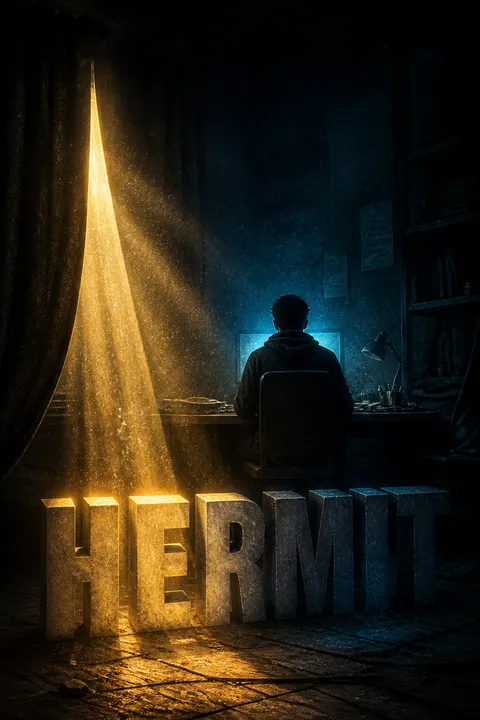
Trapped by habit, Jamie devolves into a hermit, his existence confined to one stinking room. Since leaving school—barely noted, rarely spoken to—he detaches from reality. Shows no ambition, dodges responsibility, passing time in between PlayStation sessions and online chats with Lee, never seeing him in person. Social interaction triggers panic; the world feels hostile, all tasks impossible. The only warmth is digital: staggered, awkward connection with Lee, food runs only made when desperation outbalances terror at going outside. His days and nights are blurred: nocturnal, greasy, sleep-deprived, hungry—trapped in inertia, sliding further from even his ma's reach.
Awkward Joab Talkings
Fiona and Jamie's gran bicker over how Jamie's been raised; Fiona wants to spare him pain, to parent with softness, but her mam sees only coddling and stunted growth. Attempts at encouragement turn into guilt trips and interrogations around the kitchen table: why hasn't Jamie gotten a joab, why does he never step outside, whose fault is his inertia? Jamie dawdles between apathy and shame, avoiding anything—work, college, apprenticeships—that would force him outside the comfort of his pit. Silence is easier than confrontation; emails and text offers for joab-hunts are met with shrugs, anger, and a sense of inevitable failure.
Lee an Poltergeist Truths
If Jamie's life is bleak, so's Lee's, at least online. Both confess to being virgins, isolated, and unskilled, passing time with YouTube scares and ghost stories. Jamie finally admits the "poltergeist" of childhood was his drunk da—a revelation met with the dark humour of shared generational trauma. They swap stories about absent fathers and death: personal, normalised pain. Late-night conversations with Lee are the only time Jamie feels seen, but even these are tinged by jealousy, suspicion, and his own stunted emotional skills. Lee suggests online subcultures—involuntary celibates, incel forums, and wider communities of loneliness, doubt, and hatred that begin to poison their thinking.
Generations o' Anxiety
Fiona looks back, seeing Jamie as a mirror of herself: shy, anxious, awkward and odd, shaped by the coldness and violence of her upbringing. She confesses to never saying she loved him—because her own parents never did—and wonders if softer parenting was a crueler mistake. Her memories are filled with regret, failed escape attempts from abusive relationships, and unresolved guilt. She battles the pressure o' her maw, her own fears, and the impossible weight of being 'enough' for Jamie. Their isolation is intertwined; Fiona cannot rescue her son from the apathy she's branded into him.
Online Freendships Form
Jamie and Lee's relationship is forged in darkness: two weird boys finding connection, banter, and fleeting belonging in gaming chat. When Lee visits for the first time, it's clumsy but precious—a rare moment when Jamie can be physically present with a pal instead of only a voice in his ear. Awkward hospitality, sharing cans and fags, confessions about personal hygiene and loneliness—these are massive steps for two shut-in, anxious lads. The outside world remains terrifying, but their bond represents possibility, even as it swirls with mutual self-loathing and ridicule.
Incel Ideology Dawns
Lee introduces Jamie to incel forums and language; their self-esteem immediately plummets. What started as banter becomes nastiness, as they find solace and justification for failures in a dark, misogynistic subculture. "Black pill" ideology—accepting they are genetically doomed losers—becomes gospel; empathy erodes. Jamie vacillates between shame and curiosity, hating the incel label but drawn by its explanations for why he's always felt excluded. Their conversations sour, angering at the world, their mothers, women in general. It all climaxes when Lee proposes—via his "mate" Seb—a magical escape: running away to a secret London flat for outcasts.
Maws an Maw's Failures
As Jamie withdraws, Fiona is left with simmering guilt and shame. She's regarded as a weirdo by colleagues, unable to connect even when kindness is shown. Hoping for change, she recounts childhood memories of Jamie's brief sparkle. But her anxiety festers: why does raising a boy alone feel impossible? Persistent family scrutiny, the legacy of her own trauma, the residue of domestic abuse, and crippling comparisons to other mothers—these batter away at her self-worth. Fiona's world contracts further every time Jamie spurns her help, and she cycles between hopeful resolve and abject despair.
Jenkin Memories, Grievances Surface
Fiona's relationship history is traumatic: her brutal ex, Danny, leaves an indelible shadow. Her inability to leave him quickly is a source of inner torment, her eventual victory marred by the lasting effects on both herself and Jamie. The past blurs into the present as Fiona wonders if she's capable of love, or if Danny hollowed her out. Only her own mother's hard-won strength yanks her free, briefly. But even as she claims independence, guilt and fear remain, poisoning her attempts at connecting with Jamie and leaving her less whole than she hopes.
Lee Steps Intae Reality
Lee's real-life visits, the intimacy of sharing a bed and stories, crack the shell of both boys' loneliness. Their connection is both genuine and tainted: online toxicity has already warped their identities and desires. The plan to run away to Seb's London commune gathers momentum—Lee, susceptible and desperate for affirmation and escape, leaps at the chance to belong. Jamie's resistance dissolves in the face of Lee's insistence and his own loathing for home. This chapter climaxes with the two boys finally leaving—setting the stage for everything to unravel.
Fiona's Haunted Histories
As the boys disappear, Fiona's life spins into a panic-soaked search, haunted by neighbour's gossip, old trauma, and accusatory texts. She's battered by internal and external accusations: did she fail Jamie? Is everyone convinced she's the villain? Danny re-emerges, full of threats and blame, her mother's old anger returns, and the eyes of the whole scheme seem on her. Fiona's a shell; self-harming, lost, she contemplates suicide, ultimately rescued by two kindly strangers. But the shame, fear and self-loathing remain. Her sense of self-worth, always paper-thin, is torn to bits by this most public of breakdowns.
Failed Escapes
Seb's "commune" turns out to be a filthy, joyless pit ruled by Seb's bitterness and control. Jamie and Lee are immediately stripped of agency: their phones taken, their identities further ground down. After a failed "initiation"—following women to terrify them—the reality becomes clear: Seb hopes for more. Fuelled by trauma, rage, and twisted logic, he commands the boys to carry out an acid attack. Lee deliberately misses, scalding only a dog, but the act devastates both, especially as Lee's darkest online secrets (sending pictures, rape fantasies) emerge. Desperate, ashamed and trapped, both lads realise the horror of the ideology and community that led them here.
False Hope, Missing
In the aftermath of the botched attack, Seb's fury turns physical. Jamie and Lee's attempts at escape prove useless; Seb's dominance is too strong, their agency crushed by months of self-doubt, internet poison, and trauma. At a train platform, Seb lashes out, eventually throwing Lee onto the tracks, causing his death. Jamie's witness to this horror is total; his sense of safety shatters. For Lee, every hope of escape is dashed; for Jamie, the guilt becomes inescapable. Meanwhile, back in Glasgow, community blame, shame and panic spread—mothers and neighbours equally unable to process such cruelty, loss, and randomness.
Panic and Paranoia
Police search efforts, online speculation, and the state of Jamie's room—a riot of squalor—become symbols of broader social breakdown. Fiona is interrogated, gossiped about, guilted by her own community and family. She sees her own mother's faults reflected in her parenting, sinking under shame, defensiveness, and bone-deep exhaustion. Jamie, traumatised and adrift in London, tries to find Lee, but is consumed by guilt, hunger and aimless wandering. Their agonies are parallel spirals, connected by grief and regret.
Off tae London
Fiona, broken in body and spirit, is delivered the news: Jamie is alive, Lee is dead. Jamie's return is fraught—full of apologies neither can ever properly speak. The mother-son relationship, so long fractured, is cautious, raw and tentative. The gulf of suffering cannot be bridged with hugs alone, but both agree to keep going—recognising, at last, that their mutual survival is a victory. In the silence that follows, through apologies, toast, and tea, the hope for a new beginning arises—tentative, unclear, but real.
London Chaos, Acid Schemes
In the aftermath of Lee's death and Seb's escape, blame and police inquiries swirl in both Glasgow and London. Lee's ma, overcome with loss, intertwines her grief with Fiona's. Jamie is left with enduring guilt for his role—both inaction and complicity in the patterns of violence and loneliness that led them beyond caring for themselves or others. The echoing void of loss—both of a pal and of any certainties—settles over all survivors.
Doom Spiral Homecoming
Recovery is messy. Guilt, trauma, and sadness linger in the newly cleaned house. As they reintegrate, Jamie and his ma begin to speak, fragile but honest, about their pain. There is no easy fix, only the admission that things must be different—and that the smallest gestures of love and effort might matter more than they ever realised. The cycles of shame, guilt, and silence won't be erased, but can, perhaps, be softened by mutual acknowledgment and, finally, the words "I love you."
Analysis
A brutal, darkly hilarious journey through the failures of love, mental health, and working-class survival
Chris McQueer's "Hermit" sits at the heart of contemporary Scottish life, a tale marked no by grand drama but by the overwhelming weight of everyday misery and connection starved of oxygen. Across generations, the book charts the impossible cycles: Jamie's and Fiona's lives both trapped in anxiety, economic precarity, unspoken violence, and a chronic inability to reach each other. The novel is as much about the failure of institutions—school, work, welfare, even digital spaces meant for communion—as it is about the hollowness wrought by trauma and neglect.
Through gallows humour, vernacular speech, and forensic psychological observation, McQueer exposes the harsh realities of contemporary masculinity—where "incel" mindsets are both source and symptom of rage, self-destruction, and camaraderie distorted into violence. Mothers are both saviours and scapegoats; sons, both victims and perpetrators. Yet, the tale resists despair: in the laughter, in the resilience of everyday routines—the very act of sitting down over bad toast and sweet tea—there's an ember of hope. For the hermits, just surviving, just trying again, is resistance. If love is rarely said, sometimes it's finally heard.
Review Summary
Hermit is widely praised for its dual-narrative structure, alternating between Jamie, a reclusive nineteen-year-old, and his mother Fiona. Readers commend McQueer's unflinching yet darkly humorous portrayal of incel culture and online radicalisation, highlighting how disturbingly realistic Jamie's gradual manipulation feels. The Scottish dialect adds authenticity and vivid characterisation. Common criticisms include a rushed ending and underdeveloped aftermath. Many compare it favourably to Young Mungo, and the audiobook narration receives particular praise. Overall rating: 4.16/5.
Characters
Jamie Skelton
Jamie's role is that of isolated protagonist; a young man whose self-confidence, social skills, and sense of worth have never developed past childhood. He's shaped by withdrawn, emotionally fearful parents: his maw, Fiona, incapable of affectionate displays; his da, split by violence and drink. Jamie is anxious, awkward, and adrift—comforted only by online games and connections, especially with Lee. The internet becomes the crooked community where his identity forms, but only deepens his sense of alienation and self-hatred. His journey, from failed interactions and self-neglect, through incel radicalisation, to real-world violence and trauma, is mirrored by his painful, halting stabs at reconciling with his mother—his need for love always at odds with his inability to give or receive it.
Fiona Skelton
Fiona is both narrator and anti-hero: a mother paralysed by guilt, shame, and the ongoing legacy of her own emotionally stunted upbringing. Her relationship with Jamie is defined by absence—of warmth, clear communication, and direct love. Scarred by her former partner's violence, unable to believe she's "enough," she clings to routines, cleaning and minor control, as life slides away from her. Fiona's perspective offers context to Jamie's stunted development, framing the struggle as generational, structural, and fraught with futility. Her one hope, too often lost, is that survival—hers and Jamie's—may count for something.
Lee McGonigle
Lee is Jamie's only real friend: a boy of sharp banter, digital bravado, and festering insecurity. Also isolated, Lee is both mirror and contrast: more outgoing, more manipulative, but equally prepared to believe the world has rigged itself against the likes of him. When exposed to Seb's incel ideology, Lee becomes both disciple and victim—parroting hate, threatening violence, seeking affirmation through belonging. In moments of drunken intimacy, he's vulnerable and warm; in toxicity, he's vindictive. His tragic fate (pushed to death by Seb after failing to commit violence) is the final, cruel symbol of isolation's wages.
Seb
Seb, the American anchor of the London "commune," is a twisted incel patriarch: he lures vulnerable lads with the promise o' kinship and escape, only to orchestrate ever-escalating psychological and physical violence. Traumatized, unreliable, and clearly predatory, he uses digital communities to groom, manipulate, and ultimately destroy boys desperate for belonging. His ideology is that of victimhood weaponised—against women, society, and his own followers. He becomes the demon at the heart of Jamie and Lee's London descent, his violence both literal and ideological.
Granny (Isabel)
Fiona's mother, Jamie's granny, is a force of nature—her love expressed in sharp commands, criticism, and the vigilant, practical survival tactics she learned through Glasgow poverty and violence. She expects resilience, holds others to her impossibly high standards, yet is a rare source of emergency protection (and the occasional hug). Her presence sharpens both Fiona's guilt and Jamie's sense of expectation, underscoring the hard reality of survival for working-class women.
Jamie's Da (Danny)
Danny is the missing centre of Jamie's early pain. Often drunk and chaotic, he's best remembered for his violence, volatility, and the suffocating, silent tension he brings to the home. Jamie associates physical affection mainly with his da post-pints; Fiona's trauma is marred by his legacy. Danny's brief, feckless re-appearances only deepen Jamie's confusion and Fiona's rage. He's a cautionary ghost: the man both boy and mother fear Jamie might become.
Jacqui (Lee's Ma)
Jacqui's story—emotionally neglected, seeking her missing son, haunted by guilt and failure—mirrors Fiona's, reinforcing the universality of both parental shame and the limits of maternal love in the face of mental health, poverty, and digital-era isolation. Her eventual bereavement (Lee's death) punctuates the novel's indictment of society's abandonment of struggling families.
Granny Skelton
Jamie's paternal grandmother is less visible but serves as a representation of unyielding traditional values, anxious toughness, and the complex web of family support and oversight that sometimes strangles as much as it saves.
Gillian (Fiona's Colleague)
Gillian represents an alternative life—a cheerful, supportive colleague, always keen for a blether, offering relief, sympathy, and the kind of conventional family stories Fiona can only envy. Her awkward matchmaking efforts, good-hearted gossip, and tangible concern cast the Skelton family's experience in sharp relief, highlighting what they lack in networks and confidence.
Mark (Fiona's Date)
Mark is a symbol of Fiona's near-escape from misery—a gentle but intrusive man, whose apparently innocent pursuit after a first date triggers panic, paranoia, and renewed questioning of Fiona's ability to love and trust. His brief intrusion brings to light the ways trauma shapes even the most mundane hopes for connection post-abuse.
Plot Devices
Dual-Narration, Shifting Viewpoints
The alternating perspectives of Jamie and Fiona allow the reader to see how isolation, mental health, and trauma echo between generations. Both narrators are deeply unreliable: Jamie's voice is hesitant, half-articulated, and cluttered by internal anxieties; Fiona's is marked by guilt, retrospective shame, and circular, defensive explanations. The interplay of these voices builds empathy, frustration, and, critically, reveals the gulf between lived intentions and experienced reality. At times, the cross-cutting jumps to Lee and Seb's points of view, reflecting the dispersal and diffusion of responsibility, blame, and violence.
Foreshadowing, Symbolism, Repetition
"Poltergeists" are a childish misreading of actual domestic violence—traumatic noises and terrors that symbolise the way Jamie's inner life is haunted by his father's rage. Throughout, objects (dirty rooms, old Gameboys, soggy socks, empty bottles) are repeated almost as totems—reminders of both squalor and comfort, evidence of inertia's grip. The outside world—in supermarkets, workplace chatter, the ever-present pressure of "the neighbours"—is a menacing, unknowable force promising both rescue and exposure.
Online Radicalization and the "Black Pill"
The forums, gaming chats, and digital communities are delivered with a palpable sense of both solace and escalating danger. The "black pill" is deployed both as a literal poison (Sulphuric acid bottle) and as an internal ideology: once swallowed, hope and empathy are replaced by resignation, loathing, and nihilistic violence. Seb's grooming, Lee's capitulation, Jamie's confused compliance—each is foreshadowed by earlier, smaller escalations and a continual drift from humour to horror.
Trapped Spaces and Cyclical Failure
Nearly every location—Jamie's bedroom, Fiona's house, the "commune" in London, even train platforms—is depicted as both fort and prison. Jamie's struggle to leave home mirrors Lee and Fiona's repeated, failed attempts at escape. Attempts to run away, improve, love, or restart are constantly undermined by ingrained habits, intrusive fears, or sheer exhaustion. Each new attempt produces opportunity for revelation but also for further collapse.
Download PDF
Download EPUB
.epub digital book format is ideal for reading ebooks on phones, tablets, and e-readers.








































