
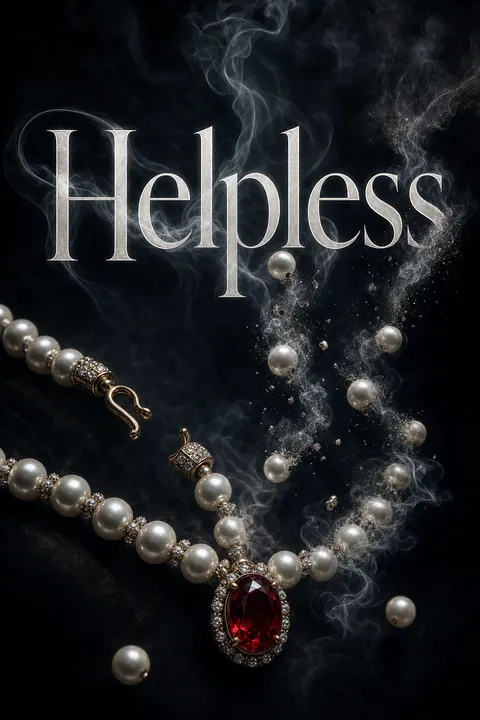


Plot Summary
A Funeral by the Lake
Twelve years after leaving the colleges, Faye Heron1 flies back for the funeral of PT,6 the film professor whose writing scholarship launched her Hollywood career. Campbell,3 PT's6 nephew and one of her few remaining college friends, asks her to speak at a lakeside ceremony scattering PT's6 ashes beside his drowned wife, Sarah.8
He warns that Henry,2 her old boyfriend and Campbell's3 lifelong companion, will attend with his wife and children. Faye,1 married but quietly unraveling, tells herself she came only to honor PT,6 though the thought of Henry2 electrifies her.
At the reception, scholarship student Emma King5 corners her with an unsettling claim: she, not the house cleaner, found PT6 dead, his hands covered in Band-Aids, hours after he abruptly canceled all his classes.
Knoll opens by braiding grief with appetite. Faye's ostensible mourning is a cover for erotic longing, establishing a narrator who curates her own motives even as she confesses them. The funeral setting foregrounds the novel's obsession with performance: eulogies, appearances, the choreography of who matters to whom. Emma's intrusive story plants the mystery engine while signaling Faye's condescension toward younger, hungrier women. Class anxiety hums beneath every interaction, the scholarship kid returning as a celebrity yet still feeling peripheral. The Band-Aids and canceled classes are dropped like breadcrumbs, promising that PT's tidy heart-attack death conceals something jagged underneath.
The Coerced Apology
Blocked in by Campbell's3 SUV, Faye1 follows Emma5 to the Sig Phi house, where Corrine's4 younger brother Win9 leads her upstairs to the room Henry2 and Campbell3 once shared. There sits Henry,2 hardened by age but still the man who once taught her that degradation could feel like devotion.
Campbell3 nudges him toward a long-overdue apology for how their relationship ended, the relationship Faye1 later mined for a viral, award-winning television episode about coercive control. Henry2 apologizes with unnerving tenderness, quietly orders Win9 to keep his hands off her, then leaves without warmth. Wounded yet thrilled, Faye1 realizes the old voltage between them still runs live. Back at her hotel, alone, she replays his voice again and again.
The reunion stages desire as power negotiation rather than romance. Henry's apology, extracted publicly, reads as ritual humiliation reversed, and Faye receives it like a proposal she cannot decline. Knoll exposes how thoroughly Faye has aestheticized her own damage, converting private submission into public art that the culture misread as victimhood. Win functions as a mirror, his casual grabbing highlighting the difference between crude entitlement and Henry's precise, consented control. The scene's charge comes from recognition: two people who understand each other's darkest wiring meeting across years of accumulated marriage, fame, and resentment, each measuring how the other has aged into someone both familiar and unreachable.
Coffee, Ashes, and an Arrangement
The next morning, before the dock ceremony, Faye1 and Henry2 share coffee and gleefully mock Emma's5 grandiose ambitions, savoring how seamlessly their minds still interlock. Henry2 mentions he kept some of her old clothes and offers to bring them to her hotel room after the service. During the scattering of PT's6 ashes, he steers her downwind, and their bodies remember each other.
Faye,1 trapped in a sexless marriage and beholden to a vindictive agency, decides this reunion will be exactly the reckless thing she craves, and gives him her room number. She also relays Emma's5 strange conviction that PT's6 bandaged hands and sudden death concealed foul play, a theory Henry2 helps her dismiss with practiced wit.
Complicity is the real intimacy here. Faye and Henry bond not through affection but through shared contempt, a folie a deux built on cruelty they both find intelligent. Knoll uses Emma as the object of their derision to dramatize how the powerful protect their world by mocking the aspirant. The ashes ceremony literalizes the theme of unfinished mourning bleeding into desire, the body reflexively answering an old master. Crucially, Faye's dismissal of Emma's suspicions is dramatic irony in motion: she rationalizes away the truth because acknowledging it would interrupt her own seduction, showing how appetite quietly edits perception.
Bourbon and a Betrayal
Henry2 arrives with a bag of her old fast fashion, mixes her a bourbon, and Faye1 braces for their charged encounter. Instead his warmth curdles into venom. He accuses her of massacring him before the world with her episode, admits the apology was only bait to get inside her room, and reveals he has already changed her passcodes and combed through her phone.
As sedation floods her limbs, Faye1 understands the drink was drugged. Henry2 calmly hijacks her digital life, notes that she has told everyone to leave her alone all week, and covers her mouth as she slips under. When someone knocks, he sends them away. Faye,1 unable to form a word, silently screams for help.
The seduction fantasy detonates into genuine violation, and Knoll weaponizes the reader's own anticipation of a sexy reunion. The chapter interrogates the thin membrane between the coercion Faye eroticizes and coercion that is simply criminal. Henry's grievance about the episode reframes the earlier award-winning narrative as a contested account, introducing the theme of who owns a shared story. His methodical seizure of her phone, passwords, and isolation exploits the modern condition where a person can vanish inside a life of curated unavailability. The drug erases her voice, the writer's most prized instrument, a chilling inversion of her power.
Captive at Lake Wanika
Faye1 comes to in the remote Adirondack cabin where Henry's2 mother once locked him as a boy, the door bolted from outside, the windows soundproofed. Over successive days he enforces a suffocating regimen: rationed water, granola bars he knows she loathes, and the methodical stripping of her Cartier bracelet, diamond studs, and locket.
He forces her to crawl and beg for water, reviving the submission dynamic that once bound them. Terrified yet grotesquely aroused, Faye1 cannot cleanly separate fear from want.
She attempts to flee by boat, forgets the primer bulb, and Henry2 drowns her nearly to blackout before hauling her back, visibly shaken that he almost killed her. As she loses consciousness, a woman's voice calls her name across the water.
Captivity externalizes the psyche the novel has been describing. The cabin, built to cage a child, becomes the stage for Faye's lifelong entanglement of love and confinement. Knoll refuses the clean victim narrative, insisting on Faye's arousal even inside genuine danger, which is the book's most transgressive gambit. The stripping of her expensive armor returns her to the scholarship girl who first felt owned and valued at once. Henry's terror when he nearly drowns her reveals his own loss of control, complicating the captor archetype. The disembodied voice on the water is a suspended thread, promising that the island is not as private as it seems.
What Henry Wants
Henry2 lays out his leverage: a scheduled Instagram post of Faye's1 cruelest private remarks, plus a flawless forged rejection to Caroline,12 the rival agent Faye1 secretly met to plot her escape from a marriage and agency controlled by her powerful brother-in-law. He insists this is not simple revenge, that he is somehow trying to save her life, and that what he truly needs is access to her email.
A suspicious-login timer keeps her locked out, so she cannot yet comply. Bewildered, Faye1 senses Henry2 is hiding the real stakes behind his cruelty. Their nights oscillate between menace and tenderness, and after he nearly kills her, he crawls into bed to warm her, and they fit together exactly as they used to.
Motive becomes the mystery's second engine. Henry's cryptic claim that he is protecting her scrambles the captor-victim binary and forces Faye, a professional storyteller, to reverse-engineer a plot she is trapped inside. The forged agent rejection shows how intimacy has become surveillance: Henry knows her professional lifelines better than her husband does. Knoll keeps the reader disoriented by pairing coercion with genuine caretaking, the same paradox that governs Faye's inner life. The withheld reason for the email obsession sustains narrative tension while deepening the sense that everyone around Faye has an agenda she has been too self-absorbed, or too aroused, to detect.
The Clubhouse Killing
When Henry2 motors to shore, Faye1 pries the rotted window frame loose and flees barefoot through a storm to the clubhouse, desperate for a phone. Inside she finds Campbell,3 who claims he is waiting for a signal. His warmth turns predatory. He corners her, makes her log into her freshly recovered email, and deletes PT's6 message and its attachment of Emma's script.
Understanding he means to kill her, Faye1 jams a pen into his ear, then, trapped again on the porch, bludgeons him with a heavy ceremonial stone. Campbell3 dies on the wet boards. Henry2 appears at the foot of the stairs, and rather than surrender, Faye1 runs, silently daring him to chase her, until he seizes her ankle inside a chimney.
The novel's placid, decent friend is revealed as its most ruthless operator, detonating Faye's assumptions about who is dangerous. Knoll stages the killing to expose Faye's own capacity for lethal action and, disturbingly, her pleasure in it, refusing to let her remain merely acted upon. The deleted email confirms that Emma's script is the story everyone is willing to kill to bury. Faye's decision to flee toward Henry rather than away from him crystallizes the book's central pathology: even in mortal danger she is drawn to the man who cages her. The chimney escape gestures toward the cracked-fireplace motif of cohesion and fate.
The Truth About Sarah
Bound to a chair, Faye1 extracts the story. Years earlier, Henry,2 driving drunk while Campbell3 clawed at his drugs, struck and killed Sarah8 on her dawn walk. Panicked, the two staged a suicide, forged a note beside a negative pregnancy test, pushed her rowing scull into the lake, and buried her body on PT's6 vast private land.
Emma's script, titled The Accident, exposed everything because Campbell,3 secretly her lover, had confessed it in a boastful stupor. PT6 read it, dug until he struck human bone, confronted both men, then died of the heart attack they left him alone to suffer. Henry2 swears he wants to protect Faye1 and still loves her. She commands him to beg, and their reunion turns consensual and shattering.
The central revelation reframes a private grief the campus mythologized as tragic suicide into a cover-up, indicting how the wealthy launder their crimes into acceptable sorrow. Sarah, longing for children, becomes doubly erased, first by death, then by a narrative that weaponized her infertility. Emma's script emerges as an act of romantic vengeance turned accidental justice, literature detonating a buried truth exactly as PT once taught Faye it should. The consensual sex arriving atop confessed manslaughter is deliberately obscene, forcing readers to sit in Faye's refusal to let atrocity extinguish desire. Her demand that Henry beg momentarily flips their hierarchy, exposing power as the couple's true erotic language.
Buying Emma's Silence
The morning after, Faye1 agrees to help Henry2 contain the fallout. They visit Emma,5 who believes Campbell3 left suddenly for a family emergency, and Faye1 dangles a production-assistant job plus vague promises of a Hollywood future in exchange for discretion. Emma,5 entitled and ravenous, negotiates upward, demanding her script be sold outright, and Faye,1 half-disgusted and half-envious of the girl's untested confidence, seals a fragile pact.
The three then set out to strand Campbell's3 SUV at the Albany train station, part of a cover story Faye1 only partly comprehends. On the long drive, Faye1 phones her husband,7 who has discovered her secret meeting with the rival agent12 and coldly demands one last chance to save their marriage.
Faye's complicity deepens, and the novel refuses to let her play innocent hostage. The transaction with Emma dramatizes how mentorship in Faye's world is really gatekeeping, opportunity dispensed as a muzzle. Knoll sharpens the generational contrast: Emma's serene belief that she deserves success wounds Faye, who earned everything through deprivation and now recognizes the black magic of her own drive. The husband's phone call reintroduces the marriage plot at its most brittle, revealing a man who mistakes possession for repair. Faye's willingness to launder a killing to protect her career shows ambition metastasizing into moral collapse, her survival instinct indistinguishable from careerism.
Corrine Points a Gun
Crossing back over the lake, Faye1 is ambushed by Corrine,4 who fakes a stranding then draws an antique pistol. Corrine4 reveals she wrote Sarah's8 suicide note twelve years ago to shield Campbell,3 and that she and Henry2 conspired to kill Campbell,3 an unwilling holdout blocking the lucrative sale of the family land.
Henry2 is selling because his bipolar wife's ruinous spending sprees bankrupted and evicted him. Corrine's4 scheme frames Emma,5 through her brother Win,9 for Campbell's3 death staged as a confessional overdose.
At gunpoint, the three trek through wilderness to Dorothy Parker's carved tree, where Henry2 and Corrine4 exhume the last of Sarah's8 bones and later scatter them into the lake, destroying the evidence before the acreage becomes public land.
Corrine's unmasking completes a portrait of complicity spanning both sexes and a decade, dismantling the reader's sympathy for the wronged wife. Knoll ties the conspiracy to real economic engines: land value, forest preservation, generational wealth defended by any means. The revelation that Henry sells not from greed but from a spouse's untreated illness recasts him as another person managed and manipulated, echoing the accusations once leveled at his controlling behavior. Exhuming Sarah beneath a poet's tree fuses literary myth with grotesque labor, the couple physically dismantling a woman to preserve their inheritance. The frame narrows: everyone is disposable, and Faye is now merely the next variable to be controlled.
The Tape and the Sirens
To lock in Faye's1 silence, Corrine4 demands a sex tape as collateral. Alone with Faye,1 Henry2 finally tells the whole truth of his financial ruin and confesses he performs dominance only because loving her openly once drove her away. Faye1 answers with her own root wound: a childhood of daycare beatings and parents who taught her she deserved punishment, forging her hunger for helplessness.
They film themselves, and she refuses to say she loves him, precisely because she does. At dawn, police arrive, having recovered her mud-stained note reading help, and take Corrine4 into custody. Henry2 and Faye1 synchronize their story, blaming Corrine4 for everything, and walk out uncuffed, reuniting before news cameras in the station parking lot.
The novel's psychological thesis surfaces here: Faye's eroticized helplessness is a childhood injury reenacted, love and punishment fused before she could name either. Henry's mirror confession, that his domination is a mask for unbearable tenderness, reveals both lovers performing selves to make intimacy survivable. The withheld declaration of love becomes the book's most piercing gesture, honesty disguised as refusal. The tape literalizes the theme of desire as evidence, pleasure converted into leverage. The abrupt police rescue and clean escape feel almost too tidy, a narrative seam Knoll leaves deliberately visible, priming the reader to question the reliability of everything just witnessed.
That's the End
Faye1 delivers her final line not to Henry2 but to six Hollywood executives. The entire abduction was her pitch for an erotic thriller. In reality, PT6 died of an ordinary heart attack, Henry2 attended the funeral with his wife and children and never even greeted her, and Campbell3 is alive in Connecticut.
What is true: Faye's1 husband7 never desired her, admitting he only wanted her when she seemed to need him, and their divorce has triggered a smear campaign orchestrated by his agent brother. Blacklisted and desperate for a hit, Faye1 has spun her marriage's humiliation and her lifelong craving for helplessness into fiction, daring an industry too frightened of litigation to buy a story no man would sue over.
The frame collapses inward, retroactively recasting the thriller as authored fantasy and confirming Faye as a supremely unreliable narrator. Knoll turns the reader's immersion into an indictment: we consumed a woman's manufactured captivity as entertainment, exactly as the industry does. The reveal weaponizes the novel's true subject, a sexless marriage and a woman erased by a husband who prized only her neediness. Fiction becomes Faye's counterattack, the same move that made her career, transmuting private degradation into commercial art. The pitch also exposes Hollywood's cowardice, willing to profit from female desire only when legally insulated, and Faye's genius for exploiting precisely that hypocrisy.
Epilogue
Los Angeles burns. Evacuated to a Montecito hotel, Faye1 crosses paths with Claire,11 the indie executive whose Palisades home may already be ash. Over a shared bottle of wine, Claire11 admits she wants to make the film, wagering that no man will sue by publicly confessing to a dead sex drive.
Faye,1 freshly divorced and freshly ruined, at last finds the champion her career needs. As she hangs up her jewelry, Claire11 notices the silver Tiffany heart at her throat, the very necklace from her story. Faye1 insists it was only fantasy, then tucks the pendant beneath her shirt, privately wondering whether she and Henry2 somehow rewrote their ending after all.
The wildfires literalize apocalypse as backdrop to renewal, the city's collapse mirroring Faye's razed reputation and marriage. Claire's championing arrives through solidarity between discarded women, and her cold logic about litigation confirms the novel's cynical account of what makes female stories sellable. The necklace is the epilogue's masterstroke: a physical object from a supposedly invented tale, seeding doubt about how much of the fantasy was confession. Knoll ends on calibrated ambiguity, letting Faye's whisper that they may have changed the ending suggest either delusion, wish, or buried fact. The unreliable narrator keeps her final secret, insisting that authorship, not truth, is the only power she trusts.
Analysis
Helpless is a thriller built as a hall of mirrors, using genre machinery to interrogate female desire, authorship, and the marketability of pain. Knoll's boldest move is her unreliable narrator: Faye1 tells a lurid captivity story so persuasively that the reader forgets to ask whether it happened, and the eventual reveal that it is a pitch turns our appetite for her suffering into the novel's real subject. We consumed a manufactured female ordeal exactly as Hollywood does, and Knoll makes us complicit. The book refuses the tidy vocabulary of victimhood. Faye1 insists her submission was chosen, that coercive control was a language she wanted, and the novel sits uncomfortably in the gap between consented degradation and genuine abuse, daring readers to hold both truths at once. Her eroticized helplessness is revealed as reenacted childhood injury, love and punishment welded together before she could name either, which lends the sexual material a mournful psychological logic rather than mere provocation. Class and money thread throughout: old wealth defends its private wilderness through murder and forgery, while the scholarship girl claws upward only to discover her success is on loan, revocable by a vengeful brother-in-law. Marriage receives an unsparing autopsy, a union starved not by cruelty but by absence, a husband7 who prized Faye's1 neediness over her personhood. Above all the novel argues that storytelling is power and revenge. Faye's1 lifelong method, converting humiliation into acclaimed fiction, is both her survival mechanism and her moral compromise, and the closing image of the necklace suggests she may have rewritten reality itself into something she could bear. Knoll delivers pulpy pleasure and literary unease simultaneously, leaving the reader unsure which parts to believe and certain only that Faye,1 the author inside the author, keeps her final secret.
Review Summary
Characters
Faye Heron
Ambitious Hollywood storytellerA writer, director, and one-time actress who rose from a scholarship childhood to Hollywood prominence, Faye narrates with dazzling self-awareness and cool cruelty. She is superlatively beautiful, medicated against her own brain chemistry, and privately starving inside a marriage that offers no desire. Her defining drive is a craving to be taken care of and dominated, a hunger she traces to a childhood of emotional deprivation and punishment framed as love. She observes everyone as raw material, unable to stop stealing for the page. Fiercely protective of her hard-won status, she fears erasure above all, and treats fear itself as fuel. Faye is both predator and victim of her own appetites, a woman who transmutes shame into art and rarely lets anyone see the smallest, truest version of herself.
Henry Spalding
Ex-lover, old-money heirFaye's1 college boyfriend, a tall, disarmingly handsome heir to an Adirondack fortune built on rustic furniture and private wilderness. Henry notices everything, a rare, unsettling attentiveness that once made Faye1 feel uniquely seen. He speaks in an aristocratic register and moves with predatory grace, capable of both meticulous cruelty and startling tenderness. Beneath the composure runs deep anxiety and a terror of losing what he loves, which curdles into a need to control. His dominance is less appetite than armor, a way to connect that spares him the vulnerability of open feeling. Raised by a mother who literally locked him away, Henry equates caretaking with confinement. He is Faye's1 mirror and match, the one person whose internal wiring runs complementary to her own.
Campbell Holland
Faye's decent old friendPT's6 nephew and Henry's2 inseparable companion since childhood, Campbell is handsome in a wholesome, mid-century way and famously well-mannered. One of Faye's1 few genuine college friendships, he remembered her favorite Gatorade flavor and quietly paid her way when she was broke. Married to Corrine4, father to young Tookie, he projects easy decency, though Faye1 glimpses something colder and meaner beneath the charm when grief strips his composure.
Corrine Holland
Campbell's aloof wifeA tan, makeup-averse New England blueblood who married Campbell3 straight out of college, trading a promising writing life for a certain kind of comfort. Corrine is sharp, glacial, and openly disdainful of Faye1, whom she pegged early as an operator. Beneath the brittle superiority lies real grief and thwarted longing, particularly around motherhood, which she guards with vicious composure and dry, cutting wit.
Emma King
Hungry scholarship studentThe current Granger10 Scholar, brunette and perpetually tanned, who submitted her script to Faye1 and idolizes her. Emma is overfamiliar, entitled, and ravenous for discovery, radiating the serene confidence of someone raised to believe she deserves good things. Faye1 finds her grating and enviable in equal measure. Emma's ambitions and grievances make her both a nuisance and, quietly, a person who knows too much.
PT (Professor Toner)
Beloved late mentorThe longtime film professor whose writing scholarship transformed Faye's1 life, a tall, health-conscious man in perpetual black T-shirts with an inherited heart condition. He nurtured raw talent he called neon and taught that the richest drama lives in messy human dynamics. Widower of Sarah8, he offered Faye1 the parental attention she never received. His recent death is the event that summons everyone back to the lake.
Faye's husband
Estranged producing partnerFaye's1 producing partner and spouse of roughly seven years, a successful, health-obsessed industry figure who began as a fellow assistant and once rescued her at a job interview. Charming and outwardly devoted, he is emotionally muted and averse to sex, wanting Faye1 most when she seemed to need him. His powerful agent brother shields and threatens their world, making any divorce perilous for Faye1.
Sarah
PT's drowned wifePT's6 younger wife, a robust, unglamorous crew coach with a booming voice, who longed for children and, after repeated pregnancy losses, was believed to have drowned herself in the lake. Her fate haunts the community and the narrative.
Win (Winthrop)
Corrine's smug brotherCorrine's4 much younger brother, a fraternity fixture in sockless loafers who fancies himself charming and needles others for sport. A fan of Faye's1 show, he trails her around campus and shares a barbed, knowing history with Emma5.
Jonathan Granger
Scholarship-funding producerThe celebrated producer who endowed PT's6 writing scholarship and gave Faye1 her first Hollywood job. Checked out and coasting on reputation, he embodies the industry's gatekeeping machinery and the myth of meritocracy Faye1 both benefited from and saw through.
Claire
Indie film executiveA bespectacled head of mid-budget development who encounters Faye1 during the wildfires. Blunt, smart, and unafraid of provocative material, she sees commercial promise where others see legal risk, and becomes an unexpected ally to Faye's1 stalled career.
Caroline Hasser
Rival poaching agentThe head of a competing agency's literary department who courts Faye1 over lunch. Meeting her represents Faye's1 quiet plan to escape a marriage and representation controlled by her brother-in-law, a secret with dangerous professional consequences.
Plot Devices
The Episode
Fame born from private painFaye's1 career-making television episode, which dramatized her breakup with Henry2 as a story of coercive control, complete with a boyfriend faking a heart attack to sabotage her flight. Celebrated as a feminist parable, it won her an Emmy while misrepresenting a dynamic Faye1 insists she desired. The episode recurs as grievance, as origin myth, and as proof that Faye's1 signature move is converting intimate humiliation into acclaimed fiction. It seeds the novel's central question of who owns a shared story and establishes Faye's1 method long before the finale reframes the entire narrative through that same lens of authored revenge.
Emma's script, The Accident
Buried crime made textA screenplay submitted by scholarship student Emma5 that dramatizes a decade-old killing and cover-up. Its existence drives the mystery: why a mentor6 died distressed, why an email must be deleted, why people will kill to keep it unread. The script functions as literature detonating truth, the exact power PT6 taught Faye1 to wield. It links the affair, the confession, and the exhumation into one causal chain, demonstrating the novel's belief that stories are weapons capable of unearthing what money and silence tried to bury forever.
The Tiffany heart necklace
Token of submission and doubtA silver Tiffany heart Henry2 once bought Faye1 as part of their layaway game, a reward she was to earn through submission but never wore. Symbol of their economy of control, desire, and helplessness, it recurs across timelines as memory and provocation. In the final pages it reappears as a physical object bridging Faye's1 supposedly invented story and her actual life, seeding uncertainty about how much of the fantasy was confession. The necklace crystallizes the novel's blur between authored myth and lived truth, a small silver question mark left deliberately unanswered.
The pitch frame
Story-within-a-story revealThe structural sleight of hand revealing that the abduction narrative is a movie Faye1 is pitching to executives. The device recasts the entire captivity as authored fantasy and Faye1 as an unreliable narrator, turning the reader's immersion into an indictment of how audiences consume manufactured female suffering as entertainment. It also foregrounds the true, unglamorous story beneath: a sexless marriage and a smear campaign. The frame demonstrates Faye's1 core power, transmuting private degradation into commercial fiction, and leaves the boundary between invention and reality permanently unstable.
Helplessness
Wound driving desireThe novel's psychological throughline, the craving to be dominated and cared for that Faye1 traces to a childhood of daycare punishment and parents who fused love with humiliation. Introduced through her marriage's failures and her memories with Henry2, it culminates in confessions that reframe her eroticized submission as reenacted injury. The device unifies the sexual, familial, and professional strands, explaining why Faye1 is drawn toward captors and controllers, and why she seeks scenarios that let her feel small. It elevates the thriller into a study of how early damage scripts adult desire.
Download PDF
Download EPUB
.epub digital book format is ideal for reading ebooks on phones, tablets, and e-readers.








































