Plot Summary
Birthmarks and Old Scars
A baby is born, and her mother, haunted by a past she cannot name, wonders what her body remembers that her mind cannot. The birth is both a miracle and a reckoning, as the mother's thoughts drift to scars—physical and emotional—that mark her as part of a lineage of women who run, who disappear, who survive. The newborn's downy hair and fragile body are a revelation, but the mother's joy is shadowed by the knowledge that everything in the world is edged with danger. The past is never far, and the inheritance she fears most is not one of love, but of secrets and pain. The story begins with the hope of new beginnings, but the weight of old scars lingers.
Haunted Pines Return
Callie Hauser, newly appointed chief of police in her Pine Barrens hometown, struggles to fit in with her all-male squad and the insular, secretive community. Her mother, Jenna, is a local legend for all the wrong reasons—her drinking, her disappearances, her wild stories about the Jersey Devil. When Callie pulls Jenna over for a DUI, their fraught relationship is laid bare, exposing old wounds and resentments. The Pine Barrens, with its endless trees and hidden histories, presses in on Callie, reminding her that the past is never truly gone. The woods are thick with secrets, and Callie's return is both a homecoming and a confrontation with everything she tried to leave behind.
Mothers, Daughters, and Devils
The relationship between mothers and daughters is explored through Callie and Jenna, as well as through the local legend of the Jersey Devil—a story of a mother's curse and a child transformed into a monster. Jenna's belief in the devil is both a coping mechanism and a metaphor for the dangers lurking in the woods and within themselves. The community's folklore becomes a lens for understanding the cycles of pain, abandonment, and survival that define the women's lives. The devil is not just a creature in the trees, but the embodiment of generational trauma, addiction, and the secrets that haunt families.
The Baby Doe Secret
A decades-old mystery resurfaces: the unsolved case of Baby Doe, a newborn found dead in the woods. Callie learns that her mother, Jenna, discovered the body as a teenager—a trauma that shaped her life. The case file is thin, the evidence sparse, but the emotional weight is immense. As Callie investigates, she uncovers a broken bracelet at the scene, a symbol of a lost girlhood and a clue to the identity of the baby's mother. The Baby Doe case becomes a crucible for Callie, forcing her to confront her own family's history and the failures of the community to protect its most vulnerable.
Sisters in the Shadows
Annabelle and Sabrina Riley, twins growing up in neglect and poverty, are inseparable yet divided by jealousy, betrayal, and the attention of an older man known only as the Coyote. Their mother is gone, their father absent, and the sisters are left to navigate adolescence alone. Sabrina is wild, magnetic, and reckless; Annabelle is studious, desperate to be good. Their bond is tested by secrets—pregnancy, violence, and the intrusion of predatory men. The woods are both sanctuary and threat, and the sisters' story is one of love, rivalry, and the desperate search for escape.
The Coyote's Trail
The Coyote, an older man with ties to the local police, preys on vulnerable girls like Sabrina and Annabelle. His relationships with them are marked by manipulation, secrecy, and abuse. The community's silence and the complicity of authority figures allow him to operate unchecked. The sisters' lives spiral as Sabrina becomes entangled with the Coyote, and Annabelle, in a moment of longing and confusion, crosses a line that will haunt her forever. The Coyote's trail is littered with broken girls and broken promises, and his shadow looms over the entire narrative.
Broken Beads, Broken Bonds
A broken amber bracelet, once their mother's, becomes the symbol of the sisters' fractured relationship and the unraveling of their lives. Sabrina disappears after a confrontation with the Coyote, leaving Annabelle alone and pregnant. Desperate and abandoned, Annabelle gives birth in secret, her pain and fear culminating in the abandonment of her newborn—Baby Doe. The act is both a crime and a tragedy, born of isolation and hopelessness. The broken beads mark the spot where everything changed, and the consequences ripple outward for decades.
The Good Daughter's Burden
Callie, driven by a need to prove herself and to make sense of her own origins, becomes obsessed with solving the Baby Doe case. Her investigation is both professional and personal, as she uncovers connections between her family, the Rileys, and the Caputo family—a local dynasty with secrets of their own. Callie's pursuit of justice is complicated by her loyalty to her mother, her friendship with Jane, and her own sense of guilt and inadequacy. The burden of being the "good daughter" weighs heavily, as she navigates a web of lies, betrayals, and half-truths.
Generations of Silence
The narrative expands to include Blair, Annabelle's daughter, who stumbles upon her mother's hidden past through old photographs and genetic testing. The silence that protected Annabelle for years becomes a prison, and the truth, once revealed, threatens to destroy the family she built. The community's collective silence—about abuse, addiction, and violence—enables cycles of harm to continue. The cost of keeping secrets is measured in lost lives, broken relationships, and the perpetuation of trauma across generations.
The Devil in the Pines
As the investigation deepens, the lines between victim and perpetrator blur. The Caputo family's influence shields the guilty and punishes the vulnerable. The myth of the Jersey Devil becomes a metaphor for the community's willingness to scapegoat women—labeling them as monsters, sluts, or head cases—while ignoring the real sources of harm. The true evil is not supernatural, but systemic: the failure to protect, to believe, to intervene. The woods are haunted not by devils, but by the ghosts of those the community failed.
Unraveling the Past
DNA evidence links Callie to Baby Doe, revealing that she and Annabelle are half-sisters, both daughters of the Coyote—Luke Caputo. The truth shatters Callie's sense of self and forces a reckoning with her mother, Jenna, who finally confesses her own victimization and the choices she made to survive. Annabelle, exposed by her daughter's genetic test, is arrested and put on trial. The past, long buried, is unearthed, and the characters must confront the consequences of their actions and the failures of those who should have protected them.
The Price of Belonging
As the Caputo family's crimes come to light, the community is forced to confront its own complicity. Jane, Callie's best friend, is revealed to have been involved in the local drug trade, further blurring the lines between good and bad, victim and perpetrator. The price of belonging—to a family, a community, a legacy—is steep, and forgiveness is neither simple nor guaranteed. The characters must decide what they are willing to sacrifice to protect those they love, and what it means to truly belong.
Truths Unearthed
The climax unfolds in the woods, where Callie is nearly killed by Damien Caputo, desperate to protect his family's secrets. Jane intervenes, saving Callie and ensuring that the truth about Sabrina's murder and the Caputo family's crimes is finally exposed. The bodies—literal and metaphorical—are unearthed, and justice, though imperfect, is served. The survivors are left to pick up the pieces, haunted by what they have lost and what they have learned.
The Family's Undoing
Annabelle stands trial for the death of Baby Doe, her family torn apart by the revelations. The Internet and Modern Judgment and media descend, turning her into a symbol of both evil and victimhood. The Caputo patriarchs are arrested, and the community is forced to reckon with the legacy of silence and complicity. The survivors—Callie, Jane, Jenna, Blair—struggle to rebuild their lives in the aftermath, seeking meaning and connection in the ruins of their families.
Justice and Judgment
Annabelle is convicted of involuntary manslaughter, serving time but ultimately surviving. Jenna, finally sober, finds a measure of peace and reconciliation with Callie. The Caputo men are brought to justice, but the scars remain. The law can only do so much; true justice is elusive, and the judgment of the community is often harsher than any court. The characters grapple with what it means to forgive, to atone, and to move forward.
Forgiveness and Farewell
In the aftermath, the survivors seek healing. Annabelle and Jenna exchange letters, finding solace in shared pain and understanding. Callie, no longer a cop, begins to imagine a new life with Adrian, her partner. Jane and Opal start over, free from the Caputo family's shadow. The past cannot be undone, but the possibility of grace—of forgiveness, of new beginnings—remains. The woods, once a place of danger and loss, become a site of remembrance and renewal.
The Heather Blooms Again
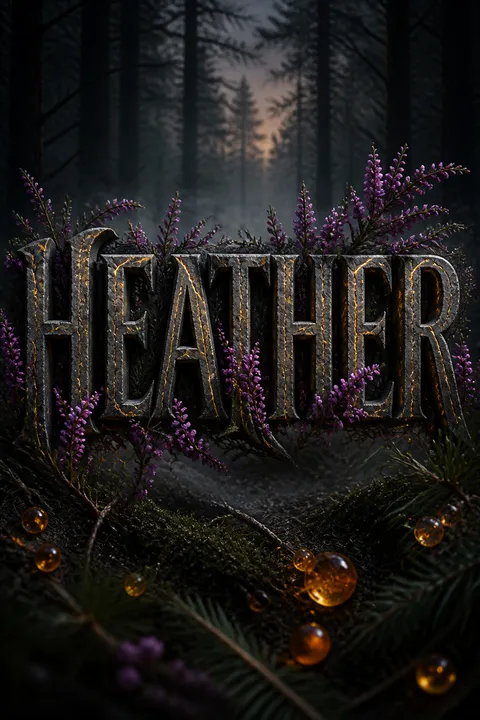
The novel ends with Annabelle returning to the Pine Barrens, laying flowers on the graves of her sister and her lost child—Heather. The heather, a hardy plant unique to the region, becomes a symbol of survival and resilience. The story closes with the acknowledgment that while the past is inescapable, the future is unwritten. The women who survived—scarred but unbroken—carry forward the lessons of pain, love, and endurance. The heather blooms again, a testament to the possibility of hope.
Analysis
Heather is a powerful meditation on the intergenerational transmission of trauma, the failures of institutions to protect the vulnerable, and the resilience of women in the face of violence and neglect. Caitlin Mullen weaves together a literary thriller and a family saga, using the conventions of crime fiction to interrogate deeper questions of guilt, complicity, and redemption. The novel's structure—braiding past and present, multiple perspectives, and the slow revelation of secrets—mirrors the psychological complexity of its characters and the ways in which the past is never truly past. At its heart, Heather is about the cost of silence: the ways families and communities conspire to hide the truth, and the damage wrought by shame and secrecy. Yet the novel is also a testament to survival—the possibility of forgiveness, the endurance of love, and the hope for renewal. The heather blooms again, not because the past is forgotten, but because those who remain choose to remember, to speak, and to begin again.
Review Summary
Characters
Callie Hauser
Callie is the novel's central protagonist, a woman shaped by abandonment, trauma, and a relentless drive to impose order on a chaotic world. Raised by her alcoholic mother, Jenna, Callie becomes chief of police in her insular hometown, determined to prove herself and to solve the mysteries that have haunted her family for generations. Her relationships—with her mother, her best friend Jane, and her eventual partner Adrian—are marked by both loyalty and distance, as she struggles to reconcile her need for control with her longing for connection. Callie's investigation into the Baby Doe case becomes a journey of self-discovery, as she uncovers her own origins and the web of secrets that bind her to the Rileys and the Caputos. Her psychological arc is one of reckoning—with her own limitations, her family's legacy, and the possibility of forgiveness.
Annabelle Riley / Iris Owens
Annabelle, later known as Iris, is the "good" twin—studious, responsible, desperate to escape her family's dysfunction. Her life is defined by her bond with her sister Sabrina, her longing for safety, and her catastrophic choices in the face of abandonment and abuse. After giving birth in secret and abandoning her newborn, Annabelle flees, reinventing herself as Iris and building a new life defined by order, motherhood, and service. Her psychological journey is one of profound guilt, shame, and the desperate need to belong. The revelation of her past threatens to destroy everything she has built, but also offers the possibility of truth and, ultimately, a measure of grace.
Jenna Barry
Jenna is Callie's mother, a woman marked by trauma, addiction, and the burden of secrets. Her life is a series of disappearances—literal and emotional—as she struggles to cope with the pain of her own girlhood and the choices she made as a teenager. Jenna's belief in the Jersey Devil is both a metaphor for her fears and a shield against the world's dangers. Her relationship with Callie is fraught, defined by both love and resentment. Jenna's eventual sobriety and confession are acts of courage, and her arc is one of survival, regret, and the hope for reconciliation.
Sabrina Riley
Sabrina is Annabelle's twin, the "bad" sister—reckless, magnetic, and drawn to danger. Her relationship with the Coyote is both a rebellion and a tragedy, as she seeks love and power in all the wrong places. Sabrina's disappearance is the novel's central mystery, and her fate—murdered to protect the Caputo family's secrets—embodies the vulnerability of girls in a world that refuses to protect them. Sabrina is both a victim and a fighter, her memory haunting Annabelle and the narrative as a whole.
Jane Jefferies
Jane is Callie's closest friend, a woman who shares a history of parental neglect and the determination to build a better life. Her marriage into the Caputo family entangles her in the town's web of secrets, and her own involvement in the local drug trade complicates her role as victim and accomplice. Jane's arc is one of resilience, as she survives a near-fatal accident, confronts her husband's crimes, and ultimately chooses truth over loyalty. Her relationship with Callie is a testament to the power—and limits—of female friendship.
Blair Owens
Blair is Annabelle's daughter, a teenager whose curiosity and resourcefulness lead her to uncover her mother's hidden past. Through old photographs and genetic testing, Blair becomes the unwitting catalyst for the novel's final reckoning. Her psychological journey is one of confusion, anger, and the search for identity. Blair's love for her mother is tested but endures, and her arc embodies the novel's central question: can we ever truly escape the past?
Luke Caputo (The Coyote)
Luke is the Coyote, the older man who preys on vulnerable girls and uses his power and connections to evade consequences. As the son of the police chief and brother to Jane's husband, Luke is both insider and outsider, his crimes shielded by the community's silence. He is the biological father of both Callie and Baby Doe, making him the dark heart of the novel's web of secrets. Luke's psychological profile is one of entitlement, manipulation, and the capacity for violence. His eventual exposure is both justice and a reminder of the damage wrought by unchecked power.
Damien Caputo
Damien is Jane's husband, a man torn between loyalty to his family and the demands of conscience. His complicity in the Caputo family's crimes—covering up Sabrina's murder, attempting to kill Callie—makes him both villain and victim, shaped by the expectations and failures of his lineage. Damien's psychological arc is one of desperation, as he tries to protect his family at any cost, only to become the agent of their undoing.
Frank Caputo
Frank is the retired police chief, father to Luke and Damien, and the architect of the community's culture of silence. His influence shields the guilty and punishes the vulnerable, and his loyalty to family overrides his sense of justice. Frank's arc is one of decline, as the truth about his family's crimes comes to light and his legacy is undone. He embodies the dangers of unchecked authority and the cost of prioritizing reputation over truth.
Opal Jefferies
Opal is Jane and Damien's young daughter, a symbol of innocence and the possibility of renewal. Her presence is a reminder of what is at stake—the next generation, the hope for a better future. Opal's vulnerability and resilience are central to the novel's emotional core, and her survival is a testament to the strength of the women who protect her.
Plot Devices
Interwoven Timelines and Perspectives
The novel employs a braided narrative, shifting between Callie's present-day investigation, Annabelle's past, and Blair's contemporary coming-of-age. This structure allows for the gradual revelation of secrets, the layering of perspectives, and the deepening of emotional resonance. The use of first-person and close third-person narration immerses the reader in the characters' psychological landscapes, while the intercutting of timelines builds suspense and empathy. The narrative's recursive structure mirrors the cycles of trauma and survival that define the characters' lives.
Symbolism and Motifs
Objects—broken bracelets, pressed flowers, old photographs—serve as tangible links to the past and as symbols of loss, memory, and hope. The heather plant, unique to the Pine Barrens, becomes a motif for resilience and survival. The legend of the Jersey Devil is both a literal story and a metaphor for the ways women are demonized and scapegoated. The woods themselves are a living presence, both sanctuary and threat, embodying the novel's themes of concealment, danger, and endurance.
Foreshadowing and Red Herrings
The novel is rich in foreshadowing—early references to scars, secrets, and the dangers of the woods hint at later revelations. Red herrings abound: the identity of Baby Doe's mother, the true nature of the Caputo family's crimes, the source of the drug trade. The gradual unspooling of clues mirrors the characters' own journeys toward understanding, and the reader is invited to piece together the truth alongside them.
The Internet and Modern Judgment
The novel explores the impact of social media and true-crime culture on the pursuit of justice and the experience of shame. The exposure of Annabelle's secret becomes a public spectacle, with the internet serving as both judge and jury. The tension between private pain and public judgment is a central theme, raising questions about who gets to tell the story and what justice really means.
Download PDF
Download EPUB
.epub digital book format is ideal for reading ebooks on phones, tablets, and e-readers.








































