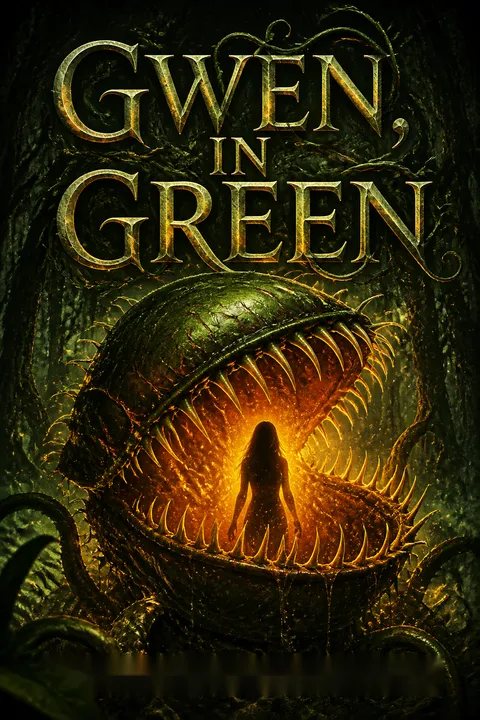

Plot Summary
Gwen's Gentle Heart
Gwen Ferrier is introduced as a woman whose compassion extends to every stray animal and child in her orbit, earning her the nickname "Marsha, the Enormous Mother." Despite her childlessness, her home is a haven for the vulnerable, and her gentle nature is evident in her interactions with both people and animals. Yet, Gwen's kindness is shadowed by a deep-seated sense of being unloved and ugly, a legacy of her troubled childhood. This empathy, while a source of strength, also makes her vulnerable to the strange and menacing forces lurking in her new environment. Her encounter with a rabid opossum during a visit to the land that will become her home foreshadows the unnatural threats she will face, setting the tone for a story where the boundaries between human and nature blur ominously.
Haunted by the Past
Gwen's marriage to George is loving but complicated by her unresolved issues from a childhood marked by neglect and shame. Her mother's promiscuity and the ridicule Gwen endured at school have left her with deep sexual insecurities and a sense of unworthiness. George's patience and affection help her overcome some of these barriers, but the scars remain. Their relationship is tested by infidelity and the struggle to reconcile Gwen's need for emotional safety with her desire for intimacy. The narrative delves into Gwen's internal battles, her attempts to accept herself, and the lingering impact of her mother's choices. This chapter establishes the psychological foundation for Gwen's later vulnerability to the supernatural and ecological forces that will come to dominate her life.
Dream House, Dark Roots
With an inheritance, George and Gwen purchase a large, isolated tract of land on Pine Tree Island, near a nuclear power plant under construction. Their dream house rises amid the chaos of bulldozers and environmental devastation, symbolizing both hope and hubris. The couple's happiness is palpable as they settle into their new life, but the land's history and the ongoing destruction around them cast a shadow. Gwen's connection to the natural world deepens as she tends to plants and observes the wildlife, but she also begins to sense an undercurrent of unease. The juxtaposition of domestic bliss and ecological violence sets the stage for the supernatural elements that will soon intrude, as the land's pain becomes Gwen's own.
Nightmares and New Beginnings
As George clears the land, Gwen is plagued by vivid nightmares of dismemberment and death, her sleep disturbed by visions of pain and mutilation. The once-friendly house becomes a place of shadows and fear, mirroring her growing sense of alienation. Gwen's old insecurities resurface, affecting her relationship with George and her ability to find joy in their new life. She turns to painting and caring for plants as a way to cope, but the dreams persist, hinting at a deeper connection between her psyche and the suffering of the land. The chapter explores the interplay between personal trauma and environmental destruction, suggesting that Gwen's nightmares are both a symptom and a warning.
The Forest's Revenge
The ecological violence surrounding the Ferriers' home begins to manifest in real-world tragedies. Their beloved dog, Mandy, dies after ingesting poisonous plants, and Gwen is haunted by the idea that the land itself is retaliating against the human intrusion. She becomes obsessed with the variety of toxic flora around her, seeing in them both a threat and a form of communication. George dismisses her concerns, but Gwen's intuition tells her that something is deeply wrong. The chapter marks a turning point as the boundary between Gwen's empathy for nature and her own mental stability starts to erode, foreshadowing the supernatural possession that will soon take hold.
Possessed by the Green
Gwen's connection to the land intensifies, culminating in a fugue state where she seduces a visiting meter reader in a trance-like, almost ritualistic act. The experience leaves her wracked with guilt and suicidal despair, but she is saved by her cat, Satan, who attacks her as she attempts to end her life. This violent intervention jolts Gwen back to reality, but she is left shaken and confused about her own agency. The incident marks the beginning of Gwen's possession by the collective pain and will of the land, as her body becomes a conduit for forces beyond her understanding. The chapter explores themes of agency, guilt, and the porous boundaries between self and environment.
Descent into Madness
Gwen's mental state deteriorates as she seeks help from Dr. Irving King, an elderly psychiatrist. Their sessions reveal Gwen's deep identification with the suffering of plants and animals, and her inability to separate her own pain from that of the land. Dr. King is intrigued by her case, sensing echoes of a previous patient, Evelyn Rogers, who exhibited similar symptoms decades earlier. Despite therapy, Gwen's condition worsens, and she becomes increasingly isolated, her actions driven by impulses she cannot control. The chapter highlights the limitations of psychological intervention in the face of supernatural or ecological trauma, and the growing sense that Gwen is not merely ill, but transformed.
Venus Flytraps Awaken
Gwen discovers a colony of Venus flytraps near the pond and becomes fascinated by their predatory nature. She transplants them into her home, feeding them raw meat and observing their reactions. George, ever the tinkerer, uses a polygraph to measure the plants' responses, discovering that they react to thoughts and threats, as if they possess a form of consciousness. The flytraps become a symbol of the land's sentience and its capacity for both beauty and violence. Gwen's identification with the plants deepens, and she begins to speak of them as if they are kin, hinting at an alien origin and a collective intelligence that transcends individual life forms.
The Island's Secret Pain
As the destruction of the marshes and forests accelerates, Gwen's suffering becomes unbearable. She experiences the pain of the land as her own, and the only relief comes through intense, often indiscriminate sexual encounters with local boys and men. These acts are not driven by desire, but by a desperate need to drown out the agony of mass death. The narrative draws a parallel between Gwen's compulsions and the earlier case of Evelyn Rogers, suggesting a cyclical pattern of possession and revenge tied to the land's ongoing violation. The chapter explores the intersection of sexuality, violence, and ecological trauma, blurring the lines between victim and perpetrator.
Blood in the Woods
The pain Gwen experiences reaches a breaking point as bulldozer operators clearing the land begin to die under mysterious and violent circumstances. Gwen, under the influence of the land's collective will, lures and kills several men, burying their bodies in the woods. The murders are both an act of revenge and a futile attempt to balance the scales of destruction. The community is unsettled by the disappearances, but the true nature of the threat remains hidden. Gwen's actions are depicted as both monstrous and sympathetic, a manifestation of the land's agony and her own psychological unraveling.
The Plant That Screams
George's experiments with the polygraph reveal that plants, especially the Venus flytraps, respond to human emotions and intentions, "fainting" when threatened and reacting to thoughts of harm. This discovery challenges the couple's understanding of consciousness and morality, raising questions about the ethics of killing even the most passive forms of life. Gwen's bond with the plants becomes more pronounced, and she begins to speak of a collective "we" that includes herself, the flytraps, and the mysterious entities in the pond. The chapter underscores the novel's central theme: the interconnectedness of all life and the consequences of ignoring that bond.
The Therapist's Dilemma
Dr. King, increasingly obsessed with Gwen's case, uncovers the history of Evelyn Rogers, a former patient who exhibited similar symptoms and was linked to a series of murders during a previous wave of ecological destruction. King's attempts to understand and help Gwen lead him into dangerous territory, as he becomes both confidant and potential victim. Gwen, recognizing the threat he poses to her secret, ultimately poisons and suffocates him, ensuring that the cycle of violence and silence continues. The chapter explores the limits of rational inquiry in the face of the irrational and the deadly consequences of seeking truth in a world governed by forces beyond human control.
The Cycle Repeats
The narrative reveals that Gwen is not the first woman to be possessed by the land's pain; Evelyn Rogers, decades earlier, experienced the same compulsion to avenge the suffering of the trees and plants. Both women's stories are marked by sexual excess, violence, and eventual self-destruction, suggesting that the land selects its vessels from among those most attuned to its agony. The cycle of possession and revenge is tied to periods of intense ecological disruption, with each new wave of destruction awakening the dormant consciousness in the pond and its chosen avatar. The chapter emphasizes the inevitability of recurrence as long as the land continues to be violated.
The Boys' Secret
Local boys, drawn by rumors of a mysterious, sexually available woman on the island, become unwitting participants in Gwen's attempts to alleviate her pain. Their encounters are both a rite of passage and a symptom of the island's corruption, as the line between pleasure and compulsion blurs. The boys' stories spread through the community, fueling gossip and speculation, but the true nature of Gwen's suffering remains hidden. The chapter highlights the ways in which trauma and violence ripple outward, affecting even those on the periphery of the central drama.
Echoes of Evelyn Rogers
Dr. King's investigation into the history of Pine Tree Island uncovers the tragic story of Evelyn Rogers, whose sexual compulsions and acts of violence mirrored Gwen's own. The parallels between the two women suggest a supernatural inheritance, with the land's pain passing from one generation to the next. The discovery of multiple bodies from the past reinforces the sense of a cursed place, where human and ecological suffering are inextricably linked. The chapter serves as both a revelation and a warning, underscoring the futility of trying to escape the island's dark legacy.
Massacre in the Marsh
The construction of the canal and the clearing of the marshes result in the wholesale slaughter of plant and animal life, an agony that Gwen experiences as her own. The scale of the destruction overwhelms her, driving her to ever more desperate acts in an attempt to numb the pain. The narrative draws explicit parallels between ecological and human genocide, challenging the reader to confront the moral implications of environmental violence. Gwen's suffering becomes a symbol of the land's own, and her actions, however extreme, are depicted as a form of resistance against annihilation.
Gwen's Final Transformation
As the destruction reaches its climax, Gwen's identity dissolves entirely into the collective consciousness of the land and the alien intelligence in the pond. Her actions become increasingly erratic and violent, culminating in the murder of her husband, George, when he threatens the sanctuary of the pond's plants. Gwen's final act is one of self-immolation and surrender, as she burns down the house and drowns herself in the pond, merging her essence with the ancient, suffering intelligence that has possessed her. The chapter is both a tragedy and a release, as Gwen finds peace only in annihilation.
The End of George
George, oblivious to the depth of Gwen's transformation, becomes the final victim of the land's vengeance. His attempts to clear the pond's plants trigger a violent response from Gwen, who, in a state of possession, brutally murders him. The act is depicted with clinical detachment, emphasizing the inevitability of his fate and the totality of Gwen's surrender to the land's will. The destruction of the house and Gwen's subsequent suicide mark the end of the Ferriers' story, but not the end of the island's curse.
The Land Remains
In the wake of the Ferriers' deaths, the land returns to a state of uneasy equilibrium. Attempts to sell and develop the property are thwarted by a series of bizarre animal attacks and accidents, suggesting that the land itself is hostile to human intrusion. The real estate agent's frustration and the prospective buyers' fear underscore the persistence of the island's curse. The chapter serves as a coda, reminding the reader that the cycle of violence and possession is not easily broken, and that the land's memory is long.
The Cycle Continues
The novel ends with the suggestion that the forces which possessed Gwen and Evelyn before her remain dormant but vigilant, ready to awaken whenever the land is threatened anew. The real estate agent's musings about the inevitability of future development hint at the certainty of recurrence, as human ambition and ecological ignorance collide once more. The final image is one of unresolved tension, with the land waiting patiently for its next defender—and avenger.
Analysis
A modern ecological horror parable"Gwen, in Green" is a haunting meditation on the consequences of ecological destruction, filtered through the lens of psychological horror and supernatural possession. The novel explores the porous boundaries between human and nonhuman life, suggesting that the pain inflicted on the land reverberates through sensitive individuals, driving them to acts of violence and self-destruction. Gwen's journey from gentle caretaker to possessed avenger is both a personal tragedy and a broader commentary on the costs of ignoring the interconnectedness of all life. The recurring motif of plant consciousness challenges anthropocentric assumptions and raises uncomfortable questions about the ethics of progress and development. The story's cyclical structure, with its echoes of past tragedies and the inevitability of recurrence, serves as a warning about the dangers of repeating history without learning from it. Ultimately, the novel suggests that true healing is impossible without acknowledging and addressing the deep wounds inflicted on the natural world—a lesson that resonates powerfully in an era of environmental crisis.
Review Summary
Reviews for Gwen, in Green are mixed, averaging 3.33/5. Fans praise its eco-gothic atmosphere, compelling character development, and clever blend of horror, science fiction, and sexuality. Many appreciate it as a fascinating 1970s time capsule, republished under the "Paperbacks From Hell" series. Critics, however, find the excessive sex scenes tiresome, the pacing slow, and the dated attitudes toward gender and race difficult to overlook. Most agree the premise is intriguing—nature using a woman as a vessel for revenge—even if the execution divides readers.
People Also Read



Characters
Gwen Ferrier
Gwen is the emotional and psychological center of the novel, a woman whose deep empathy for animals and plants makes her uniquely vulnerable to the suffering of the land. Her traumatic childhood, marked by neglect and shame, leaves her with profound insecurities and a desperate need for love and acceptance. Gwen's marriage to George offers her stability, but her unresolved issues and sensitivity to her environment set the stage for her eventual possession by the land's collective pain. As the story progresses, Gwen's identity dissolves into that of the suffering island, her actions driven by forces beyond her control. She becomes both victim and perpetrator, her violence a reflection of the land's agony and her own psychological unraveling. Gwen's arc is a tragic exploration of the costs of empathy in a world indifferent to suffering.
George Ferrier
George is Gwen's devoted husband, a practical and good-natured man whose love for Gwen is genuine but ultimately insufficient to save her. His background in engineering and business makes him skeptical of Gwen's growing obsession with the land and its pain. George's attempts to rationalize and control their environment—through building, clearing, and experimenting—put him at odds with the supernatural forces at work. His inability to understand or accept Gwen's transformation leads to his downfall, as he becomes the final victim of the land's vengeance. George's character embodies the well-meaning but ultimately destructive tendencies of modern man, blind to the deeper currents of suffering around him.
Dr. Irving King
Dr. King is an elderly, experienced psychiatrist drawn into Gwen's orbit by her increasingly bizarre symptoms. His professional curiosity is piqued by the parallels between Gwen and a former patient, Evelyn Rogers, whose case remains unresolved in his mind. King's attempts to help Gwen are motivated by both compassion and a desire for intellectual closure, but his inability to grasp the supernatural dimensions of her condition proves fatal. His death at Gwen's hands is both a consequence of his meddling and a symbol of the limits of rational inquiry in the face of irrational, ecological trauma. King's arc is a meditation on the dangers of curiosity and the hubris of believing that all mysteries can be solved.
Evelyn Rogers
Evelyn Rogers is a spectral presence in the novel, her story unfolding through Dr. King's recollections and the island's dark history. Like Gwen, Evelyn was possessed by the land's pain during a period of ecological destruction, her compulsions leading to sexual excess and murder. Her actions are both a warning and a template for Gwen's own descent, suggesting that the land selects its vessels from among those most attuned to its suffering. Evelyn's legacy haunts the island, her unresolved trauma echoing through the generations and reinforcing the cyclical nature of the curse.
Jack Flores
Flores is the site supervisor for the canal and power plant construction, a man whose pride in his work blinds him to the ecological devastation he oversees. His death at Gwen's hands is both a personal tragedy and a symbolic act of revenge by the land. Flores represents the forces of progress and development, indifferent to the suffering they cause, and his fate serves as a cautionary tale about the costs of ignoring the interconnectedness of all life.
Satan (the cat)
Satan, Gwen's black cat, plays a pivotal role in saving her from suicide, attacking her at the crucial moment and preventing her death. The cat's actions are depicted as both instinctual and influenced by the supernatural forces at work on the island. Satan's intervention underscores the theme of animal sensitivity to unseen dangers and the possibility of interspecies communication in times of crisis.
The Venus Flytraps
The Venus flytraps discovered by Gwen are more than just unusual flora; they are depicted as sentient, possibly alien beings with the ability to communicate and influence human behavior. Their reactions to threats and their role in the island's ecosystem make them both symbols and agents of the land's collective will. The flytraps' presence reinforces the novel's themes of consciousness, empathy, and the blurred boundaries between human and nonhuman life.
The Island Boys (Don, Tommy, others)
The local boys who become involved with Gwen are both victims and beneficiaries of her attempts to alleviate her pain through sexual encounters. Their stories serve as a lens through which the community perceives Gwen's transformation, and their experiences highlight the ripple effects of trauma and violence. The boys' innocence and curiosity are contrasted with the darkness at the heart of the island, emphasizing the loss of innocence that accompanies contact with the supernatural.
The Real Estate Man
The real estate agent who attempts to sell the Ferriers' land after their deaths serves as a pragmatic observer of the island's ongoing strangeness. His encounters with bizarre animal behavior and his inability to find buyers underscore the persistence of the land's curse and the futility of human attempts to control or profit from a place marked by so much suffering.
Ruth Henley
Ruth is Dr. King's longtime office assistant, a practical and compassionate woman who helps manage his files and, after his death, ensures the destruction of his records. Her relationship with King is marked by mutual respect and unspoken affection, and her role in the story is to provide continuity and closure as the cycle of violence and secrecy comes to an end.
Plot Devices
Ecological Possession and Revenge
The central plot device of the novel is the idea that the land, when subjected to mass destruction, can possess sensitive individuals—specifically women like Gwen and Evelyn—and use them as instruments of revenge. This possession is both psychological and supernatural, blurring the lines between mental illness and genuine haunting. The pain of the land is experienced as physical and emotional agony, driving the possessed to acts of violence and sexual compulsion as a means of coping and retaliation. The cyclical nature of this possession, tied to waves of ecological disruption, reinforces the theme of history repeating itself as long as the underlying trauma remains unaddressed.
Plant Consciousness and Telepathy
The novel employs the device of plant consciousness, using George's polygraph experiments to demonstrate that plants can sense and respond to human emotions and intentions. This discovery challenges the characters' assumptions about the boundaries of consciousness and raises ethical questions about the treatment of all living things. The Venus flytraps, in particular, are depicted as both symbols and agents of an alien intelligence, capable of influencing human behavior and communicating distress.
Foreshadowing and Recurrence
The story is structured around the recurrence of similar events across generations, with the experiences of Evelyn Rogers serving as both a warning and a template for Gwen's own descent. Foreshadowing is used extensively, with early incidents (such as the rabid opossum and the deaths of animals) hinting at the larger pattern of possession and revenge. The repetition of certain motifs—sexual compulsion, murder, ecological destruction—reinforces the sense of inevitability and the inescapability of the island's curse.
Psychological Horror and Unreliable Perception
The novel employs psychological horror by immersing the reader in Gwen's increasingly fragmented and unreliable perspective. Her nightmares, fugue states, and shifting sense of self create an atmosphere of uncertainty, making it difficult to distinguish between genuine supernatural events and the manifestations of mental illness. This ambiguity heightens the tension and underscores the theme of the porous boundaries between self and environment.
Symbolism of the Pond and Flytraps
The clear pond and the Venus flytraps serve as central symbols in the novel, representing both the alien intelligence that possesses Gwen and the possibility of communication across species. The pond is a site of both death and rebirth, a place where the boundaries between human and nonhuman dissolve. The flytraps, with their predatory nature and alien origins, embody the dual capacity for beauty and violence inherent in all life.
Download PDF
Download EPUB
.epub digital book format is ideal for reading ebooks on phones, tablets, and e-readers.








































