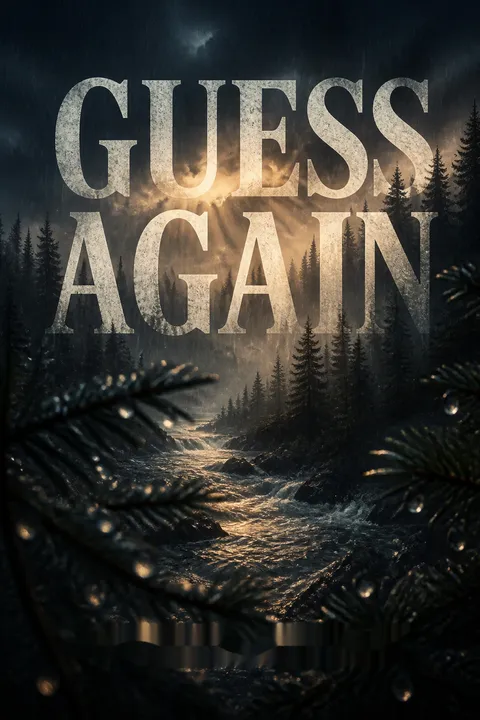
Plot Summary
Unretirement and Old Wounds
Ethan Hall, once a top investigator for Wisconsin's DCI, has rebuilt his life as an ER doctor, leaving behind the trauma of hunting child predators. But when his old partner Pete Kramer, dying of ALS, asks him to look into the cold case of Callie Jones—a senator's daughter who vanished a decade ago—Ethan is pulled back into the world he tried to escape. The request is more than a favor; it's a dying man's last hope for closure, and Ethan's own unresolved grief over his father's murder by notorious killer Francis Bernard resurfaces. The emotional cost of returning to his old life is high, but Ethan can't refuse.
The Governor's Desperate Plea
Governor Mark Jones, Callie's father, leverages his political clout to reopen his daughter's case, assembling a team that includes Ethan and Pete. The governor's grief is raw, his marriage destroyed by the loss, and his political ambitions forever shadowed by the unsolved disappearance. He offers Ethan a deal: solve the case, and his crushing medical school debt will be erased. The stakes are personal and political, and the pressure to deliver answers is immense. Ethan's sense of duty and guilt compels him to accept, setting the investigation in motion.
The Girl Who Vanished
Callie Jones was the star of Cherryview—athlete, scholar, and beloved daughter. But beneath the surface, she struggled with family dysfunction, a controlling mother, a distant father, and a predatory stepfather. Her best friend Lindsay Larkin recalls their strained friendship the summer Callie disappeared, hinting at secrets Callie kept even from her. As Ethan reconstructs Callie's last days, he uncovers a web of pressure, forbidden love, and a pregnancy Callie tried to hide. The perfect life was a fragile illusion, and the truth is buried in the details of her final hours.
The Prisoner's Leverage
Francis Bernard, infamous for killing Ethan's father and suspected in a string of murders, sits in solitary confinement. Yet, he claims to know what happened to Callie Jones. Through cryptic messages and manipulations, Francis dangles information, demanding a transfer to a less restrictive prison in exchange for the location of Callie's body and the rescue of another missing woman, Portia Vail. His power comes not from freedom, but from the secrets he hoards and the desperate need of those on the outside. Ethan is forced into a dangerous negotiation, knowing Francis's games are never simple.
The Obsession of Eugenia
Eugenia Morgan, suffering from hybristophilia, is obsessed with Francis Bernard. She builds a shrine to him, follows his instructions to the letter, and becomes his accomplice in orchestrating events from the outside. Eugenia's identity blurs as she assumes new personas, manipulates evidence, and ultimately becomes both pawn and player in Francis's escape plan. Her psychological unraveling is both tragic and terrifying, as love becomes a weapon wielded by a master manipulator.
The Past Resurfaces
As Ethan investigates, he discovers chilling parallels between Callie's disappearance and the Lake Michigan Massacres—unsolved murders of women with black heart tattoos on their chests, crimes for which Francis was suspected but never charged. The past bleeds into the present as Portia Vail is abducted in a copycat scenario, and evidence points to a network of obsession, revenge, and psychological trauma. The investigation becomes a race against time, with Ethan haunted by his father's legacy and the specter of unfinished evil.
The Coach's Secret
Blake Cordis, Callie's young volleyball coach, is revealed as her secret lover and the father of her unborn child. Their relationship, hidden behind prepaid phones and encrypted texts, is fraught with risk and shame. When Callie decides to keep the baby, she is lured to her death by a message she believes is from Blake. The truth is more complex: the phone was stolen, and someone else sent the fatal text. Blake's life is destroyed by suspicion, but he is not the monster everyone believes.
The Prepaid Phone
The investigation hinges on a prepaid Samsung phone Callie bought before her disappearance. With the help of tech guru Christian Malone, Ethan recovers deleted texts that reveal Callie's plans and her trust in Blake. The phone, hidden for years, is found only because Francis Bernard leads Ethan to it, raising questions about how a prisoner could know so much. The phone is both a key to the mystery and a symbol of the layers of deception at play.
The Anonymous Confession
Lindsay Larkin, now a successful psychologist, runs an online therapy platform that allows clients to remain anonymous. When someone logs in and confesses to killing Callie, Ethan and Christian race to break the encryption. The confession appears to come from Blake, but deeper hacking reveals it was a frame job—Lindsay herself, driven by jealousy and heartbreak, orchestrated Callie's death and the framing of Blake. The digital age has made secrets easier to keep—and to weaponize.
The Killer's Accomplice
Eugenia's role as Francis's accomplice is revealed to be even more complex: she is not Eugenia at all, but Harriett Alshon, a woman who assumed Eugenia's identity to carry out Francis's plans. Harriett's transformation is complete—she kills Eugenia, helps Francis escape, and becomes his partner in crime. The lines between self and other, love and violence, are obliterated in her devotion to Francis. The investigation is confounded by her ability to become someone else entirely.
The Parole Hearing
Francis's parole hearing is a crucible for Ethan and Maddie, both victims of his violence. Their testimonies are raw and powerful, but the system's limitations are clear—Francis is eligible for release in a few years regardless of their pleas. The hearing is a reminder that justice is often imperfect, and that the wounds of the past are never fully healed. The emotional stakes are heightened as Francis continues to manipulate from behind bars.
The Copycat and the Shrine
The discovery of Portia Vail, alive but traumatized, in a basement shrine to Francis, echoes the horrors of the past. The copycat crimes are not mere imitation—they are the product of a cult-like devotion to Francis, fueled by hybristophilia and psychological manipulation. The investigation uncovers a network of enablers, each drawn to the darkness at the center of the story. The line between victim and perpetrator blurs, and the cycle of violence threatens to repeat.
The Trap Is Set
Francis's transfer is the culmination of his long game. With Harriett's help, he escapes a prison transport in a bloody ambush, killing guards and disappearing into the wilderness. The authorities are left scrambling, and Ethan realizes too late that every step has been orchestrated. The trap closes not just on the investigators, but on everyone touched by Francis's evil. The final hunt begins, with Ethan and Maddie as the ultimate targets.
The Prison Break
The storm-lashed climax unfolds at Ethan's remote cabin, where Maddie is attacked by Harriett and Francis. In a brutal fight, Maddie is wounded but manages to kill Harriett with a spear. Ethan arrives in time to save Maddie from Francis, and the two men battle through the raging river. Francis disappears, presumed dead, but his body is never found. The violence is both cathartic and unresolved, leaving scars that will never fully heal.
The Framed and the Framer
The aftermath reveals Lindsay's full role in the tragedy: driven by jealousy over Blake, she killed Callie, framed Blake, and manipulated Francis to cover her tracks. Her confession, hidden behind layers of digital security, is finally uncovered. But before she can be brought to justice, Francis finds and kills her, completing his own cycle of vengeance. The truth is ugly, and the cost of uncovering it is high.
The Final Hunt
Ethan and Maddie, both physically and emotionally wounded, struggle to rebuild their lives. The discovery of Callie's body brings closure to some, but the revelation that Ethan's own father was Francis's partner in the original murders shatters his sense of self. The sins of the past are inescapable, and the legacy of violence continues to haunt the survivors. The hunt for Francis is never truly over.
The River's Judgment
The river that claimed Francis's body becomes a symbol of unresolved justice. Despite exhaustive searches, his body is never found, leaving open the possibility of his survival. The ambiguity is both a curse and a relief—closure is denied, but so is the finality of defeat. The river, like the story, refuses to give easy answers.
The Legacy of Monsters
A year later, Ethan is a broken man, haunted by the revelation that his father was a serial killer. The evidence—photos, tapes, and a final letter from Francis—forces him to confront the darkness in his own lineage. When new murders occur, echoing the old pattern, Ethan is called back to the hunt. The cycle of violence, guilt, and pursuit continues, and the question remains: can the legacy of monsters ever be broken?
Analysis
Charlie Donlea's Guess Again is a masterclass in modern crime fiction, blending psychological suspense, procedural investigation, and deep character study. At its core, the novel is about the inescapability of the past—the way trauma, secrets, and violence echo across generations, shaping lives and destinies. The story interrogates the nature of evil, not as an external force, but as something that can be inherited, nurtured, and even loved. Through its complex structure and shifting perspectives, the book challenges the reader to question what is true, who can be trusted, and whether justice is ever truly possible. The use of technology—encrypted texts, anonymous therapy sessions, digital evidence—reflects the anxieties of the modern age, where privacy and identity are both fragile and weaponized. Ultimately, Guess Again is a meditation on guilt, obsession, and the search for redemption. It suggests that closure is an illusion, that the legacy of monsters is never fully erased, and that the only way forward is to confront the darkness within ourselves. The novel's final image—Ethan, broken but resolved, agreeing to hunt the killer who may be his own blood—captures the story's haunting ambiguity and its refusal to offer easy answers.
Review Summary
Guess Again receives strong praise with a 4.18 rating. Readers highlight Charlie Donlea's masterful plotting, addictive pacing, and shocking twists. Most found the mystery unpredictable, praising protagonist Ethan Hall and the cat-and-mouse dynamic with serial killer Francis. The cold case structure and dual timelines kept readers hooked, though some found too many characters and time jumps distracting. Several noted predictable twists and plot holes. Many loved the cliffhanger ending and hope for a sequel, while others were disappointed by the lack of resolution. The audiobook narration received high marks.
People Also Read





Characters
Ethan Hall
Ethan is a man divided—once a brilliant investigator, now an ER doctor seeking redemption from the horrors he witnessed. His father's murder by Francis Bernard left him with deep scars, and his return to the world of criminal investigation is both a duty and a torment. Ethan's relationships are marked by guilt and a need to protect, especially with Maddie, the only woman to survive Francis's violence. His journey is one of confronting the darkness within and without, and his ultimate challenge is accepting the monstrous truth about his own father.
Maddie Jacobson
Maddie is the sole survivor of the Lake Michigan Killer, bearing both physical and psychological scars. Her relationship with Ethan is forged in shared trauma, and her determination to keep Francis behind bars is matched only by her vulnerability. Maddie's resilience is tested repeatedly, and her survival is both a triumph and a burden. She represents the cost of violence and the possibility of healing, even when the past refuses to stay buried.
Francis Bernard
Francis is the story's dark heart—a killer whose charm, intelligence, and ruthlessness make him both terrifying and compelling. His ability to control events from prison, manipulate accomplices, and orchestrate his own escape speaks to a mind that is always several moves ahead. Francis's relationship with Ethan is deeply personal, and his final revelations about Ethan's father add a layer of tragedy to his evil. He is both a product and a creator of obsession.
Lindsay Larkin
Lindsay is Callie's former best friend, now a successful psychologist with a hidden darkness. Her jealousy over Blake and Callie drives her to murder, and her intelligence allows her to frame others and manipulate digital evidence. Lindsay's psychological complexity is profound—she is both victim and perpetrator, driven by love, rejection, and a need for control. Her ultimate fate is a testament to the destructive power of unresolved trauma.
Blake Cordis
Blake is the young volleyball coach whose affair with Callie sets the tragedy in motion. His genuine love for Callie is overshadowed by the scandal of their relationship and the suspicion that follows her death. Blake is both a victim of circumstance and his own poor choices, manipulated by Lindsay and haunted by the consequences. His life is a cautionary tale of secrets, shame, and the dangers of forbidden love.
Pete Kramer
Pete is Ethan's former partner, whose ALS diagnosis gives him a sense of urgency and clarity. His request to Ethan to solve Callie's case is both a final act of friendship and a way to find meaning in his own mortality. Pete's presence is a reminder of the cost of the work they did, and his death marks the end of an era. He is the story's conscience, urging Ethan to confront the truth.
Eugenia Morgan / Harriett Alshon
Eugenia, later revealed as Harriett, is the embodiment of hybristophilia—her love for Francis drives her to murder, identity theft, and self-destruction. Her ability to assume new identities and carry out complex plans makes her both a formidable accomplice and a tragic figure. Her devotion is exploited by Francis, and her end is both inevitable and pitiable.
Mark Jones
The governor's public power is matched by private pain. His relentless pursuit of answers for Callie's disappearance is both a quest for justice and a way to atone for his failures as a father. Mark's willingness to bend the rules and use his influence is driven by love, but also by guilt. He is a man who cannot let go, and his story is one of loss and the limits of power.
Christian Malone
Christian is a former Silicon Valley star who aids Ethan with his technical expertise. His skills are crucial in breaking digital barriers and uncovering hidden truths. Christian's outsider status and dry humor provide relief from the story's darkness, and his friendship with Ethan is a reminder that help can come from unexpected places.
Kai Benjamin
Kai is the Chippewa elder who welcomes Ethan and Maddie to Lake Morikawa, offering wisdom, support, and ultimately his life. His murder by Francis is a devastating blow, symbolizing the loss of innocence and the reach of evil. Kai's presence is a link to tradition, community, and the possibility of peace.
Plot Devices
Dual Timelines and Interwoven Narratives
The novel masterfully weaves together events from 2015 and 2025, using flashbacks, interviews, and recovered evidence to slowly unravel the mystery of Callie's disappearance. This structure allows for dramatic irony, as the reader often knows more than the characters, and creates a sense of inevitability as the past's unresolved crimes resurface in the present.
Unreliable Narrators and Shifting Perspectives
The story is told through multiple viewpoints—Ethan, Maddie, Lindsay, Francis, and others—each with their own biases, secrets, and blind spots. This device keeps the reader guessing, as confessions, memories, and digital evidence are all subject to manipulation. The ultimate revelation of Lindsay as the killer is a gut-punch, made possible by the careful layering of perspectives.
Foreshadowing and Symbolism
The black heart tattoo, the prepaid phone, and the shrine to Francis are all symbols that foreshadow the story's twists. The river and the storm serve as metaphors for chaos, cleansing, and the impossibility of true closure. The use of Elton John's "Goodbye Yellow Brick Road" as a recurring song underscores themes of escape, regret, and the search for home.
Psychological Manipulation and Obsession
The novel explores hybristophilia, obsessive love disorder, and the ways in which trauma can warp desire. Characters are driven to extremes by their need for connection, revenge, or validation. Francis's ability to manipulate others, Lindsay's need to control the narrative, and Harriett's willingness to become someone else all speak to the power of psychological compulsion.
Red Herrings and Misdirection
The investigation is littered with suspects, motives, and misleading evidence. The framing of Blake, the anonymous confession, and the shifting identities of the accomplices all serve to keep the reader—and the investigators—off balance. The final revelations are earned through careful unraveling of these threads.
The Legacy of Violence
The ultimate twist—that Ethan's father was Francis's partner in the original murders—reframes the entire narrative. The sins of the past are not just historical, but genetic and psychological, forcing Ethan to confront the possibility that evil is part of his own inheritance. The story ends with the suggestion that the cycle may never truly be broken.
Download PDF
Download EPUB
.epub digital book format is ideal for reading ebooks on phones, tablets, and e-readers.








































