

Key Takeaways
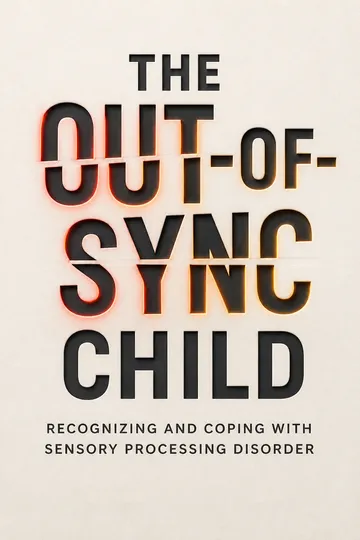
1. An "In-Sync" Child Thrives Through Integrated Movement.
When you are In Sync, your movements are efficient and fluid.
Optimal functioning. An "In-Sync" child moves with ease, feels comfortable in their own body, and functions effectively across all aspects of life. This comfort translates into better emotional security, social interactions, and overall engagement with the world. The ability to move efficiently and fluidly is a hallmark of a well-integrated sensory-motor system.
Holistic well-being. Being In Sync extends beyond just physical prowess; it encompasses emotional stability and social grace. Children who are comfortable in their bodies are more likely to:
- Join in group games
- Try new activities
- Function well in a classroom
- Make friends easily
- Maintain personal organization
Feeling good. The correlation between movement and well-being is profound. Just as adults feel better after physical activity, children benefit immensely from purposeful movement experiences. This program aims to cultivate this inherent comfort and efficiency, ensuring children develop the foundational skills needed for lifelong success and a positive self-image.
2. Modern Life Creates "Out-of-Sync" Developmental Challenges.
We are concerned that children have neither the freedom nor the inclination to move and play the way they did years ago.
Altered childhood landscape. The 21st-century childhood, characterized by excessive electronic playtime and screen-time, has significantly reduced opportunities for crucial physical and creative activity. This shift away from active, three-dimensional exploration towards sedentary, screen-based tasks is a major contributor to developmental problems.
Consequences of sedentary living. This lack of movement disrupts the natural body-brain connection, leading to a rapid increase in children with delayed basic physical and perceptual skill development. The book highlights several concerning issues stemming from this "out-of-sync culture":
- Sensory processing disorder
- Visual and auditory processing difficulties
- Learning and academic challenges
- Poor organization and social skills
- Increased childhood anxiety and obesity
Misguided priorities. Many parents and educators mistakenly believe that accelerating academic learning through sedentary tasks like video programs and flash cards is beneficial. However, this approach overlooks the fundamental role of movement in building the neural pathways necessary for mature thinking and learning. A walk along the river, for instance, is often more developmentally appropriate than a computer program for a young child.
3. Movement is the Essential Foundation for All Child Development.
Early motor development is one of the most important factors in the physical, emotional, academic, and overall success of your child.
Igniting intelligence. Physical activity is the basic connection that ignites a lifetime of intelligence. As children naturally engage in activities like running, catching balls, and rolling down hills, their brains learn fundamental concepts such as up/down, right/left, and forward/back. These experiences are crucial for developing the skills needed for reading, writing, and overall integration.
Building strong roots. The developing child can be likened to a tree, where strong roots lead to a sturdy, thriving individual. These "roots" are nourished by movement, which continuously integrates sensory, perceptual motor, and visual skills. Without these foundational experiences, a child's development can be compromised, leading to difficulties in various areas.
Beyond academics. While academic skills are often prioritized, the book emphasizes that they are built upon a robust foundation of motor development. Children who miss out on these early movement adventures may struggle with seemingly simple tasks, impacting their confidence and engagement. Movement is not just about physical health; it's about preparing the entire child for successful interaction with their world.
4. Three Core "Roots" Drive In-Sync Development: Sensory, Perceptual Motor, and Visual Skills.
We think of a child’s roots as having three major components—sensory processing skills, perceptual motor skills, and visual skills.
Interconnected systems. An In-Sync child's development is rooted in the continuous integration of three primary skill sets. These components begin developing before or soon after birth and are refined through movement. For example, balancing on one foot with eyes open is easy, but closing them makes it challenging, illustrating the interrelationship of these systems.
Sensory processing skills: These are the foundational senses that interpret information from the body and environment.
- Tactile: Receiving and responding to touch sensations (e.g., wearing various textures, using utensils).
- Vestibular: Processing gravity and movement through the inner ear, crucial for balance, muscle tone, vision, and hearing (e.g., standing upright, riding a bike).
- Proprioceptive: Unconscious awareness of muscle and joint position, informing force and movement (e.g., stomping vs. tiptoeing, writing pressure).
Perceptual motor and visual skills: Built upon a sound sensory base, these skills allow for coordinated interaction with the world.
- Perceptual Motor: Balance, bilateral coordination (using both sides of the body), body awareness, directionality, laterality (awareness of body sides), midline crossing, motor planning, and spatial awareness.
- Visual: Acuity (sight measurement), binocularity (using both eyes as a team for depth perception), and visual tracking (watching moving targets).
5. Child Development is a Sequential Journey, Not a Race: Slow is Better.
Times may change, but the time required for a child to grow and develop never will.
No shortcuts. Human development follows a natural, unhurried sequence that cannot be rushed. The modern emphasis on instant gratification and early academic achievement often leads to attempts to accelerate learning, which can be detrimental. Allowing a child ample time to master foundational skills is a gift, not a waste.
Value of lingering. "Sooner does not mean better." Teaching a child a skill before they are developmentally ready can result in "splinter skills"—isolated abilities that don't integrate into broader development. Children often know when they are ready to move to the next level, and allowing them to linger at a stage, like crawling, strengthens crucial underlying skills.
- Crawling: Develops vestibular, tactile, proprioceptive input; laterality, bilateral coordination, midline crossing, directionality, and motor planning.
- Repetition: What appears as unnecessary repetition to an adult is often essential skill-building for a child.
Patience and fun. Almost all motor skills are more difficult and beneficial when practiced slowly. Parents and educators should resist the urge to hurry children along, instead focusing on making learning experiences enjoyable. When activities are fun, children are more engaged and successful, naturally progressing at their own optimal pace.
6. Targeted Activities Build Foundational Sensory-Motor and Visual Skills.
This easy program will quickly become invaluable to you, too, as you and your child learn to incorporate the concepts into your everyday lifestyle.
Purposeful movement. The In-Sync Program offers developmentally based activities designed to provide children with the movement experiences necessary to get In Sync. Unlike sedentary screen-based activities, these require active physical engagement, as fundamental skills are acquired only through movement.
Unique program features:
- Developmentally based: Activities are categorized as Beginner (preschooler), Intermediate (primary school), and Advanced (elementary school), with suggestions for increasing challenge.
- Flexible and adaptable: Each activity can be customized to a child's specific needs, preferences, and attention span, encouraging creativity in movement.
- Addresses multiple skills: Activities simultaneously incorporate various sensory, motor, and visual skills, promoting holistic development.
Practical benefits. The program is designed to be easy to use, portable, expandable, inclusive, and economical, requiring minimal equipment. By integrating these activities into daily life, parents and teachers can give children a "moving experience that will last a lifetime," enhancing skills like:
- Balance, bilateral coordination, body awareness
- Directionality, laterality, midline crossing
- Motor planning, proprioception, spatial awareness
- Tactile, vestibular, and visual processing
7. Underlying Movement Deficits Impact Learning and Behavior.
Any one of the In-Sync components that your child has not yet fully integrated can significantly compromise his or her ability to succeed in the world.
Hidden struggles. When children struggle with tasks like writing or catching a ball, the underlying reasons are often overlooked, and the wrong approach is used. These difficulties frequently stem from unintegrated sensory, perceptual motor, or visual skills, which can manifest as academic, social, or emotional challenges.
Case studies illustrate impact:
- Rosie (Shrinking Violet): Poor spatial awareness and posture, leading to low self-esteem and tentative movements. Her miniature, cramped drawings reflected her perception of herself in space. Movement games expanded her world and improved organization.
- Bernie (Bully to Buddy): Aggressive behavior, poor math/reading, and disorganization linked to never crawling and early walking. His disorganized drawings and clumsy movements indicated poor spatial awareness, laterality, and midline crossing. Ground-based activities helped him develop missed fundamental skills.
- George (Clueless to Competent): Social difficulties, purposeless play, and avoidance of playground equipment despite "normal" screenings. His behaviors were explained by poor visual processing, affecting depth perception and spatial understanding. Targeted activities improved his visual system and overall competence.
Beyond symptoms. These examples demonstrate that addressing the root cause—the lack of integrated movement experiences—is more effective than treating only the symptoms. The In-Sync Program helps identify and address these underlying issues, leading to profound improvements in a child's ability to function and thrive.
8. Parents and Educators are Key to Fostering an In-Sync Environment.
In this out-of-sync world, how to grow an In-Sync child is something every parent and teacher deserves to know.
Empowering caregivers. Parents and teachers are the primary facilitators of a child's development. By understanding the principles of an In-Sync child and incorporating movement into daily routines, they can counteract the negative effects of a sedentary culture. This involves being present, patient, and playful.
Practical tips for fostering In-Sync development:
- Embrace the journey: Recognize that development is sequential and varies in pace; "sooner does not mean better."
- Prioritize slow and steady: Encourage slow, deliberate practice of skills, allowing children to master them at their own rate.
- Make it fun: Frame activities as play, ensuring children are engaged and motivated, which naturally enhances learning.
- Encourage "heavy work": Offer opportunities for pushing, pulling, lifting, and carrying (e.g., pushing a stroller, carrying groceries) to build proprioception and core strength.
Everyday opportunities. Caregivers are already growing In-Sync children through simple, everyday interactions: bouncing on a knee, rolling a ball, letting a child push a stroller, or roughhousing. The program provides a structured way to amplify these natural, beneficial experiences, transforming routine tasks into powerful developmental opportunities.
Download PDF
Download EPUB
.epub digital book format is ideal for reading ebooks on phones, tablets, and e-readers.








































