
Plot Summary
Children Under the Dome
In the icy, secret sanctuary of Zygote, a group of children—Nirgal, Jackie, Dao, and others—grow up under the watchful eyes of Hiroko and the First Hundred, hidden from the authorities after the failed revolution of 2061. Their world is a fragile dome beneath the Martian south polar cap, a place of bamboo treehouses, communal baths, and makeshift schools. Here, the children learn to survive, to love, and to question, guided by a patchwork of teachers: the mystical Hiroko, the scientific Sax, the anarchic Coyote, and the stern Maya. The children's innocence is shaped by the harshness of Mars and the legacy of rebellion, their play shadowed by the knowledge that nothing on Mars will last. The dome is both sanctuary and prison, a microcosm of hope and loss, where the seeds of a new Martian identity are sown.
The Green and the White
The children's world is shaped by two opposing philosophies: Hiroko's "green world" of viriditas, the holy greening power, and Sax's "white world" of scientific inquiry and control. Hiroko teaches that life's purpose is to spread and nurture beauty, to foster the emergence of a new Martian biosphere. Sax, the tireless scientist, seeks to understand and explain, vexed by the "Great Unexplainable." Their visions are embodied in the children—Nirgal, who can sense and generate heat, and Jackie, who is fiercely independent. The tension between the mystical and the rational, the real and the true, becomes the central dialectic of their lives. As the children grow, they are drawn to both worlds, longing for synthesis, for a way to be both Martian and human, both creators and discoverers.
Hidden Lives, Secret Worlds
Life in Zygote is precarious. The hidden colony is part of a network of sanctuaries scattered across the south, each struggling to survive in the aftermath of revolution. The children are ectogenes, born in tanks, their parentage a mystery, their genetics subtly altered for Martian life. Visitors bring news, gifts, and rumors of the outside world, but also the constant threat of discovery. The adults debate the ethics of hiding, the burden of secrecy, and the morality of their choices. The children, meanwhile, eavesdrop, play, and dream, haunted by questions of identity and belonging. The world outside is vast and dangerous, but the world inside is no less fraught, as alliances shift and the past refuses to stay buried.
Coming of Age on Mars
As Nirgal and his peers grow, they face the pain of first love, jealousy, and death. The loss of Simon, a beloved elder, marks the end of innocence, forcing Nirgal to confront mortality and the limits of science and love. The children's relationships become more complex, as desire and rivalry strain the bonds of their small tribe. The collapse of the dome and the forced migration to a new sanctuary—Gamete—symbolizes the end of childhood and the beginning of exile. Nirgal's journey with Coyote across the Martian surface opens his eyes to the vastness and diversity of Mars, the hidden sanctuaries, the open demimonde, and the strange, shifting alliances of the underground. He returns changed, no longer a child, but not yet at home in the adult world.
The Long Runout
Ann Clayborne, the great areologist and Red, wanders the Martian surface, studying the land and mourning the loss of the untouched planet. She witnesses a catastrophic landslide—a "long runout"—and is nearly killed, an event that crystallizes her sense of the randomness and contingency of life. Ann's grief and anger at the relentless transformation of Mars lead her to the Reds, a loose network of radicals resisting terraforming. She is drawn into their cause, torn between despair and the need to act. Her journey is one of exile and return, of wrestling with the meaning of resistance in a world that seems bent on change, and of finding, in the company of others, a renewed sense of purpose.
The Scientist as Hero
Sax Russell, the archetypal scientist, reinvents himself to rejoin the surface world, undergoing surgery and assuming a new identity. He immerses himself in the work of terraforming, designing new plants, lichens, and ecosystems for the changing Martian environment. Sax's passion for knowledge is both his strength and his weakness; he is driven to understand, to intervene, to create. His affair with Phyllis, his encounters with old friends and enemies, and his eventual capture and torture by the authorities test his faith in science and in himself. Rescued by the underground, Sax must relearn language and memory, and in doing so, discovers the limits of reason and the necessity of love, community, and forgiveness.
The Underground Awakens
As the Martian underground grows in strength and complexity, new alliances are forged among the hidden sanctuaries, the demimonde, the Reds, the Sufis, the Bogdanovists, and the Free Mars movement. The gift economy, based on nitrogen and hydrogen peroxide, knits together a web of mutual aid and exchange. Praxis, a Terran transnational with a conscience, reaches out to the underground, seeking partnership and offering a vision of "ecocapitalism." The old divisions—Red and Green, native and immigrant, Terran and Martian—are challenged by the emergence of a new generation, the sansei and yonsei, who are at home in the transformed world. The question of what it means to be Martian, and what kind of world they will build, becomes urgent.
The Congress of Dorsa Brevia
In the vast lava tube of Dorsa Brevia, representatives from every corner of the underground and demimonde gather for a historic congress. The Swiss provide structure, the Sufis bring ritual, and the First Hundred—now the First Thirty-Nine—struggle to reconcile their differences and forge a common vision. The Dorsa Brevia Declaration, a statement of principles for a free Mars, is hammered out through weeks of debate, compromise, and celebration. The congress is both a triumph and a disappointment: unity is elusive, and the old antagonisms persist. Yet the act of coming together, of imagining a new society, plants the seeds of revolution and hope.
The Gift Economy
The underground's survival depends on a complex web of gift and barter, a "gift economy" that values giving over hoarding, and measures wealth in nitrogen, hydrogen peroxide, and mutual aid. Coyote, the eternal trickster, is the master of this system, trading seeds, goods, and favors across the sanctuaries. The Sufis, the Bogdanovists, and the Minoans each bring their own traditions of sharing and community. Praxis and the Swiss offer models of "eco-economics" and "semiautonomy." The gift economy is both practical and symbolic, a way of enacting the values of the areophany and the Dorsa Brevia Declaration, and of resisting the logic of the metanationals. It is fragile, always threatened by scarcity, betrayal, and the return of old habits, but it is also the foundation of a new Martian society.
The Trigger Event
The collapse of the West Antarctic ice sheet on Earth triggers a global flood, drowning coastal cities and throwing the Terran order into chaos. The metanationals, already locked in a "metanatricide," are paralyzed by disaster. On Mars, the underground seizes the moment: strikes, demonstrations, and sabotage erupt across the planet. The old cities—Sabishii, Burroughs, Sheffield—become battlegrounds. The Reds and Marsfirsters escalate their campaign, while the moderates struggle to hold the movement together. The revolution is both planned and improvised, a "phase change" in which the old order melts away and a new one struggles to be born. The fate of Mars hangs in the balance, as the exiles and natives, the old and the young, the radicals and the pragmatists, all must decide what kind of world they will make.
The Flood and the Exodus
The revolution reaches its crisis as the dike protecting Burroughs is breached—by accident or design—and the city begins to flood. The population, warned by the underground, evacuates en masse, donning Sax's CO2-filter masks and walking seventy kilometers across the cold Martian plain to Libya Station. The exodus is both ordeal and liberation, a test of endurance and solidarity. The city, once the heart of Martian civilization, is left behind, drowned beneath the rising ice sea. The survivors, bloodshot and exhausted, are scattered to new homes, but the act of walking out together becomes a founding myth, a moment of collective rebirth. The revolution, for all its chaos and pain, has succeeded in freeing Mars from Terran control.
Revolution and Phase Change
With the metanationals in retreat and the World Court recognizing Martian independence, the revolutionaries must confront the challenge of building a new society. The Dorsa Brevia Declaration becomes the blueprint for a government, but the old divisions—Red and Green, native and immigrant, radical and moderate—persist. The First Hundred, now scattered and diminished, struggle to guide the process, haunted by the failures of the past. The new Martians, led by Nirgal, Jackie, and others, bring energy and vision, but also impatience and risk. The revolution is not a single event, but a "phase change," a transformation that is ongoing, incomplete, and fraught with danger and possibility.
The Price of Memory
The survivors of the revolution—especially the First Hundred—are marked by loss, trauma, and the weight of memory. Maya, haunted by the deaths of John and Frank, struggles with depression, déjà vu, and the fear of forgetting. Sax, recovering from torture and aphasia, must relearn language and self. Ann, exiled and angry, is both witness and participant in the destruction of the world she loved. The younger generation, for all their vitality, are not immune to the scars of the past. The price of freedom is high, and the work of healing—personal and collective—is only beginning.
The Fate of the First Hundred
The First Hundred, once the architects of Mars, are now elders, exiles, and ghosts. Some—Hiroko, Coyote, Sax—disappear into legend or obscurity. Others—Maya, Nadia, Ann—struggle to find new roles as teachers, mediators, and memory-keepers. Their relationships are marked by love, rivalry, and regret, as they try to guide the new world without repeating the mistakes of the old. The question of legacy—what to remember, what to forget, what to pass on—becomes central. The First Hundred must learn to let go, to trust the new Martians, and to accept that the world they made is no longer theirs alone.
The New Martians
The sansei and yonsei—Nirgal, Jackie, Dao, Diana, and others—are the first true Martians, at home in the transformed world, unburdened by Terran nostalgia. They are tall, strong, and adaptable, shaped by the low gravity and the new biosphere. Their politics are pragmatic, their loyalties fluid, their sense of identity rooted in the land and in each other. They are the inheritors of the revolution, but also its critics, eager to move beyond the old divisions and to create a society that is just, joyful, and free. Their struggles—with love, with power, with the meaning of Martian-ness—are the struggles of a new world coming into being.
The Shape of Freedom
With independence won, the work of building a free Mars begins in earnest. The Dorsa Brevia Declaration is debated, amended, and enacted. The gift economy, eco-economics, and the areophany become the pillars of a new order. The old cities are rebuilt or abandoned; new settlements rise in the tented valleys, the canyons, and the islands of the new seas. The question of terraforming—how much, how fast, how far—remains contentious, but the principle of stewardship and restraint prevails. The Martians, native and immigrant, Red and Green, learn to live together in diversity, to balance freedom and responsibility, to honor the land and each other. The shape of freedom is not fixed, but evolving, a work in progress.
The World Remade
The revolution is not only political, but ecological and spiritual. The Martian landscape is remade: glaciers melt, seas rise, forests and meadows spread, new species evolve. The work of areoformation—of making Mars both Martian and alive—continues, guided by the lessons of the past and the hopes for the future. The world is both new and ancient, familiar and strange, a place where the dreams of Earth are tested and transformed. The Martians, for all their differences, are united by the knowledge that they are making history, that their choices will echo for millennia. The world they have made is not perfect, but it is theirs.
The Future in Their Hands
As the dust settles and the new order takes shape, the Martians look to the future with a mixture of hope and uncertainty. The old wounds are not healed, the old dangers not banished, but the possibility of something new—something truly Martian—remains. The children of Zygote, the survivors of the First Hundred, the new Martians of the valleys and seas, all stand at the threshold of a world remade. The future is in their hands, and the story of Mars is only beginning.
Analysis
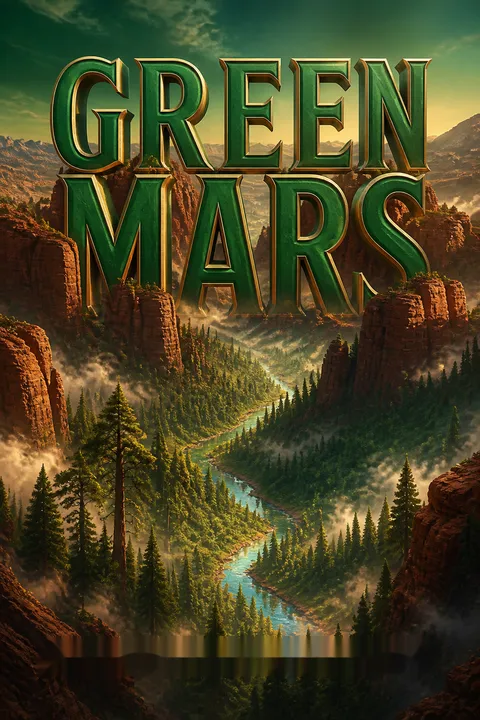
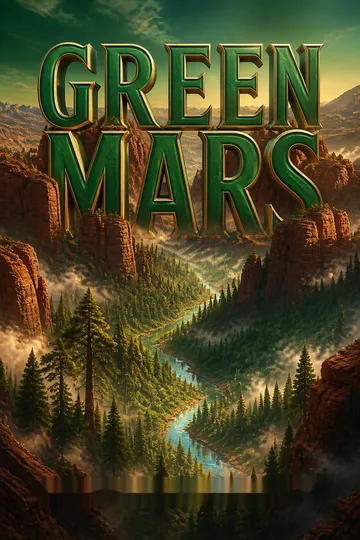
Green Mars is a sweeping, ambitious exploration of the possibilities and perils of transformation—personal, political, ecological, and cultural. At its heart, the novel asks what it means to make a new world: how to balance the drive for change with the need for restraint, how to honor the past without being trapped by it, how to build freedom on foundations of justice, diversity, and care. Robinson's Mars is not a blank slate, but a living, contested terrain, shaped by the dreams, traumas, and struggles of its inhabitants. The novel's central lesson is that revolution is not a single event, but an ongoing process—a "phase change" that requires both destruction and creation, both memory and imagination. The gift economy, the areophany, and the Dorsa Brevia Declaration are not utopias, but experiments, always at risk, always in need of renewal. The characters—especially the First Hundred and the new Martians—embody the tensions and hopes of this process: the burden of history, the pain of loss, the promise of synthesis. In the end, Green Mars is a story of hope—not naïve or triumphant, but hard-won, provisional, and open-ended. The future of Mars, like the future of any society, is in the hands of those who dare to imagine it, to build it, and to live it together.
Review Summary
Green Mars, the second volume in Kim Stanley Robinson's Mars trilogy, receives mixed reviews averaging 3.96 stars. Readers praise the detailed scientific exploration of terraforming, political conflicts between Mars colonizers and Earth corporations, and character development of the First Hundred settlers and new Mars-born generations. Many appreciate the philosophical depth and meticulous research. However, common criticisms include slow pacing, excessive technical descriptions, lengthy passages of characters traveling or contemplating, and problematic characterizations particularly of female characters. Some find it a rewarding but demanding read requiring patience for scientific conferences and ecological details.
People Also Read
Characters
Nirgal
Nirgal, the ectogene child of Hiroko, is the emotional and spiritual center of the novel. Raised in the hidden sanctuary of Zygote, he is both an outsider and a bridge between worlds: Terran and Martian, science and mysticism, childhood and adulthood. Gifted with a unique ability to sense and generate heat, Nirgal is a symbol of adaptation and transformation. His journey—from innocent child to wandering youth to revolutionary leader—mirrors the coming of age of Mars itself. Nirgal's relationships with Jackie, Coyote, Hiroko, and the First Hundred are complex, marked by love, rivalry, and longing. He is both a product of his environment and a shaper of it, embodying the possibility of a new Martian identity that transcends old divisions. His leadership is quiet, inclusive, and visionary, rooted in empathy and a deep connection to the land.
Jackie Boone
Jackie, the granddaughter of John Boone, is a force of nature: beautiful, athletic, and magnetic. She is the leader of her generation, a master of both seduction and strategy, and a passionate advocate for Martian independence. Jackie's relationship with Nirgal is fraught with tension—love, rivalry, and mutual fascination. She is both a follower and a critic of her grandfather's legacy, determined to make her own mark on history. Jackie's politics are radical, her methods bold, and her loyalties fluid. She is both a unifier and a divider, inspiring devotion and resentment in equal measure. Her journey is one of self-discovery, ambition, and the struggle to define what it means to be Martian.
Hiroko Ai
Hiroko is the spiritual heart of the underground, the creator of the areophany and the hidden sanctuaries. She is both scientist and shaman, blending genetic engineering with a reverence for life's greening power—viriditas. Hiroko's matriarchal community is a radical experiment in living, parenting, and survival. She is distant, enigmatic, and fiercely protective of her children, both literal and metaphorical. Hiroko's influence extends far beyond her physical presence; her teachings shape the values and practices of the underground, the gift economy, and the new Martian society. She is both revered and resented, a symbol of hope and a reminder of loss. Her disappearance is a wound that never fully heals.
Sax Russell
Sax is the archetype of the scientific mind: curious, methodical, and driven to understand and change the world. His passion for terraforming is both creative and destructive, leading to both triumph and catastrophe. Sax's journey—from leader to exile, from scientist to saboteur, from victim to survivor—is marked by loss, trauma, and the struggle to reconcile reason and emotion. His relationships—with Ann, Phyllis, Maya, and the younger generation—are fraught with misunderstanding and longing. Sax's aphasia and recovery symbolize the limits of knowledge and the necessity of humility, love, and community. He is both a builder and a destroyer, a hero and a cautionary tale.
Ann Clayborne
Ann is the voice of resistance to terraforming, the defender of the untouched Martian landscape. Her love for the planet is fierce, uncompromising, and often isolating. Ann's journey is one of exile, grief, and reluctant leadership. She is both a critic and a participant in the revolution, torn between despair and the need to act. Her relationships—with Simon, Sax, Peter, and the Reds—are marked by loss, anger, and the search for meaning. Ann is the conscience of the novel, a reminder of what is lost in the rush to change, and a witness to the randomness and contingency of life.
Maya Toitovna
Maya is one of the last of the First Hundred, a woman marked by love, loss, and the burden of history. Her moods swing between elation and despair, her relationships are intense and often destructive, and her leadership is both necessary and fraught. Maya's struggle with memory, depression, and the fear of forgetting is emblematic of the novel's concern with the price of survival. She is both a mother and a murderer, a unifier and a divider, a symbol of the old world and a guide to the new. Her journey is one of endurance, adaptation, and the search for redemption.
Coyote (Desmond Hawkins)
Coyote is the eternal outsider, the stowaway who becomes the indispensable connector of the underground. He is a master of disguise, barter, and survival, moving between sanctuaries, trading goods and information, and keeping the flame of resistance alive. Coyote's humor, cunning, and unpredictability make him both beloved and exasperating. He is a father to Nirgal, a lover to Hiroko, and a thorn in the side of every authority. Coyote embodies the spirit of anarchy, improvisation, and resilience that sustains the underground through its darkest days.
Nadia Cherneshevsky
Nadia is the practical heart of the First Hundred, the engineer who builds and repairs, who mediates and arbitrates, who holds things together when they threaten to fall apart. Her leadership is quiet, steady, and inclusive, rooted in a deep sense of responsibility and care. Nadia's relationships—with Arkady, Maya, Sax, and the younger generation—are marked by loyalty, empathy, and the willingness to listen. She is both a survivor and a creator, a symbol of the possibility of reconciliation and the necessity of compromise.
Art Randolph
Art is a Terran sent by Praxis to make contact with the Martian underground. He is both a spy and a friend, a negotiator and a learner, a man caught between loyalty to his employer and admiration for the Martians. Art's openness, curiosity, and humility make him an effective mediator and a catalyst for change. His relationships—with Nirgal, Jackie, and the First Hundred—are marked by trust, misunderstanding, and the search for common ground. Art embodies the possibility of partnership between Earth and Mars, and the challenges of translation, adaptation, and mutual respect.
Jackie's Circle (Dao, Rachel, Frantz, and others)
Jackie's peers—Dao, Rachel, Frantz, and the other Zygote children—represent the energy, impatience, and diversity of the new Martians. They are at once siblings, rivals, lovers, and comrades, their relationships shaped by the unique circumstances of their upbringing and the pressures of revolution. Their politics are radical, their loyalties shifting, their sense of identity fluid. They are both the inheritors and the critics of the First Hundred, eager to move beyond the old divisions and to create a society that is just, joyful, and free. Their struggles—with love, with power, with the meaning of Martian-ness—are the struggles of a new world coming into being.
Plot Devices
Duality and Synthesis
The novel is structured around a series of dualities: the green world of Hiroko's viriditas and the white world of Sax's science; the old First Hundred and the new Martians; the hidden underground and the open demimonde; the Red resistance and the Green transformation. These oppositions are not static, but dynamic, driving the characters and the plot toward synthesis, compromise, and transformation. The tension between creation and destruction, memory and forgetting, freedom and responsibility, is explored through the lives of the characters and the evolution of Martian society.
Coming of Age and Generational Change
The story is, at its core, a coming-of-age narrative—not only for Nirgal and his peers, but for Mars itself. The transition from childhood to adulthood, from exile to belonging, from rebellion to revolution, is mirrored in the transformation of the planet. The generational shift—from the First Hundred to the sansei and yonsei—brings new values, new conflicts, and new possibilities. The struggle to define what it means to be Martian, and to build a society that honors both the past and the future, is central.
Hidden Networks and the Gift Economy
The survival of the underground depends on a complex web of hidden sanctuaries, secret tunnels, encrypted communications, and a gift economy based on nitrogen and hydrogen peroxide. Coyote's travels, the Sufis' rituals, and the Bogdanovists' barter all exemplify the importance of trust, reciprocity, and adaptability. The gift economy is both a practical response to scarcity and a symbolic rejection of the logic of the metanationals. It is fragile, always threatened by betrayal and scarcity, but it is also the foundation of a new society.
Revolution as Phase Change
The revolution is not a single event, but a "phase change"—a transformation that is both sudden and gradual, planned and improvised, destructive and creative. The collapse of the Antarctic ice sheet on Earth provides the trigger, but the groundwork has been laid through years of organizing, debate, and mutual aid. The revolution is marked by chaos, violence, and loss, but also by moments of solidarity, creativity, and hope. The challenge is not only to seize power, but to build something new in its place.
Memory, Trauma, and Healing
The novel is haunted by the past: the failed revolution of 2061, the deaths of John, Frank, and others, the traumas of exile and survival. The First Hundred, in particular, struggle with memory, depression, and the fear of forgetting. The work of healing—personal and collective—is ongoing, incomplete, and essential. The price of freedom is high, and the work of building a new world requires both remembrance and letting go.
Foreshadowing and Recurrence
The narrative is rich in foreshadowing and recurrence: the repetition of revolution, the cycles of mood and memory, the echoes of Earth's history on Mars. The characters are aware of the danger of repeating the mistakes of the past, and struggle to find new ways of acting, new forms of society. The motif of "you can never go back" recurs throughout, a warning and a promise. The future is uncertain, but the possibility of something new—something truly Martian—remains.
Mars Trilogy Series
About the Author
Other books by Kim Stanley Robinson
Download PDF
Download EPUB
.epub digital book format is ideal for reading ebooks on phones, tablets, and e-readers.








































