
Plot Summary
A Busted Knee, A Ghost
On the first day of December, Harriet York's morning is a mess: a busted knee, a misdelivered package, and a cat with attitude. She receives her annual, impersonal invitation to the York Family Christmas Gala, a reminder of her strained family ties. Harriet, who owns the Crow's Nest antiques shop, tries to keep her spirits up with holiday traditions and oversized decorations. But as she settles in for a cozy night, a strange man appears in her living room—Nolan, who claims to be the Ghost of Christmas Past, sent to help her mend her ways. Harriet's skepticism and humor clash with Nolan's ghostly seriousness, setting the stage for a haunting that's anything but ordinary.
The Haunting Assignment
Nolan, the Ghost of Christmas Past, is used to haunting the worst of humanity, but Harriet is different—messy, stubborn, and unexpectedly kind. Their first encounter is a comedy of errors, with Harriet demanding proof of his ghostliness and Nolan growing increasingly exasperated. He explains the rules: she must revisit her past to learn from her mistakes, and he cannot move on until she does. Harriet resists, refusing to take his hand or believe in his magic, but Nolan is bound to her for the holiday season. Their banter is sharp, their chemistry immediate, and both are left unsettled by the strange sense of familiarity between them.
Rules of the Afterlife
After Harriet refuses to cooperate, Nolan visits the Department of Hauntings and Spirits, a surreal office hidden in plain sight. He consults with Isabella, his no-nonsense supervisor, about the oddity of his assignment. Nolan is unsettled by how "nice" Harriet is compared to his usual cases, and Isabella warns him that mistakes aren't made in their line of work—he's haunting Harriet for a reason, even if he can't see it yet. The bureaucracy of the afterlife is both comic and ominous, and Nolan leaves with a sense of foreboding, realizing that the consequences of failure could be dire for them both.
Cracks and Kindness
At the Crow's Nest, Harriet deals with difficult customers and the weight of her own self-doubt. She's haunted by memories of her family's coldness and her own perceived failures. When Nolan appears again, their dynamic shifts—he brings her coffee, and they begin to share more of themselves. Harriet's kindness and vulnerability start to break through Nolan's gruff exterior. She questions the nature of her "sins," and Nolan, despite himself, is drawn to her warmth. Their connection deepens, even as both try to keep their guard up.
Ghostly Time Travel
Nolan finally convinces Harriet to take his hand, and they're swept into her childhood—a lavish law firm lobby, a train garden, and a moment of innocent rebellion. Harriet's mother is cold, her father indifferent, but young Harriet finds joy in small things and solidarity with her sister. The memory is bittersweet, revealing cracks in Harriet's family and the origins of her longing for acceptance. Nolan is surprised by the lack of true wrongdoing, and both are left wondering what, if anything, Harriet needs to atone for.
Sisters and Solitude
Back in the present, Harriet reflects on her fractured relationship with her sister, Samantha, and the loss of her beloved Aunt Matilda. She reaches out to Samantha, hoping for reconciliation, but is met with silence. Nolan reappears, and their banter resumes, but there's a growing tenderness between them. Harriet's optimism is tested, but she clings to her traditions and the small comforts of her home. The haunting is no longer just about penance—it's about connection, memory, and the possibility of healing.
A Tree, Alone
Nolan and Harriet travel to a memory of Harriet cutting down her first Christmas tree alone. The scene is both comic and poignant—Harriet struggles with the saw, gets stuck, and ultimately triumphs, pine needles in her hair and joy on her face. She explains her need to prove she can do things on her own, a legacy of her family's emotional distance. Nolan is moved by her resilience and begins to see her not as a case, but as a person he wants to protect. Their physical closeness grows, and the lines between ghost and human, assignment and companion, begin to blur.
Unfinished Business
As Harriet and Nolan continue their journeys, they question the true nature of "unfinished business." Harriet wonders if she's meant to help Nolan move on, rather than the other way around. Their roles begin to invert—Harriet becomes the helper, Nolan the one in need. They share stories, comfort each other, and their mutual attraction intensifies. But the rules of the afterlife loom large, and both are haunted by the knowledge that their time together is limited.
Jam, Arguments, and Distance
A trip to a memory involving holiday jam leads to a messy, intimate moment, but also to a painful argument. Harriet suggests that Nolan's haunting might be about his own unresolved issues, not hers. Nolan lashes out, wounded by hope he can't bear, and Harriet is left hurt and alone. Their separation is brief but agonizing, and both are forced to confront the depth of their feelings for each other. When they reunite, apologies are made, and their bond is stronger for having survived the storm.
Dreams and Longing
Nolan begins to dream for the first time in a century—dreams of Harriet, vivid and sensual. Their physical relationship deepens, but so does the ache of impending loss. Harriet's family drama comes to a head at the annual gala, where she finally stands up for herself and chooses her own happiness over their approval. Nolan is by her side, supportive and loving, but both know that their time is running out. The compass of Nolan's past, a symbol of his unfinished business, is found in Harriet's shop, pointing always to her.
Apologies and Present Moments
With the compass revealed, Nolan's magic grows unstable, and the rules of the afterlife close in. Harriet and Nolan decide to stop running from the inevitable and focus on the present—making memories, sharing gifts, and loving each other as fiercely as they can. Their love is a rebellion against fate, a choice to find joy even in the face of goodbye. But the pull of the afterlife is relentless, and Nolan is forced to make a choice: move on, or stay with Harriet.
Skating, Confessions, Forgiveness
In a final act of courage, Harriet confronts her family, reconciles with her sister, and claims her right to happiness. Nolan, too, faces his own fears and confesses his love for Harriet. The afterlife offers him a choice: move on to peace, or return to the woman he loves. Harriet's candle burns in the window, a beacon for lost sailors and lost souls alike. In the end, love proves stronger than regret, and the promise of tomorrow is enough to bring Nolan home.
A Ghost's Past Revealed
In a harrowing journey to the day of Nolan's death, Harriet nearly drowns, and Nolan must save her. The experience unlocks memories for both—Nolan remembers seeing Harriet in his final moments, a sign that their souls have always been connected. The compass, once a symbol of unfinished business, is revealed to point not north, but to Harriet. The true lesson is clear: their love is not about penance, but about finding home in each other.
Consequences and Warnings
Isabella warns Nolan that the consequences of failing to move on will affect them both. The rules are unyielding, and time is running out. Nolan and Harriet cling to each other, making the most of every moment, but the specter of separation hangs over them. When the compass is finally returned, Nolan's magic pulls him away, and Harriet is left alone, her memories intact but her heart broken.
Dress Shopping and Defiance
Harriet chooses a dress that defies her mother's expectations, a small act of rebellion that signals a larger shift. She is no longer willing to shrink herself for the comfort of others. Nolan supports her, and together they face the family gala, where Harriet finally claims her place in the world. The act of choosing herself is both an ending and a beginning—a declaration that she is worthy of love, just as she is.
Clues in the Clutter
Harriet and Nolan search the Crow's Nest for clues to Nolan's unfinished business. Amidst the clutter and chaos, they find moments of joy and connection. The music box, the compass, the mittens—all become symbols of the ways their lives have intertwined. The true key is not an object, but the love they have built together.
Mistletoe and First Kisses
Under a ceiling suddenly blooming with mistletoe, Nolan and Harriet share their first real kiss—a moment of magic that transforms them both. Their love is no longer a secret, but a force that changes the very air around them. The boundaries between ghost and human, past and present, are blurred by the power of their connection.
Boundless Wanting
Their physical relationship deepens, and with it, their emotional vulnerability. Both are afraid of losing each other, but neither is willing to let go. They make love, share secrets, and promise to hold on as long as they can. The inevitability of goodbye only makes their time together more precious.
Family, Betrayal, and Truth
At the family gala, Harriet finally confronts her mother and sister, speaking her truth and refusing to be diminished any longer. Nolan stands by her side, defending her and loving her openly. The act of choosing herself, and being chosen in return, is the true resolution of her haunting.
The Compass and the Choice
With the compass in hand, Nolan is given a choice by the afterlife: move on to peace, or return to Harriet. The waiting room is a place of reckoning, where he is confronted by Isabella and Matilda, and finally understands that Harriet was always his unfinished business. Their souls are meant to be together, and the choice is his to make.
Letting Go, Holding On
Nolan chooses to return to Harriet, but not before both must endure the pain of separation. Harriet waits, her memories intact, her hope burning like a candle in the window. She learns to let go, to trust that love will find its way home, and to believe that she is worthy of being chosen.
The Candle in the Window
As Harriet prepares to let go, a knock at the door signals Nolan's return. He has chosen her, and together they step into a future built on love, hope, and the promise of every tomorrow. Their story is not about penance or regret, but about the magic of being seen, chosen, and loved—exactly as they are.
Reunion and Tomorrow
Nolan and Harriet are reunited, their love stronger for all they have endured. The afterlife's rules have been rewritten by the power of their connection, and they are free to build a life together. The candle in the window burns bright, a symbol of hope, home, and the enduring magic of love.
Analysis
"Good Spirits" is a luminous, modern fairy tale that reimagines the holiday romance as a story of mutual redemption, self-acceptance, and the transformative power of love. At its heart, the novel asks what it means to be "enough"—for ourselves, for our families, and for those we love. Through the lens of a supernatural haunting, Borison explores the wounds we carry from childhood, the ways we shrink ourselves to fit others' expectations, and the courage it takes to claim our own happiness. The narrative is rich with humor, warmth, and emotional honesty, subverting tropes while honoring the magic of tradition and hope. The plot devices—time travel, the compass, the candle in the window—are not just clever twists, but resonant symbols of longing, belonging, and the belief that love can rewrite even the oldest rules. In a world that often feels cold and transactional, "Good Spirits" is a reminder that we are all worthy of being chosen, that kindness is a form of rebellion, and that sometimes, the greatest magic is simply being seen. The story's ultimate lesson is that home is not a place or a legacy, but the person who waits for you, candle burning, through every tomorrow.
Review Summary
People Also Read




Characters
Harriet York
Harriet is the heart of the story—a woman who has spent her life trying to be enough for a family that never truly saw her. She owns the Crow's Nest antiques shop, a haven for lost and forgotten things, much like herself. Harriet's kindness is both her strength and her vulnerability; she gives freely, even when it costs her. Haunted by the loss of her aunt and the distance from her sister, she clings to hope and tradition, using them as armor against loneliness. Through her journey with Nolan, Harriet learns to claim her own worth, to stand up for herself, and to believe that she is worthy of love—not for what she can do, but for who she is. Her arc is one of self-acceptance, courage, and the quiet magic of choosing herself.
Nolan Callahan
Nolan is the Ghost of Christmas Past, bound to haunt those in need of redemption. He died young, a fisherman lost at sea, and has spent a century watching the worst of humanity. His afterlife is one of duty, loneliness, and numbness—until Harriet. Her warmth and stubborn optimism awaken feelings he thought were lost forever. Nolan is both protector and skeptic, slow to trust but fiercely loyal once he does. His journey is one of vulnerability—learning to hope, to want, and to choose love over resignation. The revelation that Harriet is his unfinished business transforms him, offering a second chance at life and love. Nolan's arc is about coming home—not to a place, but to a person.
Samantha York
Samantha is Harriet's older sister, the "good" daughter who followed the family script. She is successful, polished, and seemingly unassailable, but beneath the surface, she is just as lost as Harriet. Their estrangement is rooted in misunderstanding and envy—Samantha envies Harriet's courage to choose her own path, while Harriet envies Samantha's acceptance. Their reconciliation is hard-won, built on honesty and the recognition that both have been hurt by the same family dynamics. Samantha's arc is about letting go of resentment, embracing vulnerability, and rediscovering the bond of sisterhood.
Donna York
Donna is Harriet's mother, a woman obsessed with appearances and legacy. Her love is conditional, her approval hard-won and easily lost. Donna's relationship with Harriet is fraught with disappointment and unspoken pain, rooted in her own unresolved issues with her sister, Matilda. She is both villain and victim, unable to see the damage she inflicts. Donna's arc is a cautionary tale about the cost of pride and the tragedy of love withheld.
Aunt Matilda
Matilda is Harriet's late aunt, the true mother figure in her life. She is the embodiment of acceptance, creativity, and unconditional love. Even in death, Matilda's influence lingers—her shop, her traditions, her belief in Harriet's worth. She appears in the afterlife to guide Nolan, revealing that she, too, has been watching over Harriet. Matilda's presence is a reminder that love endures, even beyond loss.
Isabella
Isabella is Nolan's supervisor in the afterlife, the head of the Department of Hauntings and Spirits. She is sharp, no-nonsense, and deeply invested in the rules—yet not without compassion. Isabella serves as both guide and gatekeeper, pushing Nolan to confront his true unfinished business. Her warnings are both threat and encouragement, and her ultimate revelation is that love, not penance, is the key to moving on.
Sasha
Sasha is Harriet's best friend and shop manager, a grounding presence amid the chaos. She is fiercely protective, quick-witted, and unafraid to call Harriet out when needed. Sasha's friendship is a lifeline for Harriet, offering both comic relief and genuine care. She represents the chosen family that sustains us when blood ties fail.
Builín/Oliver
The orange cat who weaves through both Harriet's and Nolan's lives, Builín is more than she seems—a link between worlds, a companion in loneliness, and a subtle guide. Her presence is a reminder that magic is often found in the ordinary, and that we are never truly alone.
Brent
Brent is Harriet's ex-boyfriend, a symbol of the life she tried to fit into but never truly belonged. He is polished and successful, but ultimately self-absorbed and unsupportive. Brent's role is to highlight the contrast between conditional love and the real, messy, transformative love Harriet finds with Nolan.
Darryl
The neighborhood postman, Darryl is a comic figure whose misdelivered packages bring people together. He represents the small acts of kindness and community that sustain Harriet, and his late-night delivery is a catalyst for the story's final, magical reunion.
Plot Devices
Ghostly Haunting as Redemption
The central device is the haunting—Nolan, as the Ghost of Christmas Past, is sent to help Harriet "mend her ways." But the story subverts the trope: Harriet is not a Scrooge, but a woman who needs to believe in her own worth. The haunting becomes a journey of mutual healing, with both characters confronting their pasts and choosing love over regret.
Time Travel and Memory
Nolan's magic allows them to travel through Harriet's memories, witnessing pivotal moments that shaped her. These journeys are both literal and metaphorical, forcing Harriet to confront her pain and Nolan to remember what it means to feel. The device is used to reveal character, build intimacy, and ultimately unlock the truth of their connection.
The Compass as Symbol
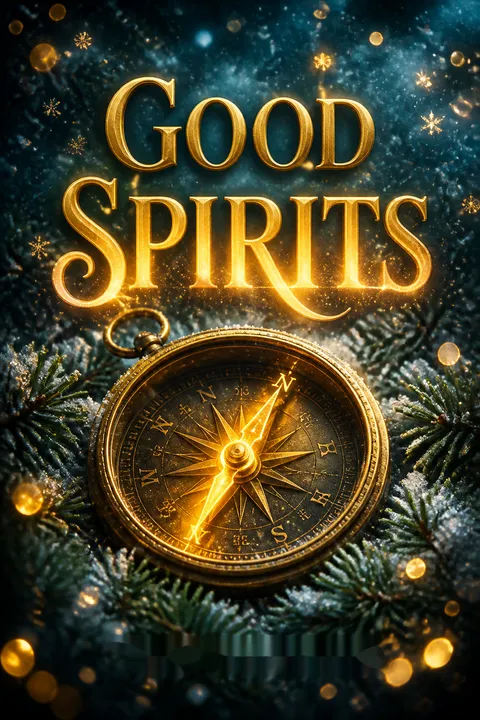
The broken compass, found in Harriet's shop, is the key to Nolan's unfinished business. It points not north, but to Harriet, symbolizing that home is not a place, but a person. The compass ties together themes of searching, waiting, and the redemptive power of love.
Bureaucracy of the Afterlife
The Department of Hauntings and Spirits is a satirical take on the afterlife, complete with staff meetings, quarterly reports, and office politics. It grounds the supernatural elements in the mundane, while also raising the stakes—failure to complete the haunting has real consequences for both Nolan and Harriet.
Foreshadowing and Repetition
The story is rich with foreshadowing—Harriet's candle in the window, Nolan's dreams, the recurring motif of waiting and hope. Repetition of phrases ("I'll see you tomorrow") and images (the candle, the compass, the mistletoe) creates a sense of inevitability and longing, culminating in a reunion that feels both magical and earned.
Subversion of Grumpy/Sunshine Trope
While Nolan is the classic grump and Harriet the sunshine, the story refuses to let either be a savior or a victim. Both are wounded, both are strong, and both must choose vulnerability. Their love is not about fixing each other, but about seeing and accepting each other fully.
About the Author


Download PDF
Download EPUB
.epub digital book format is ideal for reading ebooks on phones, tablets, and e-readers.








































