
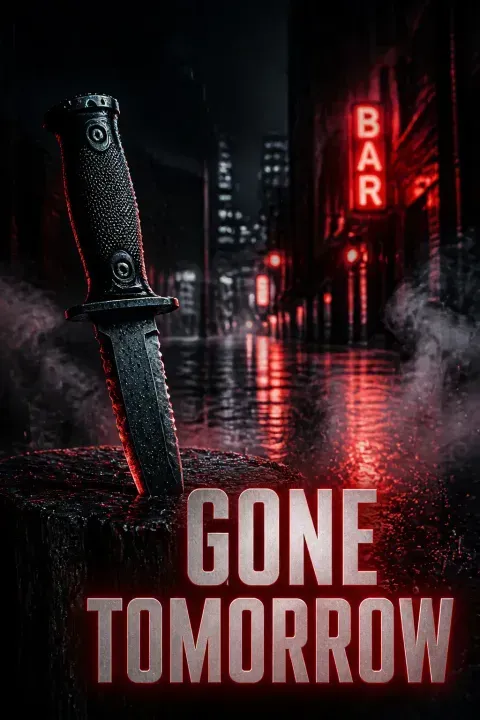


Plot Summary
The Eleventh Indicator
Jack Reacher1 rides New York's 6 train at two in the morning, his eyes automatically scanning passengers against an Israeli counterintelligence checklist he learned decades ago. A woman in her forties, dressed in a too-heavy North Face parka despite September heat, rings every one of the eleven female indicators: inappropriate clothing, sweating, nervous tics, a fixed forward stare, panting breath, mumbled prayers, a bulky messenger bag with hands buried inside.
Reacher1 knows these signs. He also knows the timing is all wrong for a bombing. Still, he approaches. She pulls a Ruger Speed-Six revolver from the bag, raises it to the soft flesh under her chin, and blows her own head off before the train reaches Grand Central.
The checklist functions as both professional tool and existential trap. Reacher's trained perception cannot be turned off, yet it produces a false positive that proves fatal. The scene establishes the central tension between observation and intervention: seeing something and saying something carries unpredictable consequences. The woman's suicide is not just plot catalyst but moral wound, one that will drive Reacher's investigation through guilt as much as curiosity.
The Missing Fifth Passenger
The train locks down. NYPD detective Theresa Lee3 catches the case, questioning Reacher1 about the eleven-point list and his military background. She mentions a troubling detail: the official witness list shows only four passengers plus the dead woman,2 but Reacher1 counted five.
The fifth man,14 in chinos and a golf shirt with cold, calculating eyes, slipped away before police arrived. Then three Defense Department agents appear, asking whether Susan Mark2 passed Reacher1 anything, whether she mentioned someone called Lila Hoth6 or Congressman John Sansom.5
They quote the Patriot Act and refuse to identify themselves. Moments after they leave, four slick private investigators from a firm called Sure and Certain accost Reacher1 on the sidewalk with the same questions.
The arrival of multiple interested parties before the body is cold reveals Susan Mark's death as nexus rather than endpoint. The DoD's haste signals national security stakes; the private investigators suggest shadowy non-governmental interests. The fifth passenger's disappearance plants an early seed of conspiracy. Reacher is being recruited as reluctant investigator by the very forces that want him to stop asking questions.
A Brother's Refusal
Jacob Mark,4 Susan's2 brother and a small-town New Jersey cop, intercepts Reacher1 outside the precinct. He refuses to accept the suicide ruling. Over coffee, he reveals Susan2 worked as a civilian systems administrator at the Pentagon's Human Resources Command, was adopted, and had a deeply strained relationship with her son Peter,10 a star defensive tackle at USC.
Peter10 vanished from a Los Angeles bar five days earlier, leaving with an older, stunningly beautiful woman.6 Jake4 also mentions Susan2 recently inherited their father's revolver and usually kept it in a sock drawer.
The timing of Peter's10 disappearance and Susan's2 trip to New York, hundreds of miles from her Virginia home, cannot be coincidence. Reacher1 begins connecting leverage, coercion, and desperation.
Jacob Mark functions as the emotional counterweight to institutional indifference. His denial is not irrational but rooted in intimate knowledge of his sister's character. The revelation about Peter introduces the classic noir mechanism of family-as-leverage, transforming Susan from random suicide to coerced victim. The adoption detail will prove thematically crucial, establishing the identity questions that drive the antagonists' elaborate deception.
The Congressman's Medals
Researching Sansom's5 biography, Reacher1 finds an unexaggerated Special Forces memoir that paradoxically reveals more by what it omits. The congressman won the Distinguished Service Cross, the Distinguished Service Medal, and two Silver Stars, yet describes no missions that would justify such decorations.
Reacher1 travels to Washington, confronts Sansom's5 wife Elspeth12 and security chief Springfield,8 then follows Sansom5 to a fundraiser in Greensboro. In a hotel suite, Sansom5 denies knowing Susan Mark2 or Lila Hoth,6 but Reacher1 watches his eyes and sees truth and deception simultaneously.
Sansom5 insists his Delta career was spotless, that no crimes were committed, that the details remain locked away. Springfield8 warns Reacher1 that turning over certain rocks would get him erased from existence.
Sansom embodies the paradox of the honorable soldier carrying compartmentalized sins. His medals, meant to honor, become the very evidence that betrays him. The scene dramatizes the gap between public service and covert action, between the politician's polished surface and the operator's buried history. Springfield's warning about erasure is not hyperbole but accurate description of post-9/11 state power.
The Four Seasons Deception
Back in New York, Reacher1 spots a watcher at Penn Station, takes his phone, and traces it to the Four Seasons Hotel. There he meets Lila Hoth,6 a stunning 26-year-old, and her mother Svetlana,7 a squat, bleak woman in a house dress. Lila6 spins an elaborate tale: she is a Ukrainian billionaire widow helping her mother find an American soldier named John5 who showed her kindness in 1983 Berlin.
Svetlana7 was a Red Army political commissar. Susan Mark2 had been helping trace this man through Pentagon records. Lila6 claims she came to New York to thank Susan2 and receive the information, but Susan2 never arrived. She seems guileless, cooperative, transparently innocent. Theresa Lee3 is inclined to believe her. Reacher1 is not.
Lila's performance is masterful precisely because it blends truth with fiction. The narrative exploits Western guilt about collateral damage, the sympathetic archetype of the searching widow, and the bureaucratic language of official inquiries. Her beauty functions as both camouflage and weapon, disarming skepticism through a hardwired human bias toward the attractive. Svetlana's silent presence provides authenticity through age and apparent vulnerability.
Billing Records and Hammers
The NYPD's 17th Precinct discovers four male bodies with faces, teeth, and fingertips destroyed by carpenter's hammers still bearing Home Depot price tags. The victims carried Sure and Certain business cards.
Meanwhile, Theresa Lee's3 partner Docherty11 reports that Homeland Security has no record of two women named Hoth entering the country on British Airways. Susan Mark2 never called London from work or home. Lila Hoth6 lied about everything.
The billing records from the dead men's offices show payments from Lila Hoth6 dating back three months, not three days. The Hoths6 entered the United States from Tajikistan with a party of nineteen men, using genuine passports from Turkmenistan, a country bordering Afghanistan. They are not Ukrainian at all.
The hammer murders serve as the story's moral event horizon: violence escalates from bureaucratic intimidation to ritualistic slaughter. The destroyed faces suggest professionals eliminating loose ends with the theatrical cruelty that marks Taliban and al-Qaeda methodology. The passport trail recontextualizes the entire narrative, transforming a personal quest story into a national security crisis. Three months of preparation indicates a long-planned operation, not an impulsive inquiry.
Darted and Disappeared
DoD agents armed with a dart gun capture Reacher1 in the Four Seasons lobby, sedating him like a zoo animal. He wakes chained to a cot in a basement cage in a disused Greenwich Village firehouse, alongside Theresa Lee3 and Jacob Mark,4 both similarly snatched. The agents demand the memory stick and information about the Hoths,6 operating under direct Pentagon authority with no Miranda rights, no charges, no IDs.
During interrogation, Reacher1 steals the dart gun, shoots the lead agent,13 batters the other two unconscious, and uses a pry bar to tear the welded cage floors from their sewer connections, freeing Lee3 and Jacob Mark.4 They flee into the Manhattan night, now fugitives from their own government.
This section dramatizes the post-9/11 normalization of extraordinary measures: American citizens rendered non-persons through bureaucratic sleight-of-hand. The firehouse basement, with its new steel cages inside old brick, embodies the architectural layering of old rights beneath new expediencies. The pry bar becomes a symbolic tool, leveraging 19th-century public health standards against 21st-century security apparatus.
The Korengal Valley Confession
Hiding in a cheap hotel, Reacher1 pieces together Sansom's5 story using federal immigration records showing the Hoths'6 Afghan origin. He deduces that Svetlana7 was not a Soviet commissar but a mujahideen fighter whose husband Grigori Hoth was a Red Army sniper.
In March 1983, Sansom's5 Delta team captured Grigori's prototype VAL Silent Sniper rifle in the Korengal Valley. Sansom5 chose not to execute the two Soviets but released them, calculating they would be too terrified of their commissar to report the truth.
Instead, they wandered until local tribeswomen captured them and subjected them to the prolonged torture-by-evisceration that Svetlana7 later specialized in herself. The story Lila6 told was inverted: Svetlana7 was the perpetrator of atrocities, not the victim.
The narrative doubling here is structurally brilliant: the same events seen from opposite sides produce radically different meanings. Sansom's act of mercy became, through accident and culture, indistinguishable from cruelty. The inversion pattern extends throughout the book: liberators become occupiers, protectors become threats, heroes become villains depending entirely on who tells the story and when.
A Snuff Film Appears
Lila Hoth's6 men find Reacher1 on a Manhattan street. He fights them off, breaking Leonid's9 jaw and another man's elbow, then steals their phones. Hours later, Lila6 calls and directs him to an envelope at the Four Seasons containing a homemade DVD.
Watching it in a hotel business center, Reacher1 sees a silent horror film: first an Afghan taxi driver, then the massive, terrified Peter Molina,10 strapped to stone slabs while Svetlana7 methodically opens their abdomens with a knife and lifts out their intestines.
Lila6 stays on the phone throughout, narrating with clinical pride, explaining that victims can survive up to eighteen hours this way. The footage of Peter10 was filmed after Susan2 missed her midnight deadline. Lila's6 message is clear: Reacher1 is next.
The DVD represents the intrusion of war-zone brutality into civilian space, a deliberate provocation designed to provoke rage over reason. Lila's phone commentary transforms atrocity into theater, the terrorist as director. The visual medium carries a truth claim that verbal accounts cannot match: seeing is believing, and what Reacher sees is his own potential fate. This is psychological warfare adapted for the individual target.
The Third Man Revealed
Meeting Sansom5 and Springfield8 in a Sheraton hotel room, Reacher1 presses for the truth. Sansom5 confesses: the 1983 Delta mission to the Korengal Valley was not about stealing a rifle.
He and Springfield8 were dispatched as Reagan's personal envoys to meet the mujahideen's rising local commander, bearing gifts and instructions to curry favor. That commander was a young, tall Saudi named Osama bin Laden. A photograph was taken: Sansom5 grinning beside bin Laden, Springfield8 on the other side.
The image disappeared into classified archives for twenty-five years until Susan Mark2 extracted it to a USB memory stick. Now al-Qaeda, through the Hoths,6 wants it suppressed because it shows bin Laden accepting American tribute, a fatal propaganda weakness.
The bin Laden revelation transforms the story from thriller into political tragedy. Every action taken in 1983 made strategic sense: supporting anti-Soviet fighters, building relationships with local commanders, documenting the mission. That those actions would become catastrophic liabilities reveals the essential hubris of intervention. Sansom's personal hell is that he did exactly what his country asked, and that obedience may destroy him.
Springfield's Arsenal
Springfield,8 understanding that Reacher1 intends to attack the Hoths6 alone, leaves a black gym bag with Theresa Lee3 to deliver. Inside: a Heckler & Koch MP5SD silenced submachine gun with thirty rounds, a Benchmade automatic knife with a four-inch double-edged blade, a leather glove for the overheating silencer, and a roll of black duct tape.
Also included are Homeland Security immigration photos of all nineteen men and two women from the Tajikistan entry. Lee3 brings the bag to Reacher's1 hotel room. The two share a charged moment, and Reacher1 admits he wants to unbutton her shirt. She consents, on condition he removes his first. Afterwards, she showers, wishes him luck, and leaves him to his mission.
The weapons transfer represents the unofficial alliance between Reacher and elements within the state that recognize the limits of official action. Springfield cannot openly help, but he can equip. The romantic interlude with Lee provides the only moment of human connection in a narrative of escalating violence, a reminder of what Reacher fights to preserve. Her departure acknowledges the gulf between their worlds.
The 58th Street Abattoir
Reasoning that the Hoths6 would double back to an abandoned position, Reacher1 locates their original hideout: a decaying mixed-use building on 58th Street near Madison Avenue. He kills the first sentry in the alley with two single shots, then moves through the old restaurant kitchen where Peter Molina10 died on a stone slab.
Working upward floor by floor, he eliminates seven more armed men with surgical three-round bursts. On the roof, he rips open a trapdoor and drops into the fourth floor, where only Svetlana,7 Lila,6 and one last bodyguard remain. The bodyguard ambushes him from the bathroom. Reacher1 kills him with his final bullet, fired left-handed. Now he faces the two women with an empty gun.
The building-as-battlespace reprises the classic siege narrative, each floor representing a layer of defense to be peeled back. Reacher's methodical approach counters the chaos of his enemies, transforming their numerical advantage into a series of manageable engagements. The empty gun at the threshold of the final confrontation raises the stakes from tactical to existential, forcing a regression to more primitive combat.
Teacher and Pupil
Svetlana7 and Lila6 arm themselves with butcher knives. Reacher,1 stripped to his boxers, reveals the Benchmade he taped to his back. The three circle in the dim studio apartment.
Svetlana7 attacks first; Reacher1 opens a six-inch gash across her forehead that sheets blood into her eyes, then severs the tendons in her right forearm and stabs her kidney. She drops. Lila6 slashes Reacher's1 stomach, a diagonal wound below his navel, but the old scar tissue from his Beirut shrapnel wound slows the blade and saves his life.
Bleeding heavily, Reacher1 charges Lila6 with a chair, beats her knife away, sits beside her on the blood-slicked floor, and strangles her. He crawls to the kitchen, rinses his knife, and uses duct tape butterflies to close his wound before passing out.
The knife fight strips away all pretense of modern warfare, reducing combat to flesh, steel, and will. Svetlana's death and Lila's strangulation are intimate killings that carry psychological costs the silenced gunfire did not. The scar that saves Reacher closes a thematic loop: the Beirut bombing, a terrorism precedent, becomes the physical legacy that enables him to survive its contemporary manifestation. The duct tape butterflies are a perfect Reacher detail: improvised, practical, insufficient but sufficient.
Midnight on the Turnpike
Reacher1 wakes in Bellevue Hospital, his wound sutured and three units of blood replaced. Sansom,5 Springfield,8 Lee,3 and Jacob Mark4 gather around his bed. Reacher1 explains his deduction: Susan Mark2 hit a four-hour traffic jam on the New Jersey Turnpike the night of her suicide.
At midnight, the Hoths'6 deadline passed, and they sent her a cell-phone image proving they had begun torturing Peter.10 In that moment, Susan2 hurled both her phone and the hated memory stick out her car window into the median.
Sansom's5 team calculates her probable position, the Jersey highway patrol closes a half-mile stretch, and within three hours they recover the crushed, unreadable USB drive. The photograph is gone forever. Sansom's5 career is saved, and the al-Qaeda operation is neutralized. Reacher1 drifts south, the scar on his stomach a pale new companion to the older one above it.
The resolution refuses catharsis. The photograph's destruction is both victory and evasion: the truth dies with the evidence, allowing business as usual to continue. Sansom escapes accountability through accident, not innocence. Reacher's southward drift at the close reasserts his essential nature as permanent outsider, unintegrated into the systems he temporarily served. The twin scars, old and new, become the body's ledger of violence survived, a more honest record than any official file.
Analysis
Gone Tomorrow operates as a thriller built on the architecture of tragic irony, where every action taken for sound reasons produces its opposite intended effect. The Israeli checklist, designed to prevent mass death, precipitates a single suicide. Sansom's5 1983 mission, conceived to bleed the Soviet Union, arms and legitimizes the force that would attack America on 9/11. Susan Mark's2 maternal love becomes the vulnerability that destroys her son.10 The memory stick, created to prove a mission accomplished, becomes the evidence that could unravel a political career and embarrass a superpower. The novel argues that the shadow world of covert operations operates on borrowed time: secrets do not age into irrelevance but mutate into new dangers as geopolitical contexts shift. The bin Laden photograph is the purest expression of this thesis, a frozen moment of Cold War expediency that, two decades later, carries entirely different meanings for every party that wants to possess or suppress it. What makes the book genuinely dark is its refusal to resolve this irony through sacrifice or redemption. The photograph is destroyed, but by accident rather than moral choice. Sansom5 escapes consequences through luck, not justice. The al-Qaeda cell is eliminated, but the institutional failures that enabled its operation remain unexamined. Reacher's1 physical scars, old and new, represent the only honest accounting the novel offers: a body marked by history, bearing witness to violence that official narratives will never acknowledge. The story's true subject is not terrorism or geopolitics but the moral weight of intervention itself, the impossibility of acting in the world without producing consequences that outrun intention and outlast memory.
Review Summary
Gone Tomorrow is a thrilling Jack Reacher novel that opens with a tense subway scene. Readers praise the fast-paced plot, intricate twists, and Reacher's methodical problem-solving. The book explores themes of terrorism, government secrets, and personal vendettas. While some found parts repetitive or implausible, most enjoyed the suspenseful action and satisfying conclusion. Child's detailed writing style and Reacher's unique character continue to captivate fans, making this a strong entry in the series.
People Also Read








Characters
Jack Reacher
Ex-Army MP turned drifter-investigatorA former military police major who left the army during post-Cold War downsizing and now wanders America with no fixed address, no luggage, and a folding toothbrush. Physically imposing at six-five and 250 pounds, he combines analytical intelligence honed by thirteen years of investigations with brutal hand-to-hand combat skills. His approach to problems is direct, methodical, and unburdened by institutional restraint. He carries a shrapnel scar from the 1983 Beirut Marine barracks bombing, a permanent reminder of terrorism's reach. His moral code is absolute but personal: he believes in justice, not law, and accepts that intervention carries unpredictable consequences. Guilt over precipitating Susan Mark's2 suicide drives his investigation as much as curiosity or outrage. He is constitutionally incapable of walking away from a mystery or a fight.
Susan Mark
Pentagon systems administrator, victimA plain, meticulous civilian clerk working at the Army Human Resources Command in the Pentagon. Adopted as an infant, divorced, mother to a son who rejected her, she was lonely and isolated, making her vulnerable to a manipulative friendship. Her computer skills and systems access made her the perfect target for those seeking classified archival material. She loved her son Peter10 despite his cruelty toward her, and that love became the leverage that destroyed her. She drove from Virginia to New York carrying her father's inherited revolver, wearing black for combat, desperately hoping to trade stolen information for her son's life.
Theresa Lee
NYPD homicide detectiveA detective in her late thirties with the Midtown South precinct, small and slim with dark hair and an attractive, friendly manner. She initially treats Susan Mark's2 death as a routine suicide but becomes drawn into the larger conspiracy through her professional instinct for anomalies. Her loyalty to her partner Docherty11 is absolute, and she refuses to abandon him even when it costs her freedom. She grows from skeptical cop to trusted ally, delivering weapons and information to Reacher1 while navigating the treacherous territory between local law enforcement and federal overreach. Her brief romantic encounter with Reacher1 acknowledges their mutual attraction without pretense of permanence.
Jacob Mark
Susan's brother, small-town copA police officer from a prosperous New Jersey suburb, also adopted like his sister. His grief over Susan's2 death manifests as stubborn denial of suicide, driving him to pursue the truth despite his department's discomfort with federal involvement. He provides crucial background about Susan's2 personality, her difficult relationship with her son Peter10, and her adoption history. His emotional arc moves from brotherly loyalty to the devastating acceptance that both his sister and nephew are dead. He represents the human cost that institutional responses to terrorism ignore.
John Sansom
Congressman, ex-Delta Force officerA decorated former Delta Force major turned successful businessman and ambitious politician. Small, wiry, with the endurance of a terrier, he won the Distinguished Service Cross, Distinguished Service Medal, and two Silver Stars in a seventeen-year military career. His memoir is notable for its honesty about operational failures and its near-total omission of actual successes, hinting at secret missions still classified. Now a congressman from North Carolina seeking a Senate seat, he projects charisma and competence. His 1983 covert mission, undertaken as a young captain following presidential orders, produced a secret that could destroy his political future and embarrass the United States. He walks a tightrope between protecting that secret and recognizing that Reacher1 may be his only chance to contain it.
Lila Hoth
Operative posing as Ukrainian widowA stunningly beautiful young woman with bright blue eyes, long dark hair, and the kind of natural elegance that makes designer clothing seem irrelevant. She presents herself as a billionaire widow from London, orphaned daughter of a Red Army commissar, seeking closure about her father's death in Afghanistan. Her English is precise, slightly formal, as if learned from old films. In reality, she is a highly trained al-Qaeda operative, ruthless and patient, who spent months cultivating Susan Mark's2 friendship and three months building a New York infrastructure for a single objective. She can switch in an instant from warm vulnerability to cold menace. Her knife skills are expert, her marksmanship exceptional, and her cruelty unlimited.
Svetlana Hoth
Lila's elder partner, posing as motherA squat, heavy woman in her sixties with steel-grey hair, dead eyes, and a face like a slab of meat. She speaks no English, communicating through Lila6 and projecting an air of bleak, silent suffering. In truth, she was a mujahideen fighter who specialized in the ritual torture and killing of Soviet prisoners during the Afghan war. Her expertise with knives, particularly the slow evisceration that can keep a victim alive for hours, is the product of extensive practice. She is the teacher to Lila's6 pupil, representing the generational continuity of extremist violence.
Springfield
Sansom's security chief, ex-DeltaA small, hard, wiry man in a conservatively tailored suit that somehow looks like battledress. He served alongside Sansom5 in Delta Force and was present on the 1983 Korengal Valley mission. Now he protects Sansom's5 physical and political security with equal intensity. His loyalty is absolute but not blind: he recognizes when official channels fail and quietly enables Reacher's1 vigilante approach, providing weapons and intelligence while maintaining deniability. He uses aliases that reference firearms manufacturers: Browning, Springfield. His professional respect for Reacher1 is grudging but genuine.
Leonid
Hoth operative, decoyA tall, reedy man with shaved head and ginger stubble, dressed in a lurid floral shirt and orange leather jacket. He serves as deliberate bait at Penn Station, letting Reacher1 take his phone to lead him to the Four Seasons. Later returns with another operative and is badly beaten. His incompetence is partly performance, partly genuine, and his principals eventually discard him.
Peter Molina
Susan Mark's son, kidnapping victimA 22-year-old senior at USC, star defensive tackle projected for the NFL. Estranged from his mother over her adoption history and what he perceived as her low origins. He was lured from a bar by Lila Hoth6, who used her beauty and four hours of patient seduction to isolate him. His disappearance provided the leverage that forced Susan Mark2 to steal the classified file.
Docherty
Theresa Lee's partnerAn experienced NYPD detective, older and more cynical than Lee3. He deliberately avoids knowing too much about Susan Mark's2 case, recognizing the danger of federal involvement. Nevertheless, he feeds Lee3 information through text messages even after she goes on the run, proving his partnership loyalty outweighs his survival instinct.
Elspeth Sansom
Sansom's wife, political partnerTall, well-dressed, expensively maintained, with the practiced grace of a politician's wife. She manages Reacher1 with the same skill she uses on donors and journalists: misdirection, charm, and strategic deployment of access. She knows her husband has secrets but has made peace with not knowing them.
The DoD Lead Agent
Pentagon security team leaderEx-military, stocky and toned, with the pink complexion and fresh haircut of a Beltway staffer. He heads the three-man team tracking Reacher1, using a tranquilizer dart gun for captures. He operates with the arrogance of someone who believes the Patriot Act places him above law, but his incompetence repeatedly allows Reacher1 to escape.
Sansom's Chief of Staff
The fifth subway passengerA man Reacher's1 age, dressed in chinos and a golf shirt, with the calculating eyes of a ballplayer. He was on the 6 train surveilling Susan Mark2 for Sansom5, and slipped away before NYPD arrived. Reacher1 later recognizes him in celebration photos in Sansom's5 office, always at the congressman's right hand.
Plot Devices
Israeli Suicide Bomber Checklist
Behavioral threat assessment toolAn eleven-point (twelve for males) list of behavioral indicators developed by Israeli counterintelligence to identify potential suicide bombers. Indicators include inappropriate bulky clothing, robotic walk, sweating, nervous tics, rigid forward stare, panting breath, mumbled prayers, large bag, and hands in bag. Reacher1 learned it during detached duty in Israel and applies it reflexively. The checklist triggers the entire plot when Reacher1 identifies Susan Mark2 as a match, though the behaviors prove to indicate suicidal or homicidal desperation rather than terrorist intent. Reacher1 later self-assesses against the same list while preparing his own assault.
The USB Memory Stick
Missing classified file containerA small digital storage device onto which Susan Mark2 extracted a classified Pentagon archival file before deleting the original. The file contains a photograph from March 1983 showing then-Captain John Sansom5 and Sergeant Springfield8 grinning beside a young Osama bin Laden during a covert Delta Force mission to the Korengal Valley. Every faction in the story hunts this stick: al-Qaeda wants to suppress it because it shows bin Laden accepting American tribute; the Pentagon wants to contain it; Sansom5 fears it will destroy his political career. Susan2 threw it from her car during the Turnpike traffic jam. It is recovered crushed and unreadable.
Army Regulation 600-8-22
Medal records legal requirementThe army regulation that requires the Human Resources Command to maintain historical records of every medal awarded, including the name, date, and award level, even when the citation itself is redacted for classified missions. Lila Hoth6 exploited this regulation by having Susan Mark2 search for unexplained high-level medals awarded in March 1983, reasoning that whoever received the Distinguished Service Medal that month must have led the mission that captured the VAL Silent Sniper. The regulation represents the bureaucratic back door through which even the most classified operations become partially visible.
The DVD
Psychological warfare recordingA homemade digital video disc delivered by Lila Hoth6 to Reacher1 at the Four Seasons. It contains silent footage of two ritual eviscerations: first a Kabul taxi driver, then Peter Molina10, strapped to stone slabs while Svetlana Hoth7 methodically opens their abdomens with a butcher knife and extracts their intestines. Lila6 provides live telephone commentary during Reacher's1 viewing, boasting that victims can survive up to eighteen hours. The DVD is designed to provoke Reacher1 into a rage-driven, tactically reckless response, but instead hardens his resolve to methodical destruction of the Hoth operation.
The Dart Gun
Non-lethal capture weaponA compressed-gas tranquilizer gun firing feathered darts tipped with ceramic honeycomb matrices containing barbiturate anesthetic. Used by the Defense Department agents to capture Reacher1, Theresa Lee3, and Jacob Mark4 without leaving marks or requiring lethal force. The dosage is calibrated for human subjects, tested at Guantanamo, and causes approximately eight hours of unconsciousness. Reacher1 is darted twice before turning the weapon on his captors during his escape from the firehouse basement. The gun symbolizes the Pentagon's preference for clean, bureaucratic solutions that leave no visible damage but enable unlimited detention.
FAQ
Synopsis & Basic Details
What is Gone Tomorrow about?
- Instincts Trigger Investigation: Former military policeman Jack Reacher's honed instincts are alerted by a woman exhibiting signs of a suicide bomber on a late-night New York subway, despite the implausible setting.
- Tragic Suicide Unfolds: The woman, Susan Mark, unexpectedly uses a gun to end her own life in front of Reacher, prompting him to question the circumstances and his potential role in her final moments.
- Unraveling a Deeper Mystery: Driven by curiosity and a sense of responsibility, Reacher begins investigating Susan Mark's background, uncovering connections to sensitive Pentagon information, powerful federal agencies, and a mysterious foreign family with a hidden agenda.
- Consequences of Hidden Pasts: Reacher's pursuit of the truth leads him into a dangerous conflict involving Cold War secrets, political ambition, and ruthless adversaries determined to keep a damaging historical event buried, forcing him to confront the violent repercussions of long-held secrets.
Why should I read Gone Tomorrow?
- Intriguing Psychological Thriller: The novel delves into the psychological states of characters under extreme pressure, from Susan Mark's terror to Reacher's calculated detachment, offering a compelling look at human behavior in crisis.
- Complex Layered Mystery: Beyond the initial suicide, the plot unfolds through multiple layers of deception, hidden identities, and conflicting motivations, keeping the reader guessing about the true nature of the conspiracy until the very end.
- Signature Reacher Action & Intellect: Readers get the classic Jack Reacher experience: sharp observation, strategic thinking, brutal efficiency in combat, and a relentless pursuit of justice outside conventional systems, all set against the vivid backdrop of New York City and Washington D.C.
What is the background of Gone Tomorrow?
- Post-9/11 Security Context: The story is deeply rooted in the heightened security environment following the Twin Towers attacks, referencing Israeli counterintelligence techniques and the pervasive "If you see something, say something" mentality, highlighting the era's anxieties.
- Cold War Military History: The plot hinges on a specific, sensitive U.S. military operation during the Cold War (1983 in Afghanistan), exploring the long-term consequences of covert actions and the complex relationship between the U.S. and former Soviet states like Ukraine and Turkmenistan.
- Washington D.C. Political Landscape: The narrative touches upon the world of U.S. politics, specifically a Senate campaign, illustrating how past military service is leveraged for political gain and the lengths to which candidates and the government will go to protect reputations and national secrets.
What are the most memorable quotes in Gone Tomorrow?
- "If you see something, say something.": This ubiquitous post-9/11 public service announcement is repeated early in the novel, highlighting the atmosphere of vigilance that triggers Reacher's initial suspicion and setting the stage for the central conflict.
- "You don't do what John Sansom has done in his life if you're soft.": Browning, Sansom's head of security, delivers this line to Reacher, emphasizing the ruthless nature required for Sansom's military and political success and serving as a veiled threat about the forces Reacher is challenging.
- "You must save the last bullet for yourself because you do not want to be taken alive, especially by the women.": Lila Hoth quotes this chilling piece of historical advice regarding combat in Afghanistan, foreshadowing the brutal nature of the final confrontation and revealing the deep-seated cultural memory of conflict in the region.
What writing style, narrative choices, and literary techniques does Lee Child use?
- First-Person, Present Tense Narration: The story is told from Reacher's immediate perspective, immersing the reader directly in his observations, thoughts, and actions as they happen, creating a sense of urgency and immediacy.
- Detailed, Procedural Descriptions: Child employs meticulous detail in describing Reacher's observations, analysis (like the eleven-point list), and actions (combat, movement through the city), grounding the extraordinary events in a sense of realistic procedure and expertise.
- Sparse, Direct Prose: The writing is lean and efficient, mirroring Reacher's personality. Dialogue is often clipped and functional, focusing on conveying necessary information or asserting dominance, contributing to the novel's fast pace and tough tone.
Hidden Details & Subtle Connections
What are some minor details that add significant meaning?
- The Subway Car Number (7622): Reacher's detailed knowledge of the specific R142A subway car model, gleaned from a previous encounter, highlights his photographic memory and obsessive observation skills, which are crucial to his investigation, even down to seemingly irrelevant facts.
- Susan Mark's Plain Appearance: Described as "plain" with "neatly but unstylishly cut" hair and "plain nails," Susan's unremarkable appearance emphasizes her role as an "invisible" Pentagon clerk, making her an ideal, unsuspecting target for coercion and later, for blending into the city crowd.
- The Weather (Hot & Humid): The oppressive heat and humidity, particularly underground, make Susan Mark's choice of a heavy winter jacket highly conspicuous, reinforcing Reacher's initial suspicion based on the "inappropriate clothing" point of the list.
What are some subtle foreshadowing and callbacks?
- The Dart Gun: Reacher first sees a dart gun on a National Geographic documentary about gorillas, a seemingly random detail that later becomes a direct threat when federal agents use one to incapacitate him, highlighting the dehumanizing tactics employed by his adversaries.
- The Rumsfeld/Saddam Photo: Sansom's use of the Rumsfeld/Saddam handshake photo in his book and office is presented as political commentary, but subtly foreshadows the revelation that Sansom himself engaged in a similarly controversial meeting with a future enemy (Osama bin Laden) years earlier.
- The "Doubling Back" Tactic: Lila Hoth mentions the Afghan mujahideen's tactic of "doubling back to positions we had previously written off as abandoned," a seemingly historical detail that later proves to be her own operational strategy for hiding in plain sight in New York City.
What are some unexpected character connections?
- Sansom's Chief of Staff on the Train: The discovery that Sansom's chief of staff was the fifth passenger on the subway car, observing Susan Mark, reveals Sansom's direct involvement and surveillance of Susan from the outset, contradicting his initial claims of ignorance.
- Springfield's Shared History with Sansom: Springfield, Sansom's head of security, is revealed to have served alongside Sansom in Delta Force, including the mission in Afghanistan, establishing a deep bond of loyalty and shared secrets that makes him a key protector of Sansom's past.
- The Hoths' Connection to Peter Molina: The Hoths' knowledge of Susan Mark's son, Peter, and their use of him as leverage, culminating in his apparent murder, establishes a direct, brutal link between the historical secret and Susan's personal tragedy, explaining her extreme fear.
Who are the most significant supporting characters?
- Theresa Lee: The NYPD detective provides crucial assistance, navigating the official police response, sharing information, and later becoming an active ally, demonstrating integrity and resourcefulness within the system Reacher operates outside of.
- Jacob Mark: Susan Mark's brother, a small-town cop, represents the personal impact of the conspiracy, driving the initial search for answers and providing Reacher with vital background information on Susan and her family dynamics, particularly her relationship with Peter.
- Springfield: Sansom's loyal head of security, an ex-Delta NCO, acts as Sansom's enforcer and information conduit, providing Reacher with key details about Sansom's past and the nature of the threat, while also representing the military's code of loyalty and secrecy.
Psychological, Emotional, & Relational Analysis
What are some unspoken motivations of the characters?
- Susan Mark's Desperation: Beyond the immediate threat, Susan's decision to commit suicide on the train, rather than face her captors or the consequences, suggests a profound level of despair and hopelessness, possibly believing her actions had already doomed her and her son.
- Lila Hoth's Ruthlessness: Lila's calm demeanor while describing horrific torture and her willingness to use Peter Molina as leverage reveal a cold, calculating nature driven by a deep-seated desire for revenge or ideological victory, masked by her beauty and polite facade.
- Sansom's Political Ambition: Sansom's primary motivation for keeping the 1983 mission secret is his political career, demonstrating how personal ambition can override historical transparency and national embarrassment, even when dealing with figures like Osama bin Laden.
What psychological complexities do the characters exhibit?
- Reacher's Guilt and Detachment: Reacher grapples with the possibility that his intervention "tipped her over the edge," showing a rare moment of self-doubt, yet he maintains a detached, analytical approach to the subsequent investigation, compartmentalizing his emotions to function effectively.
- Svetlana Hoth's Trauma and Vengeance: Svetlana's past as a Red Army commissar who witnessed atrocities and lost family members fuels her quest for vengeance, suggesting deep psychological scars that manifest in her brutal methods and her desire for retribution against those she blames.
- Jacob Mark's Grief and Denial: Jacob's initial disbelief in his sister's suicide and his later struggle to accept Peter's likely death illustrate the psychological impact of sudden, violent loss and the difficulty of processing trauma, particularly when confronted with disturbing truths about his family.
What are the major emotional turning points?
- Susan Mark's Suicide: This event is the catalyst, shifting the narrative from a potential public safety incident to a personal mystery for Reacher, triggering his investigation and setting the emotional tone of tragedy and unresolved questions.
- The Revelation of Peter Molina's Abduction/Death: Learning that Susan's son was likely kidnapped and killed as leverage transforms the stakes of the mystery, providing a concrete, horrifying explanation for Susan's terror and fueling Reacher's determination to find the Hoths.
- Watching the DVD: Reacher's visceral reaction to the torture video, culminating in him throwing up, marks a significant emotional turning point, moving him beyond detached investigation to personal fury and a direct desire for retribution against the Hoths.
How do relationship dynamics evolve?
- Reacher and Theresa Lee: Their initial formal witness/detective relationship evolves into a cautious alliance based on mutual respect and shared goals, culminating in a brief, unexpected moment of intimacy that highlights Reacher's rare human connections.
- Reacher and Jacob Mark: Their relationship begins with Jake's grief and suspicion of Reacher but develops into a partnership based on a shared desire for truth about Susan and Peter, though their differing approaches (system vs. outside) eventually lead them down separate paths.
- The Hoths' "Teacher and Pupil" Dynamic: The reveal that Lila and Svetlana are not mother and daughter but "teacher and pupil" reframes their relationship from familial bond to ideological or professional partnership, emphasizing the calculated nature of their operation and Lila's training in brutality.
Interpretation & Debate
Which parts of the story remain ambiguous or open-ended?
- The Exact Contents of the Memory Stick: While the photograph of Sansom and bin Laden is revealed as the key element, the "big file" description and Sansom's reference to "three hundred pages of map references" suggest there might have been other documents or data on the stick, the full implications of which are not explored.
- The Hoths' Ultimate Fate: Although Reacher kills Lila and Svetlana and their remaining crew, the narrative leaves open the question of whether there are other members of their organization or network, or if their mission was truly a contained operation.
- The Full Extent of Government Knowledge/Involvement: The actions of the FBI and DoD agents, their turf wars, and their decision to cover up the events suggest a complex web of government knowledge and potential complicity that is hinted at but never fully detailed.
What are some debatable, controversial scenes or moments in Gone Tomorrow?
- Susan Mark's Suicide Trigger: The debate initiated by Theresa Lee about whether Reacher's approach "tipped her over the edge" is a central controversial point, forcing readers to consider the ethics and consequences of Reacher's intervention.
- The Torture Video Content: The graphic description of the torture video, particularly the disembowelment of Peter Molina, is highly controversial and serves to justify Reacher's extreme violence against the Hoths, raising questions about the use of shock value in narrative.
- Reacher's Vigilante Justice: Reacher's decision to hunt down and kill the Hoths and their crew, operating entirely outside the law and government authority, is a core controversial element of the series, but particularly stark here given the scale of the killing and the nature of his adversaries.
Gone Tomorrow Ending Explained: How It Ends & What It Means
- The Photo's Revelation: The climax reveals the memory stick contained a photograph of a young John Sansom meeting Osama bin Laden in Afghanistan in 1983. This photo is the "secret" the Hoths sought to use for leverage or embarrassment, and the government sought to suppress.
- Reacher's Retribution: Reacher tracks the Hoths to their hideout and kills them and their remaining crew in a brutal confrontation, avenging Peter Molina and preventing the photo's release, though he sustains a serious knife wound in the process.
- Cover-Up and Consequences: The government, with Sansom's influence, covers up the deaths in the hideout, attributing them to an unknown event. Reacher, Lee, and Mark are cleared of charges related to the firehouse breakout, but Reacher remains a target for federal agencies, highlighting the ongoing tension between his actions and government authority. The memory stick is recovered but destroyed, ensuring the secret remains buried, while Reacher is left with physical and psychological scars.
Jack Reacher Series


















About the Author

Download PDF
Download EPUB
.epub digital book format is ideal for reading ebooks on phones, tablets, and e-readers.








































