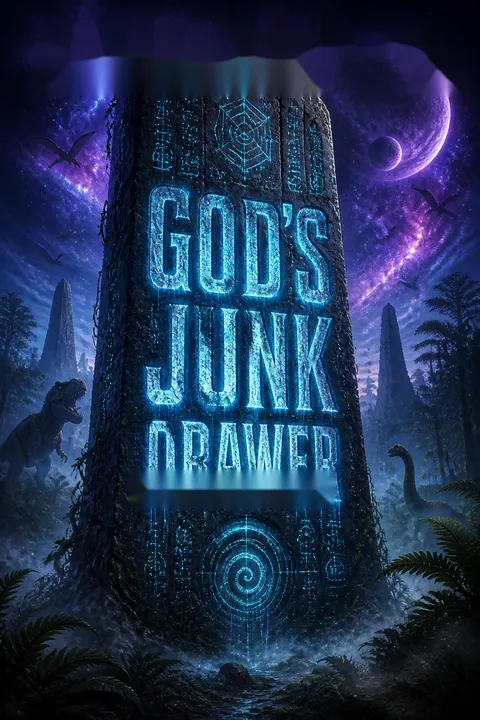

Plot Summary
Disappearance on Dead River
The story opens with the mysterious disappearance of the Gather family—James, his teenage daughter Beau, and young son Billy—during a white-water rafting trip meant to honor their late wife and mother. News reports and public speculation swirl as search parties find only fragments of their raft and gear. The family is presumed drowned, but years later, Billy reappears in Thailand, malnourished and traumatized, with wild tales of dinosaurs and survival in a strange valley. His story is dismissed as a coping fantasy, but the seeds of a deeper mystery are sown. The trauma of loss, the unreliability of memory, and the desperate need for meaning in chaos set the emotional tone for the journey ahead.
The Valley's Arrival
A group of graduate students and their professor, Dr. Noah Barnes, embark on an astronomy field trip to a remote plateau. Among them are Olivia, Parker, Sam, Kyle, Logan, and a last-minute guide, Josh. Tensions simmer—romantic, professional, and personal—against the backdrop of academic ambition and social awkwardness. As they set up camp, a strange event occurs: the ground vanishes beneath them, and they plunge into darkness. When they regain their senses, they find themselves in a prehistoric valley, surrounded by unfamiliar stars and impossible landscapes. The group's confusion and fear are palpable as they realize they are no longer in their own world—or time.
Dinosaurs and Doubt
The group quickly discovers the valley is teeming with dinosaurs—herbivores and predators alike. Their initial skepticism gives way to terror as they witness a classmate, Kyle, brutally killed by a carnivorous dinosaur. The survivors scramble for safety, their scientific rationality battered by the reality of their situation. They encounter other anachronisms: Neanderthals, strange birds with four wings, and remnants of lost civilizations. The valley is a patchwork of eras and places, defying all logic. As they struggle to survive, the group's unity frays, and the psychological toll of trauma and disbelief begins to show.
The Legend of Dino Boy
Interwoven with the present-day narrative are glimpses of Billy Gather's past. His return to the modern world as "Dino Boy" becomes a media sensation, but his detailed accounts of the valley are dismissed as fantasy or trauma-induced delusion. Yet, his memories—of a robot companion, Neanderthal neighbors, and the loss of his father—are vivid and consistent. The valley, for Billy, is both a place of wonder and horror, a crucible that forges and scars him. His story becomes a touchstone for the others, a legend that haunts their own struggle for meaning and survival.
The Patchwork World
The survivors explore the valley and realize it is not a single era but a mosaic of different times and places: forests, deserts, ruins, and artifacts from across history and prehistory. They encounter obelisks made of impossible materials, each inscribed with unreadable symbols and surrounded by strange force fields or deadly energies. The valley's geography shifts, and landmarks move or vanish. The group debates the nature of their predicament—time travel, parallel worlds, or something stranger. Their scientific training is both a tool and a torment, as every answer breeds more questions.
The Obelisks' Enigma
The obelisks become a focal point of curiosity and danger. Some repel touch, others emit lethal shocks, and all are covered in alien glyphs. Attempts to study or interact with them lead to disaster—Logan is killed by a surge of energy, and Olivia is left comatose. The survivors realize the obelisks are not random artifacts but integral to the valley's structure. They are clues to a larger design, one that transcends human understanding. The group's attempts to decode their purpose mirror their struggle to find meaning in their own suffering and loss.
The Neanderthal Threat
The valley is not uninhabited. The survivors encounter the Klaa, a tribe of Neanderthals who ride dinosaurs and enforce their own brutal order. Led by the enigmatic Empress and her lieutenant Breaker, the Klaa outnumber the humans and demand tribute. The threat of violence is constant, and the group must navigate a precarious peace. The Neanderthals' xenophobia and the Empress's iron rule are both a danger and a mystery. The survivors' attempts to communicate and coexist are fraught with misunderstanding, fear, and the ever-present possibility of betrayal.
The Empress Ascends
The Empress, a figure of mythic power, rules the Klaa with absolute authority. She is both more and less than human—her origins shrouded in rumor and fear. The valley trembles at her approach, and her word is law. As the survivors learn more, they suspect she is not a Neanderthal at all, but a transformed human—possibly Beau Gather, Billy's lost sister, changed by centuries in the valley and the influence of alien technology. Her rule is maintained by violence, spectacle, and the manipulation of the valley's strange energies. The question of her identity becomes central to the group's hopes and fears.
The Science of Survival
As days turn to weeks, the survivors adapt to life in the valley. They join the community of Roanoke, a village of castaways from across time, each with their own story of arrival and loss. The group splits between those who seek escape and those who seek understanding. Olivia, recovering from her coma, begins to speak in strange, patterned language—an aftereffect of her contact with the obelisk. Noah, haunted by guilt and failure, becomes obsessed with the valley's secrets. Parker and Sam pursue scientific inquiry, mapping the stars and the valley's shifting geography. The struggle to survive becomes a struggle to comprehend.
The Collapse of Certainty
Tensions in Roanoke rise as the Empress demands blood for perceived insults. The valley itself begins to collapse—earthquakes, storms, and the breakdown of natural laws signal an impending catastrophe. The survivors realize the valley is not a place in time, but a lifeboat—an alien construct designed to preserve life, now failing as its systems break down. The Empress's power is revealed to be both real and illusory, a function of her connection to the valley's core. The group faces impossible choices: fight, flee, or sacrifice themselves to save the rest.
The Lifeboat's Secret
Noah, guided by memories and a final vision from the alien Castaway, uncovers the valley's true nature. It is not a wormhole or a time rift, but the escape pod of a multidimensional starship, crashed and hidden in Earth's orbit. The obelisks are control nodes, the Ice Castle the command center. The valley's patchwork reality is a side effect of its damaged systems, drawing in people and places from across time to sustain itself. The Empress, once Beau, became its anchor when the Castaway died—her will and trauma shaping the valley's fate. Killing her would destroy everything; saving her might restore balance.
The Castaway's Purpose
The Castaway's final message is one of purpose and sacrifice. The valley exists to preserve life, even at the cost of its own. The Castaway remained to keep the lifeboat active, and when they died, the system latched onto the Empress. Noah realizes that to save everyone, he must take the Castaway's place—becoming the new anchor, the guardian of the valley. The survivors must convince the Empress to relinquish her hold, to let go of her pain and power. The choice is not between life and death, but between clinging to the past and embracing the possibility of return.
The Final Confrontation
The survivors confront the Empress as the valley collapses around them. In a desperate gambit, they risk everything to save her life and bring her back to the Ice Castle. The valley's systems recognize Noah as the new anchor, and the tremors cease. The Empress, mortally wounded, is freed from her centuries of rage and isolation. The Klaa scatter, and the survivors are left to pick up the pieces. The cost is high—lives lost, innocence shattered—but hope returns. The valley is restored, not as a prison, but as a sanctuary.
The Valley Restored
With Noah at the helm, the valley stabilizes. The survivors rebuild Roanoke, forging new alliances with the remaining Neanderthals and other castaways. The valley's dangers remain, but its purpose is clear: to shelter, to heal, to offer a second chance. Noah begins to learn the controls of the lifeboat, experimenting with its systems and preparing for the possibility of return. The survivors find meaning in their ordeal, forging bonds of friendship, love, and purpose. The valley is no longer a place of exile, but a home.
Home and Other Destinations
Noah, with Olivia's help, begins to unlock the secrets of the lifeboat. The survivors debate whether to return to their own times or remain in the valley. Some, like Sam and Parker, find new purpose in the community they have built. Others long for the world they left behind. The possibility of return is both a hope and a fear—what will they find, and who will they be, if they go back? The valley's lessons linger: the value of life, the cost of survival, and the power of forgiveness.
The Guilt of Survival
The survivors grapple with the guilt of those they could not save—Kyle, Logan, Josh, and so many others lost to the valley's dangers. Their memories become both a burden and a blessing, shaping the new society they build. The trauma of survival is not easily healed, but the valley's strange magic offers the possibility of redemption. The survivors honor their dead, learn from their mistakes, and strive to create a world worthy of their sacrifice.
The New Roanoke
Roanoke becomes a beacon of hope, a place where castaways from across time and space can find refuge. The survivors welcome newcomers, share their knowledge, and build a society based on cooperation and compassion. The valley's dangers remain, but so does its promise. Noah, now the valley's guardian, prepares for the day when he can send everyone home. The story ends not with escape, but with the promise of return—a promise built on trust, courage, and the hard-won wisdom of those who have survived.
The Promise of Return
The valley endures, its mysteries not fully solved but its purpose clear. Noah continues his work, guided by the memory of the Castaway and the hope of reunion with his sister. The survivors, changed by their ordeal, look to the future with cautious optimism. The valley is no longer a junk drawer of lost things, but a lifeboat—a place of healing, transformation, and the possibility of home. The story closes with the promise that, one day, everyone will find their way back—if not to the world they left, then to the world they have made together.
Analysis
God's Junk Drawer is a profound meditation on trauma, survival, and the search for meaning in a world that defies understanding. By blending science fiction, adventure, and psychological realism, Peter Clines crafts a narrative that is both thrilling and deeply human. The valley—at once a prison, a sanctuary, and a lifeboat—serves as a metaphor for the mind's capacity to both protect and imprison itself. The novel interrogates the stories we tell to make sense of suffering, the dangers of clinging to certainty, and the redemptive power of community and forgiveness. Its characters are shaped by loss but not defined by it, finding hope in the act of rebuilding and the promise of return. In a world where the past cannot be reclaimed and the future is uncertain, God's Junk Drawer offers a vision of healing that is both hard-won and deeply necessary: the courage to let go, the wisdom to adapt, and the grace to call even the strangest places home.
Review Summary
God's Junk Drawer receives an overall rating of 4.07/5, with most readers praising its wildly imaginative premise—dinosaurs, Neanderthals, aliens, and time-displaced humans colliding in a mysterious valley. Comparisons to Jurassic Park, Land of the Lost, and Michael Crichton are frequent. Fans love the twists, world-building, and Ray Porter's narration. Common criticisms include a slow, bloated middle section, too many POVs, underdeveloped characters, and repetitive dialogue. Despite mixed feelings about pacing and characters, most readers found it an entertaining, fun adventure worth recommending.
Characters
Noah Barnes (Billy Gather)
Noah is the adult incarnation of Billy Gather, the "Dino Boy" whose childhood in the valley became legend. As a professor, he is brilliant but emotionally scarred, driven by guilt over his family's fate and his own survival. His relationships are marked by distance and a need for control, masking deep vulnerability. Noah's journey is one of reckoning—with his past, his failures, and the limits of his knowledge. He evolves from a traumatized child to the valley's new guardian, learning to accept responsibility, forgive himself, and find purpose in service to others. His connection to the valley is both a curse and a calling, shaping his identity and destiny.
Beau Gather / The Empress
Beau is Billy's older sister, presumed dead but revealed as the Empress who rules the Klaa. Her transformation is both physical and psychological—a product of centuries of isolation, trauma, and the valley's alien influence. As the Empress, she is ruthless, cunning, and feared, but beneath the surface lies the wounded girl who lost everything. Her relationship with Noah is fraught with betrayal, longing, and the hope of redemption. Beau's arc is a meditation on the corrosive power of grief and the possibility of healing, even after unimaginable loss. Her final act is one of release, allowing the valley to move forward.
Olivia Martinez
Olivia is a graduate student whose sharp intellect and independence mask deep insecurities. Her rivalry with Parker and complicated feelings for Logan add layers to her character. After surviving a near-fatal encounter with an obelisk, she is left with a unique form of aphasia—speaking in patterned, reverse-alphabetical sentences. This linguistic barrier becomes a metaphor for trauma and the struggle to communicate. Olivia's recovery is a testament to resilience, and her eventual partnership with Noah in deciphering the valley's secrets marks her as a key agent of change.
Parker Sangthong
Parker is Olivia's academic rival and, at times, nemesis. Driven, analytical, and fiercely independent, she is both a foil and a complement to the other survivors. Her skepticism is a shield against the valley's chaos, but also a source of strength. Parker's journey is one of humility—learning to trust, to collaborate, and to accept the limits of knowledge. Her scientific rigor and emotional intelligence make her a vital part of the group's survival and eventual understanding of the valley's true nature.
Sam (Samael Jones)
Sam is a graduate student with a deep obsession for the "Dino Boy" legend and the valley's mysteries. Socially awkward and often overlooked, he finds purpose and belonging in the valley's challenges. His encyclopedic knowledge, drawn from childhood fascination, becomes a lifeline for the group. Sam's arc is one of growth—from passive observer to active participant, from running away to standing his ground. His willingness to sacrifice himself for others marks his transformation into a true hero.
Josh Redd
Josh is the group's last-minute guide, a drug dealer on the run who assumes a false identity. Outwardly affable and resourceful, he is driven by desperation and a longing for connection. Josh's outsider status gives him a unique perspective, but also makes him expendable in the valley's brutal calculus. His death is sudden and senseless, a reminder of the valley's indifference to human plans. Yet, his moments of kindness and humor leave a lasting impact on those who survive.
Pyr
Pyr is a future-born soldier with synthetic limbs and a war-scarred psyche. Her presence is both reassuring and unsettling—a living reminder of the valley's reach across time. Pyr's pragmatism and combat skills are invaluable, but her emotional detachment masks deep wounds. She becomes a mentor and protector to the group, especially Sam, and her willingness to risk herself for others is both a strength and a vulnerability. Pyr's arc is one of adaptation, learning to find meaning beyond survival.
Qiang
Qiang is the leader of Roanoke, a community of castaways from across history. Wise, patient, and burdened by responsibility, he navigates the delicate balance between appeasing the Klaa and protecting his people. Qiang's authority is earned through empathy and experience, but he is not immune to doubt or fear. His relationship with Noah is one of mutual respect and occasional conflict, as both men struggle to reconcile the needs of the many with the pain of the few.
The Castaway
The Castaway is a multidimensional being whose crashed lifeboat became the valley. Their purpose is to preserve life, even at the cost of their own freedom. The Castaway's perception of time and reality is fundamentally alien, making communication difficult but profound. Their relationship with the Gather family is one of gentle guidance and occasional frustration. The Castaway's final act—transferring control of the valley to Beau, and later to Noah—is an ultimate sacrifice, a testament to the power of compassion across species and dimensions.
Breaker (B'Kar)
Breaker is the Klaa's chief enforcer, a figure of brute strength and cunning. His loyalty to the Empress is absolute, but his ambition and aggression make him a constant threat. Breaker's worldview is shaped by the valley's brutality—might makes right, and difference is danger. His confrontations with the survivors are marked by violence and contempt, but also by a certain tragic inevitability. Breaker is both a product and a perpetuator of the valley's darkest impulses.
Plot Devices
Patchwork Setting and Temporal Dislocation
The valley's geography is a literal patchwork, composed of fragments from different eras and locations—prehistoric jungles, modern ruins, future technology, and alien artifacts. This device serves both as a narrative puzzle and a metaphor for trauma, memory, and the search for meaning. The shifting landscape disorients characters and readers alike, forcing constant adaptation and reevaluation. The valley's temporal dislocation—its refusal to fit into any single timeline—mirrors the survivors' psychological dislocation, their struggle to reconcile past, present, and future.
The Obelisks and Alien Technology
The obelisks are both plot catalysts and symbols of the unknown. Their inscrutable glyphs, deadly energies, and shifting properties drive the narrative forward, forcing characters to confront the limits of their knowledge and the dangers of curiosity. The obelisks' true nature—as control nodes of the lifeboat—emerges gradually, paralleling the survivors' journey from confusion to understanding. Their interactions with the obelisks are moments of revelation and peril, marking turning points in both plot and character development.
Unreliable Narration and Memory
The novel employs multiple perspectives—news reports, therapy sessions, personal recollections—to blur the line between fact and fiction. Billy's story is both a legend and a lived experience, shaping the expectations and actions of the other characters. The survivors' memories are unreliable, colored by fear, hope, and the need for coherence. This device underscores the central theme: the search for truth is always mediated by the stories we tell ourselves and each other.
Foreshadowing and Narrative Echoes
The narrative is rich with foreshadowing—early references to lifeboats, junk drawers, and the impossibility of escape set the stage for later revelations. Events and phrases echo across timelines and characters, creating a sense of inevitability and interconnectedness. The survivors' struggles mirror those of the Gather family, and the valley's cycles of collapse and restoration reflect the cycles of trauma and healing in their own lives.
Sacrifice and the Burden of Leadership
The valley demands sacrifice—of safety, certainty, and self. Noah's journey is marked by the burden of leadership, the guilt of survival, and the need to make impossible choices. The Empress's tyranny is both a product of her own suffering and a warning of what happens when power is wielded without compassion. The survivors' willingness to risk themselves for others is both their greatest strength and their greatest vulnerability.
Download PDF
Download EPUB
.epub digital book format is ideal for reading ebooks on phones, tablets, and e-readers.








































