
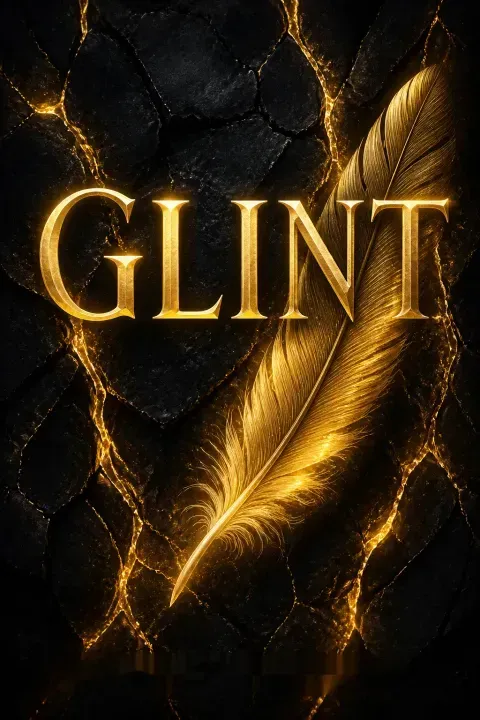


Plot Summary
Gilded Prisoner of the Enemy
Auren1 rides in a black carriage across the frozen Barrens, her body bruised from Captain Fane's abuse and her throat raw from screaming. Sail12 is dead, murdered in front of her on the Red Raid ship, his body dumped into an ocean of snow. Commander Rip,2 a full-blooded fae with spikes curving from his arms and spine, locked her inside this carriage but left her unbound.
When camp is made, she discovers unexpected comforts: a private tent with furs, a coal fire, food, water, even a mender sent to check her injuries. No chains, no guard at her back. But she knows she is a pawn meant to be dangled before King Midas.3 As exhaustion drags her under, she resolves to find a way to warn her king3 before Fourth's army reaches him.
The opening establishes Auren's psychological state as one of compounded trauma: guilt over Sail's death, violation from the pirates, and now the terror of a new captor. The dissonance between her expectation of cruelty and the actual treatment she receives creates cognitive friction that will drive her entire arc. Rip's decision to give her comfort rather than punishment is the first sign that he operates by a different code than the monster his reputation suggests. This section plants the central question: what does captivity mean when it feels nothing like what you expected?
A Cage Without Bars
Auren1 wanders camp freely, testing the invisible boundaries of her captivity. Keg,10 an outspoken cook with wooden beads in his hair, serves her extra portions and declares she's his favorite eater.
When crude soldiers mock her, Rip2 assigns them latrine duty under Osrik5's supervision, an act of protection that bewilders her. She meets Lu,6 a female captain with shaved dagger designs on her scalp, who drafts her into stealing a wine barrel and leads her to the saddles' tent.
Throughout these encounters, Auren1 searches for the army's messenger hawks, determined to send warning to Midas.3 The soldiers' unexpected decency, their camaraderie and discipline, unsettles her more than outright cruelty would because it complicates the clean division between enemy and ally.
Auren's worldview is binary: Midas equals safety, everyone else equals threat. The soldiers of Fourth systematically dismantle this framework through mundane kindness. Keg's warmth, Lu's irreverent friendship, even Osrik's gruff fairness all refuse to conform to the monster narrative Auren needs them to fulfill. Her desperate search for the hawks is not just about loyalty to Midas; it is an attempt to reassert the old categories, to prove to herself that she still knows which side she is on. The psychological stress of cognitive dissonance begins to wear at her defenses.
Secrets Carry a Price
Inside the cramped tent, twelve saddles seethe with mutual hatred, their fear curdling into venom directed at each other. They despise Auren1 for her perceived freedoms, calling her a traitor for walking the camp while they are confined.
When Auren1 pulls Rissa8 aside for a private conversation, the shrewd blonde saddle reveals she knows exactly what happened with Captain Fane: Auren1 used gold-touch magic, a power Midas3 has spent a decade hiding. Rissa8 does not threaten exposure outright.
She names a price: enough gold to buy out her royal saddle contract and start fresh somewhere far from any king. Auren,1 trapped between compliance and catastrophe, agrees to pay once they reach Fifth Kingdom. Rissa8's parting smile carries the implicit warning that if Auren1 fails, someone else will pay more for the information.
Rissa operates as a dark mirror to Auren: both are women commodified by powerful men, both have learned survival through performance. But where Auren clings to the fiction of love, Rissa has stripped away all illusion and treats every relationship as transactional. Her blackmail is not villainy but pragmatism born of the same system that built Auren's cage. This scene introduces the central tension between Auren's two secrets: her gold-touch magic and her fae nature. Each secret requires different strategies to protect, and the cost of protecting one may demand sacrificing the other.
Ribbons Unleashed by Fear
Fever and exhaustion finally fell Auren.1 Hojat,9 the army mender with a scarred face and kind eyes, comes to check on her, but when his hand presses against her forehead, blind panic consumes her. Her twenty-four golden ribbons snap outward from her spine and launch him across the tent with terrifying force.
Rip2 catches the mender before he crashes into the support poles. Both men stare at the satiny appendages now splayed in defensive fury around her trembling body. Auren1 apologizes, explaining that no one is allowed to touch her.
Rip,2 unsurprised, admits he saw her use the ribbons when she descended the pirate ship. He asks why she hides them, and she counters that she does not need another reason for people to gawk. Hojat,9 recovering his composure, continues his treatment while the ribbons slowly retreat.
The ribbons are the physical manifestation of Auren's repressed self: powerful, reactive, and dangerous when denied. Her instinct to hide them mirrors her psychological strategy of suppressing her own needs to survive. The scene dramatizes the failure of that strategy; her body will not be controlled the way her mind has been. Hojat's decision to continue treating her after being attacked demonstrates a radical form of acceptance that Auren has never experienced. He does not recoil from what she is. This small act of being seen without being rejected plants the first seed of self-acceptance.
The King's Unborn Heir
While thanking Auren1 for encouraging the saddles to accept medical care, Hojat9 casually mentions that one woman requires special attention due to pregnancy. When Auren1 presses for a name, he identifies Mist,11 the black-haired saddle whose hatred for Auren1 has been the most vocal and vicious.
The baby is Midas3 's. Auren1's composure disintegrates. Midas3 had always been careful with her, never risking a pregnancy, but he was cavalier with his saddles. The revelation strips away the last pretense that she holds a unique place in his affections.
Rip2 watches her devastation without gloating, but when she accuses him of orchestrating the moment, he counters with cold precision: she has been lying to herself about Midas3 for years. In a rage, she throws a vial at him, which he catches without flinching.
Mist's pregnancy functions as the final crack in Auren's psychological defenses. She has rationalized Midas's other women as political necessity, as meaningless physical acts, but a child is undeniable proof of intimacy and consequence. The revelation reframes every sweet word Midas ever spoke: if she was truly precious, why was she the only one he refused to risk a child with? Rip's refusal to comfort her is itself a form of respect; he treats her as someone capable of facing hard truths rather than someone who needs to be managed with pretty lies.
The Cold Queen Rises
In Highbell, Queen Malina4 sheds her golden gowns for the white and ice-blue silks of her Colier bloodline. She sits on Midas3's throne during an open forum, wearing her mother's opal crown, and dares the nobles to challenge her. When one man questions her right, she reminds him that Colier blood has ruled Sixth Kingdom for generations.
She wins the support of Lady Helayna, a powerful widowed countess, and systematically cuts off all messenger hawks from the castle to isolate Midas3 from his advisors. Her three advisors squirm but comply.
Later, she takes a male saddle of her own, Jeo, as a public insult to her absent husband. A letter arrives from the Red Raids: they failed to capture Auren1 because Fourth Kingdom's army intercepted the entire party. Malina4 celebrates, believing the enemy will destroy her rival far more thoroughly than pirates ever could.
Malina's arc serves as a dark foil to Auren's awakening. Both women are trapped by Midas's power, but where Auren internalizes her captivity as protection, Malina externalizes her resentment into political vengeance. Her methods are ruthless precisely because the system gives her no legitimate path to power; she must seize it through manipulation and calculated cruelty. The revelation that Fourth has Auren is a moment of dramatic irony: Malina celebrates what she assumes will be Auren's destruction, unaware that the same army is treating her rival with more dignity than Midas ever did.
"I'm Fae" Tears Free
When Auren1 stumbles upon soldiers training, she intervenes to protect young Twig from what she mistakes for abuse. Osrik5 invokes the fight circle's rule: anyone who enters must fight. Rip2 volunteers as her opponent. He strips off his armor and shirt, his fae heritage on full display, and systematically throws her into the snow again and again.
Each time she rises, he demands more. When she refuses to use her ribbons, he roars in her face, backing her across the circle until she shatters. She screams that she is fae, the confession tearing out of her like a physical thing.
Her ribbons explode outward with devastating force, throwing Rip2 across the circle. He catches every strike, pins her against his chest, and tells her with unmistakable pride that she has finally found her fight. Osrik,5 Lu,6 and Judd7 witnessed everything and know what she is.
This scene is the psychological climax of the first half of the book. Rip's method is brutal but purposeful: he understands that Auren's self-repression is killing her spirit, and only by pushing her past the breaking point can he help her reclaim herself. The confession is not extracted for his benefit but released for hers. The presence of the Wrath as witnesses is crucial; Auren has spent her whole life hiding, and now she is seen by people who do not flinch. Their acceptance rewrites the trauma of being discovered and rejected that has governed her since childhood.
Kiss Beneath the Mourning Moon
On a secluded beach beneath a rare blue mourning moon, Auren1 tells Rip2 her greatest truth: she was born in Annwyn, the fae realm, and was stolen from it twenty years ago. They sit together as stars streak across the sky like tears, honoring the dead.
Rip2 leans in and brushes his lips against hers, a feather-light kiss that leaves her breathless and confused. Later, in the tent, his demeanor shifts. He reveals he knows she sent a messenger hawk to warn Midas.3 But he also tells her it does not matter: King Ravinger2 had already informed Midas3 of her capture days ago.
Her desperate act of loyalty was futile. She is caught between relief that her betrayal had no consequence and shame that she committed it at all. Rip2 walks out, leaving her alone with the memory of his kiss and the weight of her choices.
The mourning moon scene is the book's emotional fulcrum. Auren gives Rip a truth freely, not traded or extracted, and he reciprocates with the softest touch she has ever received. That the kiss is immediately followed by the revelation about the hawk is no accident; Rip is showing her that intimacy and honesty can coexist, that being known does not have to mean being punished. Her immediate instinct to lean away from him during the exchange the next day proves she is not yet ready to choose herself over Midas. The kiss becomes a haunting promise of what she is not yet free to claim.
Learning to Wield Herself
Lu,6 Judd,7 and Osrik5 train Auren1 in secret, far from the camp's watching eyes. Judd7 dances around her with a wooden sword, smacking her arms whenever she forgets to use her ribbons. Osrik5 throws a punch at her shoulder to prove that her instincts will protect her when she stops overthinking, and her ribbons snap up to block him.
Lu6 explains that the three of them are Rip2's Wrath, his most trusted team who know his fae secret and would never reveal hers. After training, Auren1 convinces Keg10 to help her haul a laundry tub to the saddles' tent and fill it with melted snow so the women can bathe.
They do not thank her, but she realizes kindness does not require gratitude to matter. Something is shifting in how she values herself, separate from how others value her.
The training sequences mark Auren's transition from passive survival to active self-development. The Wrath's pedagogy is physical but their lesson is psychological: her body is not a liability to be hidden but a weapon to be mastered. The bath for the saddles is an equally important act of growth. She helps women who despise her without expecting anything in return, disentangling her self-worth from external validation. These small acts of agency and generosity are her first steps toward a selfhood defined by her own choices rather than Midas's needs.
A Door Offered, Then Shut
As Fourth's army masses outside Ranhold Castle, Rip2 confronts Auren1 in the tent. His intensity is palpable, his voice low. He asks if she wants to stay, offering to make arrangements before King Ravinger2 arrives to complicate everything. But she must decide now.
Auren1 panics. She cannot abandon the man who protected her for a decade, cannot believe Rip2's offer is real rather than another manipulation. She insists Midas3 loves her and things will be different. Rip2's expression shuts down completely, all the warmth of the mourning moon extinguished.
He calls her a fool and walks out. By morning, King Ravinger2 has arrived with rotting power that sickens the very ground, and guards are posted at Auren1's tent. She is no longer a free-roaming curiosity but a secured prisoner awaiting exchange.
This is the tragic hinge of the book. Auren is offered genuine escape by someone who sees her fully and values what he sees, but she cannot accept it because she has not yet internalized her own worth. Her refusal is not really about Midas; it is about the terrifying prospect of choosing herself. Rip's coldness afterward is not cruelty but self-protection; he extended himself and was rejected. The arrival of King Ravinger's rotting magic externalizes the corruption Auren is returning to, a physical manifestation of the decay she has accepted as love.
Returned Like a Golden Object
Osrik5 escorts Auren1 to the exchange point where Midas3's golden-armored envoy waits. Rip2 rides beside her in full battle armor, spikes gleaming, but he will not speak or look at her. When she must dismount, Midas3's soldiers refuse to touch her, citing their king's decree.
Rip2 lifts her from her horse, his hands firm on her waist, their faces inches apart. She leans away on instinct, and his expression shutters into cold apathy. He drops her without ceremony and rides off. She is taken through servant passages into Ranhold Castle, a secret once again.
When she finally sees Midas3 in his private study, he calls her Precious, promises to destroy anyone who harmed her, but holds her at arm's length. He never truly embraces her. His warmth is a performance, his concern a checklist.
The exchange scene crystallizes the difference between Rip and Midas through physical gesture. Rip touches her with presence and heat; Midas refuses to touch her at all. The 'no touching' rule Midas enforces is not about protection but about property, she is a valuable object that must not be handled by anyone but the owner. Auren's instinctive lean away from Rip reveals how deeply her conditioning still controls her body, even as her heart begins to recognize what she is losing. The servant passages she is herded through mirror her status: valuable enough to hide, shameful enough to keep out of sight.
Caged Again, Blood on Her Hands
Midas3 leads Auren1 to a windowless dressing room where a new iron cage has been built. Inside sits a woman with gold-painted skin, a decoy who impersonated her during her absence. When Auren1 refuses to enter the cage, insisting she has changed and does not need bars anymore, Midas3's patience evaporates.
He mocks her, dredging up a traumatic incident from her past to wound her into submission. When words fail, he seizes her physically and drags her into the cage. In the struggle, her glove slips off.
She shoves the decoy woman aside, and her bare hand burns with gold-touch magic. The woman solidifies instantly, her face frozen mid-scream, a golden statue of agony. Auren1 collapses in horror while Midas,3 undisturbed, tells her this proves exactly why she must stay caged: to protect everyone from what she is.
The accidental murder of the decoy is the book's darkest moment and the fulcrum of Auren's transformation. Midas's response is the ultimate unveiling of his abuse: he uses her guilt as a weapon, reframing her imprisonment as a necessary protection for others rather than his own greed. This is classic abuser logic, transforming the victim's trauma into justification for more control. The decoy woman's death is also a symbolic suicide: Auren kills the false version of herself, the compliant gilded pet who existed only as Midas's reflection. Something must die for the real Auren to live.
The Monster Unmasked
Locked in the windowless room with the dead woman's golden statue, Auren1 screams and pounds at the door until her gold-touch magic, fading at sunset, gilds it solid. She cannot break through what she has created. Then the doorknob disintegrates into golden sand.
A figure steps through: King Ravinger,2 whose rotting power makes her gorge rise. He examines her coat, noting the accidental gold gilding on the feathers inside. In her fury at what she believes is Rip2's mockery behind her back, she throws the coat at him and tells him to return it to its owner. He smiles. Then his body transforms.
The rotting veins recede, spikes stab through his arms and spine, scales gleam on his cheeks, his ears sharpen to deadly points. Rip2 stands before her, fully fae. He tells her his name is Slade,2 and that peace was negotiated. Fourth's army will stay in Ranhold. They will be seeing much more of each other.
The dual identity reveal recontextualizes the entire book. Every interaction with Rip was also an interaction with the king he serves. His power, his authority, his ability to offer her escape all make sense now. The deception is devastating to Auren, who feels played, but it also means that the man who saw her, challenged her, and kissed her possesses the actual power to change her circumstances. Slade's decision to reveal himself in this moment, when she is at her lowest and most trapped, is a declaration: he is not done with her. The game between kings is merely the stage; the real story is what happens between two fae in a world that wants them dead or caged.
Epilogue
The Golden Gold Vine: A miser3 discovers a golden vine and devotes himself entirely to its cultivation. He feeds it his hair, his nails, his ears, his nose, his very blood, growing ever more obsessed with its metallic beauty. The vine1 consumes every room of his house, every offering he makes, while he gives up pieces of himself to keep it gleaming.
In the end, he plucks out his own eyes and lies submerged in her tendrils, still whispering 'mine' as she drains the last of his life. The vine1 grows beyond the house, beyond the hill, an insatiable contagion fed by a love that was always only hunger. And still, the miser3 wanted more.
The Golden Gold Vine functions as a mythic condensation of the entire narrative. The miser is Midas, and the vine is Auren, but the poem's horror lies in its ambiguity: who is really destroying whom? The miser feeds the vine his very body, believing he is tending a treasure, but the vine is merely growing according to its nature, indifferent to his sacrifice. The poem suggests that possessiveness disguised as devotion is a form of self-annihilation. The miser never once asks what the vine needs; he only ever whispers 'mine.' The final image of the vine spreading beyond the house implies that cycles of exploitation and obsession cannot be contained; they will always overflow the structures built to house them.
Analysis
Glint is a novel about the slow, painful process of waking up from a lie you have told yourself to survive. Auren1 has spent a decade believing that Midas3's cage is protection, that his possessiveness is love, that her compliance is gratitude. The book methodically dismantles each of these beliefs through contrast: the enemy army treats her with more respect than her king3 ever did, a fae commander2 sees her fully when her lover3 only sees her gleam, and her own body rebels against the suppression she has imposed on it. The central insight is that the difference between captivity and safety is not the presence of bars but the presence of choice. Midas3 offers Auren1 protection that requires her to disappear; Rip2 offers her nothing she does not choose. The tragedy is that Auren1 cannot yet choose herself. Her refusal of Rip2's offer is not loyalty but fear, the terror of stepping into a personhood she has never been allowed to inhabit. The book's romantasy structure cleverly aligns the reader's desires with the love interest while forcing the protagonist to catch up to what the reader already knows, creating dramatic irony that is painful and propulsive. The Golden Gold Vine poem that closes the volume serves as a thesis statement: a relationship built on possession and extraction will consume both parties, but only one of them will be blamed for its appetite.
Review Summary
Glint receives mostly positive reviews, with readers praising the character development, particularly Auren's growth. Many enjoy the slow-burn romance and found family aspects. The book is compared to works by Sarah J. Maas and Jennifer L. Armentrout. Some criticize the slow pacing and lack of plot, while others appreciate the focus on character interactions. The ending and plot twists are widely praised, leaving readers eager for the next installment. Overall, it's seen as an improvement over the first book in the series.
Characters
Auren
Gilded fae captive awakening to truthA full-blooded fae with shimmering gold skin stolen from Annwyn as a child, Auren has spent two decades hiding what she is. Twenty-four golden ribbons grow from her spine, prehensile appendages she can control, and her touch carries the power to turn anything to solid gold during daylight hours, a magic she cannot always restrain. Rescued at fifteen by Midas3 from a life of begging and abuse, she has spent a decade mistaking his cage for protection and his possessiveness for love. She is fiercely loyal as a trauma response, suppressing her own needs and instincts to survive. Her journey forces her to confront the difference between being treasured and being owned. She gradually discovers her own strength, her own fury, and her own worth.
Commander Rip
Fae army commander, secret kingA full-blooded fae hiding in plain sight as the commander of Fourth Kingdom's army, Rip possesses black spikes that protrude from his arms and spine, silvery scales along his cheekbones, and pointed ears. His power is vast and ancient, his combat skills legendary. He operates with strategic patience and unnerving perception, never treating Auren1 as a possession but relentlessly pushing her to stop hiding what she is. His intensity masks deeper feelings that emerge in quiet, vulnerable moments. His soldiers follow him with absolute loyalty, and his inner circle, the Wrath, know his true nature. His relationship with Auren1 evolves from captor to something far more complicated, testing her loyalties and her sense of self.
King Midas
Golden King, manipulative captorThe ruler of Sixth Kingdom whose reputation for gold-touch magic is built entirely on Auren1's hidden power. Midas is charming, strategic, and pathologically possessive, viewing Auren1 as his most valuable asset rather than a partner. He keeps her in a gilded cage, parades her gilded body before dignitaries as proof of his magic, and insists she is his 'Precious' while maintaining a wife4 and a harem of saddles. His love is conditional, his protection transactional. When Auren1 begins to assert her own will, his response reveals the ugly truth beneath the golden facade: he values her power far more than her person, and he will use any means to maintain control.
Queen Malina
Ambitious usurper, scorned wifeThe cold, calculating queen of Sixth Kingdom, Malina is Midas3's wife in name only. Born a Colier princess, she was raised to rule Highbell but was sidelined when her father gave her to Midas3 and her husband's gold obsession consumed her ancestral home. She possesses no magic, but her ambition is a force of its own. Beneath her icy composure simmers years of resentment toward Midas3 for stealing her birthright and parading his favored before her. She is strategic, patient, and ruthless in pursuing power, arranging the Red Raid ambush to eliminate Auren1 and maneuvering politically to seize control of her kingdom while her husband is away.
Osrik
Rip's massive right-hand enforcerA towering, bearded soldier with a wooden piercing through his bottom lip and a permanent scowl, Osrik serves as Rip2's enforcer and a member of the Wrath. He initially views Auren1 with contempt, calling her Midas3's symbol and threatening to whip her for disrespect. Beneath the intimidation, he proves fiercely loyal to Rip2 and warms to Auren1 after witnessing her fight and her resilience. His blunt honesty and unexpected moments of humor mask a warrior's unwavering honor.
Lu
Female captain, fierce mentorA captain in Fourth's army with shaved hair carved into dagger designs and a red gemstone piercing above her lip. Lu moves like a bird, light and swift, and commands respect effortlessly from soldiers twice her size. She gives Auren1 the nickname 'Gildy Locks' and becomes an unexpected mentor, teaching her to own her choices and fight for herself rather than lying down for the world's thumb. As part of Rip2's Wrath, she knows his fae secret and guards it with absolute loyalty.
Judd
Cocky blond warrior, rumor-spreaderA soldier of Rip2's Wrath whose mustard-yellow hair makes him conspicuous in any crowd. Judd is the one who started the rumor that Rip2 tears off his opponents' heads, a joke that spread across all of Orea. He trains Auren1 in combat with teasing irreverence and shirtless swagger, but his humor conceals a competent warrior's sharp instincts. He drafts Auren1 into stealing wine barrels as part of an ongoing prank war between army factions.
Rissa
Shrewd saddle seeking freedomThe most skilled and poised of Midas3's royal saddles, Rissa has shrewd blue eyes and an instinct for survival honed by years of being used by powerful men. She witnessed Auren1 use gold-touch magic against Captain Fane and leverages that knowledge into a demand: gold to buy her freedom from the royal saddle contract. She is pragmatic to the point of ruthlessness, loyal only to herself, and willing to do whatever it takes to escape the life she was sold into.
Hojat
Gentle army mender with secretsFourth's army mender whose face was badly burned, leaving one side scarred and drooping. He treats Auren1 with unexpected kindness, calling her 'my lady' and giving her dried peonies for luck when she falls ill. His concoctions include questionable ingredients like boiled intestines, but his honesty and gentleness make him impossible to dislike. He is the first person Auren1 accidentally attacks with her ribbons, and his decision to continue treating her afterward demonstrates a radical acceptance she has never experienced.
Keg
Outspoken cook, Auren's allyThe army's cook who takes an immediate liking to Auren1. He threatens to put his foot up soldiers' arses if they complain about his food, serves her extra portions, and helps her arrange baths for the saddles. His family runs a brewery back in Fourth Kingdom, and his brothers are named Distill and Barley.
Mist
Pregnant saddle, Auren's rivalA black-haired saddle who despises Auren1 with particular venom, a hatred explained when Hojat9 reveals she is carrying Midas3's illegitimate child. Her pregnancy makes her the most vocal in condemning Auren1's perceived privileges and freedoms among the captured saddles.
Sail
Murdered guard, Auren's first friendOne of Midas3's guards who became Auren1's first real friend in a decade during their journey. He was murdered by Captain Fane of the Red Raids, his body strapped to a mast in cruel mockery of his name. Auren1 pushed his corpse overboard so the pirates could not continue to abuse him, and his death haunts her throughout the book.
Plot Devices
Auren's gold-touch magic
Deadly daylight transformation powerAuren1's skin contact during daylight hours turns any living thing or object to solid gold. She cannot always control the spread of the magic, which has killed at least two people accidentally. Midas3 has hidden this power for a decade, claiming it as his own to build his reputation as the Golden King. The magic fades completely at sunset and returns at dawn. It serves as both Auren1's greatest threat and her only weapon, the thing that makes her valuable to Midas3 and dangerous to everyone else.
Auren's ribbons
Prehensile fae appendages for combatTwenty-four golden satiny ribbons grow from Auren1's spine, twelve on each side from shoulder blades to lower back. They are strong enough to tear iron doors off hinges, sharp enough to clash with Rip2's spikes like swords, and dexterous enough to untie knots. They respond to her emotions, lashing out defensively when she is threatened. Auren1 has spent years hiding them, wrapping them around her torso beneath clothing and suppressing their movement. Where her gold-touch is destructive, her ribbons are protective, an extension of her fae nature she is learning to wield as a warrior rather than hide as a shameful secret.
Midas's cages
Physical and psychological imprisonmentMidas3 builds elaborate gilded cages for Auren1, first in Highbell Castle and later in Ranhold, presenting them as protection from the dangerous world. The cages are beautiful, spacious, and utterly inescapable. The bars represent Midas3's control over every aspect of Auren1's existence: where she goes, who sees her, when she eats, what she wears. The cage is the physical manifestation of a psychological prison built on Auren1's trauma and Midas3's manipulation. Her journey is fundamentally about recognizing that safety and captivity are not the same thing.
Rip's dual identity
Hidden king concealing true powerCommander Rip2 and King Slade Ravinger2 are the same fae male, capable of shifting between two physical forms. As Rip2, he manifests spikes, scales, and pointed ears. As Slade2, he carries rotting magic that spreads decay through the ground and manifests as writhing dark veins beneath his skin. His dual identity allows him to move through the world as a feared commander while wielding the true authority of a monarch. The revelation that the man who challenged Auren1, trained her, and kissed her is also the king everyone fears recontextualizes their entire relationship and positions him as someone with actual power to change her circumstances.
Messenger hawks
Long-distance communication systemTrained hawks kept in a specialized carriage within Fourth's army, used to send messages across Orea. Each hawk is trained to fly specific directions based on which leg vial receives the message. Auren1 spends much of the book searching for these hawks, eventually finding them and sending a warning to Midas3 about the approaching army. The hawks represent the desperate attempt to maintain old loyalties, but Auren1's guilt after sending her message reveals that her allegiance is already shifting.
FAQ
Synopsis & Basic Details
What is Glint about?
- Captivity and self-discovery: Auren, the gold-touched favored of King Midas, finds herself captured by the army of Fourth Kingdom.
- Power and control: The story explores themes of power, control, and manipulation as Auren navigates treacherous relationships and uncovers hidden agendas.
- Quest for freedom: Auren embarks on a journey of self-discovery, challenging her loyalty to Midas and seeking to break free from her gilded cage.
Why should I read Glint?
- Complex character dynamics: The story features intricate relationships and morally gray characters, creating compelling conflicts and emotional depth.
- Intriguing world-building: Raven Kennedy crafts a rich and immersive fantasy world with unique magical elements and political intrigue.
- Empowering themes: Glint explores themes of self-discovery, empowerment, and breaking free from oppressive systems, resonating with readers seeking stories of personal growth.
What is the background of Glint?
- Political landscape of Orea: The story is set in the world of Orea, divided into several kingdoms with complex political relationships and power struggles.
- Magic and the Fae: Magic plays a significant role, with the existence of fae and their unique abilities shaping the world's dynamics.
- Midas's golden touch: The power of Midas's golden touch has transformed Highbell Castle and influenced the kingdom's economy and social structure.
What are the most memorable quotes in Glint?
- "Gold may gleam, but it doesn't stand the test of time.": This quote from Queen Malina highlights the superficiality of wealth and the fleeting nature of power.
- "Shove down weakness, and strength will rise...": This mantra, echoing from Auren's past, encapsulates her determination to survive and overcome adversity.
- "You can't trust people.": This recurring theme, voiced by both Midas and Auren, underscores the pervasive sense of betrayal and the challenges of forming genuine connections.
What writing style, narrative choices, and literary techniques does Raven Kennedy use?
- First-person perspective: The story is primarily told from Auren's point of view, allowing readers to intimately experience her thoughts, emotions, and perceptions.
- Descriptive language: Kennedy uses vivid and evocative language to paint a picture of the world, characters, and their emotional states.
- Foreshadowing and symbolism: The author employs subtle foreshadowing and recurring symbols, such as gold and cages, to enhance the story's themes and create a sense of anticipation.
Hidden Details & Subtle Connections
What are some minor details that add significant meaning?
- The state of Highbell Castle: The transformation of Highbell Castle into a gilded monument reflects Midas's obsession with wealth and his disregard for tradition and history.
- The significance of names: Character names, such as "Ravinger" and "Colier," hint at their personalities and roles in the story.
- The description of the weather: The harsh, unforgiving weather of the Barrens mirrors Auren's emotional state and the challenges she faces.
What are some subtle foreshadowing and callbacks?
- Auren's dreams and nightmares: Auren's recurring dreams and nightmares foreshadow future events and reveal her deepest fears and anxieties.
- Recurring phrases and motifs: The repetition of phrases like "gilded cage" and the recurring motif of gold reinforce the story's central themes.
- The significance of objects: Objects like the silver box and the white opal crown gain significance as symbols of Malina's past and her desire to reclaim her identity.
What are some unexpected character connections?
- Auren and Rip's shared fae heritage: The revelation of their shared fae heritage creates a complex connection between Auren and Rip, blurring the lines between captor and captive.
- Malina and Auren's shared struggle for power: Despite being on opposite sides, Malina and Auren both grapple with the challenges of asserting their power in a male-dominated world.
- Keg and Auren's unlikely friendship: The unexpected bond between Auren and Keg, the army cook, provides moments of levity and highlights the humanity within the ranks of Fourth Kingdom's army.
Who are the most significant supporting characters?
- Osrik: As Rip's right-hand man, Osrik embodies the strength and ruthlessness of Fourth Kingdom's army, while also displaying moments of unexpected compassion.
- Hojat: The army mender, Hojat, provides Auren with medical care and offers glimpses of kindness and empathy amidst the harsh realities of war.
- Lu: A strong and independent female soldier, Lu challenges Auren's preconceived notions and offers her a different perspective on power and freedom.
Psychological, Emotional, & Relational Analysis
What are some unspoken motivations of the characters?
- Midas's fear of vulnerability: Midas's obsession with control stems from a deep-seated fear of vulnerability and a desire to protect himself from loss.
- Rip's desire for justice: Rip's actions are driven by a desire for justice and a belief that Midas's power is corrupt and must be challenged.
- Malina's longing for recognition: Malina's ambition is fueled by a longing for recognition and a desire to prove her worth beyond her role as Midas's wife.
What psychological complexities do the characters exhibit?
- Auren's Stockholm syndrome: Auren's complex feelings for Midas, including her loyalty and affection, can be interpreted as a form of Stockholm syndrome.
- Rip's internal conflict: Rip grapples with the conflict between his fae nature and his role as a king, struggling to reconcile his desire for power with his sense of morality.
- Malina's repressed anger: Malina's quiet rebellion masks a deep-seated anger and resentment towards Midas, stemming from years of being overshadowed and controlled.
What are the major emotional turning points?
- Auren's capture by Fourth's army: This event forces Auren to confront the realities of the outside world and question her sheltered existence.
- The revelation of Mist's pregnancy: This discovery shatters Auren's trust in Midas and forces her to reevaluate their relationship.
- Auren's decision to send the hawk: This act of defiance marks a turning point in Auren's journey, as she begins to assert her own agency and challenge Midas's control.
How do relationship dynamics evolve?
- Auren and Midas's relationship: Their relationship evolves from one of dependence and admiration to one of distrust and resentment, as Auren begins to see Midas's manipulative nature.
- Auren and Rip's relationship: Their relationship evolves from one of animosity and suspicion to one of grudging respect and a complex connection, as they discover their shared fae heritage and challenge each other's beliefs.
- Auren and Rissa's relationship: Their relationship evolves from one of animosity to one of reluctant understanding, as they bond over their shared experiences and their desire for freedom.
Interpretation & Debate
Which parts of the story remain ambiguous or open-ended?
- Rip's true intentions: Rip's motivations remain ambiguous, leaving readers to question whether he is genuinely interested in helping Auren or simply using her for his own purposes.
- The nature of Auren's powers: The full extent and origin of Auren's gold-touch magic remain unclear, leaving room for speculation and future exploration.
- The future of Fifth Kingdom: The fate of Fifth Kingdom and its people remains uncertain, as the story ends with the threat of war looming on the horizon.
What are some debatable, controversial scenes or moments in Glint?
- Midas's treatment of Auren: Midas's possessiveness and controlling behavior towards Auren spark debate about the nature of their relationship and whether it is abusive.
- Auren's actions on the pirate ship: Auren's decision to kill Captain Fane and use her powers to escape raises questions about the morality of her actions and the extent to which she is justified in using violence.
- The ending and Auren's choice: Auren's decision to stay with Midas despite his flaws and her growing feelings for Rip sparks debate about whether she is making the right choice and whether she is truly free.
Glint Ending Explained: How It Ends & What It Means
- Auren's return to Midas: Auren returns to Midas, but with a newfound awareness of his flaws and a determination to change their relationship dynamics.
- The revelation of Rip's true identity: The reveal that Rip is King Ravinger sets the stage for a major conflict and complicates Auren's feelings for him.
- Auren's choice to stay: Auren's decision to stay with Midas, despite his flaws, is a complex one, suggesting that she is not yet ready to fully embrace her independence and that she still sees something worth fighting for in their relationship.
The Plated Prisoner Series



About the Author
Other books by Raven Kennedy



Download PDF
Download EPUB
.epub digital book format is ideal for reading ebooks on phones, tablets, and e-readers.








































