
Plot Summary
Night Flight, Shattered Gate
Leah flees Kyneston with her baby, Libby, pursued by the powerful Jardine brothers. At the estate's glowing wall, she tries to use her child's latent Skill to open the gate, but is confronted by Silyen, the youngest Jardine, whose curiosity is as dangerous as his power. The gate responds to Libby's blood but not her will, trapping them. Gavar, Libby's father, arrives and, in a fit of possessive rage, shoots Leah. As she dies, Jenner, the powerless middle brother, can only offer comfort. Silyen coldly observes, noting the limits of even his Skill. The scene sets the tone: in this world, Skill is both a gift and a prison, and the powerful are as cruel as they are curious. The night ends with Leah's death, Libby's fate uncertain, and the estate's walls as impenetrable as ever.
Slavedays: Family Torn Apart
The Hadley family's peaceful life is shattered when they are forced to begin their "slavedays"—a decade of unpaid servitude required of all commoners. Abi, the eldest, orchestrates a plan to serve together at Kyneston, the Jardine estate, hoping to avoid the horrors of the slavetowns. But bureaucracy intervenes: Luke, the teenage son, is deemed surplus and sent alone to Millmoor, a notorious slavetown, while the rest go to Kyneston. The family's separation is brutal, marked by violence and humiliation. Luke's forced departure is a wrenching moment, exposing the cruelty of a system that values paperwork over people. The Hadleys' hope of staying together is crushed, and each is thrust into an unfamiliar, dangerous world.
Kyneston's Walls, Millmoor's Chains
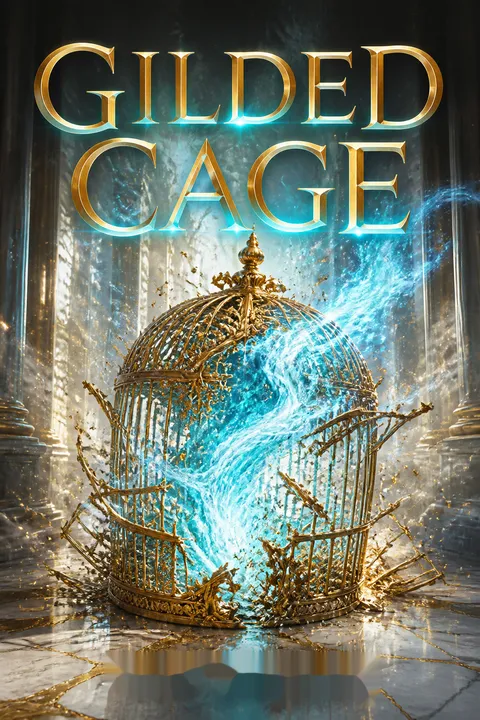
Abi, Daisy, and their parents arrive at Kyneston, awed and unsettled by the estate's magical walls and the enigmatic Jardine family. They are greeted by Silyen's unnerving display of Skill and Jenner's awkward kindness. Meanwhile, Luke is processed into Millmoor, chipped and assigned to grueling labor in the Machine Park. He quickly learns the rules of survival: keep your head down, trust no one, and endure. The contrast between Kyneston's gilded cage and Millmoor's industrial hell is stark. Both are prisons, but one is gilded, the other rusted. The Hadleys' new lives begin under the watchful eyes of their masters, each facing their own trials.
The Young Master's Bargain
Silyen Jardine, the youngest and most powerful of the Jardine brothers, is fascinated by the limits of Skill and the mysteries of inheritance. He strikes a secret bargain with Chancellor Zelston: in exchange for reviving his comatose aunt, Euterpe, Zelston must propose the abolition of the slavedays in Parliament. Silyen's motives are opaque—curiosity, ambition, or something darker. The deal sets in motion political upheaval, as the possibility of ending the slavedays threatens the foundation of Equal rule. Silyen's cold detachment and intellectual hunger make him both a catalyst and a threat, his actions rippling through the lives of commoners and aristocrats alike.
The Hadleys Divided
At Kyneston, the Hadleys are assigned roles: Abi as Jenner's assistant, Daisy as caretaker to Libby, and their parents as estate nurse and mechanic. Daisy's bond with Gavar and Libby deepens, while Abi navigates the complexities of service and her growing feelings for Jenner. Luke, isolated in Millmoor, finds unexpected allies in Renie, a streetwise girl, and Dr. Jackson, a subversive doctor. Each Hadley adapts differently: Daisy finds purpose, Abi seeks agency, and Luke is drawn into resistance. The family's separation tests their loyalties and identities, as they are forced to choose between survival and defiance.
Millmoor: Survival and Rebellion
Luke's life in Millmoor is brutal and dehumanizing, but he is quickly drawn into the underground resistance led by Dr. Jackson and Renie. The "Millmoor Games and Social Club" is a front for sabotage, smuggling, and spreading hope. Luke's tasks—delivering medicine, sabotaging equipment, and recruiting others—awaken his sense of purpose. The club's members, each with their own scars and skills, become his new family. The risk is ever-present: betrayal, violence, and the threat of slavelife. Yet, through small acts of rebellion, Luke and his friends begin to challenge the system, daring to imagine a world without slavedays.
Kyneston: Service and Secrets
Abi excels in her role at Kyneston, modernizing the estate's administration and earning Jenner's trust. Their mutual attraction grows, complicated by the unbridgeable gulf between slave and Equal. Abi's curiosity leads her to uncover family secrets, including the tragic history of Skilless heirs and the true nature of the Jardines' power. She befriends the dog-man, a Condemned slave, and becomes entangled in the estate's darker mysteries. The boundaries between service and subversion blur, as Abi risks everything to protect her family and pursue justice. Kyneston's beauty hides rot, and Abi's awakening is both personal and political.
The Chancellor's Proposal
Chancellor Zelston fulfills his bargain with Silyen, proposing the immediate abolition of the slavedays in Parliament. The act is unprecedented, sending shockwaves through the ruling class. The Proposal is met with outrage, fear, and political maneuvering. Bouda Matravers, Gavar's ambitious fiancée, and Lord Jardine plot to maintain the status quo. The Proposal is silenced—literally—by acts of Skill that erase memories and enforce secrecy. Yet, word leaks to the slavetowns, igniting hope and unrest. The possibility of freedom galvanizes the oppressed, while the Equals close ranks to defend their privilege.
Games and Resistance
Inspired by the Proposal, the Millmoor club orchestrates a coordinated day of resistance: strikes, sabotage, and a mass rally. Luke emerges as a leader, spreading the word and uniting disparate factions. The uprising is met with brutal repression—Skill is used to inflict agony and restore order. The cost is high: friends are injured, captured, or killed. Yet, the act of defiance is a victory in itself, proving that the slavedays are not unbreakable. The club's actions echo beyond Millmoor, signaling the start of a broader struggle. Luke's sense of agency is forged in fire, but the consequences are dire.
Skill, Power, and Binding
Skill is not just magic—it is the foundation of power, a tool of control, and a weapon of oppression. The binding at Kyneston's gate, the acts of Silence and Quiet, and the hereditary transmission of Skill all serve to maintain the social order. Silyen's experiments, Euterpe's awakening, and the dog-man's fate expose the limits and dangers of Skill. The commoners' lack of Skill is both a curse and a shield, as they are immune to certain manipulations but vulnerable to others. The novel interrogates the morality of power: who wields it, who suffers, and who dares to challenge it.
The Club's First Strike
The club's most daring act—breaking Oz out of Millmoor's detention center—tests loyalties and exposes hidden truths. Luke, Renie, and Jackson risk everything, aided by Angel, a mysterious ally. The escape is successful, but the cost is high: violence, pursuit, and the revelation that not all allies are who they seem. Jackson's true identity as an Equal, and the presence of traitors within the system, force Luke to question everything. The boundaries between friend and foe blur, and the stakes escalate. The club's actions draw the attention of the highest powers, setting the stage for confrontation.
The Great Demonstration
At Kyneston, Silyen orchestrates a public display of Skill reminiscent of the legendary Great Demonstration. He revives Euterpe Parva, fulfilling his bargain with Zelston, and repairs the shattered East Wing after a catastrophic explosion. The act is both awe-inspiring and terrifying, a reminder of the Equals' absolute power. The demonstration is not just spectacle—it is a statement of dominance, a warning to those who would challenge the order. Yet, it also reveals cracks: Skill can be used for healing or harm, creation or destruction. The legacy of Cadmus Parva-Jardine looms, and the cycle of power and rebellion continues.
The Dog-Man's Cage
Abi and Luke's efforts to help the dog-man—once a soldier, now a broken tool of vengeance—culminate in the revelation of his crimes. Driven mad by grief and injustice, he murdered not only his wife's abuser but also innocents. Silyen promises him escape, but at a price. The episode forces Abi and Luke to confront the limits of empathy and the dangers of unchecked power. The dog-man's story is a microcosm of the novel's themes: the cycle of violence, the corruption of justice, and the impossibility of simple answers. Mercy and vengeance are tangled, and no one escapes unscathed.
The Proposal Ball
The Proposal Ball at Kyneston is a glittering façade masking intrigue and danger. Luke, now at the estate, is drawn into a web of manipulation by Lord Rix, who uses Skill to compel him to assassinate Lord Jardine. The plan goes awry: the binding prevents Luke from harming his master, and the bullet kills Chancellor Zelston instead. Chaos erupts—Euterpe's grief unleashes a cataclysmic explosion, and the East Wing is destroyed. The ball's illusions are shattered, revealing the violence and fragility beneath the surface. Luke becomes a scapegoat, and the true conspirators remain hidden.
Assassination and Aftermath
In the aftermath of the assassination, Luke is arrested and accused of murder. Crovan and Lord Jardine use Skill to interrogate and silence him, erasing memories and obscuring the truth. Abi and Jenner are powerless to intervene, and the Hadleys face further separation. The Equals close ranks, using the chaos to consolidate power—Lord Jardine seizes the Chancellorship, and dissent is crushed. The machinery of justice is revealed as a tool of control, not truth. Luke's fate is sealed not by his actions, but by the needs of those in power. The cost of resistance is exile, pain, and loss.
The Shattering of Kyneston
Euterpe's grief-fueled Skill shatters Kyneston, killing and maiming many. Silyen, in a display of near-divine power, rebuilds the estate, erasing the evidence of destruction. The act is both miracle and menace, a reminder that Skill can unmake and remake the world at a whim. The survivors are left traumatized, and the social order is both restored and destabilized. The event marks a turning point: the old certainties are gone, and the future is uncertain. The cost of Skill is paid in blood and memory, and the survivors must reckon with what remains.
Condemnation and Escape
Luke is tried and Condemned, sentenced to a lifetime of servitude under Crovan. Dr. Jackson, revealed as Heir Meilyr, sacrifices his Skill to save Luke from further torment, but is left broken. Abi, Daisy, and their parents are separated again—Daisy remains at Kyneston, the others sent to Millmoor. Abi, refusing to accept defeat, escapes and sets out to find allies among the abolitionists. The family's ordeal is not over, but hope endures. The cycle of resistance continues, as new alliances are forged and the long game begins.
The Long Game Begins
The novel ends with the survivors scattered but unbroken. Abi flees to the Scillies, seeking help from the Trescos. Luke faces an uncertain future as a Condemned, but the memory of resistance lingers. Silyen's secrets, the club's sacrifices, and the cracks in the system hint at further upheaval. The slavedays endure, but the seeds of revolution have been sown. The story closes on a note of defiance: the long game is not over, and the fight for freedom continues.
Analysis
Gilded Cage is a searing exploration of power, privilege, and resistance, set in a world where magic—Skill—serves as both a literal and metaphorical tool of oppression. Through the intertwined fates of the Hadley family and the ruling Jardines, Vic James interrogates the moral costs of complicity and the possibilities of rebellion. The novel's dual narrative structure—contrasting the gilded estate with the grim slavetown—exposes the universality of suffering under tyranny, while the characters' personal journeys illuminate the complexities of agency, loyalty, and love. Skill, as both gift and curse, embodies the dangers of unchecked power: it can heal or destroy, liberate or bind. The acts of Silence and binding are chilling metaphors for the erasure of dissent and the enforcement of obedience. Yet, amid the brutality, the novel offers hope: small acts of defiance, the forging of unlikely alliances, and the refusal to accept the world as it is. Gilded Cage warns that revolution is a long, costly process, and that true change requires both courage and sacrifice. Its lessons resonate beyond its fantasy setting, challenging readers to question the structures of power in their own world.
Review Summary
Gilded Cage by Vic James presents an alternate Britain where magical aristocrats called Equals enslave commoners for ten years. Reviews praise the intricate world-building, complex characters, and political intrigue, though opinions diverge on execution. Most readers appreciated the multi-POV narrative, particularly enjoying enigmatic character Silyen and the contrast between estates and slave towns. Common criticisms include underdeveloped romance, too many perspectives causing confusion, and questionable world logic. Despite concerns about pacing and character development, the majority found the dark, thought-provoking premise compelling, with many eagerly anticipating the sequel.
Characters
Abi Hadley
Abi is the eldest Hadley child, driven by a fierce desire to protect her family and improve their lot. Her intelligence and organizational skills earn her a place as Jenner Jardine's assistant at Kyneston, where she excels but is constantly reminded of her status as a slave. Abi's curiosity and sense of justice lead her to uncover the estate's secrets and challenge the boundaries of her role. Her relationship with Jenner is marked by longing and frustration, as love and power are always at odds. Abi's journey is one of awakening: from dutiful daughter to determined resister, willing to risk everything for freedom.
Luke Hadley
Luke is thrust into Millmoor alone, forced to grow up quickly in a world of brutality and deprivation. His innate decency and courage draw him into the resistance, where he becomes a key player in the club's schemes. Luke's experiences harden him, but he retains empathy and a sense of right and wrong. His relationships—with Renie, Jackson, and his family—shape his identity. Manipulated and ultimately scapegoated for Zelston's murder, Luke's arc is one of loss and transformation. He is both victim and agent, his choices echoing the novel's central questions about power, complicity, and hope.
Silyen Jardine
The youngest Jardine brother, Silyen is a prodigy whose Skill is unmatched and whose motives are inscrutable. He is fascinated by the limits of power, the mysteries of inheritance, and the possibilities of change. Silyen's actions—bargaining with Zelston, experimenting with Skill, aiding and betraying others—drive much of the plot. He is both a catalyst for revolution and a guardian of the status quo, his curiosity as dangerous as his indifference. Silyen's psychological complexity lies in his detachment: he observes, manipulates, and intervenes, but rarely reveals his true desires. He is the novel's wild card, unpredictable and essential.
Jenner Jardine
Jenner, the middle Jardine brother, is unique among his family: he has no Skill. This lack makes him both an outsider and a bridge between worlds. Jenner is gentle, empathetic, and burdened by his family's expectations. His relationship with Abi is tender but doomed by circumstance. Jenner's inability to act—whether to save Leah, help Luke, or change his own fate—reflects the novel's themes of powerlessness and complicity. He is a tragic figure, defined by what he cannot do, yet his decency offers a counterpoint to his family's cruelty.
Gavar Jardine
The eldest Jardine brother and heir, Gavar is a study in contradictions. He is capable of both tenderness (toward his daughter Libby and Daisy) and brutality (toward Leah and others). Gavar is shaped by his father's expectations and his own insecurities. His relationship with Bouda is transactional, while his bond with Daisy and Libby hints at a capacity for change. Gavar's use of Skill is raw and destructive, mirroring his emotional volatility. He is both enforcer and victim of the system, his actions driving key plot turns.
Dr. Jackson / Heir Meilyr
Dr. Jackson, known in Millmoor as a subversive doctor, is revealed to be Heir Meilyr Tresco, an Equal working undercover to foment resistance. His dual identity embodies the novel's exploration of complicity and rebellion. Jackson mentors Luke, leads the club, and ultimately sacrifices his Skill to save others. His actions are driven by guilt, hope, and a desire for justice. The loss of his Skill is both a personal tragedy and a symbol of the costs of resistance. Jackson's arc is one of transformation: from privileged heir to broken revolutionary.
Renie
Renie is a young girl surviving alone in Millmoor, hardened by loss and neglect. She is resourceful, quick-witted, and fiercely independent. Renie's friendship with Luke is built on mutual respect and shared danger. She is both a guide and a provocateur, challenging Luke to act and think for himself. Renie's backstory—abandonment, self-mutilation to escape tracking—embodies the system's cruelty. She is a survivor, her resilience a testament to the possibility of hope in the darkest places.
Bouda Matravers
Bouda is Gavar's fiancée and a rising political star. She is intelligent, driven, and unapologetically self-interested. Bouda's pursuit of power is relentless, and she is willing to manipulate, betray, and use Skill to achieve her goals. Her relationship with Gavar is transactional, and her interactions with other women (including her sister) reveal both contempt and vulnerability. Bouda embodies the system's logic: power is to be seized and defended, and sentiment is a liability.
Dog (the Condemned)
Once a soldier and husband, Dog is now a Condemned slave, stripped of humanity by Crovan's Skill. His story is one of loss, vengeance, and moral ambiguity: driven mad by grief, he commits atrocities in the name of justice. Dog's interactions with Abi and Luke force them to confront the limits of empathy and the dangers of unchecked power. He is both victim and perpetrator, his fate a warning and a challenge.
Lord Whittam Jardine
The patriarch of the Jardine family, Whittam is the architect of much of the novel's cruelty. He is a master of Skill, politics, and manipulation. Whittam's ambition knows no bounds: he seizes the Chancellorship, orchestrates the suppression of dissent, and enforces the binding that keeps slaves powerless. His relationships—with his sons, wife, and rivals—are defined by dominance and calculation. Whittam is the embodiment of the system's logic: order at any cost, power without mercy.
Plot Devices
Dual Narratives: Estate and Slavetown
The novel alternates between the privileged world of Kyneston and the brutal reality of Millmoor, using the Hadley family's separation to explore both. This structure allows for a nuanced examination of power, complicity, and rebellion. The contrast between gilded cage and iron chains underscores the universality of oppression, while the characters' journeys reveal the costs and possibilities of resistance.
Skill as Power and Control
Skill is not just a magical ability—it is the foundation of the social order, a tool for enforcing obedience, erasing memories, and binding bodies and wills. The acts of Silence and Quiet, the hereditary transmission of Skill, and the binding at Kyneston's gate all serve to maintain inequality. Skill's dual nature—as both creative and destructive—mirrors the moral ambiguity of those who wield it.
Foreshadowing and Political Intrigue
From Silyen's early experiments to the secret bargains with Zelston, the novel is rich in foreshadowing. Political maneuvering, secret alliances, and betrayals drive the plot, with each character's actions rippling outward. The Proposal, the club's resistance, and the assassination plot are all seeded early, their consequences unfolding with devastating impact.
The Binding and the Limits of Agency
The binding that prevents slaves from harming their masters is both a literal and symbolic device. It raises questions about free will, complicity, and the possibility of change. Characters struggle against invisible chains, and even acts of rebellion are shaped by the system's constraints. The assassination's failure, the club's betrayals, and the dog-man's fate all hinge on the limits of agency.
The Long Game: Revolution as Process
The novel resists easy resolution, emphasizing that revolution is a long, uncertain process. Small acts of defiance, personal sacrifices, and shifting alliances are the seeds of change. The ending is open, with the survivors scattered but unbroken, and the system wounded but not destroyed. The long game is not over, and the fight for freedom continues.
Dark Gifts Series
Download PDF
Download EPUB
.epub digital book format is ideal for reading ebooks on phones, tablets, and e-readers.








































