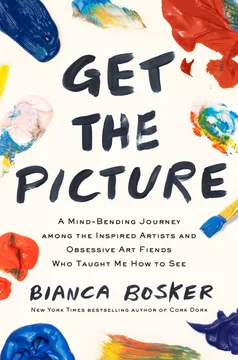

Key Takeaways
1. The Art World Operates as an Exclusive, Gatekept Machine
The art world is built on reputation. It’s all what people think of you.
A paranoid ecosystem. The contemporary art world functions as a highly insular, reputation-based machine that actively gatekeeps its secrets. Gallerists, curators, and collectors—the "Heads"—maintain power by keeping prices hidden, using coded language, and treating outsiders ("Schmos") with suspicion.
Strategic social dynamics. To survive in this ecosystem, players must perform success and carefully curate their social circles.
- Galleries hide prices to screen buyers and test their social currency.
- Artists are advised to network aggressively at openings rather than let their work speak for itself.
- Gallerists prioritize selling to "Good Persons" (museum trustees or connected collectors) over ordinary buyers to boost the artist's historical pedigree.
The illusion of purity. While the art world claims to champion progressive values and inclusivity, its commercial and social structures are deeply elitist. The "pure" galleries treat money as a vulgar necessity, yet their survival depends on a high-wire act of converting social cachet into financial capital.
2. The "White Cube" and "Artspeak" are Tools of Exclusion
Pretension hung in the air like an unacknowledged fart, and at each show, I felt two tattoos and a master’s degree short of fitting in.
The sterile gallery space. The modern gallery uniform—the "white cube"—is not a neutral backdrop but a highly calculated mechanism designed to sanctify objects. Historically evolved from elitist spaces and perfected as a tool of cultural purification, the white cube strips away the messiness of daily life to force a reverent, hushed contemplation.
Coded linguistic barriers. Similarly, "International Art English" (or artspeak) serves as an exclusionary code rather than a tool for genuine communication.
- It replaces simple terms with academic jargon (e.g., "indexicality" for finger painting, "time-based media" for video).
- It traces its roots to mid-century French post-structuralist translations.
- It functions primarily to distinguish those who "get it" from those who do not.
Enforcing intellectual submission. By combining sterile, intimidating spaces with impenetrable language, the art establishment discourages ordinary viewers from trusting their own senses. It teaches the public to defer to credentialed experts, transforming what should be a universal human experience into a test of intellectual status.
3. Context Often Trumps Content in the Valuation of Art
If you don’t know the context, you can’t understand what the fuck you’re looking at.
The power of pedigree. In contemporary art, the physical object is often secondary to the "context" that surrounds it—the artist's MFA, their gallery representation, and the collectors who own their work. This cloud of social data determines whether a pile of household appliances or a porcelain urinal is hailed as a masterpiece or dismissed as junk.
The institutional stamp. Context acts as a financial and historical security deposit for collectors.
- A museum acquisition can instantly multiply an artist's prices.
- Gallerists carefully vet buyers to ensure art is "placed" in collections that will enhance its prestige.
- The "buy one, give one" (BOGO) rule forces collectors to donate works to museums to secure their own purchases.
Outsourcing our judgment. Relying heavily on context allows the art market to manufacture value out of thin air, but it also lazy-proofs our perception. When we focus entirely on an artwork's pedigree, we stop looking at the physical object and instead evaluate the social network that endorses it.
4. Art is a Labor-Intensive Process of Constant Decision-Making
An idea is not a painting.
The myth of effortless genius. The romanticized vision of the artist as a possessed, trancelike creator ignores the grueling, physical reality of studio labor. Making art is an athletic, blister-inducing process of translating abstract thoughts into physical things that must be muscled, stretched, and engineered to exist.
A sequence of choices. Every square inch of a canvas represents a series of highly deliberate, technical decisions.
- Choosing between linen canvas (bumpy) and cotton canvas (smooth) to alter light reflection.
- Selecting specific paint mediums like oil (rich and slow-drying), acrylic (fast-drying plastic), or Flashe (velvety and matte).
- Using specialized brushes, from pig's neck hair to frayed, "fucked-up" nylon, to achieve specific textures.
The struggle with materials. Artists must constantly negotiate with stubborn, uncooperative materials that resist their intentions. Seeing the physical marks of the artist's hand—the gloops, scrapes, and layers—reveals that an artwork is not a magical apparition but a record of human labor and persistence.
5. The Rejection of Beauty is an Intellectual Trend, Not a Biological Reality
Beauty is my fucking nemesis...
The anti-beauty bias. For the past century, the art establishment has treated "beauty" as a superficial, bourgeois trap that must be destroyed. Modern and contemporary artists have systematically avoided the "pretty" to focus on the abrasive, believing that real art must provoke, disturb, and challenge rather than console.
Our hardwired biology. Despite this intellectual boycott, the human brain is evolutionary primed to seek out and enjoy beauty.
- Humans across cultures innately prefer curved shapes over sharp, angular ones.
- Symmetrical designs are universally favored because they signal health and balance.
- The color blue is globally preferred due to its evolutionary association with clean water and clear skies.
A vital nutrient. Cutting beauty out of art is like removing salt from a diet; it deprives us of a biologically essential stimulus. Beauty is not a shallow distraction but a powerful force that pulls us close, activates our brain's pleasure centers, and promises a therapeutic connection to the world.
6. Performance Art Challenges the Boundaries Between Art and Life
Performance art has become an intrinsic part of my life. It is no longer something that I do, it is who I am.
The ephemeral medium. Performance art rejects the creation of luxury commodities in favor of live, dynamic, and often uncomfortable human interactions. By using the body as a sculpture, performance artists disrupt public spaces and force viewers to confront their own desires, boundaries, and social conditioning.
Provocation as inquiry. Artists like Mandy AllFIRE use extreme physical acts—such as live face-sitting or selling worn underwear—to explore societal obsessions.
- These performances blur the line between genuine human connection and commercial exploitation.
- They expose the hypocrisy of an art public that craves transgressive concepts but shrinks from physical discomfort.
- They mirror the performative nature of social media, where identity itself becomes a branded commodity.
The handshake of engagement. Ultimately, performance art requires a leap of faith and a handshake of agreement between the creator and the audience. It succeeds not by being polished or decorative, but by lingering in the viewer's mind, forcing them to ask where the performance ends and real life begins.
7. Our Brains "Hallucinate" Reality, and Art Disrupts This Prediction
Most people think they don’t miss anything, that they see what is... They don’t realize: They see what they hallucinate.
The predictive brain. Human vision is not a passive recording device but an active, top-down process of prediction. Because the raw visual data hitting our retinas is blurry and incomplete, our brains rely on a "filter of expectation" to hallucinate a simplified, efficient version of reality that helps us survive.
The utility of art. Art functions as a deliberate glitch in this predictive system, forcing our brains to override their default shortcuts.
- It introduces "prediction errors" through visual incongruities, like surreal shapes or unexpected color combinations.
- It bypasses "color constancy," allowing us to see the shifting, unstable hues of light rather than a flat, conceptual label.
- It slows down our perception, preventing us from instantly categorizing and dismissing our surroundings.
Existential rewiring. By presenting us with images that "play hard to get," art trains our brains to tolerate ambiguity and embrace the unknown. This disruption of our mental ruts has profound cognitive benefits, keeping our minds flexible, curious, and capable of seeing the world anew.
8. "Slow Looking" Rewires Our Visual and Cognitive Perception
I really thought I understood art and how to look at it... Here, I’m realizing that it’s duration that gives you a fuller understanding of art.
The rush of consumption. The average museum visitor spends less than twenty seconds looking at a work of art, a pace that guarantees a superficial, label-driven experience. To truly commune with an artwork, we must practice "slow looking"—the deliberate act of standing before a single piece for an extended period without distraction.
The transformation of the object. When we commit to slow looking, the artwork begins to shift and reveal its hidden dimensions.
- A seemingly simple marble sculpture morphs from a seal into a foot, a wave, or a figure as we change our physical perspective.
- Subtle details, like the texture of the paint or the direction of the brushstrokes, become visible.
- Our brains move past the initial "what is it" phase to engage with the emotional and formal qualities of the work.
Cognitive benefits. This practice has real-world utility; medical students, detectives, and military personnel trained in slow looking show a marked increase in their diagnostic and observational skills. By slowing down our eyes, we learn to notice the details we normally filter out, enriching our daily lives.
9. Art is a Biologically Essential Tool for Human Connection and Expansion
Every red dot means an angel gets its wings. And some fucking artist can pay their rent, okay? It means that somebody who’s a maker gets to keep making.
A collaborative ecosystem. At its best, art is not a solitary pursuit or a speculative asset class, but a collaborative tool for human connection. When collectors, artists, and viewers engage in a shared dialogue, they build a community that supports the creation of new, mind-expanding experiences.
Democratizing the experience. True art appreciation does not require a master's degree, a trust fund, or access to exclusive VIP previews.
- Ordinary people can support living artists by buying affordable prints or visiting local, artist-run spaces.
- Living with art allows its energy to seep into our daily consciousness, altering our relationship with our surroundings.
- Sharing our raw, unpretentious reactions to art helps break down the artificial boundaries erected by the gatekeepers.
An act of optimism. Ultimately, engaging with art is an act of hope—a decision to reject a predictable, optimized existence in favor of a life filled with wonder, color, and surprise. By learning to see art, we learn to see the beauty that is already performing all around us.
Review Summary
People Also Read