
Plot Summary
Moonlight and Fire
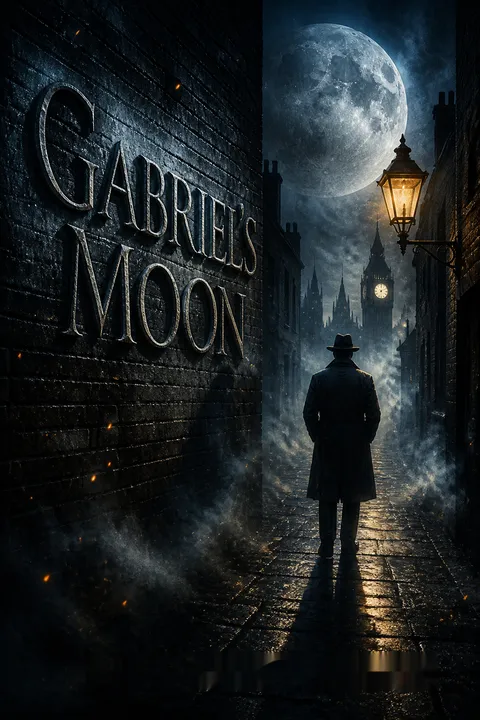
In 1936 Oxfordshire, young Gabriel Dax's world is shattered by a devastating house fire that claims his mother's life. The fire, possibly caused by his beloved moon-shaped night light, leaves him orphaned and wracked with guilt and confusion. His older brother Sefton is away at school, and Gabriel is left to grapple with the trauma alone. The moon, a symbol of comfort and loss, becomes a recurring motif in his psyche. This foundational tragedy sets the stage for Gabriel's lifelong insomnia, his search for meaning, and his complex relationship with memory, guilt, and the elusive nature of truth. The emotional scars of that night will echo through every relationship and decision he makes, shaping his journey from innocence to the tangled webs of adulthood.
Congo Shadows
In 1960, Gabriel, now a travel writer, finds himself in Léopoldville, Congo, on assignment. Through his old friend Thibault, now a government minister, he secures an exclusive interview with Prime Minister Patrice Lumumba. The Congo is in turmoil—independence has brought chaos, foreign interests, and looming violence. Gabriel records Lumumba's fears of assassination and international conspiracy, capturing a moment of history on fragile tape. The encounter is both a professional coup and a personal awakening, as Gabriel senses the gravity of the political forces at play. The interview, however, becomes a dangerous asset, drawing the attention of intelligence agencies and setting Gabriel on a path far beyond journalism, into the shadowy world of espionage and moral ambiguity.
London Intrusions
Returning to his Chelsea flat, Gabriel is unsettled by subtle signs of intrusion—misaligned furniture, a used glass, a silent phone call. His relationship with Lorraine, a working-class waitress, is passionate but complicated by class differences and his emotional distance. His brother Sefton, now a Foreign Office man, remains enigmatic and possibly involved in intelligence work. Gabriel's insomnia persists, haunted by dreams of fire and loss. The city is both a refuge and a labyrinth, filled with ambiguous encounters and the sense that he is being watched or manipulated. The ordinary and the clandestine blur, as Gabriel's personal life becomes entangled with the larger, more dangerous games unfolding around him.
The Faith Green Enigma
Faith Green, a poised and enigmatic MI6 operative, enters Gabriel's life under the guise of coincidence, but soon reveals her true purpose. She offers him a lucrative but vague assignment: travel to Spain, purchase a drawing from the artist Blanco, and deliver it to a contact. Faith's allure is both professional and personal—her calm authority and subtle seduction draw Gabriel into her orbit. She knows more about him than she should, and her requests are laced with unspoken threats and promises. Gabriel, both flattered and wary, agrees, sensing that he is being used but unable to resist the pull of intrigue, money, and the possibility of understanding Faith herself.
The Lumumba Tapes
The tapes of Gabriel's interview with Lumumba become a coveted object, sought by newspapers, MI6, and the CIA. Lumumba's assassination, foretold in the interview, turns the tapes into a potential political bombshell, implicating Western powers in the murder of a head of state. Gabriel is pressured to surrender the tapes, but he grows increasingly paranoid, hiding them in his garden. The tapes symbolize the peril of truth in a world of secrets—what Gabriel knows, and what he might reveal, makes him both valuable and vulnerable. The pursuit of the tapes draws him deeper into the world of espionage, where trust is scarce and motives are always suspect.
Psychoanalysis and Anamnesis
Plagued by insomnia and haunted by his past, Gabriel turns to Dr. Katerina Haas, a charismatic psychoanalyst. Through their sessions, he explores the trauma of his mother's death, the fire, and the gaps in his memory. Dr. Haas introduces him to the concept of anamnesis—recovering lost memories to heal psychic wounds. Their relationship is both therapeutic and fraught, as Gabriel discovers that Dr. Haas is not all she claims to be. Yet, her guidance helps him piece together the truth of his childhood, confront his guilt, and begin to understand the forces that have shaped his life. The search for self-knowledge becomes as perilous as any spy mission.
Espionage Games
Gabriel's courier mission to Spain is only the beginning. He is swept into a world of double agents, coded messages, and shifting allegiances. Faith Green's true intentions remain opaque, and Gabriel is never sure if he is a pawn, a player, or both. He meets Kit Caldwell, a charming MI6 station chief with secrets of his own, and Blanco, the artist whose drawings are used to transmit microdots—tiny capsules of intelligence. Gabriel's role as a "useful idiot" is both humiliating and empowering; he is trusted with dangerous tasks but kept in the dark about their true purpose. The line between personal agency and manipulation blurs, as Gabriel navigates betrayals, seductions, and the ever-present threat of exposure.
Cádiz and the Artist
In Cádiz, Gabriel's mission with Blanco takes on new complexity. The purchase of a drawing is a cover for the transfer of sensitive information, and Gabriel is caught between competing intelligence services. Blanco, once Caldwell's lover, is both collaborator and betrayer, selling secrets for survival. The city's sunlit beauty contrasts with the darkness of the schemes unfolding within it. Gabriel's sense of self is tested as he realizes the extent to which he is being used, and the moral cost of his involvement. The personal and the political intertwine, as art becomes a vehicle for espionage and trust is a currency in short supply.
The Useful Idiot
Gabriel's realization that he is a pawn in a larger game is both humiliating and liberating. He is set up as a drug mule, nearly arrested, and only narrowly escapes. The experience forces him to confront the reality of his role—valued for his deniability and expendability. Yet, in the process, he begins to see the patterns behind the chaos, the connections between the players, and the possibility of agency within manipulation. His relationships—with Faith, Caldwell, and even his own brother—are recast in the light of betrayal and self-preservation. The "useful idiot" becomes, paradoxically, a figure of insight and resistance.
Betrayals and Defections
The defection of Kit Caldwell to the Soviet Union is orchestrated with Gabriel's unwitting help, only to be revealed as a masterstroke of British counterintelligence—Caldwell is a triple agent, feeding disinformation to the KGB. Sefton, Gabriel's brother, is unmasked as a "termite," a mole within the British establishment, and his subsequent suicide (or murder) underscores the personal cost of espionage. Faith Green's machinations are exposed as both brilliant and ruthless, her loyalty to the cause absolute. Gabriel, caught between love, loyalty, and survival, must reckon with the consequences of his actions and the limits of his understanding.
Obsession and Southwold
Gabriel's obsession with Faith Green becomes all-consuming. He follows her to Southwold, spies on her, and ultimately confesses his feelings. Their brief, passionate affair is both a fulfillment and a disappointment—Faith remains elusive, her heart and loyalties divided. The scars of her own past, including torture during the war, are revealed, deepening Gabriel's fascination and sense of kinship. Yet, the relationship is ultimately transactional, shaped by the demands of their clandestine lives. Gabriel's longing for connection is both his greatest vulnerability and his source of resilience, as he seeks meaning in a world of secrets and betrayals.
Warsaw's Double Agents
In Warsaw, Gabriel delivers another coded drawing to Caldwell, now a celebrated Soviet "super spy" but secretly still working for the British. The elaborate web of deception is laid bare—Gabriel's every move has been anticipated, his role scripted by Faith Green's master plan. The microdots, the art, the betrayals—all serve the larger purpose of maintaining the balance of power in the Cold War. Gabriel's sense of agency is both affirmed and undermined; he is essential to the plot, yet always one step behind the true players. The experience leaves him changed, more cynical, but also more self-aware.
Family, Memory, and Loss
The investigation into the fire that killed Gabriel's mother reaches its conclusion. Through the help of a retired loss adjuster and the process of anamnesis, Gabriel uncovers the truth: his mother's death was likely a suicide, driven by depression and addiction, and not his fault. The revelation brings a measure of peace, but also sorrow for the irretrievable losses of childhood. Sefton's death, the dissolution of family, and the persistent ache of absence are confronted with honesty and acceptance. Gabriel's journey through memory is both a healing and a letting go, as he integrates the past into a new sense of self.
The Final Transformation
Gabriel's journey reaches its most perilous point when he is confronted by Queneau, the CIA agent and secret "Hillcrest," on a ferry in the North Sea. In a moment of mortal danger, Gabriel kills Queneau in self-defense, crossing a line from which there is no return. The act is both traumatic and transformative, marking the end of his innocence and the beginning of a new, hardened self. He returns to London changed, aware of the darkness within and the necessity of survival in a world without clear moral boundaries. The labyrinth of espionage has claimed another soul, but also forged a new kind of freedom.
The Labyrinth's End
In the aftermath, Gabriel distances himself from the world of spies, focusing on his writing and the pursuit of meaning in art and travel. The deaths of friends and family, the betrayals and manipulations, are woven into the fabric of his identity. Faith Green remains a haunting presence—lover, handler, nemesis, and muse. The final encounter, a chance meeting in the London Underground, suggests that the labyrinth is never truly escaped, but that life continues, shaped by the scars and wisdom of experience. Gabriel's story ends not with certainty, but with the possibility of renewal, love, and the enduring search for truth.
Analysis
Gabriel's Moon is a masterful meditation on the interplay of personal trauma and historical forces, using the conventions of the spy novel to explore deeper questions of identity, memory, and agency. William Boyd crafts a narrative in which the boundaries between victim and perpetrator, pawn and player, are constantly shifting. The novel interrogates the costs of secrecy—both national and personal—and the ways in which individuals are shaped, used, and sometimes destroyed by the systems they inhabit. Through Gabriel's journey, Boyd examines the possibility of healing through self-knowledge, the dangers of obsession, and the ambiguous nature of truth in a world where every fact is contested and every loyalty suspect. The lessons of the book are both cautionary and redemptive: that survival requires adaptability, that love and connection are both necessary and fraught, and that the search for meaning is never-ending. In the end, Gabriel's story is one of transformation—not the attainment of certainty, but the acceptance of complexity, loss, and the enduring hope for renewal.
Review Summary
Gabriel's Moon follows travel writer Gabriel Dax, who becomes entangled in Cold War espionage after interviewing Congolese Prime Minister Patrice Lumumba in 1960. Recruited by mysterious MI6 handler Faith Green, Gabriel undertakes increasingly dangerous missions while grappling with childhood trauma from a fire that killed his mother. Reviews are polarized: admirers praise Boyd's evocative writing, skillful plotting, and atmospheric 1960s settings, comparing it favorably to le Carré. Critics find the protagonist unconvincing, the spy craft implausible, and historical details inaccurate. Most agree it's an entertaining, quick read with loose ends suggesting a series continuation.
Characters
Gabriel Dax
Gabriel is the novel's protagonist, a man marked by childhood trauma and lifelong insomnia. Orphaned by a fire that killed his mother, he is driven by guilt, memory, and a yearning for meaning. As a travel writer, he seeks solace in movement and observation, but is drawn into the world of espionage through a combination of chance, manipulation, and his own emotional needs. Gabriel's relationships—with women, family, and colleagues—are shaped by his sense of loss and his desire for connection. His psychological journey is one of self-discovery, as he confronts the truth of his past, the ambiguity of his actions, and the possibility of transformation. He is both a pawn and a player, a "useful idiot" who becomes, by the end, a figure of agency and insight.
Faith Green
Faith is an MI6 operative whose calm authority, intelligence, and emotional opacity make her both alluring and dangerous. She recruits Gabriel for clandestine missions, using him as a courier and deniable asset. Her motivations are complex—loyal to her cause, scarred by wartime torture, and capable of both tenderness and ruthlessness. Faith's relationship with Gabriel is a dance of seduction, control, and genuine connection, but she remains ultimately unattainable. She is the architect of the novel's central espionage plot, orchestrating betrayals and defections with cold precision. Psychologically, Faith embodies the costs of survival in a world of secrets, her scars both literal and metaphorical.
Sefton Roscommon
Sefton is Gabriel's older brother, a Foreign Office official whose bland exterior conceals a life of duplicity. Their relationship is formal, marked by emotional distance and unresolved childhood wounds. Sefton's involvement in intelligence work is ambiguous, and his eventual unmasking as a mole ("termite") is both a shock and a source of guilt for Gabriel. Sefton's suicide (or possible murder) underscores the personal cost of espionage and the corrosive effects of secrecy. His character is a study in repression, envy, and the longing for recognition, as well as the tragic consequences of betrayal.
Kit Caldwell
Caldwell is the MI6 station chief in Madrid, a witty and cultured man with a hidden life as a triple agent. His defection to the Soviet Union is revealed as a masterstroke of British counterintelligence, making him a conduit for disinformation. Caldwell's personal history—his sexuality, his relationship with Blanco, his survival instincts—adds depth to his character. He is both a victim and a manipulator, navigating the treacherous waters of loyalty and self-preservation. Caldwell's friendship with Gabriel is genuine, marked by mutual respect and shared vulnerability, and his fate is a testament to the ambiguities of the Cold War.
Dr. Katerina Haas
Dr. Haas is Gabriel's therapist, guiding him through the process of anamnesis and the recovery of lost memories. Her methods are unconventional, and her own credentials are suspect, but her influence on Gabriel is profound. She helps him confront the trauma of his mother's death, the fire, and the patterns of guilt and longing that shape his life. Their relationship is both professional and intimate, marked by moments of rupture and reconciliation. Dr. Haas represents the possibility of self-knowledge and the limits of therapy in a world of secrets.
Lorraine Rogan
Lorraine is Gabriel's girlfriend, a waitress from a different social background whose vitality and directness contrast with his introspection. Their relationship is passionate but ultimately unsustainable, undone by differences in class, ambition, and emotional needs. Lorraine's eventual departure for a new life is both a relief and a loss for Gabriel, highlighting his inability to sustain intimacy and his tendency to seek solace in unattainable women like Faith. Lorraine embodies the ordinary pleasures and disappointments of life, grounding Gabriel in reality even as he drifts into the world of espionage.
Blanco (Javier Agustín Montano)
Blanco is a Spanish surrealist painter whose drawings are used to transmit microdots and coded messages. Once Caldwell's lover, he is both collaborator and betrayer, selling secrets for money and survival. Blanco's art becomes a metaphor for imbalance and instability, mirroring the precariousness of the world he inhabits. His character is marked by bitterness, pragmatism, and a certain tragic dignity, as he navigates the demands of politics, love, and self-preservation.
Raymond Queneau / Hillcrest
Queneau, also known as Hillcrest, is the American intelligence officer who seeks the Lumumba tapes and ultimately confronts Gabriel in a deadly showdown. He is a figure of menace, manipulation, and cold calculation, representing the darker side of Western intervention in global affairs. His pursuit of Gabriel is relentless, and his death at Gabriel's hands marks a turning point in the protagonist's journey from innocence to experience.
Nancy-Jo Berndlinger
Nancy-Jo is a young American woman who becomes entangled in the espionage plot, used as a courier and set up as a drug mule. Her vulnerability, addiction, and ultimate death underscore the human cost of the games played by intelligence agencies. Nancy-Jo's brief connection with Gabriel is marked by longing, deception, and the impossibility of escape from the forces that use and discard her.
Manley Dryden
Dryden is the retired loss adjuster whose meticulous investigation into the Yeomanswood fire helps Gabriel recover the truth of his past. His persistence and attention to detail provide the factual anchor for Gabriel's journey through memory and guilt. Dryden's character represents the value of evidence, the importance of confronting painful realities, and the possibility of redemption through knowledge.
Plot Devices
Trauma and Memory
The novel's structure is anchored in Gabriel's unresolved childhood trauma—the fire and his mother's death. This event shapes his psyche, relationships, and choices, and is revisited through dreams, psychoanalysis, and investigation. The gradual recovery of memory (anamnesis) serves as both a plot device and a metaphor for the search for truth in a world of secrets.
Espionage and Double Agents
The plot is driven by the mechanics of Cold War espionage—coded messages, courier missions, double and triple agents, and the constant threat of betrayal. Characters' true loyalties are often hidden, and the narrative structure mirrors the uncertainty and paranoia of the era. Foreshadowing is used to build suspense, as seemingly innocuous events (the tapes, the drawings) are revealed to have far-reaching consequences.
The "Useful Idiot"
Gabriel's role as a "useful idiot" is both a plot device and a commentary on agency and manipulation. He is valued for his deniability and expendability, but gradually becomes aware of the patterns behind the chaos. The device allows the reader to experience the confusion and danger of espionage from the inside, and to question the nature of free will in a world of power and secrecy.
Art as Code
The use of Blanco's art to transmit microdots and coded messages is a central plot device, blending the worlds of creativity and espionage. Art becomes both a literal and symbolic means of communication, concealment, and revelation, reflecting the novel's themes of ambiguity, interpretation, and the search for meaning.
Psychoanalysis and Therapy
Gabriel's sessions with Dr. Haas provide a structural and thematic framework for the novel, allowing for introspection, exposition, and the gradual unveiling of the protagonist's inner life. The therapeutic process mirrors the investigative work of espionage, as both seek to uncover hidden truths and resolve conflicts.
Foreshadowing and Recurrence
The novel employs recurring motifs—the moon, fire, insomnia, the color silver, the act of watching or being watched—to create a sense of continuity and inevitability. Foreshadowing is used to build tension and to link disparate events, suggesting that the personal and the political are inextricably intertwined.
About the Author
Other books by William Boyd





Download PDF
Download EPUB
.epub digital book format is ideal for reading ebooks on phones, tablets, and e-readers.








































