
Plot Summary
Cat on the Roof
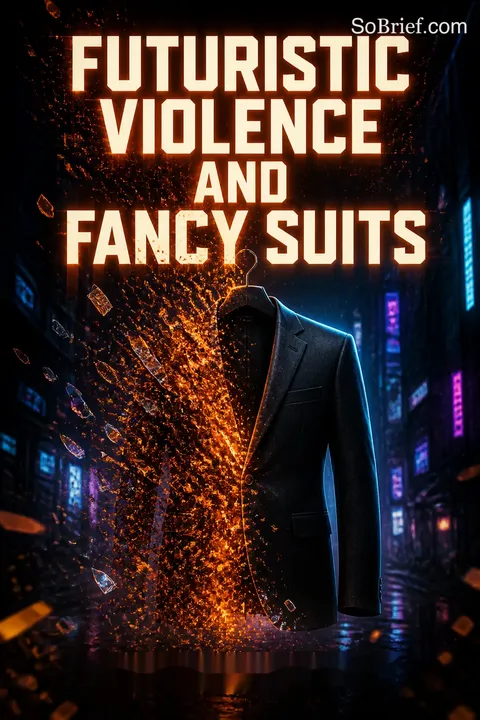
Zoey Ashe's life in rural Colorado is defined by poverty, her mother's eccentricities, and a stubborn cat named Stench Machine. But as she tries to coax her cat off the roof, she's oblivious to the real threat: a cyber-augmented killer stalking her, intent on streaming her torture to a bloodthirsty online audience. This opening scene sets the tone for a world where violence, technology, and spectacle are inseparable. Zoey's mundane struggles are about to be shattered by a legacy she never wanted, and the reader is thrust into a near-future America where privacy is extinct, and notoriety is a death sentence. The emotional undercurrent is Zoey's vulnerability, her humor masking fear, and the sense that her world is about to change forever.
The Chase Begins
Zoey's life is upended when her self-driving car is hijacked remotely by Will Blackwater, a sharply dressed stranger who claims to work for her estranged, now-dead father. As a cybernetic killer—The Hyena—closes in, Zoey is thrust into a deadly chase across snowy Colorado. The pursuit is broadcast live to millions, turning her into prey in a world obsessed with viral violence. Will's team orchestrates a harrowing escape, sacrificing Zoey's car and nearly her life to outwit the killer. The emotional arc is terror and disbelief, as Zoey realizes she's a pawn in a much larger, more dangerous game, and that her only hope lies with people she has every reason to distrust.
Inheritance and Intrigue
Zoey learns her biological father, Arthur Livingston—a notorious crime lord—has died, leaving her a mysterious inheritance. But the legacy is a curse: every criminal, mercenary, and fame-seeker in the country is after her, believing she holds the key to a legendary vault. Will Blackwater and his team offer protection, but their motives are murky. Zoey's mother is at risk, and the only way to keep her safe is to flee to Tabula Rasa, a lawless, hyper-modern city built by the rich for the rich. The emotional core is Zoey's resentment and confusion, as she's forced to trust strangers and accept that her life will never be normal again.
Train to Tabula Rasa
On a high-speed train to Tabula Rasa, Zoey meets Jacob, a charming stranger, and is introduced to a city where surveillance is constant and violence is entertainment. The train ride is tense, as Zoey senses she's being watched. Her fears are confirmed when a deranged, lightning-wielding killer—The Soul Collector—takes her and Jacob hostage, demanding access to her father's vault. The city's bystanders, armed and apathetic, watch the drama unfold on their Blink feeds. The emotional arc is fear and alienation, as Zoey realizes she's famous for all the wrong reasons, and that in Tabula Rasa, spectacle trumps humanity.
Hostage on Arrival
Zoey's arrival in Tabula Rasa is a media event, with her hostage crisis broadcast to millions. The Soul Collector murders Jacob in front of her, and Zoey is paraded through the city as a prize. Will Blackwater and his team intervene, negotiating with the killer and leveraging the city's obsession with viral events to orchestrate Zoey's escape. The emotional impact is trauma and numbness, as Zoey is forced to perform her own victimhood for an audience that sees her as entertainment, not a person. The city's moral vacuum is laid bare, and Zoey's isolation deepens.
Escape and Pursuit
Zoey flees into the city, pursued by mercenaries, vigilantes, and voyeurs. Every move is tracked by the Blink network, making anonymity impossible. She finds temporary refuge with a demolition crew, who debate whether to turn her in for a multimillion-dollar bounty. The city's underbelly is revealed: alliances are transactional, and violence is currency. Zoey's desperation is palpable, as she realizes she can trust no one, and that her father's legacy is a target painted on her back. The emotional arc is exhaustion and despair, as survival becomes a matter of luck and cunning.
Strangers and Allies
Zoey is "rescued" by Andre Knox, one of her father's enforcers, who claims to be on her side. She's taken to Arthur Livingston's opulent estate, where she meets the rest of the "Suits"—Will, Echo, and Budd—each with their own agenda. The estate is both sanctuary and prison, and Zoey is forced to negotiate for her life, leveraging her status as the only person who can open the vault. The emotional core is suspicion and defiance, as Zoey refuses to be a passive pawn, demanding guarantees and asserting her agency in a world that sees her as a tool.
The City Watches
The Blink network turns Zoey's ordeal into a viral event, with millions following her every move. The hunt for the vault's key becomes a citywide reality show, with rival factions, bounty hunters, and psychopaths converging on her location. The city's obsession with spectacle is both a weapon and a curse, as Zoey learns to manipulate her audience and the Suits' resources to survive. The emotional arc is adaptation and grim humor, as Zoey embraces her role as a reluctant celebrity, using the city's voyeurism to her advantage.
The Vault's Secret
After a series of betrayals and near-death escapes, Zoey is forced to open her father's vault. The Suits' true motives are revealed, and Zoey learns that the vault contains not treasure, but a message: Arthur Livingston has left everything to her, making her the sole heir to his empire—and his enemies. The emotional impact is shock and anger, as Zoey realizes she's been manipulated by everyone, and that her father's final act was to make her the most powerful, and most hunted, person in Tabula Rasa.
The Monster Unleashed
Molech, a superhuman crime lord with a cult of augmented followers, seizes control of the city's underworld. Armed with stolen technology, he launches a campaign of terror, destroying institutions and slaughtering rivals. Zoey becomes his primary target, and the Suits scramble to counter his escalating violence. The city descends into chaos, as power, technology, and spectacle collide. The emotional arc is terror and resolve, as Zoey and her allies realize that defeating Molech will require more than brute force—it will require outsmarting the monster at his own game.
The Gilded Trap
As Molech's rampage reaches its peak, Zoey and the Suits orchestrate an elaborate con, using the city's obsession with viral events to lure Molech into a trap. Fake bombs, viral distractions, and a fabricated "One Ring" device are deployed in a desperate gambit to neutralize Molech's power. Betrayals are revealed, and the true nature of Arthur's legacy comes into focus. The emotional core is courage and sacrifice, as Zoey risks everything—not just her life, but her sense of self—to end the cycle of violence.
The Power of Blink
The final confrontation is broadcast to the world, with Zoey using the "One Ring"—a voice-activated device that can paralyze anyone with Raiden implants—to freeze Molech and his army. The city, and the world, watches as the spectacle of violence is turned against itself. The emotional arc is catharsis and exhaustion, as Zoey reclaims her agency, not by killing her enemy, but by refusing to play his game. The power of Blink is revealed as both a weapon and a mirror, reflecting the city's hunger for violence and its capacity for change.
The One Ring
In the aftermath, Zoey is left to pick up the pieces of her shattered life and city. The Suits offer to take control, but Zoey must decide what kind of leader she wants to be. The "One Ring" is both a literal device and a metaphor for power: it can end violence, but only if wielded wisely. The emotional core is acceptance and growth, as Zoey embraces her role as a reluctant hero, determined to break the cycle of spectacle and violence that defined her father's world.
The Final Gambit
Zoey recovers from her injuries, surrounded by allies old and new. The city begins to rebuild, and the Suits debate the future of Tabula Rasa. Zoey's relationship with Will, Echo, and Andre evolves, as they confront the moral ambiguities of power and justice. The emotional arc is hope and uncertainty, as Zoey realizes that true change is slow, messy, and requires constant vigilance. The story ends not with a triumphant victory, but with the promise of a new beginning—and the knowledge that the fight for the soul of the city is never truly over.
Aftermath and Meaning
In the quiet after the storm, Zoey contemplates the meaning of her ordeal. The city's obsession with violence and spectacle is both a warning and a challenge. The legacy of Arthur Livingston is a burden, but also an opportunity to build something better. Zoey's journey from victim to survivor to leader is marked by pain, humor, and resilience. The emotional resolution is bittersweet: the world is still broken, but change is possible, one choice at a time.
Analysis
A satire of power, spectacle, and survival in the digital ageFuturistic Violence and Fancy Suits is a razor-sharp satire of a world where technology, violence, and spectacle have merged into a single, inescapable reality. David Wong's novel is both a thrilling adventure and a biting commentary on the commodification of suffering, the erosion of privacy, and the dangers of unchecked ambition. At its core, the book is about agency: the struggle to assert one's humanity in a world that sees people as tools, targets, or entertainment. Zoey's journey from victim to survivor to leader is a meditation on the cost of power, the meaning of legacy, and the possibility of change. The story warns against the allure of spectacle and the temptation to become the monster one fights. It challenges readers to question who benefits from violence, who controls the narrative, and what it means to be a hero in a world that rewards cruelty. Ultimately, the novel is a call to resist the logic of the crowd, to embrace vulnerability, and to find meaning not in victory, but in the refusal to quit.
Review Summary
Futuristic Violence and Fancy Suits receives mixed reviews (3.98/5). Readers praise its fast-paced action, humor, and satirical take on technology and toxic masculinity. Many enjoy the colorful characters and cyberpunk setting of Tabula Ra$a. However, criticisms focus on inconsistent characterization, particularly of protagonist Zoey Ashe, perceived misogyny, flat villains, excessive length, repetitive plotting, and script-like dialogue. Several reviewers note the book feels rushed or poorly edited. While some find it hilariously entertaining popcorn fiction, others are disappointed by its juvenile humor and lack of depth compared to Wong's previous work.
People Also Read
Characters
Zoey Ashe
Zoey is a twenty-two-year-old barista from rural Colorado, thrust into chaos by the death of her estranged crime-lord father. Her journey is one of transformation: from ordinary, self-deprecating "trailer trash" to the most wanted—and ultimately most powerful—person in Tabula Rasa. Zoey's humor and vulnerability mask deep trauma, and her relationships are shaped by distrust and a fierce desire for agency. She is defined by her refusal to be a victim, her adaptability, and her capacity for empathy in a world that rewards cruelty. Her arc is about learning to wield power without becoming the monster she fears.
Will Blackwater
Will is Arthur Livingston's right-hand man, a cold, calculating negotiator with a talent for psychological warfare. He is both protector and puppet master, guiding Zoey through the city's dangers while keeping his own motives hidden. Will's emotional detachment is a shield for deep wounds—his wife's death, his fraught relationship with Arthur, and his own sense of inadequacy. He is both a mirror and a foil for Zoey, challenging her to rise to the occasion while struggling with his own limitations. Will's arc is about learning to trust, to let go of control, and to accept that heroism is found in persistence, not perfection.
Arthur Livingston
Arthur is the shadow looming over the entire narrative—a larger-than-life figure whose death sets the story in motion. His legacy is both material (wealth, power, enemies) and psychological (abandonment, manipulation, impossible expectations). Arthur's final act is to make Zoey his heir, forcing her to confront the cost of power and the meaning of family. He is both villain and benefactor, a man who tries to atone for his sins by giving his daughter the tools to survive—and the burden of his enemies. Arthur's presence is felt in every betrayal, every scheme, and every moment of reckoning.
Molech (Chet Campbell)
Molech is the primary antagonist, a cybernetically enhanced crime lord who weaponizes spectacle, violence, and technology. He is both a product and a manipulator of the city's obsession with viral fame, using the Blink network to turn murder into entertainment. Molech's psychology is defined by a hunger for power, a rejection of empathy, and a belief in the survival of the fittest. He is charismatic, terrifying, and ultimately self-destructive—a warning of what happens when the monster is given free rein. His arc is a descent into madness, culminating in his defeat not by violence, but by the refusal to play his game.
Andre Knox
Andre is one of the Suits, Arthur's muscle and a man of surprising depth. He is physically imposing but emotionally grounded, providing comic relief and moral support. Andre's loyalty is to the team, and his relationship with Zoey evolves from protector to partner. He is defined by his pragmatism, his sense of honor, and his willingness to risk everything for his friends. Andre's arc is about finding purpose beyond violence, and about the power of community in a world that rewards isolation.
Echo Ling
Echo is the Suits' tech expert, a woman of sharp intellect and sharper wit. She is both outsider and insider, navigating the city's digital underworld with skill and skepticism. Echo's relationship with Zoey is complex—part mentor, part rival, part friend. She is defined by her adaptability, her refusal to be underestimated, and her ability to find solutions in chaos. Echo's arc is about embracing vulnerability, trusting others, and using technology as a tool for change rather than control.
Budd Billingsley
Budd is the Suits' elder statesman, a man with deep connections and a dry sense of humor. He is both a relic of the old world and a guide to the new, helping Zoey navigate the city's labyrinth of alliances and betrayals. Budd's wisdom is hard-won, and his loyalty is to the team above all. He is defined by his pragmatism, his sense of history, and his willingness to do what needs to be done. Budd's arc is about legacy, redemption, and the cost of survival.
Stench Machine
Zoey's cat is more than a pet—he is a symbol of her past, her stubbornness, and her capacity for love. Stench Machine's antics provide levity in dark moments, and his presence is a reminder of what is at stake. In the story's climax, he inadvertently exposes a crucial deception, proving that even the smallest, most overlooked characters can change the course of events.
Wu
Wu is a professional protector, skilled in both violence and wisdom. He is defined by his calm, his loyalty, and his ability to see through chaos to the heart of the matter. Wu's relationship with Zoey is one of mutual respect, and his actions are guided by a code of honor. He is a reminder that true strength lies in restraint, and that survival is as much about planning as it is about power.
Melinda Ashe
Zoey's mother is a complex figure—eccentric, loving, and deeply flawed. She is both a source of comfort and a reminder of Zoey's roots, providing perspective and emotional support. Melinda's presence is felt throughout the story, anchoring Zoey in moments of crisis and reminding her of what truly matters. Her arc is about resilience, forgiveness, and the enduring power of family.
Plot Devices
Blink Network and Viral Spectacle
The Blink network is the story's central plot device, a citywide (and global) system of always-on cameras, live feeds, and viral events. It turns every act of violence, every chase, and every betrayal into entertainment for millions. The network is both a weapon and a mirror, amplifying the city's obsession with fame, power, and cruelty. It enables real-time manipulation, public shaming, and mass mobilization, making privacy impossible and turning survival into a performance. The narrative structure is shaped by the logic of viral spectacle: every action is calculated for its impact on the audience, and the line between reality and entertainment is blurred.
The Vault and the Inheritance
Arthur Livingston's vault is the story's MacGuffin—a legendary treasure that everyone wants, but whose true value is symbolic. The vault's key is Zoey herself, making her both prize and target. The inheritance is a curse, forcing Zoey to confront the cost of power and the meaning of family. The vault's true secret is not wealth, but a message: power is a burden, and the only way to break the cycle is to refuse to play the game. The device is used to explore themes of agency, legacy, and the dangers of unchecked ambition.
Raiden Technology and Superhuman Augmentation
The Raiden implants and gadgets are the story's engine of escalation, enabling characters to transcend human limits—and to become monsters. The technology is both a promise and a trap, offering power at the cost of humanity. The arms race between Molech and the Suits drives the plot, as each side seeks the ultimate advantage. The "One Ring" device is the ultimate plot twist: a tool that can end violence, but only if wielded with restraint. The device is used to explore themes of hubris, the limits of technology, and the dangers of seeking power for its own sake.
Misdirection, Con Games, and Narrative Structure
The narrative is structured as a series of cons, misdirections, and reversals. Every plan is a bluff, every alliance is suspect, and every victory is provisional. The story is told through Zoey's perspective, blending humor, trauma, and self-doubt. The unreliable narration reflects the uncertainty of the world, and the constant threat of betrayal. Foreshadowing is used to build tension, with callbacks to earlier events and motifs (the cat, the football helmet, the "One Ring") providing emotional resonance and thematic unity.
Zoey Ashe Series
About the Author
Other books by David Wong
Download PDF
Download EPUB
.epub digital book format is ideal for reading ebooks on phones, tablets, and e-readers.








































