Plot Summary
Three Days No Sleep
Leo, a young gay man in North London, is three days into a drug binge, his mind and body fraying. He narrates the raw, poetic agony of addiction, the relentless need for escape, and the looming crash that always follows the high. His world is reduced to the next fix, the next moment of numbness, and the ever-present threat of violence or oblivion. The city is both a playground and a prison, and Leo's voice is jagged, desperate, and darkly funny. This opening sets the tone: a life lived on the edge, where hope flickers but rarely catches, and where survival is a daily negotiation with pain.
Exploding Fruit Realisation
Mallory Maddox, once a bestselling author, now hosts a party in her North London home, feeling like a piece of fruit in Candy Crush—here, then obliterated. She's surrounded by pretentious guests, hiding her insecurities behind curated books and a "distressed" mirror. Her marriage to Ronan, a rising Netflix executive, is performative and strained. Mallory's creative well has run dry; her only success, "Shallow Embers," haunts her. She's blocked, both as a writer and a person, and the party only amplifies her sense of fraudulence and isolation. The chapter pulses with biting satire and aching vulnerability, exposing the gap between appearance and reality.
Party Masks and Lies
After the party, Mallory reflects on her marriage and career. Ronan's success overshadows her, and she feels increasingly irrelevant. She obsesses over other authors' achievements, especially P.K. Anderson's meteoric rise. Mallory's attempts at therapy and self-improvement are half-hearted, more about appearances than healing. She's desperate for a new idea, something to reignite her sense of purpose. The chapter is laced with dark humor and self-loathing, as Mallory's envy and self-doubt spiral. Her relationship with Ronan is transactional, their intimacy hollow. The pressure to have a child looms, adding another layer of anxiety to her already fragile psyche.
Writer's Blocked Life
Mallory, drunk and searching for inspiration, stumbles upon a Reddit post about literary trends: "gay and sad" sells. She wonders if she can appropriate this pain for her own gain. Downloading Grindr, she creates a fake profile using nude photos of her husband, seeking "research" for her next book. The lines between authenticity and exploitation blur. Mallory's actions are reckless, driven by a mix of envy, boredom, and a craving for relevance. Her internal monologue is sharp, self-aware, and deeply conflicted. The chapter ends with her receiving an invitation to a "T-Party"—unaware it's a chemsex gathering, not a tea party.
Grindr, Guilt, and Research
Mallory's foray into Grindr is both comic and unsettling. She's out of her depth, fumbling with queer slang and etiquette, but is quickly drawn into the world of late-night hookups and coded invitations. Meanwhile, Leo is hustling for drugs, navigating dangerous dealers and the constant threat of violence. Their worlds are about to collide. The narrative alternates between Mallory's privileged, insulated anxiety and Leo's raw, street-level desperation. Both are searching for connection, but for very different reasons. The chapter is a study in contrasts—class, safety, and the commodification of pain.
T-Party Invitation
Mallory, emboldened by alcohol and adrenaline, decides to attend the T-Party, bringing vol-au-vents and wine as if going to a picnic. She rationalizes her actions as "unhinged bravery," convinced she's gathering material for her novel. Leo, meanwhile, is tasked with delivering drugs to the same party, dodging threats from his dealer, Brick. The tension mounts as both characters head toward Priory Road, each propelled by their own compulsions. The chapter is laced with dark humor and a sense of impending disaster, as Mallory's naivety and Leo's desperation converge.
Chemsex at Priory Road
At the party, Mallory realizes too late that she's stumbled into a chemsex scene, not a genteel gathering. She watches, horrified, as Leo is beaten and humiliated on the doorstep, caught between the demands of the party host and the threats of Brick. The violence is sudden and brutal, shattering any illusions Mallory had about her "research." She's paralyzed by fear and guilt, unable to intervene effectively. The chapter is a turning point, exposing the real stakes of the world Mallory has been toying with and the vulnerability of those, like Leo, who live on its margins.
Vol-au-Vents and Violence
When Leo is attacked by Brick in the street, Mallory finally acts, attempting to use pepper spray but accidentally blinding Leo instead. She helps him escape, driving him away from the scene as sirens approach. The aftermath is chaotic—blood, panic, and a desperate attempt to avoid police involvement. Mallory's actions are both heroic and deeply compromised; she's implicated in the violence she sought only to observe. The encounter leaves both shaken, their lives now entangled by trauma and secrecy. The chapter is a study in unintended consequences and the limits of good intentions.
Blood on the Pavement
Leo, battered and blinded, refuses Mallory's offer to go to the hospital, insisting she drop him near his squat. Mallory returns home, scrubbing away the evidence of the night's events, haunted by guilt and adrenaline. Both characters are left to process what's happened—Leo facing eviction from his halfway house, Mallory navigating suspicion from Ronan. The chapter is suffused with shame, secrecy, and the desperate need to maintain appearances. The violence of the night lingers, a wound that cannot be easily cleaned or forgotten.
Rescue and Regret
Mallory, desperate for material, seeks out Leo under the guise of offering therapy. Their sessions are fraught—Leo is both vulnerable and manipulative, aware that Mallory is using him for her book. Mallory's guilt grows as she realizes the depth of Leo's trauma and her own complicity in exploiting it. Meanwhile, Leo oscillates between seeking help and hustling for survival, his trust in Mallory tenuous at best. The chapter explores the ethics of storytelling, the porous boundary between care and exploitation, and the hunger for redemption.
Domestic Facades
Mallory's marriage to Ronan deteriorates as her obsession with Leo and her secret manuscript intensify. Ronan becomes controlling, monitoring her movements and communications, while Mallory grows increasingly desperate to finish her novel and escape. The domestic sphere becomes a battleground—every gesture, every conversation charged with suspicion and resentment. Mallory's Mother arrives, adding another layer of surveillance and judgment. The chapter is claustrophobic, capturing the suffocating dynamics of a relationship built on control and denial.
The AA Meeting
Mallory attends an AA meeting, posing as "Mandy," and encounters Leo, who shares his story with the group. The meeting is a theater of pain and recovery, where confession is both ritual and performance. Mallory is moved by the stories she hears, but also aware of her own duplicity. Leo, meanwhile, uses the meeting to hustle for money and sympathy, his vulnerability both real and strategic. The chapter interrogates the rituals of recovery, the commodification of suffering, and the porous line between authenticity and performance.
Mandy and Liam
Mallory's manuscript, "Slay," takes shape, drawing heavily from her interactions with Leo. The boundaries between fiction and reality blur—Leo becomes "Liam," Mandy becomes Mallory's alter ego. The novel within the novel mirrors their real lives, exposing the ways in which trauma is mined for art and profit. Mallory's guilt intensifies as she realizes the cost of her creative theft, while Leo senses he is being used but is too desperate to refuse the attention. The chapter is metafictional, self-aware, and deeply uneasy.
Therapy, Truth, and Trauma
Mallory and Leo's relationship reaches a breaking point. Leo confronts her about her exploitation, while Mallory is forced to reckon with her own motives and the damage she's caused. Their confrontation is raw, painful, and cathartic—truths are spoken that cannot be unsaid. Mallory's marriage collapses under the weight of secrets, and Leo spirals further into addiction and despair. The chapter is a reckoning, a moment of brutal honesty that leaves both characters changed.
Manuscript and Manipulation
Mallory's novel is accepted for publication, but only after she changes the ending to make it more "authentic"—that is, more tragic. Leo, realizing he has been written out of his own story, confronts Mallory in her kitchen, knife in hand. The scene is tense, charged with betrayal and longing. Mallory's husband intervenes, violence erupts, and the boundaries between fiction and reality collapse. The chapter is a meditation on authorship, ownership, and the violence inherent in storytelling.
The Final Draft
In the aftermath, Mallory leaves her marriage and relocates to the coast, reinventing herself as a successful author. Leo, meanwhile, survives, gets clean, and begins writing his own story—a dark, vengeful novel inspired by his experiences with Mallory. The cycle of exploitation and reinvention continues, as both characters seek meaning and redemption through narrative. The chapter is bittersweet, acknowledging the costs of survival and the impossibility of closure.
Book Launch and Ghosts
Mallory's book launch is a triumph—critical acclaim, commercial success, and public adulation. Yet she is haunted by Leo's absence, by the knowledge that her success is built on his pain. Leo, now clean and writing under a pseudonym, attends the launch incognito, witnessing the spectacle of his own erasure. The chapter is suffused with irony and melancholy, exposing the emptiness at the heart of literary fame and the ghosts that linger behind every story.
Cycles Continue
The novel ends with both Mallory and Leo embarking on new projects—Mallory celebrated, Leo poised for his own literary revenge. The cycle of exploitation, reinvention, and survival continues. The final note is ambiguous: healing is possible, but the wounds of the past remain. The story closes on the image of the sea—vast, indifferent, and ever-present—a reminder of both possibility and oblivion.
Analysis
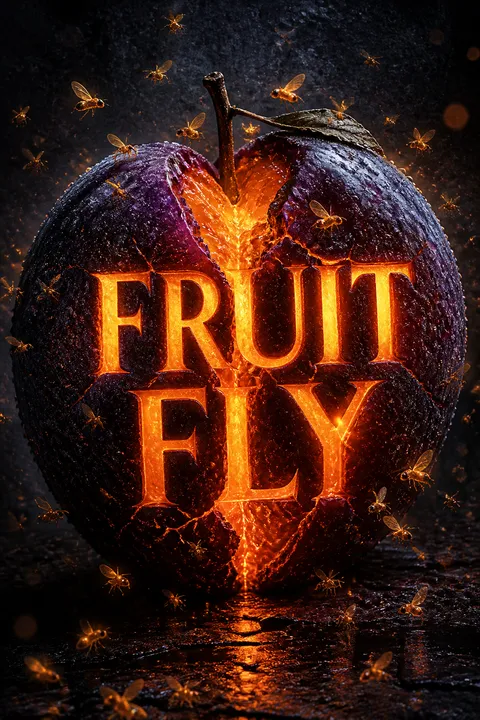
A savage, darkly comic meditation on trauma, exploitation, and the hunger for authenticityFruit Fly is a novel that skewers the contemporary obsession with trauma as currency—both in publishing and in personal relationships. Through its dual narrative, it exposes the porous boundaries between care and exploitation, authenticity and performance, survival and self-destruction. Mallory's journey is a cautionary tale about the costs of creative ambition and the dangers of appropriating others' pain for personal gain. Leo's story is a testament to the resilience and vulnerability of those living on the margins, and a critique of a society that consumes their suffering as entertainment. The novel's metafictional structure implicates the reader, forcing us to confront our own complicity in the cycle of exploitation. Ultimately, Fruit Fly is a brutal, funny, and deeply humane exploration of what it means to survive in a world that is always hungry for more—more pain, more story, more truth. Its lesson is both simple and profound: we are all the same, haunted by shame and longing for connection, and the stories we tell can both save and destroy us.
Characters
Mallory Maddox
Mallory is a once-successful novelist whose creative well has run dry. Trapped in a performative marriage and haunted by envy, she oscillates between self-loathing and grandiosity. Her psychological landscape is marked by anxiety, guilt, and a craving for validation. Mallory's relationship with Leo is both exploitative and redemptive—she uses his pain for her art, but is also genuinely moved by his suffering. Her journey is one of self-deception, manipulation, and, ultimately, a search for authenticity. Mallory's development is fraught; she escapes her marriage and achieves literary success, but at the cost of her own integrity and the well-being of those she exploits.
Leo Fuller ("Liam")
Leo is a young gay man living on the margins—addicted, homeless, and hustling for survival. His voice is raw, poetic, and darkly funny. Leo's relationship with Mallory is complex: he is both victim and manipulator, aware of being used but desperate for connection. His trauma is real, but he also performs it, knowing its currency in a world hungry for "authentic" pain. Leo's journey is one of survival, relapse, and eventual recovery. He is both haunted and haunting, a ghost in Mallory's story and, finally, the author of his own.
Ronan McSweeny
Ronan is Mallory's husband, a Netflix executive whose success and charisma mask a deep need for control. He is both supportive and suffocating, weaponizing care as a means of dominance. Ronan's relationship with Mallory is transactional—he manages her life, finances, and even her creative output. His psychological profile is marked by insecurity, jealousy, and a fear of abandonment. As Mallory seeks independence, Ronan's control intensifies, culminating in emotional and physical violence. He is both a product and perpetrator of toxic masculinity.
Mallory's Mother (Stacey)
Stacey is a woman who has reinvented herself through class mobility and relentless self-curation. Her relationship with Mallory is fraught—supportive on the surface, but deeply judgmental and emotionally withholding. Stacey's own traumas are buried beneath layers of performance and denial. She is both a cautionary figure and a mirror for Mallory, embodying the costs of survival in a world that punishes vulnerability.
P.K. Anderson (Paula Kate)
P.K. is Mallory's literary rival and aspirational figure—a bestselling author whose career trajectory Mallory both envies and seeks to emulate. She represents the seductive allure of literary fame and the emptiness that can accompany it. P.K.'s presence in the narrative is spectral, a reminder of what Mallory could be, and what she can never fully attain.
Brick
Brick is a drug dealer whose brutality and stupidity are both comic and terrifying. He is a constant threat to Leo, representing the ever-present danger of street life. Brick's violence is random, his power absolute within his domain. He is both a plot device and a symbol of the structural violence that shapes Leo's world.
Mo
Mo is one of Leo's clients—a man who pays for sex and inflicts violence. He is both a source of income and a source of trauma for Leo. Mo's death in the canal is a pivotal moment, blurring the lines between victim and perpetrator, and raising questions about complicity and survival.
Joanie
Joanie is Mallory's old friend, now more connected to Ronan than to Mallory. She represents the shifting allegiances and betrayals of adulthood, as well as the loneliness that comes from outgrowing old relationships. Joanie's presence is a reminder of what Mallory has lost—and what she cannot reclaim.
Stan
Stan is Mallory's editor, a figure of both support and exploitation. He encourages Mallory to mine her own and others' pain for literary profit, pushing her to make the story darker, more "authentic." Stan embodies the publishing industry's hunger for trauma and its willingness to commodify suffering.
Mandy (Mallory's alter ego)
Mandy is the fictionalized version of Mallory in her own manuscript—a therapist who tries to save Leo/Liam. She is both a projection of Mallory's best intentions and a vehicle for her worst impulses. Mandy's journey mirrors Mallory's, exposing the limits of empathy and the dangers of self-delusion.
Plot Devices
Dual Narrative Structure
The novel employs a dual narrative, alternating between Mallory and Leo's points of view. This structure allows for a rich exploration of class, power, and the ethics of storytelling. The boundaries between fiction and reality are deliberately blurred—Mallory's manuscript mirrors the events of the novel, and Leo becomes both character and author. This metafictional device heightens the sense of instability and self-awareness, inviting readers to question the nature of truth and authenticity.
Satire and Dark Humor
The narrative is laced with biting satire and dark humor, particularly in its depiction of the literary world, therapy culture, and middle-class pretensions. Humor is both a shield and a weapon, used to deflect pain and expose hypocrisy. The tone shifts rapidly between comedy and tragedy, mirroring the volatility of the characters' inner lives.
Foreshadowing and Repetition
The novel is structured around cycles—of addiction, violence, and reinvention. Repeated motifs (fruit, waves, violence, performance) foreshadow key events and reinforce the sense of inevitability. The past is never truly past; trauma echoes through the narrative, shaping the present and threatening the future.
Metafiction and Self-Reference
Mallory's manuscript, "Slay," is embedded within the novel, creating a story-within-a-story dynamic. Characters comment on their own roles, and the process of writing becomes a central theme. The novel interrogates the ethics of authorship, the commodification of pain, and the porous boundary between art and exploitation.
Unreliable Narration
Both Mallory and Leo are unreliable narrators, their accounts shaped by self-interest, trauma, and denial. The reader is constantly invited to question what is real, what is performed, and what is imagined. This device heightens the sense of instability and complicity, drawing the reader into the ethical dilemmas at the heart of the story.
Download PDF
Download EPUB
.epub digital book format is ideal for reading ebooks on phones, tablets, and e-readers.








































