
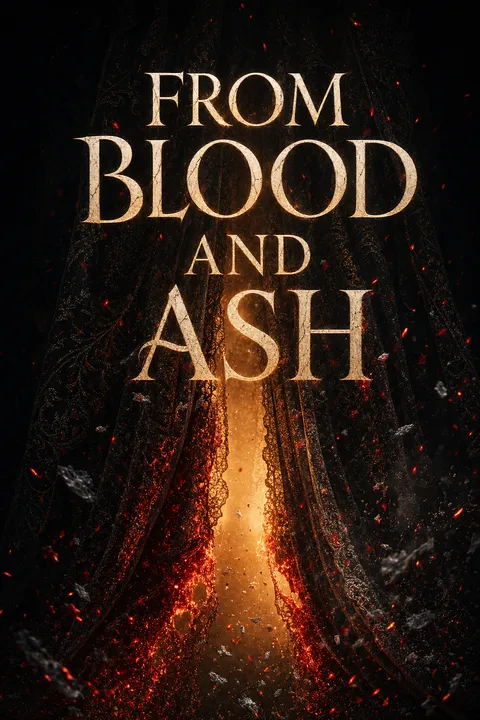


Plot Summary
The Maiden at the Red Pearl
Disguised in a borrowed cloak and a stolen mask, Poppy1 slips into Masadonia's most scandalous establishment, gambling among Rise guards who never suspect the Chosen of the gods sits beside them. She overhears that a Huntsman named Finley was drained and torn apart near the Blood Forest, proof the Craven draw close.
A knowing woman who refuses to flatter the Ascended recognizes her instantly and, when Poppy's guard Vikter3 unexpectedly arrives, steers her upstairs to an empty room. Poppy1 has spent eighteen years veiled, untouchable, forbidden to speak or be looked upon. Tonight she wants to simply exist as a girl named Poppy. That single reckless choice, made out of suffocating loneliness, sets every later catastrophe in motion.
The opening weaponizes contradiction: a sacred icon courting profanity. Armentrout frames Poppy's rebellion not as recklessness but as starvation, the predictable hunger of anyone denied selfhood. The Red Pearl, a space where masks grant honesty, inverts the veil she wears publicly, suggesting that concealment can liberate rather than imprison. The casual mention of Finley's corpse seeds the novel's central dread, while the perceptive stranger plants doubt about who truly deserves loyalty. Crucially, Poppy chooses to 'live' before she understands the price, establishing agency as the book's moral engine and foreshadowing how every assertion of will will cost someone their blood.
A Kiss Meant for Another
Inside the hidden room waits Hawke Flynn,2 a strikingly beautiful new Rise guard recently arrived from the capital. He assumes Poppy1 is Britta, a castle maid he has met here before, and kisses her with a hunger she has never imagined. When he realizes she is a stranger, he is intrigued rather than deterred, teasing her, calling her Princess, sensing she came not to talk but to taste experience.
He nearly removes her mask before his companion Kieran5 pounds on the door, summoning him to handle an arriving envoy. Hawke2 begs her to wait. She promises, then flees the moment he leaves, certain she will never see him again. The encounter awakens a longing that will war against everything her title demands of her.
The mistaken-identity meet-cute disguises a darker architecture: Hawke's interest is never as accidental as it appears, a fact the reader cannot yet weigh. Poppy's first kiss becomes a referendum on bodily autonomy, the one realm where she can choose. Armentrout calibrates the eroticism against Poppy's profound inexperience, making sensation itself a form of rebellion against a system that polices her purity. The lie she tells (promising to wait, then vanishing) mirrors the larger deceptions that will define their bond, establishing a relationship built, from its first breath, on performance, withheld truth, and the intoxicating danger of being seen by someone who should not be looking.
The Caged Chosen's Secret Mercy
Poppy's1 daily existence is a gilded cell inside Castle Teerman: veiled at all times, allowed only the color white, attended by her companion Tawny.4 Yet she carries a forbidden gift, the ability to sense others' pain and draw it away. With Vikter,3 the older guard who trained her in secret and loves her like a daughter, she slips into the Lower Ward to grant cursed victims a dignified death rather than public burning.
She mercy-kills a Huntsman named Marlowe with her bloodstone dagger. Meanwhile Duke Teerman,6 her guardian, delivers humiliating canings he calls lessons, with his cruel confidant Lord Mazeen7 watching. Poppy1 hides her bruises, her training, and her gift, knowing exposure means worse than the Duke's6 wrath.
Here the novel's thesis crystallizes: sanctity as a mechanism of control. Poppy's veneration coexists seamlessly with her abuse, exposing how reverence and exploitation can wear the same face. Her clandestine compassion toward the cursed reframes empathy as resistance, an illegal act of dignity in a kingdom that monetizes fear. Vikter functions as chosen family and conscience, the man who armed her against a world designed to keep her helpless. The Duke's lessons, ritualized sexualized violence dressed as righteousness, render the Ascended's hypocrisy visceral long before the plot explains it. Poppy's secrecy becomes survival, but it also isolates her, deepening the loneliness that drove her to the Red Pearl.
Blood in the Queen's Garden
A Lady in Wait named Malessa is found pale and bloodless, her neck broken, two puncture wounds in her throat, evidence Poppy1 and Vikter3 privately attribute to an Atlantian who breached the castle. Days later, while admiring night-blooming roses, Poppy1 watches her guard Rylan take an arrow through the chest and die instantly.
A hooded kidnapper9 orders her to come quietly, but Poppy1 stabs him with her hidden dagger, wounding him badly before a whistle calls him off. The arrow that killed Rylan bears the Dark One's2 promise: from blood and ash, they shall rise. The Duchess8 concludes that the legendary Dark One, the fallen prince Casteel,2 has come for the Chosen herself, and warns that the Queen may summon Poppy1 to the capital.
Violence escalates from rumor to personal siege, transforming Poppy from sheltered symbol into hunted prize. The murders introduce the political stakes: she is not a person to her enemies but a message, valuable as ransom or terror. Significantly, Poppy survives because she trained illegally, validating her quiet defiance and indicting the system that wanted her defenseless. Armentrout layers dramatic irony thick here, naming Casteel as the bogeyman while the reader has already met the charming guard whose true nature remains masked. Rylan's death also inaugurates the novel's brutal pattern: those who guard Poppy keep dying, binding her affection to grief and guilt.
Sworn by Her True Name
To Poppy's1 shock, Hawke2 is appointed her new personal Royal Guard, replacing Rylan despite his youth and recent arrival, championed by Commander Jansen. Summoned before the Duke6 and Duchess,8 Poppy1 must unveil herself, baring the Craven scars that mar half her face. The Duke6 calls her half masterpiece, half nightmare.
Hawke2 counters that both halves are equally beautiful, and swears his oath not to the Maiden but to Penellaphe,1 vowing himself hers from this moment to the last. Poppy1 is terrified he will recognize her as the girl from the Red Pearl, but he gives no sign. His presence is constant, observant, intimate in a way no guard has dared, blurring the line between protector and temptation she cannot afford.
The oath scene stages a quiet revolution: Hawke addresses the woman, not the relic, validating an identity the entire kingdom erases. His public defense of her scars rewrites them from shame into testimony of survival, a reframing Poppy has never been offered. Yet the appointment strains credulity by design, and the reader's unease at his improbable ascent mirrors a buried truth Poppy refuses to examine. Armentrout exploits the romance trope of the devoted bodyguard while loading it with menace, since proximity is precisely what an infiltrator requires. The tension between what Hawke says and why he might say it makes every tender moment a potential trap.
Caught Fighting on the Rise
When horns announce a Craven attack and the mist breaches the wall, Poppy1 escapes through a secret servants' passage, arms herself, and climbs to the battlements to loose bloodstone arrows alongside the guards, killing creatures as they scale the Rise. Hawke2 discovers her mid-fight, awed by her lethal skill.
After a brief, charged scuffle in which she throws her dagger at his face and he catches it, he reveals he knew from the start that she was the masked girl at the Red Pearl. He calls her Princess again. Later, in her chambers, instead of reporting her, he explains that betraying her would only destroy the trust his duty requires, and admits he too secretly grants cursed victims a merciful death.
The battlement sequence collapses Poppy's two selves: the sacred Maiden and the warrior she built in secret merge under fire, witnessed at last. Hawke's refusal to expose her reads as devotion but functions as strategy, a distinction the narrative deliberately keeps slippery. Their shared mercy toward the cursed forges genuine moral kinship, the most honest intimacy between them, which makes the eventual betrayal cut deeper. Armentrout uses combat as courtship, eroticizing competence rather than helplessness, a deliberate subversion of the damsel framework. Poppy's thrill at being known, truly seen beneath the veil, becomes the lever by which she is later moved, her deepest need turned against her.
The Lessons and the Defender
The Duke6 summons Poppy1 for another lesson, ostensibly for sitting with Ladies in Wait and growing too familiar with Tawny,4 in truth to feed Mazeen's7 appetite and his own. He strips and canes her, seven lashes, while she refuses to cry out. Hawke,2 waiting outside, senses something is wrong and fetches Vikter.3
Later, when Priestess Analia15 grips Poppy's1 chin and moves to strike her during lessons, Hawke2 seizes the woman's wrist and threatens her, the first time anyone has intervened. He probes Poppy1 about what the Duke6 does to her, refusing to accept her deflections. The Duchess8 separately reveals that the only prior Maiden was eventually killed by the Dark One,2 a fate she fears Poppy1 is courting.
This section dramatizes the slow theft of a self through sanctioned cruelty, and the radical disruption a single witness creates. Hawke's intervention against the Priestess matters less as heroics than as recognition that Poppy's suffering is not normal, a truth she has been conditioned to absorb silently. The Duke's lessons expose the obscene logic of the Ascended order, where power performs virtue while indulging sadism. The Duchess's warning about the first Maiden injects fatalism: defiance and death seem linked. Poppy's shame, her self-blame for an abuse she did not invite, is rendered with painful psychological accuracy, illuminating how victims internalize the architecture of their cages.
Under the Willow at the Rite
At the Rite, the harvest celebration where second children are given to the Court and third children to the Temples, Poppy1 attends unveiled and masked, dressed in red rather than white, briefly indistinguishable from anyone else. The absent Duke6 never appears. Hawke2 leads her into the garden to reclaim it from Rylan's memory, sharing his own grief over a lost brother, and beneath a weeping willow Poppy1 asks him to kiss her.
They lose themselves until Vikter3 discovers them and erupts, furious at the danger, accusing Hawke2 of treating the Chosen as a conquest. Shaken, Poppy1 confesses to Vikter3 her exhausted truth: she has nothing, no choice, no future, and some buried part of her wants to be found unworthy.
The Rite's pageantry masks the kingdom's quiet predation, with children handed over under sacred pretext, a horror Poppy senses but cannot yet name. The willow scene grants her the rarest thing she owns: a chosen pleasure, freely requested. Her plea, please kiss me, is an act of authorship over a body others have always governed. Vikter's fury, both protective and prophetic, frames the romance as transgression with lethal stakes. Poppy's confession is the emotional fulcrum of the book, articulating that her rebellion was never lust but a desperate bid for personhood, even at the cost of the death exile her unworthiness would bring.
The Duke Staked in Blood
Returning to the celebration, Poppy1 and Tawny4 discover why the Duke6 never came: his body hangs impaled against the wall, pierced through the heart with the very cane he used to beat her, the Dark One's2 slogan scrawled in blood above him. Then windows shatter and arrows fly. Descenters in silver wolven masks pour into the Great Hall while fires distract the guards across the city.
The slaughter is indiscriminate. Loren is shot through the head; Dafina is killed by flying glass. Poppy,1 crushed in the panicked crowd, crawls over the dead trying to drag people to safety. The Ascended finally reveal their inhuman power, sweeping into the hall to finish the attackers, but only after most of the innocents have already fallen.
The Duke's ritualized execution, killed by his own instrument of cruelty, delivers grim poetic justice while announcing that the rebellion is no longer abstract. Armentrout stages the massacre as sensory chaos, refusing to sanitize collateral death, so that Poppy's later sympathies remain morally complicated. The wolven masks and the slogan transform vague dread into organized insurgency. Critically, the Ascended's belated, lethal intervention exposes the lie at the kingdom's heart: they could always have protected the people, which means their failures are choices. The carnage strips Poppy of peers and illusions alike, accelerating her from sheltered icon toward someone forced to reckon with where true monstrosity lives.
Vikter Falls, Mazeen Dismembered
As the survivors are herded to a safe room, a wounded Descenter rises and drives a sword through Vikter's3 chest. Poppy1 presses her hands to the wound, but too overwhelmed to summon her gift, she cannot save him. He dies begging forgiveness for failing to protect her. When Lord Mazeen7 sneers over Vikter's3 body, Poppy's1 grief ignites into something feral.
She seizes a sword and hacks the Lord7 apart, severing the arm and hand that once pinned her, then his head, unable to stop until Hawke2 physically restrains her and renders her unconscious with a pressure point. She wakes days later, her screams having torn her throat raw, learning that over a hundred died and that Vikter's3 funeral has already passed without her.
Vikter's death severs Poppy's last tether to chosen family and detonates the rage she has swallowed for years. The dismemberment of Mazeen is catharsis rendered grotesque, a victim reclaiming agency through butchery, and Armentrout refuses to let it be clean or cost-free. Poppy feels no guilt, only a disturbing satisfaction, marking her transformation from sufferer into someone capable of monstrous force. Hawke subduing her foreshadows his control over her even at her most uncontrolled. The aftermath, missed funerals and lost time, externalizes grief's dissociative fog. This is the point of no return: the gentle Maiden is gone, replaced by a woman whose tenderness and violence now share one root.
The Road to the Capital
The Queen summons Poppy1 to Carsodonia, deeming Masadonia unsafe, and remarkably the Duchess8 does not punish her for killing Mazeen,7 hinting she always knew the Lord's7 cruelty. Poppy1 must say a wrenching goodbye to Tawny,4 who stays behind, then sets out beyond the Rise with Hawke2 leading, his friend Kieran5 guiding, and a small band of guards including Phillips11 and young Airrick.12
Hawke2 returns her lost bloodstone dagger, which he had kept safe, and rides with her pressed against him across the Barren Plains. For the first time the wind touches her unveiled face. As Hawke,2 he listens to why she needs to defend herself and asks only that she wear better shoes, accepting her completely.
The journey externalizes Poppy's liberation: stripped of veil, white gowns, and castle walls, she travels as a person rather than a relic. The Duchess's refusal to punish her hints that the Ascended's hierarchy of cruelty has internal lines even the powerful recognize. Hawke's return of the dagger is a quiet covenant, equipping rather than restraining her, the antithesis of the Duke's control. Yet the open road also strips away witnesses, the precise condition an infiltrator needs. Armentrout lets the romance bloom at its most genuine here, building the reader's investment to maximize the coming devastation. Poppy mistakes momentum toward danger for movement toward freedom.
Warmth in the Blood Forest
The company camps within the Blood Forest, where crimson leaves bleed and bleached human bones litter the path. Freezing and braced for nightmares, Poppy1 is reluctant when Hawke2 lies down behind her to share his warmth, insisting it is duty to keep her alive and undiscovered by Craven her screams might summon.
As they trade banter and confessions, including her dread of the Ascension and her hunger to simply live, he slides a hand beneath her clothing and, under the blankets while a guard patrols nearby, brings her to a quiet, shuddering climax. She sleeps deeply and dreamlessly for the first time in memory, and admits, only to herself, that he was right that she could finally rest.
The Blood Forest, a landscape of beautiful decay, mirrors a relationship lush and rotten at once. Armentrout uses physical intimacy as both genuine tenderness and structural irony: the man easing her terrors is the architect of them. Poppy's pleasure is framed as another reclamation of bodily autonomy, sensation she chooses against a lifetime of enforced purity. The clandestine setting, danger inches away, heightens the eroticism while underscoring her recklessness. Her dreamless sleep symbolizes a peace she has never known, peace borrowed from the very source of her undoing. The scene deepens the reader's complicity, making us root for a bond we increasingly suspect is built on sand.
Airrick's Merciful Death
Barrats scatter ahead of a Craven horde that erupts from the mist, and the company fights for survival. Hawke2 throws Poppy1 a bloodstone sword and she kills creatures with brutal precision, but young Airrick12 is gutted shielding her from a Craven's claws. Kneeling beside the dying guard, Poppy1 takes his hand and floods him with warmth, drawing away his agony so he passes peacefully, smiling, certain his mother has come for him.
Phillips11 and Hawke2 witness the act. Phillips,11 awestruck, names the rumor aloud: she has the touch, the gift of the child of the gods. The losses mount, the company reduced by several guards and Huntsmen, as they press on toward the trading town of New Haven.
Airrick's death repays the debt Poppy could not pay Vikter, letting her use her gift for the gentle passing she was too shattered to grant her mentor. The scene reframes her power as sacred mercy, a counterweight to the violence she has unleashed elsewhere. Phillips's recognition publicly confirms what the Ascended forbade her to reveal, edging toward the question of what she actually is. Armentrout balances horror and grace, juxtaposing the Craven's mindless hunger with Poppy's deliberate compassion, sharpening the moral inversion the novel is building: the kingdom's monsters and its saints may not be who the people believe. Each death tightens the thematic noose around the meaning of the Craven.
The Night at New Haven
At Haven Keep, the townsfolk greet the company like returning royalty, and Poppy1 notices oddities: no Royal Crest, no visible Ascended, a Lord supposedly off hunting. Bathed and fed, she waits up for Hawke2 and, choosing to reclaim her life fully on her own terms, asks him to stay.
He warns her bluntly that he cannot simply hold her, that he is not a good man, that she will not leave the room a maiden. She insists. They sleep together, and afterward he makes her promise to never forget that this was real, no matter what tomorrow brings. Poppy,1 certain only that she loves him and will refuse the Ascension, surrenders to the most deliberate choice of her life.
Poppy's seduction of Hawke is the apotheosis of her arc toward self-determination, the moment she claims her body, desire, and future against everything her title forbids. Armentrout stresses that this is her choice, repeatedly, making consent and authorship the scene's emotional core. Hawke's insistent confession of his own unworthiness and his plea that she remember it as real drip with dramatic irony, a man begging to be believed even as he deceives. The uncanny details of New Haven seed dread beneath the tenderness, so the reader experiences both consummation and foreboding at once. Her resolve to refuse the Ascension marks her psychological independence complete, just before the ground gives way.
Every Word Was a Lie
At dawn Phillips11 bursts in, convinced the keep is a trap and that Hawke2 and Kieran5 cannot be trusted, since no Ascended exist here and guards have vanished. When Kieran5 is confronted, he transforms before Poppy's1 eyes into a wolven, a creature she believed extinct.
Fleeing to the stables, Poppy1 discovers the truth detonating around her: Hawke2 kills Phillips11 with a crossbow bolt, the townsfolk are Descenters, and the one-handed man who killed Rylan, named Jericho,9 is among them. Hawke2 admits everything. He came to Masadonia for one purpose, to reach her. He arranged the opening that made him her guard. And he is no mortal at all. The charming protector she loved2 is an Atlantian, an agent of the Dark One.
The betrayal recontextualizes the entire novel, retroactively poisoning every tender beat the reader cherished. Armentrout executes the reversal so that Poppy's humiliation is the reader's, punishing our shared willingness to believe. Kieran's transformation literalizes the theme that nothing is what it seems, including the extinct, including the sacred. Hawke's confession is devastating precisely because he does not deny the calculation, refusing the comfort of a softening lie. Poppy's defining wound is reopened: helplessness, the very thing she trained her whole life to escape, returns through the one person she trusted absolutely. The scene weaponizes intimacy as the ultimate vulnerability, proving that being known is also being exploitable.
His Blood, Her Blade
Descenters and a grieving Mr. Tulis defy orders and try to butcher Poppy;1 loyal wolven Delano14 and the Atlantian Naill defend her, and Kieran5 saves her, but she is mortally wounded and bleeding out. The man she knew as Hawke2 arrives and, refusing to let her die, tears open his wrist and compels her to drink his Atlantian blood, which heals her and floods her with desire.
He reveals his true name and rank: Prince Casteel Da'Neer of Atlantia, the very Dark One the kingdom fears.2 Enraged, Poppy1 plunges her bloodstone dagger into his heart and flees into the falling snow. But an Atlantian cannot die from a pierced heart. He catches her, bites her, and in the snow their fury becomes desperate passion.
The blood exchange fuses the novel's twin obsessions, intimacy and predation, into one act: salvation delivered through coercion. Poppy's stabbing is righteous, justified, and futile, dramatizing her impossible position, unable to kill the man who betrayed her or to stop loving him. The reveal that Hawke is Casteel, the bogeyman who haunted the narrative from page one, closes the dramatic-irony loop with maximum cruelty. The snow scene refuses easy resolution: desire persists alongside betrayal, capturing the disorienting reality of loving someone who has wronged you. Armentrout insists the heart's loyalties do not obey the mind's verdicts, making Poppy's continued want her most painful, most human contradiction.
Going Home to Marry
Casteel2 explains the buried history: the Ascended are vamprys, accidental monsters who feed on mortals and create the Craven, while the Atlantians were the wronged people scrubbed from the records. He himself was held and tortured in a Temple for decades, branded, used as living blood-cattle, and his captive brother Prince Malik is why he needs Poppy1 as ransom.
He executes the Descenters who attacked her, leaving Jericho9 impaled as a warning. At dinner he reveals the truth her gift always hinted at: Poppy1 is part Atlantian, which is why she was made the Maiden and survived a Craven attack. Atlantia still exists beyond the misted Skotos Mountains, and an Atlantian may only wed on home soil. He announces they ride home, to marry.
The inverted history completes the novel's central indictment: the worshipped are the predators, the demonized are the victims, and faith itself was the kingdom's leash. Casteel's revealed trauma humanizes the villain without absolving him, complicating Poppy's hatred with horror at what was done to him by the people who raised her. The disclosure that Poppy is part Atlantian reframes her entire identity, her gift, her veneration, her survival, as a secret the Ascended exploited. The closing marriage announcement weaponizes intimacy one final time, fusing political leverage with desire. Poppy ends not freed but reclassified, her cage merely exchanged, her autonomy still the contested prize of powerful men's wars.
Analysis
From Blood and Ash weaponizes the conventions of fantasy romance to interrogate how power sanctifies its own predation. Poppy's1 veil is the book's governing metaphor: a society that worships a girl while systematically erasing her, conflating purity with obedience and reverence with ownership. Armentrout's sharpest move is structural, building a romance so emotionally persuasive that its eventual unmasking implicates the reader's own credulity, mirroring Poppy's. The dramatic irony that the charming Hawke is the dreaded Dark One2 operates on two registers at once, rewarding rereading and dramatizing how the people we trust most are precisely those positioned to wound us. The novel's central reversal, that the holy Ascended are the true monsters and the demonized Atlantians the wronged, functions as political allegory: institutions manufacture fear of an external enemy to justify exploiting the very people they claim to protect, harvesting children under the cover of faith. Thematically, the book is obsessed with consent and authorship. Nearly every assertion of Poppy's1 agency, sneaking out, training to fight, choosing a lover, refusing the Ascension, is framed as rebellion against a life scripted by others, and the narrative consistently sides with desire as a legitimate form of self-determination. Yet Armentrout complicates this with the troubling motif of control disguised as care, from the Duke's lessons6 to Hawke's compulsion of her blood,2 refusing tidy distinctions between protection and possession. Grief recurs as transformation: each death (Rylan, the massacre, Vikter,3 Airrick12) hardens Poppy1 and fuses her capacity for mercy with her capacity for violence, until both spring from the same fierce love. The ending offers not freedom but reclassification, her cage merely exchanged, leaving the reader to question whether escaping one's makers is even possible when identity itself was their invention.
Review Summary
From Blood and Ash receives mixed reviews, with many praising its steamy romance, intriguing plot twists, and compelling characters, particularly the love interest Hawke. Critics cite issues with pacing, predictability, and worldbuilding. Some readers found the protagonist Poppy frustrating and the relationship dynamics problematic. Despite divided opinions, many readers were engrossed by the story and eager for the sequel. The book won the Goodreads Choice Award for Best Romance, though some question its categorization as romance versus fantasy.
People Also Read


Characters
Poppy (Penellaphe)
Veiled Chosen MaidenPenellaphe, called Poppy by the few who love her, is the Maiden, chosen from birth to be given to the gods, forbidden to speak, be touched, or be seen. Scarred across half her face by a childhood Craven attack that killed her parents, she carries both visible and hidden wounds. Beneath enforced docility burns a fierce, curious, rebellious will: she trained secretly as a warrior, sneaks out to taste forbidden life, and harbors a gift for sensing and easing others' pain. Driven by suffocating loneliness and a hunger for choice, she oscillates between dutiful submission and reckless self-assertion. Her defining need is to stop being helpless and to be wanted as a person, not revered as a thing, a longing that makes her both formidable and dangerously easy to manipulate.
Hawke Flynn
Enigmatic golden-eyed guardHawke is a strikingly beautiful young guard, newly arrived in Masadonia with glowing recommendations, who becomes Poppy's1 personal protector. He moves with predatory grace, deflects with teasing charm, and hides a deep, unrelenting grief that Poppy1 senses but cannot explain. Quick-witted, lethally skilled, and unnervingly observant, he treats Poppy1 as a person rather than a sacred object, defending her dignity and respecting her need to fight. Yet his interest always seems to run deeper and stranger than duty, and he guards secrets of his own with practiced ease. He claims to be the son of a farmer who lost a beloved brother. His blend of tenderness, danger, and concealment makes him simultaneously Poppy's1 refuge and her greatest risk.
Vikter
Loyal guardian and mentorA seasoned, weathered Royal Guard well into his fourth decade, Vikter has protected Poppy1 since her arrival in Masadonia and loves her like the daughter he lost when his wife died in childbirth. Breaking custom, he secretly trained her to fight and partnered with her to grant cursed victims merciful deaths. Principled, protective, and quietly grieving, he is her conscience and chosen family, the one person who knows nearly all her secrets and worries endlessly for her safety.
Tawny
Beloved companion and friendTawny is a Lady in Wait assigned as Poppy's1 companion, a warm, vivacious young woman with rich brown skin and an easy laugh. Bound to Poppy1 by duty yet genuinely loving, she is the closest thing Poppy has to a true friend, ready to abet her schemes and tease her mercilessly. She dreams of the capital and the Ascension's promised freedom, unburdened by Poppy's dread, providing levity against the surrounding darkness.
Kieran
Hawke's watchful companionKieran is a cold, strikingly handsome man with pale wintry eyes who arrived from the capital alongside Hawke2 and serves as the company's guide. Reserved and dryly amused, he answers questions with questions and watches Poppy1 with guarded wariness. His bond with Hawke2 runs deep and old, and he carries an air of someone who knows far more than he admits, loyal to a cause he never fully names.
Duke Teerman
Cruel sadistic guardianDorian Teerman, the Ascended Duke of Masadonia and Poppy's1 guardian, is coolly handsome with hair so pale it seems white. Beneath a mask of civility lies a sadist who delights in degrading Poppy1 through ritual canings he calls lessons, fixating on her scars and her body. Centuries old, emotionless to Poppy's gift, he embodies the rot beneath the Ascended's sacred veneer.
Lord Mazeen
The Duke's cruel confidantLord Brandole Mazeen is an Ascended with berry-dark lips and fathomless black eyes who shares the Duke's6 appetite for cruelty. He torments Poppy1 with overly familiar hands and thinly veiled threats, savoring her humiliation during the Duke's6 lessons. Vain and entitled, he has nursed a petty grudge against Poppy's1 family for years, making him a figure of pure, gleeful menace.
Duchess Teerman
Composed Ascended guardianJacinda Teerman, the Ascended Duchess, is brown-haired, ageless, and outwardly kind, soft-voiced and seemingly maternal toward Poppy1. She prizes the Ascension above all, valuing Poppy1 chiefly for what she signifies to the kingdom. Beneath her gentleness lies sharp knowledge of court secrets and a pragmatic coldness, a woman who understands cruelty even when she does not openly condone it.
Jericho
One-handed vengeful attackerJericho is the shaggy-haired assailant with frost-pale eyes who first tries to abduct Poppy1 in the garden, losing a hand to her dagger. Vicious, vengeful, and gleefully sadistic, he promises to bathe in her blood and harbors festering resentment toward those above him. His hunger for cruelty makes him a loose, dangerous element even among his own allies.
Ian
Poppy's distant beloved brotherPoppy's1 older brother, a gentle dreamer who once spun fantastical tales, now lives in the capital after Ascending by rare royal exception. He writes monthly letters and is the family Poppy1 aches to see again, her tenderest tie to a vanishing past.
Phillips
Seasoned skeptical guardA dark-skinned veteran Rise guard who has survived years against the Craven, Phillips is sharp-instincted and cautious. He accompanies Poppy's1 journey and, trusting his gut over orders, becomes the first to sense that something about the company is dangerously wrong.
Airrick
Young earnest guardA soft-faced young Rise guard barely older than Poppy1, prone to blushing despite his combat training. Kind and brave, he played cards beside her unknowingly at the Red Pearl and proves willing to put himself between Poppy1 and death.
Agnes
Grieving cursed man's wifeA weary woman of the Lower Ward whose Huntsman husband returns home cursed, Agnes seeks the help of the white-handkerchief network. Grateful for Poppy's1 mercy, she later reappears bearing anxious, half-spoken warnings.
Delano
Pale-eyed loyal wolvenA blond, blue-eyed member of Hawke's2 circle with an air of gentle courtesy, Delano proves a capable guardian who, despite the chaos, abhors harming a woman and stands between Poppy1 and those who want her dead.
Priestess Analia
Severe religious instructorThe hawk-faced Priestess charged with Poppy's1 lessons, Analia is humorless, critical, and quick to strike, embodying the suffocating, punitive piety that polices Poppy's every gesture and reports her failings to the Duke6.
Plot Devices
The Veil and the Maiden
Enforced sacred imprisonmentPoppy's1 veil and the strictures of the Maiden, never seen, touched, or spoken to, function as both literal and symbolic cage. The white gown, the forbidden colors, the prohibition on friendship and self-defense, all dramatize a personhood erased in the name of holiness. Removing the veil becomes the novel's recurring gesture of liberation: at the Red Pearl, before the dying, in the Duke's6 office, at the Rite. The contrast between her public sanctity and private abuse exposes how reverence can mask exploitation. The reader tracks Poppy's1 arc by how often, and how willingly, the veil comes off, each unmasking a step toward claiming a self the system was built to deny her.
The Empathic Gift
Sensing and easing painPoppy1 can perceive others' physical and emotional pain and, by touch, draw it away by channeling warm memories through an invisible connection. Forbidden to use it until she is found worthy, she wields it anyway to ease the cursed and the dying. The gift drives the plot on multiple levels: it generates the rumors that mark her, it deepens her bond with Hawke2 whose grief she repeatedly soothes, and it reveals that she feels nothing from the Ascended, an eerie clue to their nature. As the gift evolves near her Ascension, sensing emotions beyond pain, it ultimately points toward the buried truth of what Poppy1 actually is.
Bloodstone Weapons
Killing the undyingBloodstone, often paired with wolven bone, is the rare material capable of killing Craven, cursed mortals, and other immortal creatures when it pierces the heart or destroys the brain. Poppy's1 bone-handled bloodstone dagger, a sixteenth-birthday gift from Vikter3, is her favorite weapon and a recurring emblem of her secret competence. She uses it to grant mercy, to wound her abductor, and to fight Craven, and it changes hands across the story: lost in chaos, returned by Hawke2, and finally turned against him. The weapon embodies the theme that lethality is also self-determination, and its limits, what it can and cannot kill, become crucial in the climax.
The Inverted History
Truth that recontextualizes allThe kingdom's official history, gods blessing the Ascended to defeat monstrous Atlantians who created the Craven, is gradually exposed as propaganda. The truth, that the Ascended are vamprys who feed on mortals, create the Craven, and harvest sacrificed children, while the Atlantians were the wronged people, reframes every prior event. Clues are planted early: no one ever sees the children given to the Temples, no Ascended walks in daylight, none ever fights the Craven, and Poppy1 senses no emotion from them. The revelation transforms heroes into predators and villains into victims, forcing both Poppy and the reader to question every loyalty and every act of faith.
Hawke's Hidden Identity
Devotion masking infiltrationThe charming guard Hawke Flynn2 is in truth Prince Casteel Da'Neer of Atlantia, the feared Dark One2, an Atlantian who engineered his entire posting to reach Poppy1 and use her as ransom for his captive brother Malik. Every tender moment carries a double meaning the reader cannot fully weigh until the reveal: his recognition of her at the Red Pearl, his improbable appointment as her guard, his secrecy, his strange agelessness, and his habit of breaking kisses before she feels his fangs. The slow accumulation of clues against Poppy's1 willful trust makes the betrayal both shocking and inevitable, the novel's master stroke of dramatic irony.
FAQ
Synopsis & Basic Details
What is From Blood and Ash about?
- Maiden's constrained existence: The story centers on Poppy, the Maiden, who is isolated and bound by strict rules, preparing for a mysterious Ascension.
- Forbidden romance and rebellion: Her life is disrupted by Hawke, a guard, leading to a forbidden romance and a rebellion against the kingdom's oppressive forces.
- Unraveling secrets and revelations and destiny: Poppy uncovers secrets and revelations about her identity and the kingdom, forcing her to choose between her duty and her own path.
Why should I read From Blood and Ash?
- Addictive fantasy romance: The book offers a captivating blend of fantasy, action, and a steamy, forbidden romance that keeps readers engaged.
- Strong female lead: Poppy is a compelling protagonist who evolves from a constrained maiden to a rebellious force, making her relatable and inspiring.
- Intriguing world-building: The novel creates a detailed and immersive world with complex political intrigue, hidden secrets and revelations, and supernatural elements.
What is the background of From Blood and Ash?
- Kingdom ruled by gods: The story is set in a kingdom where the gods are believed to have a direct influence, shaping the social and political structure.
- Maiden's role and Ascension: The Maiden's role is central, with her Ascension being a pivotal event that dictates the kingdom's future, steeped in religious and cultural significance.
- Political unrest and rebellion: The kingdom is rife with political unrest, with a fallen kingdom seeking to reclaim what they believe is theirs, creating a backdrop of conflict and tension.
What are the most memorable quotes in From Blood and Ash?
- "I am not yours to command.": This quote encapsulates Poppy's growing defiance and her rejection of the control others try to exert over her.
- "I am not a Maiden. I am a weapon.": This quote reveals a pivotal shift in Poppy's understanding of her true purpose and identity, moving beyond her role as a passive figure.
- "Love is not a weakness. It's a strength.": This quote highlights the central theme of love as a powerful force that drives the characters and challenges the established order.
What writing style, narrative choices, and literary techniques does Jennifer L. Armentrout use?
- First-person perspective: The story is told from Poppy's point of view, allowing readers to deeply connect with her thoughts, emotions, and experiences.
- Descriptive and immersive language: Armentrout uses vivid descriptions to create a rich and detailed world, drawing readers into the story's atmosphere.
- Pacing and suspense: The narrative is paced to build suspense, with reveals and twists that keep readers engaged and eager to uncover the truth.
Hidden Details & Subtle Connections
What are some minor details that add significant meaning?
- Poppy's red hair: Her unique hair color, initially seen as a mark of her Maiden status, later becomes a symbol of her connection to the Ascended and her true heritage.
- The significance of the veil: The veil, meant to hide Poppy, becomes a symbol of her oppression and the secrets and revelations she is forced to keep, highlighting her lack of agency.
- Hawke's golden eyes: His golden eyes, initially a striking feature, are later revealed to be a sign of his true identity and his connection to the Ascended.
What are some subtle foreshadowing and callbacks?
- Early mentions of the Ascended: Seemingly throwaway lines about the Ascended foreshadow the later reveal of their true nature and their connection to Poppy.
- Hawke's knowledge of the Maiden's rituals: His familiarity with the Maiden's rituals hints at his deeper understanding of the kingdom's secrets and revelations and his true purpose.
- Recurring dreams and visions: Poppy's recurring dreams and visions foreshadow key events and revelations, adding a layer of mystery and intrigue.
What are some unexpected character connections?
- Vikter's hidden loyalty: Vikter's unwavering loyalty to Poppy goes beyond his duty as a guard, hinting at a deeper connection and a shared understanding of the kingdom's secrets and revelations.
- The Duchess's ambiguous role: The Duchess's seemingly supportive role is later revealed to be more complex, with her own hidden agenda and motivations.
- The connection between the Ascended and the gods: The link between the Ascended and the gods is not immediately clear, adding a layer of complexity to the world's mythology and power dynamics.
Who are the most significant supporting characters?
- Vikter: As Poppy's mentor and protector, Vikter provides guidance and support, acting as a father figure and a source of stability in her life.
- The Duchess: Her ambiguous role and hidden motivations add intrigue and complexity to the plot, influencing Poppy's journey and the kingdom's fate.
- The guards: The guards, particularly those loyal to Poppy, represent the potential for rebellion and the fight against the oppressive forces of the kingdom.
Psychological, Emotional, & Relational Analysis
What are some unspoken motivations of the characters?
- Hawke's desire for revenge: Beyond his duty to protect Poppy, Hawke is driven by a desire for revenge against those who wronged his people, adding a layer of complexity to his actions.
- The Duke's fear of losing power: The Duke's manipulative actions are motivated by his fear of losing control and his desire to maintain the status quo, highlighting his insecurity.
- Poppy's yearning for freedom: Poppy's actions are driven by her deep-seated yearning for freedom and autonomy, which fuels her rebellion against the constraints of her role.
What psychological complexities do the characters exhibit?
- Poppy's internal conflict: Poppy struggles with her duty as the Maiden and her desire for personal freedom, leading to internal conflict and a questioning of her identity.
- Hawke's dual nature: Hawke grapples with his duty as a guard and his true identity, creating a complex character with conflicting loyalties and motivations.
- The Duke's manipulative tendencies: The Duke's manipulative behavior reveals a deep-seated insecurity and a need to control others, highlighting his psychological flaws.
What are the major emotional turning points?
- Poppy's first kiss with Hawke: This moment marks a significant emotional turning point, awakening her desires and challenging her understanding of her role.
- The revelation of Hawke's true identity: This revelation shatters Poppy's trust and forces her to reevaluate her relationship with him, leading to emotional turmoil.
- Poppy's decision to embrace her power: This moment marks a shift in Poppy's emotional state, as she moves from a passive figure to an active force, embracing her destiny.
How do relationship dynamics evolve?
- Poppy and Hawke's forbidden romance: Their relationship evolves from a forbidden attraction to a deep bond, challenging the boundaries of their roles and the kingdom's rules.
- Poppy and Vikter's father-daughter bond: Their relationship evolves from a mentor-mentee dynamic to a deep, familial bond, highlighting the importance of loyalty and support.
- Poppy and the Duchess's complex dynamic: Their relationship evolves from a seemingly supportive alliance to a more complex dynamic, with hidden agendas and shifting loyalties.
Interpretation & Debate
Which parts of the story remain ambiguous or open-ended?
- The true nature of the gods: The exact nature and motivations of the gods remain ambiguous, leaving room for interpretation and speculation about their role in the world.
- The future of the kingdom: The ending leaves the future of the kingdom uncertain, with the rebellion still in its early stages and the power dynamics in flux.
- The full extent of Poppy's powers: The full extent of Poppy's powers and her potential as a weapon remain open-ended, hinting at further developments in future books.
What are some debatable, controversial scenes or moments in From Blood and Ash?
- The intensity of the romantic scenes: Some readers may find the intensity of the romantic scenes controversial, questioning their appropriateness within the context of the story.
- The portrayal of power dynamics: The power dynamics between Poppy and Hawke, particularly in the early stages of their relationship, may be seen as problematic by some readers.
- The moral ambiguity of certain characters: The moral ambiguity of certain characters, such as the Duchess, may lead to debates about their true intentions and loyalties.
From Blood and Ash Ending Explained: How It Ends & What It Means
- Poppy embraces her power: The ending sees Poppy embracing her true identity and her powers, moving beyond her role as the Maiden and becoming a force to be reckoned with.
- The rebellion gains momentum: The rebellion against the oppressive forces of the kingdom gains momentum, setting the stage for further conflict and change in future books.
- Uncertainty and open questions: The ending leaves many questions unanswered, creating a sense of anticipation and excitement for the next installment in the series, while also highlighting the complexity of the world and the characters.
Blood and Ash Series


About the Author
Other books by Jennifer L. Armentrout


Download PDF
Download EPUB
.epub digital book format is ideal for reading ebooks on phones, tablets, and e-readers.








































