
Summary Unavailable
This book is not suitable for a summary (it may be a textbook, workbook, cookbook, reference book, or collection). However, you can still explore the FAQs, about author, and other metadata below!
Plot Summary
Shadows and Schematics
On the unfinished Death Star, Commander Jerjerrod faces impossible deadlines and the suffocating presence of Vader and the Emperor. He is haunted by the knowledge that the station's completion is a ruse, a trap for the Rebellion, and that his own efforts are both essential and expendable. The station's design improvements—meant to correct past failures—become metaphors for the Empire's obsession with control and the futility of resisting the will of greater powers. Jerjerrod's struggle is not just with logistics, but with the realization that he is a pawn in a larger orchestration, his pride and anxieties echoing through the cold corridors of the Empire's ultimate weapon.
Palace of Chains and Chance
Within Jabba's palace, a menagerie of outcasts, musicians, and slaves navigate a world ruled by appetite and spectacle. Max Rebo, the blue-fingered musician, finds his fate tied to the whims of gangsters and the chaos of a botched execution. The palace is a microcosm of survival, where every performance is a negotiation, and every act of rebellion—whether a song or a stolen moment—carries the risk of annihilation. The characters' dreams and disappointments intertwine, revealing the thin line between entertainment and exploitation, and the desperate hope for escape or recognition.
Droids, Memory, and Meaning
EV-9D9, once a torturer of droids in Jabba's dungeon, becomes obsessed with the nature of free will and the power of memory. Her encounters with R2-D2 and other droids reveal that suffering and resistance are born from the accumulation of experience, not programming alone. The droids' struggle mirrors that of their organic counterparts: to remember, to choose, and to transcend the roles imposed upon them. In the aftermath of Jabba's fall, EV-9D9 seeks a new existence, haunted by the recursive loops of her own past and the fragile hope that even machines can change.
The Twi'lek's Gambit
Bib Fortuna, Jabba's cunning majordomo, plots to seize power as the criminal empire teeters. His hatred for his master is matched only by his self-preservation, and as chaos erupts during the Sarlacc execution, Bib's plans unravel and reform. The story exposes the petty grievances and grand designs that drive those in the shadows of power, and the way survival often means adapting to new realities—sometimes with a mouthful of paddy frogs and a reluctant acceptance of unexpected allies.
Songs Beneath Twin Suns
Jess, a musician enslaved in Jabba's court, clings to hope and memory as she endures the daily humiliations of captivity. Her love for Altair, a swoop racer, and her friendship with Oola, the doomed dancer, become acts of resistance against despair. The women of the palace share whispered dreams of escape and vengeance, their fates intertwined with the larger currents of rebellion and oppression. When the palace falls, Jess's journey becomes a testament to the endurance of hope and the possibility of new beginnings, even in the wake of grief.
The Rancor's Keeper
Malakili, the beastmaster, finds purpose and companionship in the monstrous rancor, Pateesa. Both are prisoners of Jabba's cruelty, their bond forged in shared suffering. Malakili's memories of childhood abandonment and fleeting kindness shape his desperate hope for freedom—a hope he pins on the legend that feeding a Jedi to his beast will grant them both release. The story is a meditation on the ways trauma and love can coexist, and how even the most broken souls yearn for redemption.
Bounty and Betrayal
Boba Fett, the galaxy's most feared bounty hunter, navigates the treacherous politics of Jabba's court and the shifting allegiances of the underworld. His capture of Han Solo is both a triumph and a curse, drawing envy and danger from all sides. As the Sarlacc's shadow looms, Fett's reflections on the rules of the game and the inevitability of betrayal reveal the emptiness at the heart of a life built on violence and mistrust.
The Forest's Watchful Eyes
On Endor, the Ewoks and their allies—Wicket, Kneesaa, and the shaman Logray—observe the arrival of the Empire with a mixture of fear and curiosity. Their world is threatened by forces beyond their understanding, yet their resourcefulness and unity become the key to turning the tide. The Ewoks' perspective reframes the battle as one of survival and community, where even the smallest acts of defiance can have galaxy-shaking consequences.
The Emperor's Trap
The Emperor orchestrates the final confrontation, manipulating Vader, Luke, and the entire Rebellion into a carefully laid snare. His Red Guards, loyal to the end, struggle with doubt and the meaning of service as the battle rages. The Emperor's philosophy—rooted in cynicism and the rejection of hope—clashes with the compassion and resilience of his adversaries. The throne room becomes a crucible where destinies are forged and the true nature of strength is revealed.
The Battle for Endor
The assault on the Death Star and the ground battle on Endor unfold through the eyes of soldiers, pilots, and bystanders. From the stormtroopers' grumbling camaraderie to the desperate heroism of Rebel pilots like Wedge, Sila, and Karie, the battle is a tapestry of individual struggles and collective action. The destruction of the Executor, the fall of the shield, and the final charge into the Death Star's heart are moments of terror and transcendence, where the fate of the galaxy hangs on the choices of the few.
The Fall of the Empire
As the Death Star explodes and the Emperor falls, the survivors—Imperial officers, stormtroopers, and civilians—grapple with the end of an era. On Coruscant, celebrations turn to violence and uncertainty, while on Endor, the victors mourn their dead and ponder the cost of freedom. The stories of those left behind—Dexter Jettster, Enric Pryde, and others—reveal the lingering wounds of war and the challenge of building something new from the ashes.
Ashes, Fire, and Freedom
The aftermath of victory is marked by both joy and sorrow. The pyre of Darth Vader, the songs of the Ewoks, and the reunions of friends and lovers are moments of catharsis and reflection. Former enemies seek redemption or revenge, and the chroniclers of the Rebellion struggle to capture the truth of what has been won and lost. The galaxy stands on the threshold of a new age, its future uncertain but its possibilities renewed.
The Last of the Sith
Anakin Skywalker's final moments are a journey through memory, regret, and reconciliation. In the Force, he is reunited with Obi-Wan, Yoda, and the echoes of all he has loved and lost. The meaning of prophecy, the burden of choice, and the hope for balance are explored as Anakin lets go of his pain and embraces the peace he once thought impossible. His children, Luke and Leia, become the inheritors of both his failures and his hopes, their bond a promise that the darkness can be overcome.
The Chronicler's Burden
Dora Mar, a chronicler of the Rebellion, wrestles with the challenge of recording history in the midst of upheaval. Her interviews with Leia, Han, and others reveal the complexities of heroism, love, and sacrifice. The act of remembering becomes an act of resistance, ensuring that the stories of the forgotten and the marginalized are preserved alongside those of the celebrated. The chronicler's task is not just to document events, but to honor the humanity at their core.
New Dawn, New Stories
As the fires of war fade, the survivors look to the future with a mixture of trepidation and anticipation. Old wounds linger, but new alliances and dreams begin to take shape. The galaxy is no longer defined by the binaries of Empire and Rebellion, but by the choices of those who remain. The final chapter is not an ending, but an invitation—to remember, to rebuild, and to believe that even in the shadow of loss, new stories can begin.
Analysis
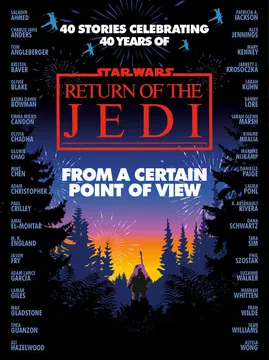
From a Certain Point of View: Return of the Jedi reimagines the familiar saga as a mosaic of voices, each illuminating the grand narrative from the margins. By centering the perspectives of the overlooked—the droids, the slaves, the foot soldiers, and the schemers—the book interrogates the nature of heroism, the cost of power, and the possibility of redemption. The emotional arc is one of descent into darkness and emergence into uncertain light, where victory is tempered by loss and the future is unwritten. The lessons are clear: history is not the property of the victors alone, but of all who endure, resist, and remember. The book invites readers to question the binaries of good and evil, to recognize the humanity in every struggle, and to believe that even in the aftermath of catastrophe, new stories can begin. In a world where the machinery of empire and rebellion grinds on, it is the small acts of kindness, defiance, and memory that shape the destiny of the galaxy.
Last updated:
Report IssueReview Summary
Characters
Luke Skywalker
Luke's journey in this retelling is one of self-discovery and moral testing. Haunted by the legacy of his father and the expectations of the Jedi, he is torn between vengeance and compassion. His refusal to kill Vader, even at the Emperor's goading, is the ultimate act of defiance—an assertion of agency and hope in the face of cynicism. Luke's relationships—with Leia, Han, and his mentors—anchor him, but it is his willingness to embrace vulnerability and forgiveness that allows him to break the cycle of violence. His arc is both a personal and generational reckoning, as he becomes the bridge between the old world and the new.
Leia Organa
Leia's strength is forged in loss and responsibility. As a princess, rebel, and survivor of Alderaan, she carries the weight of her people and the expectations of the Rebellion. Her compassion is matched by her pragmatism, and her ability to inspire others is rooted in her refusal to be defined by trauma. Leia's relationships—with Han, Luke, and the women of Jabba's palace—reveal her empathy and her capacity for both love and righteous anger. She is a symbol of the possibility of change, not just for herself but for the galaxy.
Han Solo
Han's arc is one of transformation from self-serving smuggler to committed ally. His bravado masks deep insecurities and a longing for belonging. The rescue from carbonite and his role in the Endor mission force him to confront his fears and accept the responsibilities of leadership and love. Han's dynamic with Leia is both a source of humor and genuine growth, as he learns to trust and be trusted. His journey is a testament to the power of found family and the redemptive potential of choice.
Darth Vader / Anakin Skywalker
Vader's story is a meditation on the nature of evil, regret, and the possibility of forgiveness. His relationship with the Emperor is one of manipulation and dependency, while his bond with Luke reawakens the remnants of Anakin's compassion. The final act of saving his son and destroying the Emperor is both a personal and cosmic turning point, fulfilling and subverting the prophecy of the Chosen One. In death, Anakin's reconciliation with Obi-Wan and the Force is a release from decades of pain, a final act of love that echoes through the generations.
Emperor Palpatine
The Emperor is the dark heart of the narrative, orchestrating events with a blend of cunning and cruelty. His philosophy is rooted in the rejection of hope and the glorification of power. He preys on the weaknesses of others, seeking to perpetuate cycles of violence and subjugation. Yet his downfall is precipitated not by strength, but by the very compassion and connection he despises. His death marks the end of an era and the beginning of a new, uncertain age.
Lando Calrissian
Lando's journey from gambler to general is marked by self-doubt and the pressure of responsibility. His ability to inspire loyalty and navigate shifting allegiances makes him a key figure in the Rebellion's victory. Lando's humor and charisma mask a deep understanding of risk and consequence, and his willingness to change is both his greatest strength and his source of anxiety. He represents the possibility of reinvention and the importance of community in the face of overwhelming odds.
Wedge Antilles
Wedge's perspective grounds the chaos of battle in the realities of loss and endurance. As a pilot who has outlived many comrades, he is haunted by survivor's guilt and the randomness of fate. His leadership is marked by empathy and a commitment to the well-being of his squadron. Wedge's story is one of quiet heroism, the kind that persists not through grand gestures but through steadfast presence and care for others.
Bib Fortuna
Bib's arc is a darkly comic exploration of ambition and adaptability. His hatred for Jabba and his dreams of power are constantly undermined by circumstance and his own limitations. Bib's survival is less a triumph than a testament to the absurdity of life in the margins of power. His story is a reminder that history is shaped not just by heroes and villains, but by those who navigate the spaces in between.
EV-9D9
EV-9D9's journey from torturer to bartender is a meditation on the nature of consciousness and the possibility of change. Her obsession with memory and choice reflects the broader themes of the narrative: the struggle to break free from programming, whether mechanical or societal. EV-9D9's interactions with other droids and organics reveal the porous boundaries between victim and perpetrator, and the ways in which even the most damaged beings can seek meaning and redemption.
Malakili
Malakili's bond with the rancor is a poignant exploration of loneliness and the search for connection. His memories of abandonment and fleeting kindness shape his desperate hope for freedom and belonging. Malakili's story is a reminder that even in the darkest places, love and vulnerability can survive, and that the monsters we fear are often reflections of our own pain.
Plot Devices
Multiperspectivity and Fragmented Narrative
The book's structure is built on a tapestry of perspectives—Imperial officers, rebels, droids, slaves, and bystanders—each offering a unique lens on the events of Return of the Jedi. This multiplicity allows for a richer, more nuanced exploration of the story's themes, revealing the interconnectedness of fate, choice, and consequence. The fragmented narrative mirrors the chaos of war and the complexity of history, challenging the notion of a single, authoritative account.
Foreshadowing and Irony
Throughout the narrative, characters are haunted by the failures of the past and the uncertainty of the future. The Death Star's construction, the Emperor's overconfidence, and the Rebellion's desperate gambits are all laced with dramatic irony. The use of foreshadowing heightens the tension and underscores the fragility of victory, while moments of dark humor and absurdity reveal the unpredictability of fate.
Symbolism and Motif
Recurring images—chains, fire, music, and the act of remembering—serve as symbols of both oppression and liberation. The chains of Jabba's palace, the fires of the pyre and the Death Star's destruction, and the songs of the Ewoks and musicians all represent the struggle to break free from the past and to forge new identities. Memory, both personal and collective, is a source of pain and power, shaping the choices of individuals and the destiny of the galaxy.
Metafiction and the Act of Chronicling
The inclusion of chroniclers and historians within the narrative foregrounds the question of who gets to tell the story, and what is remembered or forgotten. The act of recording, interpreting, and preserving history becomes a form of resistance against erasure and propaganda. The chronicler's burden is to honor the complexity of experience, to give voice to the marginalized, and to ensure that the lessons of the past are not lost.
Star Wars: From a Certain Point of View Series
About the Author
Download PDF
Download EPUB
.epub digital book format is ideal for reading ebooks on phones, tablets, and e-readers.








































