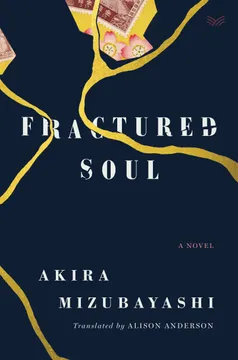

Plot Summary
Melancholy Under the Strings
In pre-war Tokyo, eleven-year-old Rei spends a mild Sunday afternoon in the municipal cultural center, lost in a book recommended by his father Yu, who is preparing for a string quartet rehearsal. The pair share a bond shaped by literature and music, their affection complicated by absence—Rei's mother is dead, and the looming threat of war casts shadows even over mundane pleasures. Music, literature, and familial warmth create a fragile sense of peace within a world about to rupture. The emotional undertones of the day's gentle sunlight and domestic routine set a poignant stage, foreshadowing both imminent violence and the persistent longing threaded through Rei's memory.
The Quartet's Fragile Harmony
Yu, with Chinese friends Kang, Cheng, and Yanfen, forms a string quartet that embodies defiant cosmopolitanism despite surging Sino-Japanese animosity. Music offers sanctuary and mutual recognition as rehearsals become acts of quiet resistance against nationalist hysteria. The rehearsal room, alive with harmonic searching and companionship, isolates them from the belligerence outside. Each musician brings hopeful vulnerability, threading together personal histories and anxieties into an aural tapestry. Despite differences in language and nationality, harmony is their aspiration—yearned for yet always delicate, threatened by both internal doubt and looming external danger.
Sudden Boots, Silent Hiding
The rehearsal is violently interrupted as soldiers burst in, suspicion falling on this unusual gathering. Instinctively, Yu saves Rei by hiding him in a wardrobe while the world outside erupts in hostility. Through a thin slit of safety, Rei watches catastrophe unfold. Fear steals over him—his legs numb, his childish sense of safety dissolving. The adult world's cruelty is made literal and immediate. In darkness, clutching his book, Rei becomes a spectator to both human courage and the senseless malice of authority. He emerges from the wardrobe forever changed—his innocence irreparably fractured along with his father's instrument.
Shattered Violin, Shattered World
Yu and his friends are interrogated, and when Yu stands up to the soldiers, they retaliate brutally, smashing his cherished violin—a piece made by Nicolas François Vuillaume—under booted heels. In the violence of its destruction, the soul post—the very "soul" of the instrument—breaks, echoing Rei's internal devastation. The violin's annihilation becomes emblematic: culture, memory, and family are all subject to the mindless destructiveness of war. Rei, watching helplessly from hiding, imprints this violation indelibly upon his psyche, setting his lifelong search for restoration—and for peace—into motion.
Handed from Shadow
After the soldiers' rage, a solitary officer—Lieutenant Kurokami—finds the hiding Rei. Recognizing the boy's fear and the ruined violin's significance, Kurokami wordlessly hands the wrecked instrument to Rei. The gesture, hesitant yet gentle, marks an unexpected moment of interconnection amid chaos. It links the fates of child, soldier, and instrument, underscoring music's lingering humanity and the need for acts of grace even within inhuman times. The lieutenant's identity will ripple through generations, and his brief act of empathy will become the axis for future reconciliations, binding together loss and hope.
A Dog Named Momo
Rei escapes into the dusk, violin cradled like a wounded animal. Wandering his altered neighborhood, he is met by a stray dog, which he names Momo. The animal, gentle and wordlessly loyal, follows him home and keeps him warm through a sleepless night spent outside. Momo becomes a living conduit to lost family, a silent guardian who shares Rei's isolation. In the years to come, Momo will be both a stand-in for and reminder of the love he's lost—an echo of his father's spirit and a comfort as Rei crosses the thresholds of displacement and grief.
Longing Across Continents
After Yu's disappearance, Rei is adopted by Philippe, his father's French friend, and Isabelle. Leaving Japan, Rei becomes Jacques Maillard, a French child with a silent Japanese core. His book and broken violin are his only tangible ties to his previous life. The trauma of loss and migration instills in Jacques a determination to maintain connection—through French mastery, but also through persistent, secretive engagement with Japanese language and literature. The struggle to hold together multiple selves, languages, and sorrows shapes his adolescence and sets him on a path of reconciliation between past and present.
Becoming Jacques Maillard
Jacques comes of age in France, independently driven to become a luthier. In the town of Mirecourt, he meets Hélène, a bowmaker. Their parallel apprenticeships and eventual love illustrate the interdependence of art forms—violin and bow, music and craft, solitude and partnership. The two are united by a relentless pursuit of precision, beauty, and meaning in their crafts. Together, they form a new family, anchoring Jacques' fractured self. The longing to restore his father's violin becomes both personal quest and metaphor for healing a soul ravaged by loss and historical violence.
Music, Memory, and Rebirth
Years pass as Jacques meticulously restores the shattered violin; his skill and reputation grow. The restoration is painstaking: like memory, it is an act of resurrection, piece by piece. The violin becomes not just a relic, but a living vessel—its renewed voice a testament to endurance and love. Simultaneously, Jacques translates beloved childhood literature, creating a bridge between his Japanese roots and his French existence. Both acts—repairing violin and translating words—are transgenerational, aimed at reviving what history has cruelly sundered, and ensuring that stories of compassion and resilience endure beyond one fragile lifetime.
The Black God's Heir
Decades on, Jacques/write to Midori Yamazaki, a young Japanese violinist whose grandfather was Lieutenant Kurokami—the "Black God." Their meeting uncovers how acts of fleeting kindness may ripple through time: Kurokami's compassion preserved the violin, which Jacques now entrusts to Midori, uniting two family legacies violently torn apart. Through conversation, music, and shared reminiscence, both recognize the generative power of forgiveness, the fallibility and grace within people shaped by war, and the necessity of personal acts of care even in moments eclipsed by brutality.
Gifts Passed On
Midori's mother, Ayako, and Jacques gather, sharing memories and items: restored violin, a pink cardigan belonging to Rei's mother, and a treasured book, "The Crab Cannery Ship." Each object is a vessel for grief, remembrance, and reconciliation. The violin is entrusted to Midori, completing its journey from destruction to redemption. Music—performed anew—links the living and the dead, transforming loss into heritage. Each transmission, physical or emotional, closes and heals a family wound, restoring connection across time, language, and blood.
Confronting Lost Time
Jacques returns to Tokyo, seeking remnants of his childhood neighborhood. Places are unrecognizable, consumed by war, time, and urban renewal. Yet the act of searching honors memory—finding small, unexpected continuities and experiencing the bittersweet truth that loss can only ever be partly healed. In Shanghai, he reconnects with Yanfen, the Chinese violist, who shares her own vestiges from the past and fills in blank spaces of his father's final days. Their conversation is a shared act of mourning, love, and release.
Letters Across Generations
Letters and emails among Jacques, Midori, and Yanfen serve as lifelines connecting generations ruptured by war. Stories overlap, memories contradict and complete each other, piecing together the fate of Yu, Kurokami, and their respective families. The written word becomes both record and ritual: a defense against oblivion and a tool for inner renewal. Through correspondence, understanding deepens, wounds are spoken and—though not erased—are illuminated, honored, and made communal.
Circle Completed by Music
At the Salle Pleyel in Paris, Midori performs Berg's "To the Memory of an Angel" on the restored violin, using Hélène's bow. Before an enraptured crowd, she shares the extraordinary history of the instrument and the families it unites. Music becomes a bridge, summoning ghosts, ending cycles of silence, and transforming trauma into beauty. Midori's encore performance of Schubert's "Rosamunde" and Bach's "Gavotte en rondeau" powerfully enacts the novel's central hope: that even the most devastated souls and objects can be made whole—if not unscarred—through art and connection.
The Altar of the Past
Back in his Paris workshop, Jacques builds an altar of memory: photographs, mementos, the restored violin, treasured books and the pink cardigan. The altar is secular, encompassing, and universal—a refusal to let violence annihilate connection. It is an antidote to meaninglessness in a world ever threatened by new destructions. Through this ongoing act of remembrance, Jacques affirms the value of the emotional, the fragile, the soul within both instrument and human, and the obstinate necessity of continuing to hope, create, and love despite history's cruelties.
The Quiet Resurrection
The story's protagonists—living and dead—are, in a sense, released. The broken soul post is restored; the violin's song endures. Yanfen's death, marked by her final letter, brings gentle closure to lifelong regrets and overdue reunions. Having gifted memory, music, and objects to the next generation, each character is allowed to rest. Ritual, translation, and craft complete the cycle: enabling peace, emotional resolution, and the possibility of renewal, not only for the individuals but for the legacy of art and kindness they preserve.
New Souls, New Sound
The narrative ends with future forwardness. The restored violin's music will continue in Midori's performances; Jacques and Hélène's lifework of creation and care persists. The "fractured soul" is not made whole by forgetting, but by integrating its scars and transforming them into sound, narrative, and relationship. From personal healing to universal resonance, the story insists: through mourning, through music, by refusing to abandon the suffering inherited from history, new souls and new songs are always being born.
Analysis
Modern meditation on survival, memory, and the artistry of reconciliation"Fractured Soul" is an exquisitely-wrought testament to the resilience of the individual and collective spirit in the aftermath of unspeakable violence. Through its musical metaphors and craftsmanship, Mizubayashi turns trauma, displacement, and the ache of memory into sources of creative renewal. The novel insists that history's wounds—whether national, familial, or personal—cannot be fully closed, yet they can be made fertile, giving rise to new art, new kinships, and new empathies if we are brave enough to carry them. At its heart, the story advocates for moral courage, for the rescue and restitution of what is broken (be it instrument or soul), and for the radical act of passing blessings forward—through music, teaching, or simple kindness. The work is also a cross-cultural tapestry, calling for solidarity amidst difference, and casting restorative art as both ceremony and rebellion. In a world perpetually threatened by division and loss, "Fractured Soul" offers the consolation that nothing truly precious ever wholly vanishes: it survives in sound, in story, and in the compassionate hands of those willing to repair what others have sought to destroy.
Characters
Rei Mizusawa / Jacques Maillard
Rei is intelligent, sensitive, and marked by early trauma: the brutal loss of his father Yu, the shattering of both family and symbol (the violin), and exile from Japan. Adopted in France as Jacques, he becomes a master luthier—his vocation driven by a need to repair not just wood but memory and self. His relationships—with Momo the dog, with Hélène the bowmaker, with music and literature—are marked by longing, gratitude, and a persistent sense of displacement. Psychologically, Rei evolves from a fractured, haunted child into a craftsman of restoration: not seeking erasure of pain, but integration and commemoration. His slow, tender reconciliation with his past and with others is his greatest act of self-healing.
Yu Mizusawa
Yu is both loving single father and an idealist: committed to music, cosmopolitan friendship, and rational, moral values. His cross-cultural quartet is an act of resistance in wartime Japan—where he ultimately pays the price for nonconformity, empathy, and intellectual openness. His protector's instinct shapes Rei (his final act is to hide his son, at great personal risk), and his essence is preserved in the battered but eventually resurrected violin. Psychologically, Yu embodies the tragedy of the decent man caught in historical catastrophe, but also the dignity and endurance of memory, artistry, and parental love across generations.
Lin Yanfen
Yanfen, the Chinese violist and later survivor, is a symbol of cosmopolitan solidarity and historical sorrow. Fluent in Japanese, she is attuned to difference but values connection above all. Her role as an unwilling "wife" to Yu during the soldiers' interrogation, and her lifelong guardianship of objects (the cardigan, book), reflect deep loyalty and lingering love. Her late-life reunion with Rei allows her to give and receive closure, reconciling decades of survivor's guilt, loss, and compassion. Yanfen's psycho-social arc is about tending wounds rather than healing them—her presence and memory becoming, finally, a blessing.
Lieutenant Kurokami ("Black God")
Kurokami enters as a figure of authority but acts with unexpected humanity, sparing Rei and saving the violin. His indirect role in preserving the possibility of restoration echoes through generations, shaping the life of his granddaughter, Midori. Later revelations of his suffering—grief for his family lost in Hiroshima, revulsion against military music, unhealed trauma—underscore the human cost of obedience and violence. Kurokami's legacy is one of complex regret and compassion, his brief act of mercy rippling outward to create postwar reconciliation between Japanese and Chinese families.
Hélène Becker
Hélène is a master bowmaker, Jacques' partner in both love and creative vocation. Their mutual dedication to craft is both literal and symbolic—the union of violin and bow is their shared vision for healing, partnership, and purpose. Hélène's empathy, patience, and gentle encouragement provide Jacques with emotional stability, allowing him to face his deepest ruins and reanimate broken history. Her psychoanalytic significance lies in her role as co-restorer: healing is collective, dependent on solidarity and trust.
Midori Yamazaki
Midori embodies the link between past suffering and renewed cultural vitality. As Kurokami's granddaughter, she is heir to both tragedy and hope. Her international career, shaped in part by the gifts and wounds of her grandfather's generation, bridges temporal, cultural, and personal distances. Her emotional intelligence and musical sensitivity bring the restored violin and its story fully to life, both for her audiences and the past ghosts it lifts. Midori's arc is one of embodied, living reconciliation—a channel for the voices silenced by war, now singing again.
Philippe Maillard
Philippe, Yu's French friend, plays a pivotal role: rescuing, adopting, and raising Rei when war makes orphans of so many. His compassion, and that of his wife Isabelle, provides Rei/Jacques with a path to psychological stability and bicultural selfhood. Psychologically, Philippe stands for the resourcefulness and warmth of the found family—a recognition that love and kinship can cross bloodlines, nations, and trauma.
Momo (the dog)
Momo appears at every stage as a comforting presence—first in Japan, then as a sequence of successor dogs in France. The animal's loyalty and wordless love fill the gap left by human absence, haunting Rei with reminders of affection that is beyond words or history. Symbolically, Momo embodies the persistence of the spirit, the ways in which love survives catastrophe, and the possibility, always, of unexpected salvation.
Kang and Cheng
Yanfen's fellow Chinese musicians, Kang and Cheng, never re-emerge after the quartet's dissolution, standing for the countless personal relationships fractured by history. They represent the cost of unbridgeable silence—but also the reality that every life is marked by incomplete answers, missing connections, and irreversible loss.
Ayako Yamazaki
Midori's mother, Ayako, gently sustains family memory and allows the past to surface in the present through hospitality and listening. She holds the stories of her father with humility and becomes a partner in the project of remembrance and intergenerational healing. Her presence helps ensure that history, with its suffering and beauty, can be spoken, shared, and ultimately, transformed.
Plot Devices
Music as Redemptive Bridge
The narrative is structured as a musical composition—its sections named after tempo markings, its structure alternating between Japan and France, past and present, like themes with variations. Musical works—especially Schubert's "Rosamunde" and Bach's "Gavotte en rondeau"—function as leitmotifs, summoning memories and motivating actions. The process of playing, listening, and restoring music (and instruments) is a metaphor for reconciling memory with trauma. Foreshadowing abounds (e.g., the initial quartet, the repeated musical references), and every major narrative transition is accompanied by a shift in musical genre or recollection—turning private suffering into public performance and shared ritual.
Objects as Carriers of Memory
The destroyed violin, a pink cardigan, treasured books, photographs, and Momo the dog—each object is deeply invested with personal and collective meaning. The violin's restoration mirrors psychic healing; the cardigan and book testify to love and courage in a time of terror. Their passage between hands, through time and across continents, is central to the plot's progress and the characters' emotional arcs. Lost-and-found objects become means for characters to confront, survive, and, crucially, transmit the soul of what war threatened to annihilate.
Epistolary Structure, Intergenerational Dialogue
The novel abounds in letters and emails, which serve as encounters, confessions, and invitations (in both senses). The written word is a tool for uncovering the silenced past, allowing generations separated by culture and trauma to reach understanding, forgive, and find kinship. The exchange of stories is essential for healing the "fractured soul" and guiding the living toward peace with what cannot be undone.
Nonlinear, Polyphonic Narrative
The narrative jumps through time, geography, and perspective, moving from childhood recollections to adult relationships, from Japan to France to China. The interleaving of past and present, of direct experience and recollected history, strengthens the themes of persistence and return. Ghostly presences, internal monologues, and silent rituals shape the narrative as much as action and dialogue. This structure places the reader in a position of active listening—mirroring the openness required of musicians and luthiers alike.
The Soul Post as Literal and Metaphoric Axis
The "soul post" (sound post of the violin) is both technical and allegorical. Its destruction symbolizes the shattering not only of music, but also of family, memory, and self; its careful reconstruction embodies the arduous work of personal and cultural healing. The book's dual attention to practical craftsmanship and existential yearning frames the story's central question: how does one restore resonance, not just sound, after the deepest losses?
Download PDF
Download EPUB
.epub digital book format is ideal for reading ebooks on phones, tablets, and e-readers.








































