
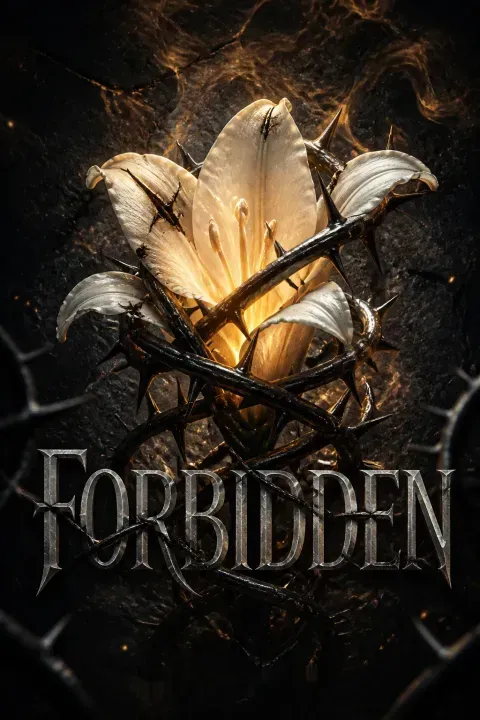


Plot Summary
The Invisible Boy
Lochan Whitely1 sits in class, mute and sweating, watching dead flies on the windowsill. Teachers ask him questions; he cannot answer. His classmates either mock or ignore him.
The only place he exists fully is at 62 Bexham Road, a cramped council house where he and his sister Maya,2 just thirteen months younger, have become surrogate parents to three younger siblings: volatile thirteen-year-old Kit,3 hyperactive eight-year-old Tiffin,4 and sweet five-year-old Willa.5 Their mother, Lily,6 drifts between the house and her boyfriend Dave's10 flat, increasingly absent, always drunk when she does appear.
Their father left for Australia years ago with a new wife and never looked back. Lochan1 is brilliant on paper, predicted four As, but his selective mutism makes every school day a torture. Only Maya2 understands. Only Maya2 sees him.
The novel opens with a paradox that defines its tragedy: Lochan is simultaneously hyper-visible as a 'weirdo' and completely invisible as a person. His silence at school mirrors his family's invisibility to social services, neighbours, and the state. The dead flies on the windowsill serve as Lochan's first metaphor for himself: trapped behind glass, able to see life but unable to reach it. The family structure is already inverted: Lochan and Maya are the real parents, while Lily has regressed to adolescence. This role reversal is the soil in which forbidden love later grows, blurring the boundaries between sibling, parent, and partner.
When Mother Forgets
Maya2 arrives home to find her mother on the couch with a wet cloth on her forehead, claiming stomach flu. When Maya2 asks about Tiffin4 and Willa,5 Lily6 stares blankly: she forgot to pick them up from school. It is her day off.
Maya2 calls St Luke's primary and learns the children were collected thirty minutes earlier by an unknown childminder. Panicked, she phones Lochan,1 who meets her at the school. After tense minutes, they discover an elderly woman named Sandra, whom Lily6 called in a rare moment of lucidity, has the children safe.
That evening, Lochan1 confronts Lily6 about her drinking. She retaliates by mocking his social anxiety, calling him abnormal, asking where his friends and girlfriends are. Kit3 watches with relish. Lochan1 retreats, shattered.
This sequence crystallizes the family's central horror: the children are one forgotten pickup away from disaster. Lily's neglect is not passive but actively dangerous, and her retaliation against Lochan reveals the psychological mechanism she uses to protect herself: attack his vulnerability before he can name hers. The moment is doubly cruel because Lochan has just demonstrated extraordinary competence under pressure, speaking calmly to school officials despite his social phobia. His mother's words 'the day you start acting like a normal teenager' plant a seed of self-loathing that will haunt his relationship with Maya.
A Salsa Between Siblings
Maya2 engineers a rare empty house by fabricating a family outing to a fairground. She and Lochan1 have hours alone. She puts on music and coaxes him into dancing. They start with salsa steps, laughing, then the music shifts to a slow crooner. Maya2 hooks her arms around Lochan's1 neck. He puts his hands on her waist. They sway together, her bare legs brushing his jeans, her breath warm on his neck.
Lochan's1 body responds physically. Horrified, he shoves her away, retreats to the bathroom, and stands under an icy shower. For days afterward, he buries himself in schoolwork, avoids Maya's2 eyes, and runs punishing laps around the park until his body gives out. He tells himself it was nothing, just adolescent biology. He does not believe it.
The dance scene is the novel's first hinge. What begins as innocent play becomes charged with sexual energy neither sibling anticipated. Lochan's reaction is not desire in isolation but a crisis of identity: his body has betrayed the only relationship that sustains him. His retreat into frantic activity, cold showers, and avoidance maps the classic shame response. The scene is masterfully ambiguous: Maya seems to register something but does not pull away. Two people who have been emotionally fused since childhood suddenly discover their bodies want a different kind of closeness, and neither has the emotional vocabulary to name what is happening.
Nico and the Unwanted Kiss
Francie7 convinces Maya2 to accept a date with Nico DiMarco,8 the wealthy, handsome boy everyone wants. Lochan1 is consumed with jealous agony during the four hours Maya2 is gone, imagining every detail, finally punching a wall hard enough to bloody his knuckles.
Meanwhile, Maya2 finds Nico8 genuinely decent. They talk for hours. But when he leans in to kiss her in his car, she turns her cheek. Walking home, she confronts the truth: she cannot kiss Nico8 or any other boy because she is in love with Lochan.1
She arrives to find Lochan1 waiting, wild-eyed. He accuses her of sleeping with Nico,8 calls her like mother, like daughter. Maya2 screams that nothing happened and then kisses him: first on the cheek, then the corner of his lips, then fully on the mouth. He kisses her back.
The date functions as a catalyst that forces subconscious feelings into conscious awareness. Lochan's accusation 'like mother, like daughter' is the cruelest thing he could say, projecting his fear of abandonment onto Maya's sexuality. Maya's sequential kisses on his cheek, then near his lips, then fully on his mouth map a progression from affection to passion that mirrors how their relationship has evolved internally. The moment is both a release and a transgression: years of emotional intimacy crystallize into a single act that neither can undo. They have crossed a line that, in the eyes of the world, makes them criminals.
Maya's Fall
In the days after the kiss, Lochan1 insists they must never act on their feelings. He proposes they both date other people: he will go out with Francie,7 Maya2 will give Nico8 a second chance. Maya2 agrees, but the pain of it causes her to skip class and wander the school in a dissociative state. She steps into nothingness on a staircase and falls, cutting her face, bruising her body.
Lochan1 rushes to the nurse's office, barely holding himself together. He takes her home. On the couch, he breaks down, apologizing for everything. Maya2 admits she cannot be with anyone else. She says the words that change everything: she loves him in every kind of way, not just as a brother. Lochan1 stops fighting. They decide to be together, whatever the risk.
Maya's fall operates on multiple levels: it may be an accident, a subconscious suicide attempt, or a cry for help. The ambiguity matters less than its function as the point of no return. The near-loss of Maya shatters Lochan's resolve. His breakdown reveals that his moral objections were always secondary to his terror of losing her. Their decision 'to be together' is not a plan but a surrender: they stop pretending they can live without the love they have discovered. The novel here shifts from 'will they or won't they' to 'how will they survive this.'
The Bedroom and the Bracelet
In Maya's2 bedroom, with the house empty, they explore each other's bodies for the first time. Lochan1 is terrified of losing control; Maya2 is curious and bold. They do not have intercourse, but the closeness overwhelms them both. At school, Lochan1 secretly writes essays for other students to earn money.
On the fire-escape stairs, he presents Maya2 with a silver bracelet he has saved for months to buy. Inside, the engraving reads: 'Maya,2 love you for ever. Lochan1 x.' She wears it always, touching the inscription in the dark, the metal catching moonlight through her curtains. It becomes her talisman, the physical proof that what they share is love, not sickness. She tells no one where it came from.
The bracelet functions as a wedding ring substitute: a private vow exchanged in a world that will never recognize their union. Lochan's secret labor to afford it echoes traditional masculine provider roles, while the engraving 'for ever' stakes a claim on permanence that their situation actively denies. The bracelet's position on Maya's wrist, visible yet unreadable to others, mirrors their relationship: present in plain sight but illegible to anyone who does not know the code. It is the novel's most potent symbol of love under erasure.
The Cemetery's Brutal Words
Tiffin4 walks in on them embracing in the kitchen one morning; they fabricate an excuse about Maya2 being upset. The near-miss heightens the tension. Days later, Maya2 tries to touch Lochan1 more intimately while he is changing. He panics, screams that she is sick, that their whole relationship is sick and disgusting. Maya2 flees to the cemetery.
Lochan1 follows. In the rain, she tells him she no longer loves him, using his own words as weapons. He collapses, sobbing, begging her to take it back. She does not. They separate in agony. For weeks afterward, they exist as polite strangers in their own home, the distance between them more painful than any forbidden closeness ever was.
This fight reveals the fault line in their relationship: Lochan's internalized shame versus Maya's willingness to embrace what they have. His outburst uses the language of the outside world ('sick', 'disgusting') against her, proving he has internalized society's judgment even as he loves her. Maya's retaliatory 'I don't love you any more' is a survival mechanism: if she cannot have all of him, she will have none. The cemetery setting underscores the death of their brief happiness. Their separation tests whether their bond can survive self-hatred.
Hamlet and Hyperventilation
In English class, Miss Azley9 leads a discussion on the Oedipus complex in Hamlet. When a student crudely mentions brothers and sisters who have sex, Lochan's1 mind spirals into paranoia. He becomes convinced the lesson is a setup, that everyone knows his secret. His heart races past 200 beats per minute. He hyperventilates, shaking uncontrollably, until the nurse is called and Maya2 rushes to his side.
At home afterward, they finally talk. Lochan1 confesses his terror: what if they lose control, what if they hurt the children, what if someone finds out? Maya2 holds him. They agree they can love each other in every way except intercourse, drawing a line they will not cross. It feels like a compromise they can live with.
The panic attack is Lochan's body speaking what his mind cannot: the secret is killing him. The classroom discussion of incest as literary theme becomes, in his paranoid state, a public trial. His collapse forces Maya back to him, dissolving the wall built in the cemetery. Their agreement to 'everything except intercourse' is classic bargaining behavior: an attempt to contain an uncontainable force by drawing arbitrary boundaries. The novel quietly undercuts this deal, making the reader feel the pressure that will eventually shatter it.
Willa's Dislocated Shoulder
While Lochan1 is cooking, Willa5 climbs onto the kitchen counter to reach biscuits. He tells her to get down. When she refuses, he grabs her arm and pulls. She slips, and the weight of her falling body yanks her shoulder from its socket. At the hospital, Willa5 is treated, but a woman from the Child Protection Agency named Alison arrives to question them.
She focuses on Lochan's1 actions: did he pull her roughly? Was he angry? Lochan,1 wrecked with guilt, admits he pulled her arm and that yes, he had shouted. Maya2 watches in horror as he appears to incriminate himself. They manage to leave without further investigation, but the encounter terrifies them. Social Services now have their names. One more incident could tear the family apart.
The hospital scene externalizes the threat that has always haunted this family: the state's power to separate them. Lochan's guilt-ridden confession, while honest, reveals how easily a stressed, loving caregiver can be made to look like an abuser. The scene foreshadows the novel's climax with brutal precision: a moment of lost control, an injury, and authorities asking questions designed to assign blame. The irony is devastating: Lochan is genuinely trying to protect Willa, yet his actions appear aggressive when described in clinical terms. The Whitleys survive this encounter but the net is tightening.
Kit Returns to the Fold
A game of British Bulldog in the street changes everything. Kit,3 returning from detention, is coaxed into playing. Soon he is laughing, chasing, being chased, his adolescent hardness melting. From that night, something shifts.
Kit3 offers to take Tiffin4 and Willa5 to the cinema so Lochan1 and Maya2 can revise. He stops goading Lochan,1 stops slamming doors. When a school trip to the Isle of Wight is announced, Kit3 is ecstatic: his first real adventure. Lochan,1 worried about Kit's3 fear of heights, quietly speaks to the coach to ensure Kit3 is supervised, not excluded.
The family celebrates Lochan's1 eighteenth birthday at Burger King with a lopsided homemade cake. For the first time in years, the Whitelys feel almost whole. Maya2 and Lochan1 dare to believe they might survive after all.
Kit's transformation is the novel's most hopeful thread. His anger was never about hating Lochan; it was about feeling displaced by the younger children and powerless in a family without functional parents. The British Bulldog game returns him to childhood, to a time before resentment calcified. Lochan's quiet intervention with the coach is a perfect act of big-brother love: protective without being controlling. The family's brief happiness makes what follows almost unbearably cruel. The reader is lulled into hope precisely so the fall will hurt more.
Two Days of Freedom
Maya2 orchestrates a perfect alignment: Kit3 leaves Saturday morning for his Isle of Wight trip. Simultaneously, Tiffin4 and Willa5 are invited for a sleepover at a friend's house. For two full days, Lochan1 and Maya2 will have the house to themselves.
The night before, the family gathers for an impromptu celebration: junk food on the carpet, karaoke performances, Willa5 belting Abba with wrong lyrics, Kit3 showing unexpected musical talent. Maya2 steals their mother's6 spare key from her keyring so she cannot surprise them.
Lochan,1 giddy with anticipation, jokes about selling Willa5 to gypsies for one night alone. They count down the hours. Saturday morning, they drop off the children, run home through the rain, and fall into each other's arms. The house is finally, gloriously empty.
This section represents the eye of the storm: joy so pure it feels earned. Maya's careful planning reveals how their entire relationship has been conducted as a military operation, every moment stolen, every touch calculated. The family karaoke night is the Whitelys at their best: chaotic, loving, making magic from nothing. Maya stealing the key is a small act of defiance that will prove futile, underscoring the novel's theme that no amount of careful planning can protect forbidden love from chance. The anticipation of freedom is almost erotic in itself, a release valve for months of tension.
Consummation and Catastrophe
In Maya's2 bedroom, with the sun streaming through open curtains, they undress each other slowly. Lochan1 asks if she is sure. She is. They have intercourse for the first time, tender and intense. Afterward, they lie tangled together, laughing with joy, believing their love is beautiful enough to transcend any law.
Then the bedroom door swings open. Their mother6 stands there. She had returned to collect clothes and a neighbor let her in with a spare key. Her scream shatters everything.
She launches herself at Lochan,1 clawing and hitting, calling him a monster. She phones the police from the street, telling them her son has tried to suffocate her daughter, that he is going to kill her. Neighbors gather. Lochan1 holds Maya,2 shielding her, and begins to formulate a plan.
The sex scene and its immediate destruction form the novel's brutal turning point. The lovemaking is deliberately written as tender and mutual, countering the narrative that will soon be imposed on it: that Lochan is a rapist, a predator. The open curtains and sunlight suggest a momentary belief that their love can exist without shame. Their mother's arrival is a devastating collision of two worlds: the private one where their love makes sense, and the public one where it is monstrous. Her lie to the police (that Lochan was trying to suffocate Maya) prefigures the larger legal fiction that will destroy them.
Kit's Desperate Chase
Lochan1 tells Maya2 she must claim he raped her. If they both admit to consensual incest, both will be arrested, and the children will be taken into care. He coaches her through the story between panicked breaths. The police break down the door.
Lochan1 strikes Maya2 across the face to make the abuse look real, then is handcuffed and dragged out. As officers push him toward the squad car, he sees Kit3 sitting inside the house, his trip bags at his feet. Kit3 screams that Lochan1 ruined his life by telling the coach about his fear of heights, that he was humiliated in front of his entire class.
He called their mother6 and told her Lochan1 and Maya2 would be alone together all weekend. He never imagined she would call the police. As the car pulls away, Kit3 sprints after it, sobbing and punching the window, screaming apologies that Lochan1 cannot hear.
Kit's confession recontextualizes the entire novel. His betrayal was not born of malice but of wounded pride: a thirteen-year-old's desperate need to hurt someone after being publicly humiliated. He is not a villain but a child who made a catastrophic miscalculation. The chase scene, with Kit running until the car disappears, is the novel's most heartbreaking image: a boy who destroyed his family in a moment of anger, now powerless to undo it. The irony is bitter: Lochan's act of protective love (speaking to the coach) is what triggers their destruction. Love, in this world, has no safe expression.
Death in the Cell
At the police station, Lochan1 endures hours of interrogation, forcing himself to describe every intimate moment with Maya2 as rape. The detectives are disgusted but satisfied. Then they drop a bombshell: Maya2 has signed a statement swearing the relationship was fully consensual and instigated by her.
She faces arrest and up to two years in prison. Lochan1 realizes that his confession cannot save her: if he insists he forced her, she faces prison for her contradictory statement; if he confirms her story, they both go to prison and the children enter care.
There is only one way to make Maya's2 statement the official truth. In his cell, he tears the plastic sheet from the mattress, knots strips together, loops it over the barred window, and hangs himself. His last thoughts are of Maya's2 face, her kisses, her love.
Lochan's suicide is presented not as despair but as strategy: the only act that can protect Maya and the children. He dies to make her his victim, knowing that with him gone, her confession becomes irrelevant and the prosecution ends. This reframes the entire love story as tragedy in the classical sense: two people whose love is so total it can only end in immolation. The suicide echoes the dead flies from the opening chapter: trapped, he chooses to stop struggling. His final thoughts are not of freedom but of Maya, underlining that even in death, his identity exists only in relation to her.
Epilogue
A month after Lochan's1 death, Maya2 stands before her mirror in a navy dress, preparing for his funeral. She keeps a kitchen knife hidden in her desk drawer. Her plan is simple: after the service, she will go to their spot in Ashmoore Park and end her life.
Willa5 bursts in, tearful, not wanting to attend the funeral. Maya2 comforts her, suggesting she make a drawing for Lochan's1 grave. Willa5 asks what Maya2 will give him. The question undoes her. Later, alone, she realizes that if she dies, Lochan's1 sacrifice will have been meaningless.
He gave his life so she could live. She walks downstairs, places the knife at the back of the kitchen drawer, and whispers a promise to try. The family walks to the church together, holding hands, as Tiffin4 notices the warmth in the air: nearly summer.
The epilogue completes the novel's moral arc by offering survival not as triumph but as daily choice. Maya's decision to live is not a sudden epiphany but a slow, painful recognition that her death would negate Lochan's sacrifice. The knife moving from desk to kitchen drawer symbolizes the return to ordinary domesticity, however scarred. Willa's innocent question ('What are you going to give him?') functions as the unconscious wisdom of children: love demands ongoing action, not terminal gestures. The final image of the family walking together, holding hands, mirrors the opening's vision of fractured domesticity but with a crucial difference: they are no longer hiding. Nearly summer suggests that after the long winter of grief, some warmth is possible.
Analysis
Tabitha Suzuma's Forbidden uses the incest taboo as a lens to examine what happens when love is criminalized. The novel's structural genius lies in its dual narration: by letting readers inhabit both Lochan1 and Maya's2 consciousness, it makes their relationship feel not merely understandable but inevitable. They have been parentified children, forced into adult roles before they reached adolescence. Their love is less a violation of the sibling bond than an extension of a bond that was never conventionally sibling-like to begin with. The novel asks an uncomfortable question: if two people have been partners in survival since toddlerhood, sharing every burden, every grief, every joy, what label fits them? 'Brother and sister' is a biological accident. 'Soul mates' is closer to their lived reality. The tragedy is not that they love each other but that the world has no category for what they are. The legal and social machinery that destroys them, from the Child Protection Agency to the police, is not malevolent but blind: it can only process their relationship as abuse because it lacks the imagination for anything else. Lochan's1 suicide is the novel's bitterest irony: he becomes the monster the world already believes him to be, performing a rape confession so that Maya2 can be classified as a victim rather than a criminal. His death is simultaneously a defeat and an act of radical agency: the only remaining way to protect his family. The epilogue offers a qualified hope. Maya2 chooses to live not because her grief has healed but because Lochan's1 sacrifice demands a return she can only make by surviving. The novel ultimately argues that love, even when it destroys, is not wrong; the frameworks that judge it are what fail.
Review Summary
Forbidden by Tabitha Suzuma is a controversial and emotionally charged novel about incestuous love between siblings. Readers found it heart-wrenching, thought-provoking, and beautifully written, praising the author's handling of the taboo subject. Many were moved to tears and felt conflicted about rooting for the forbidden relationship. The book challenged readers' perspectives on love and societal norms. While some found it melodramatic or uncomfortable, most agreed it was a powerful, unforgettable story that left a lasting impact.
People Also Read



Characters
Lochan Whitely
Eldest brother, surrogate father, loverSeventeen, turning eighteen during the novel. Brilliant academically with severe selective mutism and social anxiety: he cannot speak to his peers or answer questions in class, though he excels at written work and can communicate with adults under pressure. At home he is warm, capable, and fiercely devoted to his siblings, cooking meals, managing bills, and doing the school run. His father's abandonment and his mother's6 alcoholism forced him into the parent role at age twelve. He is gaunt, dark-haired, with striking green eyes and a self-inflicted sore beneath his lip from constant anxious chewing. His love for Maya2 is the only place he feels fully alive. He researches incest laws online, terrified of the legal consequences. His defining trait is self-sacrifice: he will destroy himself to protect the people he loves.
Maya Whitely
Second eldest, Lochan's partner, surrogate motherSixteen, turning seventeen. She has long auburn hair, blue eyes, and freckled skin. Like Lochan1, she has been co-parenting since childhood. She is more socially capable than her brother1, with a best friend Francie7 and the ability to navigate school, but she remains emotionally tethered to Lochan1 in a bond formed when they created a private language as toddlers during their parents' fights. She is passionate, impulsive, and when she commits to their romantic relationship, she commits fully, refusing the shame Lochan1 internalizes. She is the one who initiates physical intimacy. After Lochan's1 death, she plans her own suicide but ultimately chooses to live for the children. Her arc moves from dependency to a hard-won agency.
Kit Whitely
Angry middle child, inadvertent betrayerThirteen years old, sandy-haired with a fake diamond earring and a hardening attitude. Deeply wounded by his father's abandonment, he channels his pain into resentment toward Lochan1, whom he sees as a usurper of paternal authority. He has joined a rough crowd at school, smokes weed, and stays out late. Beneath the anger is a child desperate for attention in a family where the younger ones are cute and the older ones are caregivers. His turnaround begins with a game of British Bulldog in the street. His catastrophic decision to tell his mother6 about Lochan1 and Maya2 being alone together, made in fury after a public humiliation, destroys the family. His grief afterward is absolute.
Tiffin Whitely
Hyperactive younger brotherEight years old, tow-headed and full of manic energy. He is obsessed with football, constantly dribbling balls through the house and the street. He has a sharp emotional intelligence beneath his chaotic exterior: he is the one who asks Maya2 if she and Lochan1 are secretly his real parents, sensing the truth of their role. He catches Lochan1 and Maya2 embracing in the kitchen but accepts their flimsy excuse with visible skepticism. His need for attention often manifests as acting out, but he is fundamentally loving and craves family stability.
Willa Whitely
Youngest sibling, innocent witnessFive years old, with waist-length golden hair, dimpled cheeks, and huge blue eyes. She has lost her front teeth and pokes her tongue through the gap when she smiles. Gentle, biddable, and often overlooked amid the chaos of her louder siblings, she craves attention from Maya2 and Lochan1. She dislocates her shoulder when Lochan1 pulls her off the kitchen counter, an accident that brings Child Protection Services to the hospital. She is deeply attached to Lochan1 and devastated by his death. Her innocent questions in the epilogue ultimately save Maya's2 life.
Lily Whitely
Alcoholic, neglectful motherThe children's mother, in her mid-forties but desperately clinging to youth through heavy makeup, revealing clothes, and relationships with younger men. Once beautiful, now prematurely aged by hard living. She works as a waitress at her boyfriend Dave's10 restaurant but spends her wages on alcohol and retail therapy. She increasingly abandons her children to stay at Dave's10 flat, resents having to support them financially, and reminds Lochan1 that he was an 'accident' who trapped her in marriage. Her discovery of Lochan1 and Maya2 together triggers the final catastrophe. Her immediate call to the police, lying that Lochan1 was trying to kill Maya2, reveals her instinct for self-preservation over maternal protection.
Francie
Maya's best friend, Lochan's admirerA bold, talkative girl at school with frizzy hair, red lipstick, and an unsubtle crush on Lochan1. She serves as Maya's2 confidante and a foil for the 'normal' teenage experience Maya2 cannot have. Maya2 uses her as a sounding board to test how the outside world might react to forbidden love, asking hypothetical questions about whether any love can be wrong.
Nico DiMarco
Maya's brief romantic interestEighteen, wealthy, handsome, and confident. Expelled from a private school for smoking weed. He drives his own car and takes Maya2 to an upscale Italian restaurant. Despite his smooth exterior, he reveals genuine loneliness from parental neglect. His attempt to kiss Maya2 after their date, and her refusal, crystallizes her realization that she can only love Lochan1.
Miss Azley
Caring English teacherA young Australian teacher who recognizes Lochan's1 brilliance and tries to help him overcome his social anxiety. She keeps him after class to offer support, stops pressuring him to do presentations, and shows genuine concern for his wellbeing. Her discussion of the Oedipus complex in Hamlet inadvertently triggers Lochan's1 worst panic attack. She represents the adult help that comes too late.
Dave
Mother's boyfriend, absent figureNine years younger than Lily6, owner of the restaurant where she works. Recently separated from his wife, he has his own children and makes it clear he does not want to take on Lily's6. His presence accelerates Lily's6 abandonment of her family, as she spends increasing time at his flat and eventually goes on holiday with him without telling the children.
Plot Devices
The Silver Bracelet
Secret love token and vowAn intricately designed solid silver bracelet that Lochan1 buys for Maya2 by secretly writing coursework essays for other students over four months. The inside is engraved: 'Maya2, love you for ever. Lochan1 x.' He gives it to her on the fire-escape stairs at school. She wears it constantly, hiding the engraving against her skin, touching it at night for comfort. After his death, it remains on her wrist as she faces the funeral. The bracelet functions as their private wedding ring: a permanent, tangible proof of a love that can never be publicly acknowledged.
Social Services Threat
Constant external pressureThe ever-present danger that the children will be taken into care if authorities discover their mother's6 alcoholism and abandonment. This threat shapes every decision Lochan1 and Maya2 make: they cover for Lily's6 absences, forge her signature on school forms, and maintain a facade of normal family life. When Willa's5 dislocated shoulder brings a Child Protection Agency officer to the hospital, the threat becomes acute. This device drives the novel's central tension: Lochan1 and Maya's2 love is not just forbidden by social taboo but dangerous because discovery means losing their siblings to the state.
Lochan's Selective Mutism
Psychological cage and character driverLochan's1 inability to speak in social situations, especially with peers, isolates him completely at school. He can write brilliantly and speak to family or authority figures under pressure, but his voice fails him in class. This condition, which began or worsened after his father left, traps him in a bubble of loneliness that makes his bond with Maya2 his only emotional outlet. It also shapes the novel's climax: during his police interrogation, his stammering and visible distress make his 'confession' to rape more credible, while simultaneously making his suffering more agonizing for the reader.
Ashmoore Park
Secret refuge and final destinationA large, empty park that Maya2 discovers and calls her 'piece of paradise.' She brings Lochan1 there during a skipped school afternoon, revealing it as the place she goes when home becomes unbearable. They kiss freely there for the first time in public, pretending to be any young couple. The hollow surrounded by trees becomes their sanctuary. In the epilogue, Maya2 plans to end her life in this same spot, bringing the narrative full circle before she changes her mind.
Kit's School Trip
Catalyst for the climaxKit's3 week-long trip to the Isle of Wight is meant to be the best experience of his life. Lochan1, knowing Kit3 has an unadmitted fear of heights, speaks privately to Coach Wilson to ensure Kit3 is supervised, not excluded from activities. The coach publicly removes Kit3 from the abseiling list, humiliating him in front of his friends. Kit's3 fury at this betrayal leads him to call his mother6 and tell her that Lochan1 and Maya2 will be home alone together all weekend, a revelation intended to cause trouble but which he never imagined would lead to police and death.
FAQ
Synopsis & Basic Details
What is Forbidden about?
- Forbidden Love's Destructive Power: The novel explores the intense and complex relationship between siblings, Lochan and Maya, as their bond evolves into a forbidden love, challenging societal norms and family dynamics.
- Dysfunctional Family Dynamics: The story delves into the chaotic and neglectful environment of the Whitely family, where the siblings are forced to take on adult responsibilities due to their mother's absence and irresponsibility.
- Internal Struggles and Sacrifice: The narrative focuses on the characters' internal conflict with their feelings, societal expectations, and the sacrifices they make for each other, leading to a tragic yet poignant exploration of love and duty.
Why should I read Forbidden?
- Emotional Depth and Complexity: The novel offers a raw and unflinching portrayal of complex emotions, exploring the depths of love, desire, guilt, and despair, making it a compelling read for those seeking emotional intensity.
- Challenging Societal Norms: "Forbidden" dares to question conventional boundaries, prompting readers to confront their own perceptions of right and wrong, and to consider the impact of societal expectations on individual lives.
- Tragic Yet Poignant Narrative: The story is a heart-wrenching exploration of love and sacrifice, leaving a lasting impact on the reader, and prompting reflection on the power of human connection and the lengths one will go to protect those they love.
What is the background of Forbidden?
- Contemporary Setting: The story is set in a modern, urban environment, reflecting the challenges and complexities of contemporary family life and societal pressures.
- Dysfunctional Family Context: The background includes a neglectful mother, an absent father, and a chaotic home environment, which creates a sense of instability and forces the siblings to take on adult responsibilities.
- Social Anxiety and Isolation: The novel explores the impact of social anxiety and isolation on Lochan, highlighting the challenges faced by individuals who struggle to connect with the world around them.
What are the most memorable quotes in Forbidden?
- "You can close your eyes to the things you do not want to see, but you cannot close your heart to the things you do not want to feel.": This quote, placed at the beginning of the novel, encapsulates the central theme of the story, highlighting the characters' struggle to reconcile their desires with their emotions.
- "Family: the most important thing of all. My siblings may drive me crazy at times but they are my blood. They're all I've known. My family is me. They are my life. Without them I walk the planet alone.": This quote reveals Lochan's deep sense of responsibility and his unwavering commitment to his family, despite the challenges they face.
- "Before there was anything, there was Lochan. When I look back on my life, all sixteen and a half years of it, Lochan was always there.": This quote emphasizes the profound bond between Maya and Lochan, highlighting the depth of their connection and the central role Lochan plays in Maya's life.
What writing style, narrative choices, and literary techniques does Tabitha Suzuma use?
- First-Person Perspective: The novel primarily uses the first-person perspective, alternating between Lochan and Maya's viewpoints, allowing readers to intimately experience their thoughts, emotions, and internal conflict.
- Emotional and Introspective Tone: Suzuma's writing style is characterized by its emotional depth and introspective tone, delving into the characters' psychological complexities and unspoken feelings.
- Foreshadowing and Symbolism: The author employs subtle foreshadowing and symbolism throughout the narrative, creating a sense of unease and hinting at the tragic events to come, while also adding layers of meaning to the story.
Hidden Details & Subtle Connections
What are some minor details that add significant meaning?
- The Dead Flies on the Windowsill: In the opening chapter, Lochan observes dead flies on the windowsill, which foreshadows his own feelings of being trapped and suffocated by his circumstances, unable to escape his reality.
- The Red Sore Beneath Lochan's Lip: Lochan's constant lip-biting, resulting in a persistent sore, symbolizes his internal conflict and anxiety, a physical manifestation of his emotional distress.
- Maya's Bare Feet and Bruised Knees: Maya's frequent appearance without socks and with scraped knees highlights her vulnerability and the physical toll of her responsibilities, while also emphasizing her resilience and determination.
What are some subtle foreshadowing and callbacks?
- The Mention of the "Man of the House": The recurring phrase "man of the house" used by their mother towards Lochan from a young age foreshadows the immense burden of responsibility he carries and the pressure he feels to protect his family.
- The Photo from Blackpool: The snapshot of the family in Blackpool, taken before their father left, serves as a callback to a happier time, highlighting the contrast between their past and present lives and emphasizing the loss of innocence.
- The Repetition of "You're Not Alone": Maya's repeated desire to tell Lochan "You're not alone" foreshadows their eventual confession of love and their shared understanding of each other's struggles, while also highlighting the isolation they both feel.
What are some unexpected character connections?
- Kit's Resentment and Shame: Kit's resentment towards Lochan, initially appearing as typical sibling rivalry, is later revealed to stem from his own feelings of inadequacy and shame, creating a complex and unexpected connection between the two brothers.
- Francie's Fascination with Lochan: Francie's initial attraction to Lochan, seemingly superficial, reveals a deeper understanding of his unique qualities and a desire to connect with someone who is different, highlighting the complexities of human attraction.
- The Shared Burden of Responsibility: Despite their different personalities, both Lochan and Maya share the burden of responsibility for their family, creating a deep and unspoken connection that transcends their romantic feelings.
Who are the most significant supporting characters?
- Kit Whitely: As the middle child, Kit's actions and reactions significantly impact the plot, highlighting the complexities of sibling relationships and the challenges of adolescence, while also serving as a catalyst for Lochan's internal conflict.
- Francie: As Maya's best friend, Francie provides a contrasting perspective on relationships and social interactions, while also serving as a foil to Maya's more reserved nature, and inadvertently pushing Maya to confront her feelings for Lochan.
- Miss Azley: As Lochan's English teacher, Miss Azley's attempts to engage him in class and her genuine concern for his well-being highlight the challenges he faces and the impact of his social anxiety, while also foreshadowing his eventual breakdown.
Psychological, Emotional, & Relational Analysis
What are some unspoken motivations of the characters?
- Lochan's Need for Control: Lochan's unspoken motivation is to maintain control over his chaotic life and protect his family, which stems from his deep-seated anxiety and fear of losing the little stability he has.
- Maya's Desire for Connection: Maya's unspoken motivation is to find a deep and meaningful connection, which is why she is so drawn to Lochan, as he is the only person who truly understands her and shares her burdens.
- Kit's Yearning for Acceptance: Kit's unspoken motivation is to gain acceptance and recognition, which is why he seeks validation from his peers and resents Lochan's position of authority within the family.
What psychological complexities do the characters exhibit?
- Lochan's Social Anxiety and Self-Doubt: Lochan's severe social anxiety and self-doubt are deeply ingrained, making it difficult for him to connect with others and leading to a constant internal conflict with his own worth.
- Maya's Codependency and Self-Sacrifice: Maya's codependency on Lochan and her tendency to sacrifice her own needs for the sake of her family highlight her deep-seated need for connection and her fear of abandonment.
- Kit's Resentment and Insecurity: Kit's resentment towards Lochan and his rebellious behavior stem from his own feelings of insecurity and his struggle to find his place within the family, revealing a complex mix of anger and vulnerability.
What are the major emotional turning points?
- The First Kiss: The first kiss between Lochan and Maya is a major emotional turning point, revealing the depth of their feelings and setting the stage for the conflicts and challenges they will face.
- The Discovery by Their Mother: The discovery of their relationship by their mother is a major emotional turning point, shattering their illusion of safety and forcing them to confront the harsh realities of their situation.
- Lochan's Arrest: Lochan's arrest is a major emotional turning point, highlighting the devastating consequences of their forbidden love and forcing them to make unimaginable sacrifices for each other.
How do relationship dynamics evolve?
- Sibling Bond to Forbidden Love: The relationship between Lochan and Maya evolves from a strong sibling bond to a complex and forbidden love, challenging societal norms and forcing them to confront their deepest desires.
- Rivalry to Understanding: The relationship between Lochan and Kit evolves from rivalry and resentment to a grudging understanding and acceptance, highlighting the complexities of sibling dynamics and the impact of shared experiences.
- Dependence to Independence: The relationship between Maya and her mother evolves from dependence to a growing sense of independence, as Maya takes on more responsibility for her family and begins to question her mother's choices.
Interpretation & Debate
Which parts of the story remain ambiguous or open-ended?
- The Nature of Lochan's Feelings: The novel leaves open to interpretation the extent to which Lochan's feelings for Maya are driven by genuine love or by his need for connection and stability, prompting readers to question the nature of their relationship.
- The Possibility of a Future Together: The ending leaves the possibility of a future for Lochan and Maya ambiguous, forcing readers to consider the long-term consequences of their actions and the challenges they will face.
- The Impact on the Younger Siblings: The novel leaves open-ended the long-term impact of the events on Tiffin and Willa, prompting readers to consider the lasting effects of trauma and the challenges of growing up in a dysfunctional family.
What are some debatable, controversial scenes or moments in Forbidden?
- The Incestuous Relationship: The central theme of the novel, the incestuous relationship between Lochan and Maya, is highly controversial, prompting debate about the nature of love, societal norms, and the boundaries of human relationships.
- Lochan's Actions Towards Maya: Lochan's actions towards Maya, particularly his attempts to control her and his insistence that she take responsibility for their relationship, are open to interpretation, prompting debate about the nature of consent and power dynamics.
- The Ending and its Implications: The ending of the novel, with Lochan's arrest and Maya's decision to take responsibility for her family, is open to interpretation, prompting debate about the nature of sacrifice, the limits of love, and the possibility of redemption.
Forbidden Ending Explained: How It Ends & What It Means
- Lochan's Sacrifice and Arrest: The ending sees Lochan arrested after their mother discovers their relationship, and he takes full responsibility for their actions, hoping to protect Maya and their siblings from further harm.
- Maya's Decision to Stay: Maya, despite her love for Lochan, decides to stay with her siblings, recognizing the need to protect them and provide them with stability, even if it means sacrificing her own happiness.
- A Tragic Yet Hopeful Conclusion: The ending is both tragic and hopeful, highlighting the devastating consequences of their forbidden love while also emphasizing the enduring power of family bonds and the possibility of resilience in the face of adversity. The ending leaves the reader with a sense of loss, but also with a glimmer of hope for the future.
Download PDF
Download EPUB
.epub digital book format is ideal for reading ebooks on phones, tablets, and e-readers.








































