
Plot Summary
Entitlement's Stench
Teddy Crutcher, Belmont Academy's Teacher of the Year, is introduced as a man who despises the entitlement of his students and their wealthy parents. When Zach Ward's father, James, tries to pressure Teddy into raising Zach's grade, Teddy refuses, relishing his own sense of moral superiority. Teddy's interactions are laced with contempt for the privileged world around him, and his private thoughts reveal a simmering resentment. The school's culture of achievement and parental interference is established, setting the stage for a battle of wills between Teddy and the Wards. Teddy's rigid sense of right and wrong, and his belief in his own methods, foreshadow the darkness lurking beneath his polished exterior.
The Extra Assignment
After the confrontation with Zach's parents, Teddy offers Zach an "extra credit" assignment: read and write a paper on the class's rejected book, Bleak House, within a week. This is less a gesture of fairness than a calculated punishment, designed to humble Zach and reinforce Teddy's authority. Zach, caught between his parents' expectations and Teddy's demands, feels trapped and resentful. The assignment becomes a symbol of the power struggle between teacher and student, and the lengths to which adults will go to maintain control. The seeds of deeper conflict are sown, as both Teddy and Zach become more entrenched in their roles.
Parental Pressure Games
The Wards' relentless pursuit of academic perfection for Zach is mirrored by other parents at Belmont, all desperate to secure their children's futures. Zach's friendship with Courtney, another student under pressure, provides a glimpse into the emotional toll of these expectations. The school's culture is one of constant competition, with students maneuvering for grades, positions, and approval. Teachers like Sonia Benjamin, beloved by students, try to shield them from the worst of it, but even she is drawn into conflicts over deadlines and priorities. The adults' machinations create a toxic environment, where students are both privileged and powerless.
The Vote and the Lie
Teddy orchestrates a class vote on which book to read next, but secretly manipulates the outcome to maintain control and create drama. His need for power extends beyond the classroom, as he monitors students' social media under fake profiles and relishes small acts of sabotage against colleagues. The illusion of choice and fairness is exposed as a tool for manipulation. Meanwhile, Zach struggles with the extra assignment, feeling increasingly isolated and targeted. The tension between appearance and reality grows, as the school's polished surface hides deeper dysfunction.
Coffee, Control, and Poison
Teddy's obsession with control leads him to tamper with coffee pods in the teachers' lounge, dosing colleagues with various substances to "help" them or punish perceived slights. When Sonia Benjamin falls violently ill after drinking coffee, Teddy records the results of his experiment with clinical detachment. The line between discipline and harm blurs, as Teddy justifies his actions as being "for their own good." The school's culture of surveillance and suspicion intensifies, with teachers and students alike on edge. The first hints of real danger emerge, as Teddy's private vendettas take a darker turn.
The Memorial Looms
The annual memorial for the previous headmaster's suicide becomes a focal point for the school's anxieties. Committees obsess over every detail, from decorations to speeches, while underlying tensions simmer. Sonia, still recovering from her illness, is celebrated for her decade of service, but her party is overshadowed by the relentless pressure to perform and the ever-present threat of scandal. Teddy prepares his own speech, determined to outshine his rivals and cement his legacy. The memorial becomes a stage for both public mourning and private ambition, as the community struggles to process its collective trauma.
Rivalries and Resentments
Fallon Knight, a former student whose life was derailed by a damning reference letter from Teddy, returns to Belmont as a substitute teacher. Her presence reignites old grudges and introduces a new player in the game of secrets and revenge. Fallon's covert surveillance of Teddy, both online and in person, adds another layer of intrigue. Meanwhile, Zach and Courtney's friendship deepens as they navigate the fallout from the school's scandals. The web of rivalries, resentments, and hidden agendas grows ever more tangled, with Teddy at the center.
Poisoned Gifts
At Sonia's anniversary celebration, a mass poisoning occurs: Ingrid Ross, the powerful president of the parents' Collaborative, collapses and dies, while others fall ill. Panic and suspicion sweep through Belmont. Teddy, who had intended to target Sonia with a carefully dosed coffee pod, realizes too late that the wrong person drank it. He scrambles to cover his tracks, manipulating evidence and planting suspicion on others. The school is thrown into chaos, with police and media descending, and the community desperate for answers. The true extent of Teddy's capacity for harm is revealed.
The Fallout
As investigations intensify, Teddy frames the school's custodian, Joe, and the long-serving administrator, Ms. Marsha, for the poisonings. He exploits their access and vulnerabilities, planting evidence and anonymous tips. The authorities, eager for resolution, arrest them, and the school breathes a sigh of relief. Meanwhile, Zach and Fallon, both suspicious of Teddy, begin to compare notes. Fallon's surveillance yields damning footage of Teddy sneaking into the school after hours, but she hesitates to go to the police, fearing she'll be dismissed as a disgruntled ex-student. The cycle of harm and guilt tightens around the true culprit.
The Mad Scientist Emerges
As Teddy is promoted to interim headmaster, he basks in the spotlight, giving interviews and orchestrating the school's recovery. Yet his paranoia grows, especially as Fallon and Zach close in. Fallon's relentless pursuit of justice puts her in Teddy's crosshairs, and she becomes the next victim—her death staged as a tragic accident. Zach, devastated but undeterred, brings his suspicions to the FBI, but Teddy's manipulations muddy the waters. The "Mad Scientist" moniker takes hold in the media, but the real killer remains hidden in plain sight, protected by his reputation and cunning.
The Blame Game
Frank Maxwell, a teacher haunted by guilt over his own role in the school's scandals, confesses to a crime he didn't commit, hoping for redemption. The authorities, overwhelmed by conflicting evidence and eager for closure, accept convenient explanations. The community, desperate to move on, embraces the narrative of closure and healing. Yet the truth remains elusive, as Teddy continues to manipulate events from behind the scenes. The cost of justice, and the ease with which blame can be shifted, become central themes.
The Wrong Suspects
With Ms. Marsha and Joe in jail, and Frank's confession muddying the waters, the real killer is free to operate unchecked. Teddy's sense of invincibility grows, even as Zach and Courtney, now a couple, refuse to let the matter rest. The FBI's investigation stalls, hampered by Teddy's careful framing and the community's desire for resolution. The wrong people suffer, while the true source of Belmont's rot remains at the helm. The dangers of misplaced trust and institutional inertia are laid bare.
The Headmaster's Fall
At the grand memorial event, Teddy unveils the new monument, basking in his triumph. But Frank, now a minister, takes justice into his own hands, dusting the ceremonial cloth with a deadly contact poison. Teddy, whose compulsive cuticle-picking leaves him vulnerable, absorbs the toxin and dies soon after. The cycle of violence and retribution comes full circle, as the community is forced to confront the consequences of its failures. The headmaster's fall is both a personal and institutional tragedy, marking the end of an era.
The New Headmaster
In the aftermath of Teddy's death, Belmont scrambles to recover. The board appoints a new headmaster, and the school reopens with tighter security and renewed promises of safety. Yet the underlying issues—privilege, pressure, and the corrosive effects of unchecked ambition—remain unresolved. Zach and Courtney, now at a new school, reflect on the lessons learned and the scars left behind. The cycle of hope and disillusionment continues, as the next generation prepares to inherit the legacy of Belmont.
The Final Poisoning
The revelation of Frank's role in Teddy's death complicates the narrative of justice. His act is both a crime and a form of vigilante justice, raising questions about the limits of forgiveness and the price of redemption. The community, eager to move on, quickly rewrites the story to suit its needs. The ambiguity of motive and morality lingers, leaving readers to ponder the true meaning of justice in a world where the lines between good and evil are blurred.
The Last Gasp
As the dust settles, the survivors struggle to find closure. Zach and Courtney, now together, look to the future with cautious optimism, determined to break the cycle of harm. The school, forever changed, becomes a symbol of both the dangers and the possibilities of elite education. The story ends with a sense of uneasy peace, as the characters reckon with the past and try to chart a new course. The final image is one of hope tempered by hard-won wisdom.
The Memorial Unveiled
The memorial, once a symbol of loss, becomes a site of reflection and renewal. The community gathers to honor the dead and reaffirm its commitment to the living. The lessons of Belmont—about power, privilege, and the dangers of unchecked ambition—echo through the halls. The survivors, scarred but resilient, carry these lessons forward, determined to build a better future. The story closes with a sense of hard-earned clarity, as the characters—and the reader—are left to ponder what it truly means to act "for your own good."
Analysis
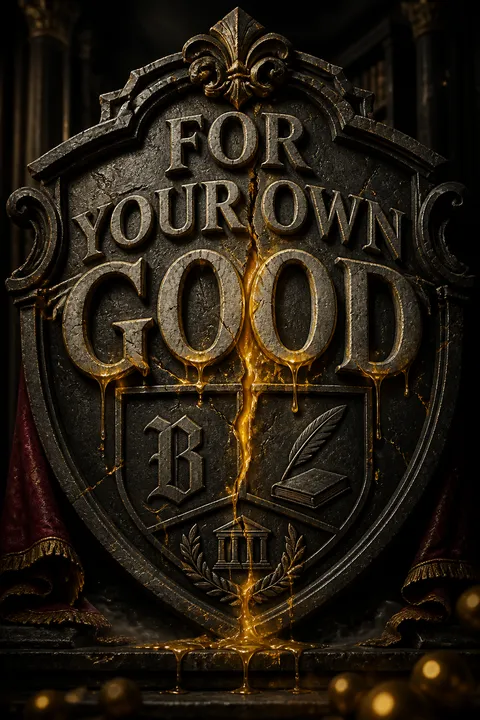
A dark satire of privilege, power, and the myth of benevolenceFor Your Own Good is a razor-sharp critique of elite institutions and the corrosive effects of unchecked ambition, entitlement, and the illusion of doing "what's best." Through its intricate plotting and psychologically rich characters, the novel exposes how systems designed to nurture can become engines of harm, especially when individuals justify cruelty as necessary for the greater good. The use of poison as both a literal and metaphorical device underscores the insidiousness of toxic cultures, where harm is often hidden beneath a veneer of excellence and care. The story's shifting perspectives and unreliable narrators force readers to question appearances and confront uncomfortable truths about complicity, blame, and the limits of institutional justice. Ultimately, the novel warns that true change requires not just new leaders or tighter controls, but a fundamental reckoning with the values and behaviors that perpetuate cycles of harm. The final note of hope—Zach's resolve to become a better kind of teacher—suggests that redemption is possible, but only if we are willing to see and break the patterns that bind us.
Review Summary
For Your Own Good is a darkly comedic thriller set at the elite Belmont Academy, featuring the diabolical Teacher of the Year, Teddy Crutcher. Most reviewers praised its compulsive readability, sharp humor, and entertaining cast of morally corrupt characters. Many highlighted the multiple POV structure and short chapters as page-turning strengths, though some felt these same elements diluted tension and mystery. The ending proved divisive. Overall, readers found it a wildly fun, if occasionally shallow, ride.
People Also Read


Characters
Teddy Crutcher
Teddy is the central figure, a teacher who believes he alone knows what's best for his students and colleagues. His resentment of privilege and hypocrisy masks a deep need for control and recognition. Teddy's psychological complexity is rooted in his outsider status at Belmont and his failed marriage, fueling his descent into sabotage and murder. He justifies his actions as necessary corrections, blurring the line between discipline and harm. Teddy's development is a study in self-deception, as his pursuit of "the greater good" leads to increasingly destructive choices. His relationships—with students, colleagues, and his absent wife—are marked by manipulation and emotional distance. Ultimately, Teddy is both a product and a perpetrator of Belmont's toxic culture.
Zach Ward
Zach is the son of wealthy, demanding parents, caught between their expectations and his own desires. Initially compliant and eager to please, Zach's experiences with Teddy and the school's pressures awaken a sense of injustice and resistance. His friendship with Courtney provides emotional grounding, while his interactions with Fallon draw him into the school's deeper mysteries. Zach's psychological journey is one of awakening and agency, as he moves from passive victim to active investigator. His development is marked by increasing skepticism, moral courage, and a willingness to challenge authority. By the end, Zach emerges as a survivor determined to break the cycle of harm.
Courtney Ross
Courtney is Zach's closest confidante, a fellow student under immense pressure from her mother and the school. Her arrest for her mother's murder makes her a symbol of the system's failures. Courtney's psychological resilience is tested by betrayal, isolation, and public scrutiny. Her relationship with Zach deepens into romance, providing mutual support and hope. Courtney's development is a testament to endurance and the search for justice, as she refuses to be defined by others' narratives. Her journey highlights the costs of parental ambition and the importance of solidarity.
Sonia Benjamin
Sonia is the heart of Belmont, a teacher who genuinely cares for her students and tries to shield them from the worst of the school's culture. Her kindness and competence make her a target for Teddy's resentment. Sonia's psychological profile is marked by guilt, self-doubt, and a relentless drive to help others. Her death is both a personal tragedy and a turning point for the community, exposing the dangers lurking beneath the surface. Sonia's legacy endures as a reminder of what is lost when good people are destroyed by toxic systems.
Fallon Knight
Fallon is a former star student whose life is derailed by Teddy's sabotage. Her return to Belmont as a substitute teacher is driven by a desire for justice and revenge. Fallon's psychological complexity lies in her blend of intelligence, anger, and vulnerability. Her surveillance of Teddy and alliance with Zach make her a formidable opponent, but her inability to escape the past ultimately leads to her downfall. Fallon's development is a cautionary tale about the costs of obsession and the difficulty of escaping cycles of harm.
Frank Maxwell
Frank is a well-meaning but flawed teacher whose own moral failings and guilt drive him to confess to crimes he didn't commit and, ultimately, to take justice into his own hands. His psychological journey is one of self-doubt, religious searching, and eventual vigilante action. Frank's transformation from teacher to minister and avenger reflects the corrosive effects of guilt and the desperate search for redemption. His actions raise questions about justice, forgiveness, and the limits of institutional solutions.
James and Pamela Ward
Zach's parents embody the culture of entitlement and achievement at Belmont. Their relentless pursuit of success for their son blinds them to his needs and the harm they cause. Psychologically, they are driven by fear of failure and a belief in their own righteousness. Their relationship with Zach is transactional, marked by manipulation and conditional support. They serve as both products and perpetuators of the system's dysfunction.
Ms. Marsha
Ms. Marsha is the long-serving administrator who knows all the school's secrets. Her loyalty and competence make her indispensable, but also vulnerable to being framed. Psychologically, she is pragmatic, cautious, and deeply invested in the school's traditions. Her arrest and downfall highlight the dangers of misplaced trust and the ease with which institutions sacrifice individuals for self-preservation.
Joe
Joe is the school's custodian, a background figure who becomes a convenient target for blame. His psychological profile is marked by resignation and invisibility, reflecting the class divisions at Belmont. Joe's fate underscores the vulnerability of those without power or voice in elite institutions.
Ingrid Ross
Ingrid is the powerful head of the parents' Collaborative, whose death sets off the chain of events leading to the school's unraveling. Her psychological makeup is defined by ambition, control, and a willingness to wield power ruthlessly. Ingrid's fate is both a consequence of her own actions and a symbol of the system's self-destructive tendencies.
Plot Devices
Multiple Perspectives and Unreliable Narration
The novel employs a rotating cast of narrators—Teddy, Zach, Sonia, Fallon, Frank, and others—each offering a distinct perspective on events. This structure creates dramatic irony, as readers are privy to secrets unknown to other characters. The unreliable narration, especially from Teddy, blurs the line between truth and self-justification, forcing readers to question motives and reality. The interplay of perspectives heightens suspense and deepens psychological complexity.
Poison as Metaphor and Mechanism
Poison operates both as a literal murder weapon and as a metaphor for the school's culture. Teddy's tampering with coffee and food mirrors the insidious spread of resentment, ambition, and harm throughout Belmont. The escalating use of poison reflects the breakdown of trust and the dangers of unchecked power. The motif of poison also underscores themes of culpability, complicity, and the difficulty of identifying true sources of harm.
Social Media and Surveillance
The novel integrates social media, fake profiles, and surveillance—both digital and physical—as tools for manipulation, investigation, and control. Teddy's online monitoring of students, Fallon's hidden cameras, and the school's new security system all reflect the pervasive anxiety about privacy and reputation. These devices amplify the sense of paranoia and the impossibility of true safety in a world obsessed with image and information.
Red Herrings and Misdirection
The narrative is structured around a series of red herrings—false confessions, planted evidence, and convenient suspects—that mislead both characters and readers. Teddy's framing of others, Frank's confession, and the authorities' eagerness for closure all serve to obscure the truth. This device critiques the failures of institutional justice and the dangers of narrative convenience.
Cycles of Harm and Redemption
The story is built on cycles: of ambition, harm, blame, and attempted redemption. Characters repeat the mistakes of the past, even as they struggle to break free. The memorial, the succession of headmasters, and the recurring theme of "for your own good" all reinforce the difficulty of genuine change. The ending, with Zach's decision to become a teacher, offers a glimmer of hope that the cycle can be broken—but only with self-awareness and courage.
About the Author


Download PDF
Download EPUB
.epub digital book format is ideal for reading ebooks on phones, tablets, and e-readers.








































