
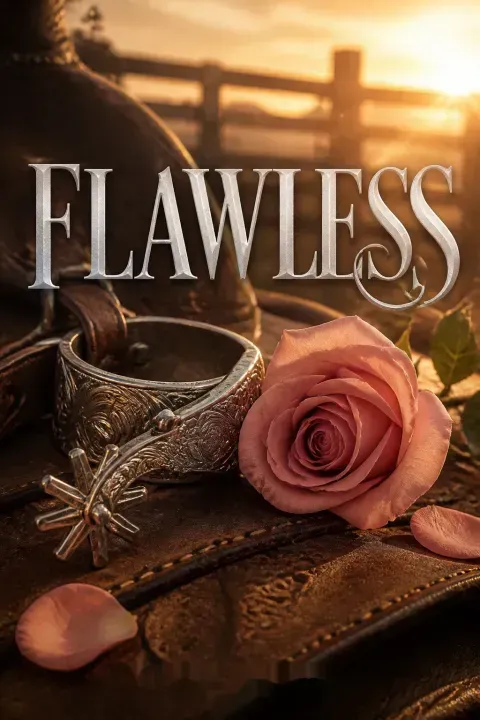


Plot Summary
Milk Scandal's Unlikely Consequence
In a Calgary boardroom, Summer Hamilton1 watches her father Kip3 play a damning video. Bull riding champion Rhett Eaton,2 the face of professional bull riding, has been caught on a hot mic declaring his hatred for milk, the product he is paid millions to endorse.
The footage then cuts to him punching a reporter who ambushed him in a parking lot. Kip,3 Rhett Eaton2's longtime agent, seethes: the Dairy King sponsorship is gone, and other sponsors may follow. Rhett Eaton2 needs a keeper for the next two months until the World Championships in Las Vegas, someone to polish his tarnished image.
Kip3's eyes land on Summer,1 his daughter, fresh from law school and eager to prove herself at Hamilton Elite. He announces she is exactly what Rhett Eaton2 needs: a full-time shadow, living at his ranch, traveling to every event, and ensuring he stays out of trouble.
This opening establishes the central conflict through a classic forced-proximity setup, but deeper than the rom-com premise lies a more interesting dynamic. Summer is a chronic people-pleaser who has spent her life trying to earn her place in a fractured family, while Rhett is a man who has built his identity on not caring what anyone thinks. The milk scandal functions as more than a plot device: it represents the tension between authentic self and public persona that both protagonists must navigate. Kip's decision to send his daughter, rather than a more experienced employee, reveals his own complicated motives, perhaps intuitively understanding that Summer needs this shakeup as much as Rhett does.
Wishing Well Ranch Welcome
Summer1 arrives at Wishing Well Ranch in a skirt and heeled loafers, looking comically out of place among the dusty fields and grazing cattle. Rhett2's father Harvey4 greets her with unexpected warmth, showing her to a main-floor bedroom and warning her that his youngest son will sulk like a child.
She finds Rhett2 working fence lines with his older brother Cade5 and young nephew Luke.13 When Cade5 begins asking pointed questions about why Rhett2 needs an agent living on the property, Summer1 smoothly lies, introducing herself as a junior agent learning the ropes.
She redirects the conversation by charming Luke13 with promises of M&M's mixed into popcorn, a diversion so effective that Cade5's interrogation derails entirely. Rhett2 watches this performance with grudging respect. He had expected a snitch; instead, Summer1 protected him from family humiliation without being asked.
Summer's first interaction with the Eaton family reveals her core competency: she reads people brilliantly and manages their emotions with surgical precision, a survival skill honed by navigating a stepmother who resented her existence and a half-sister who kept her at arm's length. Her instinct to protect Rhett, even when he has been nothing but hostile, signals the caretaking impulse that will define their dynamic. The ranch itself functions as a character, its open spaces and male-dominated chaos standing in stark contrast to the polished, cold perfection of Summer's upbringing. She is entering a world that operates on different rules, and her adaptability is immediately tested.
The First Whistle
At the Pine River arena, Summer1 experiences live bull riding for the first time. She watches Rhett2 mount a volatile bull called Later Gator with her heart lodged in her throat, her fingers clenched in the fabric of her skirt. He rides with an almost supernatural stillness, his body flowing with the animal's violent contortions until the buzzer sounds.
The score is a massive 93 points, but the crowd's response is muted, still punishing him for the milk controversy. Rhett2 stands alone in the dirt, shoulders dropped, and something in Summer1 refuses to let that stand. She produces a whistle so piercing it silences the section around her.
Rhett2's head snaps up, finds her face in the crowd, and his defeated expression transforms into startled wonder. Later that evening, Summer1 buys arnica cream and painkillers at a pharmacy, then spends an hour kneeling behind him on his hotel bed, massaging his injured shoulder.
The whistle is the first moment Summer acts purely on instinct rather than calculated professionalism, and it marks the beginning of her transition from handler to genuine ally. The image of Rhett, a world-class athlete who performs for thousands, looking dejected in the middle of an arena is striking: it externalizes his internal isolation. He is surrounded by people yet profoundly alone. Summer's whistle acknowledges him specifically, not the persona but the person beneath. Her subsequent caretaking, the pharmacy run and the massage, establishes a pattern where physical touch becomes their primary language before either of them has the vocabulary for what is developing between them.
One Bed, Two Histories
When the heater in Summer1's hotel room fails and the hotel has no vacancies, Rhett2 insists she take his bed. He tries to sleep on the floor, but his injured shoulder makes it impossible. She finally orders him into the bed beside her. In the darkness, they exchange the stories that shaped them.
Summer1 reveals she is the product of Kip3's affair with the family's nanny, a woman who signed over custody and returned to her home country, leaving Summer1 to be raised by a resentful stepmother who pitted her against her half-sister Winter.8 She survived a congenital heart defect and a surgery that went wrong, spending years in hospitals where Kip3 never left her side.
Rhett2 confesses his mother died giving birth to his younger sister Violet; he has no memories of her, only a void where maternal love should have been. When Summer1's freezing feet brush his legs, he tangles them with his own, and they fall asleep holding hands.
The bed-sharing scene is a masterclass in intimacy building through vulnerability exchange. Both characters offer their origin wounds, the foundational hurts that shaped their respective defense mechanisms: Summer's overachieving people-pleasing and Rhett's devil-may-care bravado. Summer's confession that she was born a burden illuminates her entire psychology: she has spent her life trying to be useful enough, helpful enough, good enough to justify her existence. Rhett's admission that he missed out on having a mother reveals the void beneath his attention-seeking behavior. The physical gesture of him warming her feet is quietly profound, a caretaking act from a man who claims not to care about anyone, offered to a woman who has never let anyone take care of her.
The Parking Lot Gambit
A shoulder MRI at a Calgary hospital brings Summer1 and Rhett2 face to face with Winter,8 Summer1's half-sister and a surgical resident. Winter,8 with practiced cruelty, announces that Summer1 had Rhett2's Wranglers advertisement displayed on her bedroom wall throughout high school.
The humiliation is swift, but Rhett2 deflects it with a wink and a pointed remark that deflates Winter8's malice. Outside, Summer1 spots her ex, Rob Valentine,9 waiting in his sports car with a vanity license plate. She explains the complicated truth: Rob9 was her heart surgeon, the man who saved her life, then began a secret relationship with her when she turned eighteen, only to discard her and marry Winter8 years later.
He resurfaces whenever he senses Summer1 moving on. Rhett2 offers a tactic: he cups her face and kisses her thoroughly in the parking lot, a performance for Rob9 that becomes genuine the moment their lips meet.
This kiss operates on multiple levels simultaneously: as revenge theater, as protective posturing, and as a dam breaking on genuine desire. Winter's public outing of Summer's teenage crush serves as a kind of emotional strip-mining, exposing something tender and private for the purpose of humiliation. Rhett's immediate pivot to protection, his willingness to be used as a prop in Summer's drama with Rob, reveals a generosity beneath his prickly exterior. The setting is deliberate: the hospital where Summer nearly died, where Rob held power over her vulnerable body, now becomes the site where she begins reclaiming her agency. The kiss itself betrays Rhett; what begins as showmanship becomes something uncontrolled and real.
Tractor Paper and Horseback Rescue
Summer1 learns that Rhett2 and his brothers have a long-standing feud with the neighboring Jansen family. When Cade5 discovers the Jansens parked a tractor on Eaton property, Beau6 hatches a plan to toilet-paper the offending machinery.
The three brothers ride out, cover the tractor in paper, and then Cade5 and Beau6 flee on horseback when the Jansens appear, leaving Rhett2 hiding inside the cab. Summer,1 hearing the commotion, gallops out on Rhett2's horse wearing a white dress and snakeskin boots, furious at their recklessness. She reams out Cade5 and Beau6 before finding Rhett2 walking home across the fields.
He rides double behind her, his arms wrapped around her waist, and at the fence line afterward he pulls her into a hug that nearly becomes a kiss. She stops it, telling him she cannot manage athletes if she hooks up with them and that he needs to find someone else to play this game with.
This sequence crystallizes the tension between Summer's professional identity and her growing feelings. Her fury at the brothers is not just about the risk of bad publicity; it is genuine fear for Rhett's safety disguised as professional concern. The image of her galloping to his rescue, white dress billowing, inverts the traditional damsel-in-distress trope: she is the one charging into danger to save him. Rhett's instinct to hold her afterward, to pull her into his body at the fence line, reveals how thoroughly his resistance has crumbled. Summer's retreat, her insistence that he find someone else, is the last stand of her people-pleasing, rule-following self before the dam breaks completely.
The Body Shot Reckoning
After Rhett2 wins another event, the riders gather at a bar where rival Emmett Bush11 places his cowboy hat on Summer1's head without explaining the unwritten rule: wear the hat, ride the cowboy. Rhett2's reaction is volcanic. He storms across the room, knocks the hat to the floor, and warns Emmett11 away with genuine menace.
Rather than retreating, Summer1 meets his intensity with her own. She tucks a shot glass between her breasts, sprays a line of whipped cream up her surgical scar, and dares him to stop talking and act. Rhett2 obliges in front of the entire bar, licking the cream from her skin with deliberate slowness while his hands grip her waist.
He then pulls her out of the bar and back to their hotel, where she tells him to stop being a gentleman and ruin her. He confesses he has been obsessed with her since the boardroom and has not wanted anyone else since. They spend the night together.
The body shot scene crystallizes the central erotic tension of their relationship: Summer's need to be wanted openly, unashamedly, and Rhett's hunger to claim her publicly. Her choice to spray whipped cream along her surgical scar is psychologically significant. The scar is physical evidence of her vulnerability, what almost killed her, what Rob held power over. By incorporating it into a sexually charged public act, she transforms it from a site of shame into something deliberately provocative. Rhett's compliance, his willingness to perform this act in front of an audience, communicates something his words have not: he is not embarrassed by her, not hiding her. She is not a dirty secret to him, which is all Rob ever allowed her to be.
Chaps, Constellations, and a Public Kiss
The relationship deepens quickly. Rhett2 presents Summer1 with the custom charcoal chaps she admired weeks earlier, admitting he bought them because he noticed her longing and remembered her saying she had to quit riding when her heart condition worsened.
She models them wearing nothing underneath, and afterward Rhett2 traces the freckles scattered across her back, telling her they look like constellations. He writes the word "Mine" by connecting the dots with a pen, an act of tender possession that leaves her breathless.
At The Railspur on Honky Tonk Sunday, Rhett2 cuts in on Beau,6 who is two-stepping with Summer,1 and kisses her openly on the dance floor while half the town watches. Summer1 stiffens at first, conditioned by years with Rob9 to hide her relationships, but Rhett2 holds her chin and tells her he does not care who sees. There is no one he would rather ruin his reputation with.
The chaps represent something more significant than a simple gift: they are proof of attunement. Rhett, who presents as self-absorbed, has been watching Summer with forensic attention, cataloging her desires, her history, her losses. The chaps restore something her illness took from her, an identity as a rider that she abandoned during her hospital years. The 'Mine' written on her back is possessive but also reverent, mapping her body like a night sky, something vast and beautiful that he wants to spend time understanding. The public kiss at The Spur marks a definitive pivot. Summer has spent her life being hidden, first as a shameful secret of her father's affair, then as Rob's clandestine lover. Rhett's insistence on visibility is its own form of healing.
A Heart Attack's Fallout
A phone call during dinner brings catastrophe. Winter8 informs Summer1 that Kip3 has suffered a heart attack, but Winter8 waited hours to notify her. Summer1 races to the hospital with Rhett,2 where they encounter both Winter8 and Rob,9 now married. When Rob9 snarls at Summer1 to keep her mouth shut, Rhett2's control shatters.
He punches Rob9 in the face, and in the chaos that follows, he reveals Rob9's history with Summer:1 the secret relationship that began when she was his teenage patient, the years of manipulation, the marriage to Winter8 while continuing to string Summer1 along. Winter8's face goes white with shock.
Summer1 watches her deepest, most shameful secret detonate in a hospital hallway, exposed without her consent. Though Rob9 deserved consequences, Summer1 is devastated that Rhett2 took the choice from her and that Winter8 learned the truth through public humiliation rather than private confession.
This scene operates as a triple rupture: Winter's cruelty in delaying the news, Rob's ongoing predation and contempt, and Rhett's decision to weaponize Summer's secret without her consent. Rhett's violence, while satisfying on a visceral level, demonstrates the shadow side of his protective instinct: he acts on his own definition of justice without consulting the person he claims to protect. Summer's rage at him afterward is not about Rob's deserved comeuppance but about autonomy. After a lifetime of other people dictating the terms of her existence, from her mother's abandonment to Marina's resentment to Rob's exploitation, having Rhett seize control of her story, even in her defense, replicates a familiar wound. Winter's devastation adds another layer of tragedy: Summer genuinely loves her sister and never wanted to hurt her this way.
Cruel Words, Walking Away
The next night, Theo Silva,10 the young rider Rhett2 mentors, gets bucked off and lies unconscious in the dirt. As the bull charges back toward Theo10's motionless body, Rhett2 vaults the fence and throws himself over the boy, absorbing the full impact of two thousand pounds of animal.
Summer1 watches the footage on a livestream and races to the emergency room, where she finds Rhett2 cradling broken ribs, still refusing proper medical attention. When she begs him to stop riding, to value his life, he lashes out with deliberate cruelty. He tells her they only slept together for a couple of weeks, echoing the exact words Rob9 once used to dismiss her.
Summer1 freezes. The parallel is unmistakable. She walks away, tears cutting tracks through her makeup, while Rhett2 instantly recoils from his own words, knowing he has become the thing he hated most. But the damage is done, and she does not look back.
Rhett's cruelty here is a defense mechanism so transparent it almost functions as a confession. By invoking Rob's language, he is not comparing Summer to a casual fling; he is comparing himself to the man who hurt her worst, revealing his deepest fear: that he is no better than Rob, that he will inevitably fail the people who care about him. His self-sacrifice saving Theo is the external manifestation of an internal script: he is only valuable when he is being useful, taking hits, absorbing damage. Summer's plea that he stop riding is heard by him not as love but as the same dismissal his family has always offered, that his career is trivial, that he should grow up. His response is to push her away before she can leave him, to be the abandoner rather than the abandoned.
Two Kinds of Firing
In the aftermath, Cade5 corners Rhett2 in the ranch kitchen and speaks more honestly than he ever has. He explains that the family does not mock Rhett2's career because they think it is foolish but because they love him and are terrified of losing him the way they lost their mother.
He tells Rhett2 that Summer1 transformed him, that he was happier and less lost with her, and that he needs to decide what he actually wants rather than filling time. Meanwhile, Kip3 fires Summer1 from Hamilton Elite in his hospital room, telling her his real legacy is teaching her to pursue passion, not obligation.
He insists she was never a burden, never a mistake, and the only way she could disappoint him is by not living fully. Rhett2 then appears at Summer1's office to apologize, telling her he loves her and will keep coming back no matter how long it takes. She listens but does not immediately respond.
Both protagonists receive the same medicine from different sources: the truth that their identities have been constructed around false premises. Cade's speech reframes Rhett's entire family history, revealing that what he interpreted as disapproval was love expressed through worry, the only language a family of emotionally constipated men could manage. Kip's act of firing Summer is the most profound gesture of fatherly love in the novel: he releases her from the debt she believed she owed, revealing that her value to him was never transactional. Together, these confrontations clear the psychological ground for both characters to choose each other freely, not from need or obligation or fear, but from genuine desire for a shared future.
The Vegas Stands
Summer1's best friend Willa7 books them last-minute flights to Las Vegas for the World Championships. Summer1 arrives in the stands wearing white, not as an employee but as a woman who has finally admitted she is in love. When Rhett2 climbs onto the chute to mount a notoriously dangerous bull called Filthy McNasty, he feels fear for the first time in his career.
He looks up, sees Summer1 in the crowd, and watches her mouth the words: I love you. He pulls his hand from the rope, climbs off the bull, tosses his helmet aside, and walks away from a potential third world title.
He pushes through the arena until he reaches her row. He places his cowboy hat on her head in front of thousands of spectators and thousands more watching on television, then kisses her. He tells her that hearing her say she loves him is the biggest win of his life. He retires on the spot, publicly and without regret.
Rhett's retirement is not a surrender but a recalibration of what constitutes victory. For over a decade, he has measured his worth in eight-second increments, gold buckles, and sponsor checks, chasing an elusive feeling of enough-ness that never arrived because he was filling the wrong void. Summer's presence in the stands represents something unprecedented in his career: someone who showed up for him, not for the spectacle or the celebrity, but for the man beneath. Her mouthed confession, wordless across a crowded arena but perfectly understood, mirrors the way they have communicated all along, through gestures, touches, shared silences. When Rhett places his hat on her head, the same hat he once told her signaled possession and intention, he is making a public declaration that his identity is no longer 'bull rider' but something more expansive and more true.
Epilogue
One year later, Rhett2 returns from a coaching trip to find Summer1 sitting on the steps of their new house, beside his old rusted truck, now fully restored. She has spent his absences secretly having it rebuilt, painted a particular shade of steely blue that matches his mother's eyes in his favorite photograph.
He is speechless. After they make love, he straddles her back and writes four words by connecting the freckles: 'Will you marry me?' She sees the reflection in the bathroom mirror and says yes before he can produce the ring, a canary diamond solitaire with star-shaped accents.
They celebrate at the main house with Harvey,4 Cade,5 Luke,13 and the rest of the Eatons. Summer1's gym, Hamilton Athletics, thrives, training professional athletes including hockey players and bull riders. Rhett2 coaches on the WBRF circuit, coming home to her between events, finally certain of who he is and what he wants.
The restored truck functions as the novel's final and most elegant symbol. Rhett's original plan was to paint it the color of his mother's eyes, a tribute to a woman he never knew, whose absence shaped him. Summer completing this project, selecting the precise shade by studying old photographs, represents her unique ability to understand what Rhett needs before he can articulate it. The truck also symbolizes restoration more broadly: Rhett's relationship with his own history, Summer's healing from Rob's manipulation, and the creation of a shared future that honors both their pasts. The proposal via freckle-constellation reprises their most intimate private ritual, the mapping of her body as a night sky, but transforms it into a permanent commitment. Summer does not hesitate this time. Her yes is immediate, unconflicted, the answer of a woman who has finally learned to want things for herself.
Analysis
Flawless is, at its core, a novel about the difference between being wanted and being chosen. Both protagonists have spent their lives mistaking one for the other. Summer,1 the accidental daughter of an affair, raised by a stepmother who resented her existence, has always conflated being useful with being loved. She earned her place through achievement, through caretaking, through never asking for anything for herself. When Rob9 kept her as a secret, she accepted it because secrecy was her native language. What Rhett2 offers her, what finally breaks through her defenses, is not just desire but visibility. He wants to be seen with her. He kisses her on a crowded dance floor. He places his hat on her head in front of thousands. He makes her un-hideable. Rhett2's parallel wound is the inverse: he has been visible his entire career, performing for crowds, but never felt truly seen. His family's concern registered as dismissal because he could not recognize love that expressed itself as fear. His mother's death left him with a void he tried to fill with adrenaline, applause, and sexual conquest, none of which ever satisfied because none of them required him to be vulnerable. Summer1 sees him, not the persona but the man beneath, the one who is hurting and scared and desperate to matter. The novel's genius lies in its refusal to treat these wounds as things the lovers heal in each other. Instead, they create conditions where healing becomes possible. Summer's father3 fires her, releasing her from the imagined debt that shaped her career. Cade5 finally tells Rhett2 the truth about his family's love. Only after these external confrontations can the protagonists choose each other freely, not from need or compensation but from genuine desire for a shared future. The bull riding itself functions as the perfect metaphor for Rhett2's internal struggle: an eight-second battle for control over something massive and dangerous that could kill you at any moment. His retirement is framed not as failure but as graduation. He has won enough. He has proven enough. What he wants now cannot be measured in points or buckles. The epilogue's restored truck, painted the blue of his mother's eyes by a woman who studied old photographs to get the shade right, closes the novel's emotional loop. The mother whose absence defined him is honored by the woman whose presence redefined him. The past is not erased but integrated, and the future is something they build together on land where they first fell in love.
Review Summary
Flawless receives mixed reviews, with an overall rating of 4.05 out of 5. Some readers praise the chemistry between the main characters and the small-town cowboy romance atmosphere. Others criticize the predictable plot, underdeveloped characters, and cringeworthy dialogue. The book is described as a fun, fluffy romance by some, while others find it boring and lacking depth. Many readers express excitement for the series despite their criticisms, particularly looking forward to stories featuring side characters introduced in this first installment.
People Also Read




Characters
Summer Hamilton
Ambitious agent turned accidental handlerA twenty-five-year-old law school graduate working at her father3's talent agency, Hamilton Elite. Summer is a chronic people-pleaser whose entire psychology was shaped by being the product of her father3's affair with the family nanny. Her mother signed away custody and returned to her home country, leaving Summer to be raised by a resentful stepmother, Marina, who made her feel like a burden, and a half-sister, Winter8, who kept her at a cold distance. Summer survived a congenital heart defect and a surgery that went wrong, spending years in hospitals where her father Kip3 never left her side, creating a fierce loyalty and an unconscious belief that she owes him her career in repayment. She dresses impeccably, works relentlessly, and masks her insecurities behind a poised, sometimes smug exterior. Beneath the polish, she craves being chosen openly, not hidden as a shameful secret.
Rhett Eaton
Champion bull rider facing scandalA thirty-two-year-old two-time World Champion bull rider at the top of his sport but nearing the end of his career. Rhett is the youngest of four siblings, raised on Wishing Well Ranch by a single father4 after his mother died giving birth to his sister Violet. He has no memories of her, only a void that he has spent his life trying to fill with attention, adrenaline, and achievement. His public persona is cocky, charming, and reckless, a ladies' man who answers to no one. Privately, he is far more sensitive than he lets on, deeply wounded by his family's apparent disapproval of his career, which he misreads as mockery rather than the fear-driven love it actually is. He is physically breaking down from years of untreated injuries but refuses to stop riding because he has no idea who he would be without the sport. He longs for genuine connection but has never let anyone close enough to hurt him.
Kip Hamilton
Ruthless agent, devoted fatherSummer1's father and Rhett2's longtime agent, a bombastic, foul-mouthed wheeler-dealer who built Hamilton Elite from nothing. Kip is a walking contradiction: a man who cheated on his wife and fractured his family, yet spent years sleeping in a hospital chair beside his sick daughter1. He is sharp, manipulative in business, and fiercely protective of the people he loves. His relationship with Summer1 is the healthiest in her life, even when he expresses it through teasing and tough love. He understands Rhett2 better than Rhett2 realizes, seeing past the bravado to the decent man beneath. His heart attack becomes a catalyst for the entire family to confront buried truths, and his decision to fire Summer1 is ultimately an act of profound fatherly liberation, releasing her from an imagined debt she never actually owed.
Harvey Eaton
Wise patriarch of Wishing Well RanchRhett2's silver-haired father, a warm-hearted rancher who raised four children alone after his wife died in childbirth. Harvey greets Summer1 with genuine kindness from her first moment at the ranch, making her feel welcome in a way her own home never did. He is the emotional center of the Eaton family, patient and perceptive, able to see the truth of his sons' dynamics without interfering. He never remarried, still devoted to his late wife's memory, and his gentle guidance often comes wrapped in dry humor. He bonds with Summer1 over morning coffees and easy conversation, recognizing in her the same caretaking instincts that define his own approach to family.
Cade Eaton
Grumpy older brother, single fatherRhett2's eldest brother, a stoic rancher who took on enormous responsibility after their mother's death. Cade is divorced, raising his young son Luke13 alone while running the day-to-day operations of Wishing Well Ranch. He communicates primarily through scowls and grunts, but beneath the gruff exterior is a man who has spent his entire life worrying about his younger siblings. His apparent disapproval of Rhett2's career masks genuine terror that he will lose another family member to tragedy. He delivers the novel's most emotionally honest speech when he finally tells Rhett2 that the family's criticism comes from love, not dismissal. He is protective, dependable, and quietly observant, often seeing truths that others miss.
Beau Eaton
Charming middle brother, special forcesRhett2's middle brother, a member of Canada's elite JTF2 special forces unit. Beau is the family's sunshine: playful, giddy, and impossible to stay angry at. He flirts with Summer1 shamelessly, partly to needle Rhett2 and partly because it is simply his nature. His job is secretive and dangerous, and the family never knows where he is or what he is doing, but he masks whatever darkness he carries behind relentless humor. He is smarter and more perceptive than his goofy persona suggests, and his bond with childhood friend Jasper Gervais12, a professional hockey goaltender, is one of the novel's steady background relationships.
Willa Grant
Summer's fiercely loyal best friendSummer1's best friend since their teenage years, when they met at riding lessons. When Summer1's heart condition forced her to quit riding, Willa kept visiting her in the hospital, sharing pictures and videos and refusing to let the friendship fade. She is a tall redhead with a flair for the dramatic, an unabashed flirt who constantly encourages Summer1 to be less responsible and more reckless. She manages her brother's bar in Chestnut Springs while trying to figure out her own path. Willa is the one who books the spontaneous flights to Las Vegas that bring Summer1 back to Rhett2, proving herself the kind of friend who will drag you toward your own happiness when you are too scared to move.
Winter Valentine
Summer's estranged half-sisterA surgical resident and Summer1's older half-sister, raised by their shared father Kip3 and her mother Marina. Winter is cool, calculating, and passive-aggressive, shaped by a mother who spent years poisoning her against Summer1. She is not outright cruel but delivers her barbs with surgical precision, as when she publicly reveals Summer1's teenage crush on Rhett2. She married Rob Valentine9 without knowing his history with Summer1, making her both an antagonist and a victim in the story's central secret. Her discovery of Rob9's betrayal devastates her, and her pregnancy adds another layer of tragedy to the family fracture. She refuses to speak to Summer1 afterward, leaving their relationship in painful limbo.
Rob Valentine
Predatory ex-lover, Winter's husbandA cardiothoracic surgeon who performed Summer1's life-saving heart procedures when she was a teenager, then began a secret sexual relationship with her once she turned eighteen. He discarded her to marry her sister Winter8, but continued stringing Summer1 along for years with occasional calls and suggestive comments, a manipulation tactic designed to keep her silent about their past. He is smug, polished, and contemptuous of Rhett2's rural background, representing everything Summer1 is trying to escape.
Theo Silva
Rhett's young protégé in bull ridingA twenty-two-year-old bull rider whose father, a legendary Brazilian champion, was Rhett2's mentor before a bull killed him. Rhett2 has taken Theo under his wing, coaching him, teasing him, and pushing him to be better. Theo is talented but reckless, refusing to wear a helmet despite the dangers. His near-fatal accident, when he is knocked unconscious and nearly gored, becomes the catalyst for Rhett2's own self-sacrifice and subsequent emotional unraveling. Theo eventually wins his first world title after Rhett2's retirement.
Emmett Bush
Rhett's smarmy rival on the circuitA fellow bull rider and Rhett2's closest competitor in the standings. Emmett presents a wholesome, all-American image with his blond hair and blue eyes, but his behavior toward women is predatory. He puts his cowboy hat on Summer1 without explaining the rule that wearing the hat means riding the cowboy, triggering Rhett2's jealous fury. He serves as a foil to Rhett2, a reminder of the reputation Rhett2 is trying to outgrow.
Jasper Gervais
Childhood friend, professional hockey goalieA professional hockey goaltender who grew up alongside the Eaton brothers in Chestnut Springs and is practically family. Jasper is quiet, introspective, and wears a perpetual team cap over shaggy hair. He is Beau6's best friend and a steady, calming presence. He agrees to attend Rhett2's rodeo events when the rest of the family won't, and he is present for several key moments, including the dinner interrupted by Kip3's heart attack.
Luke Eaton
Cade's mischievous young sonCade5's almost-five-year-old son, a bright and energetic boy who runs his grumpy father into the ground. Luke adores his Uncle Rhett2 and already wants to be a bull rider. His innocent questions and observations often defuse tense family moments, and his presence reminds the Eaton brothers of what they are protecting. He bonds quickly with Summer1, who enchants him with the promise of M&M's in his popcorn.
Plot Devices
The WBRF Bull Riding Circuit
Career backdrop and identity crucibleThe professional bull riding circuit serves as both the literal setting for much of the novel and the central metaphor for Rhett2's identity crisis. Every weekend, riders compete for points leading to the World Championships in Las Vegas, risking their lives for eight-second rides scored out of one hundred points. For Rhett2, the circuit represents his entire adult identity: the only thing he is good at, the only place he feels in control, and the source of the attention he has craved since childhood. The physical toll it takes on his body, the constant travel, the buckle bunnies, and the sponsor obligations create a lifestyle fundamentally incompatible with the stable, present love Summer1 both offers and deserves. His eventual retirement is not just a career change but an identity death and rebirth.
Summer's 'Last Moments' Philosophy
Coping mechanism turned compassDuring her years in the hospital, Summer1 developed a personal philosophy to manage her fear of death: in any difficult moment, she asks herself, 'If these were your last moments on earth, would you go happy?' This question becomes a touchstone throughout the novel. She shares it with Rhett2 during an early vulnerable moment, and he later turns it back on her when asking what she truly wants from him. The phrase recurs in pivotal scenes: when she decides to kiss him, when she decides to sleep with him, when she flies to Vegas, and finally when Rhett2 chooses to retire rather than risk his last moments being on a bull instead of with her. It transforms from a survival tactic born of illness into a guide for living authentically.
Rhett's Untreated Injuries
Physical manifestation of self-destructionRhett2 enters the novel with a shoulder injury that requires surgery he refuses to get, and over the course of the story he adds broken ribs from saving Theo10. His body is a map of accumulated damage, each injury a badge of his refusal to stop, his inability to imagine an identity beyond bull riding. Summer1's instinctive caretaking, her massages, her pharmacy runs, her insistence that he see doctors, becomes the first language of love between them. His injuries also create the central conflict of the climax: when Summer1 begs him to value his life, he hears her concern as the same dismissal his family has always offered, and he lashes out to push her away before she can leave him first.
The Custom Leather Chaps
Symbol of being truly seen and supportedAt a rodeo trade show, Summer1 admires a pair of handcrafted charcoal leather chaps with ivory stitching and silver detailing, but she hesitates at the price and walks away. Rhett2 buys them secretly, remembering that she told him she had to quit riding when her heart condition worsened. When he presents them to her days later, the gift communicates that he has been paying attention, that he sees her not just as his handler but as a woman with her own lost passions. The chaps represent restoration: of her identity as a rider, of her sense of worthiness to want things for herself, and of her trust that a man can support her dreams rather than treat her as an accessory to his. She models them for him wearing nothing underneath, an act of reclaimed confidence.
The Freckles on Summer's Back
Intimate mapping and eventual proposal canvasRhett2 becomes fascinated by the freckles scattered across Summer1's back, telling her they remind him of constellations, like binary stars stuck in each other's orbit by invisible forces. He traces them with his fingers, then one night writes the word 'Mine' by connecting the dots with a pen. This private ritual becomes their secret language of belonging. In the epilogue, one year later, Rhett2 uses the same method to propose, writing 'Will you marry me?' across her back and sending her to the mirror to read it. The freckles transform from a physical feature into a map of their relationship, a testament to how carefully he has studied her and how permanently he wants to mark his place in her life.
FAQ
Synopsis & Basic Details
What is Flawless about?
- Enemies-to-lovers romance: The story centers on the evolving relationship between Summer Hamilton, a newly hired agent, and Rhett Eaton, a professional bull rider with a tarnished reputation.
- Public image redemption: Summer is tasked with managing Rhett's public image after a series of scandals, leading to a clash of personalities and a slow-burn romance.
- Personal growth and self-discovery: Both characters undergo significant personal growth as they navigate their careers, family dynamics, and feelings for each other.
Why should I read Flawless?
- Compelling character dynamics: The chemistry between Summer and Rhett is palpable, with their banter and evolving relationship driving the narrative.
- Emotional depth and vulnerability: The story explores themes of vulnerability, self-discovery, and the challenges of balancing personal desires with professional responsibilities.
- Engaging small-town setting: The backdrop of Chestnut Springs adds charm and intimacy to the story, enhancing the characters' personal journeys.
What is the background of Flawless?
- Contemporary small-town setting: The story is set in the fictional town of Chestnut Springs, Alberta, a place where rural life and rodeo culture are prominent.
- Professional bull riding world: The narrative delves into the world of professional bull riding, showcasing the high stakes, intense competition, and the challenges faced by athletes.
- Family and community influence: The characters' actions and decisions are heavily influenced by their family dynamics and the close-knit community they live in.
What are the most memorable quotes in Flawless?
- "The harder they buck, the happier I am.": This quote encapsulates Rhett's fearless and competitive nature, highlighting his love for the challenge of bull riding.
- "You're pure magic up there. Of course, you will.": Summer's words to Rhett after a ride show her genuine belief in his abilities and her growing affection for him.
- "I'm not possessive. I am protective. And I'll never stop protecting you.": Rhett's declaration to Summer reveals his deep-seated need to care for her, even when he struggles to express his feelings.
What writing style, narrative choices, and literary techniques does Elsie Silver use?
- Dual POV narrative: The story is told from both Summer and Rhett's perspectives, allowing readers to understand their inner thoughts and feelings.
- Fast-paced dialogue and banter: The dialogue is witty and engaging, with a focus on banter and playful teasing between the main characters.
- Emotional depth and vulnerability: The author uses internal monologues and emotional scenes to explore the characters' vulnerabilities and personal struggles.
Hidden Details & Subtle Connections
What are some minor details that add significant meaning?
- The rust bucket truck: Rhett's old truck, initially a symbol of his past, becomes a symbol of his connection with Summer when she restores it, representing their shared history and future.
- The silver ring and bracelet: Rhett's consistent wearing of these items hints at his desire for stability and connection, contrasting with his public image.
- Summer's choice of clothing: Her initial "prissy" outfits contrast with her later adoption of more casual, comfortable clothing, symbolizing her personal growth and acceptance of her new environment.
What are some subtle foreshadowing and callbacks?
- The mention of Summer's past riding experience: This seemingly throwaway detail foreshadows her later comfort and skill on horseback, as well as her connection to the ranching lifestyle.
- The repeated use of "Princess": Initially a mocking nickname, it evolves into a term of endearment, reflecting the changing dynamic between Rhett and Summer.
- The significance of the wishing well: The well, initially a symbol of childhood wishes, becomes a place where Rhett and Summer share a vulnerable moment, hinting at their deeper connection.
What are some unexpected character connections?
- Summer and Theo's shared understanding: Despite their different backgrounds, Summer and Theo connect over their shared understanding of Rhett's complexities and the pressures he faces.
- Cade and Summer's mutual respect: Despite Cade's initial gruffness, he develops a respect for Summer's strength and determination, recognizing her positive influence on Rhett.
- Jasper and Summer's quiet bond: Their shared experience of being clients of Kip Hamilton creates a subtle connection, highlighting the small-world nature of their lives.
Who are the most significant supporting characters?
- Harvey Eaton: Rhett's father, provides a sense of stability and wisdom, offering guidance and support to both Rhett and Summer.
- Theo Silva: A younger bull rider and Rhett's protégé, serves as a foil to Rhett, highlighting his growth and mentorship abilities.
- Willa Grant: Summer's best friend, provides a source of support and humor, offering a contrasting perspective on Summer's life and choices.
Psychological, Emotional, & Relational Analysis
What are some unspoken motivations of the characters?
- Rhett's need for validation: Despite his outward confidence, Rhett seeks validation through his bull riding career, driven by a desire to prove himself and maintain his identity.
- Summer's desire for control: Summer's need to manage Rhett's image stems from a deeper desire for control, rooted in her past experiences and a need to prove her worth.
- Kip's fear of losing control: Kip's overbearing nature and attempts to control Rhett and Summer stem from a fear of losing control, rooted in his past experiences and a desire to protect his loved ones.
What psychological complexities do the characters exhibit?
- Rhett's internal conflict: Rhett struggles with the conflict between his desire for freedom and his need for connection, often masking his vulnerabilities with bravado.
- Summer's people-pleasing tendencies: Summer's desire to please others and her fear of disappointing them stem from her past experiences and a need for validation.
- Winter's passive-aggressive behavior: Winter's passive-aggressive behavior and attempts to undermine Summer stem from her own insecurities and a need for control.
What are the major emotional turning points?
- The shared kiss: The kiss between Rhett and Summer forces them to confront their feelings and the blurred lines between their professional and personal lives.
- The hospital confrontation: The hospital scene with Rob and Winter forces Summer to confront her past and the manipulative dynamics of her previous relationship.
- Rhett's retirement: Rhett's decision to retire from bull riding is a major turning point, signifying his willingness to prioritize his relationship with Summer over his career.
How do relationship dynamics evolve?
- From animosity to attraction: Rhett and Summer's relationship evolves from initial animosity and resistance to a deep and passionate connection.
- From professional to personal: Their relationship blurs the lines between professional and personal, as they navigate their feelings and vulnerabilities.
- From individual to interdependent: Both characters learn to rely on each other, forming a bond that is based on mutual respect, support, and love.
Interpretation & Debate
Which parts of the story remain ambiguous or open-ended?
- The future of Summer's career: While Summer finds a new path, the specifics of her future career and how she will balance her personal and professional life remain open-ended.
- The long-term impact of Rhett's retirement: The story leaves the reader to imagine how Rhett will adapt to life after bull riding and how he will find fulfillment outside of his career.
- The resolution of Summer's family dynamics: While Summer confronts her past, the long-term impact of her relationship with Winter and her stepmother remains somewhat ambiguous.
What are some debatable, controversial scenes or moments in Flawless?
- Rhett's initial behavior: Rhett's impulsive actions and initial resistance to Summer's authority can be seen as problematic, raising questions about his character and growth.
- Summer's enabling behavior: Summer's initial attempts to control Rhett's behavior can be seen as enabling, raising questions about her own agency and boundaries.
- The power dynamics: The power dynamics between Rhett and Summer, particularly in the early stages of their relationship, can be seen as problematic, raising questions about consent and agency.
Flawless Ending Explained: How It Ends & What It Means
- Rhett's retirement and declaration of love: Rhett's decision to retire from bull riding and declare his love for Summer signifies his willingness to prioritize their relationship over his career.
- Summer's self-discovery and new path: Summer's decision to leave her job and pursue her own passions signifies her personal growth and self-discovery.
- A future of mutual support and love: The ending emphasizes the importance of choosing each other every day, highlighting the transformative power of love and the strength found in embracing one's authentic self.
Chestnut Springs Series
About the Author
Other books by Elsie Silver






Download PDF
Download EPUB
.epub digital book format is ideal for reading ebooks on phones, tablets, and e-readers.








































