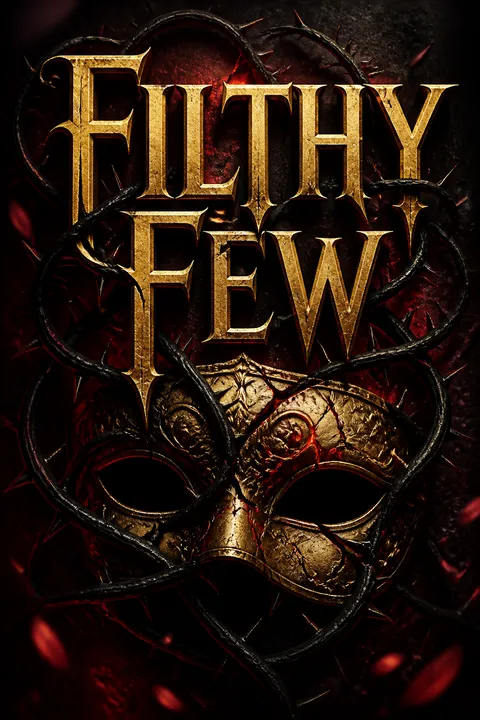

Plot Summary
New Beginnings, Old Secrets
Nova Quinlin's life is upended when she and her mother move to the wealthy enclave of Hollow Hills, following her mother's marriage to Thomas Valerian. The opulence of her new home is matched only by the coldness lurking beneath its surface. Nova's attempts to settle in are met with awkwardness from her new stepbrother, Nexus, and a sense of foreboding from Thomas. As Nova unpacks, she senses that beneath the luxury lies a web of secrets and power plays. Her determination to hold onto her identity—refusing to change her last name—sets the stage for a battle of wills. The move is not just a change of scenery, but the beginning of a dangerous game where Nova's very sense of self will be tested.
The Kings of Hollow Hills
Nova's introduction to Haven Prep is a baptism by fire. Her stepbrother Nexus and his friends—Vox, Hayze, Archer, and Ezekiel—are the undisputed kings of the school, their word law among students and teachers alike. At a beach bonfire, Nova is warned to stay away from the boys, but her defiance only draws their attention. She quickly learns that the social hierarchy is rigid and merciless, with the "Filthy Few" at the top. The girls who orbit them are both envious and cruel, and Nova's refusal to bow to their rules marks her as a target. Yet, her spirit and sharp tongue intrigue Vox, the group's dark-hearted leader, setting the stage for a volatile connection.
Fresh Meat, Filthy Games
Nova's first days at Haven Prep are a gauntlet of humiliation and intimidation. Nexus makes it clear she is his to control, warning his friends off her while simultaneously asserting his dominance. The Filthy Few's games are cruel, and Nova is forced to navigate a minefield of threats, rumors, and unwanted attention. Despite the hostility, she finds an unlikely ally in Vivian, Vox's twin sister, whose own position is fraught with danger. Nova's refusal to be cowed only escalates the boys' interest and the girls' jealousy. The lines between protection and possession blur, and Nova realizes that in Hollow Hills, survival means playing by rules she despises.
The Filthy Few's Favor
Nova's world turns surreal when she is visited in the night by a masked stranger—one of the Filthy Few—who offers her a favor in exchange for a debt. The encounter is both terrifying and strangely exhilarating, awakening desires and fears she never knew she had. The Filthy Few's power is not just social but secretive and ritualistic, their reach extending into the shadows of the town. Nova is warned that asking for help comes at a steep price, and the favor is not to be taken lightly. The masked games become more than just bullying—they are a test of will, a seduction, and a threat all at once.
Tangled Loyalties and Lies
As Nova is drawn deeper into the Filthy Few's orbit, she struggles to discern friend from foe. Her friendship with Vivian deepens, but even this bond is fraught with secrets. The boys' cruelty intensifies, but so does their fascination with her, especially Vox, whose aggression masks a dangerous attraction. Nova's only solace is her long-distance best friend, Waylen, but even that relationship is strained by jealousy and distance. Letters from a mysterious uncle hint at a larger conspiracy involving her true parentage and the power struggles of the Brotherhood. Nova is caught between her desire for connection and the need to protect herself from those who would use her.
The Brotherhood's Shadow
The true nature of Hollow Hills is revealed as Nova learns about the Brotherhood—the Haven Saints—a secret society that rules the town from the shadows. The Filthy Few are not just school bullies but heirs to a legacy of violence, corruption, and ritual. Thomas, as the current Lord, is grooming Nexus to take over, but the succession is fraught with danger. The Brotherhood's rules are absolute, and disobedience is punished with exile or death. Nova's connection to the group becomes more perilous as her bloodline is revealed to be central to the Saints' future. The stakes are no longer just social—they are life and death.
Masks, Power, and Pain
The games turn brutal as Nova is subjected to physical and psychological torment. The Filthy Few's masked rituals blur the line between pleasure and pain, and Nova's resistance only fuels their obsession. Vox's duality—cruel tormentor by day, seductive masked stranger by night—confuses and entices her. The Brotherhood's demands grow, and Nova is forced to confront the reality that her suffering is part of a larger power play. The lines between victim and participant blur, and Nova must decide how far she is willing to go to survive—and what she is willing to become.
The Witch and the Wolf
The twisted relationship between Nova and Vox reaches a fever pitch. Their encounters are charged with violence and longing, each trying to dominate the other. Nova's defiance is met with Vox's relentless pursuit, both in and out of the mask. Their connection is undeniable, but trust is impossible in a world built on secrets and betrayal. As their physical relationship deepens, so does the emotional complexity, with both haunted by guilt, loss, and the fear of vulnerability. The witch and the wolf are locked in a dance of destruction and desire, each threatening to consume the other.
Collars, Chains, and Choices
Nova's captivity becomes literal as Nexus and Thomas tighten their control, forcing her to wear a collar and submit to public degradation. The school's cruelty mirrors the Brotherhood's, and Nova's spirit is tested to its limits. Yet, even in chains, she finds ways to fight back, using wit and courage to resist their attempts to break her. The Filthy Few's internal divisions grow, with loyalties shifting and old friendships fracturing. Nova's choices become more desperate as the cost of survival rises, and the line between submission and strategy blurs.
Bloodlines and Betrayals
The truth about Nova's parentage is revealed—she is not just a pawn but the rightful heir to the Saints' legacy. Her brother is none other than Ezekiel, and her birthright makes her both a prize and a threat. Betrayals come from all sides as alliances shift and old wounds are reopened. Vivian's role as informant and her own ambitions complicate the web of loyalty and love. The Filthy Few are forced to confront their own complicity in the system they hate, and Nova must decide whether to claim her power or destroy it.
The Price of Survival
The cost of survival becomes unbearable as Nova loses those she loves—Waylen is murdered, and Ezekiel's life hangs in the balance. The Filthy Few's favor comes at a devastating price, and Nova is forced to confront the darkness within herself. The Brotherhood's grip tightens, and the only way out is through blood and betrayal. Nova's quest for vengeance is fueled by grief and rage, but the path to freedom is littered with casualties. The line between justice and revenge blurs, and Nova must decide what she is willing to sacrifice to end the cycle of violence.
The Saints' Reckoning
The final confrontation with Thomas and the Brotherhood is set in motion. The Saints' annual gathering becomes a battleground as Vox, Nova, and their allies challenge the old order. Betrayals are revealed, alliances are tested, and the true cost of power is laid bare. Vivian's ascension as Lordess upends the hierarchy, and the banishment of the Filthy Few marks the end of an era. The reckoning is both personal and political, as each character must face the consequences of their choices and the ghosts of their past.
Love, Loss, and Vengeance
In the wake of the Saints' fall, Nova and Vox are exiled, forced to build a new life far from Hollow Hills. The wounds of betrayal and loss run deep, but the possibility of healing emerges. Nova's relationship with her mothers—both biological and adoptive—offers a chance at reconciliation, while Vox grapples with the loss of his twin and the end of his old life. The scars of the past remain, but love and hope begin to take root in the ashes of vengeance.
The Lordess Ascends
Vivian's rise to power marks a turning point for Hollow Hills. As Lordess, she enacts reforms and seeks to dismantle the corrupt system from within. Her marriage to Ezekiel is both a political alliance and a personal sacrifice, and her relationships with Archer and Hayze remain unresolved. Vivian's strength and cunning are tested as she navigates the treacherous world of the Saints, determined to protect those she loves—even if it means becoming the monster she once feared.
Exile and Freedom
Nova, Vox, and their families carve out a new existence in exile. The trauma of their past lingers, but the freedom from the Saints' tyranny allows for growth and healing. Nova's journey from victim to survivor is mirrored by Vox's transformation from tormentor to protector. Together, they confront their demons and begin to imagine a future defined by choice rather than fate. The bonds of found family offer solace, and the possibility of redemption glimmers on the horizon.
Healing, Hope, and Home
The story closes with Nova and Vox finding peace in each other and in the new life they have built. The wounds of the past are not forgotten, but they are no longer the only story. Vivian's rule brings hope for change in Hollow Hills, and the possibility of reunion remains. Nova's journey—from outsider to queen, from prey to predator, from broken to whole—is a testament to the power of resilience, love, and the refusal to be defined by others. The final chapter is not an ending, but a beginning—a promise that even in the darkest places, hope can take root.
Analysis
Filthy Few is a dark, unflinching exploration of power, trauma, and the search for identity in a world built on secrets and violence. At its core, the novel interrogates the ways in which systems of privilege and abuse perpetuate themselves—through families, schools, and secret societies—and the toll this takes on those caught in their web. Nova's journey from outsider to queen is both a personal and political transformation, as she learns to wield the very tools used against her. The novel's treatment of consent, desire, and agency is deliberately provocative, forcing readers to confront uncomfortable truths about complicity and survival. The use of masks and favors as plot devices underscores the central theme: that freedom is never given, only taken, and that the price of survival is often paid in blood and betrayal. Ultimately, Filthy Few is a story about the possibility of redemption—not through innocence, but through the hard-won wisdom that comes from facing the darkness within and without. The lesson is clear: in a world that seeks to break you, the greatest act of defiance is to choose your own fate, to love fiercely, and to refuse to be defined by the wounds others inflict.
Review Summary
Filthy Few receives an overall rating of 4.29/5, with most readers praising its addictive blend of secret societies, masked men, bully romance, and unexpected plot twists. Fans love the combustible chemistry between Nova and Vox, and the feisty, strong-willed FMC. Many highlight the book's fast pace and compelling world-building, calling it a page-turner they couldn't put down. Critical reviews cite juvenile writing, cringe dialogue, and immature characters. The high school setting divides readers, with some wishing it were college-based, though many overlooked this due to the gripping storyline.
Characters
Nova Quinlin / Taylor Tempest
Nova is the fierce, sharp-tongued protagonist whose journey from outsider to queen is marked by pain, resilience, and transformation. Initially, she is a girl displaced—forced to move to Hollow Hills and navigate a world of privilege, cruelty, and secrets. Her refusal to submit makes her both a target and an object of fascination, especially for Vox. Nova's psychological complexity is rooted in her struggle for autonomy and identity; she is haunted by abandonment, loss, and the fear of being used. The revelation of her true bloodline—daughter of Edmund Tempest, sister to Ezekiel—forces her to confront her own power and the legacy of violence she inherits. Nova's relationships are fraught with betrayal and longing, and her arc is one of hard-won agency: she learns to wield the very systems that sought to break her, ultimately choosing love and freedom over vengeance.
Vox Hatchett
Vox is the enigmatic, ruthless leader of the Filthy Few—a boy shaped by trauma, loyalty, and the burden of legacy. His aggression masks a deep vulnerability, and his need for control is both a shield and a prison. Vox's relationship with Nova is a battlefield of dominance and desire, each pushing the other to their limits. His twin bond with Vivian is central to his psyche; he is driven by the need to protect her at all costs, even as it leads him to betray others. Vox's journey is one of self-destruction and redemption: he must confront the darkness within himself, the consequences of his actions, and the possibility of love. His transformation from tormentor to protector is hard-won, and his struggle to reconcile his dual identities—Vox and two horns—mirrors the book's themes of masks, power, and the search for home.
Vivian Hatchett
Vivian is Vox's twin and Nova's closest friend—a girl caught between loyalty, love, and ambition. Her outward strength masks deep wounds, and her role as informant and eventual Lordess is both a burden and a triumph. Vivian's relationships with Archer, Hayze, and Ezekiel are complex, marked by longing, betrayal, and sacrifice. Her psychological arc is defined by her refusal to be a pawn; she seizes power not for its own sake, but to protect those she loves and to dismantle the system from within. Vivian's rise is both a victory and a tragedy, as she must become the very thing she once feared in order to save her family and herself.
Nexus Valerian
Nexus is Nova's stepbrother and the primary antagonist for much of the novel. His need for control and validation is rooted in deep insecurity and the toxic legacy of his father, Thomas. Nexus's cruelty is both a weapon and a shield, and his obsession with Nova is as much about power as it is about desire. His eventual downfall is a product of his own hubris and the machinations of those around him. Psychologically, Nexus is a study in the corrosive effects of privilege, neglect, and the desperate need to matter.
Thomas Valerian
Thomas is the embodiment of the Brotherhood's rot—a man who wields power through fear, manipulation, and violence. His marriage to Nova's mother is a strategic move, and his grooming of Nexus is both a legacy and a curse. Thomas's psychological makeup is defined by entitlement, paranoia, and the belief that the ends justify the means. His downfall is both inevitable and satisfying, as the very systems he built are turned against him by those he underestimated.
Ezekiel Tempest
Ezekiel is Nova's biological brother and a member of the Filthy Few. His journey is one of loss, guilt, and the search for redemption. Ezekiel's bond with Nova is fraught with pain and longing, and his relationships with the other boys are marked by loyalty and rivalry. Psychologically, Ezekiel is haunted by the deaths of his parents, the burden of legacy, and the fear of failing those he loves. His "death" and resurrection are symbolic of the possibility of change and the power of forgiveness.
Hayze Draven
Hayze is one of Vox's closest friends—a boy whose laid-back demeanor masks deep loyalty and pain. He is the steady presence in the group, often acting as mediator and protector. Hayze's feelings for Vivian add complexity to his role, and his willingness to sacrifice for his friends is both his strength and his weakness. Psychologically, Hayze is driven by the need to belong and the fear of abandonment.
Archer Malik
Archer is another member of the Filthy Few, marked by his fierce loyalty and unspoken love for Vivian. His humor and bravado mask deep wounds, and his struggle to reconcile his feelings with his loyalty to Vox is central to his arc. Archer's psychological makeup is defined by longing, guilt, and the desperate hope for a future beyond violence.
Waylen
Waylen is Nova's childhood best friend and the embodiment of innocence and unconditional love. His murder is the catalyst for Nova's transformation, and his memory haunts her throughout the novel. Psychologically, Waylen represents the life Nova could have had—a life free from violence and betrayal. His death is both a tragedy and a turning point, forcing Nova to confront the darkness within herself and those around her.
Nikoa Tempest
Nikoa is Nova and Ezekiel's uncle, a shadowy figure who manipulates events from behind the scenes. His actions are driven by a desire to protect his family and avenge past wrongs, but his methods are often ruthless and morally ambiguous. Psychologically, Nikoa is a study in the costs of survival—the sacrifices made, the lines crossed, and the loneliness of leadership.
Plot Devices
Duality of Masks and Identity
The novel's central plot device is the use of masks—literal and metaphorical—to explore themes of identity, power, and vulnerability. Characters hide behind personas to survive, but these masks also become prisons, preventing true connection. The duality of Vox/two horns and Nova/Taylor is mirrored in the broader social masks worn by the Brotherhood and the Filthy Few. The unmasking of characters is both a moment of revelation and a catalyst for change, forcing them to confront the truth about themselves and each other.
The Favor and the Debt
The Filthy Few's system of favors and debts is a plot engine that drives much of the action. The promise of a favor—always at a price—mirrors the broader economy of power and violence in Hollow Hills. This device allows for shifting alliances, betrayals, and the exploration of consent, coercion, and complicity. The favor is both a lifeline and a trap, forcing characters to confront the costs of survival and the limits of agency.
Secret Societies and Rituals
The Haven Saints are more than a backdrop—they are a living, breathing antagonist whose rules, rituals, and punishments shape every character's fate. The society's traditions—blooding in, the annual reckoning, the rules of succession—provide structure and stakes, while also serving as a metaphor for the cycles of violence and abuse that the characters must escape or perpetuate.
Foreshadowing and Narrative Structure
The novel employs foreshadowing through letters, rumors, and masked encounters, building suspense and deepening the sense of paranoia. The narrative structure is both linear and recursive, with past traumas and secrets resurfacing at key moments. The use of alternating perspectives (Nova, Vox, others) allows for a multifaceted exploration of events, motivations, and emotional arcs.
Power, Consent, and Agency
The plot is driven by the constant negotiation of power—between genders, classes, families, and individuals. Consent is complicated by coercion, desire, and survival, and the characters' agency is always under threat. The interplay of dominance and submission, both sexual and social, is used to explore the costs and possibilities of resistance.
Download PDF
Download EPUB
.epub digital book format is ideal for reading ebooks on phones, tablets, and e-readers.








































