
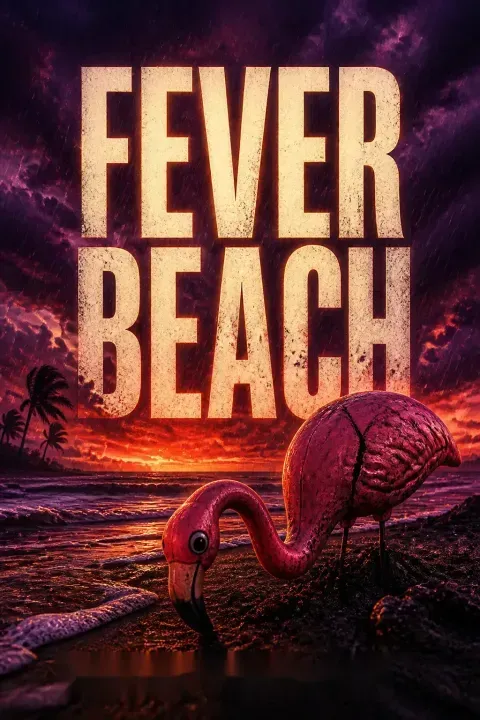


Plot Summary
Sanctuary Falls Hit-and-Run
Dale Figgo3 picks up a hitchhiker in Tangelo Shores and forces the man to throw Ziploc bags weighted with sand and printed with anti-Semitic flyers into driveways in the Sanctuary Falls subdivision. When homeowner Noel Kristiansen,8 a retired pharmaceutical executive, storms out in his bathrobe to confront the truck, Figgo3 tries his bear spray only to find the can empty.
He accelerates instead. Kristiansen8 lands on the hood, his skull spidering the windshield before he slides onto the pavement. Figgo3 flees without calling for help.
The hitchhiker, terrified, later phones the Florida Highway Patrol from Georgia, identifying the black Ram pickup and describing the driver's weapons and sex toy in the back seat. Corporal Danielle Dominguez17 opens an investigation. Kristiansen8 survives but suffers a concussion and fractured memory, while his wife Mary9 begins her own determined pursuit of the man who ran down her husband.3
Hiaasen establishes Figgo as a uniquely Floridian villain: both ridiculous and lethal. His bear spray is empty, his flyer misspells 'Holocaust,' and his victim is a white Republican rather than the Jewish target he imagined. The scene introduces the novel's tonal balancing act between comedy and genuine danger. The hitchhiker's refusal to testify—he just wanted a ride to the interstate—reflects the moral exhaustion of a public constantly asked to witness extremism. Kristiansen's concussion-induced amnesia creates a vacuum that his wife's relentless pragmatism will ultimately fill.
Magazine Left Behind
Twilly Spree,2 a restless wealthy heir with a record of eco-sabotage and court-ordered anger management, shares a flight to Orlando with Viva Morales.1 He carries a fake asthma inhaler to avoid unwanted conversation, but finds himself drawn to the auburn-haired woman reading across the aisle.
She rebuffs him with surgical politeness. After landing, Twilly2 discovers she left her magazine behind. The mailing label reads V. Morales with an address in Tangelo Shores. He calls days later, confessing he obtained her number from a reverse directory.
Viva1 is annoyed but intrigued enough to agree to lunch. Over grilled mahi and hogfish, she recounts her ex-husband Malcolm, who drained her savings and racked up credit card debt before being arrested. Twilly2 shares his divorce, his dead dog, and the party barge he sank. Neither pretends to be what they are not.
The meet-cute subverts romantic comedy conventions: Twilly's approach verges on stalking, yet Viva's guarded curiosity reflects her loneliness and resilience after financial betrayal. The fake inhaler serves as a perfect emblem of Twilly's persona—a prop enabling distance while maintaining vigilance. Both characters are refugees from liars: Malcolm the embezzler, Big Phil the land-raping grandfather whose inheritance funds Twilly's crusades. Their honesty about past failures establishes the foundation for a partnership built on transparency rather than performance.
The Wee Hammers Deception
Viva1 attends a private dinner with her employers, Claude7 and Electra Mink,12 and their special guest, Congressman Clure Boyette.4 Tall and sharp-chinned with jet-black hair spiked forward, Boyette4 pitches the Wee Hammers: a charity where children as young as six will build houses for deserving families, learning construction skills while staying off the streets.
Viva1 points out child labor violations, but the Minks eagerly pledge two million dollars, haggling down from three. Viva1 transfers the money the next morning under Electra's12 insistence.
Her subsequent research on Boyette4 uncovers DUIs, a college assault case involving Christmas lights inserted into a pledge's rectum, and a political career built entirely on his father's connections. Twilly2 later drives her past the bulldozed citrus groves the Minks plan to develop into The Bunkers, revealing the foundation's philanthropy as a tax shelter for land speculation.
The Wee Hammers functions as a perfect Hiaasen satire: a scheme so absurd it should be parody, yet plausible in Florida's deregulated landscape. Boyette's teeth, described as fit for a Clydesdale, become a physical manifestation of his rapaciousness. The Minks' performative charity—buildings bearing their names while they fund political violence—exposes philanthropy as reputation laundering. Viva's professional HR expertise makes her earlier victimization by Malcolm thematically resonant: she is trained to detect fraud yet overlooked it in her own marriage, a blind spot she now refuses to repeat.
Fever Beach Conspiracy
Dale Figgo3 convenes the Strokers for Liberty on a remote federal beach, seventeen men gathered by tiki torch light. He announces a two-million-dollar windfall from anonymous 'patriot angels.' A mystery caller phones during the meeting: Congressman Boyette,4 dialing from a bar before his date with Viva,1 lays out the target.
Precinct 53 in Carpville, Florida, where Boyette4 claims massive voter fraud cost him votes in the last election. The Strokers will deploy as armed 'citizen poll watchers' on Election Day, intimidating non-white and non-Christian voters.
Figgo,3 still bitter about his expulsion from the Proud Boys after he smeared dog feces on the wrong Capitol statue, sees this as his path to white-power legitimacy. Jonas Onus,5 Figgo's3 hulging second-in-command, eyes the money with growing suspicion and personal ambition.
Fever Beach—public land protected by the federal government these men despise—becomes an ironic staging ground for sedition. The tiki torches evoke both suburban patios and darker historical imagery. Figgo's statue-defiling mistake (he thought James Zachariah George was Ulysses Grant) encapsulates the movement's intellectual bankruptcy: hatred untethered from knowledge. The beach itself, with nesting turtles and ghost crabs, represents the natural Florida these men claim to defend while remaining entirely disconnected from it. Their gathering is simultaneously menacing and pathetic.
Sir Turdley's Contacts
Viva1 endures a second date with Boyette,4 who arrives in an Alaskan ermine collar expecting sexual submission. She deflects his advances by suggesting cocaine has rendered him impotent, a psychological tactic she perfected in her single days.
Once he passes out drunk, she copies his phone contacts using his passcode, 1776, while hiding in the hotel lobby restroom. The list reveals Barry Martino, the Minks' lobbyist; numerous escorts with nicknames like Ballerina and Honey Drizzle; and Dale Figgo,3 saved as 'Sir Turdley3' in tribute to his Capitol defecation.
Viva1 realizes Figgo3 is her own landlord, the man stuffing swastika flyers in the kitchen of the townhouse they share. She also finds the Minks' connection to the stalled Bunkers development and a corrupt county commissioner named Lewin Baltry.10 The investigation has become dangerously personal.
This bedroom scene inverts the expected power dynamic: Viva weaponizes Boyette's sexual entitlement against him, using his intoxication and insecurity as extraction tools. The passcode, 1776, encapsulates the novel's critique of performative patriotism masking predation. Finding Figgo on the phone transforms her inquiry from abstract moral outrage into immediate physical danger—the enemy lives downstairs, paying rent. The 'Sir Turdley' nickname reveals Boyette's genuine contempt for the men he funds, reducing them to scatological jokes while deploying them as political weapons.
Commissioner Baltry's Crisis
The Bunkers requires rezoning from agricultural to mixed-use. County Commissioner Lewin Baltry,10 the swing vote, has already pocketed a seventy-five-thousand-dollar bribe and a customized Rolls-Royce golf cart from the Minks.
Twilly2 slides into Baltry's10 car at a Wendy's drive-through, seizes him by the comb-over, and warns that the FBI and IRS are building a case. He instructs Baltry10 to abstain from the Bunkers vote. Terrified, Baltry10 calls in sick on vote night, deadlocking the commission at three to three. The Minks erupt in fury.
Meanwhile, Twilly2 learns that Viva's1 predecessor at the foundation, Rachel Cohen, vanished after confronting the couple about their funding of a fake charity that bankrolled January 6th rioters. Her remains were later discovered in a lake near Carpville. Twilly2 tells Viva1 she is working for people capable of murder.
Twilly's methodology is theatrical intimidation backed by genuine intelligence. He has no actual FBI connections, but Baltry's guilty conscience does the work for him—the commissioner immediately flees to Montana. The Rachel Cohen revelation adds mortal stakes to what might otherwise seem a caper. The Minks' willingness to kill an inquisitive employee transforms them from comic grotesques into genuine monsters. Baltry's venality is almost innocent by comparison; he is a garden-variety grifter suddenly in over his head among people who treat murder as a business expense.
Galaxy's Revenge
Galaxy,6 a young escort whose real name is Janice Eileen Smith, has been seeing Boyette4 for over a year. After he shortchanges her Venmo payment, she uses her key to his borrowed condo and trashes it with rotting salmon, Camembert cheese, and deer urine.
Boyette,4 terrified of exposure during an election year, buys her silence with a custom Aston Martin DB11. But Galaxy6 also possesses explicit photos: the congressman on a rhinestone leash, wearing a Doberman muzzle and snowshoes. She meets Viva1 by the pool and shares the images.
Galaxy6 claims to be seventeen, making their paid encounters statutory rape, though she later confesses to Viva1 she is actually twenty-five and used a fake ID. The two women form an unlikely alliance against the man who has wronged them both,4 united by disgust at his entitled predation.
Galaxy is Hiaasen's most subversive creation: an escort who weaponizes male desire with surgical precision, controlling men who believe they control her. The age deception cuts both ways—she exploits Boyette's actual preference for younger partners while maintaining leverage through manufactured legal jeopardy. Her friendship with Viva creates an alliance across class and circumstance, two women navigating different branches of the same corrupt ecosystem. Galaxy's meticulous journaling transforms sex work into intelligence gathering, making her the novel's most effective operative.
Drag Queens Strike Back
Figgo3 charters a luxury tour bus and leads fourteen Strokers to Key West for what he calls a 'rehearsal mission.' Their target: Trauma Queens, a drag club on upper Duval Street. Dressed in black tactical gear and blaze-orange caps, they storm the stage intending to shut down the show and scatter the audience.
But the performers fight back with unexpected ferocity. A bald Marilyn Monroe impersonator trained in martial arts leads the counterattack. Figgo3 is hogtied onstage with red mesh stockings while tourists film everything.
Noel Kristiansen,8 who infiltrated the Strokers as 'Payback8' wearing a Confederate tunic, gets his skull cracked by a Gwyneth Paltrow impersonator wielding a fiberglass scepter. The viral videos humiliate the group nationally. Steve Bannon hails the operation as heroic, but the footage contradicts every word.
The Key West sequence represents Hiaasen at his most gleeful: the Strokers' toxic masculinity literally beaten by the community they sought to terrorize. The drag performers' martial arts training inverts every expectation about vulnerability—the men in gowns are warriors, the men in body armor are victims. Figgo's hogtying by red stockings becomes a perfect metaphor for his ideology's impotence. The scene exposes the fragility of the white nationalist brand: one viral humiliation undoes months of recruitment. Bannon's attempt to spin disaster as victory mirrors the broader right-wing media strategy of manufacturing reality when events contradict ideology.
The Hitman's Mercy
Claude Mink7 hires a professional killer named Moe11 to eliminate Commissioner Baltry,10 who has fled to a trout lodge in Montana. Moe11 tracks Baltry10 through a DMV record from a used Subaru purchase in Oregon.
He confronts the terrified commissioner at a rental house, tests Baltry's10 pistol by shooting a magpie from a tree, and seems prepared to finish the job. But during a phone call, Claude7 makes a casual anti-Semitic remark. Moe,11 who is Jewish, takes deep offense. Instead of killing Baltry,10 he stages a fake death scene with ketchup, photographs it for Claude,7 and drives the commissioner back to Florida.
Moe11 then receives a contract to kill Galaxy6 for a hundred thousand dollars. When he arrives at her apartment, she overpowers him with a knife. They end up sharing a gluten-free pizza and becoming improbable allies.
Moe represents an unexpected moral center: a killer with professional ethics who draws a bright line at bigotry. His decision to spare Baltry is simultaneously principled and pragmatically vindictive—he collects his full fee while betraying the client who insulted him. The Galaxy confrontation similarly inverts expectations: the 'teenage escort' disarms a professional killer with physical competence and psychological acuity. Their pizza dinner becomes a negotiation between two people who understand transactional relationships, finding common ground in mutual recognition that their professions share a certain honest clarity.
Boyette's Bondage Exposed
Two catastrophes strike simultaneously. Viva,1 having obtained Galaxy's6 permission, anonymously distributes the congressman's bondage photos to media outlets. The images — Boyette4 muzzled, leashed, cocaine-dusted, snowshoed — explode across the internet within hours.
The Speaker cancels Boyette's4 prized 'woke eight ball' hearings on C-SPAN. Meanwhile in Carpville, the Wee Hammers house on Watermelon Way catches fire when a sociopathic boy named Egregio swings an oxyacetylene torch like a lightsaber, igniting solvent. Two children are injured. Contractor Tomas De Leon15 quits after the blaze, sickened by the dangerous charade.
Boyette's4 father Clay,14 learning for the first time that the charity is a front, demands answers his son4 cannot produce. The campaign, already trailing middle-school teacher Deborah Eden, enters freefall. Boyette's4 team claims AI generated the photos, but nobody believes them.
The twin collapses mirror each other structurally: both schemes were built on performance and deception, both involved children (real in the Wee Hammers, fabricated in Galaxy's fake age), and both were undone by documentation. The photos function as political IEDs because they expose the chasm between Boyette's family-values rhetoric and his actual appetites. Egregio, the child sociopath who burns down the house, is darkly comic: the Wee Hammers concept was so reckless it practically self-destructed, requiring only a genuinely disturbed child to trigger the inevitable catastrophe.
Election Eve Sabotage
Two days before the election, Twilly2 retrieves Figgo's3 hidden weapons cache from a storage unit. He methodically disables every firearm — removing firing pins, trigger springs, and firing mechanisms — in ways invisible to casual inspection, then returns the guns to the townhouse.
When Jonas Onus5 breaks in and threatens Viva1 with a pistol, forcing her toward Figgo's3 bedroom, Twilly2 knocks him unconscious with a single punch. He injects Onus5 with feral-cat tranquilizer, drives him to a marina, and sets him adrift on a paddleboard in the Gulf Stream wearing only a Trump-themed hoodie.
Onus5 will later be rescued by a Mexican freighter, far from Carpville. With Onus5 eliminated and the weapons neutralized, Twilly2 coordinates with Viva,1 who has volunteered at Serene Transitions, the assisted-living facility serving as Precinct 53. The Kristiansens sign on as official poll watchers.
Twilly's sabotage represents a maturation in his methodology—surgical rather than explosive, a shift from the bank-bombing of his youth toward more precise intervention. The paddleboard exile of Onus is simultaneously cruel and merciful; Twilly could have killed him but chose removal and humiliation instead. This reflects his ongoing struggle to channel rage into controlled, effective action. Viva's volunteer position places her at the center of the coming confrontation, transforming her from investigator to active participant. The Kristiansens' involvement closes the narrative loop on the hit-and-run that opened the novel.
Precinct 53 Siege
At dawn on Election Day, the Strokers for Liberty surround Serene Transitions. Figgo3 posts riflemen at each corner of Beet and 17th while others seal ballot boxes with Gorilla Glue. But Twilly2 wears a 'CLURE FOR SURE!' campaign shirt in full view of television cameras, visually linking Boyette4 to the armed mob.
When Deborah Eden arrives to cast her ballot, a Stroker demands her identification and the confrontation airs nationally. Viva,1 in blue scrubs, live-streams everything. Police converge. When Strokers try to intimidate voters of color, their weapons fail to fire.
Officers arrest several men. Figgo3 discovers his AR-15 is dead and screams at Twilly2 to remove the incriminating shirt, then bolts. Voter turnout at Precinct 53 reaches sixty-eight percent — a record. Boyette4 loses the precinct by over eight hundred votes and the election by four points.
The operation fails on every level: tactical (sabotaged weapons), strategic (media exposure), and political (it drives turnout). Twilly's 'CLURE FOR SURE!' shirt is the masterstroke—a single garment that implicates Boyette in voter intimidation, destroying plausible deniability. The choice of an assisted-living facility as a polling place adds grotesque irony: the Strokers are terrorizing elderly voters. Viva's livestream ensures the event cannot be memory-holed. The historic turnout represents democracy's immune response to authoritarian tactics—the community shows up precisely because someone tried to stop them.
Figgo's Fatal Flag
After fleeing Precinct 53, Figgo3 drives through Carpville in a daze. He spots a rainbow pride flag flying outside a historic home and decides to shred it with his boot knife. Unable to reach the flag from the ground, he attempts to shimmy up the fifteen-foot pole.
His neck becomes entangled in the halyard rope and the flag itself. The knife, tucked inside his body armor, pierces his perineum. Figgo3 dies hanging from the pole, discovered hours later by the gay couple who live there — they had been out voting.
The medical examiner's report notes his reconstructed nose, crafted from scrotal skin grafted after his earlier bicycle accident. His trucker cap, bearing the Strokerz swastika logo, lies on the ground beneath him. The man who sought to terrorize others with symbols of hatred is killed by a symbol of pride.
Figgo's death is the novel's most savage irony: the flag he sought to destroy becomes his executioner. The scrotal-skin nose, a running gag throughout the book, acquires symbolic weight in death—his body literally carries the evidence of his own ridiculousness. He dies not in glorious battle but in a bungled act of vandalism, as incompetent in death as in life. The homeowners' absence (they were voting) underscores the democratic process Figgo tried to subvert. His cap and its crooked swastika, symbols he never learned to draw correctly, become his epitaph.
Claude's Final Reckoning
The night after the election, the county zoning board reconvenes. Lewin Baltry,10 hidden for weeks by the Kristiansens under Twilly's2 direction, walks into the chamber. Claude Mink,7 seated in the front row beside lobbyist Barry Martino, sees the commissioner he paid to have murdered.10
The shock triggers a fatal cardiac event. Paramedics cannot revive him. Baltry10 casts the deciding vote against The Bunkers development. In the aftermath, Electra Mink12 faces the collapse of the project and the couple's leveraged debts. Months later, she and three other commissioners are indicted on federal bribery charges.
The Mink Foundation dissolves, and the family name is stripped from hospital wings across Florida — except the shingles research center in Ocala. Electra12 eventually agrees to testify against ex-congressman Boyette4 in exchange for prosecutorial leniency.
Claude's death is poetic justice delivered by the man he paid to have killed, preserved by the hitman whose ethnicity he insulted. The timing—at the zoning hearing where his corrupt empire was meant to triumph—completes the arc of hubris. Moe engineered this revenge from a distance, proving that Claude's bigotry was not just morally repugnant but strategically fatal. Electra's survival and cooperation reveals the asymmetry of their partnership: she is pragmatic enough to cut deals, while Claude literally died of rage. The surviving shingles center memorial is classic Hiaasen—even total disgrace leaves one absurd monument.
Fever Beach Goodbye
Viva1 accepts an HR position at Macy's in New York. She and Twilly2 share a final day at Fever Beach — swimming, collecting the Strokers' litter, and unearthing a broken tiki torch she insists on keeping as a souvenir of the absurd battlefield.
Twilly2 has purchased Starfish Point, a small island in the Bahamas' Exumas, where he plans to build a house elevated on pilings. Galaxy,6 who received the Aston Martin from Twilly2 as a gift, has enrolled in nursing school at Kennesaw State. Clure Boyette,4 facing multiple indictments, vanishes on a hog hunt in dense Panhandle timber; searchers find only his chewed brush pants and a scalp of hair glistening with product.
Jonas Onus,5 having jumped ship in Veracruz, drowns crossing the Rio Grande among migrants, his body never identified. At the beach, Viva1 asks Twilly2 to visit her after New Year's. He promises a plane ticket.
The denouement distributes justice unevenly—some villains die, others escape, some are transformed. Onus's drowning among migrants is the novel's most brutal irony: the white supremacist dies crossing the same river as the people he demonized, his body anonymous among theirs. Galaxy's nursing school admission reframes her entire arc; the 'escort' always had a plan, and her sabbatical was genuine. Twilly's island purchase is both retreat and continuation—he will keep fighting, just from farther away. Viva's tiki torch souvenir is an act of memorial: she takes a piece of the nightmare with her as she moves toward a life she chose.
Analysis
Fever Beach operates as a funhouse mirror reflecting contemporary American political dysfunction through the distorted lens of Florida — a state Hiaasen has chronicled for decades as the national id, where every pathology manifests in exaggerated form. The Strokers for Liberty, with their misspelled flyers and malfunctioning communication platform, embody the banality of modern extremism: not masterminds but mediocrities radicalized by podcasts and grievance, genuinely dangerous because their incompetence makes them unpredictable. The novel insists that the greatest threat to democracy comes not from organized evil but from organized stupidity with access to firearms and dark money.
The book's moral architecture rests on an unlikely, cross-cutting alliance. Viva,1 the defrauded HR professional; Twilly,2 the trust-fund saboteur; Galaxy,6 the escort playing a long game; the Kristiansens, a conservative interracial couple seeking personal justice. None belong to the same tribe, yet they converge against a common enemy because the institutions meant to provide justice — police, courts, elections — have been captured or neutralized by the very forces they would oppose. This is vigilante fiction for an era of eroded institutional trust, where the good guys must work outside systems that no longer function.
Hiaasen's signature move — pairing pitch-black subject matter with comic absurdity — achieves new heights here. Figgo's3 scrotal-skin nose, the drag queens' martial arts beatdown, Boyette's4 snowshoe fetish: these jokes land because they are true to character, not merely ornamental. The comedy functions as a pressure-release valve for material that, played straight, would be unbearable. Yet beneath the satire runs a genuine ecological grief. Twilly's2 fury at the bulldozed orange groves, his dream of a Bahamian island, the recurring imagery of beach and sea — these are not set decorations but the novel's spiritual core. The land itself is the victim that cannot speak, and Twilly's2 violence against excavators represents a desperate form of advocacy through destruction.
The novel ultimately suggests that accountability in a broken system requires extralegal creativity — not because law is meaningless, but because those who write and enforce it have been purchased. Twilly's2 sabotage, Moe's11 principled betrayal of his anti-Semitic client, Viva's1 infiltration, Galaxy's6 documentation: each represents a form of justice official channels cannot deliver. It is a troubling thesis, but Hiaasen renders it with such verve and moral clarity that it feels less like anarchy than necessity — a temporary, improvised correction until the institutions can be reclaimed.
Review Summary
Fever Beach is Hiaasen's latest satirical novel set in Florida, featuring his trademark blend of absurd characters, political commentary, and environmental themes. Readers praise its humor, with many finding it laugh-out-loud funny. The story revolves around a group of incompetent white supremacists, corrupt politicians, and quirky protagonists. While some found the plot meandering, most enjoyed the biting satire and Hiaasen's skewering of current political issues. Reviews are generally positive, though some readers felt it wasn't Hiaasen's best work.
Characters
Viva Morales
Wealth Director Turned InvestigatorA sharp, resilient woman in her early forties who moved to Florida after her charming ex-husband Malcolm drained her savings and vanished. She works as wealth director for the Mink Foundation, distributing millions to hospitals and charities while gradually uncovering her employers' darker activities. Viva was trained in human resources, which makes her earlier victimization by Malcolm particularly galling—she is paid to detect fraud yet overlooked it in her own marriage. She possesses a dry, self-deprecating wit and a pragmatic courage that emerges under pressure. Her relationship with Twilly2 awakens a taste for direct action she never knew she had. She maintains an unlikely friendship with Galaxy6, the young escort, and calls Figgo's formidable mother13 when her landlord's3 behavior crosses lines. She reads The New Yorker religiously and dreams of a talking coyote.
Twilly Spree
Eco-Warrior Heir and SaboteurA wealthy, restless man in his forties who lives off an inheritance from his 'land-raping grandfather.' Twilly has a long record of environmental direct action—sinking a corrupt councilman's party barge, blowing up his uncle's bank branch for funding Everglades destruction—and the court-ordered anger management to show for it. He keeps small apartments across Florida, carries a fake asthma inhaler to avoid socializing, and traps feral cats (then releases them with bell collars to protect songbirds). Beneath his solitary, eccentric exterior lies a methodical intelligence and genuine moral conviction. He infiltrates the Strokers for Liberty under the alias 'Chaos,' viewing the group with contempt but recognizing the danger they pose. His relationship with Viva1 surprises him by becoming something he does not want to leave behind.
Dale Figgo
White Nationalist Strokers FounderA dim, paranoid, perpetually unlucky white supremacist in his mid-thirties. Figgo works at a warehouse packaging realistic silicone sex toys called Darcy's Dream Booty, which he steals as recruitment gifts. He founded the Strokers for Liberty after being expelled from the Proud Boys for smearing dog feces on a Confederate statue he mistook for Ulysses Grant. His flyers consistently misspell 'Holocaust' and 'cabal.' He rents a room in his mother's townhouse to Viva1, unaware she despises everything he stands for. Figgo genuinely believes he is a warrior for white Christianity, yet his operations consistently collapse through his own incompetence. His mother Donna13, a former competitive boxer, regularly punches him to express her disappointment. He undergoes a nose reconstruction using scrotal skin after a bicycle accident.
Clure Boyette
Corrupt Florida CongressmanA tall, sharp-chinned congressman from the Florida Panhandle with enormous teeth and hair spiked like an anime villain. Boyette coasted into politics on his fixer father's14 connections, surviving DUIs, a college assault case, and serial infidelities through family money and influence. He created the Wee Hammers, a fraudulent children's charity, to funnel two million dollars from elderly donors Claude7 and Electra Mink12 to the Strokers for Liberty. Boyette's private life revolves around cocaine, paid escorts, and a bondage fetish involving ermine collars, Doberman muzzles, and snowshoes. He believes he is a political genius destined for higher office. His fundamental error is treating everyone—escorts, donors, foot soldiers—as disposable tools rather than agents with their own agency and grievances.
Jonas Onus
Strokers' Ambitious Second-in-CommandA massive, bearded firefighter pensioner with a tricolored beard who serves as Figgo's3 tactical lieutenant. Onus retired on a dubious disability claim and spends his days parked under an oak tree listening to Alex Jones and conspiracy podcasts. He has three children by three different women, all born within a week of each other, and resents the financial demands of fatherhood. He remains bitterly aggrieved about missing the January 6th Capitol riot because one of his sons swallowed a pet turtle. His dog Himmler, a vicious pit-mastiff mix, serves as both companion and deterrent. Onus sees the Strokers' two-million-dollar fund as his ticket out of domestic drudgery and into white-power stardom. His rivalry with Figgo3 escalates from resentment to violent ambition.
Galaxy
Escort and Strategic BlackmailerJanice Eileen Smith, known professionally as Galaxy and online as Teenderoni. She presents herself as a teenager to appeal to clients like Boyette4 but is actually twenty-five years old, using a fake Louisiana driver's license. Sharp, funny, and utterly unsentimental about her work, she documents every encounter in a private journal. When Boyette4 shortchanges her, she trashes his condo with rotting seafood and deer urine, then negotiates an Aston Martin as hush money. She forms an unexpected friendship with Viva1 over dirty martinis, sharing the explicit photos that will eventually destroy the congressman's4 career. Galaxy is on 'sabbatical' from escorting and has been quietly planning her exit: nursing school at Kennesaw State, a new city, a different life.
Claude Mink
Elderly Megadonor and ConspiratorA diminutive, pinch-faced octogenarian who, with his wife Electra12, made a fortune buying and flipping Florida citrus groves to developers. The Minks use their foundation's philanthropy—naming hospital wings after themselves—to launder their reputation while funding right-wing causes. Claude is an alcoholic, a casual anti-Semite, and increasingly consumed by paranoid fantasies about migrants invading his walled estate. He becomes sexually obsessed with a silicone sex toy called Darcy's Dream Booty, which his wife eventually discovers and incinerates. When his schemes are threatened, Claude does not hesitate to hire professional killers. His relationship with Electra12 has curdled into mutual contempt masked by shared ambition.
Noel Kristiansen
Hit-and-Run Victim Turned InfiltratorA retired pharmaceutical executive and registered Republican whose life is upended when Figgo's3 truck strikes him in his own subdivision. The concussion fractures his memory but sharpens his fury. He infiltrates the Strokers for Liberty under the alias 'Jerry Jeff Tupelo' (Payback), wearing a Confederate tunic he bought online. His wife Mary9, a Black woman, initially urges restraint but eventually becomes his partner in pursuit of the white nationalists who terrorized their neighborhood. Kristiansen is a conservative churchgoer—'the whitest white man they'd ever meet'—which makes him an improbable but effective undercover operative among the bigots.
Mary Kristiansen
Tenacious Wife and Co-ConspiratorNoel's8 wife of thirty-four years, a Black woman with a pragmatic intelligence and fierce protective instincts. While her husband recovers from the hit-and-run, Mary tracks down Dale Figgo3 through court records, confronts his mother Donna13 at the gym, and refuses the settlement money in favor of actual accountability. She recognizes the danger the Strokers pose to her family and to the broader community, but channels her anger into methodical action rather than her husband's thirst for personal revenge. She and Noel8 eventually shelter fugitive commissioner Lewin Baltry10 in their home, becoming crucial links in the chain that brings down the Minks.
Lewin Baltry
Corrupt County CommissionerThe swing vote on the county zoning board, Baltry has grown wealthy by accepting bribes from developers like the Minks. He accepted seventy-five thousand dollars and a custom golf cart to approve The Bunkers project. When Twilly2 scares him with a false warning about federal investigations, Baltry panics and flees to Montana, where he proves spectacularly inept at wilderness survival. His attempt to learn firearms ends with him shooting his own car. A mediocre golfer and an unapologetic grifter, Baltry nonetheless becomes an unlikely linchpin in the collapse of the Minks' empire when the hitman11 hired to kill him decides to spare his life.
Moe
Professional Killer with PrinciplesA Jewish hitman who spent twenty-one years on Wall Street before the 2008 crash redirected his career. Moe is methodical, middle-aged, and deeply professional—he tracks Baltry10 across the country through a DMV record, tests the commissioner's pistol by shooting a magpie, and seems prepared to complete the contract. But Claude Mink's7 anti-Semitic remark triggers something in Moe that his profession cannot override. He spares Baltry10, fakes the death scene, and collects his full fee while deliberately misleading his bigoted client. He later accepts a contract on Galaxy6, only to be disarmed by her and end up sharing pizza. Moe represents a strange ethical core in the novel's moral universe.
Electra Mink
Claude's Wife and Co-ConspiratorClaude's7 sharper, harder-edged wife. She discovered her husband's polymer sex toy and melted it in the fire pit, but her fury is more about disrespect than morality. Electra is the more pragmatic partner—she recognizes that political donations are investments requiring returns, and she is willing to give Boyette4 a second chance after the Key West disaster because 'the stakes are too high to quit now.' After Claude's7 death, she proves adaptable enough to cooperate with prosecutors, trading testimony for leniency in a way her rigid husband never could have managed.
Donna Figgo
Dale's Boxing MotherA sixty-one-year-old gym rat and former competitive boxer who keeps her son3 in line with well-timed punches. Donna is mortified by Dale's3 racism—her other three sons turned out decent, she notes—and cannot understand what happened to her youngest. She lives with a younger blockchain tycoon named Breck and travels to St. Kitts for cuttlefish stem cell infusions. When she discovers the full extent of Dale's3 activities, she drives to Key West intending to knock him unconscious. Despite her disappointment, she remains his most consistent corrective force, even if her right crosses have failed to knock the poison from his soul.
Clay Boyette
Clure's Fixer FatherThe wealthy, ruthless patriarch who has spent decades cleaning up his son's4 catastrophes—paying off victims, disappearing court records, securing no-show jobs and political appointments. Clay arranged Clure's4 entire career, viewing it as an investment. He calls his son4 a 'pathetic fucknoodle' and a 'permanent affliction,' yet continues to intervene because Clure's4 position in Congress serves the family's business interests. When the Wee Hammers scandal and bondage photos destroy Clure's4 re-election, Clay quietly flees to Turks and Caicos, drinking Painkillers at a resort bar and showing no grief for his vanished son.
Tomas De Leon
Wee Hammers ContractorAn undocumented immigrant from Guatemala who worked his way up from mixing cement to a general contractor's license. He was hired at double his usual rate to build the Wee Hammers house in Carpville, unaware it was a political fraud. Tomas is conscientious and skilled, horrified by the dangerous conditions as children run wild with power tools. A boy named Egregio drives him to the breaking point by screwing another child's hand to plywood with a drill. Tomas ultimately quits after the house burns down, his professional standards unable to accommodate the reckless charade.
Nicki Boyette
Clure's Divorcing WifeClure Boyette's4 soon-to-be ex-wife, a former BMW salesperson turned real estate agent. After years of enduring her husband's serial infidelities—compensated by diamond bracelets—she hires the most vicious divorce lawyer in north Florida and leverages Clure's4 Venmo records for maximum settlement. She secures a ski boat, fifty annual hours on the family jet, and eventually replaces her Aston Martin demand with better terms. Her new boyfriend is a retired Olympic pole vaulter.
Corporal Danielle Dominguez
Highway Patrol InvestigatorThe Florida Highway Patrol officer assigned to Figgo's3 hit-and-run case. She is professional, patient, and accustomed to being underestimated by suspects who see her gender before her badge. Dominguez methodically builds her case despite Figgo's3 transparent lies about his truck being stolen. She takes particular satisfaction in informing him that the driver who later struck him in the bicycle accident was a white American citizen, not the 'illegal migrant' Figgo3 assumed.
Plot Devices
The Wee Hammers Fund
Fraudulent charity as money laundryA fake 501(c)(3) nonprofit created by Congressman Clure Boyette4, supposedly modeled on Habitat for Humanity but staffed entirely by children as young as six wielding power tools. The Minks donate two million dollars believing it will fund 'the cause' of white Christian nationalism. In reality, Boyette4 uses the money to bankroll the Strokers for Liberty's voter intimidation operation while building a single shoddy house in Carpville for photo opportunities. The fund functions as a cutout—donors can claim charitable intent while the cash flows to paramilitary activity. When the house burns down due to a child with a welding torch, the fraud becomes impossible to conceal. The Wee Hammers name appears on incorporation documents, the burned house, and campaign signs, creating a paper trail that eventually supports Boyette's4 indictment on fraud and child labor charges.
Darcy's Dream Booty
Recurring sex toy as plot catalystA realistic silicone replica of a female torso manufactured in China and packaged by Dale Figgo3 at Bottom Drawer Novelties. The toy circulates through the novel as a darkly comic MacGuffin. Figgo3 steals multiple units as recruitment gifts for Strokers prospects. He gives one to Twilly2 as an initiation present; Twilly2 mails it to Claude Mink7 with a taunting note, destabilizing the Minks' marriage. Jonas Onus5 receives one as a recruitment incentive and his dog Himmler eats it, dying of intestinal blockage—an event that severs Onus's5 loyalty to Figgo3. Claude7 becomes sexually obsessed with his, hiding it from Electra12 until she discovers and incinerates it, then ordering a replacement through his body man. The Dream Booty links the novel's disparate worlds: the sex-toy warehouse, the white nationalist underground, and the gilded Mink estate.
KRANKK Platform
Encrypted Strokers communication systemAn obscure social media platform that Dale Figgo3 uses to communicate with the Strokers for Liberty, installed by a teenage stoner too young to be an FBI informant. The platform requires three-factor authentication, including singing Kid Rock lyrics into a laptop microphone. It crashes repeatedly, especially before important meetings, forcing Figgo3 to send self-encrypted texts with absurd code phrases like 'Bring my worm pills' and 'Don't forget the barbecue.' The platform's dysfunction becomes a running joke that mirrors the Strokers' broader incompetence. When KRANKK permanently crashes before the Election Day operation, Figgo3 must communicate by phone, creating a discoverable record. The failed platform symbolizes the gap between the Strokers' grandiose self-image as a paramilitary vanguard and their reality as technologically hapless buffoons.
Boyette's Bondage Photos
Blackmail evidence for political destructionA collection of explicit photographs and videos taken by Galaxy6 during her paid encounters with the congressman4. The images show Boyette4 wearing an Alaskan ermine collar, a Doberman muzzle, and snowshoes while being led on a rhinestone leash. In some frames, cocaine is visible on his cheeks. Galaxy6 stored everything in the cloud alongside her meticulous journal entries, creating a timestamped record that would corroborate statutory rape charges if she were actually underage—though she is not. Viva1 distributes the photos anonymously to media outlets days before the election, detonating Boyette's4 family-values campaign. His team claims AI fabrication, but the images' specificity and the existence of video make the denial laughable. The photos function as the novel's ultimate accountability mechanism: private predation exposed to public consequence.
The Bunkers Development
Mega-project driving the corruption plotA proposed planned community of forty-five hundred houses, golf courses, and pickleball courts to be built on two thousand acres of bulldozed citrus groves near Yeehaw Junction. The Minks and their development partners need a zoning change from agricultural to mixed-use residential, requiring a majority vote from the county commission. The necessary bribery of Commissioner Lewin Baltry10 connects the Mink Foundation's philanthropic facade to raw political corruption. Twilly's2 opposition to The Bunkers—he shows Viva1 the moonscape where orange trees once stood—ties his environmental activism to her investigation of the Minks. The project's name deliberately evokes both golf and military security, marketing to buyers seeking 'an exclusively curated rendition of Florida' complete with private police, drones, and gator-free golf courses. Its defeat represents the novel's lone environmental victory.
FAQ
Synopsis & Basic Details
What is Fever Beach about?
- Florida's Absurd Underbelly: The novel plunges into a darkly satirical Florida, following Dale Figgo, a hapless white nationalist whose attempt to distribute hate flyers leads to a hit-and-run, setting off a chain of chaotic events involving corrupt politicians, wealthy pseudo-philanthropists, and a cast of eccentric characters.
- Intertwined Lives of Misfits: The narrative weaves together the stories of Viva Morales, a sharp woman trapped as Figgo's tenant and working for the morally bankrupt Mink Foundation, and Twilly Spree, a wealthy environmentalist with a history of vigilante justice, whose paths converge amidst the unfolding absurdity and danger.
- Exposing Corruption and Hate: As Figgo's "Strokers for Liberty" group plots increasingly bizarre actions, Viva and Twilly find themselves drawn into a conspiracy involving Congressman Clure Boyette's fake charity, revealing the unsettling connections between political opportunism, financial manipulation, and organized hate.
Why should I read Fever Beach?
- Sharp, Darkly Comic Satire: Carl Hiaasen's signature blend of outrageous humor and biting social commentary is on full display, offering a hilarious yet unsettling look at contemporary extremism, political corruption, and the unique madness of Florida.
- Unforgettable, Quirky Characters: From the pathetically incompetent bigot Dale Figgo to the resilient and witty Viva Morales and the vigilante environmentalist Twilly Spree, the novel is populated by a memorable cast that embodies the novel's themes of absurdity and unexpected heroism.
- Fast-Paced, Intersecting Plots: The story masterfully juggles multiple storylines that collide in unexpected ways, creating a propulsive narrative filled with twists, turns, and moments of both shocking violence and laugh-out-loud comedy.
What is the background of Fever Beach?
- Hiaasen's Florida Canvas: Set against the backdrop of Florida's relentless development and political peculiarities, the novel draws on the state's reputation as a magnet for the bizarre and the corrupt, reflecting Hiaasen's long-standing focus on environmental degradation and human folly in his home state.
- Real-World Absurdities: The author's note explicitly mentions that some elements, like the assembly line stealing of adult novelty items and the distribution of pro-Nazi leaflets, are based on accurately represented real-world occurrences, grounding the novel's satire in unsettling reality.
- Contemporary Political & Social Commentary: The book directly engages with themes of white nationalism, conspiracy theories (like QAnon and anti-vax narratives), political opportunism, and the role of social media in amplifying hate and exposing scandal, making it a timely reflection of current events.
What are the most memorable quotes in Fever Beach?
- "Never question the mission.": Dale Figgo's mantra, delivered with misplaced authority, encapsulates his blind adherence to his delusional cause and highlights the absurdity of his leadership, especially when the "mission" involves throwing sand-filled baggies.
- "I couldn't live with the idea of you thinking I was a writer.": Twilly Spree's self-deprecating and slightly mysterious explanation for tracking down Viva, revealing his aversion to pretense and hinting at the deeper reasons he's drawn to her honesty.
- "They say democracy dies in darkness.": Galaxy's poignant observation about the power of exposure, delivered casually while discussing leaking incriminating photos, underscores the novel's theme that bringing hidden corruption to light is essential, even if done by unlikely heroes.
What writing style, narrative choices, and literary techniques does Carl Hiaasen use?
- Darkly Humorous Satire: Hiaasen employs biting wit and exaggeration to lampoon his targets, creating scenes that are simultaneously hilarious and disturbing, such as the Strokers' absurd meetings or Boyette's kinky escapades.
- Multiple Third-Person Perspectives: The narrative shifts between various characters' points of view, often within chapters, providing a panoramic view of the interconnected plots and allowing readers insight into the diverse (and often deluded) motivations of the cast.
- Fast Pacing and Intersecting Plots: The story moves quickly, driven by escalating chaos and the collision of seemingly disparate storylines, utilizing coincidence and unexpected connections to propel the plot forward and maintain narrative tension.
Hidden Details & Subtle Connections
What are some minor details that add significant meaning?
- The Empty Bear Spray Can: Figgo's reliance on an empty can of bear spray, previously used by Viva to kill a cockroach, is a subtle detail that highlights his incompetence and dependence on others, directly leading to the hit-and-run incident in Chapter 1.
- The Specific Statue Defaced: The mention that Figgo smeared feces on the statue of James Zachariah George, a Confederate secessionist, rather than Ulysses Grant as Figgo believed, underscores his ignorance and the historical illiteracy often underlying modern hate movements (Chapter 2).
- The Wee Hammers P.O. Box: The detail that the Wee Hammers foundation is registered to a post office box in Bonifay County (Chapter 5) subtly links the fake charity to Congressman Boyette's home district and foreshadows the location of the Strokers' final operation.
What are some subtle foreshadowing and callbacks?
- The Hitchhiker's Lightning Fear: The anecdote about the llama struck by lightning (Chapter 1) subtly foreshadows the violent storm that disrupts the Strokers' meeting on Fever Beach later in the novel (Chapter 21), highlighting the unpredictable nature of both weather and human chaos.
- Rachel Cohen's Disappearance: The brief mention of Viva's predecessor, Rachel Cohen, vanishing (Chapter 2), serves as a chilling callback later when Twilly investigates her fate and links her disappearance to the Minks' corrupt activities (Chapter 7), underscoring the real danger faced by those who uncover their secrets.
- The Aston Martin's Journey: The repeated appearances and mentions of the specific solar bronze Aston Martin convertible (Boyette's gift to Nicki, then promised to Galaxy, then bought by Twilly) serve as a recurring motif and subtle callback, linking multiple characters and plotlines through a single object representing wealth, desire, and manipulation.
What are some unexpected character connections?
- Viva and Donna Figgo's Alliance: The seemingly impossible connection between the progressive Hispanic tenant, Viva, and the tough, boxing-enthusiast mother of her white nationalist landlord, Donna Figgo, becomes a surprising alliance based on mutual concern and exasperation with Dale's behavior (Chapter 4, 13, 22).
- Twilly Spree and the Kristiansens: The vigilante environmentalist Twilly unexpectedly connects with Noel and Mary Kristiansen, the victims of Figgo's hit-and-run, leading to Twilly sheltering Lewin Baltry for them and the Kristiansens becoming poll watchers at Precinct 53, demonstrating how disparate individuals are united against common foes (Chapter 15, 27).
- Galaxy and Moe the Killer's Dinner: The hitman hired to kill Galaxy unexpectedly spares her and shares a pizza, revealing a surprising ethical turn and providing Galaxy with crucial information about the Minks, highlighting the novel's theme of unpredictable human connections even in the darkest circumstances (Chapter 23).
Who are the most significant supporting characters?
- Jonas Onus: Figgo's unstable second-in-command and rival, whose bitterness, incompetence, and eventual betrayal drive much of the internal conflict within the Strokers and contribute significantly to their downfall (Chapter 2, 12, 14, 16, 21, 25).
- Clure Boyette: The corrupt congressman whose fake charity and need for political cover provide the financial and structural link between the wealthy Minks and the Strokers, serving as a central figure in the novel's exploration of political rot (Chapter 2, 4, 6, 8, 10, 12, 16, 18, 20, 24, 27).
- Claude and Electra Mink: The ultra-wealthy couple whose vanity and desire for influence lead them to fund Boyette's schemes, embodying the novel's critique of performative philanthropy and the moral decay of the elite (Chapter 2, 4, 6, 8, 10, 11, 18, 19, 20, 24, 27).
Psychological, Emotional, & Relational Analysis
What are some unspoken motivations of the characters?
- Figgo's Craving for Belonging: Beneath his bluster and hate, Dale Figgo is deeply motivated by a desperate need for acceptance and validation, particularly after being rejected by established hate groups like the Proud Boys and Oath Keepers following his January 6th blunder (Chapter 2, 7, 16).
- Twilly's Search for Purpose: Twilly's restless activism and willingness to engage in risky confrontations stem from an unspoken need to find meaning and direction in a life insulated by inherited wealth, seeking external chaos to fill an internal void (Chapter 3, 6, 9, 10, 13, 17, 18, 23).
- Onus's Desire for Redemption: Jonas Onus's ambition to lead the Strokers and participate in the Carpville operation is fueled by an unspoken desire to redeem himself for missing the January 6th Capitol riot, seeking a chance to prove his commitment and gain recognition (Chapter 12, 14, 16, 21, 25).
What psychological complexities do the characters exhibit?
- Figgo's Delusional Paranoia: Dale Figgo exhibits profound paranoia and delusion, believing he is constantly surveilled by the government and attributing his failures to vast conspiracies, a psychological defense mechanism that prevents him from confronting his own incompetence and bigotry (Chapter 2, 4, 7, 12, 14, 16, 18, 22, 24).
- Twilly's Controlled Rage: Twilly Spree manages deep-seated anger through calculated, often absurd acts of disruption rather than uncontrolled outbursts, a complex psychological coping mechanism developed through years of therapy and self-awareness, allowing him to channel his rage into targeted actions (Chapter 3, 6, 9, 10, 13, 17, 18, 23).
- Boyette's Performative Entitlement: Congressman Clure Boyette's psychological makeup is dominated by a sense of entitlement and a need for constant validation, masked by a veneer of political piety and charm, leading to reckless behavior and a complete lack of self-awareness regarding the consequences of his actions (Chapter 2, 4, 6, 8, 10, 12, 16, 18, 20, 24, 27).
What are the major emotional turning points?
- The Hitchhiker's Disgust and Action: The hitchhiker's initial weary amusement turns to shock and disgust after witnessing the hit-and-run, leading to the emotional turning point where he decides to call the Florida Highway Patrol despite his fear, initiating the official investigation into Figgo (Chapter 1, 3).
- Viva's Decision to Investigate: Viva's initial resignation to her circumstances shifts to active suspicion and determination after encountering Congressman Boyette and the bizarre Wee Hammers grant, marking an emotional turning point where she decides to risk her job and safety to uncover the truth (Chapter 4, 5, 6, 8, 10).
- The Key West Humiliation: The Strokers' disastrous Key West operation serves as a major emotional turning point for the group, particularly for Figgo and Onus, shattering their delusions of competence and leading to internal power struggles and demoralization (Chapter 7, 13, 16, 21).
How do relationship dynamics evolve?
- Viva and Twilly's Deepening Connection: Their relationship evolves from a chance encounter on a plane to a partnership based on mutual respect, shared purpose, and romantic attraction, culminating in them becoming allies in exposing corruption and finding solace in each other amidst the chaos (Chapter 3, 5, 6, 8, 10, 13, 15, 17, 18, 23, 26).
- Figgo and Onus's Descent into Rivalry: The dynamic between Dale Figgo and Jonas Onus deteriorates from a tentative alliance based on shared ideology to bitter rivalry and open hostility, fueled by envy, incompetence, and betrayal, ultimately leading to their mutual destruction (Chapter 2, 4, 5, 7, 12, 14, 16, 19, 21, 25).
- Boyette's Transactional Relationships Unravel: Congressman Boyette's relationships with his wife, his father, his donors (the Minks), and his escorts (like Galaxy) are primarily transactional, but these dynamics unravel as his scandals escalate, leading to blackmail, abandonment, and the collapse of his carefully constructed facade (Chapter 2, 4, 6, 8, 10, 12, 16, 18, 20, 24, 27).
Interpretation & Debate
Which parts of the story remain ambiguous or open-ended?
- The Full Extent of the Conspiracy: While the novel exposes the core corruption involving the Minks, Boyette, and the Strokers, the full network of "patriot angels" and their ultimate goals remain somewhat ambiguous, hinting at a larger, unseen force funding extremist activities.
- Moe the Killer's Future: The fate of Moe the killer is left open-ended; having abandoned his contract and shown unexpected ethics, it's unclear if he will continue his profession, face consequences for his past actions, or find a different path, leaving his ultimate destiny unresolved.
- Twilly and Viva's Long-Term Relationship: The novel concludes with Viva moving to New York and Twilly planning a project in the Bahamas, leaving their future together uncertain, prompting readers to debate whether their connection, forged in chaos, can survive distance and their fundamentally different approaches to life.
What are some debatable, controversial scenes or moments in Fever Beach?
- Twilly's Vigilante Actions: Twilly's decision to engage in illegal acts like property destruction (blowing up the excavator) and kidnapping (tranquilizing and exiling Jonas Onus) is highly debatable, raising questions about whether his ends justify his means and if his actions are truly heroic or merely self-indulgent vigilantism.
- The Use of Child Labor in "Wee Hammers": The concept of using young children for construction labor, even as a fake charity front, is inherently controversial and disturbing, pushing the boundaries of satire to highlight the Minks' and Boyette's moral depravity and disregard for human safety.
- Moe the Killer's Ethical Turn: The portrayal of a professional hitman developing a conscience and sparing his targets based on his clients' bigotry is a controversial narrative choice, prompting debate about the nature of morality and whether a character engaged in such violence can be presented with any degree of ethical complexity or redemption.
Fever Beach Ending Explained: How It Ends & What It Means
- The Downfall of the Corrupt: The Fever Beach ending explained shows the collapse of the main antagonists: Congressman Boyette loses his election and faces indictment due to scandals and the failed Precinct 53 operation; the Minks face legal and financial ruin after Claude's death and the exposure of their schemes; Dale Figgo dies accidentally in a final, pathetic act of vandalism; and Jonas Onus is lost at sea after being exiled by Twilly.
- Justice and Resilience Prevail: Despite the chaos and corruption, the ending emphasizes that justice, albeit messy and unconventional, is served. Ordinary citizens like the Kristiansens and Viva play crucial roles, and the resilience of democracy is highlighted by the increased voter turnout spurred by the Strokerz' actions.
- Moving On, Scars Remain: The novel concludes with Viva leaving Florida for a new life in New York, and Twilly pursuing his long-held dream of building a retreat in the Bahamas. While they escape the immediate madness, the ending suggests that the scars of their experiences, and the absurdity of the world they navigated, will remain with them, leaving their future relationship and personal peace open to interpretation.


Download PDF
Download EPUB
.epub digital book format is ideal for reading ebooks on phones, tablets, and e-readers.








































