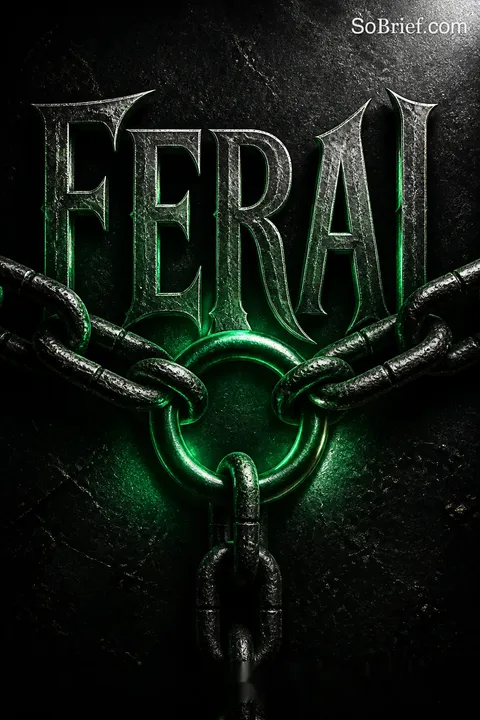
Plot Summary
Three Men, One Obsession
Azadeh Baran, an Iranian immigrant scarred by trauma, finds herself at the center of a fierce, obsessive love triangle—or rather, a quadrangle. Ezekiel "Zeke" Summers, the preacher's son who lost an eye defending her; Cyrus Porter, a fire-scarred survivor with a penchant for violence and dark humor; and Levinston "Lev" Cartwright, a billionaire haunted by his monstrous parents, all orbit her with a devotion that borders on feral. Their love is primal, possessive, and at times destructive, but it is also the only place Azadeh has ever felt truly safe. Together, they form a chosen family, each man offering her a different kind of salvation, and each bound to her—and to each other—by wounds that refuse to heal.
The Girl Called Free
Azadeh's name means "free," but her life has been anything but. Fleeing Iran with her mother and siblings after her father's execution, she grows up in America, carrying the scars of religious and patriarchal violence. Her mother, Nasrin, is both a fierce protector and a product of her own trauma, instilling in Azadeh the importance of independence and compassion. Yet, survivor's guilt haunts her—she cannot embrace happiness without remembering the girls left behind. Her drive to save others, especially women trapped by violence, becomes both her calling and her curse, pulling her away from the men who love her and the home they've built together.
Scars and Sanctuary
Each member of this unconventional family bears visible and invisible scars. Zeke's missing eye is a testament to his loyalty; Cyrus's burns are reminders of a childhood spent in hell; Lev's aversion to touch and obsession with control stem from unspeakable abuse. Azadeh herself is marked by lash scars from her childhood in Iran. Their shared pain becomes the glue that binds them, but it also threatens to tear them apart. The manor, once a house of horrors for Lev, is transformed into a sanctuary—a place where they can be both broken and whole, where violence and tenderness coexist.
Family, Found and Chosen
For Azadeh, Zeke, Cyrus, and Lev, blood ties are a source of pain, but chosen family is salvation. Zeke finds in the Barans the motherly love denied by his own parents. Cyrus, once a self-proclaimed monster, is seen and cherished for the first time. Lev, whose parents were monsters in every sense, learns the possibility of love and acceptance. Together, they create rituals of care—meals, birthdays, inside jokes—that become lifelines. Yet, the specter of their pasts lingers, and the threat of losing one another is ever-present, especially when Azadeh's work takes her away and Lev's desperation for control leads to betrayal.
Violence, Love, and Survival
Violence is both a threat and a language of love in their world. Zeke's protection of Azadeh costs him his eye; Cyrus's pyromania is both a coping mechanism and a form of intimacy; Lev's need for control manifests in surveillance and, at times, dangerous games. Azadeh herself is drawn to risk, knife play, and marking her lovers. Their sexual dynamics are raw, primal, and often degrading, but always underpinned by trust and consent. Through these acts, they reclaim agency over their bodies and rewrite the scripts of their trauma, finding healing in the very things that once hurt them.
The Price of Protection
Lev's love for Azadeh is all-consuming, driving him to extremes. When Azadeh stays away too long, Lev kidnaps her younger sister, Mona, hoping to force Azadeh's return. His actions, meant to protect, instead endanger Mona and shatter Azadeh's trust. The revelation of Lev's surveillance—cameras throughout the manor, a tracker hidden in Azadeh's cherished necklace—exposes the dark side of his devotion. The group is forced to confront the line between love and control, and Azadeh must decide whether forgiveness is possible when the person you love most becomes your betrayer.
Betrayal in the Manor
Azadeh's return to the manor is explosive. She confronts Lev with fury and heartbreak, her trust in him shattered by his betrayal. The men are forced to take sides, and old wounds are reopened. Lev's inability to communicate his needs and his reliance on control nearly destroy the family they've built. Yet, even in the midst of rage, the bonds between them prove resilient. Through confrontation, confession, and the willingness to face their darkest impulses, they begin the slow process of repair, learning that love without honesty is just another form of captivity.
The Ties That Bind
The group's loyalty is tested as they work together to rescue Mona from a religious cult. Their willingness to kill for each other—and for Azadeh's family—reveals the depth of their commitment. Violence becomes a tool of justice, a way to reclaim power from those who once wielded it against them. In the aftermath, they are forced to reckon with the consequences of their actions and the reality that their love, while fierce, is not always enough to save them from themselves. Yet, it is this very willingness to fight for one another that ultimately saves them.
Monsters and Mothers
The shadow of monstrous parents looms large. Lev's mother, complicit in unspeakable abuse, and his father, a sadist, left him with a fractured sense of self. Zeke's preacher father brutalized him for his sexuality, culminating in the loss of his eye. Cyrus's parents burned him, leaving him physically and emotionally scarred. Azadeh's mother, though loving, is haunted by her own trauma and the impossible expectations of survival. Each character must confront the ways their parents shaped them, for better or worse, and decide whether to perpetuate or break the cycle of violence.
The Language of Pain
For this family, pain is both a memory and a method of intimacy. Scars are worn as badges of survival, and acts of degradation and violence are transformed into rituals of trust. Through knife play, bondage, and primal sex, they reclaim their bodies and rewrite the narratives of their abuse. The line between pleasure and pain blurs, but always with the understanding that consent is sacred. In these acts, they find a language that transcends words—a way to say, "I see you, I accept you, I love you, even in your darkness."
Voyeur's Confession
Lev's compulsion to watch, to control, and to possess is laid bare. His surveillance of Azadeh, both technological and physical, is both a symptom of his trauma and a violation of trust. When his secret is revealed, the group must confront the reality of his sickness and decide whether he can be forgiven. Lev's journey toward healing requires him to relinquish control, submit to vulnerability, and accept love on others' terms. Only by facing his own darkness can he hope to be truly seen and accepted by those he loves.
Blood, Fire, and Forgiveness
The rescue of Mona is a crucible for the group. They unleash their violence on those who have harmed her, meting out justice in ways both brutal and cathartic. Yet, the aftermath is not simple. Forgiveness is hard-won, and trust must be rebuilt. Azadeh, Zeke, Cyrus, and Lev must each confront their own capacity for darkness and decide whether love can survive betrayal. Through therapy, honesty, and the willingness to be vulnerable, they begin to heal—not by erasing their scars, but by embracing them as part of their story.
The Rescue of Mona
When Mona is kidnapped by a cult, the group mobilizes with ruthless efficiency. Lev's wealth and connections, Alaric's underworld expertise, and Azadeh's martial prowess combine to orchestrate a daring rescue. The violence they unleash is both a reckoning and a release, a way to reclaim agency for themselves and for Mona. In the aftermath, the family is forced to confront the cost of their actions and the reality that safety is never guaranteed. Yet, the rescue cements their bond and reaffirms their commitment to one another.
Healing in the Shadows
In the wake of trauma and betrayal, the group turns to therapy, determined to break the cycles of violence that shaped them. Lev, once unable to bear touch, learns to submit and accept love. Cyrus, the jester, reveals his own need for care and acceptance. Zeke, the anchor, finds healing in vulnerability. Azadeh, the heart of the family, learns that she is allowed to be happy—that her scars do not make her unworthy of love. Together, they forge new rituals of care, transforming the manor from a place of nightmares into a home.
Boundaries Broken, Barriers Down
As Lev's barriers fall, the group explores new depths of intimacy. Acts once rooted in shame—voyeurism, degradation, submission—become sources of connection and healing. The boundaries between them blur, and their love becomes a space where all parts of themselves are welcome. Through honest communication, safe words, and mutual care, they create a relationship that is both unconventional and deeply fulfilling. Their sexual liberation is not just about pleasure, but about reclaiming agency and rewriting the scripts of their trauma.
The Power of Degradation
For Azadeh and her lovers, degradation is not humiliation—it is empowerment. Words and acts once used to shame and control them are reclaimed as tools of pleasure and connection. In the safety of their chosen family, they can explore the darkest corners of their desires without fear. Through these acts, they find freedom from the judgments of the world and from the voices of their abusers. Degradation becomes a way to say, "You cannot hurt me anymore. I choose this. I own this. I am free."
Becoming Whole Together
In the end, it is not violence or sex that saves them, but love—messy, complicated, and unconditional. Through therapy, honesty, and the willingness to be vulnerable, they build a life together. They marry in a symbolic ceremony, have children, and dedicate themselves to helping others escape the cycles of violence that once trapped them. The manor, once a place of nightmares, becomes a haven of joy. Their scars remain, but they are no longer wounds—they are reminders of survival, resilience, and the power of chosen family.
Epilogue: Dreams from Nightmares
Ten years later, Azadeh sits in the gazebo, pregnant and surrounded by her family. The children play in the yard, laughter echoing where screams once haunted the halls. Lev, once broken by his past, is now a loving partner and father. Zeke and Cyrus, once defined by violence, are gentle and devoted. Azadeh, once consumed by survivor's guilt, has found purpose in helping others. Together, they have transformed their pain into compassion, their trauma into strength, and their love into a legacy of hope.
Analysis
Feral is a raw, unflinching exploration of trauma, love, and the power of chosen familyAt its core, the novel asks whether it is possible to heal from the deepest wounds—not by erasing them, but by embracing them as part of one's story. Through its nonlinear structure, shifting perspectives, and unapologetic depiction of violence and sexuality, Feral challenges conventional notions of romance and recovery. The characters' journey is not one of simple redemption, but of ongoing struggle, negotiation, and acceptance. The novel's greatest strength lies in its refusal to offer easy answers: love is not a cure, but a process; forgiveness is not a given, but a choice; and family is not defined by blood, but by the willingness to see, accept, and fight for one another. In a world that often punishes difference and vulnerability, Feral offers a vision of hope rooted in honesty, resilience, and the transformative power of compassion.
Review Summary
Feral by Mila Crawford is a dark MMMF romance that has received mixed reviews. Many readers praise its spicy content, complex characters, and incorporation of Persian culture. The book explores themes of trauma, religious oppression, and women's rights in Iran. Some readers found the narrative structure confusing and the plot underdeveloped. The audiobook version received high praise for its narration. While some readers loved the intense, unhinged nature of the story, others found it too dark or lacking in substance beyond the erotic scenes.
People Also Read

Characters
Azadeh Baran
Azadeh is the axis around which the story turns—a woman forged in the crucible of trauma, yet fiercely compassionate and unbreakably strong. Her childhood in Iran, marked by religious violence and the loss of her father, leaves her with both physical and emotional scars. In America, she becomes a protector, driven by survivor's guilt to save others even at the cost of her own happiness. Her relationships with Zeke, Cyrus, and Lev are complex: she is their lover, friend, and sometimes savior, but also the one who challenges them to confront their own darkness. Azadeh's journey is one of reclaiming agency, learning to accept love, and transforming pain into purpose. Her scars, both visible and hidden, become symbols of resilience and the possibility of healing.
Ezekiel "Zeke" Summers
Zeke is the steadfast heart of the group, the one who holds everyone together. The loss of his eye defending Azadeh is both a literal and symbolic sacrifice, marking him as both protector and martyr. Raised by an abusive preacher, Zeke's trauma is deep, but he channels it into loyalty and care for those he loves. His bisexuality and openness to love in all its forms make him a bridge between Azadeh, Cyrus, and Lev. Zeke's journey is one of learning to balance strength with vulnerability, to accept care as well as give it, and to find healing in both violence and tenderness. His love for Azadeh is unwavering, but he also finds fulfillment in his relationships with Cyrus and, eventually, Lev.
Cyrus Porter
Cyrus is the wild card—scarred by fire, both literally and figuratively, he uses humor and violence as shields against a world that has always seen him as a monster. His childhood was a nightmare of abuse, culminating in the act of burning his own parents. Yet, beneath the bravado and dark humor lies a desperate need to be seen, accepted, and loved. Cyrus's relationship with Azadeh is marked by mutual understanding of pain and the power of degradation as reclamation. With Zeke, he finds both rivalry and deep affection; with Lev, a complicated dance of dominance and submission. Cyrus's journey is one of learning that he is worthy of love, not in spite of his scars, but because of them.
Levinston "Lev" Cartwright
Lev is the most damaged and dangerous of the group—a billionaire heir whose parents were monsters in every sense. His aversion to touch, need for control, and voyeuristic tendencies are all products of profound trauma. Lev's love for Azadeh is obsessive, driving him to both protect and betray her. His journey is the most fraught: from perpetrator of harm (kidnapping Mona, surveilling Azadeh) to penitent seeking forgiveness. Through therapy, submission, and the acceptance of his own vulnerability, Lev learns to relinquish control and accept love. His redemption is hard-won, but ultimately, he becomes a devoted partner and father, transforming the manor from a place of nightmares into a home.
Nasrin Baran
Azadeh's mother, Nasrin, is a figure of both strength and contradiction. Having escaped Iran after witnessing her husband's execution and her daughter's public lashing, she is fiercely protective yet burdened by her own trauma. Nasrin instills in her children the values of independence, compassion, and resilience, but also struggles with the scars of patriarchy and loss. Her death is a pivotal moment, forcing Azadeh to confront her own capacity for survival and the meaning of family. Nasrin's legacy is one of hope, sacrifice, and the belief that even in exile, one can create a new home.
Mona Baran
Mona, Azadeh's younger sister, represents both vulnerability and the possibility of healing. Her kidnapping by Lev (and later by a cult) is the catalyst that forces the group to confront their own darkness and the limits of their love. Mona's survival and eventual rescue reaffirm the importance of chosen family and the willingness to fight for those you love. Her presence is a reminder of what is at stake—not just for the main characters, but for all the girls Azadeh seeks to save.
Dariyus Baran
Dariyus, Azadeh's brother, is a steadying force in her life. Though less central to the main narrative, his presence underscores the importance of family ties and the ways in which trauma ripples through generations. Dariyus's protectiveness and pragmatism offer a counterpoint to the more volatile dynamics of the main group, reminding Azadeh of her roots and responsibilities.
Alaric Cinder
Alaric, leader of the Cinders, is an ally whose connections and expertise are instrumental in Mona's rescue. His presence expands the world of the novel, showing that survival often requires alliances with those who operate outside the law. Alaric's pragmatism and loyalty to Azadeh highlight the importance of community and the ways in which chosen family can extend beyond blood or romance.
The Manor
Though not a person, the manor is a character in its own right—a place of horror and healing, memory and possibility. Once the site of Lev's greatest traumas, it becomes, through the group's efforts, a sanctuary where pain is acknowledged and transformed. The manor's evolution mirrors the characters' journeys from brokenness to wholeness.
The Cult (SALT)
The cult that kidnaps Mona is the external manifestation of the forces the characters have battled internally: patriarchy, religious abuse, and the commodification of innocence. Their defeat is both a literal rescue and a symbolic victory over the systems that perpetuate trauma.
Plot Devices
Nonlinear Narrative and Multiple Perspectives
The novel unfolds through a nonlinear structure, shifting between past and present, and among the perspectives of Azadeh, Zeke, Cyrus, and Lev. This fragmentation reflects the characters' fractured psyches and the way trauma disrupts the continuity of memory and identity. Flashbacks to childhood, moments of violence, and scenes of intimacy are interwoven, creating a tapestry of experience that is both chaotic and deeply interconnected. The use of multiple perspectives allows for a nuanced exploration of each character's motivations, fears, and desires, highlighting the ways in which their stories overlap and diverge.
Symbolism of Scars, Surveillance, and Ritual
Scars—whether from violence, fire, or lashing—are recurring symbols, representing both the wounds inflicted by others and the agency reclaimed through survival. Surveillance (Lev's cameras, trackers) serves as both a metaphor for control and a literal plot device, driving conflict and forcing confrontations about trust and autonomy. Rituals—meals, birthdays, sexual games—anchor the characters in the present, offering moments of stability amid chaos. These symbols and rituals are not just background details, but active agents in the characters' journeys toward healing.
Foreshadowing and Repetition
The novel employs foreshadowing and repetition to underscore the cyclical nature of trauma and the possibility of breaking free. Early scenes of violence and betrayal are echoed in later acts of healing and forgiveness. The repetition of phrases ("family is everything," "you're my security blanket") and the recurrence of certain acts (knife play, degradation, rescue) create a sense of continuity, reminding the reader that healing is not linear, but a process of returning, revisiting, and rewriting the past.
Thematic Juxtaposition of Violence and Tenderness
The story constantly juxtaposes violence and tenderness, degradation and empowerment, control and submission. These contrasts are not simply for shock value, but serve to highlight the complexity of love in the aftermath of trauma. The characters' willingness to explore the darkest corners of their desires is balanced by their commitment to care, consent, and mutual respect. This thematic tension drives the narrative and deepens the emotional impact of the story.
Darkly Ever After Series
Download PDF
Download EPUB
.epub digital book format is ideal for reading ebooks on phones, tablets, and e-readers.








































