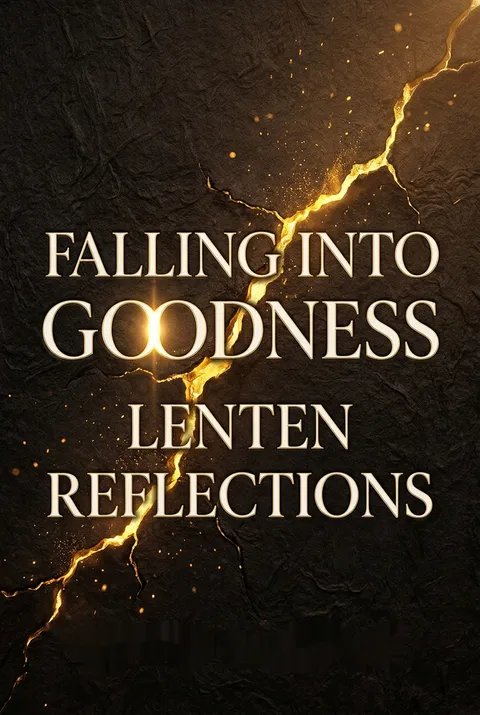

Key Takeaways
1. Embrace Your Creatureliness and Return to the Ground
No one ever told me what a gift it would be to return to the ground of my being, to relinquish the exhausting attempt to fly just a bit above everyone else, to relax my fatigued ego.
Hit the reset button. Ash Wednesday invites us to return to our fundamental nature: dust. This isn't a morbid reminder of sin, but a liberating call to embrace our creatureliness and inherent limitations. We often design our lives to avoid this "ground," hovering above reality to escape calamities, humiliations, and shame, driven by perfectionism and a fear of vulnerability.
Original goodness. The concept of "original creatureliness" reminds us that God declared everything "very good" at creation, including our seemingly awkward parts. Our problem, "sin," isn't inherent badness but our flight from this "very good" design, trying to become something we're not. This disrupts divine order and creates ripple effects in the world.
Lent as an invitation. This season is not about guilt-driven self-discipline or giving up treats, but an invitation to rest. It's a gift to relax our fatigued egos and surrender, allowing Jesus to meet us in the dust. Here, there's no facade, no hiding, only rest and renewal in the humble ground of our being.
2. Discover Your True Self Dwelling in Christ
You are in the Spirit. Christ dwells in you. It may not always feel like it. You might be triggered to anger, flooded with shame. But it’s your deepest reality.
Fragmented vs. wholehearted. We often feel fragmented, "not quite ourselves," with parts of us at war—the relaxed self versus the anxious self, the part that wants to go on a bike ride versus the part that wants a nap. This inner conflict can lead to confusion and even a sense of hypocrisy, as Dietrich Bonhoeffer noted.
The Christ-self within. St. Paul suggests our "true self" is the Christ-self, God hidden and dwelling within us by the Spirit. This core identity manifests as compassion, self-giving love, and effortless grace. Psychologists describe this true self with attributes like calm, compassionate, courageous, clear, creative, curious, and connected—qualities beautifully analogous to the fruits of the Spirit.
Beyond fear and shame. St. John's message that "perfect love casts out fear" isn't about moral perfection, but about oneness and wholeheartedness. We are more than our anxiety, created in and for Love. By returning to our roots, to God's original love, we can embrace our limitations and allow Jesus to embrace every weary, broken, and unloved part of us, freeing us from the burden of being someone we are not.
3. Your Heart is God's Temple, a Realm to Explore
Within the heart is an unfathomable depth. There are reception rooms and bedchambers in it, doors and porches, and many offices and passages. In it is the workshop of righteousness and of wickedness.
More than flesh. Our bodies are not sinful prisons but temples, the domain of God. This beautiful imagery, elaborated in the Old Testament tabernacle/temple, signifies our heart as God's new Eden, the dwelling place of the King, from which the entire earth will be renewed. St. Macarius's vivid description reveals the heart as Christ's palace, filled with both treasures of grace and "dragons and lions."
Neglecting inner housecleaning. We often live externalized, busy lives, moving from task to task without stopping to assess our inner health. We change oil in cars and filters in water dispensers, but neglect the "inner housecleaning" of our vast heart territory. This leads to tinkering with self-help or Lenten fasts, only to return to old cycles of helplessness.
Journey inward. Exploring these inner realms requires desire and commitment, despite the "dragons, lions, and poisonous creatures"—metaphors for our internal resistances. Christ has already taken up residence, urging us on this journey and filling us with spiritual resources. This exploration is not selfish introspection but a profound adventure to discover God dwelling within.
4. See Your Godlike Beauty Hidden Behind Curtains of Shame
Our godlike beauty is hidden behind curtains of shame.
The loud voice of shame. Shame relentlessly tells us we're "not enough"—not thin enough, smart enough, spiritual enough. It's a primary tool Evil uses to erode loving intimacy with God. This internal narrative often convinces us we are lowly paupers, a "mistaken identity" reinforced by some spiritual guides who emphasize our bentness, badness, and brokenness.
Merton's audacious claim. Thomas Merton suggests that if we could truly see the "secret beauty of their hearts," the core of each person in the eyes of the Divine, "there would be no more war, no more hatred, no more cruelty, no more greed." He even claims we might "fall down and worship each other." This challenges our Lenten focus on "sinful behavior" as the primary problem.
God's design and whisper. The Holy Trinity designed us for beauty, goodness, and dignity. The Father crafted every detail, the Son came to remind us of our true identity, and the Spirit whispers "Beauty and Dignity" over our souls day and night. This divine homing beacon calls us back to our original, God-imaged goodness, stirring a desire to live faithfully from a place of inherent worth.
5. The Kingdom of God is Not Far Away, But Within and Among You
For, in fact, the kingdom of God is among you.
Invisible summer. Jesus' words to the Pharisees reveal that the Kingdom is not an observable, manufactured, or packaged entity. It's the antithesis of our controlling ego. Like Leo Tolstoy's "invisible summer" found within amidst winter, the Kingdom is a present reality, accessible through imagination and inner stillness.
Heaven on earth. God dwells among us, not "up there" somewhere between Venus and Saturn. Emmanuel dwelled with us, and His Spirit dwells in the church and in our hearts. Heaven is, quite literally, within you. The old sages and mystics, like St. Teresa of Avila in her "Interior Castle," understood this "radiant sanctuary" where intimacy with God is privileged above all else.
Turn around. John the Baptist's call to "Repent, for the kingdom of heaven has come near" is an invitation to "turn around." We often seek heaven in external pursuits—romantic relationships, binges, material possessions—turning to the periphery instead of the center. Jesus isn't waiting to scold us, but to embrace us, if only we dare to look and exercise our sanctified imagination to find the goodness already present.
6. Abide in Christ: Make Your Home in Him
Live in me. Make your home in me just as I do in you.
A strange invitation. The word "abide" or "remain" in John 15:4 is better understood as "make your home." St. Augustine famously said, "God is more near to me than I am to myself," calling God our "homeland." This implies a profound intimacy, yet we often live as if God is far away, like living in a tent in the backyard of a palatial estate, never entering the doors.
Absent awareness. Franciscan priest Richard Rohr notes, "We cannot attain the presence of God because we are already totally in the presence of God. What's absent is awareness." We are distracted, sometimes even believing our "damp tent" existence is as good as it gets. Jesus invites us to recognize that He has made His home in us, and we are to make our home in Him.
God's extreme makeover. Jesus' ascension isn't a "going away" but a "going deeper" into another dimension to begin a grand re-design of us and the cosmos. C.S. Lewis describes this as God building a palace where we expected a cottage. Lent, then, is not about spiritual touch-ups or "getting right with God" through external habits, but surrendering to God's inner work, partnering in the transformation of our living temple.
7. Take the Humble Path of the Beatitudes
Blessed are the poor in spirit, for theirs is the kingdom of heaven.
A counter-intuitive beginning. Jesus' first lesson to his disciples, "Blessed are the poor in spirit," is a "buzzkill" to those seeking titles, riches, and glory. It's not about selling possessions, but coming to the "very end of yourselves"—a radical call to let go of striving and accumulation. T.S. Eliot's "In my end is my beginning" captures this inward journey through desolation to deeper union.
The journey of dying. This kingdom journey requires us to fall, not climb. It's a daily dying to every "old self," every false self, even the ones that served us well. This process involves grief, saying goodbye to old attachments and ways of being. It's a "bloody" path, a lifetime work of surrendering every resistant part of us, allowing our true selves in Christ to emerge like the resurrected Jesus.
Inheriting the earth. The Beatitudes—mourning, meekness, hunger for righteousness, mercy, purity of heart, peacemaking, and even persecution—outline this downward path. They chip away at our cheap versions of happiness, exposing our propensity for self-fulfillment. This journey, though daunting, leads to freedom, self-discovery, and a life lived fully, where we fall into the goodness of God's vision.
8. Wrestle Honestly with God and Your Doubts
I am not at ease, nor am I quiet; I have no rest, but trouble comes.
Embrace the boxing ring. In a culture of pain avoidance and quick fixes, Lent invites us to wrestle with God, to rip off bandaids and do the heart surgery necessary to confront our pain and self-sabotage. Job's story is a "heavyweight bout" where he wrestles until his hands open in surrender, refusing to theologize away his suffering.
No easy answers. This book of Job offers no "how-to" for pain management, only an honest engagement with suffering. When tragedy strikes, pretense vanishes, and we're thrust into a raw, unfiltered space where God can feel like an enemy. In these moments, we must "speak what you feel, not what you ought to say," going through the pain with boxing gloves on, as honestly as possible.
The limp of Israel. Jacob's wrestling with the "God-man" renames him Israel, "one who struggles with God." This struggle, marked by a limp, defines an entire nation. Our wrestling, too, is a declaration of trust, a relentless engagement with a God who is near and available. Doubt is inevitable, as seen in the Psalms and even in Calvin's theology, but God is secure amidst our insecurity, fearless in hearing our every doubt.
9. Follow Jesus on the Bloody Path of Justice and Transformation
Very truly, I tell you, unless a grain of wheat falls into the earth and dies, it remains just a single grain; but if it dies, it bears much fruit.
Justice as restoration. God's justice isn't an apocalyptic horror story but a process of setting everything aright, restoring brokenness, and making all things new, including us. This "setting-things-right" often comes on a trail of tears, a "bloody mess" of dying and rising, like Jesus' command to "cut out your eye if it causes you to sin"—a metaphor for radical heart surgery.
Jill's metamorphosis. Jill, terrorized by abuse, was soulless, out of touch with her true self. Her journey to freedom was a "dying-to-rising" process, enduring brutal abuse, leaving her husband, and claiming a new identity. This "crucifixion" to her old self came at a high cost but led to an extraordinary metamorphosis, transforming her into a champion for other women.
The cost of following. Following Jesus means walking a bloody path, identifying with the sufferings of the world (Philippians 3). It requires removing our blinders to societal pain—racism, abuse, injustice—and moving toward discomfort. Our true self, guided by compassion and empathy, refuses to diminish the image-bearing humanity of another, even when it leads to personal persecution and holy disruption.
10. Die to the False Self for True Self-Discovery
True self-denial (the denial of our false, fallen self) is not the road to self-destruction, but the road to self-discovery.
Good Friday's gateway. The path to Easter resurrection goes through Good Friday's dying. Every transformative journey follows this cruciform path, descending to the dust, just as we began at Ash Wednesday. The Psalmist reminds us that the poor will eat, and those who return to the ground will bow, finding Jesus not in lofty heights but in liminal spaces.
Crucified with Christ. St. Paul's declaration, "I have been crucified with Christ and it is no longer I who live, but it is Christ who lives in me," means that parts of us—our "flesh" or "false self"—must die. This cruciform journey touches every not-yet-transformed part, leading to wholeheartedness, an experience of oneness and worthiness in Christ.
Delightful self-discovery. This talk of dying and crucifixion, though seemingly negative, is ultimately about unshackling us from idols, addictions, and attachments that weigh us down. Life in the "fleshy-false-self" is enslaved, unfulfilled, and soul-sucking. John Stott clarifies that denying our fallen self leads to affirming our created self, opening us to self-discovery, vulnerability, and intimacy—the abundant life we've hungered for since the beginning.
Review Summary
Readers largely praise Falling into Goodness as a rich, impactful Lenten devotional, with many calling it their favorite. Highlights include its contemplative depth, challenging yet affirming tone, and weekly themes with Scripture-based meditations. Several readers appreciated its exploration of the false self and grace. A few critics noted its self-published editing issues and questioned its spiritual focus, feeling it leaned more toward psychological self-help. Overall, the book resonates strongly with most readers, earning a 4.5 out of 5 rating.
People Also Read








About the Author
Other books by Chuck DeGroat



Download PDF
Download EPUB
.epub digital book format is ideal for reading ebooks on phones, tablets, and e-readers.








































