
Plot Summary
Snowfall and Storytelling
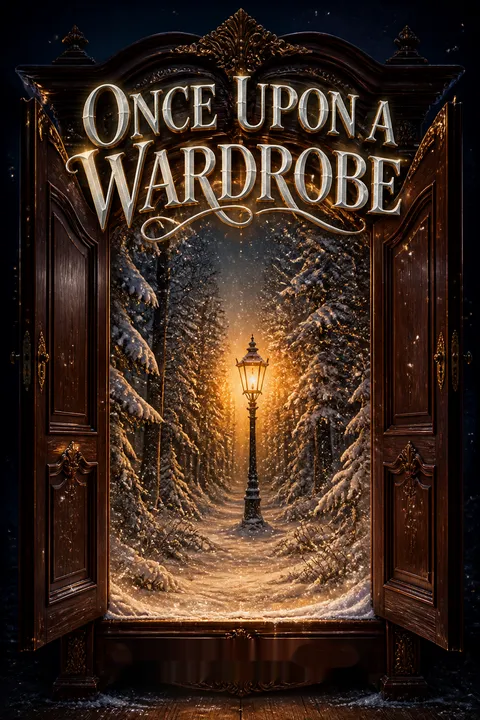
In the winter of 1950, eight-year-old George Devonshire, frail and terminally ill, finds solace in C. S. Lewis's newly published The Lion, the Witch and the Wardrobe. Snow piles outside his window, echoing the endless winter of Narnia. George's world is small—his bed, his wardrobe, his books—but his imagination is vast. He clings to stories as a way to escape his failing body and the sorrow that permeates his home. His older sister, Megs, a mathematics student at Oxford, is his anchor and confidante. George's love for Narnia becomes an obsession, and he yearns to know where such a magical world could have come from. The snow outside and the stories within become intertwined, setting the stage for a journey that will change both siblings forever.
The Question of Narnia
Megs returns home from Oxford, balancing her academic ambitions with the emotional weight of George's illness. George, wise beyond his years, asks her to find out from C. S. Lewis himself: "Where did Narnia come from? Is it real?" Megs, logical and skeptical, initially dismisses the question as childish, but George's insistence and the depth of his longing move her. She promises to seek out Lewis, despite her doubts and the barriers between them—gender, status, and the intimidating world of Oxford's male-dominated academia. This promise becomes a quest, not just for George's sake, but for Megs's own understanding of the power and purpose of stories.
The Author's Doorstep
Megs's determination leads her to the Kilns, Lewis's home on the outskirts of Oxford. After several failed attempts, she is discovered by Lewis's brother, Warnie, who welcomes her with warmth and curiosity. Invited inside, Megs meets C. S. Lewis—Jack—whose presence is both ordinary and extraordinary. Instead of giving direct answers, Lewis offers stories from his own life, inviting Megs to listen and carry them back to George. The Kilns, with its cozy clutter and air of lived-in magic, becomes a threshold between reality and imagination, and Megs finds herself drawn into a new kind of learning—one that values myth and memory as much as logic and fact.
Childhood Kingdoms
Lewis recounts his childhood in Ireland with his brother Warnie, where they invented imaginary lands—Animal-Land and Boxen—in the attic of their home, Little Lea. These early acts of creation, born from loneliness and longing, become the soil from which Narnia will one day grow. Megs relays these stories to George, who recognizes in young Jack's imaginative play a mirror of his own need to escape suffering. The siblings realize that stories are not mere diversions but lifelines, shaping identity and offering hope. The boundaries between fact and fiction blur, and the wardrobe in George's room becomes a symbol of possibility.
Loss and Longing
The narrative turns to the pivotal loss in Lewis's life: the death of his mother when he was a boy. Jack's prayers for her recovery go unanswered, and her absence leaves a wound that shapes his worldview. Megs, reading this to George, feels the ache of impending loss in her own family. The story of Jack's grief resonates deeply, revealing how sorrow and longing can fuel creativity and the search for meaning. The ruined castle of Dunluce, visited in Jack's childhood, becomes a symbol of both beauty and impermanence—a place where reality and myth converge.
Imagination's Healing Power
As George's health declines, Megs brings him more stories from Lewis's life—tales of resilience, creativity, and the solace found in books and imagination. George, inspired by Jack's example, begins to draw and write his own stories, discovering a sense of agency and joy even as his body weakens. Megs, too, is changed; she starts to see the world through the lens of story, recognizing that imagination is not an escape from reality but a way to engage with its deepest truths. The act of storytelling becomes an act of love, binding the siblings together and offering a measure of healing.
Exile and Endurance
Lewis's years at harsh English boarding schools are recounted—places of cruelty, loneliness, and exile. Yet even in these bleak environments, Jack finds refuge in books, letters, and the worlds he creates in his mind. Megs shares these episodes with George, who sees in Jack's endurance a model for his own struggles. The stories reveal that suffering and displacement can be transformed through imagination, and that exile—whether physical or emotional—can be survived by holding onto hope and creativity.
The Map to Meaning
George, ever curious, asks Megs to bring him an atlas and colored pencils, wanting to map the worlds he hears about. Megs realizes that both mathematics and stories are ways of seeking order and meaning in a chaotic world. She learns from Lewis that reason and imagination are not enemies but partners in the search for truth. The siblings trace the journeys of Jack and Warnie, both literal and metaphorical, and begin to understand that the quest for meaning is itself a kind of adventure—one that requires courage, curiosity, and openness to wonder.
The Power of Myth
Lewis's lifelong fascination with myth—Norse, Greek, Celtic—comes to the fore. He describes the moment of "joy" he experienced reading Wagner's Norse legends, a longing that pointed beyond itself to something transcendent. Megs, initially skeptical, comes to appreciate that myths are not lies but vessels for truths too deep for literal language. Through conversations with Lewis and her own experiences, she learns that stories can reveal the shape of reality, offering glimpses of grace, redemption, and the possibility of resurrection.
The Professor's Lessons
Lewis's formative years with his tutor, Kirkpatrick—the "Knock"—are explored. Under the Knock's rigorous guidance, Jack learns logic, debate, and the discipline of thought. Yet it is through his friendship with Arthur Greeves, a boy with a weak heart, that Jack discovers the power of empathy and connection. Megs sees parallels between Arthur and George, and between herself and Jack. The lessons of mentorship, friendship, and intellectual humility become central to her own growth, as she learns to balance reason with compassion.
War and Wonder
The trauma of World War I marks Lewis indelibly. Wounded in battle, he turns to poetry and myth for solace, publishing his first book under a pseudonym. The war's devastation deepens his understanding of loss, courage, and the need for stories that offer hope. Megs, reading these accounts to George, recognizes that even in the darkest times, the imagination can kindle light. The narrative draws connections between the battles of Narnia and the real wars that shaped Lewis's generation, underscoring the enduring relevance of mythic storytelling.
The True Beginning
During World War II, Lewis and Warnie open their home to children evacuated from London. Their presence inspires Lewis to begin writing the story that will become The Lion, the Witch and the Wardrobe. The first draft is tentative, with different names and details, but over time the story takes shape, drawing on the threads of Lewis's own life—childhood loss, mythic longing, the search for home. Megs realizes that stories often begin long before they are written, gestating in memory, experience, and the subconscious. The true beginning of Narnia is not a single moment, but a tapestry woven from many strands.
The Adventure to Ireland
George's greatest wish is to see Dunluce Castle, the inspiration for Cair Paravel. With the help of Padraig, a kind-hearted Oxford student, Megs and George embark on a daring journey to Ireland. The adventure is both literal and symbolic—a fulfillment of George's dream and a testament to the power of love and imagination. At the castle's ruins, George experiences a moment of transcendence, seeing the world not as it is, but as it could be. The journey affirms the value of risk, the necessity of wonder, and the possibility of joy even in the face of sorrow.
The Lion's Shadow
As George's health fades, he continues to draw lions—Aslan—into every scene, sensing the presence of something greater than himself. Megs, struggling to reconcile logic with faith, asks Lewis directly: Who is Aslan? Where did he come from? Lewis responds with humility and ambiguity, suggesting that stories arise from images, dreams, and the mysterious workings of grace. Aslan is both a literary creation and a symbol of the divine—a supposal, not an allegory. The lion's shadow falls across the lives of all who seek meaning, inviting them to look beyond the surface of things.
Answers Without Answers
Megs comes to accept that some questions—about Narnia, about suffering, about the afterlife—cannot be answered with certainty. Lewis teaches her that stories are not puzzles to be solved, but mysteries to be entered. The siblings, their parents, and Padraig gather around George, sharing stories, tears, and laughter. The act of storytelling becomes a way of saying goodbye, of honoring the mystery at the heart of life. Megs realizes that the best stories do not close doors, but open them, inviting readers to step through into new worlds of possibility.
The End as Beginning
After George's death, Megs finds solace in writing and teaching, carrying forward the lessons she learned from her brother, from Lewis, and from the stories they shared. Years later, she reads to her own grandson, passing on the tale of George, Narnia, and the enduring power of imagination. The story comes full circle, affirming that every ending is also a beginning, and that the light of story—like the lamppost in Narnia—shines on, guiding new generations through the wardrobe and into wonder.
Analysis
A meditation on the necessity of story in the face of sufferingOnce Upon a Wardrobe is a luminous exploration of why we tell stories and how they shape our lives, especially in times of loss and uncertainty. Through the intertwined journeys of Megs and George, the novel argues that stories are not mere diversions but essential tools for making sense of the world, for finding hope, and for connecting across boundaries of age, belief, and circumstance. By weaving together biography, myth, and fiction, Patti Callahan Henry pays tribute to C. S. Lewis's legacy while also crafting a narrative that stands on its own as a testament to the healing power of imagination. The book invites readers to embrace ambiguity, to honor both reason and wonder, and to recognize that the most important questions—about love, death, and meaning—may not have definitive answers, but are nonetheless worth asking. In a modern context, the novel resonates as a call to reclaim the magic of storytelling, to find courage in vulnerability, and to believe that even in the darkest winter, the light of a lamppost—and the roar of a lion—can guide us home.
Review Summary
Once Upon a Wardrobe is widely praised as a magical, heartwarming blend of fiction and history, earning an overall rating of 4.33/5. Most readers love the tender sibling relationship between Megs and George, the immersive portrayal of C.S. Lewis's life, and the celebration of storytelling's transformative power. Many were moved to tears by the emotional ending. Critical reviews cite inconsistent prose, underdeveloped narrative cohesion, and Megs's frustratingly rigid character. Fans of Narnia and Lewis particularly cherish the novel, while those already familiar with Lewis's biography may find it redundant.
People Also Read

Characters
Megs Devonshire
Megs is a seventeen-year-old mathematics prodigy at Oxford, defined by her devotion to reason, order, and her ailing younger brother, George. Initially skeptical of fairy tales, she is compelled by George's plea to seek out C. S. Lewis and discover the origins of Narnia. Through her encounters with Lewis and the stories he shares, Megs undergoes a profound transformation—learning to value imagination, myth, and the emotional truths that logic alone cannot provide. Her journey is one of opening: to wonder, to love, and to the acceptance of life's mysteries. Her relationship with George is the emotional core of the novel, and her eventual embrace of storytelling becomes her way of honoring him and finding her own voice.
George Devonshire
George, eight years old and terminally ill, is wise beyond his years yet retains a child's capacity for wonder. His obsession with Narnia is both an escape from suffering and a quest for meaning. George's questions drive the narrative, compelling Megs to venture beyond her comfort zone. Despite his frailty, he is emotionally resilient, often comforting his family rather than the other way around. George's imagination is vivid—he draws, dreams, and inhabits stories with a depth that inspires those around him. His acceptance of mortality and his insistence on the importance of stories leave a lasting impact on his family and on Megs in particular.
C. S. Lewis (Jack)
Lewis appears as both a character and a living embodiment of the power of story. Warm, witty, and approachable, he welcomes Megs into his home and responds to her questions not with direct answers, but with stories from his own life. His past—marked by childhood loss, imaginative play, intellectual rigor, and the trauma of war—shapes his understanding of myth and meaning. Lewis's humility and openness to mystery challenge Megs's certainties, and his kindness offers comfort to both siblings. He is portrayed as a man who has suffered and found redemption through imagination, faith, and friendship.
Warnie Lewis
Warnie, Jack's older brother, is a steady, compassionate presence at the Kilns. He shares in the storytelling, offering insights into their shared childhood and the creation of Boxen. Warnie's own experiences of war and loss parallel Jack's, and his warmth helps Megs feel at home in the unfamiliar world of Oxford. His relationship with Jack models the kind of sibling bond that Megs and George share, reinforcing the novel's themes of loyalty, memory, and the sustaining power of family.
Padraig Cavender
Padraig is an Oxford literature student with Irish roots, whose easygoing nature and empathy draw Megs out of her shell. He becomes both a confidant and a romantic interest, helping Megs see the value of stories and imagination. Padraig's willingness to help Megs and George fulfill their dream of visiting Dunluce Castle demonstrates his generosity and courage. His presence in Megs's life represents the possibility of new beginnings and the enduring importance of friendship and love.
Mum (Mrs. Devonshire)
Mum is a figure of strength and vulnerability, striving to hold the family together in the face of George's illness. She channels her anxiety into caring for her garden and her children, and her emotional journey mirrors Megs's—moving from denial and fear to acceptance and gratitude. Her relationship with Megs is marked by both tension and deep affection, and her eventual embrace of storytelling reflects her own transformation.
Dad (Mr. Devonshire)
Dad is a steady, hardworking presence, running the local market and struggling with his inability to "fix" George's illness. His love for his family is quiet but profound, and his moments of vulnerability—especially in the face of loss—reveal the depth of his grief. Dad's gradual acceptance of the importance of stories and imagination is part of the novel's broader message about the need for emotional openness.
Arthur Greeves
Arthur, Lewis's childhood friend, shares Jack's love of books and suffers from a weak heart, much like George. Their friendship is a source of comfort and inspiration for Jack, and their correspondence shapes his understanding of empathy and connection. Arthur's presence in the narrative underscores the importance of friendship and the ways in which shared suffering can foster deep bonds.
Mrs. Moore (Minto)
Mrs. Moore, the mother of Lewis's fallen comrade Paddy, becomes a surrogate mother to Jack after the war. Jack's commitment to caring for her fulfills a promise and reflects his sense of duty and compassion. Her presence at the Kilns during the war years adds another layer of complexity to the household and to Jack's understanding of family.
The White Witch / Aslan (Symbols)
Though not characters in the literal sense, the White Witch and Aslan function as symbolic presences throughout the novel. The Witch represents suffering, loss, and the forces that threaten hope, while Aslan embodies grace, courage, and the possibility of redemption. George's drawings of Aslan in every scene reflect his longing for protection and meaning, and the recurring question of Aslan's identity becomes a focal point for the novel's exploration of faith and mystery.
Plot Devices
Nested Storytelling and Metafiction
The novel employs a layered narrative structure, with Megs relaying Lewis's autobiographical stories to George, who in turn reimagines them through his own drawings and dreams. This nesting of stories blurs the boundaries between fact and fiction, past and present, and highlights the transformative power of narrative. The metafictional device—stories about the making of stories—invites readers to reflect on the origins and purposes of storytelling itself.
The Wardrobe as Portal
The wardrobe in George's room, echoing the one in Lewis's novel, serves as a recurring motif—a threshold between the mundane and the magical, the known and the unknown. It represents the possibility of escape, transformation, and the discovery of new worlds within and beyond oneself. The act of entering the wardrobe becomes a metaphor for entering into story, memory, and meaning.
Letters and Oral Tradition
Letters between characters (Jack and Arthur, Megs and George, Lewis and his pen friends) and the oral transmission of stories underscore the importance of communication in forging relationships and preserving memory. The act of writing and reading letters, as well as telling and retelling stories, becomes a way of bridging distances—geographical, emotional, and existential.
Foreshadowing and Circular Structure
The novel is structured to echo the cyclical nature of stories and life itself. The opening and closing scenes mirror each other, with Megs reading to a new generation, suggesting that stories—and the love they carry—are never truly finished. Foreshadowing is used to prepare readers for loss, but also for the possibility of renewal and hope.
Interplay of Reason and Imagination
The tension between Megs's mathematical worldview and the imaginative world of Narnia is a central plot device. Through her journey, the novel explores the limitations and strengths of both approaches, ultimately suggesting that reason and imagination are complementary paths to truth. This interplay is dramatized in Megs's conversations with Lewis, Padraig, and her family, as well as in her own internal transformation.
About the Author
Other books by Patti Callahan Henry
Download PDF
Download EPUB
.epub digital book format is ideal for reading ebooks on phones, tablets, and e-readers.








































