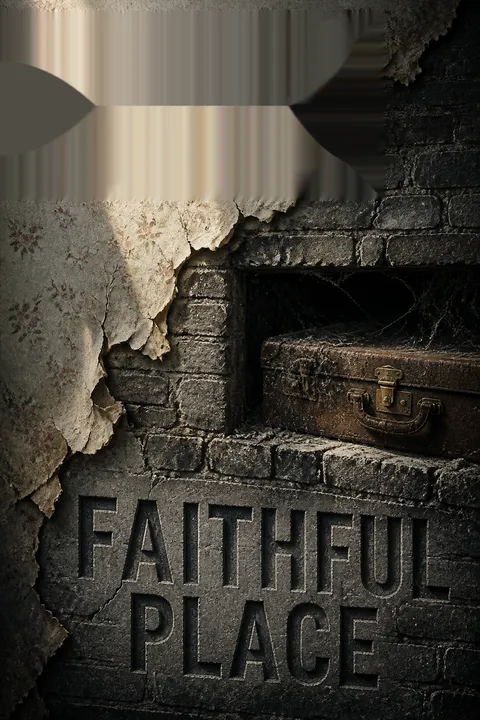

Plot Summary
Midnight Promises, Broken Dreams
Nineteen-year-old Frank Mackey, desperate to escape his dysfunctional Dublin family and the suffocating confines of Faithful Place, plans to elope to England with his first love, Rosie Daly. On a cold December night, he waits for her at the top of their street, their secret New Year's Eve. But Rosie never arrives. Instead, Frank finds a note in a derelict house, Number 16, saying she's left for England alone. Heartbroken and betrayed, Frank leaves home, convinced Rosie abandoned him, and spends the next twenty-two years building a new life, haunted by the night that changed everything.
The Suitcase in the Chimney
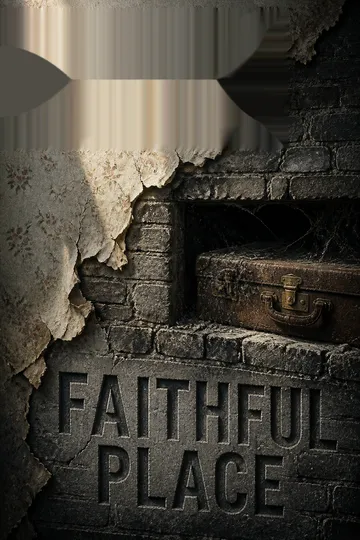
Decades later, Frank is a detective in Dublin's Undercover Squad, divorced and devoted to his daughter Holly. His estranged family calls him back to Faithful Place: builders have found Rosie's suitcase hidden behind a fireplace in Number 16. The suitcase contains her clothes, tapes, and ferry tickets—evidence she never left for England. The discovery shatters the old story and forces Frank to confront the possibility that Rosie never left at all, and that something terrible happened to her that night.
Family Ties, Family Lies
Frank's return to Faithful Place is fraught with tension. His family—his tough mother, alcoholic father, and siblings Shay, Carmel, Jackie, and Kevin—are a volatile mix of loyalty, resentment, and secrets. The Mackeys and the Dalys, Rosie's family, have a long history of mutual animosity. As Frank investigates, he's forced to navigate the minefield of old grudges, unspoken traumas, and the suffocating rules of the neighborhood, where no one ever squeals and everyone has something to hide.
Ghosts of Faithful Place
Frank's investigation into Rosie's disappearance is both professional and deeply personal. He interviews Rosie's family and friends, piecing together her last days. The suitcase's contents suggest Rosie was packed and ready to go, but never made it out. The neighborhood, changed by time but still clinging to its old codes, is alive with gossip and suspicion. Frank's presence stirs up memories and resentments, and he's forced to confront the ghosts of his own childhood—poverty, violence, and the desperate longing to escape.
The Girl Who Vanished
Frank's instincts tell him Rosie never left Faithful Place. He retraces her likely route the night she vanished, focusing on Number 16, the derelict house where her suitcase was found. With the help of his brother Kevin, Frank explores the house and its basement, uncovering a concrete slab that seems out of place. When the police break it open, they find a body: Rosie's remains, hidden for over two decades. The discovery transforms the case from a missing person to a murder investigation, and Frank is plunged into a search for the truth that will tear his family apart.
The Body in the Basement
The murder squad, led by Scorcher Kennedy, takes over the case. Forensics confirm the body is Rosie's, her skull fractured and hyoid bone broken—evidence of a violent death. The neighborhood is electrified by the news, and suspicion falls on everyone who knew Rosie. Frank, both a cop and a suspect, is sidelined but refuses to let go. He's determined to find out who killed Rosie, even as the investigation threatens to destroy what's left of his family and his own sense of self.
Old Wounds, New Scars
As Frank digs deeper, he uncovers layers of family dysfunction and neighborhood complicity. The Mackeys' history is one of sacrifice and survival, with Shay and Carmel giving up their own futures to protect the younger siblings from their violent father. Frank's relationship with his siblings is strained by old rivalries and new suspicions. The Dalys, too, are fractured by grief and denial. The investigation reveals that Rosie's plans to leave were known to more people than Frank realized, and that betrayal may have come from closer to home than he ever imagined.
The Note That Changed Everything
A crucial piece of evidence emerges: the original note Rosie left behind, split in two. One half was found the night she vanished; the other turns up in Kevin's pocket after his sudden death. The note, addressed to her family, confirms Rosie intended to run away with Frank. Its reappearance raises disturbing questions: did Kevin know more than he admitted? Did he have a role in Rosie's death? The note becomes the fulcrum of the investigation, shifting suspicion and deepening the mystery.
Sins of the Fathers
Frank's investigation forces him to confront the sins of the previous generation. The long-standing feud between the Mackeys and the Dalys is rooted in old romantic entanglements and class resentments. Frank learns that his father and Rosie's mother had a history, and that the bitterness between the families shaped their children's lives. The violence and secrets of the past have left scars on everyone, and the truth about Rosie's death is tangled in the web of family loyalty, shame, and the desperate need to escape.
The Price of Secrets
Just as Frank begins to make progress, tragedy strikes again: his brother Kevin is found dead in the garden of Number 16, apparently having fallen from a window. The police suspect suicide, but Frank is convinced it's murder. The timing and circumstances suggest Kevin knew something about Rosie's death—and that someone killed him to keep it secret. The family is devastated, and Frank is consumed by guilt for not answering Kevin's calls for help. The cost of secrets, and the price of silence, become painfully clear.
The Confession
Frank's relentless pursuit of the truth leads him to a devastating realization: his brother Shay is the murderer. Shay, embittered by years of sacrifice and convinced that Frank's escape with Rosie would doom the rest of the family, confronted Rosie the night she vanished. In a fit of rage, he killed her and hid her body. When Kevin began to suspect the truth, Shay lured him to Number 16 and killed him as well, staging it as a suicide. The confession is both a relief and a tragedy, confirming Frank's worst fears about the family he tried so hard to leave behind.
Blood Tells
The revelation of Shay's guilt forces Frank to confront the darkest truths about his family and himself. The Mackeys' fierce loyalty, their code of silence, and their willingness to sacrifice for each other have become a curse. Shay's actions are the twisted culmination of a lifetime of pain and resentment. Frank, torn between his duty as a cop and his love for his brother, must decide whether to protect Shay or bring him to justice. The meaning of family, and the limits of forgiveness, are tested to the breaking point.
The End of Innocence
Frank's daughter Holly, clever and observant, becomes the unwitting key to the case. She discovers evidence of Shay's guilt and, after a painful struggle, tells Frank what she knows. The burden of family secrets falls on the next generation, and Frank is determined to break the cycle. He arranges for Shay's arrest, ensuring that the truth will come out, even as it destroys what's left of the Mackey family.
The Weight of the Past
With Shay in custody and the truth revealed, the Mackeys are left to pick up the pieces. The family is shattered, their illusions gone. Frank is ostracized by the neighborhood for "squealing" on his own brother, but he stands by his decision. The cost of closure is high: relationships are broken, and the wounds of the past are slow to heal. Frank's own sense of identity is shaken, but he finds solace in his daughter and the hope that she can escape the legacy that trapped him.
The Truth Comes Home
Frank tries to rebuild his life, reconnecting with his daughter and ex-wife, and making peace with the choices he's made. The neighborhood, forever changed by the revelations, begins to move on. The old codes of silence and loyalty are exposed as both a source of strength and a source of tragedy. Frank's journey is one of painful self-discovery, as he learns that the past can never be fully escaped, but it can be faced.
The Last Goodbye
The story ends with Frank reflecting on the cost of truth and the meaning of family. The ghosts of Faithful Place linger, but Frank is determined to give his daughter a better future. The final scenes are bittersweet: the neighborhood is blanketed in snow, the old houses stand silent, and Frank walks the streets of his childhood one last time. The past is never truly gone, but the possibility of redemption remains.
The Cost of Closure
In the aftermath, Frank is left to reckon with the consequences of his actions. He is estranged from his family, but closer to his daughter. The neighborhood's old ways are dying, replaced by new realities. The story of Faithful Place is one of love and loss, of secrets and survival, and of the enduring power of the past to shape the present. Frank's journey is a testament to the difficulty of breaking free, and the courage it takes to face the truth.
Analysis
Faithful Place is a masterful blend of psychological thriller, family drama, and social commentary, using the framework of a murder mystery to explore the enduring impact of childhood trauma, the complexities of loyalty, and the inescapable pull of the past. Tana French's novel is as much about the corrosive effects of secrets and the longing for escape as it is about solving a crime. Through Frank Mackey's journey, the book interrogates the meaning of family—how it can both save and destroy us—and the ways in which our origins shape our destinies. The novel's setting, a working-class Dublin neighborhood resistant to change, becomes a microcosm for the struggle between tradition and transformation. Ultimately, Faithful Place is a story about the cost of truth: the pain of confronting what we most want to forget, the courage required to break cycles of silence, and the hope that, by facing the past, we might build a better future for those we love.
Review Summary
Faithful Place receives largely positive reviews for its compelling character study of detective Frank Mackey, atmospheric Dublin setting, and exploration of family dynamics. Readers praise French's writing style, dialogue, and ability to create complex, flawed characters. While some find the mystery element predictable, many appreciate the emotional depth and psychological insights. The book is often cited as a favorite in the Dublin Murder Squad series, though a few readers found it slower-paced than previous installments. Overall, reviewers commend French's skill in balancing suspense with rich character development.
People Also Read







Characters
Frank Mackey
Frank is the protagonist and narrator, a tough, sharp-witted detective who escaped his abusive family and working-class Dublin roots, only to be pulled back by the mystery of his first love's disappearance. Frank is fiercely loyal to his daughter Holly, cynical about family, and driven by a need for truth and justice. His psychological complexity is rooted in childhood trauma, guilt, and the longing for escape. Over the course of the novel, Frank is forced to confront the limits of loyalty, the cost of secrets, and the inescapable pull of the past. His journey is one of painful self-discovery, as he learns that closure comes at a price.
Rosie Daly
Rosie is Frank's first love, the girl who was supposed to be his ticket out of Faithful Place. Spirited, independent, and full of dreams, Rosie represents both possibility and loss. Her disappearance is the central mystery of the novel, and her fate—murdered on the night she was to run away—haunts everyone who knew her. Rosie's character is revealed through memories, interviews, and the evidence she left behind. She is both a real person and a symbol of everything Frank wanted and lost.
Shay Mackey
Shay is Frank's older brother, a hard, embittered man who sacrificed his own future to protect his siblings from their violent father. Shay's sense of duty curdled into resentment, and his inability to escape Faithful Place becomes the motive for his crimes. He kills Rosie to prevent Frank from leaving, and later kills Kevin to protect his secret. Shay is both a victim and a villain, shaped by the same forces that shaped Frank. His psychological portrait is one of rage, jealousy, and the tragic consequences of misplaced loyalty.
Kevin Mackey
Kevin is Frank's younger brother, sweet-natured and easygoing, who never managed to escape the family's orbit. Kevin's discovery of the truth about Rosie's death leads to his own murder at Shay's hands. Kevin's innocence and vulnerability make his fate especially poignant, and his death is the catalyst that forces Frank to confront the full horror of what has happened.
Jackie Mackey
Jackie is Frank's younger sister, a hairdresser with a big heart and a talent for keeping the family together. She is the only sibling Frank stays in touch with after he leaves home, and she is the one who calls him back when Rosie's suitcase is found. Jackie is both a source of comfort and a reminder of the ties Frank can never fully break. Her loyalty is tested by the events of the novel, and she is left to pick up the pieces after the truth comes out.
Carmel Mackey
Carmel is the eldest Mackey sister, practical and nurturing, who took on the role of surrogate mother to her younger siblings. Her life is defined by sacrifice and responsibility, and she is both proud of and resentful toward her family. Carmel's relationship with Frank is complicated by old wounds and unspoken grievances, and she is deeply affected by the family's unraveling.
Mr. and Mrs. Mackey
Frank's parents are emblematic of the dysfunction at the heart of Faithful Place. His mother is domineering and manipulative, his father violent and alcoholic. Their marriage is a battleground, and their children are collateral damage. The legacy of their abuse and neglect shapes every character in the novel, and their inability to change is both a source of tragedy and a warning to the next generation.
Mr. and Mrs. Daly
Rosie's parents are haunted by the loss of their daughter and the secrets that surrounded her disappearance. Mr. Daly is rigid and judgmental, Mrs. Daly fragile and unstable. Their relationship with Frank is poisoned by old resentments, and their inability to accept the truth about Rosie's fate is both understandable and heartbreaking.
Holly Mackey
Holly is Frank's nine-year-old daughter, bright, observant, and fiercely loved by her father. She becomes an unwitting participant in the investigation, discovering evidence that helps solve the case. Holly represents the possibility of breaking the cycle of trauma and secrecy that has defined the Mackey family. Her relationship with Frank is the emotional anchor of the novel, and her resilience offers a glimmer of hope.
Scorcher Kennedy
Scorcher is the lead detective on Rosie's murder case, a former rival of Frank's with a rigid sense of procedure and a keen eye for reputation. He is both an ally and an obstacle, more concerned with closing the case than with the messy realities of family and loyalty. Scorcher's approach to the investigation highlights the limitations of official justice and the complexities of truth.
Plot Devices
Dual Timelines and Memory
The novel's structure alternates between Frank's present-day investigation and his memories of the past, gradually revealing the truth about Rosie's disappearance and the Mackey family's history. This dual timeline creates suspense and allows the reader to experience the emotional weight of the past alongside the unfolding mystery. Memory is both unreliable and essential, shaping the characters' perceptions and decisions.
The Locked-Room Mystery
At its core, Faithful Place is a murder mystery: a body hidden for decades, a closed circle of suspects, and a detective determined to find the truth. The "locked-room" aspect is literal (Rosie's body hidden in a sealed house) and metaphorical (the secrets locked within the family and the neighborhood). The investigation is complicated by the codes of silence and loyalty that define Faithful Place.
Family as Both Sanctuary and Prison
The novel explores the paradox of family: the ways in which it can nurture and destroy, offer safety and inflict harm. The Mackeys' fierce loyalty is a source of strength, but also the root of their tragedy. The rules of Faithful Place—never squeal, always stand by your own—are both a shield and a cage. The plot hinges on the tension between individual desire and family obligation.
The Power of Place
Faithful Place is more than a backdrop; it is a living, breathing force that shapes everyone who lives there. The neighborhood's history, its unwritten rules, and its resistance to change are central to the story. The physical spaces—Number 16, the Mackey home, the streets and gardens—are imbued with memory and meaning, and the past is always present.
The Unreliable Narrator
The story is told entirely from Frank's point of view, blending sharp observation with emotional blind spots. His cynicism, humor, and self-deception color the narrative, and the reader is invited to question his judgments and motivations. The unreliable narrator device deepens the psychological complexity and keeps the reader guessing.
The Cycle of Secrets and Silence
The plot is driven by the secrets kept by individuals, families, and the neighborhood as a whole. The refusal to "squeal" is both a survival strategy and a source of tragedy. The novel explores the cost of silence, the burden of hidden truths, and the difficulty of breaking free from the past.
FAQ
0. Synopsis & Basic Details
What is Faithful Place about?
- A Detective's Return: Faithful Place follows Dublin Undercover Detective Frank Mackey, who is pulled back to his estranged, working-class childhood neighborhood after twenty-two years when the suitcase of his first love, Rosie Daly, is found hidden in a derelict house. This discovery shatters his long-held belief that Rosie abandoned him to elope to England, forcing him to confront the possibility that she was murdered.
- Unearthing a Cold Case: The narrative delves into Frank's investigation of Rosie's disappearance, which quickly escalates into a murder inquiry when her remains are found in the same derelict house. This personal quest for truth forces Frank to navigate the complex, often toxic, dynamics of his own family and the tight-knit, secretive community of Faithful Place, where old loyalties and unspoken rules clash with his professional duty.
- A Web of Family Secrets: As Frank uncovers layers of betrayal, resentment, and long-buried secrets, the investigation takes a devastating turn with the death of his younger brother, Kevin. This second tragedy intensifies Frank's resolve, leading him to a shocking revelation about the true killer and the profound, destructive impact of his family's past on their present.
Why should I read Faithful Place?
- Deep Psychological Dive: Readers should delve into Faithful Place for its masterful psychological exploration of trauma, loyalty, and identity. Tana French crafts a protagonist, Frank Mackey, whose internal struggles are as compelling as the external mystery, offering a raw, unflinching look at how childhood experiences shape an adult's entire worldview.
- Atmospheric & Immersive Setting: The novel's vivid portrayal of Faithful Place itself acts as a character, drawing readers into a Dublin neighborhood steeped in its own history, codes, and palpable atmosphere. French's evocative prose makes the setting feel alive, contributing significantly to the story's pervasive sense of claustrophobia and inescapable past.
- Complex Moral Dilemmas: Beyond the thrilling murder mystery, the book challenges readers with profound moral questions about family loyalty versus justice, the nature of truth, and the possibility of breaking destructive cycles. It's a story that lingers long after the final page, prompting reflection on personal responsibility and the enduring weight of secrets.
What is the background of Faithful Place?
- Post-Celtic Tiger Dublin: The novel is set against the backdrop of a rapidly changing Dublin, specifically the working-class Liberties district, which is experiencing the effects of the "Celtic Tiger" economic boom and its subsequent bust. This economic shift introduces new social dynamics, with old tenements being bought up by "yuppies" and foreign investors, creating a tension between traditional community values and modern aspirations.
- Irish Social Fabric: French subtly weaves in elements of Irish social history, including the prevalence of emigration in the 1980s as a means of escape from economic hardship, and the strong influence of Catholicism on community life and individual morality. The characters' lives are deeply intertwined with these cultural norms, particularly the unspoken code of silence and fierce family loyalty that often supersedes official law.
- The Liberties' Unique Identity: The Liberties, historically an area with its own rules and a strong sense of independence, serves as a microcosm for these broader themes. Its labyrinthine streets and close-knit community foster both deep bonds and suffocating secrets, making it a challenging environment for Frank, an outsider by choice, to navigate as he investigates a crime rooted in its very foundations.
What are the most memorable quotes in Faithful Place?
- "In all your life, only a few moments matter.": This opening line from the prologue immediately establishes the novel's thematic core: the profound impact of pivotal moments and the long shadow they cast. It foreshadows Frank's lifelong obsession with the night Rosie disappeared, highlighting how a single event can define a person's entire existence and the retrospective clarity (or distortion) of memory.
- "You can take the fella out of the Place, but you can't take the Place out of the fella.": Uttered by Mandy Brophy to Frank, this quote encapsulates the inescapable influence of one's origins, a central theme in Faithful Place. It speaks to the deep-seated identity forged by community, family, and environment, suggesting that even Frank's successful escape and new life as a detective cannot truly sever his ties to the raw, unvarnished reality of his past.
- "I'm not my da.": Frank's desperate assertion to Rosie, and later to himself, is a powerful declaration of his struggle against inherited traits and the cycle of abuse. It reveals his core motivation to be different from his violent, alcoholic father, and underscores his fear of becoming the very thing he despises. This quote is a poignant expression of his yearning for a better life and his fierce determination to protect Holly from the same legacy.
What writing style, narrative choices, and literary techniques does Tana French use?
- First-Person, Introspective Narrative: Tana French employs a deeply immersive first-person narrative, allowing readers direct access to Frank Mackey's cynical, witty, and often self-deceiving internal monologue. This choice creates an intimate connection with the protagonist, but also establishes him as an unreliable narrator, forcing readers to question his perceptions and biases, especially concerning his family and past.
- Rich, Sensory Prose: French's writing is characterized by its vivid, sensory descriptions that bring Dublin and Faithful Place to life. She uses evocative language to paint detailed pictures of settings, from the "savory burnt edge from the hops up at Guinness's" to the "thick chilly air" of the morgue, immersing the reader in the physical and emotional landscape of the story.
- Dialogue as Character & Conflict: Dialogue is a cornerstone of French's technique, serving not just to advance the plot but to reveal character, history, and power dynamics. The sharp, often lacerating exchanges, particularly within the Mackey family, are laden with subtext, unspoken grievances, and cultural nuances, reflecting the complex relationships and the community's unique communication style.
- Foreshadowing and Thematic Echoes: French masterfully uses subtle foreshadowing and recurring motifs to build suspense and deepen thematic resonance. Seemingly casual remarks or background details often gain profound significance later, creating a tightly woven narrative where past events constantly echo in the present, reinforcing the idea that "the past is never truly gone."
1. Hidden Details & Subtle Connections
What are some minor details that add significant meaning?
- The "Riptide Pull" Metaphor: Frank's recurring description of life's pivotal moments as a "riptide pull" (Prologue, Chapter 1) is more than just a literary flourish. It subtly foreshadows the inescapable, almost fated nature of his return to Faithful Place and the subsequent unraveling of his carefully constructed life, suggesting a force beyond his control that dictates his destiny. This metaphor highlights his deep-seated belief in external forces shaping his life, rather than his own agency.
- The Smell of the Liberties: Frank notes that after Guinness's went "eco-correct," the Liberties now smell of "diesel fumes" instead of "malt and burnt hops" (Chapter 2). This seemingly minor detail symbolizes the loss of the area's traditional working-class identity and the encroachment of modern, less authentic elements. It underscores the theme of change and loss, reflecting Frank's own struggle to reconcile his past with the present.
- Ma's Sacred Heart Statue: The "lurid red" glow of Ma's Sacred Heart statue in the corner of the living room (Chapter 2) is a subtle but potent symbol. It represents the pervasive, often suffocating, influence of traditional Irish Catholicism and its blend of piety and superstition within the Mackey household. Its "lurid" quality hints at the darker, less holy aspects of the family's life, contrasting sharply with the idealized image of faith.
What are some subtle foreshadowing and callbacks?
- Kevin's "Spider Monkey" Comment: When Frank calls Holly a "spider monkey," she asks, "What's a spider monkey?" (Chapter 1). This seemingly innocent exchange subtly foreshadows Kevin's later death by falling from a height, linking him to the image of a creature that climbs and falls. It's a dark, almost unconscious premonition of his tragic end.
- Shay's "Peace on Walton's Mountain" Remark: After the suitcase is found, Shay sarcastically quips, "Peace on Walton's Mountain. Just in time for Christmas" (Chapter 2). This ironic comment, referencing an idealized family show, foreshadows the complete breakdown of family peace and the violent revelations that will follow, highlighting the stark contrast between their reality and any semblance of harmony.
- Imelda's "One That Got Away": Imelda's poignant reflection that Rosie was "the only one of us that didn't turn into her ma... The one that got away" (Chapter 14) is a powerful callback to the novel's central theme of escaping one's origins. It subtly foreshadows the revelation of Shay's motive, which is rooted in preventing Frank from being "the one that got away" and leaving the family behind, thus trapping them all in their inherited fates.
What are some unexpected character connections?
- Frank's Father and Rosie's Mother: The revelation that Frank's father, Jimmy Mackey, and Rosie's mother, Tessie O'Byrne (later Daly), had a romantic history before their respective marriages (Chapter 17) is a deeply unexpected connection. This hidden past explains the intense, long-standing animosity between the Mackey and Daly families, revealing that the feud was not just about class or Frank and Rosie's relationship, but a bitter, unresolved romantic rivalry that poisoned generations.
- Kevin's Secret Admiration for Rosie: Kevin's quiet admission that he "remember[s] Rosie... really strongly" and found her "lovely" (Chapter 2) hints at a deeper, unacknowledged attraction. This is later confirmed by Imelda, who reveals Kevin had a "massive thing for Rose" (Chapter 18). This unexpected connection provides a potential, albeit unproven, layer of motive for Kevin's actions or involvement, complicating the initial perception of his innocence.
- Carmel's Envy of Kevin and Jackie: Carmel confesses to Frank that she was "jealous of him [Kevin]... and of Jackie, as well" (Chapter 17), wishing she could still be "great at being happy" like them. This reveals an unexpected emotional depth to Carmel, showing her hidden struggles beneath her maternal, practical exterior. It highlights how even within the closest family bonds, unspoken resentments and desires can fester, influencing perceptions and interactions.
Who are the most significant supporting characters?
- Stephen Moran: As the young, earnest floater detective assigned to Scorcher Kennedy's team, Stephen Moran becomes Frank's crucial "man on the inside" (Chapter 11). His intelligence, ethical compass, and willingness to question authority make him indispensable to Frank's parallel investigation. Stephen represents a new generation of police work, less bound by old loyalties and more focused on objective truth, serving as a foil to both Frank's street-smart cynicism and Scorcher's procedural rigidity.
- Imelda Tierney: Rosie's childhood friend, Imelda, initially appears as a minor character but becomes a pivotal witness. Her complex relationship with the Mackey family, her own struggles with life in the Liberties, and her eventual betrayal of Rosie's secret to Shay (Chapter 18) are crucial to unraveling the murder. Imelda embodies the destructive power of envy and the desperate desire for attention, highlighting how seemingly small acts of jealousy can have catastrophic consequences.
- Nora Daly: Rosie's younger sister, Nora, provides a unique perspective on the Daly family dynamics and Rosie's character. Her quiet strength, her lingering grief, and her unexpected connection with Frank (Chapter 16) offer moments of vulnerability and insight. Nora's willingness to share her memories and her family's secrets, despite her father's disapproval, is vital to Frank's understanding of the past and the deep-seated animosity between the families.
2. Psychological, Emotional, & Relational Analysis
What are some unspoken motivations of the characters?
- Frank's Need for Control: Beneath Frank's cynical exterior and his stated desire for justice lies a deep, unspoken motivation for control. His undercover work, his meticulous planning, and his relentless pursuit of the truth are all attempts to impose order on a chaotic world, particularly one shaped by his dysfunctional family. His anger at Rosie's perceived abandonment and Kevin's death stems partly from the loss of control over his own narrative and the lives of those he cares about.
- Shay's Desire for Recognition and Escape: Shay's primary unspoken motivation is a desperate yearning for recognition and a chance to escape his predetermined fate in Faithful Place. His resentment towards Frank for leaving, and his ambition to buy the bike shop, are driven by a desire to prove his worth and break free from the cycle of poverty and violence that defined his parents' lives. His actions are a twisted manifestation of this longing, fueled by a sense of being overlooked and undervalued.
- Olivia's Quest for a "Normal" Family: Olivia's decision to secretly introduce Holly to Frank's family, despite Frank's wishes, is motivated by an unspoken desire for Holly to have a "normal" extended family, something Olivia herself likely values. Her actions, though misguided in Frank's eyes, stem from a deep maternal instinct to provide her daughter with a sense of belonging and a connection to her heritage, even if it means defying Frank's protective instincts.
What psychological complexities do the characters exhibit?
- Frank's Identity Fragmentation: Frank exhibits a profound psychological complexity rooted in identity fragmentation. He constantly oscillates between his "cop" persona—detached, logical, and rule-bound—and his "Faithful Place" self—impulsive, fiercely loyal, and prone to violence. This internal conflict is exacerbated by his return home, where the boundaries between his past and present selves blur, leading to erratic behavior and emotional outbursts. His struggle to reconcile these identities is central to his character arc.
- Shay's Martyr Complex and Resentment: Shay is a psychologically complex character driven by a deep-seated martyr complex. He genuinely believes he sacrificed his life for his siblings, leading to profound resentment towards those who "escaped." This complex fuels his anger and jealousy, particularly towards Frank, and ultimately manifests in violent acts. His inability to process his own trauma and perceived injustices leads him to destructive patterns, making him both a victim of his circumstances and a perpetrator of violence.
- Ma's Manipulative Grief: Frank's mother, Ma, displays a complex form of manipulative grief. While genuinely heartbroken by Kevin's death, her expressions of sorrow are often intertwined with guilt-tripping, blame, and a desire to control those around her. Her refusal to acknowledge her own role in the family's dysfunction, and her projection of blame onto Frank, highlight her psychological defense mechanisms and her inability to confront uncomfortable truths.
What are the major emotional turning points?
- Discovery of Rosie's Body: The moment Rosie's skeletal remains are found in the basement of Number 16 (Chapter 5) is a devastating emotional turning point for Frank. It shatters his twenty-two-year-old narrative of abandonment, replacing it with the horrifying truth of murder. This discovery redefines his past, his relationship with Rosie, and his understanding of his own life, propelling him into a raw, grief-stricken quest for justice.
- Kevin's Death and the Note: Kevin's sudden death and the subsequent discovery of Rosie's missing note half in his pocket (Chapter 8) is another critical emotional turning point. It plunges Frank into a fresh wave of grief and guilt, but also ignites his fierce determination to clear Kevin's name. This event transforms the investigation from a cold case into a deeply personal vendetta, forcing Frank to confront the possibility of betrayal within his own family.
- Holly's Revelation to Shay: Holly's calculated conversation with Shay about the note (Chapter 21), and her subsequent decision to tell Stephen Moran, marks a pivotal emotional shift. It represents the "end of innocence" for Holly and the breaking of the cycle of silence within the Mackey family. For Frank, it's a moment of both pride and profound fear, as his daughter steps into the dangerous world of adult secrets, forcing him to protect her while also allowing her to forge her own path.
How do relationship dynamics evolve?
- Frank and Olivia's Post-Divorce Relationship: Frank and Olivia's relationship evolves from one of polite, strained co-parenting to a fragile, tentative reconnection. Initially marked by resentment and Frank's attempts to provoke her, the shared trauma of Kevin's death and Holly's involvement forces them to drop their defenses. Their late-night conversations reveal a deeper understanding and lingering affection, culminating in Olivia's decision to end her relationship with Dermot and consider a "date" with Frank, hinting at a potential, albeit uncertain, reconciliation.
- Frank and Shay's Brotherly Antagonism: The relationship between Frank and Shay, always characterized by rivalry and resentment, escalates into outright hostility and eventually violence. Their initial interactions are marked by Shay's sarcastic jabs and Frank's thinly veiled contempt. As the truth about Rosie and Kevin emerges, their antagonism boils over, revealing a deep-seated competition and a twisted bond forged in shared childhood trauma. The final confrontation is a brutal culmination of their lifelong struggle for dominance and recognition.
- The Mackey Siblings' Fractured Unity: The Mackey siblings' dynamic shifts from a superficial, uneasy truce to a state of profound fracture. Initially, they present a united front, albeit a dysfunctional one, against the outside world. However, the investigation into Rosie's death and the subsequent revelations expose the deep cracks in their loyalty, forcing them to confront uncomfortable truths about each other and their shared past. While some bonds, like Frank and Jackie's, are tested but endure, others, like Frank and Shay's, are irrevocably broken.
4. Interpretation & Debate
Which parts of the story remain ambiguous or open-ended?
- The Full Extent of Kevin's Knowledge: While Shay confesses to killing Kevin to silence him about Rosie's murder, the exact extent of Kevin's knowledge and how he acquired it remains somewhat ambiguous. Frank speculates Kevin "put all that together" (Chapter 20) after Rosie's body was found, but the precise details of his realization and what he intended to do with the information are left to interpretation. This ambiguity adds to the tragedy of Kevin's death, as his potential to reveal the truth is permanently silenced.
- The Future of Frank and Olivia's Relationship: The novel concludes with Frank and Olivia agreeing to a "date," but the long-term viability of their relationship remains open-ended. Their past struggles, Frank's deep-seated issues, and the recent trauma they've endured suggest that any reconciliation would be fraught with challenges. The ending offers a glimmer of hope but no definitive promise, leaving readers to ponder whether they can truly overcome their individual and shared histories.
- The Long-Term Impact on Holly: While Holly bravely provides crucial evidence, the full psychological impact of her involvement in her uncle's arrest and the family's subsequent unraveling is left open. Frank's determination to protect her from the "Mackey curse" is clear, but the novel acknowledges that "some things in life aren't optional" (Chapter 22). Her future resilience and ability to navigate the complex legacy of her family are presented as an ongoing journey, not a resolved outcome.
What are some debatable, controversial scenes or moments in Faithful Place?
- Frank's Confrontation with Imelda Tierney: Frank's aggressive interrogation of Imelda Tierney (Chapter 18), where he physically intimidates her and threatens her daughters, is highly controversial. This scene pushes the boundaries of Frank's character, forcing readers to question his methods and whether his pursuit of justice justifies such brutal tactics. It highlights the moral ambiguity of his role as a detective and the blurred lines between right and wrong in his world.
- Shay's Justification for Rosie's Murder: Shay's explanation for killing Rosie—that he was protecting his family from Frank's abandonment and ensuring Frank stayed to fulfill his "duty" (Chapter 20)—is a deeply disturbing and debatable moment. While clearly a rationalization for murder, it forces readers to confront the twisted logic of his trauma and the extreme lengths to which perceived loyalty can lead. This scene challenges simplistic notions of good and evil, presenting Shay as a product of his environment and a victim of his own warped sense of responsibility.
- Frank's Decision to Use Holly as a Witness: Frank's conscious decision to allow Holly to confront Shay and later provide evidence, knowing the potential psychological cost to his daughter, is a highly debatable moment. While he frames it as Holly's choice and a necessary step for justice, it raises questions about parental protection versus the pursuit of truth. This scene forces readers to weigh the immediate emotional harm against the long-term benefits of breaking a cycle of silence, leaving the ethical implications open for discussion.
Faithful Place Ending Explained: How It Ends & What It Means
- Shay's Arrest and Frank's Reckoning: The novel culminates in Frank's confrontation with his brother Shay, who confesses to murdering Rosie Daly and later Kevin Mackey. Frank, after a brutal physical and emotional struggle, arrests Shay, ensuring justice for Rosie and Kevin. This act signifies Frank's definitive break from the Mackey family's code of silence and his commitment to a different path, even if it means ostracization from his remaining family. The ending of Faithful Place sees Frank choosing justice over blind loyalty, a profound personal transformation.
- The Cycle Broken, But Scars Remain: The meaning of the ending is that while the cycle of secrets and violence within the Mackey family is ostensibly broken, the emotional scars are deep and lasting. Frank is estranged from his mother, father, and sisters, who view him as a "squealer." Holly, though brave, is deeply affected by the revelations and her role in them. The snow-covered landscape of Faithful Place in the final scenes symbolizes a kind of cleansing, but also a cold, stark reality. The Faithful Place ending explained is not one of neat resolution, but of hard-won truth and the ongoing process of healing.
- **Hope for a New Beginning with [Holly](#
Dublin Murder Squad Series



About the Author
Other books by Tana French




Download PDF
Download EPUB
.epub digital book format is ideal for reading ebooks on phones, tablets, and e-readers.








































