
Plot Summary
Debt and Drowning
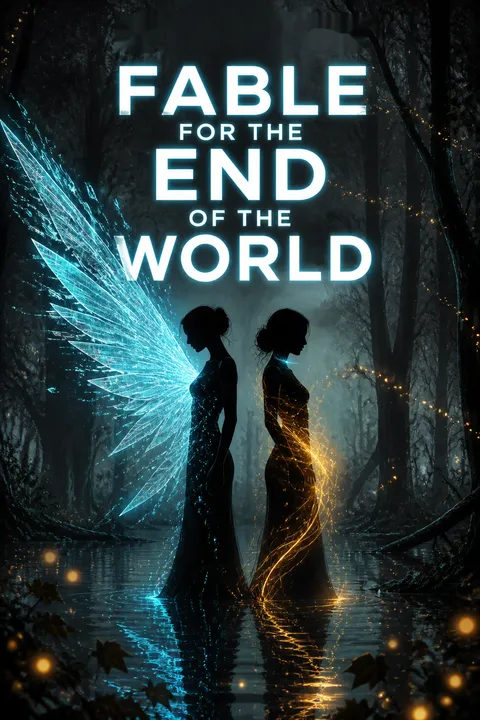
In the flooded outlying Counties of New Amsterdam, Inesa Soulis and her brother Luka struggle to keep their family afloat. Their mother, Janina, is sickly and addicted to Caerus's endless catalogue of goods and services, racking up debts that threaten the family's survival. Inesa works as a taxidermist, preserving the last unmutated animals for the wealthy, while Luka hunts. The community is fractured by poverty, resentment, and the ever-present threat of Caerus's collectors. When Janina's debts reach their limit, Inesa is chosen as the next "Lamb" for the Gauntlet—a televised, state-sanctioned hunt where an Angel, a genetically and technologically enhanced killer, will pursue her for thirteen days. The price of survival is everything.
The Angel's Gauntlet
Melinoë, the Angel assigned to hunt Inesa, is Caerus's most infamous creation: beautiful, deadly, and haunted by the memory of a previous kill—a young girl named Sanne. Melinoë's mind is fractured by repeated memory wipes and emotional conditioning, but the trauma of her last Gauntlet lingers. She is desperate to prove herself to her handler, Azrael, who views her as both daughter and weapon. As the Gauntlet begins, Melinoë is briefed on Inesa's life, her family's struggles, and the narrative Caerus wants to sell: a tragic, beautiful Outlier girl, a perfect victim for the world to watch.
Siblings and Sacrifice
Inesa reels from her mother's betrayal—Janina has chosen her daughter as the Lamb to save herself and Luka. The siblings' relationship is tested as they scramble to prepare for the Gauntlet, gathering supplies and recalling the lessons of their vanished father, who dreamed of escaping Caerus's control. Luka refuses to abandon Inesa, vowing to help her survive. Their plan: run north, toward the rumored "Drowned County," a place off the grid where Caerus's reach supposedly ends. The community watches, some with pity, others with morbid anticipation.
The Price of Survival
As the Gauntlet starts, Inesa and Luka flee in a borrowed car, navigating treacherous, half-drowned roads. Melinoë descends from a helicopter, her every move broadcast to millions. The siblings' flight is harrowing—mutated animals, flooded roads, and the ever-present fear of the Angel's approach. When Melinoë attacks, Luka wounds her, but the siblings are forced into the woods, pursued by both the Angel and the monstrous, cannibalistic Wends—humans mutated by desperation and contaminated food. The world watches, hungry for spectacle.
Tracker in the Throat
Inesa's every move is tracked by a device implanted in her throat, its pulse a constant reminder of her impending doom. The siblings are separated during a Wend attack; Inesa is left alone, wounded and terrified. Melinoë, suffering from withdrawal and injury, is also lost in the woods. Both are forced to confront their own mortality and the limits of their strength. The tracker's hum is a second heartbeat, a countdown to the end.
The Hunter and the Hunted
Inesa and Melinoë cross paths in the forest, each too weak to kill the other. Necessity breeds a fragile alliance: Melinoë's skills and weapon keep the Wends at bay, while Inesa's knowledge of the land and resourcefulness keep them alive. The cameras, always watching, capture their every interaction. As they shelter together, the boundaries between hunter and hunted blur. Both are haunted by guilt, trauma, and the knowledge that only one can survive.
Wends in the Woods
The pair are attacked by Wends, forcing them to fight side by side. Melinoë's training and Inesa's determination save them, but not without cost—wounds, exhaustion, and the deepening realization that the world is more monstrous than either imagined. Inesa's compassion for the Wends, once human, unsettles Melinoë, who is forced to confront her own humanity. The woods become a crucible, burning away old certainties.
Unlikely Alliance
As they seek shelter in an abandoned cabin, Inesa and Melinoë's alliance deepens. They share food, tend each other's wounds, and reveal painful truths: Melinoë's memory wipes, the trauma of her last kill, Inesa's family history, and the betrayals that shaped them. The cameras are always present, but in the darkness, they find moments of honesty and vulnerability. A deal is struck: they will help each other survive until the cameras return, then resume the Gauntlet. But the line between enemy and companion is fading.
Shelter and Secrets
In the cabin, the two women find a fragile peace. They bury the previous occupant, share stories, and care for each other's injuries. The storm outside mirrors the turmoil within. As they bandage wounds and share warmth, their connection grows—compassion, longing, and the first stirrings of love. The world outside is hostile, but inside, they are safe, if only for a moment. The knowledge that the Gauntlet will resume hangs over them, a shadow on every tender gesture.
The Memory of Mercy
Melinoë confesses the truth of her last Gauntlet: the killing of Sanne, a child from Inesa's own town, and the memory that refuses to be erased. Inesa, in turn, reveals the complexities of her family's love and betrayal. Both are shaped by systems that demand survival at any cost. Their shared pain becomes a bond, and the possibility of mercy—of choosing not to kill—emerges. But Caerus's narrative demands blood, and the world is watching.
The World is Watching
The cameras, always present, shape every action. Azrael manipulates the narrative, threatening Luka's life to force Melinoë's hand. The world's attention is a weapon, making private moments public and turning love into a spectacle. Inesa and Melinoë realize that their only hope is to subvert the narrative—to escape the grid, destroy the tracker, and disappear. But Caerus will not let them go easily. The price of rebellion is everything.
The Dogs Arrive
As the pair attempt to escape, Caerus deploys its ultimate enforcers: the Dogs, bulletproof killing machines. In a desperate act, Inesa and Melinoë use fire and cunning to destroy the Dogs, but Melinoë is badly burned. Inesa tends her wounds, and in the aftermath, their love is finally confessed and consummated. The world, always watching, witnesses their defiance. But Azrael is not finished; the final act is yet to come.
Fire and Flight
With the tracker destroyed and the cameras momentarily cut, Inesa and Melinoë flee toward the Drowned County, following the coordinates left by Inesa's father. The journey is perilous—cold, hunger, and the threat of pursuit. But hope blooms between them, fragile and fierce. They dream of a life beyond survival, of a world where love is not a crime. The past cannot be erased, but the future is unwritten.
The White Dress
As the Gauntlet's timer runs out, Azrael manipulates the final confrontation. Inesa is forced to don a white dress, echoing the innocence of Sanne and the spectacle Caerus craves. Melinoë is given a new hunting suit and a choice: kill Inesa and be spared a final memory wipe, or refuse and lose everything. The world is watching, hungry for blood and redemption. The lovers' defiance is a threat to the system itself.
The Final Confrontation
In the clearing, Azrael arrives by helicopter, holding Luka hostage. Melinoë is forced to fight Lethe, another Angel, in a brutal, public battle. Lethe is killed, but not before mortally wounding Melinoë. Inesa and Melinoë share a final, desperate embrace as the helicopter descends. Azrael's victory is hollow; the world has witnessed something he cannot erase. Love, even in defeat, is a form of rebellion.
Love in the Ashes
Inesa survives, but at great cost. Luka is freed, but the Drowned County is revealed to be a myth—there is no escape from Caerus's reach. Melinoë is taken away, her memories wiped, and married off to a Caerus executive. Inesa becomes a reluctant celebrity, her every action scrutinized and commodified. The world moves on, hungry for the next spectacle. But Inesa cannot forget. Grief and anger become her companions, but so does hope.
After the Gauntlet
Inesa and Luka rebuild their lives, haunted by loss and the knowledge that true freedom is still out of reach. The world is unchanged, but something has shifted: the possibility of rebellion, the memory of love, the refusal to forget. Inesa dreams of finding Melinoë again, of a world where love is not a crime. The story ends with hope—a promise that even in a world built on debt and spectacle, love can survive, and the end is not yet written.
Analysis
A fable of love, resistance, and the cost of survivalFable for the End of the World is a searing indictment of a society built on debt, spectacle, and the commodification of suffering. Through the intertwined stories of Inesa and Melinoë, the novel explores the ways systems of power shape identity, memory, and desire. The Gauntlet is both a literal and metaphorical crucible, forcing characters to confront the limits of their humanity and the price of survival. The novel interrogates the ethics of spectacle, the dangers of forgetting, and the possibility of love as resistance. Inesa and Melinoë's relationship is both a rebellion and a lifeline, offering hope in a world determined to erase it. The story refuses easy answers: survival always comes at a cost, and freedom is never given, only claimed. In the end, the novel insists that even in a world built to crush hope, love can survive—and that the end of one story is the beginning of another.
Review Summary
Fable for the End of the World receives mixed reviews, with an average rating of 3.74 out of 5. Many praise its dystopian world-building, sapphic romance, and social commentary. Readers appreciate the Hunger Games-inspired elements and Reid's unique take on the genre. However, some criticize the pacing, character development, and romance as underdeveloped. The ending is polarizing, with some finding it unsatisfying while others see it as thought-provoking. Overall, fans of dystopian YA and Reid's previous work are likely to enjoy this novel.
People Also Read

Characters
Inesa Soulis
Inesa is a seventeen-year-old taxidermist from the flooded outlying Counties, marked by poverty, resilience, and a deep sense of responsibility for her family. Betrayed by her mother and chosen as the Lamb, she is thrust into a world of spectacle and violence. Inesa's relationship with her brother Luka is the emotional core of her life, shaped by shared trauma and fierce loyalty. Her compassion, resourcefulness, and capacity for love set her apart in a world that demands brutality. Over the course of the Gauntlet, Inesa transforms from a victim into a rebel, forging an unlikely alliance—and ultimately a profound love—with her would-be killer, Melinoë. Her journey is one of grief, anger, and hope, as she learns to claim her own story in defiance of the system that seeks to erase her.
Melinoë
Melinoë is Caerus's most infamous Angel: beautiful, deadly, and deeply broken. Created through genetic and technological manipulation, she is both weapon and spectacle, trained to kill Lambs for the entertainment and control of the masses. Her handler, Azrael, is both father figure and jailer, shaping her into the perfect instrument. Melinoë is haunted by the memory of her last Gauntlet—the killing of a child, Sanne—which repeated memory wipes cannot erase. Her journey through the Gauntlet with Inesa forces her to confront her own humanity, vulnerability, and capacity for love. The relationship that grows between them is both a rebellion and a lifeline, offering Melinoë a glimpse of a life beyond survival. Her ultimate act of defiance is not violence, but mercy and love, even as the system tries to erase her once more.
Luka Soulis
Luka is Inesa's younger brother, a skilled hunter and the family's provider after their father's disappearance. He is shaped by loss, anger, and a fierce sense of duty. Luka's relationship with Inesa is complex—marked by rivalry, resentment, and deep, unspoken love. He is willing to risk everything to save her, even as the world demands he sacrifice her for his own survival. Luka's actions during the Gauntlet make him a reluctant celebrity, a symbol of resistance and hope. Yet he is haunted by guilt and the knowledge that survival always comes at a cost. His journey is one of grief, forgiveness, and the painful process of letting go.
Janina Soulis
Janina is Inesa and Luka's mother, a woman broken by loss, illness (real and imagined), and the crushing weight of debt. Her addiction to Caerus's goods and services is both a symptom and a cause of her family's suffering. Janina's decision to offer Inesa as the Lamb is an act of desperation, self-preservation, and betrayal. She is both victim and perpetrator, shaped by a world that values survival over love. Her relationship with her children is fraught, marked by manipulation, guilt, and the unbreakable bonds of family.
Azrael
Azrael is the mastermind behind the Angel program, a figure of both paternal affection and ruthless control. He views Melinoë as his greatest creation, shaping her through memory wipes, surgeries, and emotional conditioning. Azrael is obsessed with narrative, spectacle, and the maintenance of Caerus's power. His relationship with Melinoë is complex—part father, part jailer, part lover of his own handiwork. He is both a product and a perpetuator of the system, ultimately undone by the very humanity he tried to erase.
Lethe
Lethe is another of Azrael's Angels, defined by her fiery temperament, jealousy, and need for validation. She is both competitor and mirror to Melinoë, shaped by the same processes of dehumanization and spectacle. Lethe's final confrontation with Melinoë is a brutal, public battle—a fight for survival, recognition, and the right to exist. Her death is both a tragedy and a liberation, a reminder of the costs of the system.
Keres
Keres is Melinoë's closest companion among the Angels, a figure of kindness and forbidden intimacy. She is decommissioned and memory-wiped after failing to conform to Azrael's expectations, becoming a symbol of what is lost in the pursuit of perfection. Keres's fate haunts Melinoë, shaping her fear of oblivion and her longing for connection. She represents the possibility of love and the tragedy of its erasure.
Sanne Dekker
Sanne is the child killed by Melinoë in her previous Gauntlet, a memory that refuses to be erased. Her death is both a personal trauma for Melinoë and a public spectacle for the world. Sanne's innocence and suffering become a symbol of the system's cruelty, haunting both Melinoë and Inesa. Her memory is a wound that cannot heal, a reminder of what is at stake.
Hendrik Visser
Visser is a high-ranking Caerus official, emblematic of the system's decadence, control, and indifference. He becomes Melinoë's husband after her decommissioning, a fate worse than death. Visser's presence is a constant reminder of the world's priorities: spectacle, consumption, and the erasure of inconvenient humanity.
Zetamon
Zetamon is a masked, anonymous celebrity streamer who reacts to the Gauntlet and interviews Luka. He represents the world's voyeurism, complicity, and hunger for narrative. Zetamon's streams shape public opinion, turning Luka into a hero and Inesa into a spectacle. He is both a mirror and a megaphone for the world's desires.
Plot Devices
The Gauntlet
The Gauntlet is the central plot device: a state-sanctioned, televised hunt where a chosen "Lamb" is pursued by an "Angel" for thirteen days. It is both entertainment and a mechanism of social control, reinforcing the power of Caerus and the helplessness of the Outliers. The Gauntlet's rules, timer, and surveillance shape every action, turning private moments into public spectacle. The narrative is manipulated by Azrael and Caerus, who craft stories to maximize engagement and maintain order. The Gauntlet is a crucible, burning away old identities and forging new ones in the fire of survival.
Surveillance and Spectacle
The ever-present cameras are both literal and symbolic, turning every moment into a performance. The world is always watching, and the knowledge of surveillance shapes behavior, relationships, and even thoughts. The line between reality and narrative blurs, as private pain becomes public entertainment. The plot uses the cameras to heighten tension, expose vulnerability, and ultimately subvert the system: when Inesa and Melinoë believe they are alone, they are most themselves—and most dangerous to the system.
Memory and Erasure
Melinoë's repeated memory wipes are both a plot device and a metaphor for trauma, survival, and the struggle to retain identity. The system's attempt to erase inconvenient memories is never fully successful; the past returns in dreams, flashes, and the persistence of love. The threat of erasure hangs over every character, shaping choices and relationships. Memory becomes an act of resistance, a refusal to be rewritten.
Mutations and Wends
The mutated animals and the Wends—humans transformed by desperation—are both obstacles and symbols. They represent the world's decay, the consequences of survival at any cost, and the possibility of adaptation. The Wends are a warning: what happens when humanity is stripped away, when survival becomes the only law. The mutations are both grotesque and beautiful, reminders that life persists, even in the ruins.
Narrative Structure and Foreshadowing
The novel alternates between Inesa and Melinoë's perspectives, mirroring their journeys and deepening the emotional arc. The structure allows for foreshadowing, dramatic irony, and the slow revelation of secrets. The use of chapter titles, countdowns, and shifting timelines heightens tension and underscores the inevitability of the Gauntlet's end. The narrative is self-aware, interrogating its own construction and the power of stories to shape reality.
About the Author
Other books by Ava Reid
Download PDF
Download EPUB
.epub digital book format is ideal for reading ebooks on phones, tablets, and e-readers.








































