
Plot Summary
Unspace and the Architects
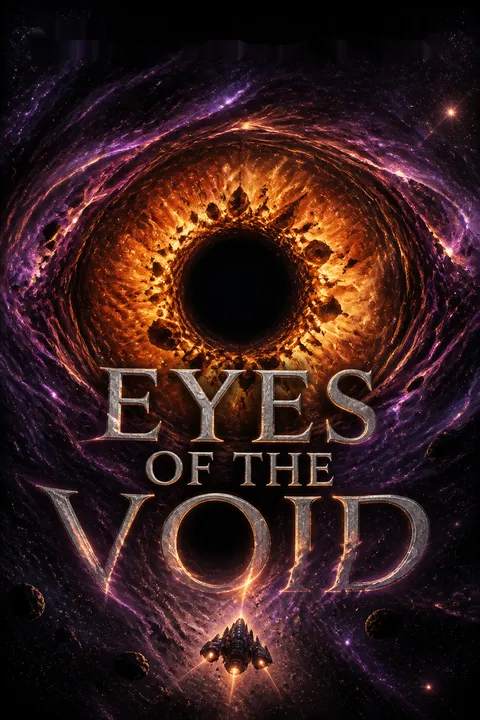
The story opens with the concept of unspace—a dimension beneath reality, traversed by ships using gravitic drives, and haunted by the presence of the Architects. These moon-sized entities emerge from unspace to reshape inhabited worlds into bizarre, deadly sculptures, leaving devastation in their wake. Humanity's first war with the Architects cost billions of lives, only ending when specially engineered Intermediaries made contact. Now, decades later, the Architects have returned, and the universe trembles as old fears and new uncertainties resurface. The rules of unspace, the mystery of the Originators, and the terror of the Architects set the stage for a galaxy on the brink.
Fractured Alliances Form
In the aftermath of the first war, humanity is divided into factions: the Colonies, the Parthenon, the Hivers, and the Nativists, each with their own agendas and suspicions. The Parthenon, a society of vat-born women, and the Hivers, once tools now independent, have seceded, leaving the Colonies fractured. Xenophobic Magdan nobles and the radical Nativists stir unrest, while the Hegemony—an alien empire ruled by the inscrutable Essiel—offers protection at a price. Old alliances are strained as the return of the Architects forces everyone to reconsider who is friend and who is foe.
The Vulture God's Crew
The salvage ship Vulture God and its crew—drone specialist Olli, lawyer Kris, Hanni factor Kittering, and Intermediary Idris—are drawn into the galaxy's turmoil. Idris, one of the last original Ints, is haunted by his past and the burden of his unique abilities. The crew's loyalties are tested as they are pursued by various powers: the Parthenon, who want Idris for their own Int program; the Magdan Uskaro family, who see him as a prize; and the criminal Broken Harvest, who have their own vendettas. The Vulture God becomes both sanctuary and target as the crew navigates shifting allegiances.
Return of the Destroyers
The Architects reappear, attacking worlds seemingly at random, their motives as unfathomable as ever. The old protections—Originator relics and Hegemonic promises—prove unreliable. Panic spreads as entire populations are lost in moments. Idris's reputation as the man who once "drove off" an Architect makes him both a symbol of hope and a target for blame. The galaxy's powers scramble for answers, desperate to find a way to survive the renewed threat.
Secrets on Hismin's Moon
On Hismin's Moon, a den of criminals and opportunists, the Vulture God's crew becomes entangled in a web of espionage. Partheni agent Solace, old friend and sometimes lover to Idris, seeks his help for her government's Int program. Meanwhile, Mordant House agent Havaer Mundy is tasked with recovering leaked secrets, only to find himself caught between rival factions and a deadly bar brawl. The moon's chaos mirrors the larger galactic disorder, as secrets are bought, sold, and killed for.
The Partheni Int Program
Idris is recruited by the Parthenon to help them develop their own Ints, hoping to defend themselves against the Architects without the brutal attrition of the Colonial method. The process is fraught with ethical dilemmas: only volunteers can succeed, but the Parthenon's culture of duty blurs the line between choice and compulsion. Idris's guilt over the deaths of past candidates weighs heavily, even as a breakthrough emerges—a Partheni with the right genetic "hole" in her mind. The promise of a new Int program brings hope, but also the risk of creating a new class of weapons.
Hunted by Many Masters
The Vulture God's crew is pursued by multiple adversaries: the Magdan Uskaro family, seeking to claim Idris; the Nativists, who see him as a traitor; and the Broken Harvest, a Hegemonic crime syndicate with its own vendetta. Betrayals and shifting alliances abound, as even supposed friends may be working for other interests. The crew's survival depends on their ability to navigate a galaxy where every faction wants something from them—and where trust is a rare commodity.
Arc Pallator's Last Stand
The crew, along with Partheni and Colonial delegations, travel to Arc Pallator, a Hegemonic world with the largest known Originator site. The planet is under threat from an Architect, but the presence of the ruins delays its destruction. The city becomes a stage for desperate diplomacy, religious fervor, and scientific rivalry. As the Architect's crystal servitors begin dismantling the ruins, the crew witnesses the limits of faith and the indifference of cosmic powers. The evacuation is chaotic, and the world's fate hangs by a thread.
Originator Ruins Unveiled
The Originator city on Arc Pallator is more than a ruin—it is a key to understanding the Architects' fears. Idris, with his unique perception, senses the way the ruins deform unspace, creating a pressure that even the Architects cannot ignore. The scientific teams, led by rival experts and the Hiver Trine, race to unlock the secrets before the city is destroyed. The ruins' true power lies not in their walls, but in the spaces between—a lesson that will echo throughout the story.
The Hegemony's Deadly Bargain
The Hegemony's promise of protection is revealed as hollow when the Essiel abandon their human cultists to the Architects. The faithful are herded into a temple, only to be saved at the last moment by a feat of Hegemonic technology that rips the temple through unspace to another world. The price of faith is exposed as both salvation and expendability. The crew witnesses the Essiel's true priorities, and the cost of relying on alien gods.
The Magdan Pursuit
The Uskaro family's pursuit of Idris leads to violence, kidnapping, and a deadly game of legal and physical duels. Kris, the crew's lawyer, is forced into a knife fight with Piter Uskaro, while the Voyenni house guards hunt Idris through collapsing ruins. The Magdans' obsession with control and honor brings them into direct conflict with the crew, culminating in a desperate struggle for survival on multiple fronts.
The Broken Harvest's Shadow
The Broken Harvest, led by the Essiel gangster Aklu, manipulates events from the shadows. Their Tothiat agents, nearly unkillable hybrids, pursue their own agendas, sometimes at odds with their master. Olli and Kris are forced into an uneasy alliance with Aklu, whose admiration for their rebellious spirit is as dangerous as his enmity. The lines between law, crime, and survival blur as the crew is drawn deeper into the underworld of the galaxy.
Descent to Criccieth's Hell
The search for Idris leads to Criccieth's Hell, a planet so hostile that only a shielded Originator installation survives. Here, Idris is forced to collaborate with a mad scientist, a cyborg engineer, and a vengeful Naeromathi named Ahab. The installation houses the Machine, a device that allows Idris to peer into unspace and uncover the truth behind the Architects. The planet's lethal ecosystem and the instability of the installation create a race against time, as the crew and their enemies converge for a final confrontation.
The Machine's Revelation
Using the Machine, Idris and Ahab discover the true nature of unspace: it is shaped by the thoughts and arrangements of sentient minds, and the Architects are not the ultimate enemy. They are slaves, forced to act by unseen masters. The real power lies in the structure of nothingness—the spaces, not the things. The Machine's use damages the installation, and the planet's deadly life begins to break in. In a desperate gambit, Idris uses his Int abilities to wrench the installation into orbit, saving the survivors but dooming the Machine.
War Erupts in Orbit
In orbit above Criccieth's Hell, the Vulture God, the Partheni, the Colonial navy, and the Broken Harvest face off in a tense standoff. The arrival of the Almighty Scythe of Morning, Aklu's flagship, forces a ceasefire. Chief Laery, now allied with the Hiver Assembly and the Hegemony's outcasts, announces a new alliance to fight the Architects. The old order is upended as the Hivers flex their power, and the galaxy's future is thrown into uncertainty.
The Price of Knowledge
The survivors count their losses: Emmaneth, the Tothiat who sought death, is finally destroyed; Ahab, the Naeromathi, is lost; and Idris is left maimed but alive. The knowledge gained at Criccieth's Hell is both a weapon and a curse, offering a way to strike at the Architects' nursery but raising the specter of genocide. The crew is fractured by trauma and guilt, and the galaxy's powers must decide whether to use their new weapon—or become monsters themselves.
The Alliance of Necessity
The Hiver Assembly, the Parthenon, and elements of Hugh form a fragile alliance, pooling their resources and knowledge. The Vulture God's crew, battered but unbroken, are drawn into the new order as both assets and liabilities. Old grudges simmer beneath the surface, and the threat of renewed war looms. The alliance is held together by the shared terror of the Architects, but trust is in short supply.
The Universe Remade
The story closes with the galaxy on the cusp of transformation. The secrets of unspace and the Originators offer hope—and the risk of annihilation. The Architects remain a threat, but now the galaxy has the means to fight back, at a terrible moral cost. Idris, Solace, and the crew face an uncertain future, their fates entwined with the destiny of all sentient life. The universe is remade, not by gods, but by the choices of flawed, desperate beings.
Analysis
A meditation on survival, power, and the cost of knowledgeEyes of the Void is a sweeping space opera that interrogates the nature of power, the fragility of alliances, and the moral cost of survival in an indifferent universe. At its heart is the question of agency: who gets to choose, and what are the consequences of those choices? The return of the Architects forces every faction to confront its own priorities, revealing the limits of faith, the dangers of unchecked ambition, and the perils of relying on old certainties. The Originator ruins and the mysteries of unspace serve as metaphors for the unknown depths within and between us—spaces that can be shaped, but never fully controlled. The characters' struggles—with trauma, loyalty, and the temptation to become what they fear—mirror the galaxy's own battle to define itself in the face of annihilation. The novel warns that the tools we use to survive may also be the seeds of our undoing, and that true strength lies not in domination, but in the willingness to face the void—and each other—with honesty and courage.
Review Summary
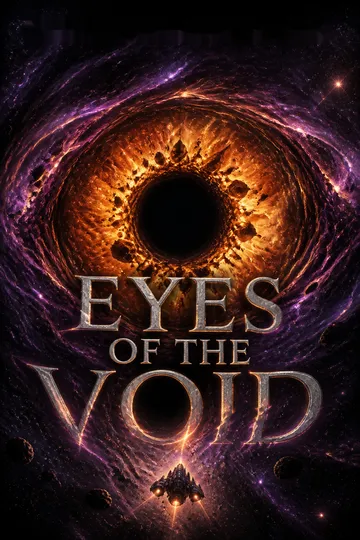
Eyes of the Void is a compelling sequel in Tchaikovsky's space opera series. Readers praise the intricate worldbuilding, complex plot, and diverse characters, especially the crew of the Vulture God. The book delves deeper into the mysteries of Unspace and the Architects, while introducing new challenges and political intrigue. Some find the dense narrative and numerous characters overwhelming, but most appreciate the author's imaginative storytelling. The novel sets up an exciting finale, leaving readers eager for the third installment.
People Also Read
Characters
Idris Telemmier
Idris is one of the last original Intermediaries, a navigator whose mind was remade to perceive and traverse unspace. Traumatized by the war and the deaths of countless Int candidates, he is burdened by guilt and the weight of expectation. His unique abilities make him both a prize and a target for every faction. Idris is driven by a need to understand the universe and to prevent further suffering, but he is also deeply ambivalent about his role as a weapon. His relationships—with Solace, Kris, and the Vulture God crew—anchor him, but he is always on the edge of despair. Idris's journey is one of reluctant heroism, as he is forced to confront the universe's deepest secrets and the moral cost of survival.
Olian "Olli" Timo
Olli is the Vulture God's drone specialist and de facto captain, a spacer born into hardship and determined to carve out her own fate. Blunt, abrasive, and fiercely loyal to her crew, Olli is both a source of strength and a magnet for trouble. Her physical disabilities—missing limbs replaced by a walker or the Scorpion frame—are matched by a relentless will. Olli's pragmatism and irreverence often mask deep wounds, but she will do anything to protect her found family. Her confrontations with authority, criminals, and even her own allies reveal a complex mix of vulnerability and resilience.
Keristina "Kris" Soolin Almier
Kris is the crew's legal mind, a graduate of Scintilla's prestigious law schools and a veteran of both courtroom and knife-fight. Her sharp intellect and sense of justice are tempered by a history of violence and guilt—her career derailed by a fatal duel. Kris is both a voice of reason and a source of internal conflict, struggling with her own capacity for violence and the demands of survival. Her relationships with Idris and the crew are marked by loyalty and self-doubt, and her journey is one of seeking redemption in a universe that rarely offers it.
Myrmidon Executor Solace
Solace is a Partheni Myrmidon—an elite soldier bred for war and loyalty. Tasked with recruiting Idris and overseeing the Parthenon's Int program, she is torn between duty and personal feeling, especially in her relationship with Idris. Solace embodies the Parthenon's virtues of discipline, sacrifice, and solidarity, but she is also haunted by the potential for her society to become monstrous. Her struggle to balance obedience, compassion, and the demands of war is central to her arc, as she becomes both protector and enforcer.
Kittering "Kit"
Kit is the Vulture God's Hannilambra trade factor, a crab-like alien with a keen sense for business and survival. Kit's perspective is shaped by Hanni culture—pragmatic, nonviolent, and deeply invested in social harmony. He is often the voice of caution and negotiation, but his loyalty to the crew is unwavering. Kit's outsider status allows him to see through human foibles, and his dry wit and resourcefulness are essential to the crew's survival.
Havaer Mundy
Havaer is an agent of Mordant House, the Colonial intelligence service, tasked with recovering secrets and navigating the galaxy's shifting alliances. He is competent, world-weary, and increasingly disillusioned by the corruption and moral ambiguity of his superiors. Havaer's pursuit of Idris and the crew is complicated by his own sense of justice and the realization that the real enemy may be within. His arc is one of reluctant complicity, as he is drawn into conspiracies that threaten everything he once believed in.
The Unspeakable Aklu, the Razor and the Hook
Aklu is a rogue Essiel, cast out from the Hegemony and ruling the Broken Harvest cartel. Both terrifying and strangely charismatic, Aklu operates by its own rules, dispensing both violence and admiration to those who impress it. Its fascination with rebellion and chaos makes it a wild card, sometimes ally and sometimes enemy to the crew. Aklu's presence is a reminder that even the gods have their outcasts—and that power is never simple.
Emmaneth (Emma Ostri)
Emmaneth is a former Mordant House operative turned Tothiat—a nearly unkillable hybrid of human and alien. Haunted by pain and guilt, she seeks death on Criccieth's Hell, only to find a new purpose in aiding Idris and the Machine's research. Emmaneth's journey is one of self-destruction and reluctant redemption, as she sacrifices herself to save Idris. Her relationship with Heremon, another Tothiat, reflects the tragedy of those remade as weapons.
Trine
Trine is a Hiver archaeologist, once owned by humans and now a free agent. Their obsession with the Originators and their ruins makes them both invaluable and difficult. Trine's long memory and eccentricity are balanced by a deep sense of justice and a desire to see the universe's secrets revealed. Their friendship with Idris and the crew is a testament to the possibility of connection across species and histories.
Chief Laery
Laery is the head of Mordant House, a ruthless and brilliant manipulator who sees the bigger picture. Her willingness to ally with the Hivers and the Hegemony's outcasts marks her as both visionary and dangerous. Laery's actions drive the formation of the new alliance, but her motives are always suspect. She embodies the moral ambiguity of leadership in desperate times.
Plot Devices
Unspace and the Presence
The narrative is structured around the concept of unspace—a dimension beneath reality, accessible only by those with the right technology or altered minds. Unspace is both a shortcut and a haunted abyss, home to the Architects and the nameless Presence that preys on sentient minds. The rules of unspace—its mapping to real space, its sensitivity to thought, and its manipulation by the Originators—are revealed gradually, with each journey deeper into its mysteries raising the stakes. Foreshadowing is used throughout, as the crew's encounters with unspace hint at the greater dangers and secrets to come.
The Originator Ruins
The Originator sites are more than archaeological curiosities—they are active participants in the plot, shaping unspace and offering both protection and peril. The ruins' true power lies in their arrangement of spaces, not their physical structures, a motif that recurs as the crew seeks to understand and ultimately use this knowledge. The Machine on Criccieth's Hell is the ultimate expression of this device, allowing Idris to see the universe's scaffolding and the birth of the Architects.
Multiplicity of Factions
The story is driven by the interplay of multiple factions—Colonies, Parthenon, Hivers, Hegemony, Magdan nobles, Nativists, and criminal syndicates—each with their own agendas. The crew is caught in the crossfire, forced to navigate a web of espionage, betrayal, and uneasy truces. The narrative structure uses alternating points of view and parallel plotlines to build tension and reveal the complexity of the galaxy's politics.
The Reluctant Hero
Idris's journey is shaped by his reluctance to be a weapon or a savior. His unique abilities make him indispensable, but he is constantly resisting the roles others try to force on him. This device allows for deep psychological exploration, as Idris's trauma, guilt, and desire for agency drive both his personal arc and the larger plot.
Moral Ambiguity and Consequence
The story repeatedly presents the characters with impossible choices: save the many by sacrificing the few, use knowledge that could lead to genocide, trust enemies for the sake of survival. Foreshadowing and callbacks reinforce the theme that every action has a price, and that the line between hero and monster is perilously thin.
The Final Architecture Series
About the Author
Other books by Adrian Tchaikovsky



Download PDF
Download EPUB
.epub digital book format is ideal for reading ebooks on phones, tablets, and e-readers.








































