
Key Takeaways
1. Life's Pursuits Are Ultimately Absurd (Hevel)
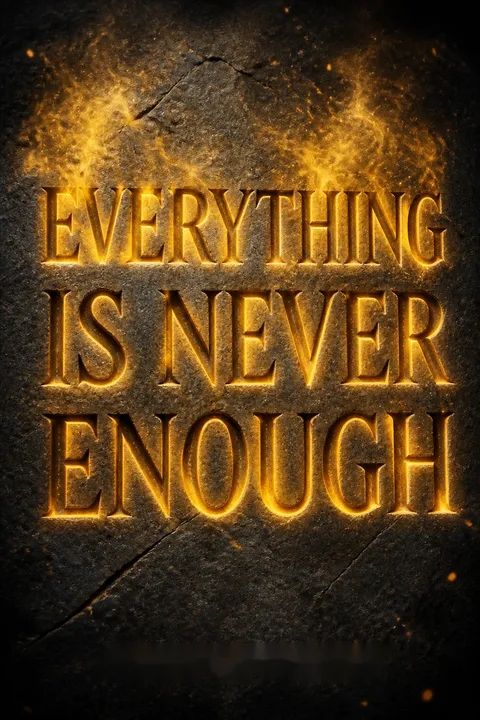
Everything is never enough.
Universal disappointment. Qohelet, the ancient philosopher, embarks on a relentless quest to find lasting happiness and meaning in all human endeavors—wisdom, work, pleasure, and wealth. His overarching verdict, "hevel," translates best as "absurd," signifying a profound mismatch between human expectations and the world's reality. This isn't about things being worthless, but rather their failure to deliver what we desperately seek.
The quest for gain. Qohelet systematically explores every possible source of satisfaction, from grand architectural projects and vast fortunes to abundant laughter and wine. He denies himself no lawful gratification, yet at the end of it all, he declares, "all was absurd and a striving after wind, and there was nothing to be gained under the sun." This isn't a failure of effort, but a fundamental flaw in the pursuits themselves.
A tragic disconnect. The absurdity lies in the inherent rupture between desire, effort, and outcome. We pour our lives into endeavors, only to find them wanting, fleeting, or ultimately meaningless in the grand scheme. This tragic disconnect leaves us with a sense of emptiness, a feeling that despite all our achievements, everything is never truly enough.
2. The World is Inherently Uncontrollable
The world has always resisted our efforts to control it, but the more you expect to be able to control, the more you will resent the uncontrollable.
Modern control obsession. Sociologist Hartmut Rosa argues that modernity's central drive is to make the world "engineerable, predictable, available, accessible, disposable…in all its aspects." We strive to control everything from our environment to our very lives, even the timing of birth and death. This relentless pursuit of mastery, however, breeds deep resentment when the world inevitably resists.
Striving after wind. Qohelet, long before modern sociology, recognized this fundamental tension. He calls all human activity "a striving after wind," a chasing after what can never be captured. Whether it's the unpredictable outcome of a race, the vagaries of fortune, or the sudden onset of disaster, life constantly reminds us of our limited power.
Paradox of control. The bitter paradox is that true aliveness and meaningful experiences often arise precisely from encountering the uncontrollable. A world fully mastered would be a "dead world." Giving up the illusion of control, like an addict beginning recovery, can bring a sense of release and allow us to focus on what we can do.
3. Human Desire is Innately Insatiable
What else does this craving, and this helplessness, proclaim but that there was once in man a true happiness, of which all that now remains is the empty print and trace?
Perpetual dissatisfaction. Qohelet observes that our sensory organs—eyes, ears, and appetites—are never truly satisfied. We always want more, or something different, even after achieving what we thought would bring contentment. This isn't just a problem of external circumstances; it's an innate insatiability within the human heart.
The eternity within. God has "put eternity into man’s heart, yet so that he cannot find out what God has done from the beginning to the end." This vast, inner chasm creates a longing for understanding and fulfillment that finite earthly goods can never provide. It's a "cosmic nostalgia," a memory of a lost wholeness that haunts us.
A dispossessed king. Pascal, echoing Qohelet, suggests this insatiability points to a past greatness. We feel unhappy as peasants because we were once dispossessed kings. Our misery is the "wretchedness of a great lord," a constant reminder that we were made for something more, something infinite, which this broken world cannot deliver.
4. Injustice Prevails Under the Sun
In my absurd life I have seen everything. There is a righteous man who perishes in his righteousness, and there is a wicked man who prolongs his life in his evildoing.
A broken moral order. Qohelet observes a profound injustice in the world: the righteous often suffer, while the wicked prosper. He sees "wickedness" in the very "place of justice," where wrongs should be righted but are instead compounded. This blatant disregard for deserving is a "grievous evil" that deeply troubles him.
Death's unjust equity. Death, the ultimate equalizer, treats the wise and the foolish, the virtuous and the immoral, exactly the same. It is "blind to what actually should" influence its outcome, trampling human dignity into dust and declaring man no better than beast. This indiscriminate finality is an insult to justice.
The absurd reality. The world's failure to align with our innate sense of justice is a core component of its absurdity. It's a "gut punch" to see someone receive the opposite of what their character merits. This persistent mismatch between deserving and receiving leaves Qohelet, and us, with a profound sense of moral disquiet.
5. Death Nullifies All Earthly Gain
For the living know that they will die, but the dead know nothing, and they have no more reward, for the memory of them is forgotten.
The ultimate limit. Death casts a chilling shadow over all of Qohelet's observations, rendering every pursuit, every achievement, and every pleasure ultimately futile. No matter how much wealth is amassed, how much wisdom is gained, or how much power is wielded, death strips it all away.
Total deprivation. Death is the "total deprivation," annihilating all earthly enjoyments and the potential to experience them. It removes not only possessions but also the capacity to work, think, or love. All other losses are partial; only death completes loss, leaving nothing behind.
A forgotten legacy. Even the memory of the wise and the great eventually fades. "There is no remembrance of former things, nor will there be any remembrance of later things yet to be among those who come after." Death ensures that all marks left on the world are eventually erased, making the quest for an enduring legacy a "striving after wind."
6. Life and Its Joys Are Gifts from God
This also, I saw, is from the hand of God, for apart from him who can eat or who can have enjoyment?
Beyond absurdity. Despite the pervasive absurdity, Qohelet repeatedly affirms that life itself, and its simple, daily joys, are gifts from God. This "middle floor" perspective reveals that even fleeting pleasures like eating, drinking, and finding enjoyment in toil are undeserved donations from a divine giver.
A literal gift. When Qohelet calls life a gift, he means it literally. Life's span, the ability to enjoy, and even wealth and possessions are "from the hand of God." This means ultimate reality is not random or malicious, but personal, loving, and intends good. Enjoyment, therefore, is not a meaningless accident but a clue to the universe's deepest secret.
Receiving, not grasping. If life is a gift, our proper response is not to grasp for gain or control, but to receive with open hands and trust. This posture allows us to let things be themselves, to come and go as intended, and to cultivate gratitude. Generosity, then, becomes a true sign that we receive life as a gift, knowing that receiving runs deeper than earning.
7. Embrace the Present with Joy
Go, eat your bread with joy, and drink your wine with a merry heart, for God has already approved what you do.
Present-tense enjoyment. Qohelet consistently commends joy, often commanding it, as the fitting response to life's gifts. Enjoyment is a present-tense experience; it cannot be stockpiled or postponed. The reward of toil is not future gain, but the pleasure experienced in the work itself, right now.
Occupied with joy. When we receive the present as a gift from God, He "keeps him occupied with joy in his heart," leaving no room for regret or anxiety. This isn't about ignoring suffering, but about being fully attentive to the goodness on offer, allowing joy to fill the heart and quiet the restless mind.
God's authorization. Our enjoyment is not shoplifting from the universe; it's following the maker's instructions. God has "already approved what you do," making enjoyment a serious business, a test of whether we receive life as His gift. This divine authorization frees us to savor the "needlessly delightful" aspects of existence.
8. Accept Your Allotted Lot
Behold, what I have seen to be good and fitting is to eat and drink and find enjoyment in all the toil with which one toils under the sun the few days of his life that God has given him, for this is his lot.
Limits define our share. Qohelet uses the term "lot" or "portion" to describe our assigned share of life—work, opportunity, wealth, and potential for enjoyment. This "lot" is limited, given by an Allotter (God), and we have no say over its quality or quantity. Modernity's illusion of endless expansion clashes with this fundamental truth.
Cultivating your portion. Accepting your lot is the starting point, not the end. Like a plot of land, your lot calls for cultivation. This involves gratefully receiving what you have, caring for it, and working within its boundaries. It's about finding goodness and wholeness by adapting to limits, rather than trying to bend the world to your will.
Joy in restraint. Contentment comes from appreciating the small good things within your lot, rather than lusting for what you don't have. This restraint, this acceptance of partiality, allows joy to spring forth from the work itself and from discovering the richness within your given circumstances.
9. Cultivate Craft in Your Toil
There is nothing better for a person than that he should eat and drink and find enjoyment in his toil.
Work's inherent difficulties. Qohelet frequently uses the word "toil" (Hebrew 'amal) to describe work, highlighting its weariness, repetition, and inherent frustrations. He doesn't sugarcoat the difficulties, but rather suggests that enjoyment can be found in the toil itself, not just from its rewards.
Respecting limits in work. To enjoy toil, one must first respect its limits and one's own. Expecting work to be quick, easy, or to satisfy all desires for novelty and glamour leads to disappointment. Instead, anticipating frustrations and setting boundaries—like knowing when to stop and rest—allows for enjoyment to emerge.
The craftsman's mindset. Approaching work as a craft, driven by quality rather than mere quantity, transforms toil. Doing a job well for its own sake, even a menial one, fosters growth and a deeper sense of satisfaction. This mindset makes the world more of a home and allows us to find joy in the diligent exertion of effort.
10. Fear God as the Ultimate Reality
God has done it, so that people fear before him.
Transcendent power. Qohelet's "top floor" perspective reveals God as endlessly dangerous and powerful beyond measure, the ultimate reality who orchestrates all natural and historical events. This recognition of God's infinite power and our weakness is the foundation of true fear—not terror, but reverent awe.
The antidote to conceit. Fearing God means letting His voice speak louder than our inner voices, deflating our conceit, and cementing our integrity. It's about listening more than speaking, treating commitments to Him with reverence, and being grounded by His word rather than self-manufactured thoughts.
Eliminating other fears. The fear of God is a "massively significant exception" to the rule that we fear what we cannot control. Instead, this fundamental fear eliminates the need to control everything else. It drives out fear of failure, rejection, and the unknown, replacing them with trust in the One who truly is in control.
11. Jesus is the Answer to Life's Absurdity
Everything is never enough, but Jesus is.
The pierced frame. Ecclesiastes reveals the "immanent frame" of life under the sun—a world where death is final, meaning is fragile, and no one is coming to rescue us. But Qohelet's frame is permeable, pierced by the conviction of a Creator God who gives gifts and will judge. The full answer to this piercing comes in Jesus.
Absurd remedy for an absurd disease. Jesus, both fully human and fully God, entered this absurd, alienated world not because he deserved it, but because we do. His incarnation was a rescue mission, enduring the full measure of God's judgment for our sin, becoming the world's futility and absurdity to break its circuit.
Hope beyond judgment. Qohelet's promise of God's judgment is good news for the world, ensuring ultimate justice. But for us, who cannot pass that test, Jesus is the only hope. He is the judge judged in our place, offering perfect righteousness and safe passage through judgment to all who trust in Him. Jesus alone is enough to satisfy God's judgment and our souls forever.
Review Summary
Readers overwhelmingly praise Everything Is Never Enough as a masterful, beautifully written exploration of Ecclesiastes for modern times. Many describe it as one of their best reads, highlighting Jamieson's ability to blend careful biblical commentary with sociological research and poetic prose. Reviewers appreciate how the book reframes happiness as receiving life as a gift rather than striving for more, with the central thesis that while everything is never enough, Jesus is. Several note its value for both Christians and non-believers alike.
People Also Read
About the Author
Other books by Bobby Jamieson
Download PDF
Download EPUB
.epub digital book format is ideal for reading ebooks on phones, tablets, and e-readers.








































