

Key Takeaways
1. Markets Offer Efficiency and Innovation, Yet Possess Inherent Limits
My purpose was neither to lionize nor to damn the market, but to invite the reader to explore with me where in society market principles were suitable, where they were misleading, and where they were dangerous, and how market forces are best constrained and turned to public purposes.
Market's undeniable virtues. Markets excel at offering consumers diverse choices, fostering innovation, and efficiently allocating resources through the price mechanism. They discipline producers, reward efficiency, and signal supply and demand, preventing the absurd misallocations seen in command economies. The local supermarket, for instance, demonstrates this "magic" by constantly adjusting prices to clear inventory and meet consumer preferences, all while driving efficiency.
Beyond the textbook ideal. However, even seemingly perfect markets like supermarkets are not purely laissez-faire. They operate within a framework of regulations (e.g., hygiene, labeling) and are influenced by non-market factors like advertising that manipulate tastes rather than simply reflecting them. This suggests that a modicum of regulation can actually enhance market efficiency by ensuring better-informed consumers and curbing opportunistic behavior.
The mixed economy imperative. The book argues against the utopian view that nearly all economic life is best organized as a pure market. Instead, it advocates for a "mixed economy" where market forces are balanced by government intervention and civil society norms. This approach acknowledges that while markets do many things well, they are not universally applicable and can lead to undesirable social and economic outcomes if left entirely unchecked.
2. The Market's Behavioral Assumptions Overlook Human Complexity and Social Values
The alleged optimality of markets depends on the veracity of each of these several interconnected assumptions.
Flawed behavioral premises. The pure market model posits a rational, self-interested individual constantly maximizing "utility" based on stable, exogenous preferences. This "revealed preference" doctrine claims that people always get what they want, and if they wanted something else, an entrepreneur would provide it. This tautological reasoning, however, ignores the instability and malleability of human preferences, which are often influenced by misinformation, prejudice, or social conditioning.
Beyond pure self-interest. Human behavior is far more complex than simple utility maximization. People are motivated by a "multitude of selves" with competing preferences, as well as non-instrumental activities pursued "for their own sake," such as truth, beauty, and justice. Experiments show that preferences are context-dependent and often contradict rational economic predictions, like the "endowment effect" where people demand more to give something up than they would pay to acquire it.
Erosion of extra-market values. The relentless "commodification" of society, driven by market logic, tends to devalue and diminish essential extra-market norms like trust, loyalty, and public-mindedness. When everything is for sale, opportunism is not only legitimate but virtuous, and individuals who act altruistically may feel like "suckers." This erosion can lead to a society of "relentless mutual suspicion," increasing transaction costs and ultimately harming economic efficiency.
3. Critical Sectors Function as 'Second-Best Markets,' Where Pure Logic Fails
The Second Best theorem suggests that when there are multiple 'distortions' in the price and supply disciplines of a given market, the removal of one distortion in the attempt to create a purer market will not necessarily improve the overall outcome.
The "Second Best" dilemma. Many crucial sectors of the economy, such as health care and banking, inherently deviate from the ideal of a pure, perfectly competitive market. In these "second-best markets," attempts to introduce more market-like mechanisms by removing some regulations can paradoxically lead to worse outcomes, increasing opportunism and inefficiency rather than improving them.
Health care's inherent imperfections. Health care is a prime example. It violates nearly all conditions of a free market:
- No free entry for providers.
- Consumers lack perfect information and free choice.
- Demand is divorced from private purchasing power (due to insurance).
- Substantial "positive externalities" (e.g., vaccinations) are not captured by market prices.
- Profit motives can lead to perverse incentives, like maximizing insurance reimbursement rather than minimizing costs.
Banking's historical lessons. The banking industry, too, is necessarily a second-best realm. Historically, strict regulation (post-Great Depression) limited price competition and speculative investments, ensuring stability and credit availability. The deregulation of the 1970s and 80s, particularly in the savings-and-loan sector, removed these non-market disciplines while retaining deposit insurance, leading to reckless speculation and a $160 billion taxpayer bailout. This demonstrated that partial marketization in an inherently imperfect sector can be disastrous.
4. Financial Markets, Though 'Pure,' Demand Regulation to Prevent Systemic Crises
Money markets epitomize both the market’s genius and its myopia.
The illusion of perfect efficiency. Financial markets, with their minute-by-minute price adjustments, appear to be the purest form of market. However, they are profoundly reliant on the state (government prints money, central banks influence value) and are prone to speculative excesses and systemic risks. The "Efficient Market Hypothesis," which claims markets always price assets correctly, is often a tautology that fails to explain phenomena like market crashes or the consistent success of long-term investors like Warren Buffett.
Short-termism vs. long-term value. Financial markets are often driven by short-term trading and speculation rather than long-term investment in real enterprises. This "short-termism" can lead to asset rearrangements (like hostile takeovers) that prioritize immediate shareholder value over the long-term health of companies, often enriching middlemen at the expense of workers and communities. The rise of complex derivative instruments, while ostensibly managing risk, often facilitates new forms of highly leveraged speculation.
Regulation as a safeguard. The history of financial regulation, from the Glass-Steagall Act (separating commercial and investment banking) to the Securities and Exchange Commission (SEC), demonstrates the necessity of state intervention. These regulations aim to:
- Prevent conflicts of interest and deceptive practices.
- Ensure disclosure and protect unsophisticated investors.
- Mitigate systemic risks that could cascade into the real economy.
Deregulation, as seen in the S&L crisis, often leads to costly failures, proving that even in the "purest" markets, a robust regulatory framework is crucial for stability and efficiency.
5. Labor Markets Defy Pure Commodity Logic, Leading to Inequality and Insecurity
People, unlike things, have a broad range of possible outputs.
Labor is not a mere commodity. Unlike products, labor is inextricably linked to human identity, livelihood, and social relationships. Workplaces are complex social organizations with norms of fairness, loyalty, and reciprocal obligations that often lead to "sticky" wages and long-term employment relationships, rather than the fluid, auction-like pricing of a spot market. Concepts like "efficiency wages" and seniority demonstrate that paying above the market-clearing rate can enhance productivity and loyalty.
The new marketization of labor. The current era has seen a dramatic shift towards treating labor more like a commodity, driven by globalization, new technologies, and weakened unions. This has led to:
- Increased downsizing, outsourcing, and contingent employment.
- Erosion of implicit contracts and job security.
- Employers demanding pay cuts or instituting two-tier wage scales.
While proponents claim this increases efficiency, it often leads to greater insecurity and a widening of income inequality, as workers compete globally for routine jobs.
Power, not just skills, drives inequality. The widening income inequality is less about a "skills gap" and more about a shift in power dynamics. Factors contributing to this include:
- Globalization: Pitting high-wage workers against low-wage global competitors.
- High Unemployment: Weakening worker bargaining power.
- Shift to Services: Creating a more polarized wage structure.
- Weakened Wage Regulation: Declining minimum wage and enforcement.
- Deregulation: Increasing competitive pressure to cut labor costs.
- Assault on Unions: Reducing a key counterweight to market forces.
These trends are not inevitable consequences of technology but reflect political and social choices that favor capital over labor, leading to a less equitable and secure society.
6. Innovation and Growth Often Require Imperfect Markets and State Intervention
The purist view of efficient free markets offers little useful insight about the dynamics of innovation or its relationship to economic growth and material well-being.
Beyond static efficiency. Standard economic theory, focused on "allocative efficiency" in equilibrium, struggles to explain long-term economic growth, which is primarily driven by technological innovation. Joseph Schumpeter argued that "imperfect competition," where firms earn "rents" (excess profits), is crucial for financing research and development. Without these rents, perfect competition would eliminate the incentive to innovate.
Innovation's complex ecosystem. Technical advance is often "path-dependent" and relies on "tacit knowledge" and localized learning, not just a generic "book of blueprints." Furthermore, "public goods" like basic research and "nonrival goods" like knowledge itself are systematically underprovided by pure markets because their benefits are hard for private firms to fully capture. This "positive externality" means that private businesses underinvest in innovation, necessitating public support.
Government as an innovation engine. Historically, state intervention has been a powerful catalyst for innovation and economic development:
- Early U.S. development: Government promoted agriculture, infrastructure (canals, railroads), and education (land-grant colleges).
- Key industries: Aviation and radio were incubated through military contracts, patent interventions, and demand-side stimulus.
- Cold War era: Pentagon funding spurred advancements in computers, jet aircraft, and microprocessors, with significant commercial spinoffs.
- Biomedical research: NIH grants have been crucial for the pharmaceutical and biotech industries.
These examples demonstrate that government, through subsidies, procurement, and strategic regulation, can effectively bridge market failures in innovation, leading to long-term growth and societal benefits.
7. Regulation is Not Antithetical to Markets, But Essential for Their Function and Public Good
Regulation, emphatically, did not supplant market forces.
The necessity of rules. Despite the anti-regulation rhetoric, regulation is often indispensable for markets to function efficiently and fairly, especially in "second-best" realms. It provides the "ground rules" that prevent opportunism, ensure fair competition, and protect consumers. Historically, a significant portion of the U.S. economy operated under substantial regulation, and this era coincided with robust economic growth.
Diverse rationales for regulation: Regulation serves various critical functions:
- Natural Monopolies: Prevents price gouging and ensures universal service (e.g., electric utilities, early telecommunications).
- Artificial Monopoly & Antitrust: Safeguards competition against abuses of market power (e.g., price-fixing, predatory pricing).
- Scarcity and Public Interest: Allocates scarce resources like the electromagnetic spectrum.
- Safety and Soundness: Protects consumers and prevents systemic risks (e.g., financial industries).
- Health, Safety, Environment: Addresses negative externalities and upholds public values.
These interventions are not arbitrary but arise from historical abuses of private power and the market's inherent limitations.
The perils of deregulation. The airline industry serves as a cautionary tale of complete deregulation. Despite predictions of lower prices and increased choice, it led to:
- Increased concentration and dominance by a few major carriers.
- Predatory pricing that crushed new entrants.
- Complex, discriminatory fare structures.
- Degraded service, fewer nonstops, and an aging fleet.
- Intensified market power at hubs and through reservation systems.
The abolition of the Civil Aeronautics Board (CAB) left no agency to correct these market failures, demonstrating that "regulated competition" is often superior to pure deregulation, especially in industries with inherent monopolistic tendencies.
8. Environmental and Social Protections Transcend Market Pricing, Demanding Collective Action
The environment, however, exhibits irreversibilities—something that does not occur in equilibrium analysis.
Market's blind spots. Markets inherently struggle with environmental and social issues because they fail to accurately price "externalities" like pollution or the long-term costs of resource depletion. Environmental degradation, unlike market fluctuations, often involves irreversible changes (e.g., ozone depletion, species extinction) that cannot be adequately captured by price signals or resolved through private bargaining.
Beyond cost-benefit analysis. While cost-benefit analysis is a tool for evaluating regulations, it often carries a bias against social protections by:
- Using narrow financial valuations of human life (e.g., discounted future earnings), which ignores intrinsic human value and distributive justice.
- Systematically discounting future benefits against current costs.
- Failing to account for "technology-forcing" effects, where regulation spurs innovation that leads to cleaner, more efficient processes (e.g., auto emissions, cotton dust standards).
Such analysis can obscure the collective decision to establish social floors and public goods that transcend purely economic calculus.
Regulation as a driver of progress. Social regulation, despite criticisms of "command and control," has demonstrably improved public health and safety. OSHA, for example, has significantly reduced workplace deaths and injuries, often by incentivizing the adoption of safer, more productive technologies. "Incentive regulation," like tradable emissions permits for acid rain, can harness market mechanisms to achieve environmental goals efficiently, but still requires a robust regulatory framework to set caps, monitor compliance, and invent new property rights. These are not spontaneous market outcomes but deliberate policy choices reflecting public values.
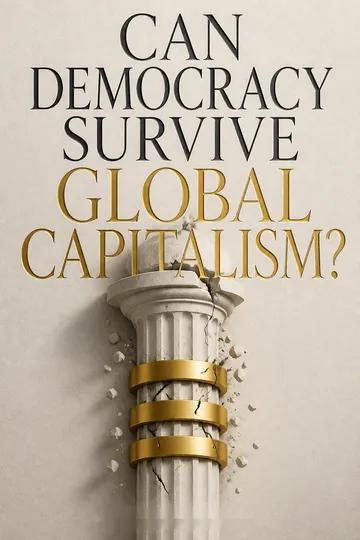
9. Market Dominance Can Corrode Democratic Politics and Civil Society
The market solution does not moot politics.
Politics is inescapable. Even in a capitalist society, rules are necessary to govern markets, from property rights to fair competition. These rules are set through politics, making the quality of political life a fundamental public good. The idea that economic issues can be relegated to "nonpolitical" bodies or that markets are self-regulating is a dangerous illusion that merely shifts influence to financial elites and private power.
Public Choice theory's cynical view. Public Choice theory, which applies economic models to politics, argues that political actors (voters, politicians, bureaucrats) are purely self-interested "rent-seekers." It claims that democratic politics is inherently inefficient, chaotic, and prone to "free-riding" and interest-group domination, leading to perverse outcomes. This theory, often invoked by conservatives, serves to discredit government intervention and democratic action, even when addressing market failures.
Money's corrosive influence. In a capitalist democracy, the tension between "one-citizen/one-vote" and "one-dollar/one-vote" is constant. Money increasingly dominates politics, leading to:
- Privileged access: Wealthy donors gain disproportionate influence over elected officials.
- Skewed campaigns: Politics becomes an expensive exercise in mass marketing, favoring negative campaigning and manipulating voters.
- "Astroturf lobbying": Money creates artificial grassroots movements, drowning out authentic citizen voices.
This "investment theory of politics" suggests that unless ordinary citizens are highly mobilized, moneyed interests can effectively keep issues off the agenda, undermining the very possibility of collective action for the common good.
10. A Robust Polity and State are Indispensable Counterweights to Market Overreach
The quality of political life is itself a public good—perhaps the most fundamental public good.
Reclaiming democratic purpose. To prevent markets from overrunning society, it's crucial to revive politics and public administration. Democracy is essential not only as a bulwark against tyranny but also for the development of individual selfhood and the expression of collective values. A vibrant democracy cultivates civic skills, public-spiritedness, and deliberation, which are antithetical to the purely instrumental and self-interested norms of the market.
Strengthening the state and civil society. A strong, competent state is necessary to govern markets effectively and provide essential public goods. Historically, nations with strong democratic traditions and effective bureaucracies have been more resilient to economic turbulence. In the U.S., this means:
- Limiting money in politics: Public financing of elections and free airtime for candidates can reduce the influence of wealthy donors.
- Renewing civic engagement: Programs like AmeriCorps and "policy juries" can foster public-spiritedness and active participation.
- Supporting mediating institutions: Unions, community organizations, and public schools are vital for social cohesion and democratic voice, often requiring public support.
The dangers of market fundamentalism. The current ideological trend of denigrating government and celebrating markets is dangerous. It leads to a "thin democracy" that is too weak to defend against market predations and social inequalities. The belief that "civil society" exists independently of government, and that public efforts to support it are illegitimate, ignores the historical evidence that a robust public sector and civic life are often mutually reinforcing. Ultimately, a society that allows "everything for sale" risks losing its democratic values, social cohesion, and long-term economic vitality.
Download PDF
Download EPUB
.epub digital book format is ideal for reading ebooks on phones, tablets, and e-readers.








































