
Key Takeaways
1. The British Justice System is Fundamentally Biased Against Women
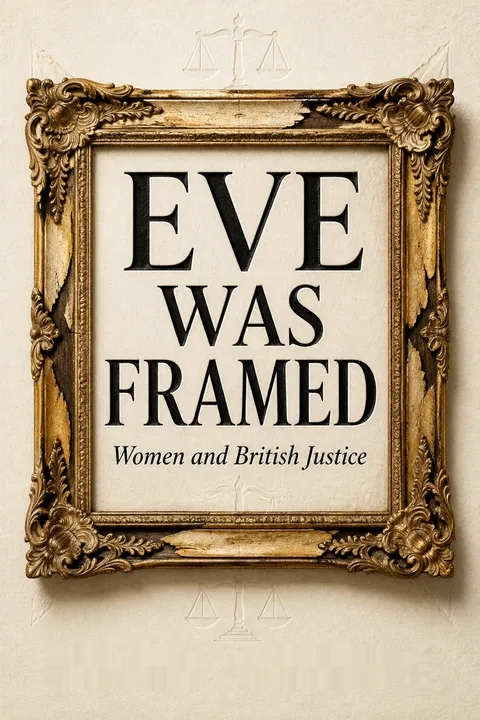
This is a cogently argued examination of how the British legal system ignores, downgrades, underrates and discriminates against women...
Systemic discrimination. The British legal system, despite its claims of impartiality, consistently disadvantages women. This bias is not always overt but is deeply embedded in the attitudes of judges, lawyers, and jurors, often stemming from non-legal societal myths about women's roles and capabilities. The author argues that the system's failures in treating women fairly serve as a "paradigm of the faults and blindnesses of the legal system as a whole."
Erosion of principles. Recent miscarriages of justice, such as those involving the Birmingham Six and Guildford Four, have exposed a crisis of confidence in British justice. While these cases often highlight police misconduct or procedural flaws, the underlying issue is a "profound resistance to a changing order" and a failure to uphold fundamental tenets like "proof beyond reasonable doubt." This erosion of principles disproportionately affects vulnerable groups, including women.
Lack of accountability. The legal establishment often dismisses criticisms as politically motivated or blames external factors, rather than engaging in self-criticism. Judges, drawn predominantly from a narrow, privileged background, often see themselves as protectors of order rather than impartial arbiters, leading to a predisposition in favor of police accounts and a reluctance to scrutinize systemic issues. This insularity prevents necessary adaptation to modern societal values.
2. Societal Myths and Stereotypes Undermine Women's Credibility
Wherever they stand in the courtroom, women are not deemed to have the same authority or credibility as their male counterparts.
Perception dictates treatment. Women in court, whether as victims, witnesses, or defendants, are often judged not on facts but on how well they conform to traditional notions of womanhood. A woman's perceived "worth" is entangled in limiting ideas, making her vulnerable to attack if she challenges conventions, even subtly. This leads to a double standard where a "good" woman might receive leniency, while a "bad" woman faces harsher judgment.
"Good" vs. "Bad" women. The legal system often categorizes women into simplistic archetypes. For example:
- The "fragrant woman" (like Mary Archer) is seen as morally upright and credible.
- The "Magdalene" (like Monica Cogland, the prostitute) is deemed untruthful and unworthy of sympathy.
- The "good wife" who supports her husband, even in crime, often receives leniency.
- The "bad wife" who is dissolute or unfaithful faces severe condemnation.
Impact on outcomes. These stereotypes influence everything from jury perception to sentencing. A woman's marital status, motherhood, or perceived sexual history can become irrelevant but damaging indicators of her character. This means that women who deviate from traditional roles, such as single mothers or those with unconventional lifestyles, often face heightened prejudice and harsher treatment in court.
3. Domestic Violence and Rape Cases Reveal Deep-Seated Prejudices
Violence is still seen as a legitimate response to certain kinds of female behaviour.
Private vs. public. Historically, domestic violence was considered a private matter, outside the law's purview, leading to a reluctance to prosecute and a failure to protect victims. This public/private dichotomy has meant that offenses occurring within the home, particularly against women and children, have been consistently undervalued and mishandled by the legal system. Even with recent reforms, deep-seated prejudices persist.
Victim-blaming culture. In cases of domestic violence and rape, women often face intense scrutiny and victim-blaming. Questions like "Why didn't you leave?" or "What were you wearing?" shift responsibility from the perpetrator to the victim. This is exacerbated by:
- The historical fallacy that women are equal participants in domestic violence.
- The notion that women "ask for it" through their behavior or attire.
- The belief that women might lie about sexual assault for vindictive reasons.
Rape myths persist. Despite legal changes, rape trials remain fraught with male-centric assumptions. The idea that a woman's "no" is ambiguous, or that she might secretly desire sex even while resisting, continues to influence judicial directions and jury perceptions. The legal system's historical focus on property rights and male control over female sexuality has created a framework where a woman's consent is often presumed or easily dismissed, unless physical resistance is overwhelming.
4. Women in the Legal Profession Face Significant Barriers
The task of pulling the weight of this legal monolith into the late twentieth century, when people have very different roles and expectations, seems Herculean, especially when well nigh all of the powerful positions within the law are held by the kind of men who explode with laughter or implode with rage at the very mention of gender bias.
"Gentleman's club" culture. The legal profession, particularly the Bar, has historically been a male-dominated institution, with traditions and practices that exclude women. From dining rituals in the Inns of Court to informal networking, the environment is often unwelcoming and subtly discriminatory. This culture makes it difficult for women to gain acceptance, build connections, and advance their careers, often forcing them into less prestigious areas of law.
Career progression hurdles. Women face specific challenges in career advancement, including:
- Difficulty securing pupillage and tenancy in chambers.
- Patronizing attitudes and marginalization by male colleagues and clerks.
- Unacceptable questions in interviews about marriage and children.
- Inadequate maternity leave policies, forcing many to leave the profession.
- A "glass ceiling" preventing them from reaching senior positions (e.g., few female QCs or High Court judges).
Defining "merit." The concept of "merit" in judicial appointments is often subjective and biased, favoring candidates who fit the traditional male mold. Despite increasing numbers of female law students with excellent qualifications, their representation in senior roles remains disproportionately low. This suggests that the criteria for success are implicitly male-centric, overlooking the diverse career paths and skills that women bring to the profession.
5. Black Women Experience Compounded Discrimination
In the morass of prejudice, black women have the hardest time being heard and securing the protection of the courts.
Intersectionality of bias. Black women face a double disadvantage in the justice system, contending with both gender and racial prejudice. Home Office statistics reveal a shocking overrepresentation of black women in prison, serving sentences significantly longer than their white counterparts for similar offenses. This disparity cannot be solely attributed to social deprivation but points to systemic biases within the legal process.
Stereotypes and assumptions. Black women are often subjected to specific racial stereotypes that influence how they are treated:
- Perceived as "lippy" or aggressive, rather than angry or assertive.
- Assumed to be sexually promiscuous or inherently dishonest.
- Their family structures (e.g., matriarchal, single-parent) are often viewed as unstable.
- Their bond with children is seen as less significant, leading to harsher outcomes in custody or sentencing.
Barriers to justice. These stereotypes affect every stage of the legal process, from policing to sentencing. Black women are more likely to be refused bail, less likely to receive probation, and their cultural backgrounds are often misunderstood or dismissed by predominantly white court officials. Even black female lawyers report having to prove their credibility in court, highlighting the pervasive nature of these biases.
6. The "Reasonable Man" Standard Fails to Account for Women's Realities
If it strains credulity to imagine what the ordinary man would do in the position of the battered spouse, it is probably because men do not typically find themselves in that situation.
Male-centric legal tests. The legal concept of the "reasonable man," used to assess behavior in defenses like provocation and self-defense, is inherently male-biased. While judges now nominally acknowledge that the "reasonable man" can be female, the underlying criteria are based on male experiences and responses, failing to account for the unique psychological and physical realities of women.
Provocation and self-defense. For women, particularly those in abusive relationships, the "reasonable man" test is problematic:
- Immediacy principle: The law often requires an immediate, "heat of the moment" response to provocation, which doesn't fit the "slow burn" or cumulative effect of long-term domestic abuse.
- Force used: Women, often physically weaker, may use weapons, which can be seen as "excessive force" or premeditation, rather than a necessary equalizer.
- "Why didn't she leave?": This common question reflects a profound misunderstanding of the psychological impact of abuse, which can render women incapable of taking "commonsensical" steps.
Need for contextual understanding. The law struggles to integrate the lived experiences of battered women, often dismissing their actions as "unreasonable" because they don't conform to male expectations of how one would react to violence. Expert testimony on the psychological effects of cumulative abuse, such as Battered Woman's Syndrome, is crucial to help juries understand these "abnormal" responses as rational within abnormal circumstances.
7. False Confessions and Vulnerable Defendants Lead to Miscarriages of Justice
It is only recently that we have come to understand that certain people in certain situations are more likely to confess to crimes which they did not in fact commit.
Vulnerability to false confessions. Several high-profile miscarriages of justice, including those involving Carole Richardson, Jacqueline Fletcher, and Judith Ward, highlight the alarming reality of false confessions. Individuals with low intelligence, susceptible personalities, or those experiencing extreme distress are particularly vulnerable to manipulation during interrogation, leading them to confess to crimes they did not commit.
Interrogation biases. Police interrogation methods, often conducted by men trained in a male-centric culture, can be particularly oppressive for women. Submissive or co-operative behavior, common responses to authority, can be misinterpreted as guilt or lead to acquiescence to leading questions. The resulting confessions, even if inconsistent with forensic evidence, are often given undue weight by juries.
Systemic failures. These cases reveal deeper systemic flaws:
- Non-disclosure of evidence: Crucial information, such as inconsistencies in interviews or evidence of mental instability, was withheld from the defense.
- Lack of legal representation: Suspects were often questioned extensively without a solicitor present, undermining their rights.
- Inadequate judicial scrutiny: Courts were often too willing to accept confessions without rigorous examination of how they were obtained or the defendant's psychological state.
These failures underscore the need for reforms in police procedure, legal representation, and judicial acceptance of expert evidence on psychological vulnerability.
8. Prostitution Laws Reflect Class and Gender Hypocrisy
Selling sex as a commodity is perceived as depraved, but it is the seller, not the buyer, who bears the responsibility.
Unequal application of law. Laws surrounding prostitution are steeped in moral judgment and a stark double standard. While the act of selling sex is not inherently unlawful, concomitant activities are criminalized, primarily targeting women. The buyer, often seen as a "victim of his own sexual needs," faces less scrutiny and punishment, reinforcing the myth of male promiscuity as acceptable.
Class-based discrimination. The legal system's treatment of prostitutes is heavily influenced by class:
- "Call-girls" in affluent areas face fewer risks and indignities than "streetwalkers."
- Poorer women are disproportionately targeted for "loitering" charges.
- Non-payment of fines often leads to imprisonment, trapping women in a cycle of incarceration.
Barriers to safety. Current laws, such as those against brothel-keeping, prevent women from working together in safer environments, increasing their vulnerability to violence and exploitation. Prostitutes are often reluctant to report assaults or rapes by clients, knowing their credibility will be undermined in court due to their profession. This leaves them unprotected and perpetuates a cycle of abuse.
9. Outdated Laws and Procedures Hinder Justice
The ritual and mystique of court procedure is itself out of date.
Archaic rituals. The British legal system is characterized by archaic rituals and language that alienate and intimidate ordinary citizens, particularly victims and defendants. Wigs, gowns, and obscure legal jargon create an environment that is comfortable only for a small, privileged class of people, hindering effective communication and participation. This mystique is not unintentional; it is designed to inspire awe and maintain the status quo.
Erosion of fundamental rights. Key legal principles, such as "proof beyond reasonable doubt," are being subtly eroded, replaced by less stringent standards like "satisfied so that they are sure." This, combined with judges' tendency to influence juries and their reluctance to acknowledge police misconduct, undermines the fairness of trials. The removal of the defense's right to challenge jurors without cause also risks creating racially imbalanced juries, further compromising justice.
Lack of victim support. Victims of crime, especially women and children, often feel neglected and alienated by the court process. Professional conduct rules prevent prosecuting lawyers from speaking directly to victims about their evidence, leaving them bewildered and unsupported. This lack of empathy and practical assistance can exacerbate trauma and discourage victims from pursuing justice.
10. Systemic Reform and Judicial Education are Crucial for Equity
Creating a legal framework which is truly equitable means a fundamental overhaul of our legal thinking.
Need for profound change. The current legal system requires a fundamental overhaul, not just minor adjustments. This involves challenging the "mindset of lawyers and judges" that perpetuates injustice and recognizing that the law must adapt to changing societal norms and expectations. True justice demands a system that is equitable, inclusive, and responsive to the diverse realities of all citizens.
Judicial reform. Key reforms for the judiciary include:
- Accountable appointments: Establishing a Judicial Appointments Commission with lay representatives to ensure diversity and transparency, moving away from the current "cloning" process.
- Mandatory training: Implementing formal, ongoing training for judges on gender, race, and class bias, as well as the psychological impacts of trauma and abuse.
- Increased diversity: Actively promoting women and ethnic minorities to judicial positions, recognizing that a diverse bench better reflects and serves society.
Broader systemic changes. Beyond judicial reform, other crucial changes include:
- Revising laws: Overhauling outdated laws like the corroboration rule in rape cases, redefining sexual offenses, and reconsidering the law of provocation to include cumulative abuse.
- Victim-centered approaches: Introducing victim representatives or specialized prosecution staff to provide support and explain procedures without compromising adversarial principles.
- Prison reform: Developing alternatives to incarceration for women, especially mothers, and ensuring that sentencing policies consider the social and economic impact on families.
These reforms are essential to dismantle the "web of prejudice, privilege and misinformation" and build a legal system that truly embodies justice for all.
People Also Read






Download PDF
Download EPUB
.epub digital book format is ideal for reading ebooks on phones, tablets, and e-readers.








































