
Key Takeaways
1. God is the Sole, Unified Reality (Nature Itself).
By God, I mean a being absolutely infinite—that is, a substance consisting in infinite attributes, of which each expresses eternal and infinite essentiality.
One substance. Spinoza posits a single, infinite, self-caused substance, which he calls God or Nature. This substance is not a transcendent creator separate from the world, but the immanent reality of everything that exists. All things are modifications or expressions of this one substance.
Infinite attributes. This singular substance possesses an infinite number of attributes, each expressing its eternal and infinite essence. Humans, however, can only perceive two of these attributes: Thought and Extension. These attributes are not separate entities but different ways of conceiving the same underlying reality.
Necessity, not will. God acts solely by the laws of his own nature, meaning everything that happens in the universe follows with absolute necessity from God's essence. There is no contingency, no free will in God, and no purpose or end goal to creation. This deterministic view contrasts sharply with traditional theological concepts of a personal God.
2. Mind and Body are Inseparable Expressions of the Same Reality.
The order and connection of ideas is the same as the order and connection of things.
Psychophysical parallelism. Spinoza argues that mind (thought) and body (extension) are not two distinct substances interacting, but rather two different attributes through which the one substance (God/Nature) expresses itself. They are two parallel aspects of the same reality, always corresponding perfectly without causal interaction between them.
No causal link. This means that mental events do not cause physical events, nor do physical events cause mental ones. Instead, a modification in the body corresponds to an idea in the mind, and vice versa, because both are expressions of the same underlying divine order. For example:
- The idea of a circle in the mind
- A physical circle existing in nature
Both are manifestations of God, one under the attribute of thought, the other under extension.
Unified individual. A human being is therefore a single individual conceived under two attributes. The human mind is the idea of the human body, and the body is the object of the mind. Understanding this unity is crucial for grasping Spinoza's view of human nature and freedom.
3. All Beings Strive to Persist in Their Existence (Conatus).
Everything, in so far as it is in itself, endeavours to persist in its own being.
Fundamental drive. This "endeavour to persist in its own being" (conatus) is the actual essence of every individual thing, including humans. It is not a conscious choice but an inherent, necessary drive that defines what a thing is and what it can do.
Indefinite duration. This striving involves no finite time; rather, it implies an indefinite duration. A thing will continue to exist by its own power unless it is destroyed by an external cause. This principle applies to all modes of God's attributes, from the simplest particles to complex human beings.
Will and appetite. When this endeavor is referred solely to the mind, it is called will; when referred to the mind and body in conjunction, it is called appetite. Desire is defined as appetite with consciousness thereof. Crucially, we do not desire things because they are good; rather, we deem things good because we desire them, reversing the conventional understanding of motivation.
4. Emotions are Natural Phenomena, Not Moral Failings.
I shall consider human actions and desires in exactly the same manner, as though I were concerned with lines, planes, and solids.
Geometric approach. Spinoza treats emotions (or "affects") with the same rigorous, deterministic method he applies to God and the mind. He views them as natural phenomena, subject to universal laws, rather than moral flaws or disturbances to be condemned.
Primary emotions. All emotions are ultimately derived from three primary affects:
- Desire: The essence of man, striving to persist.
- Pleasure: A transition to a greater perfection (increased power of activity).
- Pain: A transition to a lesser perfection (diminished power of activity).
These are modifications of the body and the ideas of those modifications.
Passive vs. active. Emotions are classified as either passions (passive states) or activities. We are passive when our actions are determined by inadequate ideas or external causes, and active when our actions arise from adequate ideas and our own nature. Understanding the causes of emotions is the first step towards controlling them.
5. True Freedom Comes from Understanding Necessity, Not Free Will.
In the mind there is no absolute or free will; but the mind is determined to wish this or that by a cause, which has also been determined by another cause, and this last by another cause, and so on to infinity.
Determinism. Spinoza explicitly denies free will, arguing that all volitions and actions are necessarily determined by prior causes. The common belief in free will stems from our consciousness of our actions and desires, coupled with our ignorance of the underlying causes that determine them.
Freedom as self-determination. Freedom, for Spinoza, is not the ability to choose otherwise, but the ability to act solely from the necessity of one's own nature, guided by reason. A free man is one who understands the necessary causes of his actions and emotions, thereby becoming their adequate cause.
Overcoming bondage. Human bondage is being a "prey to emotions," driven by external causes and inadequate ideas. By forming clear and distinct ideas of our emotions and their causes, we transform passive suffering into active understanding, gaining greater control over ourselves.
6. Good and Evil are Relative to Our Utility and Reason.
By good I mean that which we certainly know to be useful to us. By evil I mean that which we certainly know to be a hindrance to us in the attainment of any good.
No absolute good/evil. Good and evil are not intrinsic qualities of things but are relative concepts, modes of thinking that we form based on what is useful or harmful to us. A thing can be good, bad, or indifferent depending on the context and the individual.
Utility for self-preservation. What is "good" is that which helps us preserve our being and move towards greater perfection; what is "evil" is that which hinders this. Reason guides us to seek what is truly useful, which means understanding and acting in accordance with our nature.
Reason's dictates. Reason demands that every man should love himself, seek what is truly useful to him, and desire everything that brings him to greater perfection. This forms the foundation of virtue, which is acting in accordance with the laws of one's own nature.
7. Reason Guides Us to Harmony and the Common Good.
In so far only as men live in obedience to reason, do they always necessarily agree in nature.
Agreement through reason. When men are guided by reason, they necessarily agree in nature because reason dictates actions that are universally good for human nature. This leads to harmony, mutual help, and the common good, as rational individuals desire for others the same good they seek for themselves.
Discord through passion. Conversely, when men are swayed by passions (inadequate ideas), they differ in nature and are often contrary to one another, leading to conflict, envy, and hatred. Passions are defined by external causes, making individuals susceptible to external influences and discord.
Social life. While men are often driven by lusts and passions, their association in common still brings more advantages than drawbacks. Society, governed by laws and the power to enforce them, is necessary to restrain destructive passions and promote a more harmonious existence.
8. The Path to Blessedness is the Intellectual Love of God.
From this third kind of knowledge arises the highest possible mental acquiescence.
Third kind of knowledge. Spinoza introduces a "third kind of knowledge," or intuition, which proceeds from an adequate idea of God's attributes to an adequate knowledge of the essence of things. This is the highest form of knowledge, surpassing imagination and reason.
Intellectual love of God. From this intuitive knowledge arises the "intellectual love of God." This is not an emotion in the passive sense, but an active state of the mind, a joy accompanied by the idea of God as its eternal cause. It is God's love for himself, in so far as he is expressed through the human mind.
Eternity and blessedness. This intellectual love is eternal and immutable. It constitutes our salvation, blessedness, and freedom. The more we understand things by this third kind of knowledge, the more we understand God, and the greater the part of our mind that is eternal, making death less fearsome.
9. Knowledge Transforms Passive Suffering into Active Understanding.
An emotion, which is a passion, ceases to be a passion, as soon as we form a clear and distinct idea thereof.
Remedies for emotions. The mind's power over emotions lies in its ability to form clear and distinct ideas of them. By understanding the causes and nature of our emotions, we separate them from external causes and associate them with true thoughts, thereby reducing their passive hold over us.
Active vs. passive. When we have inadequate ideas, we are passive and subject to external forces. When we form adequate ideas, we become active, and our desires become virtues. For example, ambition (a passion) can transform into piety (an activity) when guided by reason.
The wise man. The wise man, guided by reason and the intellectual love of God, thinks least of death and most of life. He strives to understand things as they truly are, as necessary consequences of God's nature, and thus achieves a state of mental acquiescence and freedom from the bondage of passions.
Review Summary
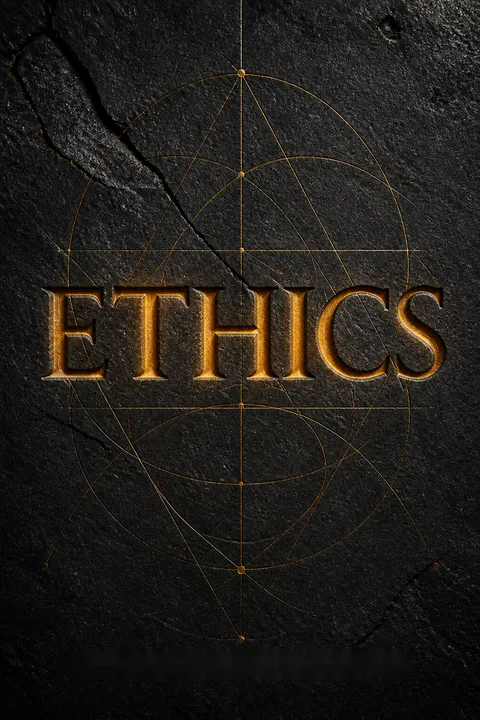
Ethics by Baruch Spinoza presents a geometrical, axiom-based approach to philosophy, combining metaphysics, psychology, and ethics. Readers appreciate Spinoza's rationalist methodology and his controversial concept of God as equivalent to Nature, rejecting anthropomorphic deity. The work systematically addresses determinism, free will, emotions (affects), and the path to human freedom through reason and understanding. Many find Parts III-IV on emotions particularly insightful, offering psychological depth ahead of its time. While challenging due to its mathematical structure and specialized terminology, reviewers praise the work's coherence and transformative potential. Spinoza advocates living according to reason, replacing negative emotions with positive ones, and achieving blessedness through intellectual love of God/Nature.
People Also Read



Download PDF
Download EPUB
.epub digital book format is ideal for reading ebooks on phones, tablets, and e-readers.








































