
Plot Summary
Gipsy's Acre Beckons
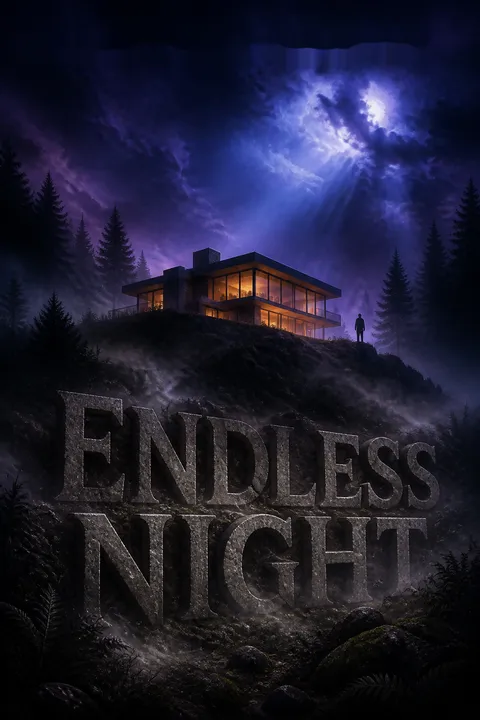
Michael Rogers, a restless young man yearning for more than his humdrum existence, stumbles upon the sale of a derelict property: Gipsy's Acre. Rumors of a curse and tragedy swirl around the land, but Mike is captivated, drawn by the prospect of making it his own. Superstition and warnings from locals, especially the crone Mrs. Lee, set a foreboding mood, yet Mike brushes off the darkness. This chance encounter with the estate triggers the "endless night" that threads through the tale, hinting at inescapable fate. Mike's imagination and longing for a beautiful home take center stage even as omens accumulate, a testament to the deceptive innocence of places and people, setting a mood of both possibility and doom.
Unlikely Meeting Under Fir
Mike's path intertwines unexpectedly with Ellie among the firs of Gipsy's Acre. Ellie seems ethereal, almost conjured from the land's shadows, capturing Mike's heart instantly. As they talk, there's an undercurrent of longing and escape: Ellie, a wealthy American heiress, is stifled by guardians and society; Mike, rootless, seeks belonging. Their exchanging of names, secrets, and dreams feels both magical and fateful—a collision of worlds. This moment, both romantic and fraught, begins the irreversible unfolding of personal and supernatural destinies. Their union feels destined yet deeply ominous, as the setting and the gypsy's curse lurk in the background.
Dreams, Fortunes, and Warnings
Mike and Ellie become enthralled by shared dreams of happiness and the perfect home, with the enigmatic architect Santonix as their guide. Yet Mrs. Lee, the village "witch," continues to warn them off the land with dire prophecies, drawing Ellie in particular into her web of fear. The curse of Gipsy's Acre, coupled with Ellie's growing anxieties, creates a simmering tension. Mike is both protective and dismissive, rationalizing the warnings even as they seem to seep into their lives. Beneath the surface, an unspoken sense of being marked by fate—or by the cravings of others—intensifies.
Secrets in Sunlight
Rapid courtship turns to wedlock, as secrets begin to build. Ellie and Mike marry quietly, with a thrilling sense of stolen freedom. Yet both hold back important facts: Ellie her wealth, constraints, and family's control; Mike his rootlessness and deep need. There's joy in their travels and exploration, but shadows persist as Ellie's family looms and Greta, Ellie's devoted companion, becomes ever closer. The love story—a "poor boy, rich girl" fantasy—should be a fairy tale, yet their isolation, difference in backgrounds, and mounting secrets slice at Eden's innocence.
Lovers' Leap of Faith
Mike and Ellie settle at Gipsy's Acre, the house of their fantasies now tangible thanks to Santonix. As they navigate English village society, Mike adapts to the unfamiliar world of wealth, and Ellie revels in her freedom. Yet both feel the weight of their separate pasts and persistent outside scrutiny—especially from Greta and Ellie's extended family—threatening the delicate balance. The motif of building, both in a physical and emotional sense, mirrors their attempt to construct happiness against rising odds. Their love is both empowering and suffocating, and the ground beneath them, both literally and metaphorically, is unsteady.
Passion, Money, and Betrayal
Their marriage brings not just joy but new vulnerabilities. As the "family vultures" descend, especially the scheming Cora and predatory Uncle Frank, Mike senses the endless demands and suspicions that Ellie's fortune draws. Old loyalties, particularly to Greta, begin to disrupt marital intimacy. Money, supposed to be freeing, turns out to be a source of control and alienation. Santonix, ever insightful, warns of lurking evil. Passion is buffered by growing betrayals and invasions; the lovers' union becomes less secure even as their house rises, beautiful but shadowed.
The Dream House Rises
The couple's new home fulfills many dreams but also accelerates underlying tensions. Santonix's modern masterpiece attracts admiration and envy, even as old superstitions haunt its grounds. Mysterious threats escalate—from pranks to vandalism and the ongoing presence of the gipsy. Domestic help and local acceptance provide some comfort, but safety remains fragile. Major Phillpot, the "God" of the region, offers support and a modicum of belonging, but also unwittingly fuels Mike's fears. The house stands as both achievement and omen—sanctuary and snare—as the shadows grow longer.
Old Curses, New Neighbors
Pranks and warnings become more sinister. Ellie's unease grows as Greta all but takes over, and Mrs. Lee's threats intensify. Old villagers and new faces—Claudia Hardcastle, the Phillpots, and others—circle warily around the newcomers. Folklore and reality blur; is the land truly cursed, or is someone fanning superstition with malicious intent? Isolation builds as the couple becomes emotionally distanced from the world—and arguably, from one another. The sense of encroaching dread intensifies with each new encounter, whispering that past and present are converging for tragedy.
Greta's Shadow Falls
Ellie, hampered by a sprain, leans entirely on Greta, who asserts herself as indispensable. Mike, increasingly suspicious, clashes with Greta, only for Ellie to take her side. The dynamic between the trio is tense and shifting, mirroring deeper psychological dependence and rivalry. Greta's influence is both nurturing and predatory, hinting at designs beyond platonic loyalty. As the gipsy's presence fades, internal pressures rise, and the seeds of tragedy are sown amid the supposed safety of home. The suffocating triangle foreshadows disaster.
Missing in the Mist
On a day that starts in anticipation and joy—Mike's "fey" exuberance—Ellie vanishes while out riding. The search is frantic, the landscape again hostile and wild. Ellie's fate is met with communal grief: she has died, apparently thrown from her horse. Details remain unconvincing for some, and circumstantial evidence, coupled with Mike's shock and the villagers' whispers, hint at something darker than an accident. Accusatory notes and the disappearance of the gipsy deepen the sense of a mystery spiraling out of control.
Endless Night Descends
Mike plunges into despair, but soon administrators, family, and police descend. The inquest returns an accidental death, hampered by incomplete evidence and Mrs. Lee's disappearance. Claudia Hardcastle's subsequent death—eerily similar to Ellie's—reinforces suspicions of foul play, while Greta proves unflappable in handling daily pains and inquiries. The house, now echoingly empty, is Mike's and yet not his; suspicion, guilt, and jealousy swirl, as the promise of "endless night" looms everywhere. Something—someone—has tipped fate from accident to murder.
Inheritance and Intrigue
Mike travels to America to settle affairs, beset by competing interests and greed among Ellie's extended family. The promise of new fortune only intensifies his alienation and fear. News arrives: Mrs. Lee, the gipsy, is dead—perhaps murdered—while Claudia, too, has fallen. The pattern is too pronounced to ignore. Greta stands by Mike's side, ever competent, ever intrusive, and now, perhaps, his only ally. But shadows converge as past conspiracies and present betrayals begin to merge.
Confessions at Gipsy's Acre
Mike, returning to Gipsy's Acre, sheds his former self, revealing the breadth of his collusion with Greta—the mastermind and temptress who engineered Ellie's death for wealth. The narrative voice inverts: what began as confessional and uncertain has become self-destructive braggadocio. Mike's complicity is complete, his crimes laid bare—Ellie's murder, the manipulation of Mrs. Lee to stoke fear, the calculated fatal accident. Yet victory tastes hollow; the house is his, but his soul is in ruins. Thoughts of "endless night" become both reality and punishment.
Ghosts of Sweet Delight
Alone at Gipsy's Acre, Mike is confronted by visions of Ellie—beloved, innocent, unreachable. The dream of happiness is now a nightmare; where once there was hope and desire, only guilt and psychological torment remain. Greta, triumphant, is now repulsive to him. The conspiracy that propelled them to riches returns to devour them. The ghostly refrain of "Endless Night" ties love, loss, and damnation. The dead are always present; the living cannot escape.
Truth Beneath the Surface
Investigators, led by Major Phillpot and Dr. Shaw, close in, presenting Mike with evidence of his and Greta's crimes—cyanide in capsules, fingerprints, a trail of death. Mike's bravado crumbles as his written confession unravels the full tapestry of deception, murder, and ambition. The façade collapses, and both Greta's and Mike's true natures are fully revealed. Justice, whether human or supernatural, is inevitable: the cycle of endless longing and darkness has no escape.
Love Twisted to Darkness
Mike turns on Greta, overcome by hatred, fear, and self-realization. Their partnership—born in greed and lust—ends in murder, as he strangles her, completing the circle of violence and betrayal. Thrilled moments before, deadened after, Mike is left in a void more total than any prison. As the authorities arrive, Mike's mind breaks, inhabiting the perpetual night of his own making. The last vestiges of hope or redemption are extinguished.
The Price of Desire
In the aftermath, Mike is taken by the police, isolated with his writing and memories. Visitors, including his mother and the ever-disapproving Major Phillpot, offer no solace. His confession is complete: he chose desire, the easy path, insatiable hunger, and it led only to despair. The story ends as it began, in Gipsy's Acre, but now Mike understands: he and Greta were "born to endless night," condemned by their choices, forever cut off from the sweet delight of simple, earnest love. The house, the fortune, and even victory are dust.
Analysis
"Endless Night" stands apart among Christie's novels as both a modern gothic and a psychological tragedy, exploring the tangled web of desire, class, and evil within ordinary life. The story's genius lies in its narrative seduction: drawing readers in with romance, dreams, and confessions before revealing the rot within. By making Mike a charming—but eventually monstrous—narrator, Christie implicates us in the allure of ambition and the ease with which love can be displaced by greed. The haunting refrain of "endless night" embodies both fate and choice; superstition and psychology are inseparably entwined until tragedy seems not just possible but inevitable. The book warns of the dangers in seeking shortcuts to joy, in ignoring internal darkness, and in trusting the wrong people. Ultimately, "Endless Night" suggests that the most poisonous threats are those closest to us—not gypsy curses, but longing curdled into violence. Its lessons resound uncomfortably today: yearning without scruple, or love without conscience, invites endless night into even the brightest of dreams.
Review Summary
Endless Night is widely regarded as one of Agatha Christie's most unique and compelling standalone novels. Praised for its gothic atmosphere, psychological depth, and a shocking twist ending, it divides readers between those who admire its slow-burn suspense and those who prefer Christie's traditional mysteries. Narrated by the charming but morally complex Michael Rogers, the story builds unease gradually before delivering a devastating climax. Many note its departure from Christie's usual puzzle-driven format, with some finding the pacing sluggish but ultimately rewarding.
Characters
Michael Rogers
Mike is a product of want—restless, charismatic, always seeking more, yet fundamentally empty. Initially, he appears as a love-struck wanderer hoping for a home and love, but his penchant for escape, ambition without effort, and disregard for consequences drive the narrative into darkness. His relationships, especially with Ellie and Greta, oscillate between longing, dependance, and cold opportunism. Psychoanalytically, Mike craves meaning but is drawn to easy gratification, his lack of self-awareness and moral anchor leading him inexorably to betrayal and violence. His final confession exposes the banality and horror of evil emerging from ordinary yearning twisted by resentment and greed.
Ellie (Fenella Guteman)
Ellie is portrayed as sheltered, sweet, and tragically naïve—a poor little rich girl imprisoned by circumstance and fortune. Her desire for belonging and genuine love exposes her to manipulation, first by her family, then by Mike and Greta. Caught between worlds, her psychological vulnerability and yearning for "sweet delight" make her both relatable and doomed. Throughout, she remains an enigma—capable of resolve but unable to detect or escape the plot against her. Her death marks the destruction of hope and becomes the haunting center of Mike's guilt.
Greta Andersen
Greta is both confidante and puppet master, first to Ellie and ultimately to Mike. Beautiful, intelligent, and cold, she orchestrates Ellie's isolation and death and enables Mike's transformation from lover to killer. Her psyche is rooted in predatory ambition: she wants to possess, to wield power, and to be desired. Greta's dynamic with both protagonists is simultaneously nurturing and destructive; relying on need, she manufactures dependency. Her fate—murdered by Mike—underscores the self-defeating nature of her schemes and the corrosion of conspiratorial love.
Mrs. Lee (the Gipsy)
Mrs. Lee is introduced as a local eccentric, a soothsayer whose dire warnings are freighted with truth beyond her understanding. At once manipulator and manipulated, she becomes the tool by which the land's supposed curse is made real, her involvement ultimately fatal. Psychoanalytically, she embodies society's fear of the outsider and the power of superstition to shape events. Her death signals the end of the myth's utility, but the evil she foretold metastasizes in human action.
Santonix
The architect from another world, Santonix is both creator and Cassandra. He connects deeply with Mike's dreams and spiritual hunger, perhaps sensing and fearing the darkness within. Dying, visionary, touched by both good and evil, he moves as a fate-figure—constructing not just a house but the setting for tragedy. His cryptic warnings, as well as his own decline, imbue the story with existential weight: the price of beauty is suffering and, perhaps, destruction.
Major Phillpot
As the representative of tradition and stability, Major Phillpot mediates between the couple and the community. Wise but limited, he suspects wrongdoing but is unable to intervene until too late. His presence brings a measure of reality to the dream and reveals the tragic limitations of good intentions in the face of human darkness.
Cora van Stuyvesant
Cora plays the part of the manipulative socialite, interested in her own comfort and position above all. Her relationships with Ellie and Mike are transactional; her presence increases the sense of siege and highlights the hollowness of the upper class. Delighted by the trappings of wealth, she is nonetheless another parasite feeding on Ellie's fortune.
Uncle Frank
Uncle Frank is emblematic of the hangers-on drawn by money. Morally ambiguous, sometimes charming, and always ready to "borrow" or manipulate, he reflects the fundamental amorality of Ellie's circle. Psychoanalytically, he is a shapeshifter—never truly attached, always seeking benefit without commitment.
Claudia Hardcastle
Claudia is introduced as a companionable local with her own tangled past, an unexpected casualty of Mike and Greta's wider schemes. Her accidental death by cyanide, intended for others, mirrors the collateral damage greed and secrecy cause. As Santonix's half-sister and Lloyd's ex-wife, she represents the tangled web of relationships and resentment, ultimately cut down by proximity.
Dr. Shaw
Shaw represents reason and the limits of "leave it to Nature" wisdom. His practical skepticism cannot prevent tragedy, but his insight and methodical approach contribute to unraveling the truth. In his presence, the differences between fate, illness, and murder come into focus. He is both the investigator and the quiet judge, outlasting Mike's fevered subjectivity.
Plot Devices
Unreliable Narration and Retrospective Confession
The entire narrative is filtered through Mike's consciousness—by turns innocent, rhapsodic, defensive, then haunted and cold. The reader is swept along by his longing and, later, by his unraveling, only realizing the full extent of his duplicity and violence as he confesses at the end. This device both implicates and deceives the reader, mirroring the surface charm and deeper predation of the protagonist.
Foreshadowing and Fatalism
From the very first page, the motif of "endless night" is woven through warnings, song lyrics, and recurring superstitions. The gypsy's curse, Santonix's cryptic statements, and the repeated use of symbolic markers (like the dangerous corner in the road or ominous fortune-telling) layer the story with a sense of inescapable fate, blurring coincidence and premonition.
Gothic Setting and Symbolism
The house at Gipsy's Acre stands for hope, ambition, and ultimately obsession. Its prominence in both plot and imagery highlights the theme of desire's danger. Elements such as the Folly, fir trees, and the shadowy woods provide both physical and mental landscapes for horror, isolation, and the descent into criminality.
Merge of Romance and Crime
Christie blends genres—starting with romance and fairy tale, introducing psychological thriller, and concluding with murder mystery. The genre merge allows emotional investment to become complicity, and the eventual reversal of expectation (lover as killer, friend as conspirator) intensifies shock and pathos.
Red Herrings and Shifting Suspects
Layered suspects—Mrs. Lee, Cora, Greta, the villagers—keep the reader off balance, building suspense through suggestion rather than overt evidence. External "curses" and accidents mask deliberate evil, all climaxing in the revelation that the gravest threat emerged from within, not without.
About the Author
Other books by Agatha Christie





Download PDF
Download EPUB
.epub digital book format is ideal for reading ebooks on phones, tablets, and e-readers.








































