
Key Takeaways
1. The Caribbean: A Global Crossroads from the Outset
The shipping lanes in and out of these islands brought the world together.
Early European ambitions. From Prince Henry the Navigator's quest for gold and wheat in Ceuta in 1415, European powers like Portugal, Castile, and Genoa were driven by economic and religious motives to explore beyond the Mediterranean. The development of the caravel, a ship capable of navigating the Atlantic's complex winds and currents, enabled systematic exploration, transforming cartography from symbolic to geographic. This era saw a convergence of ambition, technological advancement, and a desire for new trade routes to the fabled East.
A new global marketplace. Columbus's voyages, though mistakenly aimed at Asia, inadvertently positioned the Caribbean as a central hub in a burgeoning global network. While the initial search for gold proved fleeting, the islands quickly became vital for cultivating lucrative commodities like sugar, tobacco, and later coffee. This demand fueled a complex web of trade routes connecting Europe, Africa, the Americas, and even the Far East, with goods like Chinese silks and spices passing through Caribbean ports.
Intertwined destinies. The Caribbean became a crucible where diverse peoples—surviving Amerindians, vast numbers of Africans, and various European settlers—interacted, often violently, but also creatively. This constant flux of people, goods, and ideas forged unique cultural forms and identities, making the region a dynamic "crossroads" where the destinies of distant continents became inextricably linked. The region's history is not just a local narrative but a microcosm of early globalization, demonstrating how distant lands were brought together by the relentless pursuit of wealth and power.
2. European Colonization Forged a Brutal Legacy of Slavery
Europeans eradicated most of the islands’ indigenous past.
A destructive encounter. The arrival of Europeans in the Caribbean initiated a catastrophic period for the indigenous populations. Columbus's initial campaigns against the Amerindians, coupled with the devastating impact of European diseases like smallpox, led to a rapid and dramatic decline in native numbers. Europeans exploited this vulnerability, taking advantage of the situation to enslave and displace the remaining indigenous peoples, effectively erasing much of their pre-Columbian history and culture.
The rise of transatlantic slavery. As indigenous labor dwindled, Europeans turned to Africa to meet the insatiable demand for labor on their burgeoning plantations. The transatlantic slave trade, or Middle Passage, became a horrific journey for millions of Africans, who were forcibly transported to the Caribbean under brutal conditions. This system, initially justified by papal decrees against "unbelievers" and later by emerging racist ideologies, laid the foundation for centuries of exploitation and suffering.
Violence and social control. The establishment of slave societies necessitated extreme violence and elaborate systems of social control. Slave codes, like France's Code Noir or Barbados's regulations, dictated every aspect of enslaved life, permitting brutal punishments and restricting freedoms. This created a climate of fear and constant tension, as outnumbered white colonizers grappled with the ever-present threat of rebellion, shaping the very fabric of Caribbean colonial society.
3. Sugar Fueled the Transatlantic Slave Trade and Plantation Economy
A system of suppression and enslavement underpinned a human desire for the superfluous.
Global journey of a luxury. Sugar, originating in Papua New Guinea, traveled across continents, becoming a luxury item in Europe by the time of the Crusades. Its cultivation spread through the Mediterranean, reaching the Atlantic islands like Madeira and the Canaries, where early plantation models and slave labor were first employed. This global journey set the stage for sugar's eventual dominance in the Caribbean, transforming it from a rare delicacy into a widely consumed commodity.
Fueling the slave trade. The transition from tobacco to sugar in the 17th century dramatically intensified the demand for African slave labor. Sugar cane's intensive cultivation and processing requirements—from planting and harvesting to milling and boiling—demanded a vast, year-round workforce. This economic imperative drove the massive increase in slave imports, particularly to British and French islands, making sugar the primary engine of the transatlantic slave trade and the plantation economy.
Economic transformation and human cost. The sugar industry generated immense wealth for European planters and merchants, funding industrial development in Britain and building opulent fortunes. However, this prosperity came at an unimaginable human cost. The brutal conditions on sugar plantations, coupled with disease, led to high mortality rates among enslaved Africans. The pursuit of this "superfluous" luxury commodity became inextricably linked to the most profound forms of human suffering and exploitation in the Caribbean.
4. Resistance and Rebellion Defined the Enslaved Experience
Resistance and rebellion was all around.
Daily acts of defiance. Enslaved Africans and indigenous peoples in the Caribbean consistently resisted their bondage, often through subtle, everyday acts. This included working slowly, sabotaging equipment, feigning illness, or simply fleeing plantations to seek refuge in remote areas. These small acts of defiance, though often overlooked in official histories, were crucial in challenging the authority of slaveholders and asserting a degree of agency within an oppressive system.
The rise of maroon communities. A significant form of resistance was marronage, where enslaved individuals escaped to form independent communities in mountains, forests, or jungles. These maroon colonies, like those in Jamaica or Hispaniola, often allied with surviving indigenous groups and launched raids on plantations, posing a constant threat to colonial order. Treaties were sometimes negotiated, as seen in Jamaica's Maroon Wars, granting autonomy in exchange for cooperation in capturing other runaways.
Large-scale uprisings. Beyond individual acts and maroon communities, the Caribbean witnessed numerous large-scale slave rebellions. From the 1733 insurrection on Danish St. John's to the 1816 Barbados revolt and Jamaica's 1831 Baptist War, these uprisings, often fueled by rumors of emancipation or inspired by events like the French Revolution, demonstrated the enslaved's unwavering desire for freedom. Though brutally suppressed, these revolts played a critical role in galvanizing abolitionist sentiment in Europe and ultimately contributed to the end of slavery.
5. Haiti's Revolution: A Beacon of Freedom, a Source of Fear
The slaves would eventually have their revenge on all the Lejeunes of Saint-Domingue, but there would still be plenty of brutality ahead for the slaves on the island as France continued to grow wealthy on the profits of sugar.
Revolutionary spark. The French Revolution's ideals of "liberty and equality" resonated deeply in Saint-Domingue, France's wealthiest sugar colony. While white planters and free people of color debated their rights, enslaved Africans, fueled by rumors and organized through voodoo ceremonies, launched a massive uprising in August 1791. This brutal and widespread revolt, marked by burning plantations and the killing of white masters, signaled the beginning of the Haitian Revolution and a profound shift in the dynamics of power.
Abolition and independence. Led by figures like Toussaint Louverture, Jean-Jacques Dessalines, and Henri Christophe, the former slaves fought not only against French forces but also against British and Spanish incursions, who sought to exploit the chaos. France's eventual abolition of slavery in 1794, though later reversed by Napoleon, was a direct consequence of the slaves' military victories. After defeating Napoleon's forces, Dessalines declared the independent Republic of Haiti in 1804, establishing the first free black republic in the Americas and forever altering the course of Caribbean history.
A legacy of fear and inspiration. Haiti's independence sent shockwaves across the Atlantic world. For enslaved people and abolitionists, it was a beacon of hope and a testament to the power of self-liberation. However, for white planters and colonial powers, it instilled a deep-seated fear of similar race wars and slave uprisings, leading to increased repression in other slave societies. Haiti's struggle for recognition and its subsequent economic isolation, partly due to French reparations and international ostracization, cast a long shadow over its post-independence development.
6. The Decline of European Empires Paved the Way for US Dominance
European interest was crumbling away, replaced by the United States.
Decline of Spanish influence. The 19th century witnessed the gradual decline of European imperial powers in the Caribbean, particularly Spain. Exhausted by internal conflicts and wars of independence across Latin America, Spain's grip on its remaining colonies, Cuba and Puerto Rico, weakened. These islands, however, remained loyal, fearing the specter of slave revolts if they pursued independence, a stark reminder of the Haitian Revolution's impact on regional politics.
Rise of American dominance. The United States, emerging as a regional power, increasingly asserted its influence through policies like the Monroe Doctrine. Its victory in the Spanish-American War of 1898 marked a turning point, granting the US control over Puerto Rico and nominal independence for Cuba, albeit with significant American oversight. This era saw US corporations, like United Fruit, establish vast economic interests in the Caribbean and Central America, often backed by military intervention.
"Banana Wars" and informal empire. The early 20th century was characterized by US interventions, dubbed "Banana Wars," in Central American nations like Nicaragua, Honduras, and Guatemala, and occupations in Haiti and the Dominican Republic. These actions, often justified as protecting American commercial interests or preventing European encroachment, solidified the US's informal empire in the region. This new form of dominance, blending economic leverage with military might, replaced traditional European colonialism, shaping the political and economic landscape for decades to come.
7. Post-Emancipation: Freedom's Contradictions and Enduring Inequality
Slavery was gone, but its inequalities remained.
Post-emancipation challenges. The abolition of slavery across the Caribbean, though a monumental achievement, did not immediately usher in an an era of equality. Former slaves often faced continued economic hardship, low wages, and limited access to land, forcing many to squat or remain dependent on plantations. The "apprenticeship" period in British colonies and similar systems elsewhere prolonged their exploitation, highlighting the deep-seated inequalities that persisted after formal emancipation.
New labor, old exploitation. To address labor shortages on plantations, particularly in sugar-producing islands like Trinidad, Guyana, and Cuba, European powers initiated new waves of migration. Indian and Chinese indentured laborers were brought in under contracts that, while technically not slavery, often entailed harsh conditions, low pay, and social restrictions. This new system of contract labor perpetuated exploitative practices and introduced new ethnic and cultural complexities to Caribbean societies.
Racial and social hierarchies endure. Despite legal freedom, racial and social hierarchies continued to define Caribbean societies. Light-skinned elites often retained power, while black and indigenous populations faced discrimination and limited opportunities. Events like Jamaica's Morant Bay Rebellion in 1865, brutally suppressed by colonial authorities, underscored the ongoing struggle for justice and equality, demonstrating that the fight for true freedom extended far beyond the legal end of slavery.
8. The Cold War Transformed the Caribbean into an Ideological Battleground
The Cold War had arrived in the Caribbean.
Cuba's revolution and US reaction. Fidel Castro's 1959 Cuban Revolution, initially a nationalist movement against the Batista dictatorship, quickly aligned with the Soviet Union, bringing the Cold War to America's doorstep. Castro's nationalization of foreign-held assets and his embrace of socialism provoked a swift and aggressive response from the United States, including trade blockades and covert operations like the failed Bay of Pigs invasion in 1961.
The Cuban Missile Crisis. The Cold War tensions escalated dramatically in 1962 when the Soviet Union deployed nuclear missiles in Cuba. This led to the Cuban Missile Crisis, a tense standoff between the US and USSR that brought the world to the brink of nuclear war. The crisis ultimately resolved with the removal of Soviet missiles in exchange for a US pledge not to invade Cuba, but it cemented Cuba's role as a Soviet satellite and a symbol of defiance against US hegemony.
US interventions and regional instability. Beyond Cuba, the Cold War served as a pretext for extensive US intervention across the Caribbean and Central America. From supporting anti-communist regimes to covertly funding counter-revolutionary forces (like the Contras in Nicaragua) and direct military invasions (such as in the Dominican Republic in 1965 and Grenada in 1983), the US sought to prevent the spread of communism, often at the cost of regional stability and democratic development. These interventions left lasting scars, shaping political landscapes and fueling anti-American sentiment.
9. Natural Disasters and Environmental Challenges Persist
The ability of each island to respond to these needs varies by income, but environmental problems are becoming an increasing priority.
A region of vulnerability. The Caribbean, situated on active tectonic plates and in the path of Atlantic hurricanes, has always been highly susceptible to natural disasters. The devastating 2010 earthquake in Haiti, which collapsed buildings and triggered a cholera epidemic, tragically highlighted the region's vulnerability, particularly in nations lacking robust infrastructure and emergency preparedness.
Ongoing environmental threats. Beyond seismic activity and hurricanes, the region faces a growing array of environmental challenges. Deforestation, particularly in Haiti, exacerbates landslides and soil erosion, while rising sea levels threaten coastal communities and vital ecosystems like coral reefs. Pollution from human activity and large-scale trawling further endanger marine life and local fishing industries, impacting both ecological balance and economic livelihoods.
Disparate responses and global implications. The capacity of Caribbean nations to address these environmental issues is often tied to their economic resources. While some wealthier islands can invest in resilient infrastructure and conservation efforts, poorer nations struggle, often relying on international aid. These challenges underscore the interconnectedness of environmental health, economic stability, and social well-being in a region disproportionately affected by global climate change.
10. Migration and Diaspora Continuously Reshape Caribbean Identity
The West Indians who moved abroad became as much a part of the independence process as the people who stayed, their identities still intertwined with the islands where they had lived.
A history of movement. From the earliest European arrivals, the Caribbean has been defined by the constant movement of people, both forced and voluntary. The transatlantic slave trade brought millions of Africans, followed by indentured laborers from India and China. Later, economic hardship and political instability spurred waves of emigration to Europe, North America, and other Caribbean islands, creating a vast and influential diaspora.
Diaspora's impact on identity and politics. These migrant communities, while facing challenges like racism and cultural assimilation in their host countries, played a crucial role in shaping Caribbean identity and political development. They maintained strong ties with their homelands, sending remittances, influencing political discourse, and contributing to cultural exchange. The "Windrush generation" in the UK, for instance, helped forge a pan-West Indian consciousness and fueled the push for independence.
Cultural exchange and evolving identities. The diaspora has profoundly enriched both the Caribbean and its host nations, contributing to diverse cultural expressions in music, literature, and art. From reggae and calypso to distinct linguistic hybrids like Jamaican Patois and Papiamento, these cultural forms reflect the complex blend of African, European, and other influences. The ongoing flow of people continues to redefine what it means to be Caribbean, creating dynamic, evolving identities that transcend geographical boundaries.
11. The "Invented Paradise" of Tourism Masks Complex Realities
The islands have continued to foster fantasy, often completely at odds with their reality.
From death trap to paradise. Once considered a "graveyard" for Europeans due to disease, the Caribbean underwent a dramatic rebranding in the 20th century, transforming into an idealized tourist paradise. Advances in public health and the advent of jet travel made the islands accessible to a wider demographic, leading to the proliferation of resorts and cruise lines that marketed an image of pristine beaches, endless sun, and exotic indulgence.
Economic boon and social cost. Tourism became a major economic driver for many islands, offering jobs and foreign revenue, particularly as traditional agriculture declined. However, this industry often came with significant social and economic costs. Many resorts are foreign-owned, with profits rarely staying on the islands, and local populations often find themselves serving wealthy, predominantly white tourists, creating an uncomfortable echo of colonial hierarchies.
The persistent myth. The "paradise" myth, perpetuated by marketing and media, often obscures the complex realities of Caribbean life, including poverty, inequality, and environmental challenges. While tourists seek escape, locals grapple with daily struggles, often resenting the superficial engagement and the commodification of their culture. The contrast between the curated tourist experience and the authentic lives of islanders highlights the enduring tension between an "invented paradise" and the region's rich, often difficult, history.
Review Summary
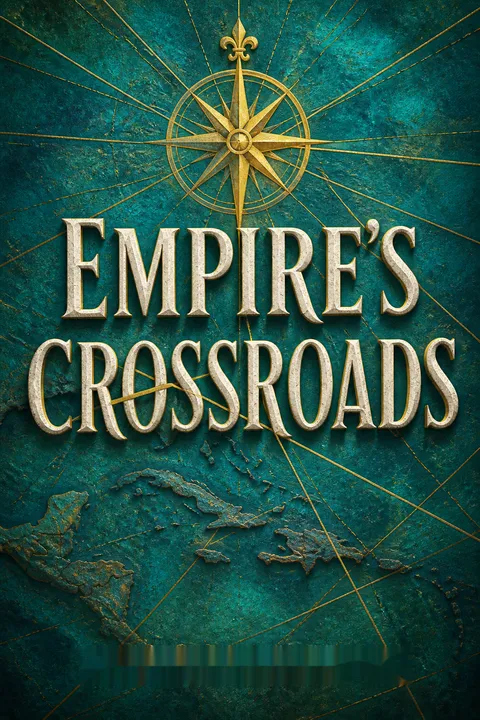
Empire's Crossroads offers a comprehensive history of the Caribbean from Columbus to modern times. Readers appreciate Gibson's engaging writing and broad scope, covering topics like colonization, slavery, and economic development. Some criticize the Eurocentric perspective and lack of depth on certain islands. The book is praised for its accessibility but critiqued for occasional bias. Overall, it's considered a solid introduction to Caribbean history, though dense at times. Readers value the insights into the region's complex past and its ongoing impact on global affairs.
People Also Read







Download PDF
Download EPUB
.epub digital book format is ideal for reading ebooks on phones, tablets, and e-readers.








































