
Key Takeaways
1. Embrace Pain and Misery for Profound Growth
Personally, I never feel more alive than when I’m in great pain, struggling to persevere against insurmountable odds and untold adversity.
Magic in misery. Dean Karnazes champions the idea that true happiness and a sense of being alive often emerge from confronting and overcoming pain and struggle, rather than avoiding them. He believes that modern society's pursuit of comfort and convenience leads to misery, while hardship and suffering can reveal a profound "magic." This contrarian view suggests that pain is not merely something to be endured, but a vital component of a fully lived life.
Pain as a teacher. Running, an activity often associated with discomfort, becomes a vehicle for self-discovery and character building. The author posits that the emotional swings inherent in long-distance running—from deep lows to supreme elation—foster creativity and insight. By pushing to the edge of chaos and mastering the mind's urge to quit, runners develop mental fortitude and a deeper understanding of their psyche, echoing Einstein's sentiment that "In the middle of difficulty lies opportunity for growth."
Addiction to life. The pursuit of these dramatic shifts in state of mind, akin to the Marathon Monks of Mount Hiei seeking enlightenment through endurance, can be seen as an addiction. However, Karnazes argues that this "addiction" to constantly seeking more life, more challenge, and more profound experiences is not a negative. It's a relentless drive to expand one's potential and find peace at the end of a long, challenging trail.
2. Follow Your Dreams, Not the Conventional Path
We are all living in cages, with the door wide open.
Leap into the unknown. After a decade of part-time dabbling, Dean made the audacious decision to quit his "cushy corporate job" and dedicate himself to running full-time. This move was not about abandoning security, but escaping a self-imposed "prison" of comfort. Inspired by pioneering figures and the fictional Forrest Gump, he chose the risky but amazing adventure of turning his passion into his vocation.
Unlikely recruits. His journey often involved drawing others into his "craziness," even those least expected. Topher Gaylord, a former college mate and non-runner, became a surprising accomplice in these escapades. Topher's initial gullibility and eventual transformation into an ultra-runner exemplify the idea that anyone can break free from their perceived limitations and embrace an adventurous life, if only they dare to try.
Setting your own course. The book emphasizes that life can be either a "safe and secure spectator sport" or a "sometimes risky but amazing adventure." By choosing the latter, Dean not only fulfilled his own "life list" ambitions but also inadvertently gave others "permission to do the same." This narrative encourages readers to recognize their own open cage doors and run towards their unique dreams, regardless of societal expectations.
3. The Unpredictable Journey of Ultra-Endurance
The only certainty out here is that nothing is certain.
Chaos and extremes. Ultra-running, especially in remote and hostile environments, is a testament to unpredictability. From the Hood to Coast relay run solo, to the 4 Deserts races across Atacama, Gobi, Sahara, and Antarctica, the author consistently faces extreme conditions. These include:
- Sudden temperature fluctuations (e.g., 75-degree swings in the Gobi)
- Unexpected terrain (e.g., knee-deep snow in Western States, sharp salt flats in Atacama)
- Environmental hazards (e.g., sandstorms, flash floods, rattlesnakes, sharks)
Mental and physical gauntlet. These races are not just physical tests but profound mental battles. The author recounts moments of extreme exhaustion, hallucinations, and disorientation, such as seeing "disfigured leviathans" in the Sahara mirage or feeling his body "levitate" after 40 hours on a treadmill. The constant pressure to push forward, even when the body is failing, highlights the immense psychological fortitude required.
Adaptation is survival. Success in ultra-running, and in life, hinges on the ability to adapt when plans inevitably go awry. Whether it's dealing with a melted cooler in Death Valley, a torn meniscus, or a rerouted race course, the narrative consistently shows that rigid adherence to a plan can be disastrous. Instead, flexibility, resilience, and a willingness to embrace the unexpected are crucial for navigating these "trackless wastes" and reaching the finish line.
4. The Indispensable Power of Support and Camaraderie
There is an intimate bond between a hundred-mile runner and his crew.
Family as foundation. Dean's parents, Popou and Yiayia, are recurring figures of unwavering support, crewing for him on countless escapades despite their age or the absurdity of the challenges. Popou, in particular, embodies steadfast presence, even when disagreeing or being "obstinate." This deep familial bond provides a crucial emotional anchor, transforming personal battles into shared endeavors.
Friends in the trenches. Beyond family, friends like Topher Gaylord, Kimmy, Jim Vernon, and pacers like Martin Franklin and JT Service play vital roles. They offer practical aid, emotional encouragement, and even join in the suffering. From Kimmy's meticulous drop bags and unexpected 14-mile run, to Martin's profound "Stop or continue" advice, these relationships are not just about assistance but about shared experience and mutual growth.
Community of suffering. The ultra-running community itself fosters a unique camaraderie. Runners offer encouragement, share remedies, and even provide life-saving advice to competitors. This shared experience of immense suffering creates deep bonds, where "every insecurity, every character flaw is open and on display for all to see." This raw honesty in the face of extreme challenge reveals the "radiant truth" of human connection.
5. Failure as a Catalyst for Deeper Understanding
You cannot grow and expand your capabilities to their limits without running the risk of failure.
Embracing setbacks. Dean Karnazes openly shares his failures, particularly his repeated DNFs (Did Not Finish) at the Leadville Trail 100-Mile Run. These experiences, far from being defeats, are presented as invaluable lessons. His first DNF due to HACE (high altitude cerebral edema) taught him about reckless arrogance, while a second DNF from a knee injury highlighted the importance of listening to his body.
Lessons from the trail. Each failure provided specific, actionable insights:
- Leadville DNF 1: Past performance is no guarantee of future success; proper acclimatization is crucial.
- Leadville DNF 2: The importance of not pushing through injury that could cause permanent damage.
- Badwater 1995: The dangers of dehydration and vomiting, leading to better hydration strategies.
Growth through adversity. The author argues that "risk-taking breeds failure and failure breeds success." His eventual completion of Leadville, after multiple attempts, was not just a physical triumph but a profound personal accomplishment, more gratifying than an easy victory. This perspective aligns with Michael Jordan's philosophy: "I've failed over and over and over again in my life. And that is why I succeed."
6. Life's Toughest Ultras Are Beyond the Racecourse
If you mess up your children, nothing else you do really matters.
Parenting as the ultimate challenge. Despite his numerous extreme athletic feats, Dean unequivocally states that his "toughest ultra" has been raising his two children, Alexandria and Nicholas. He contrasts the clear rules and finish lines of races with the unpredictable, ever-shifting demands of parenting, where "the finish line moves around a lot" and "nothing is obvious."
Navigating family dynamics. The book delves into the complexities of balancing an extreme athletic career with family life. His wife, Julie, candidly shares the challenges of living with an "Ultramarathon Man" who functions on minimal sleep and is often away. Yet, she also highlights his deep devotion, his efforts to involve the children in his travels, and his non-materialistic values, emphasizing that "he's never really changed from the boy I once knew."
Children's perspectives. Through a Q&A with Alexandria and Nicholas, the book offers a rare glimpse into the impact of his lifestyle on his children. While they miss him, they also appreciate the travel, new experiences, and the inspiration he provides. Their responses reveal a balanced view, acknowledging both the difficulties and the unique joys of having an ultra-runner father, underscoring that the true measure of success lies in the quality of these relationships.
7. The Transformative Impact of Inspiring Others
You have broken down boundaries and in doing so have expanded the realm of what’s possible to so many of us, runners and nonrunners alike.
Unintended influence. Despite his humility and self-perception as "just a runner," Dean Karnazes has received thousands of letters from people whose lives he has profoundly impacted. He views himself as unworthy of such praise, attributing it to an "alter ego" named Karno. However, the sheer volume and depth of these testimonials reveal a far-reaching influence.
Catalyst for change. Readers share stories of radical life transformations inspired by his example:
- Throwing away a TV to pursue personal fulfillment.
- Quitting a CEO job to start running and find freedom.
- Achieving sobriety after years of struggle.
- Overcoming personal tragedies and finding hope.
- Setting new personal records and winning age division awards.
Expanding possibilities. The core message resonating with readers is his willingness to "transcend the artificial impositions of social conditioning" and define what's possible on his own terms. This inspires others to challenge their own perceived limitations, whether it's running a first marathon, losing weight, or simply adopting a motto like "Improvise, Adapt, Overcome" to navigate life's obstacles.
8. Finding Freedom in Stripping Away Layers
We enter this world naked and with nothing, and we leave this world naked and with nothing.
Liberation through vulnerability. During a particularly grueling Badwater Ultramarathon, overwhelmed by mental anguish and physical confinement, Dean and his pacer JT Service decide to strip off their clothes and run naked. This act, born from a philosophical realization about shedding "emotional deadweight" and material burdens, becomes a profoundly liberating experience. It symbolizes accepting life's truths and cherishing every moment.
Confronting fears publicly. The 48-hour treadmill world record attempt on live national television, in a "fishbowl" setting, forces Dean to confront his deepest fear of being on public display. Despite the discomfort and embarrassment—including applying Vaseline for chafing in front of hundreds of onlookers—he finds a strange liberation in facing his fears head-on. This public vulnerability, paradoxically, sets him free.
Authenticity revealed. The extreme conditions of ultra-running strip away all pretense and vanity, revealing the true essence of an individual. Whether it's the raw honesty of conversations with fellow runners in the Sahara or the simple, unadorned act of running naked, these moments highlight the beauty of authenticity. The ultramarathon, in this sense, doesn't build character but "reveals it," offering a glimpse into the unvarnished soul.
9. Humor and Perspective in the Face of Adversity
This sport would be fun, if it wasn’t for all the running.
Lighthearted approach to agony. Despite the excruciating pain and suffering inherent in ultra-running, the author and the community maintain a remarkable sense of humor. Roadside signs, T-shirt slogans, and witty banter serve as a counterbalance to the agony, creating a "yin and yang" effect. This jocular nature helps runners cope with the physical and mental demands of their sport.
Classic running quips. The book shares numerous examples of this humor:
- "My sport is your sport's punishment."
- "Any idiot can run a marathon; it takes a special idiot to run an ultra."
- "If you start to feel good during an ultramarathon, don’t worry, you’ll get over it."
- "Why run one hundred miles? Because basketball and baseball only require one ball."
Absurdity of the journey. From being mistaken for a beggar at a convenience store to the "vanduzzi" remedy for muscle pain, or the "big potty" emergency during an all-night run, the narrative is filled with absurd and comical situations. These moments, often born from extreme exhaustion and sleep deprivation, provide levity and memorable anecdotes, reminding readers that even in the most challenging endeavors, laughter is a powerful coping mechanism.
10. The Deepest Joy Lies in Shared Accomplishments
Crossing the finish line as a team meant far more to me than winning the race myself.
Collective triumph. While Dean Karnazes has achieved numerous individual victories, he consistently emphasizes that the most profound and gratifying experiences are those shared with others. Winning the Atacama Crossing, for instance, felt more meaningful when crossing the finish line hand-in-hand with his crew, symbolizing a collective effort rather than a solitary win.
Mentorship and growth. The transformation of Topher Gaylord from a non-runner to an accomplished ultra-marathoner, culminating in his victory at the Ultra-Trail du Mont-Blanc, brings Dean immense pride. Watching Topher surpass him, embodying the adage "Poor is the pupil who does not surpass his master," highlights the joy of fostering growth in others. Their shared training and racing adventures forge a deep, lasting bond.
Unforgettable family moments. The most glorious moment of Dean's life was not an ultra-marathon victory, but running a 10K with his ten-year-old daughter, Alexandria. Her grit, determination, and request to hold his hand at the finish line moved him to tears, proving that "no matter how many trophies I win, no matter how many records I set, no matter how many distinctions I earn, nothing will ever top that moment." These shared, emotional experiences with loved ones transcend any individual athletic achievement.
11. There Is No Finish Line: The Unending Quest
It’s not the finish line that matters; it’s the journey, along the way.
Perpetual pursuit. For Dean Karnazes, the completion of one challenge immediately sparks the desire for the next. The finish line, rather than signifying an end, often brings a "sense of discontentment," prompting the question, "What's next?" This philosophy drives him to constantly seek new challenges, not to "one-up the last," but to continue the exploration and reward of uncharted territory.
Global aspirations. His current dream of running a marathon in every country of the world in a single year exemplifies this unending quest. This "colossal and bold goal" is not just about personal achievement but about fostering global solidarity, demonstrating that "regardless of the language one speaks, the god one worships, or the color of one’s skin, we can all run together."
Life as an ongoing adventure. The book concludes with the powerful message that life itself is an continuous journey, filled with endless possibilities for growth and discovery. Whether it's a grand global expedition or a personal challenge, the call to action is clear: "Don't just stand there. RUN!" This encapsulates the spirit of embracing life's adventures and continuously pushing beyond perceived limits.
Review Summary
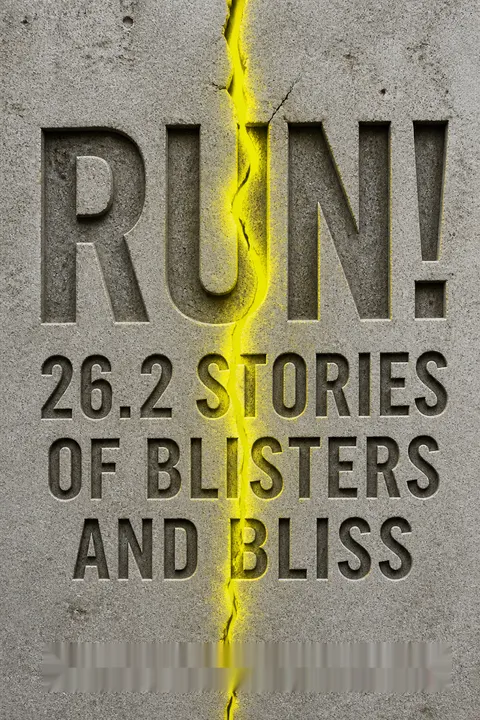
Run! 26.2 Stories of Blisters and Bliss receives mixed reviews averaging 3.93/5 stars. Readers appreciate Karnazes's inspiring ultramarathon stories and motivational message about pursuing dreams, though many find the book disjointed and less compelling than his first work, Ultramarathon Man. Critics note excessive clichés, false modesty, and self-promotion, while fans praise his humor and relatability. The 26.2-chapter format creates standalone stories that some find engaging and others consider filler. Most agree Karnazes's extreme achievements are fascinating, even if not always relatable, making it recommended primarily for runners and endurance sports enthusiasts.
People Also Read






About the Author



Download PDF
Download EPUB
.epub digital book format is ideal for reading ebooks on phones, tablets, and e-readers.








































