
Key Takeaways
1. We have crossed a threshold onto a fundamentally different, less hospitable planet
The planet on which our civilization evolved no longer exists.
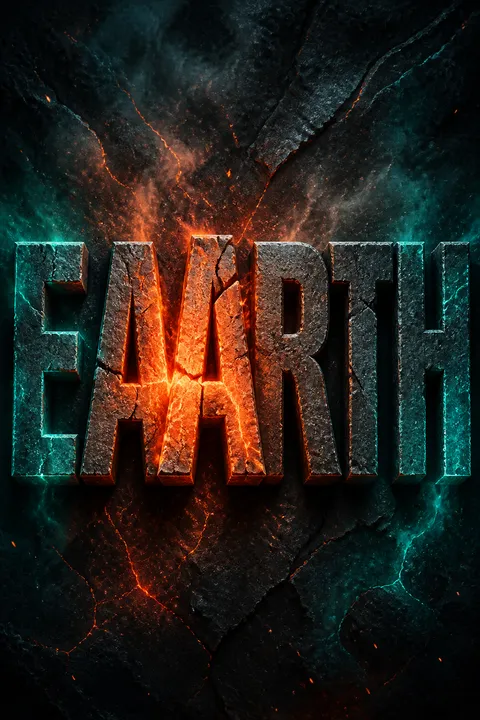
A new world. We are no longer living on the stable, hospitable Earth that nurtured human civilization for ten thousand years. By raising global temperatures by nearly one degree Celsius, we have fundamentally altered the planet's physical systems, creating a new, volatile environment that requires a new name: Eaarth.
Visible planetary changes. The evidence of this shift is already undeniable and devastating across the globe. We are witnessing rapid, unprecedented changes to the Earth's most prominent physical features:
- The Arctic ice cap is in a "death spiral," melting decades ahead of scientific projections.
- The oceans have become 30 percent more acidic, threatening the survival of marine ecosystems and coral reefs.
- Extreme weather events, such as record-breaking deluges and severe droughts, have become the new normal.
An uphill battle. This new planet is characterized by increased friction and reduced margins for error. We must abandon the illusion that we can easily restore the old climate and instead learn to navigate a much tougher, more unpredictable world.
2. The era of treating climate change as a future threat to our grandchildren is over
Forget the grandkids; it turns out this was a problem for our parents.
Immediate crisis. For decades, politicians and environmentalists framed global warming as a distant problem that would primarily affect future generations. This rhetorical safety valve allowed leaders to delay meaningful action, but real-world data has shattered this timeline.
Accelerated impacts. The consequences of our carbon emissions are happening in the present tense, disrupting lives today rather than in some far-off future. The rapid onset of climate chaos has caught scientists and policymakers off guard:
- Glaciers that supply drinking water to hundreds of millions of people are disappearing now.
- Expanding tropical zones are pushing dry subtropics into populated agricultural regions today.
- Extreme weather disasters have quadrupled in frequency compared to the late twentieth century.
A call to maturity. We must cultivate a mature outlook that accepts our current reality rather than wishing for a different one. Acknowledging that the crisis is already here is the first step toward building resilient societies capable of weathering the storm.
3. Feedback loops and tipping points are accelerating planetary instability beyond our control
We’re responsible for it, but we can’t shut it off.
Self-reinforcing cycles. The warming we have already caused is triggering natural feedback loops that release even more greenhouse gases into the atmosphere. These planetary booby traps operate independently of human activity, meaning that even if we stopped all emissions today, warming would continue to accelerate.
Ominous feedback mechanisms. Several critical feedback loops have already been activated, threatening to push the climate past the point of no return:
- Melting permafrost is releasing massive quantities of trapped methane, a highly potent greenhouse gas.
- Drying peat bogs are decomposing rapidly, threatening to release decades' worth of stored carbon.
- The loss of reflective Arctic ice replaces a white mirror with dark ocean water that absorbs solar heat.
Weakened natural sinks. Simultaneously, the planet's natural capacity to absorb carbon dioxide is declining. Warmer oceans and heat-stressed forests are absorbing less carbon than they did in the past, leaving more heat-trapping gas in the atmosphere to drive further warming.
4. The paradigm of endless economic growth is no longer viable on a finite, damaged planet
On our new planet growth may be the one big habit we finally must break.
The growth trap. Modern civilization is built on the assumption of perpetual economic expansion, fueled by cheap fossil energy. However, we have reached the physical limits of this model, as the ecological and financial costs of growth now exceed its benefits.
Intersecting crises. The end of easy growth is driven by the simultaneous arrival of climate chaos and resource depletion:
- "Peak oil" means we have reached the limit of easily extractable, cheap petroleum.
- The financial system is overleveraged, relying on risk models that ignore ecological realities.
- The cost of repairing infrastructure damaged by extreme weather is draining capital needed for expansion.
A necessary transition. We must learn to manage a graceful economic descent rather than chasing the illusion of endless growth. Transitioning to a stable, non-expanding economy is the only way to prevent a catastrophic collapse of our social systems.
5. Massive, centralized green energy projects cannot be built fast enough to save us
Because of the requisite technical and infrastructural imperatives and because of numerous (and often entirely unforeseen) socio-economic adjustments, energy transitions in large economies on a global scale are inherently protracted affairs.
The scale problem. While transitioning to renewable energy is essential, we cannot simply swap out our fossil fuel infrastructure for green alternatives and continue living as before. The sheer scale of the global energy system makes a rapid, centralized transition physically and economically impossible.
Infrastructural inertia. Replacing the multi-trillion-dollar fossil fuel network is a monumental task hindered by several factors:
- Historical energy transitions (like wood to coal) have always taken many decades to complete.
- Sunk costs in existing power plants, pipelines, and vehicles create immense political and financial resistance.
- The capital costs of building centralized green grids and nuclear reactors are prohibitively high.
Limits of technology. While wind and solar power are growing rapidly, they cannot fully replicate the concentrated, on-demand power of cheap oil. We must combine renewable energy development with a massive reduction in our overall energy consumption.
6. We must shift our societal focus from expansion to maintenance, durability, and resilience
We need now to understand the world we’ve created, and consider—urgently—how to live in it.
A new vocabulary. To survive on a tougher planet, we must replace our obsession with speed and bigness with a focus on stability and durability. Our primary collective task is no longer to build more, but to maintain and protect what we already have.
Prioritizing resilience. We must redesign our communities and institutions to withstand the shocks of a volatile climate:
- We must invest in sturdy, localized infrastructure rather than fragile, globalized networks.
- Our financial systems must prioritize safety and risk mitigation over high-yield speculation.
- We need to embrace "small-scale" technologies that are easier to manage and repair locally.
The wisdom of limits. Accepting limits is not a defeat, but a mature adaptation to reality. By scaling down our expectations and our institutions, we can build a more secure, cooperative, and ultimately more satisfying way of life.
7. Rebuilding localized food and energy systems is essential for survival
We shall see, in chapter 4, how we’ve let our energy systems and our food systems grow “too big to fail,” just as we did our banks.
Vulnerable supply chains. Our highly centralized, globalized systems for food and energy are incredibly vulnerable to disruption from climate shocks and resource scarcity. To secure our basic survival, we must decentralize these systems and rebuild them at a local, manageable scale.
The power of local agriculture. Small-scale, biodiverse farming is actually more productive per acre and more resilient to extreme weather than industrial monocultures:
- Local farms use far less fossil fuel for transport, packaging, and synthetic fertilizers.
- Diverse crop rotations and intercropping protect against total crop failure during droughts or floods.
- Community-supported agriculture (CSA) keeps food dollars within the local economy.
Distributed energy. Similarly, we must transition to distributed, local energy generation, such as rooftop solar and community wind. Generating power close to where it is consumed eliminates the need for expensive, vulnerable long-distance transmission lines.
8. The Internet can serve as a vital, low-carbon tool to keep local communities connected
The Net is the one solvent we can still afford; jet travel can’t be our salvation in an age of climate shock and dwindling oil, so the kind of trip you can take with the click of a mouse will have to substitute.
Low-carbon connection. As we scale back our physical mobility and focus on local life, the Internet can prevent our communities from becoming provincial or stifling. It offers a highly efficient, low-carbon way to share information, culture, and ideas across the globe.
Fostering local resilience. The Web can be used to strengthen local networks and facilitate mutual aid within neighborhoods:
- Online forums allow neighbors to share tools, ride-share, and coordinate emergency responses.
- Open-source platforms provide vital agricultural and technical knowledge to new local farmers.
- Digital networks can match local supply with local demand, reducing waste and dependency on global markets.
A window to the world. By keeping us connected to a global conversation, the Internet ensures that our local focus does not lead to isolation or xenophobia. It is the essential tool that allows us to live locally while still thinking globally.
Review Summary
About the Author

Download PDF
Download EPUB
.epub digital book format is ideal for reading ebooks on phones, tablets, and e-readers.








































