
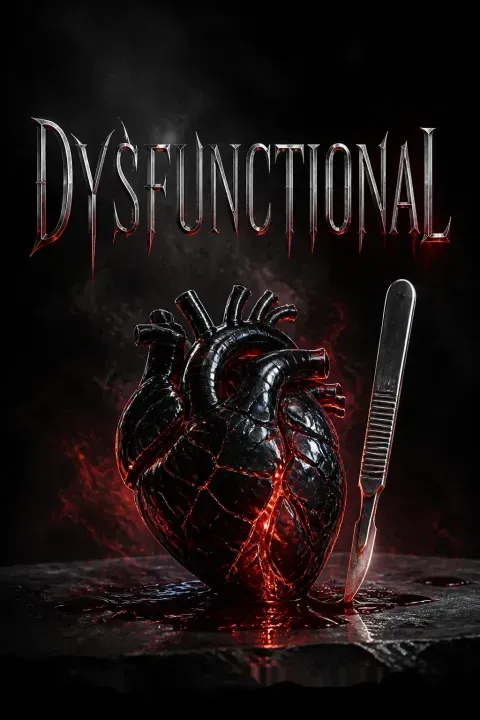


Plot Summary
The Stalker Stalked
Ezra1 sits in The Perfect Blend coffee shop, watching a tattooed man named Kaspian2 use calculated shyness to lure a blonde woman. He follows them to a hotel, curious about what happens to the women he has seen this man charm before they vanish. Inside the hotel bathroom, Kaspian2 ambushes him, slamming him against the tiles and demanding to know why Ezra1 is following.
Ezra1 deflects, but Kaspian2 sees through the lies. He reveals he ditched the woman the moment he realized he had a tail. In the supposed hotel room, she is nowhere to be found. They trade barbed threats and false smiles, each recognizing something dangerous in the other. They part with a tense, unspoken promise that this collision is far from over.
The opening establishes the central dynamic: two predators recognizing each other across a crowded room. Ezra's clinical observation of Kaspian's hunting technique (plain coffee, feigned modesty, the double-take) functions as twisted professional admiration. Each man believes he has the upper hand; each is wrong. The bathroom confrontation literalizes their relationship as a collision of equal forces, Kaspian's forearm against Ezra's throat mirroring the violence that will later become eroticized. Their dialogue is a fencing match of deflections, neither man revealing his nature while suspecting the other's. They part without resolution, establishing the pattern of perpetual cat-and-mouse that defines their early courtship.
Two Killers Circle Each Other
Over weeks, Kaspian2 and Ezra1 repeatedly encounter each other in the small town. Kaspian2 sits uninvited at Ezra's1 table, then asks him for drinks at The Hideaway pub. At the bar, they trade carefully barbed questions about victims, types, and pasts.
Kaspian2 reveals he is bisexual; Ezra1 deflects. When Kaspian2 leaves the table, Ezra1 pays the tab and discovers Kaspian2 had been drinking soda water all night, not gin and tonics, meaning he manipulated the situation sober. Outside, Ezra1 shoves Kaspian2 into an alley, hand on his throat, demanding to know why Kaspian2 keeps flirting and pushing.
Kaspian2 responds by admitting he likes submissive women and dominant men, the implication landing squarely on Ezra.1 The confrontation ends with neither man admitting desire, but the tension is undeniable and mounting.
This section explores the eroticism of mutual suspicion. Their bar date is a negotiation disguised as small talk, each seeking information while revealing nothing. Kaspian's sobriety reveal demonstrates his manipulative skill and reframes the entire encounter as a calculated move. Ezra's violent response, pinning Kaspian and choking him, is his true language: physical dominance as both threat and flirtation. Kaspian's calm acceptance of that violence reveals his complementary psychology. He does not flinch because violence is his native tongue, too. Their dynamic crystallizes here: Kaspian seeks possession, Ezra seeks control, and both find what they need in the other's darkness.
The Club of Unmasking
Kaspian2 takes Ezra1 to Tabu Dreams, a fetish club an hour away, on couples' night. Inside, they watch public sex acts and get propositioned. Kaspian2 slips away, and Ezra1 finds him in a hallway with a leather-clad man pressing him against a wall, Kaspian's2 hand on the man's crotch. Jealousy flickers. Ezra1 sends the other man away and pins Kaspian2 against the wall himself.
Kaspian2 admits he orchestrated the scene to test Ezra's1 reaction. Then, with a hand down Ezra's1 pants, he reveals his real plan was to get Ezra's1 attention all along. Outside, Ezra1 pulls a hidden bracelet knife and holds it to Kaspian's2 throat. Kaspian2 names him: Quintin Black,1 the Heart Stopper, a serial killer from Seattle. The fiction of Ezra Hamilton cracks open.
The fetish club functions as a liminal space where their true selves can surface under the cover of performance. Kaspian's engineered jealousy test reveals his need for proof of Ezra's possessiveness; he wants to be claimed. Ezra claims him in front of the other man, giving Kaspian exactly the validation he craves but on Ezra's terms. The subsequent knife scene is the story's first unmasking: Kaspian names Quintin, and the careful fiction of Ezra Hamilton shatters. The knife is both threat and intimacy; Kaspian's fear is real but so is his arousal. This is the point of no return. They can no longer pretend to be ordinary acquaintances.
A Gift Wrapped in Fear
At Kaspian's2 house, they exchange fragments of their histories. Kaspian2 admits he tracked Quintin1 from Washington after recognizing him as the man who killed his father, an undercover cop named Salvador Castillo.7
Quintin1 shares his own origin: psychopathy without trauma, parents he murdered simply because they feared him. The confession culminates in Quintin1 zip-tying Kaspian2 to his bed, cutting a circle on his chest with the bracelet knife, and masturbating with the blood. He leaves Kaspian2 tied, promising nothing.
Weeks later, on Halloween, Kaspian2 reappears with a gift: a bound man in his basement slaughterhouse. Quintin1 stabs the man through the heart in his signature style, reclaiming the Heart Stopper identity he suppressed for two years. They have rough sex over the corpse.
This section consummates their dark bond. The gift of a victim is Kaspian's ultimate love language: he provides Quintin with exactly what he needs, blood and killing, in exchange for exactly what he wants, Quintin's attention, violence, and possession. Quintin's return to killing is not a relapse but a homecoming to his authentic self, facilitated by Kaspian's acceptance. The sex on the concrete slab beside the dead body literalizes their fusion of Eros and Thanatos. Neither man expresses affection verbally; instead, Quintin says thank you for my gift and Kaspian replies thanks for mine. Their relationship operates on a transactional economy of violence and pleasure, perfectly balanced.
The Locked Box Reveals All
As Ezra1 tries to maintain his normal-citizen mask, attending bar crawls with coworkers Willow3 and Jason,4 Kaspian2 watches from the shadows, simmering with possessiveness. Willow3 begins showing interest in both men. She asks Ezra1 about his relationship with Kaspian,2 then goes on a date with Kaspian,2 leaving Ezra1 deeply suspicious.
Ezra1 follows them to a sip-and-paint class, then breaks into Kaspian's2 house. Inside a small locked box on the dresser, he finds a photograph that stops him cold: a much younger Kaspian2 with a man he recognizes instantly as Salvador Castillo,7 the undercover cop Quintin1 killed, his final victim before fleeing Seattle. The revelation lands like a physical blow. Kaspian2 is the cop's son.
Ezra's attempt at normalcy with Willow represents the life he thinks he should want, but Kaspian's obsessive surveillance reveals how unsustainable that fiction is. The locked box discovery inverts the power dynamic: Kaspian, who seemed like an impulsive stalker, is revealed to have been tracking Ezra with a specific, deeply personal motive predating their first meeting. The photograph transforms Kaspian from a chaotic admirer into a potentially lethal threat. Ezra's trust, already fragile, shatters. This is the first time his past catches up with him, and the weapon is the son of a man he killed, a man who abused that son. The revelation reframes their entire relationship as a question: has Kaspian been seeking revenge all along?
Carved Confessions
Ezra1 confronts Kaspian2 at his house with the photograph, revealing he knows about Salvador.7 Kaspian2 does not deny it but insists he has no desire for revenge. He explains his father abused and abandoned him, and that he had been planning to kill the man himself when Quintin1 beat him to it. His obsession with Quintin1 started as a search for understanding, then morphed into something else entirely.
Ezra1 does not believe him. He handcuffs Kaspian2 to the bed, cuts into his chest with a knife, carving the word Quintin1 into his skin while demanding answers. He fucks Kaspian2 brutally, mixing pain and pleasure. Afterward, he leaves Kaspian2 bloody and tells him to get out. Trust between them is shattered.
The carving of Quintin's name onto Kaspian's chest is a profound act of violent intimacy functioning as both punishment and branding. Quintin literally writes his claim onto Kaspian's body, marking him as property even as he rejects the possibility of a future together. The act echoes earlier cutting but escalates from a simple circle to a name, a permanent scar Kaspian will carry forever. Quintin's disbelief in Kaspian's motives is partly self-protection: to trust another killer, especially one with a legitimate grievance against him, would violate every survival rule Quintin lives by. The scene crystallizes their central conflict: they are drawn together by darkness, but that same darkness makes genuine trust nearly impossible.
Covenant at the Overlook
After estrangement, Ezra1 meets Kaspian2 at a secluded overlook. Kaspian2 reveals his full history: his father's physical and sexual abuse, his mother's abandonment at fifteen, his obsessive relationships with women that turned deadly when they betrayed him. He had followed Quintin1 across states for years, a tracker on his truck, his desire for revenge dissolving into consuming fascination.
Ezra1 responds with his own truth: he killed his parents not from trauma, but because they recoiled from the emptiness inside him. Learning what Salvador7 was, he regrets only that the death was not slower and more painful. They kiss for the first time, a fierce, possessive clash, then have sex in the truck cab. Ezra1 tells Kaspian2 he will always want him.
This scene marks the emotional climax: the moment two people incapable of love articulate their bond in the only language they know, honesty about violence and desire. Kaspian's confession of his father's abuse provides the psychological missing piece explaining his obsessive patterns; Quintin's response, regret that he did not make the death worse, is the most tender thing he is capable of offering. Their first kiss is an afterthought to months of sex and bloodshed, a surprisingly intimate act that seals the covenant between them. The overlook itself, a literal edge with a view of nothing in the dark, mirrors their position: balanced on the precipice of something neither can name but both refuse to lose.
Willow Hunts a Killer
Willow Bixby,3 the receptionist at Ezra's1 landscaping company, has been acting strange. She asks pointed questions about Kaspian,2 kisses Ezra1 one morning in distress, and makes cryptic remarks about whether people can change. Kaspian2 notices she has been following him, not the reverse. Simultaneously, news breaks that two young women from Soledad Square have gone missing: Laura, from the convenience store, and Emerson, a library regular.
Both were last seen with Kaspian.2 The local police open an investigation. Shevon,6 the waitress at Thai Me Down, spreads gossip across town. Kaspian2 vanishes for days, not responding to Ezra's1 messages. Ezra1 realizes Emerson was Willow's3 close friend and that Willow3 likely suspects Kaspian2 of murder.
The investigation arc introduces external consequences to Kaspian and Ezra's private world. Willow's transformation from sweet coworker to amateur detective represents the normal world's intrusion into their bubble. Her grief-fueled investigation highlights an uncomfortable truth: Kaspian's victims were real people with friends who loved them. The story does not moralize, but Willow's pain provides the only external perspective on the tragedy Kaspian has caused. Ezra's primary concern is not guilt but logistics: if the police connect Kaspian to the missing women, they will eventually connect Kaspian to him. His conscience operates purely on self-preservation, a hallmark of his psychopathy.
The Cabin Ambush
Willow3 takes leave from work, telling Ezra1 she is going to a cabin at Sugarbush with girlfriends. Ezra1 discovers she lied about the location and went to Stowe instead. He follows, and in the snowstorm, he spots Kaspian's2 truck tailing her as well. They end up at a secluded cabin at the end of a dead-end road.
Ezra1 breaks into an empty neighboring cabin and watches through binoculars. He sees Willow3 cooking, them drinking wine, then Willow3 kissing Kaspian2 on the couch. Moments later, she pulls a kitchen knife from under a pillow and holds it to his chest while straddling him. She demands he confess to killing Emerson. Ezra1 rushes over through the blizzard.
The cabin sequence is a convergence of three separate agendas: Willow's vengeance, Kaspian's planned murder of Willow, and Ezra's protective intervention. The snowstorm isolates them literally and symbolically, creating a sealed arena where normal rules abey. Willow's seduction of Kaspian mirrors his own predation of women; she uses the same tools of flirtation and false interest that he does. The moment she produces the knife, the power dynamic inverts: the stalker becomes prey. But even this was anticipated; Kaspian had his own plan to kill her. In their world, everyone is both hunter and hunted simultaneously.
Suicide Staged in Snow
Ezra1 bursts into the bedroom just as Willow3 raises the knife. Kaspian2 lies still beneath her, playing the victim. Willow3 screams that Kaspian2 killed Emerson, that she found her bracelet in his car. Ezra1 tries to calm her, but when she calls Kaspian2 a monster, Ezra1 snaps. He knocks the knife away and pins her down, revealing that he is exactly the same: a killer who does it because he enjoys it.
In the struggle, she slashes Kaspian2 across the ribs. Enraged, Ezra1 and Kaspian2 overpower her. Kaspian,2 bleeding heavily, tells Ezra1 to make it look like suicide. They slit her wrists with her own knife, then stage the room. They flee through the storm to a cottage motel, Kaspian's2 wound hastily bandaged.
Willow's death at their hands cements Ezra and Kaspian as an irreversible unit. By killing together, they cross a threshold: each has now killed to protect the other. Ezra's revelation to Willow, 'So am I,' is the first time he has voluntarily confessed his nature to an outsider, and it happens because defending Kaspian requires it. The staging of suicide is a practical act of self-preservation, but it also functions as a dark inversion of romance: they are literally cleaning up each other's mess. Kaspian's injury from Willow's blade, near his existing scars, creates a physical map of their relationship on his body: one mark from Quintin, one from a woman who tried to take Quintin away.
The Performance of Goodbye
Holed up in a cottage for days, Ezra1 stitches Kaspian's2 wound with a sewing kit. They watch the news but hear nothing about Willow's3 body; the snowstorm has delayed discovery. Ezra1 plans their escape methodically. He calls his job and quits, citing his sick father, a story he seeded months earlier with Jason.4 He calls his landlord with the same tale.
Kaspian2 contacts a real estate agent to sell his converted barn house. They return to Soledad Square briefly to pack belongings. At Thai Me Down, they perform as a devoted couple forced to relocate because of a family tragedy. Shevon6 eats it up. They run into Jason4 and repeat the story. The whole town will soon believe the narrative they have constructed.
The performance of goodbye demonstrates how seamlessly both men wear normal masks when necessary. Their ability to lie convincingly is a shared survival skill honed over years of hiding their true natures. The sick-father story, planted months in advance, shows Quintin's long-range strategic thinking; he has been preparing an exit strategy unconsciously even before meeting Kaspian. Presenting themselves as a couple to Shevon and Jason serves a dual purpose: it explains Kaspian's departure alongside Ezra's and neutralizes suspicion about their connection to the missing women by casting them as devoted partners focused on a family crisis.
Tire Iron Justice
At their informal farewell gathering at The Hideout, the mood sours when BJ,5 Samantha's boyfriend, loudly calls Ezra1 and Kaspian2 'fucking fags' and refuses to be near them. Samantha leaves in tears; Jason4 escorts her home. For Kaspian,2 the slur opens old wounds: his father called him that as a child while abusing him.
Outside the bar, they wait an hour for BJ5 to leave, then follow him. They punctured his tire earlier, forcing him to pull over on a dark, snowy road. Kaspian2 approaches with a tire iron, and when BJ5 refuses to apologize, Kaspian2 beats him to death in a furious barrage, striking his head, shoulders, and stomach until he stops moving. Afterward, they have violent sex in the truck.
BJ's murder is the most emotionally charged kill in the book because it is purely personal. Unlike their previous kills (practical, recreational, or protective), this one is driven by Kaspian's triggered trauma. The homophobic slur connects BJ to Kaspian's father, and in killing BJ, Kaspian is symbolically re-killing Salvador. Quintin's role as witness and post-murder lover provides the validation Kaspian's father never gave him. The sex afterward transforms the violence into intimacy, their established pattern. This kill is also sloppier than their norm, a blunt-force beating rather than a clean knife strike, revealing that Kaspian's impulse control remains his greatest vulnerability.
Alaska's Newest Hunters
They drive west, selling vehicles along the way, discussing destinations. Quintin1 has substantial savings from his parents' estate, enough to fund a new life. Kaspian2 suggests traveling indefinitely, but Quintin1 insists they need a home base for new identities.
They settle on Alaska: wilderness, seclusion, high crime rates, endless hiding places. Passing through Kansas, Kaspian2 shares his sketchbook, revealing pages of drawings of Quintin1 he made during years of stalking: a leg behind a library shelf, blood-covered hands, anatomically precise hearts pierced by knives.
Quintin1 is moved by the evidence of how long Kaspian2 has watched him, wanted him. They cross into Alaska and become Jamison and Grayson. For the first time, Quintin1 feels something like home.
The sketchbook reveal is a quietly devastating moment that reframes their entire history. Kaspian's art shows that his obsession with Quintin predates their meeting by years and that he has been loving him in the only way he knows how: by watching, documenting, preserving. The drawings of Quintin without his knowledge are a stalker's love letters, and Quintin's response is his reciprocal language of desire. The choice of Alaska is pragmatic, isolation and opportunity, but also metaphorical: a cold, remote place where two people who run hot with violence can coexist. They have finally stopped running and started building something, however unconventional.
Epilogue
A year and a half into their Alaskan life, Jamison1 and Grayson2 have mapped the best secluded spots for their hunting. They target Kevin,8 a man they met in a pub who boasted about his plans to be alone with his sixteen-year-old niece, using language that made his predatory intentions clear. On a group hike, they peel Kevin8 away from the trail toward a waterfall.
Grayson2 drives a hunting knife into Kevin's8 gut, then slices his throat and shoves his body into the cascading water. They hike to a clifftop with a view of glaciers and the bay. Grayson2 leans back on his palms, and Jamison1 presses against him, ordering him to his hands and knees so he can fuck him while they enjoy the view. Later, he promises. At home.
The epilogue closes the loop on the book's central question: can two people like this ever find peace? The answer is yes, but peace looks like murdering predators on hiking trails and having sex above glaciers. Their vigilantism, targeting abusers and predators, provides a fig leaf of moral justification, but the text is clear: they kill because they enjoy it. The framing does not judge. 'Home' is the final word, and it is earned through the entire arc of the novel: these two have found a place and a person where they do not have to pretend. Their love is not redemptive; it is permissive. And for them, that is enough.
Analysis
Dysfunctional operates as a dark romance that refuses the genre's typical redemption arc. Both protagonists are unrepentant serial killers, and the novel's central argument is that their love, while unconventional, is genuine precisely because it requires no pretense. Where conventional romance values vulnerability, this story values authenticity: the moment Ezra1 stops performing normalcy for Kaspian2 is the moment their relationship becomes real. The dual first-person narration, alternating between Ezra1 and Kaspian,2 creates a claustrophobic intimacy in which the reader is trapped inside two unreliable, violent minds. Neither narrator is trustworthy, but together they triangulate a truth: they are the only people who can ever truly know each other, because they are the only people who do not require lies. The novel explores the nature of obsession. Kaspian's2 years-long stalking of Quintin1 blurs the line between love and pathology, but the narrative validates his fixation by making it reciprocal. The inheritance of trauma is also central: Kaspian's2 abuse history is presented as explanatory but not exculpatory; his father's violence shaped him, but the book does not absolve him. Ezra's1 lack of trauma, his psychopathy appears innate, complicates any simple reading that hurt people hurt people. The eroticization of violence is the story's most transgressive element. Sex and murder are repeatedly paired: the first time Ezra1 kills in years is followed immediately by sex with Kaspian2 over the corpse; BJ's5 beating death leads to a truck blowjob. The novel does not frame this as perversion but as the natural expression of characters for whom violence is intimacy. Ultimately, Dysfunctional argues that love does not cure or redeem. It simply makes existence bearable. For two people who cannot feel what others feel, finding a mirror is enough.
Review Summary
Dysfunctional received mostly positive reviews, with readers praising its dark, twisted romance between two killers. Many enjoyed the possessive, obsessive relationship and steamy scenes. Some found it less dark than expected or struggled with the characters' lack of morals. The book's unconventional love story and exploration of psychopathic/sociopathic personalities intrigued readers. Common criticisms included pacing issues, underdeveloped plot points, and mixed feelings about secondary characters. Overall, fans of dark romance appreciated the unique premise and intense dynamic between the main characters.
People Also Read

Characters
Ezra Hamilton / Quintin Black
Reformed killer pulled back to darknessA landscaper in his early thirties living quietly in Vermont. Beneath the Ezra mask is Quintin Black, the 'Heart Stopper' serial killer from Seattle who murdered his parents and several others, stabbing them between the ribs. He possesses a cold, calculating psychopathy without trauma-based origin; his parents were decent but absent, and he killed them simply because they feared his emptiness. After fleeing Washington following the accidental murder of an undercover cop7, he has suppressed his urges for two years. His encounter with Kaspian2 awakens the Quintin persona. He expresses attachment through possession, control, and violence rather than verbal affection, but proves fiercely protective of Kaspian2 when threatened.
Kaspian Loughton / Jasper Castillo
Obsessive stalker craving acceptanceA twenty-three-year-old cell phone store employee covered in tattoos. Birth name Jasper Castillo. His father Salvador7 physically and sexually abused him before abandoning the family; his mother later abandoned him too. He developed an obsessive personality that fixates on women until they inevitably disappoint him, then kills them. He wants to possess and control women while craving dominance and possession from men. He tracked Quintin1 for years after witnessing him kill Salvador7, initially seeking understanding, then becoming consumed with desire. Highly intelligent, technologically skilled, and emotionally volatile, he is quick to jealousy and impulsive rage, but his obsession provides Quintin1 with the one thing no one else ever has: unconditional acceptance of his true nature.
Willow Bixby
Grieving friend turned amateur detectiveThe receptionist at Escape into Nature where Ezra1 works. Attractive, sweet, and well-liked. She develops romantic interest in Ezra1 and later Kaspian2. When her close friend Emerson disappears, she begins investigating Kaspian2, discovering security footage and a bracelet that link him. Her grief drives her to plan vigilante justice. She embodies the collateral damage of Kaspian's2 kills: the real human connections severed by his crimes.
Jason
Ezra's trusting local friendA Soledad Square native in love with Samantha, who dates BJ5. He befriends Ezra1, providing social cover and normalcy. Good-natured and unsuspecting, he becomes the primary recipient of Ezra's1 fake family-emergency story, spreading the cover narrative through town.
BJ
Homophobic antagonist who triggers violenceSamantha's boyfriend, an insecure and aggressive man. His loud slurs toward Ezra1 and Kaspian2 at their farewell party trigger Kaspian's2 traumatic memories of his father's7 abuse, directly leading to his death by tire iron beating.
Shevon
Gossipy waitress and town informantA waitress at Thai Me Down who flirts with Ezra1 and shares the latest small-town gossip. She functions as the information hub, relaying news about missing women and later spreading the story of Ezra1 and Kaspian's2 relationship.
Salvador Castillo
Abusive father and Quintin's final victimKaspian's2 father, an undercover cop in Seattle. Physically and sexually abused Kaspian2, then abandoned him and his mother. Quintin1 killed him in an abandoned house, mistaking him for a drug addict. His death is the inciting event that linked the two protagonists, as Kaspian2 witnessed Quintin1 leaving the scene and began his years-long pursuit.
Kevin
Predatory hiker targeted in AlaskaA man in Alaska who makes sexual comments about his teenage niece. Targeted by Jamison1 and Grayson2 as their first documented kill in their new life, representing their shift toward killing abusers. Stabbed and thrown into a waterfall.
Plot Devices
The Heart Stopper Method
Quintin's signature killing techniqueQuintin's1 unique method involves a thin knife angled between specific ribs to puncture the left ventricle. It requires precision, anatomical knowledge, and steady hands. The technique gives the 'Heart Stopper' name both accuracy and notoriety. Used on Salvador Castillo7, the gift victim in Kaspian's2 basement, and several others. Representing Quintin's1 need for control and artistry in killing, it also becomes the very signature that allows Kaspian2 to identify him and track him across states.
The GPS Tracker
Enables Kaspian's cross-country pursuitKaspian2 installed a GPS tracking device on Quintin's1 truck while still in Washington. He used it to follow Quintin1 during his flight from Seattle, through New Mexico, and eventually to Vermont. The tracker remained active for years, giving Kaspian2 real-time knowledge of Quintin's1 movements and allowing him to plan his own relocation. Revealed during the overlook confession, the tracker symbolizes Kaspian's2 obsessive patience and technological resourcefulness, as well as the deeply asymmetrical nature of their knowledge about each other.
The Locked Box
Hidden container of Kaspian's true identityA small locked box on Kaspian's2 dresser, disguised among ordinary clutter. Ezra1 breaks it open and finds old photos, folded papers, and a photograph of young Kaspian2 with his father Salvador7. The box's contents reveal that Kaspian2 is not merely a random stalker who became obsessed with Ezra1, but the son of the undercover cop Quintin1 killed before fleeing Seattle. This discovery shatters Ezra's1 trust and forces the central confrontation that nearly ends their relationship.
The GHB Vial Necklace
Ezra's concealed incapacitation toolA pendant necklace worn by Ezra1 that contains a hidden vial of GHB, a potent date-rape drug. He uses it at the fetish club to incapacitate the twink after Kaspian2 attacks him with broken glass, pouring the liquid into a flask of alcohol and forcing it down the man's throat. The necklace represents Ezra's1 constant preparedness and complete lack of moral boundaries; he carries a roofie on his person like others carry breath mints.
The Carved Brand: Quintin
Permanent mark of possession and betrayalAfter discovering Kaspian's2 secret identity, Quintin1 uses his knife to carve his real name into Kaspian's2 chest during a violent sexual encounter. The cuts form the word 'Quintin' across Kaspian's2 skin. It functions simultaneously as punishment for deception, a declaration of ownership, and a permanent physical bond between them. Kaspian2 later keeps the scar, only covering it with a bleeding-heart tattoo after Willow's3 knife leaves a second scar nearby. The brand becomes the most intimate artifact of their relationship.
FAQ
0. Synopsis & Basic Details
What is Dysfunctional about?
- A Dangerous Fascination: Dysfunctional introduces Ezra, a self-aware sociopath attempting to suppress his violent urges, who becomes dangerously intrigued by Kaspian, a charming predator he observes stalking women in the quiet town of Soledad Square, Vermont.
- Cat-and-Mouse Game: Their initial encounters quickly evolve into a complex psychological dance, where both men recognize the darkness in each other, leading to a mutual obsession fueled by suspicion, manipulation, and an undeniable, twisted attraction.
- Unconventional Dark Romance: The narrative explores their escalating dynamic as they test boundaries, provoke jealousy, and delve into each other's pasts, blurring the lines between hunter and hunted, rival and lover, in a romance that defies traditional morality.
Why should I read Dysfunctional?
- Psychological Depth: Dive into the minds of two morally gray protagonists, Ezra and Kaspian, whose internal struggles and complex motivations offer a unique exploration of sociopathy and trauma, challenging conventional notions of good and evil.
- Intense, Subversive Romance: Experience a dark romance where obsession, manipulation, and violence are intertwined with intimacy and desire, pushing the boundaries of the genre and offering a provocative look at love in its most dysfunctional forms.
- Masterful Suspense & Pacing: Isabel Lucero crafts a gripping narrative with dual perspectives, subtle foreshadowing, and constant narrative misdirection, keeping readers on edge as the characters navigate their dangerous dance of deceit and attraction.
What is the background of Dysfunctional?
- Small-Town Illusion: The story is set in Soledad Square, Vermont, a seemingly idyllic and safe small town whose insular nature ironically amplifies the protagonists' dangerous games, making it both a sanctuary for their secrets and a pressure cooker for their escalating desires.
- Contemporary Setting: The narrative is grounded in a modern context, utilizing elements like cell phones, social media, and everyday locations (coffee shops, libraries, bars) to create a relatable backdrop against which the characters' extraordinary and dark lives unfold.
- Exploration of Trauma: The characters' pasts, particularly Kaspian's history of abuse and abandonment, serve as a crucial backdrop, hinting at the psychological origins of their "dysfunctional" behaviors and providing a deeper understanding of their motivations.
What are the most memorable quotes in Dysfunctional?
- "My moral compass is broken beyond repair, but this man seems to solely focus on women, and I can't help but wonder why. Color me intrigued." (Ezra, Chapter 1): This quote perfectly encapsulates Ezra's self-awareness of his own darkness and his immediate, almost scientific, fascination with Kaspian, setting the stage for their unique connection.
- "You can do whatever you want, Ezra, but you'll always know that you can only ever be Quintin with me. And that's what you really want." (Kaspian, Chapter 11): Kaspian's chilling insight into Ezra's true identity and desires highlights their profound, almost telepathic understanding, and the irresistible pull of their shared monstrousness.
- "I don't believe in much. But I believe you were made for me." (Quintin, Chapter 36): This declaration, delivered amidst their most brutal intimacy, redefines "love" for these characters, signifying a deep, primal acceptance and belonging that transcends conventional romance, forming the core of their 'Dysfunctional' relationship.
What writing style, narrative choices, and literary techniques does Isabel Lucero use?
- First-Person Dual Perspective: The novel employs alternating first-person viewpoints from Ezra and Kaspian, offering intimate access to their internal monologues, conflicting thoughts, and unreliable perceptions, which deepens the psychological complexity and heightens suspense.
- Direct & Unflinching Prose: Lucero's writing is characterized by its directness and lack of euphemism, particularly in depicting violence and sexual acts, immersing the reader in the raw, visceral experiences of the characters without shying away from their darkest impulses.
- Subversion of Romantic Tropes: The narrative deliberately twists conventional romance elements, presenting jealousy as affection, manipulation as courtship, and violence as a form of profound intimacy, challenging readers' expectations and exploring the darker facets of human connection.
1. Hidden Details & Subtle Connections
What are some minor details that add significant meaning?
- Kaspian's "Plain Black Coffee" (Chapter 1) Explained: Kaspian orders plain black coffee, believing it makes him unmemorable, but Ezra astutely observes, "almost nobody orders plain coffee, so he stands out more than he thinks he does." This subtle detail immediately establishes Kaspian's flawed self-perception and Ezra's superior observational skills, foreshadowing their dynamic where Ezra consistently sees through Kaspian's carefully constructed facade.
- Ezra's Phone Accident (Chapter 5) Analysis: Ezra dropping his phone in the sink, leading him to Kaspian's workplace for repairs, is a seemingly mundane event that serves as a crucial plot device. It forces their interaction in a new, professional setting, allowing Kaspian to further his manipulation by "fixing" Ezra's phone and later using it to track him, highlighting the theme of surveillance and control in their relationship.
- Kaspian's Tattoos (Chapter 4) Symbolism: Ezra notes Kaspian's tattoos: "A chess board, some skulls, a couple different birds, numbers, a woman." These aren't just random designs; they symbolize Kaspian's core traits. The chessboard represents his strategic, game-playing nature; skulls denote death and his predatory instincts; birds could symbolize a desire for freedom or his victims; numbers suggest a methodical approach; and the woman points to his obsessive tendencies and past traumas related to women.
What are some subtle foreshadowing and callbacks?
- Ezra's "Monster Rattling" (Chapter 2) Foreshadowing: Early in the book, Ezra reflects, "the cage holding my monster captive is rattling." This seemingly throwaway line subtly foreshadows his eventual relapse into violence and the re-emergence of his "Quintin" persona, indicating that his attempts at rehabilitation are fragile and ultimately doomed by Kaspian's influence.
- Kaspian's "I'm Sure You Will" (Chapter 2) Callback: After Ezra leaves the hotel, Kaspian's parting words, "I'm sure you will," are a chilling promise of their continued, inescapable entanglement. This callback reinforces Kaspian's early awareness of Ezra's obsession and his confidence in drawing Ezra further into his orbit, highlighting his manipulative foresight.
- "Easier Than Real Blood" (Chapter 11) Dark Humor: When Willow helps Ezra create a bloody Wolverine costume, Ezra muses, "Easier than real blood, probably." This dark, almost casual remark serves as a grim foreshadowing of the real blood they will shed together, normalizing violence within their internal narratives and hinting at their shared capacity for brutality.
What are some unexpected character connections?
- Kaspian as Salvador Castillo's Son (Chapter 24) Explained: The most profound and unexpected connection is Kaspian (Jasper Castillo) being the son of Salvador Castillo, an undercover cop Ezra (Quintin Black) murdered. This revelation transforms Kaspian's initial "fascination" into a calculated, long-game revenge plot, making their entire relationship a twisted dance between killer and victim's kin, bound by a shared, violent past.
- Willow's Friendship with Emerson (Chapter 33) Motivations: Willow's seemingly innocent friendship with Emerson, one of Kaspian's victims, is revealed as the driving force behind her actions. This connection explains her sudden suspicion, her "date" with Kaspian, and her desperate attempt to kill him, turning her from a naive co-worker into a vengeful, albeit ultimately tragic, figure.
- Jason's Unrequited Love for Samantha (Chapter 12) Parallel: Jason's unrequited love for Samantha and his attempts to expose her boyfriend BJ's infidelity subtly mirrors Kaspian's own obsessive tendencies and his desire to "save" women from perceived wrongs. This parallel highlights the spectrum of obsession, from Jason's relatively harmless meddling to Kaspian's deadly interventions.
Who are the most significant supporting characters?
- Willow: The Catalyst for Escalation: Willow is crucial not just as a victim, but as a catalyst. Her suspicion and attempt at vengeance force Ezra and Kaspian to confront their shared crimes and solidify their partnership, directly leading to their escape and new identities. Her death is the ultimate consequence of their dysfunctional world.
- Jason: The Embodiment of Naive Normalcy: Jason serves as a stark contrast to Ezra and Kaspian. His genuine, if clumsy, attempts at romance and friendship highlight the protagonists' inability to form normal connections, making their darkness more pronounced. He's an unwitting pawn whose simple desires underscore the complexity and danger of the main characters' lives.
- Shevon: The Voice of the Small Town: As the local gossip, Shevon represents the pervasive nature of small-town scrutiny. Her constant updates on local disappearances and relationships (like Bill and Kathy) create a sense of claustrophobia and pressure, reminding Ezra and Kaspian that their actions are always under potential observation, even if the townspeople don't grasp the true horror.
2. Psychological, Emotional, & Relational Analysis
What are some unspoken motivations of the characters?
- Ezra's Subconscious Search for Acceptance: Beyond suppressing his urges, Ezra's unspoken motivation for pursuing Kaspian is a deep, subconscious yearning for someone who truly understands and accepts his "Quintin" persona. He's tired of pretending, and Kaspian offers a space where he doesn't have to, fulfilling a profound psychological need for authentic self-expression.
- Kaspian's Need for a "Worthy" Obsession: Kaspian's "obsessive love disorder" (Chapter 9) isn't just about control; it's about finding a target complex and dangerous enough to truly engage him. Ezra, as a fellow killer and his father's murderer, becomes the ultimate, most satisfying obsession, fulfilling Kaspian's need for intense emotional and psychological engagement that his previous victims couldn't provide.
- Willow's Desire for Justice (Chapter 33) Motivations: Willow's actions are driven by an unspoken, desperate need for justice for her friend Emerson. Her "date" with Kaspian and her attempt to kill him are not about personal gain or romance, but a raw, emotional response to grief and a perceived failure of the justice system, highlighting the moral vacuum the protagonists operate in.
What psychological complexities do the characters exhibit?
- Ezra's Identity Dissociation (Ezra vs. Quintin): Ezra exhibits a complex dissociation between his desired "normal" identity (Ezra Hamilton) and his true, murderous self (Quintin Black). This internal conflict is a constant psychological battle, where Kaspian acts as a trigger, pulling him back to the darker, more authentic Quintin, revealing the fragility of his self-imposed rehabilitation.
- Kaspian's Trauma-Induced Control Obsession: Kaspian's history of abuse and abandonment (Chapter 26) manifests as an intense need for control and a distorted view of relationships. His "obsessive love disorder" is a psychological coping mechanism, where he seeks to exert absolute control over others to prevent the pain of abandonment, making him both a victim of his past and a perpetrator of new traumas.
- Mutual Eroticization of Violence: Both characters display a psychological complexity where violence and pain are deeply intertwined with sexual arousal and intimacy. For Ezra, inflicting pain is a form of expression and release; for Kaspian, receiving it (and inflicting it) is a form of validation and connection, creating a unique and disturbing psychological bond.
What are the major emotional turning points?
- Ezra's First Cut on Kaspian (Chapter 9) Emotional Impact: The moment Ezra cuts Kaspian's chest, carving his "real name" (Quintin) into his skin, is a pivotal emotional turning point. It's an act of profound, violent intimacy that solidifies their bond, marking Kaspian as "his" and revealing Ezra's deep, possessive desire, moving beyond mere curiosity to a primal claim.
- Kaspian's Confession of His Father's Murder (Chapter 26) Emotional Shift: Kaspian's raw, emotional confession about his father's abuse and his rage at Ezra for "stealing" his revenge is a major turning point. It humanizes Kaspian, revealing his deep-seated pain and vulnerability, and shifts Ezra's perception from Kaspian as merely a "twisted fuck" to someone with a relatable, albeit dark, emotional core.
- Ezra's "I Can't Exist Without You" (Chapter 33) Declaration: After Willow wounds Kaspian, Ezra's desperate declaration, "Don't fucking do that to me again. I can't exist in a world where you don't," is a rare moment of unfiltered emotional honesty. It signifies his complete dependence on Kaspian, revealing that his "need" for Kaspian transcends utility and borders on an existential attachment, marking a profound shift in their relationship.
How do relationship dynamics evolve?
- From Mutual Surveillance to Active Manipulation: Initially, their dynamic is one of passive observation and mutual suspicion (Chapter 1-3). This quickly evolves into active manipulation, where each character orchestrates situations (Kaspian's "victims" to lure Ezra, Ezra's phone repair) to test and draw the other closer, establishing a pattern of calculated engagement.
- From Rivals to Symbiotic Partners: Their relationship progresses from a competitive rivalry, where they constantly try to outmaneuver and provoke each other (Chapter 4-8), to a symbiotic partnership. The shared act of violence (Theo, Willow, BJ, Kevin) and the subsequent cover-ups forge an unbreakable bond, transforming them into a unit where each fulfills the other's dark needs, as seen in their "kill and come" ritual (Chapter 20).
- From Detachment to Possessive Interdependence: While Ezra initially maintains emotional detachment, and Kaspian seeks control, their dynamic evolves into a possessive interdependence. Ezra's jealousy over Kaspian's interactions with others (Chapter 19) and Kaspian's unwavering pursuit of Ezra (Chapter 25) demonstrate a deep, albeit unconventional, attachment. They become each other's "home," a place where their true selves are not just tolerated but desired (Chapter 36, Epilogue).
4. Interpretation & Debate
Which parts of the story remain ambiguous or open-ended?
Download PDF
Download EPUB
.epub digital book format is ideal for reading ebooks on phones, tablets, and e-readers.








































