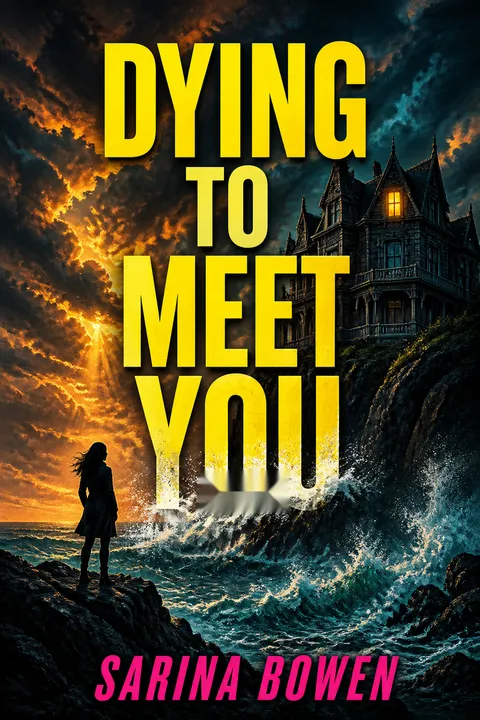

Plot Summary
Mansion's Hidden Murals
Rowan Gallagher, a skilled architect, is tasked with restoring the grand Wincott Mansion in Portland, Maine. The mansion, once a home for unwed mothers, is now being transformed into a maritime heritage center. As Rowan and her team uncover intricate, sensual murals hidden beneath layers of paint, the house's history begins to seep into the present. The restoration is plagued by delays, budget overruns, and rumors of a resident ghost. Rowan, recently dumped and struggling as a single mom, finds herself both awed and unsettled by the mansion's grandeur and secrets. The project is a career-defining opportunity, but the mansion's past and the pressure from her demanding boss, Hank Wincott, create a tense, charged atmosphere.
Ghosts and Old Wounds
Rowan's life is a balancing act between her demanding job, her teenage daughter Natalie, and the emotional fallout from her recent breakup. The mansion's eerie atmosphere and stories of a crying ghost mirror Rowan's own sense of loss and displacement. The building's history as the Magdalene Home for Wayward Girls, where young women were hidden away and shamed, resonates with Rowan's own experience as a young, unwed mother. The past and present blur as Rowan navigates the expectations of the Wincott family, the ambitions of her colleague Beatrice, and her own insecurities. The mansion's voice—its creaks, groans, and shadows—becomes a character in itself, amplifying the sense of unease.
The Breakup and the Body
Rowan's ex-boyfriend, Tim Kovak, abruptly ends their relationship via text, leaving her reeling. As she tries to move on, she becomes obsessed with tracking his movements through a location-sharing app. One night, she sees Tim's avatar parked outside the mansion—their old meeting spot. Driven by a mix of anger and longing, Rowan walks her dog to the mansion, only to discover Tim dead in his car, his face shattered by a gunshot. The shock is immediate and visceral; Rowan's world tilts as she becomes both a witness and a suspect in a murder investigation. The mansion, once a symbol of opportunity, now feels tainted and dangerous.
Police, Suspects, and Secrets
Detective Riley leads the investigation, questioning Rowan about her relationship with Tim and her actions the night of his death. The police quickly realize that Tim's death was not a suicide—no gun is found at the scene. Rowan's past, including her ex Harrison's criminal record, is dredged up. The police probe her digital life, seeking access to her phone and location data, which she hesitates to provide. The mansion becomes a crime scene, and everyone connected to it—contractors, staff, even Rowan's daughter—falls under suspicion. The investigation exposes the tangled web of relationships, secrets, and resentments that surround the mansion and its restoration.
The Ledger of Lost Babies
As the investigation deepens, Rowan discovers a hidden ledger in the mansion—an old record of babies born at the Magdalene Home. The ledger, with its cryptic entries and missing names, hints at a history of coerced adoptions and possible baby-selling. Tim, it turns out, was born at the mansion and adopted out under mysterious circumstances. He had been investigating his own origins, using photos of the ledger he secretly took from Rowan's phone. The past crimes of the Wincott family, especially Marcus Wincott's role in the home, begin to surface. The ledger becomes a key to understanding both Tim's murder and the mansion's haunted legacy.
Natalie's Rebellion
Natalie, Rowan's daughter, is navigating her own coming-of-age struggles—sneaking out, lying about her whereabouts, and secretly contacting her estranged father, Harrison. Natalie's relationship with her mother is fraught with tension, especially as the murder investigation puts them both under scrutiny. Natalie's discovery of a mysterious medallion, a Saint Raymond charm linked to the mansion's past, deepens the sense of generational trauma. As Natalie seeks out her father and confronts the truth about her family, she becomes both a source of strength and vulnerability for Rowan. Their bond is tested by secrets, danger, and the weight of the past.
The Wincott Legacy
The Wincott family's influence looms over the mansion and the city. Hank Wincott, charming but entitled, is determined to preserve the family's legacy, even as the restoration project threatens to expose old scandals. The family's history is intertwined with the Magdalene Home's abuses—coerced adoptions, mistreatment of young women, and possible cover-ups. Beatrice, the ambitious project manager, is desperate to secure her place in the Wincott hierarchy, while Hank's brother William is openly hostile. The family's obsession with image and control becomes a driving force in the unfolding drama, as the sins of the past refuse to stay buried.
The Medallion's Mystery
The Saint Raymond medallion, worn by both Natalie and others connected to the mansion, becomes a symbol of the hidden connections between the characters. The medallion was given to babies born at the Magdalene Home, marking them as part of a secret history. As Rowan and Natalie investigate its origins, they uncover links between the Wincott family, the home's staff, and the children who passed through its doors. The medallion's meaning—patron saint of childbirth, prisoners, and the falsely accused—echoes the novel's themes of shame, secrecy, and the longing for belonging.
Harrison Returns
Harrison, Natalie's estranged father and Rowan's former lover, returns to Portland after years away. His reappearance stirs up old wounds and unresolved feelings. Harrison, a recovering addict with a criminal past, is both a source of comfort and chaos. As the police focus on him as a suspect in Tim's murder, Harrison's presence forces Rowan and Natalie to confront the complexities of forgiveness, trust, and family. Harrison's own connection to the mansion's history—through his mother, Betsy Jones, a possible victim of the Magdalene Home—adds another layer to the mystery.
The Journalist's Shadow
Jules, Tim's ex-wife and a fellow journalist, arrives in Portland to investigate his death. She pressures Rowan for information, trading clues about the Wincott Foundation's financial records and the list of women connected to the home. Jules's presence intensifies the sense of danger, as it becomes clear that Tim's murder is tied to his investigation into the Wincott family's secrets. The journalist's pursuit of justice—and her willingness to manipulate Rowan—raises questions about loyalty, truth, and the cost of exposing the past.
The Threat Escalates
The tension ratchets up as someone breaks into Rowan's home, leaving Tim's wallet as a threat. The police suspect both Rowan and Harrison, while Rowan suspects the Wincotts or someone else desperate to keep the past hidden. Beatrice's behavior grows increasingly erratic, and the sense of menace intensifies. Rowan's attempts to protect her daughter and herself are complicated by her own guilt, fear, and the unresolved feelings she has for Harrison. The mansion, once a place of hope, now feels like a trap.
The Director's Ambition
Beatrice, long overlooked and underestimated, is revealed to be more than just an ambitious project manager. Her obsession with the Wincott family, her resentment at being denied the director's job, and her secret lineage as Marcus Wincott's daughter drive her to desperate measures. Beatrice's mental health deteriorates as she becomes convinced that she must protect the family's legacy at any cost. Her connection to the mansion's darkest history—and her willingness to kill to keep it secret—come to light in a chilling escalation.
The Break-In
Rowan is lured back to the mansion by Beatrice, who reveals her true identity and motives. Beatrice, armed and unhinged, handcuffs Rowan and prepares to stage her suicide, just as she did with others in the past. The confrontation is brutal and terrifying, with Rowan fighting for her life as Beatrice's plan unravels. Lickie, Rowan's loyal dog, becomes an unlikely hero, attacking Beatrice and giving Rowan a chance to survive. The mansion's haunted history comes full circle as violence erupts in its halls once again.
The Truth About Beatrice
In the aftermath, the truth about Beatrice's parentage, her role in Tim's murder, and her mental illness is revealed. The Wincott family's complicity in decades of abuse and cover-ups is exposed. Rowan, injured but alive, must reckon with the betrayal of someone she trusted and the knowledge that the mansion's ghosts were all too real. The police, finally focused on the right suspect, begin to unravel the web of lies that protected the Wincotts for so long. The survivors are left to pick up the pieces and decide what kind of future they want to build.
The Final Confrontation
As Rowan recovers from her injuries, the community grapples with the fallout from the revelations. The Wincott Foundation faces lawsuits and public scrutiny. Harrison, exonerated, becomes a steady presence in Rowan and Natalie's lives, offering a chance at reconciliation and hope. Natalie, having faced danger and loss, emerges stronger and more self-assured. The mansion, stripped of its ghosts and secrets, stands as a testament to the power of truth—and the cost of silence. Rowan, finally free from the past, looks toward a future defined by honesty, resilience, and love.
Analysis
Sarina Bowen's Dying to Meet You is a masterful blend of domestic suspense, psychological thriller, and generational drama. At its core, the novel interrogates the corrosive effects of secrecy, shame, and unchecked power. The Wincott Mansion, with its hidden murals and haunted history, serves as both a literal and figurative repository of trauma—its restoration paralleling the characters' struggle to confront and heal from the past. The story's emotional arc is driven by the interplay between mothers and daughters, the longing for belonging, and the courage required to break cycles of abuse. Bowen deftly explores the ways in which institutions—families, charities, and even architecture—can be both sources of refuge and instruments of harm. The novel's use of plot devices such as the ledger, the medallion, and the unreliable narrator keeps the reader engaged and off-balance, mirroring the characters' own uncertainty. Ultimately, Dying to Meet You is a meditation on the necessity of truth, the resilience of survivors, and the possibility of redemption. It warns of the dangers of silence and complicity, while celebrating the messy, imperfect work of building a future free from the ghosts of the past.
Review Summary
Dying to Meet You by Sarina Bowen receives mostly positive reviews (3.8/5 stars). Readers praise the atmospheric mansion setting, well-developed characters, and authentic mother-daughter relationship. The multiple POVs and slow-burn pacing divide opinions—some find it engaging while others feel it drags. Most appreciate the twisty plot and second-chance romance subplot, though several note an abrupt ending and predict some twists. The audiobook narration by three performers is consistently praised. Character development stands out, particularly protagonist Rowan. While some find it predictable with minor plot holes, many readers describe it as binge-worthy and unputdownable domestic suspense.
People Also Read






Characters
Rowan Gallagher
Rowan is the novel's protagonist, a talented architect tasked with restoring the Wincott Mansion. Her life is marked by resilience in the face of abandonment, single motherhood, and professional challenges. Rowan's psychological depth is rooted in her history as a young, unwed mother, her fraught relationship with her ex Harrison, and her longing for stability. She is both vulnerable and fiercely protective, especially of her daughter Natalie. Rowan's journey is one of confronting the ghosts of her own past—literal and metaphorical—while navigating the treacherous waters of power, privilege, and secrecy. Her development is a testament to the strength required to break cycles of shame and silence.
Natalie Gallagher
Natalie is Rowan's sixteen-year-old daughter, caught between adolescence and adulthood. She is clever, stubborn, and resourceful, often challenging her mother's authority while secretly craving connection. Natalie's psychological arc centers on her search for identity—her curiosity about her absent father, her defiance, and her need to understand the family's secrets. Her relationship with Rowan is both combative and deeply loving. Natalie's actions—sneaking out, investigating the medallion, confronting Tim—drive key plot points and ultimately help save her mother. She embodies the generational impact of trauma and the possibility of healing.
Harrison Jones
Harrison is Rowan's former lover and Natalie's father, a man marked by addiction, incarceration, and regret. His return to Portland forces all three characters to confront the past. Harrison's psychological complexity lies in his self-loathing, his longing for redemption, and his struggle to be a better father and partner. He is both a source of chaos and a stabilizing force, especially as he helps rescue Rowan. Harrison's development is a study in the possibility of change, the weight of inherited shame, and the courage required to break free from destructive patterns.
Beatrice Chambers (Vespertini)
Beatrice is the project manager on the mansion restoration, outwardly competent and charming but inwardly driven by resentment and longing. Her secret identity as Marcus Wincott's illegitimate daughter fuels her ambition and her sense of exclusion. Beatrice's psychological unraveling is central to the novel's climax—her desire for recognition, her rage at being denied, and her willingness to kill to protect the family's legacy. She is both a victim and a perpetrator, shaped by generational trauma and the toxic culture of secrecy. Her arc is a cautionary tale about the dangers of internalized shame and unacknowledged pain.
Hank Wincott
Hank is the scion of the Wincott family, overseeing the mansion's restoration and the family foundation. He is polished, entitled, and skilled at navigating power. Hank's psychological complexity lies in his need to uphold the family's image while privately acknowledging its flaws. He is both an enabler and a victim of the Wincott legacy, complicit in cover-ups but also burdened by guilt. His interactions with Rowan, Beatrice, and his own family reveal the corrosive effects of privilege and the limits of loyalty.
Tim Kovak
Tim is Rowan's ex-boyfriend and the novel's inciting victim. His secret investigation into his own adoption and the Wincott family's crimes drives the plot. Tim is intelligent, persistent, and ultimately tragic—a man searching for belonging and truth. His psychological arc is one of longing, deception, and sacrifice. Tim's actions—stealing photos, probing the past—set off a chain reaction that exposes the mansion's darkest secrets. In death, he becomes both a catalyst for justice and a symbol of the cost of silence.
Detective Riley
Detective Riley is the lead investigator on Tim's murder, methodical and empathetic. She is both a source of pressure and support for Rowan, embodying the tension between suspicion and trust. Riley's psychological insight and persistence help unravel the case, even as she is hampered by institutional blind spots. Her development is subtle but crucial—she learns to look beyond surface appearances and to question her own assumptions.
Coralie
Coralie is a young woman working for the Wincott Foundation, manipulated and abused by her powerful boss. Her storyline, interwoven with the main plot, mirrors the experiences of the girls at the Magdalene Home—exploited, silenced, and discarded. Coralie's psychological arc is one of survival, self-deception, and the longing for agency. She represents the ongoing legacy of the mansion's abuses and the ways in which power preys on vulnerability.
Jules Kovak
Jules is Tim's ex-wife and a fellow journalist, determined to uncover the truth about his death. She is sharp, persistent, and willing to bend ethical lines to get answers. Jules's psychological complexity lies in her grief, her competitive drive, and her ambiguous relationship with Rowan. She is both an ally and a threat, embodying the costs and rewards of pursuing justice.
Marcus Wincott (in absentia)
Marcus is the deceased former head of the Wincott family and the Magdalene Home, whose actions haunt every character. Though dead, his legacy of cruelty, coercion, and secrecy shapes the novel's events. Marcus's psychological presence is that of a manipulator—controlling, punitive, and obsessed with power. He is the embodiment of the mansion's darkness, the source of its ghosts, and the root of the generational trauma that drives the plot.
Plot Devices
Dual Timelines and Generational Trauma
The novel uses the restoration of the mansion as a metaphor for uncovering buried truths. Flashbacks, historical documents, and personal memories are woven into the present-day narrative, creating a sense of inevitability and haunting. The trauma experienced by the girls at the Magdalene Home echoes in the lives of Rowan, Natalie, and Beatrice, illustrating how shame and secrecy are passed down. The use of the ledger, the medallion, and the mansion's physical spaces as plot devices reinforces the theme of history's inescapable influence.
Unreliable Narration and Misdirection
The narrative structure leverages multiple points of view, red herrings, and shifting suspicions to keep the reader off-balance. Rowan's reluctance to share her phone data, Harrison's criminal past, and Beatrice's hidden motives all serve to complicate the investigation. The police's focus on the wrong suspects, the break-in at Rowan's home, and the ambiguous role of the Wincott family create a web of uncertainty that heightens tension and emotional stakes.
Symbolism and Foreshadowing
The Saint Raymond medallion, the recurring motif of ghosts, and the mansion's architectural features all serve as symbols of the characters' inner lives and the story's central mysteries. The medallion's association with childbirth, imprisonment, and false accusation foreshadows the revelations about the home's abuses and the characters' struggles for freedom. The mansion's creaks, shadows, and hidden spaces mirror the psychological landscape of the novel, while the restoration process foreshadows the painful but necessary work of healing.
Climax and Catharsis
The final confrontation between Rowan and Beatrice is both physical and symbolic—a battle for survival, truth, and agency. The use of the mansion's architecture (the railing, the gallery, the broken window) in the climax ties the personal to the historical. The intervention of Lickie, the loyal dog, provides both a literal and metaphorical breaking of chains. The aftermath—legal reckoning, public exposure, and personal healing—offers catharsis and the possibility of a new beginning.

Download PDF
Download EPUB
.epub digital book format is ideal for reading ebooks on phones, tablets, and e-readers.








































